Krakow 3-day itinerary: the classic first visit
From Krakow: Wieliczka Salt Mine tour & fast-track ticket
Duration: 4h
The classic Kraków: 3 days done right
Three days is the sweet spot for a first visit to Kraków. It’s enough time to walk the Old Town without rushing, spend a full afternoon in Kazimierz, visit Schindler’s Factory Museum, and still get out of the city for a day trip to the Wieliczka Salt Mine — one of the most remarkable underground experiences in Europe. This itinerary avoids the trap of trying to do Auschwitz and Wieliczka on the same day (a logistically brutal combo that does justice to neither).
The structure: Day 1 covers the Royal Route from the Barbican to Wawel. Day 2 is Kazimierz and Podgórze. Day 3 is the Wieliczka Salt Mine as a morning half-day, with the afternoon free for whatever you missed.
| Where | Old Town, Kazimierz, Podgórze, plus a Wieliczka day trip |
| Cost | around 615–805 PLN/person, excl. accommodation |
| Time needed | 3 full days |
| Getting there | walkable core, one tram/bus leg to Wieliczka |
| Best time | April–May or September–October |
Day 1: the Royal Route and Old Town
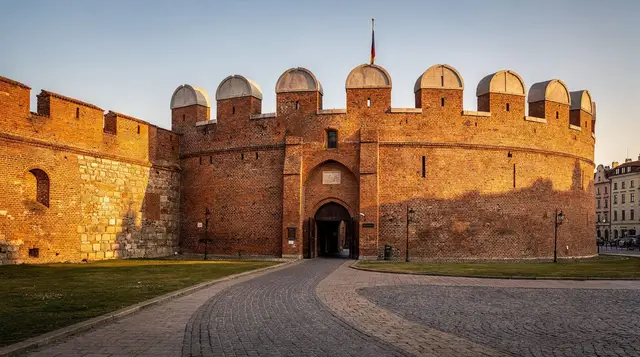
8:30 — Florian Gate and Barbican
Start at the northern edge of the Old Town. The Florian Gate (Brama Floriańska) is the only surviving medieval city gate in Kraków — you can walk through it free of charge. Attached to the left is a stretch of the original 13th-century city wall. The Barbican (22 PLN) is a round Gothic bastion built in 1498 after the Turks took Constantinople — Europe was rethinking fortification. The circular design was state of the art. Walk the ramparts in 30 minutes.
Continue south: this is the beginning of the Royal Route, the ceremonial road Polish kings walked from the city gate to Wawel Castle for coronations. Every major building along the route has a history.
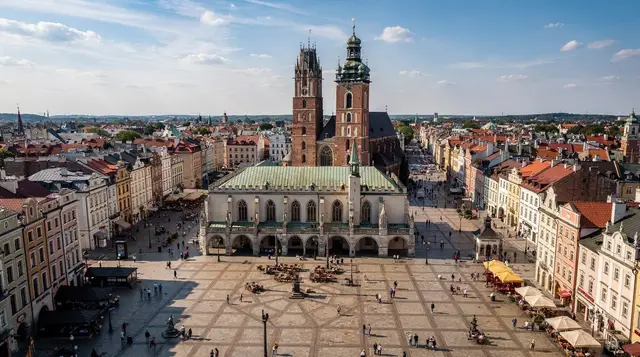
9:30 — Rynek Główny
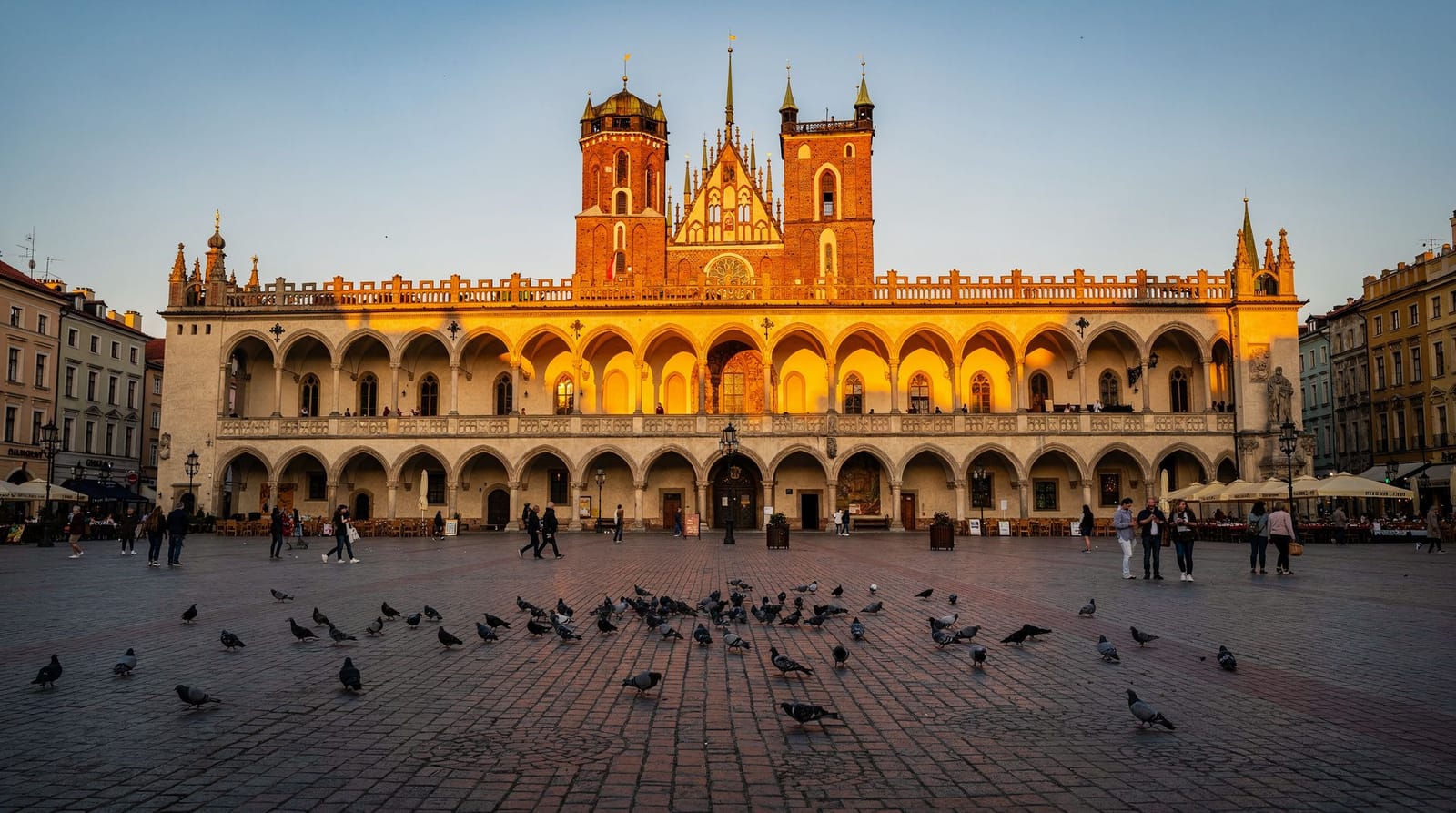
Emerge into the main square. At 9:30 it’s busy but not yet packed. Stop at the Sukiennice — the Cloth Hall — and walk through the ground-floor arcade of stalls selling amber, linen, and folk crafts. Some of the amber is fake (resin dyed yellow); buy only from stalls that offer a UV test on request. See the fake amber guide for specifics.
Walk to the base of the Town Hall Tower (northeast corner of the square; 22 PLN to climb to the top for city views). The tower is all that remains of the medieval town hall, demolished in the 19th century.
At 10:00, the trumpeter plays the hejnał from St. Mary’s Basilica — stop wherever you are on the square and listen.
Book the Old Town walking tour as an orientation: Krakow Old Town guided walking tour. A 2-hour guided tour at 10:00 covers the Rynek, basilica, and Royal Route with a licenced guide, giving you the historical framework before you explore independently.
11:00 — St. Mary’s Basilica
Entry 20 PLN from the side door on plac Mariacki (open Monday–Saturday 11:30–18:00, Sunday 14:00–18:00). Veit Stoss’s altarpiece (1477–1489) is the single most important artwork in Poland. The altarpiece is a hinged triptych: when open (11:50), it reveals gilded carved scenes of the Dormition of the Virgin with 300 figures; when closed, the outer wings show the Annunciation and Seven Joys of Mary. Both states are extraordinary.
12:00 — Rynek Underground Museum
Enter from the underground entrance in the Rynek (check the central pavement for the entrance hatch sign). The museum (45 PLN, free on Tuesdays) uses excavated medieval layers and digital recreations to show what the square looked like in the 11th–14th centuries. The hologram traders and original cobblestones are the highlights.
Rynek Underground Museum guided tour with stories — worth booking if you want to understand the medieval trade context; the audio guide alone misses some of the best material.
Allow 75 minutes.
13:30 — Lunch: avoid the Rynek trap
Walk two minutes off the square. Bar Mleczny Centralny (ul. Jagiellońska 1) is one of the surviving milk bars — subsidised canteens that kept Kraków workers fed under communism and still serve honest barszcz, pierogi, and kotlet schabowy for 10–25 PLN per dish. Alternatively, Pierogarnia Mandu (ul. Sławkowska 14) for excellent pierogi (20–30 PLN per portion).
A restaurant directly on Rynek Główny will charge 80–130 PLN for a main course. The quality does not justify the premium. See the honest Kraków guide for full details on where the tourist traps cluster.
15:00 — Wawel Castle
Walk the Royal Route south: ul. Grodzka, past the baroque Church of Saints Peter and Paul, the Romanesque Church of St. Andrew (12th century, one of the few buildings that survived the Tartar invasion of 1241). Turn right at the base of Wawel Hill.
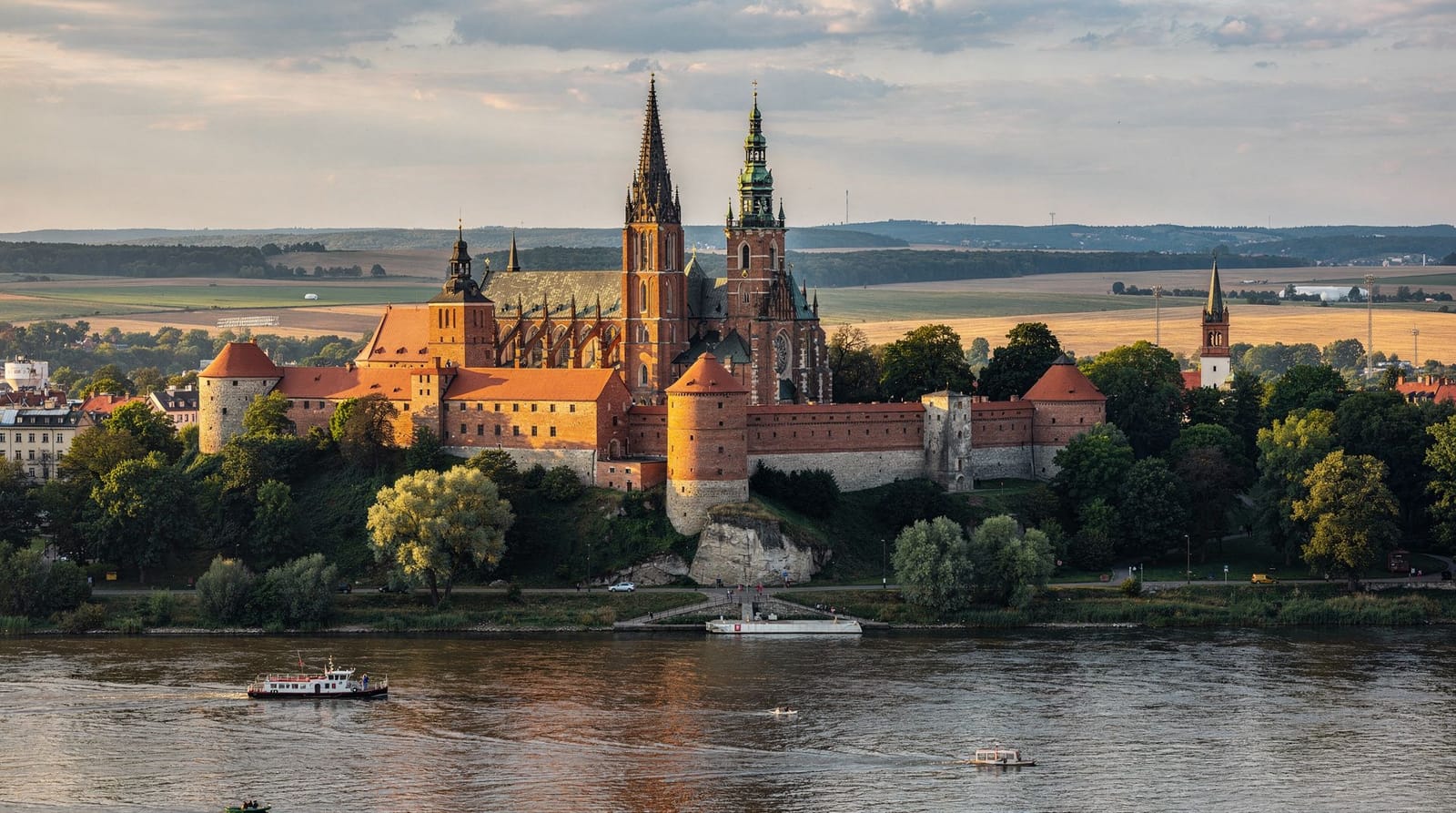
Wawel is both castle and cathedral on a limestone hill above the Vistula. Buy tickets at the ticket pavilion (arrive early — afternoon queues can reach 45 minutes). Recommended: State Rooms (57 PLN) for the 16th-century Flemish tapestries commissioned by King Sigismund Augustus, and Wawel Cathedral (26 PLN) for the royal crypts where Copernicus’s grave-slab lies alongside 18 Polish monarchs, Tadeusz Kościuszko, and the poet Adam Mickiewicz.
The Dragon’s Den (Smocza Jama, 15 PLN, open seasonally) is a natural limestone cave where, according to legend, the Wawel Dragon lived. The staircase down is steep; the firespitting bronze dragon at the Vistula exit delights children and is free to view from the riverside path.
17:30 — Wawel ramparts at sunset
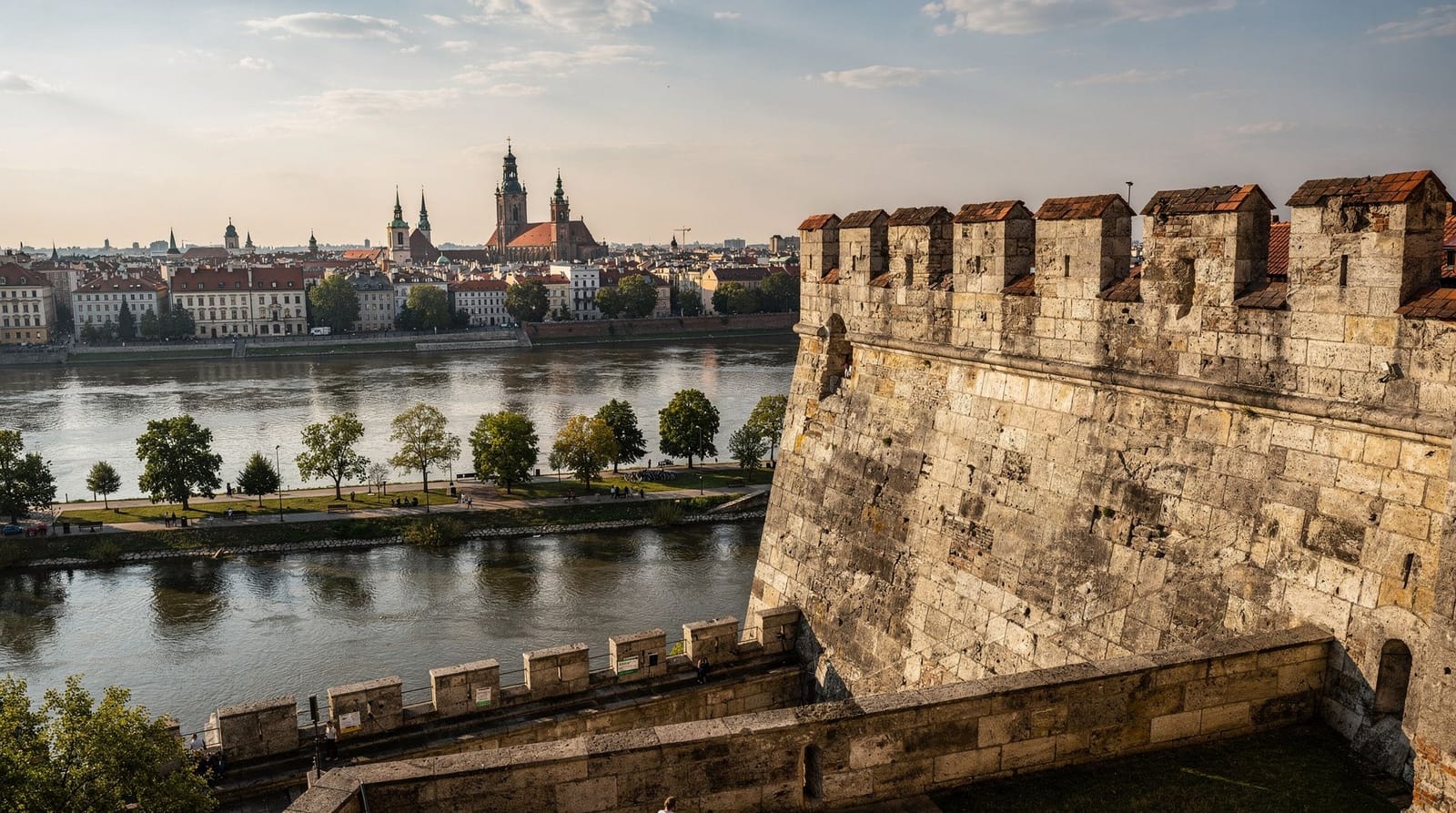
Walk the castle ramparts (free, open until dusk). The view west over the Vistula and the Kraków plain is best in the late afternoon. In summer, the walls are warm and the light turns golden — one of the best free views in the city.
19:00 — Dinner in the Old Town
Try Restauracja Różowy Słoń (ul. Straszewskiego 24) for generous Polish portions (30–55 PLN mains) near Wawel, or walk back to the Old Town for Café Camelot (ul. Tomasza 17) — relaxed atmosphere, excellent soups and pastries, not a full restaurant but good for a light supper.
Day 2: Kazimierz and Podgórze
9:00 — Schindler’s Factory Museum
Start early at Schindler’s Factory (ul. Lipowa 4) before the 10:00 rush. Book timed-entry tickets online at least 3–4 days ahead — they routinely sell out a week in advance in summer. Entry 60 PLN (≈ 14.30 €), free on Mondays (no booking that day). Allow 90 minutes to 2 hours.
Krakow Schindler Factory Museum guided tour — the multimedia exhibition is excellent but the guide provides the human context (survivor testimonies, specific individual stories) that makes it emotionally coherent rather than overwhelming.
11:00 — Ghetto Heroes’ Square and city walls
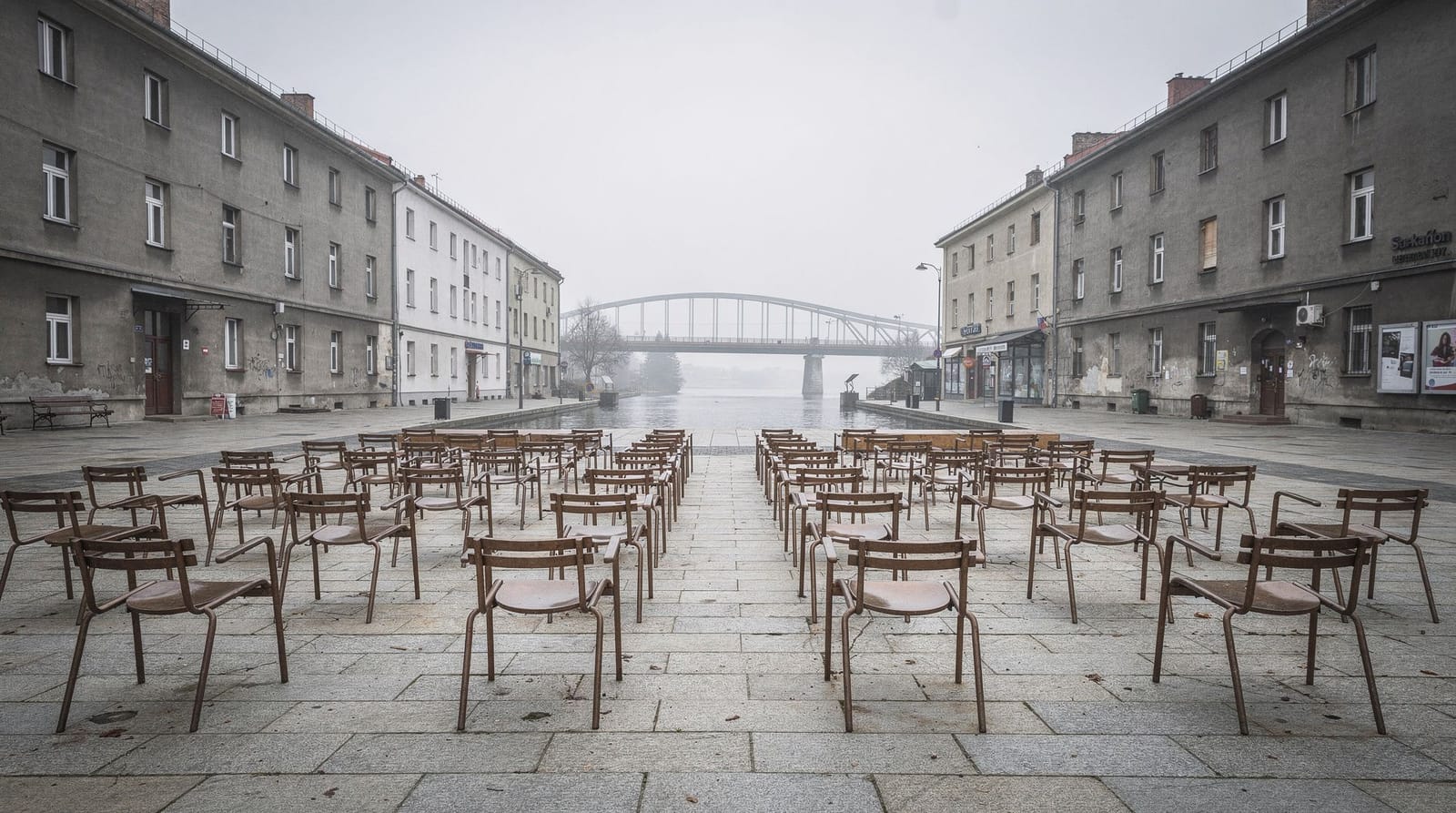
Walk 5 minutes west to Plac Bohaterów Getta. The 33 empty chairs represent every 2,000 Jews murdered from the Kraków Ghetto — a deliberately understated memorial. The Pharmacy Under the Eagle (corner of the square, 22 PLN) is a small but powerful museum in the actual pharmacy. The fragments of the Ghetto wall on ul. Lwowska survive in two sections — 30-metre stretches of the wall built by the Nazis in a deliberately tombstone shape.
12:30 — Cross to Kazimierz for lunch
Tram 3 or 24 back north across the Vistula, or walk 15 minutes through the Podgórze streets to the bridge. Kazimierz begins across Mostowa Bridge.
Lunch in Kazimierz: the Hala Targowa (Grzegórzecka 3, open until 14:00) is a covered market hall with food stalls and cheap cafeteria-style lunch counters (15–25 PLN). Alternatively, Café Szał (ul. Józefa 10) for lunch plates and coffee in a vine-covered courtyard (35–50 PLN).
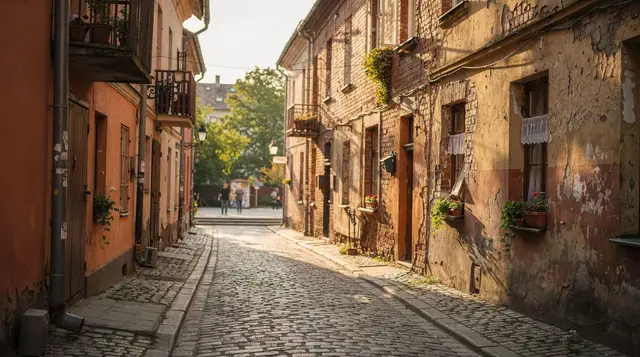
14:00 — Kazimierz afternoon
Kazimierz rewards slow exploration. The neighbourhood has:
- Synagogues: Old Synagogue (22 PLN), Remuh (10 PLN), Isaak (10 PLN), Temple Synagogue (10 PLN) — pick two if time is limited; the Old and Remuh together cover the full spectrum from 15th-century Gothic to 19th-century Moorish Revival.
- Galicia Jewish Museum (ul. Dajwór 18, 35 PLN): The permanent “Traces of Memory” exhibition of photographs documents Jewish Galicia from the 19th century through the Holocaust to the present. It’s not chronological but thematic — a deliberate choice that forces you to see the destruction in the context of what was lost.
- Plac Nowy: The circular square with its kiosks (zapiekanki from 12 PLN) and surrounding cafés. One of the most local corners of Kazimierz, popular with students and young Krakovians.
A guided tour weaves these together: Krakow Kazimierz Jewish Quarter walking tour.
16:30 — ul. Józefa café walk
The street running through the heart of Kazimierz is lined with cafés, second-hand bookshops, and bars. Alchemia (ul. Estery 5) is the classic Kazimierz café — candlelit, piled with junk-shop furniture, live music in the basement evenings. Café Singer (ul. Estery 20) is built around old Singer sewing machines — it’s kitsch but the coffee is good.
18:30 — Vistula riverside
Walk south along the Kazimierz embankment to the barki — floating bars moored on the Vistula from May through October. Dębowa (Bulwar Polański) and Przystań are popular; a cold Żywiec beer (8–12 PLN) on the water with the Wawel visible upstream is a very Kraków way to spend an hour.
19:30 — Dinner in Kazimierz
Zalewajka (ul. Józefa 26): good bigos, proper żurek, no tourist mark-up, 40–65 PLN per main. Marchewka z Groszkiem (ul. Mostowa 2) is similarly priced and always busy — a good sign in Kazimierz.
For a longer evening with food, drink, and local knowledge: Krakow 4-hour Polish food tour departs evenings and covers both Kazimierz and Old Town food stops.
Day 3: Wieliczka Salt Mine (half day) + afternoon free
9:00 — Depart for Wieliczka
The Wieliczka Salt Mine is 14 km southeast of Kraków centre. Options:
- By public bus (MPK, line 304): Departs from the junction of ul. Kurniki/Podgórze (near Rondo Grunwaldzkie). Journey 35–45 minutes; the fare depends on the city ticket zones (check ztp.krakow.pl). Best for budget travellers.
- By minibus: Tourist minibuses from ul. Starowiślna (near the Galeria Kazimierz mall) depart every 30 minutes, return guaranteed. 10–15 PLN each way.
- Guided tour with transport: Simplest option. From Kraków: Wieliczka Salt Mine tour and fast-track ticket includes transport from central Kraków, skip-the-queue entry, and a licensed guide underground.
10:00 — Wieliczka Salt Mine
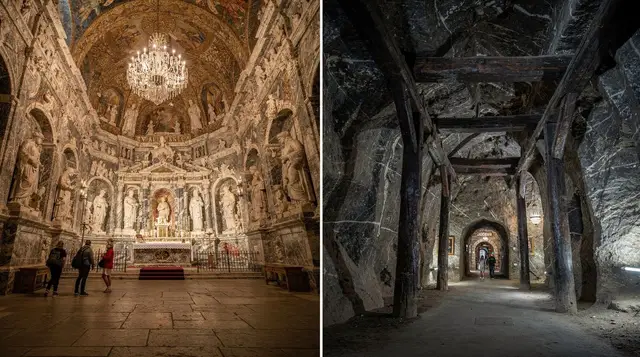
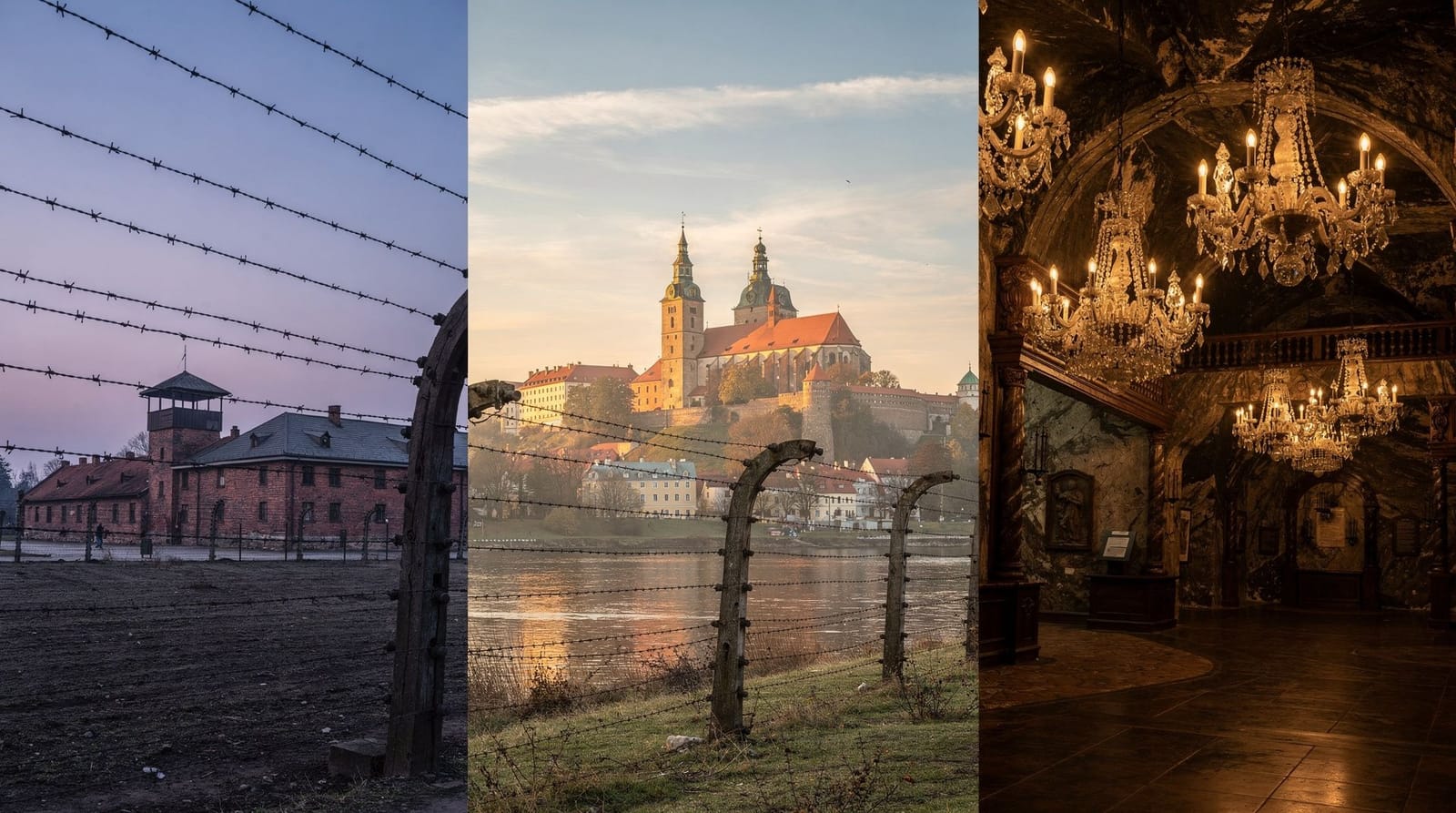
Every visitor to Wieliczka takes the same Tourist Route (2 km, 800 steps, 3 hours). The route descends to 135 metres below the surface through salt-carved chambers, lake-lit corridors, and the spectacular St. Kinga’s Chapel — a 54-metre-long underground nave with carved salt altarpieces, chandeliers made from salt crystals, and bas-relief carvings on every wall. It was built between 1895 and 1963 entirely by miners working on their own time.
Tickets start from 82 PLN (≈ 19.50 €) for the Polish-language tour; tours in English cost more and prices vary by season, so check kopalnia.pl. The mine is 17–18°C year-round — bring a light layer.
Important: the guided tour is mandatory (not optional). The exit is by lift; the stairs option is no longer offered. There are 2,000 stairs on the Tourist Route but all descending — no major climbs.
13:30 — Return to Kraków
The transport back depends on what you used to arrive. The public bus drops you at ul. Kurniki; the minibus returns to Starowiślna. Guided tour transport drops you at your pickup point.
15:00 — Afternoon free
Use the afternoon to revisit anything from Days 1–2, or choose from:
- Czartoryski Museum: Lady with an Ermine by Leonardo da Vinci. Entry 65 PLN (free on Tuesdays with a timed ticket collected the same day). Czartoryski Museum skip-the-line entry ticket.
- MOCAK Museum of Contemporary Art (near Schindler’s Factory): Provocative, with the permanent collection free on Thursdays.
- Nowa Huta: Take tram 4 or 10 east for 30 minutes to visit the planned socialist city district. Nowa Huta was built in 1949 as a model communist city, complete with steel mill, Soviet-style boulevards, and its own centre. The contrast with medieval Kraków is startling and illuminating.
- Vistula River cruise: An easy, relaxed hour on the water. Krakow sightseeing cruise on the Vistula River.
18:00 — Final evening
Return to the Old Town for one last evening. Piwnica Pod Baranami (Rynek Główny 27, in the Ram’s Head cellar) has jazz and poetry evenings; check the schedule. Walk the Planty at dusk. Buy obwarzanek from the last vendors leaving the square.
3-day Kraków budget summary
| Day | Major costs | Approx. PLN |
|---|---|---|
| Day 1 | Barbican, Underground, Basilica, Wawel (2 exhibitions), dinner | 215–275 |
| Day 2 | Schindler’s, Pharmacy, 2 synagogues, Galicia Museum, dinner | 190–250 |
| Day 3 | Wieliczka (entry + transport), Czartoryski or other museum, dinner | 210–280 |
| Total per person | 615–805 PLN (≈ 146–192 €) |
Add accommodation: central hotels from 200 PLN/night (budget) to 600+ PLN/night (mid-range boutique in Old Town).
Three-day day-by-day summary
| Day | Focus | Half-day theme |
|---|---|---|
| Day 1 | Barbican, Rynek Główny, St. Mary’s, Wawel Castle | Royal Route |
| Day 2 | Schindler’s Factory, Ghetto memorials, Kazimierz | Jewish history |
| Day 3 | Wieliczka Salt Mine, free afternoon | Day trip |
Getting to and around Kraków for a 3-day trip
Most visitors fly into Kraków Balice Airport, 15 km west of the centre. The train to Kraków Główny takes about 20 minutes and costs 20 PLN; from there, the Old Town is a 15-minute walk. See the airport to city centre guide for the full breakdown of train, bus, and taxi options. Within the city, this itinerary is largely walkable — trams matter only for the Kazimierz–Podgórze crossing on Day 2 and the trip out to Wieliczka on Day 3. A 15-minute ticket costs 4 PLN; a 24-hour pass (20 PLN) makes sense only if you’re moving around a lot on Day 2. See the public transport guide for ticket machines and validating on board — a common first-time mistake is boarding without validating a paper ticket, which counts as fare evasion even if you bought one.
Is this the right length of trip for you?
Three days works best if you want the essential city plus one meaningful excursion, without the emotional weight of Auschwitz or the extra travel day for Zakopane. If WWII history is your priority, the dedicated Auschwitz and Wieliczka 3-day itinerary swaps the structure to give the Memorial its own full day. If you have less time, the 2-day itinerary drops Wieliczka entirely and keeps the city core; if you have more, the 4-day or 5-day itineraries add Auschwitz and Zakopane respectively.
Frequently asked questions about the 3-day Kraków itinerary
Should I visit Auschwitz or Wieliczka on a 3-day trip?
If this is your only visit to Kraków and you have no particular WWII focus, Wieliczka is the more straightforward choice — it’s closer, shorter, and doesn’t require the emotional preparation of Auschwitz. If history and memorial sites are important to you, replace Day 3 Wieliczka with Auschwitz (see our Auschwitz guide and the Auschwitz-Wieliczka 3-day itinerary). Don’t attempt both in the same day.
Is 3 days enough to see everything in Kraków?
Three days covers the essential Kraków — Old Town, Kazimierz, Podgórze, and one major day trip. It does not cover Nowa Huta, the Tatras, Zakopane, Auschwitz (if skipped), or the Bochnia Salt Mine. For a more complete picture of the region, see the 5-day or 7-day Małopolska itinerary.
When is the best time to visit Kraków for a 3-day trip?
April–May and September–October are ideal: 15–22 °C, shorter queues, 20–30% lower hotel prices than summer peak. July–August is busiest (Jewish Culture Festival in July, festivals every weekend). Wieliczka is open year-round; the salt mine is always 14°C so weather outside is irrelevant.
How do I book Wieliczka in advance?
Buy tickets directly at kopalnia.pl (choose the Tourist Route, English guided tour). Tickets go on sale 90 days ahead; popular time slots (9–11 am, weekends) sell out 2–3 weeks in advance in summer. The fast-track tour includes the ticket and saves the booking complexity.
What to do if Wawel tickets are sold out?
Walk-in tickets for Wawel exhibitions are capped. The ticket pavilion opens at 9 am; arrive by 8:45 to queue for the first release. Alternatively, buy online at wawel.krakow.pl up to 30 days ahead. Guided tour operators often have reserved ticket allocations — the GYG-listed Wawel Castle skip-the-line tour is an option.
Can I fit Zakopane or the Tatras into a 3-day trip?
Not comfortably. Zakopane is a 2-hour journey each way, which would consume most of a day that’s already accounted for by Wieliczka or Wawel. If mountain scenery matters to you, extend to the 5-day itinerary, which gives Zakopane a full day without cutting anything from the city core.
Is 3 days enough if I also want to see Nowa Huta?
Only if you drop something else. Nowa Huta is a 30-minute tram ride each way and deserves at least 2 hours on-site to be worthwhile. On this itinerary, the only realistic slot is Day 3’s free afternoon after Wieliczka — and even then it competes with the Czartoryski Museum and MOCAK for the same window. The 7-day Małopolska itinerary gives Nowa Huta a proper, unhurried visit.
Top experiences
Bookable activities with verified prices and instant confirmation on GetYourGuide.