Auschwitz from Kraków: complete planning guide
From Krakow: Auschwitz-Birkenau guided tour & hotel pickup
Duration: 3.5h
How do I visit Auschwitz from Kraków?
Auschwitz-Birkenau is about 70 km west of Kraków, roughly 1h30 by road. Most visitors book a guided tour with hotel pickup — this handles transport, licensed guide, and pre-booked timed entry in one package. Independent visitors can take the train to Oświęcim (about 1h30) and book an entry card at visit.auschwitz.org, though guided tours are recommended for context and logistics.
What Auschwitz-Birkenau is and why it matters
The Memorial and Museum Auschwitz-Birkenau, situated near the town of Oświęcim in southern Poland, is the largest Nazi concentration and extermination camp complex. Between 1940 and 1945, more than 1.1 million people — primarily Jewish men, women, and children from across occupied Europe — were murdered there. The site was liberated by Soviet forces on 27 January 1945, a date now observed worldwide as International Holocaust Remembrance Day.
Today the Memorial is a UNESCO World Heritage Site and one of the most visited places in Poland, receiving around two million visitors per year. Coming here is not a tourist excursion in the ordinary sense. It is a form of bearing witness.
This guide covers everything you need to plan a visit from Kraków: transport options, booking requirements, what to expect on site, costs in PLN and euros, and how to approach the visit with the respect it deserves.
| Where | Oświęcim, around 70 km / 1.5hrs west of Kraków |
| Cost | around 220–380 PLN/person guided, or free self-guided (booking required) |
| Time needed | full day — 7–8 hours door-to-door |
| Getting there | organised tour with pickup, or train from Kraków Główny |
| Best time | book 4–6 weeks ahead in peak season (May–September) |
Distance and travel time from Kraków
Auschwitz-Birkenau is approximately 70 km west of Kraków, in the town of Oświęcim (the Polish name; “Auschwitz” is the German name imposed during occupation). Journey times:
- By tour bus or minibus: 1h15 to 1h30 depending on traffic and pickup route
- By train (Kraków Główny to Oświęcim): approximately 1h30 on regional trains; check current fares on the official website of Koleje Małopolskie
- By private car: around 1 hour via the A4 motorway
There is a fee-paying car park at the Memorial. The Memorial itself is located about 2 km from Oświęcim train station — taxis and local buses cover this final stretch.
Booking requirements: timed entry is mandatory
Since 2022, all visits to Auschwitz I (the main camp) require a pre-booked timed-entry slot. This applies to independent visitors and tour groups alike.
Guided tours from Kraków include pre-booked entry as part of the package — you do not book separately. The guided Auschwitz-Birkenau tour with hotel pickup handles transport, a licensed English-speaking guide, and timed entry in one booking.
Independent visitors must book timed slots in advance at visit.auschwitz.org. In peak season (June–August), slots fill up weeks or months in advance. Entry without a pre-booked slot is not permitted during busy periods.
Important warning: Do not book through street sellers or unofficial websites near Kraków’s Rynek Główny offering “Auschwitz tours” with vague pricing. Use licensed operators or book independently through the official Memorial website. Unofficial vendors have no access to timed-entry slots.
Guided tours from Kraków: your options
Standard guided tour with hotel pickup
This is the most practical option for most visitors. A licensed guide collects you from your Kraków hotel or a central meeting point, travels with you (typically in a minibus of 10–25 people), and leads the visit across both Auschwitz I and Auschwitz II-Birkenau.
Book the guided tour with hotel pickup from Kraków — includes return transport, licensed guide, entry to both camps, and headsets.
Typical price: 220–260 PLN per person (approximately €52–62). Duration: 7–8 hours total.
Official tour with hotel pickup
The official Auschwitz-Birkenau tour with hotel pickup operates on a similar model, sometimes with a slightly smaller group cap. Both operators use guides authorised by the Auschwitz-Birkenau Memorial and Museum.
Typical price: 240–280 PLN (€57–67).
Small-group tour (maximum 15 visitors)
The small-group Auschwitz-Birkenau tour limits participation to 15 people. With fewer visitors, your guide can set a more contemplative pace, spend longer at individual exhibits, and accommodate more questions. Strongly recommended for visitors with personal or family connections to the Holocaust, educators, and those visiting for a second time.
Typical price: 300–380 PLN (€71–90) per person.
Combination: Auschwitz and Wieliczka
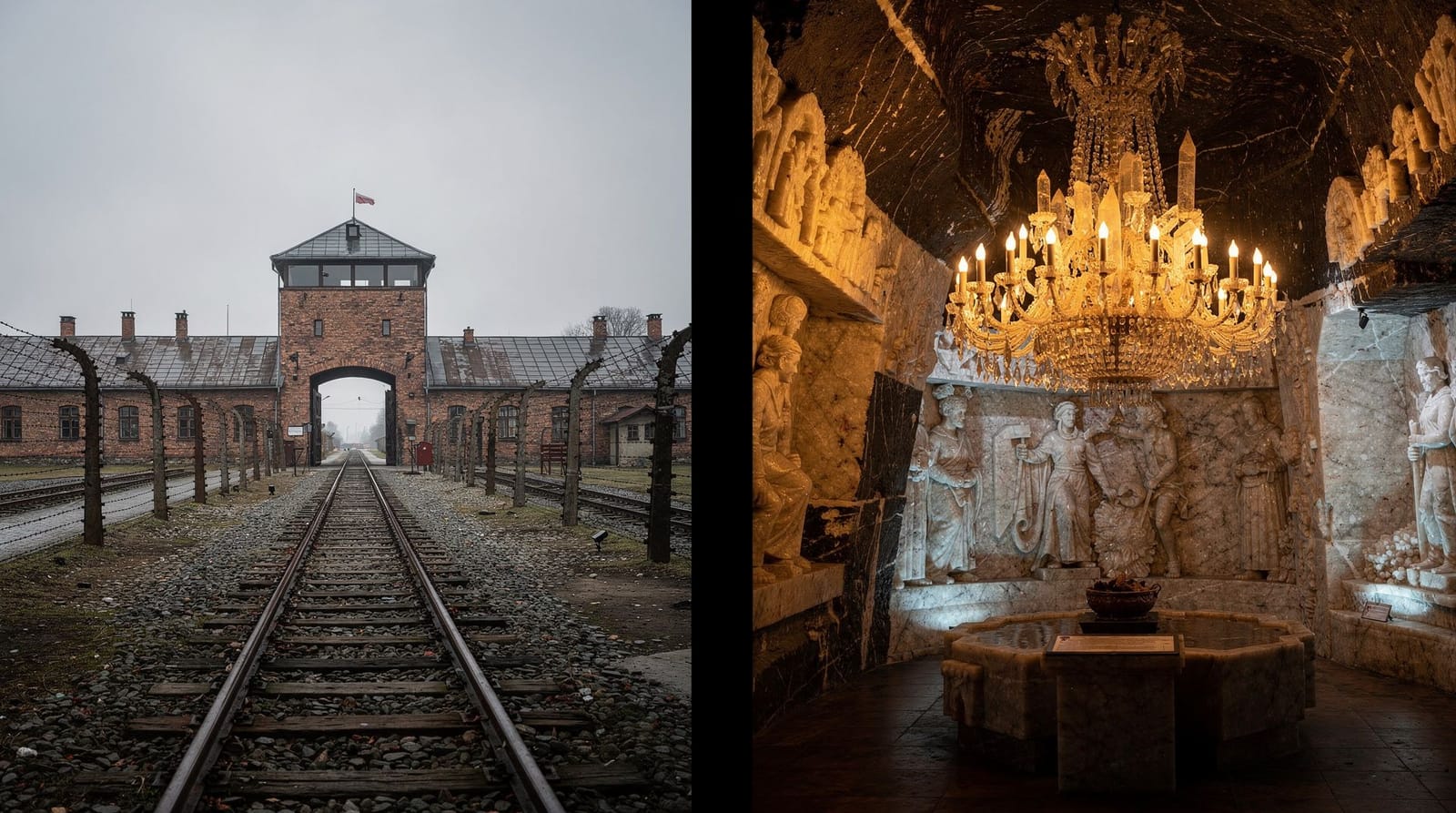
Some visitors ask about combining both sites in one day. The Auschwitz-Birkenau and Wieliczka Salt Mine day tour makes this possible — but read the note in the FAQ below before deciding whether this combination is appropriate for you.
What to expect on site
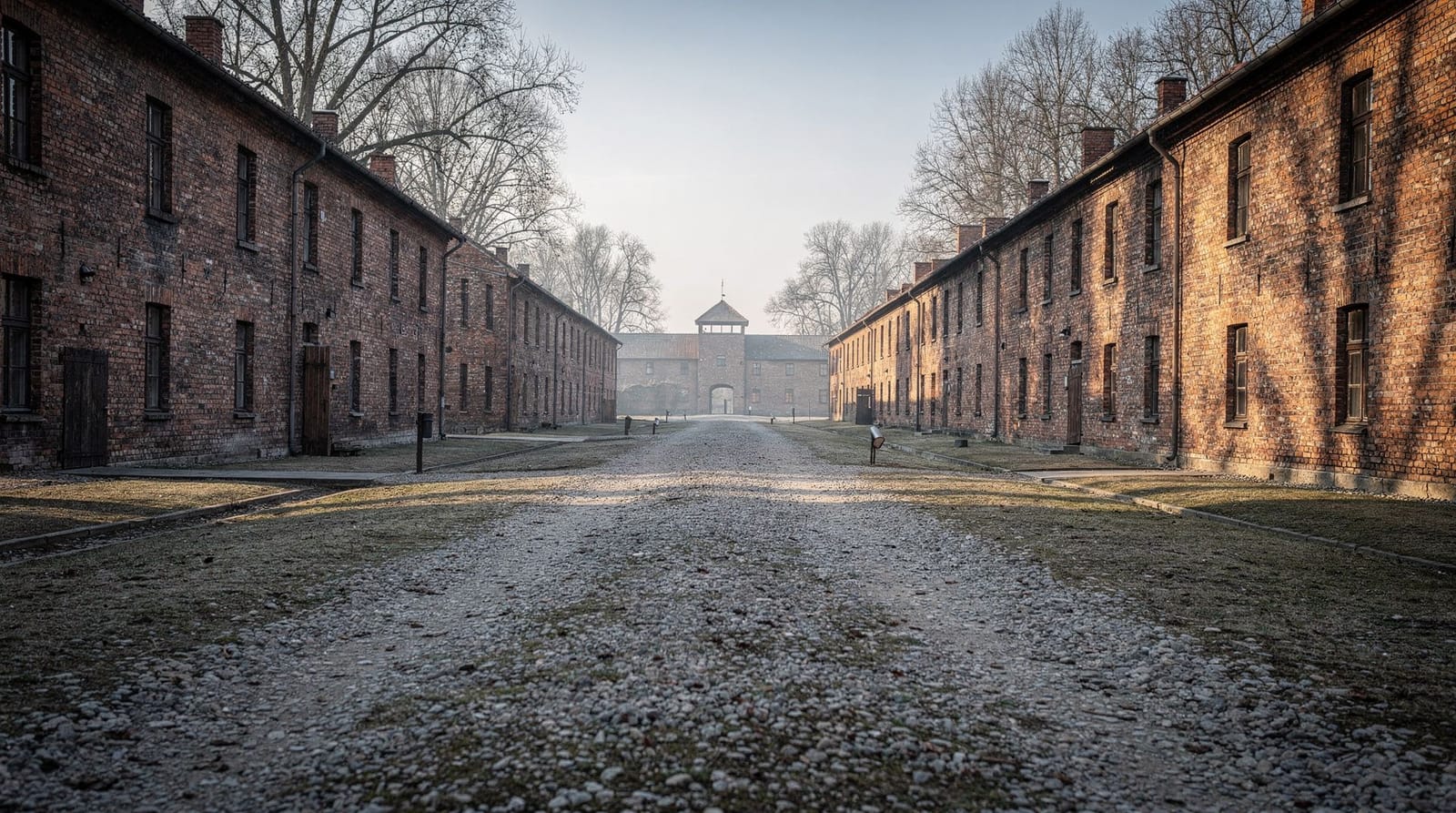
Auschwitz I — the main camp
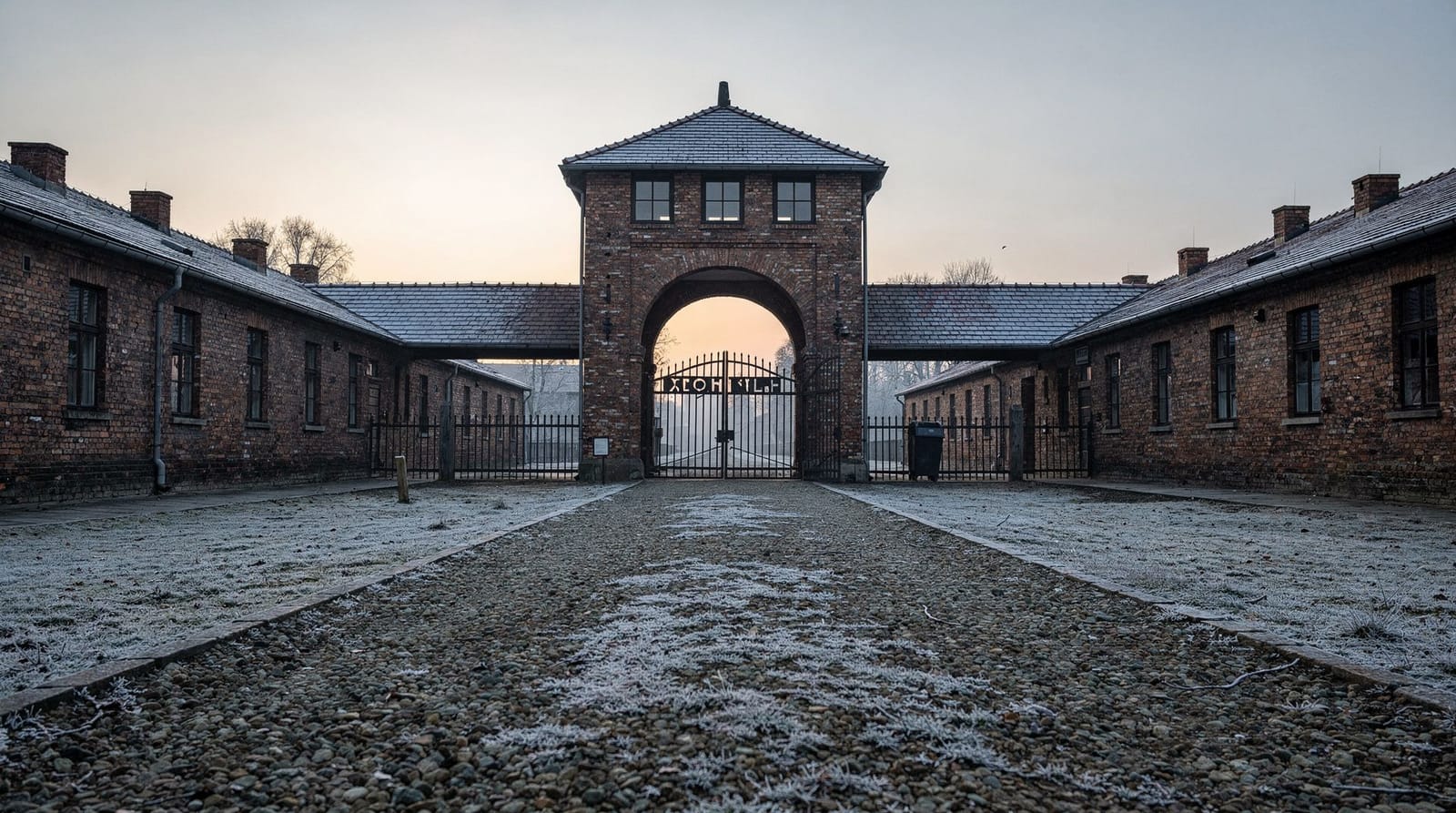
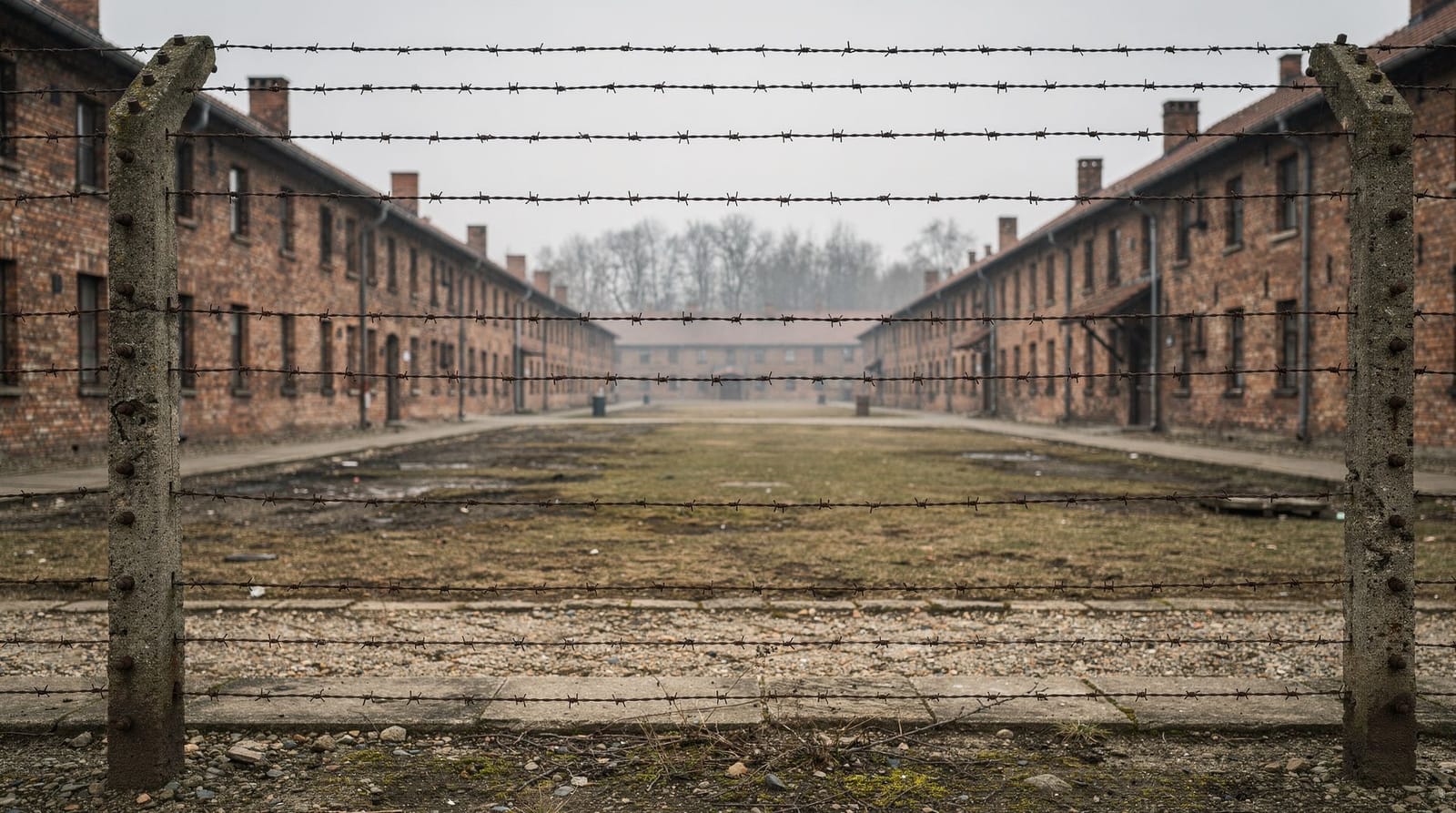
The original camp, established in 1940, consists of brick barracks, watchtowers, and the preserved gas chamber. Key elements of the visit include:
- The “Arbeit Macht Frei” gate — the infamous iron inscription above the main entrance
- Block exhibitions — individual barracks house themed exhibitions: evidence of the crimes, deportation maps, prisoner documents, and the overwhelming rooms containing victims’ belongings: shoes, suitcases, hair
- Block 11 — the “death block,” site of standing cells and the first experimental use of Zyklon B gas
- The original gas chamber and crematorium — the only intact gas chamber at the site
Allow at least 2.5–3 hours at Auschwitz I.
Auschwitz II-Birkenau
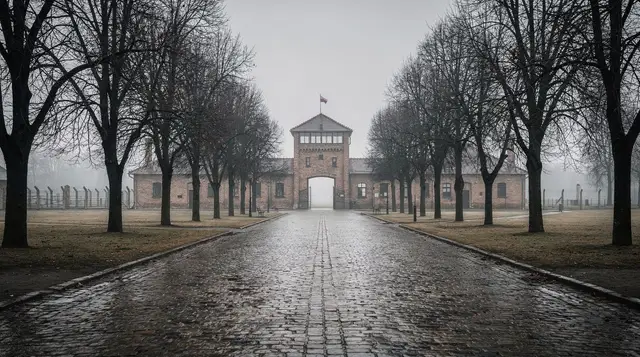
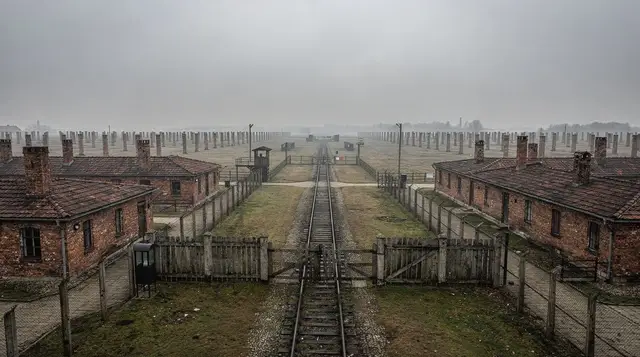
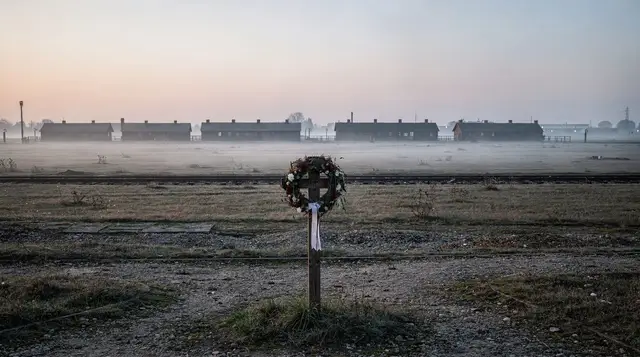
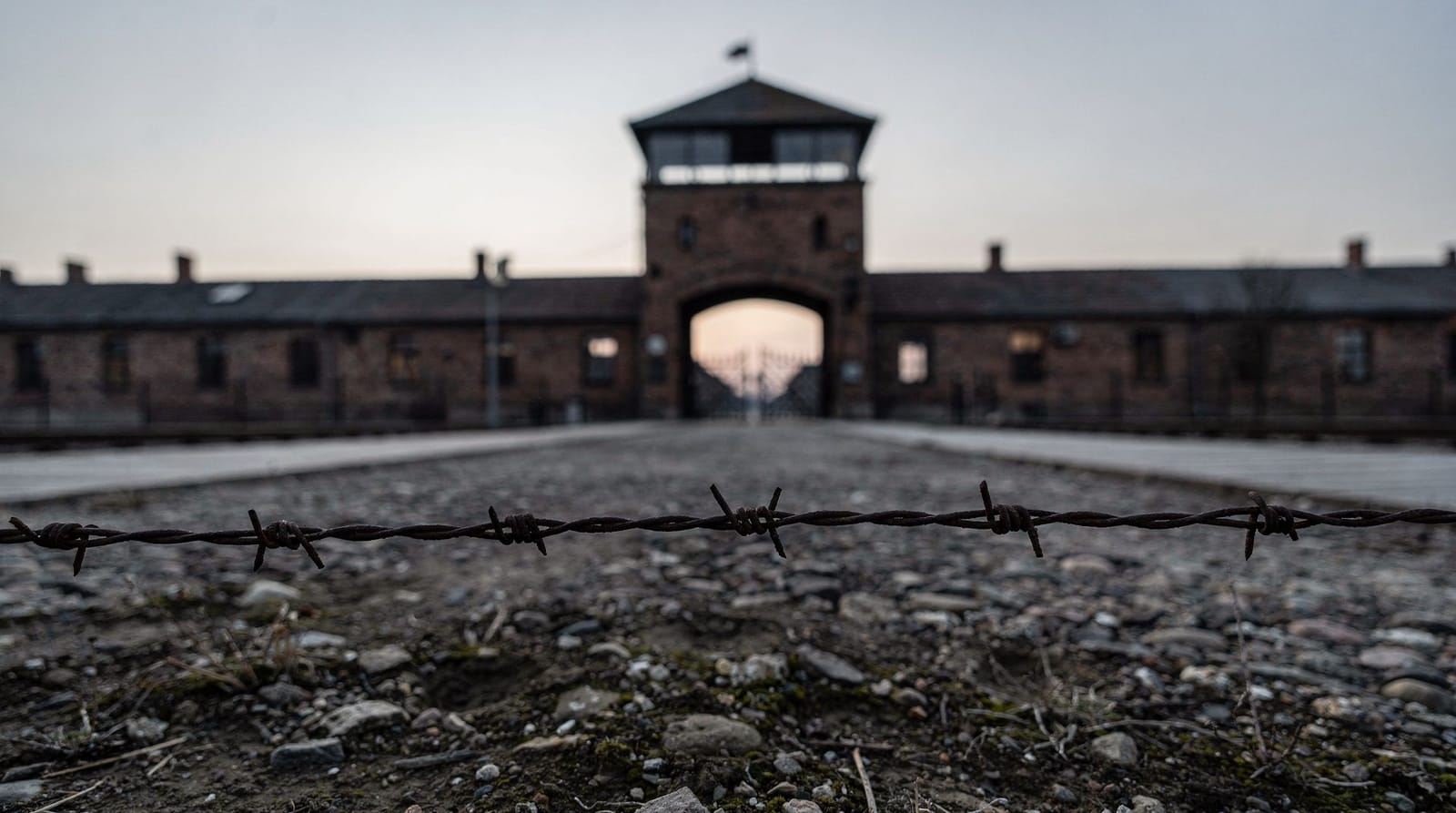
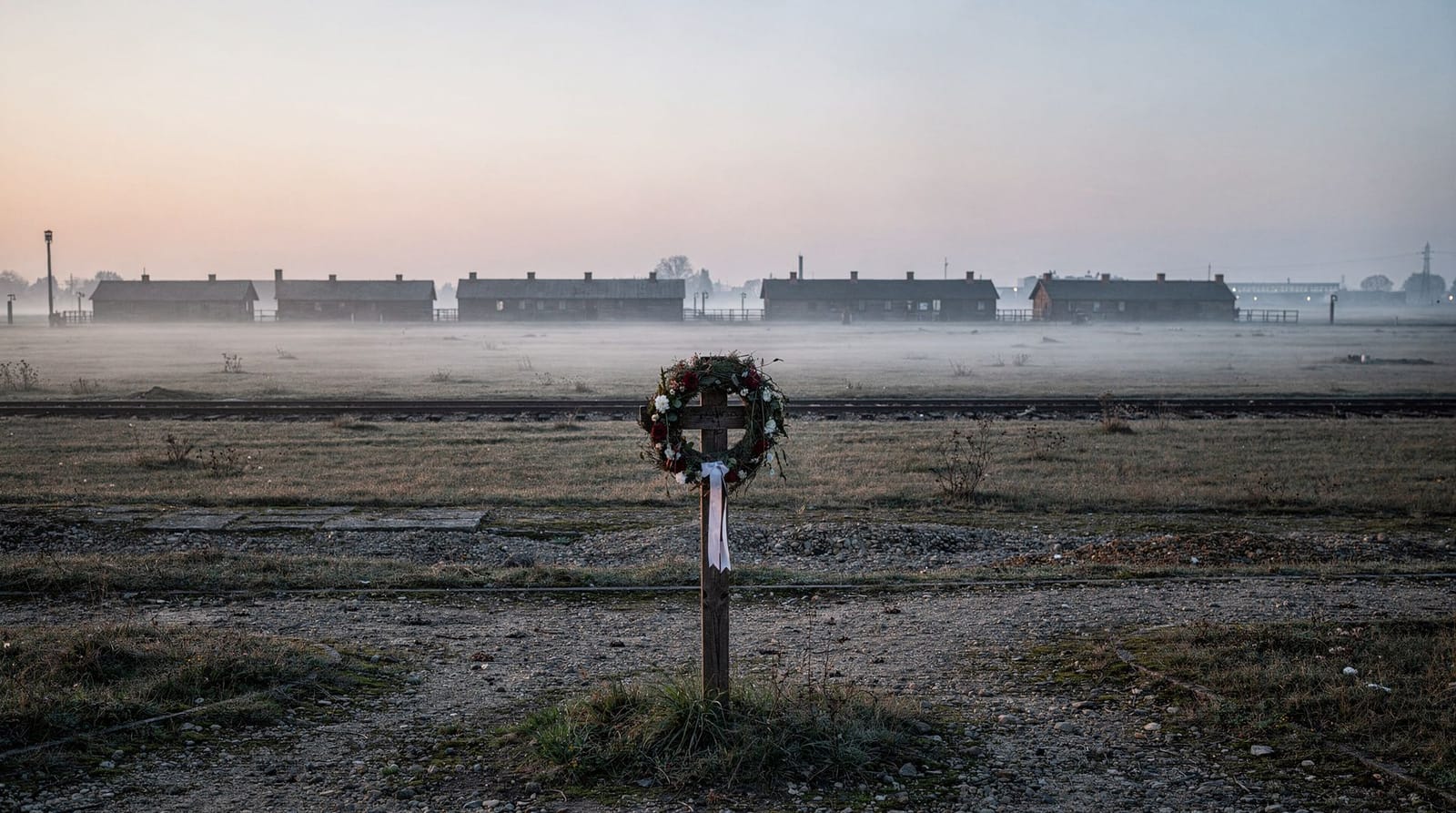
Located about 3 km from the main camp, Birkenau is the vastly larger extermination site. The scale is extraordinary and deeply affecting — 175 hectares of barracks (mostly wooden), watchtowers, the notorious railway ramp where deportees were “selected,” and the ruins of four large crematoria (blown up by the SS in January 1945).
Key features:
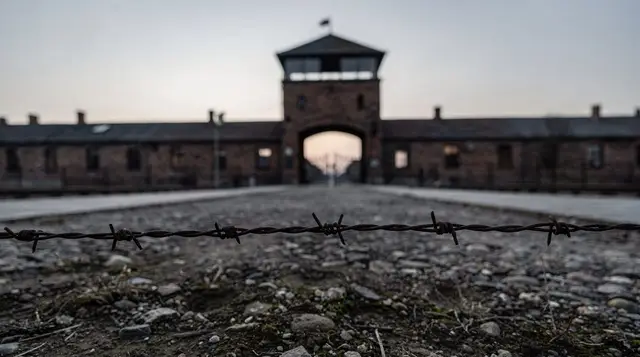
- The railway ramp and gate tower — the iconic view seen in most photographs
- Women’s and men’s camp sections — rows of wooden barracks, many preserved
- The International Monument — memorial plaques in multiple languages at the end of the tracks
- The ruins of Crematoria II and III — where the majority of murders took place
Allow 1–1.5 hours at Birkenau.
How to visit with respect
The Auschwitz-Birkenau Memorial and Museum publishes a code of conduct. Key expectations:
- Dress appropriately. No shorts, exposed midriffs, or flip-flops. This is a place of mourning.
- Maintain silence inside barracks and gas chamber areas. Mobile phones on silent. Avoid loud conversation.
- No selfies inside the gas chamber or in front of victims’ belongings. This is widely considered disrespectful and guides will ask you to stop.
- Do not touch exhibits. Victims’ personal items — shoes, suitcases, hair, glasses — are irreplaceable.
- Children under 14: The Memorial recommends against bringing children under 14 to Auschwitz I. The more open landscape of Birkenau is slightly less graphic. Discuss with your guide.
Photography is permitted in most outdoor areas. Specific indoor areas post signs where photography is not allowed — follow them.
What to eat and where
There is a café and restaurant at the Memorial visitor centre, but seating is limited and the atmosphere is generally subdued. A better approach:
- Eat before you leave Kraków. Most tours depart between 08:00 and 09:30 and return mid-to-late afternoon.
- Bring a water bottle and a snack. Particularly important in summer when the outdoor sections at Birkenau can be warm.
- Oświęcim town has standard Polish restaurants and milk bars (bar mleczny) if you want to eat after the visit, but most visitors return directly to Kraków.
Which tour type suits you?
| Traveller type | Recommended option | Why |
|---|---|---|
| First-time visitor, wants context | Standard guided tour with pickup | Handles logistics, includes licensed guide |
| Personal/family Holocaust connection | Small-group tour (max 15) | Slower pace, more room for questions |
| Tight budget, comfortable independently | Train + self-booked timed entry | Cheapest, but no guide narration |
| Limited days, must see Wieliczka too | Combined Auschwitz + Wieliczka tour | Only if you accept the pace trade-off |
| Educators / researchers | Private tour | Full flexibility on pace and focus |
Getting there independently
If you prefer to go without a guided tour:
- Train: Kraków Główny to Oświęcim, operated by PKP Intercity or regional services. Journey approximately 1h30. Check current fares and timetables on the official website of Koleje Małopolskie. Trains run roughly hourly.
- Bus: From Kraków’s MDA bus station. Journey approximately 1h45. Cheaper but slower.
- From Oświęcim station to the Memorial: Local bus or a taxi (check fares locally).
- Book your entry card independently at visit.auschwitz.org. Admission is free; the charge is for the guided service. Without a guide-educator, entry is only possible in the afternoon (from 17:00 in April–September, earlier in other months; see auschwitz.org for monthly times), and a guided visit is strongly recommended for context.
Seasonal considerations
Peak season (May–September): Up to 15,000 visitors per day at the Memorial. Tour slots sell out weeks in advance — book at least 4–6 weeks ahead, longer for small-group or private tours. Arrive exactly on time; latecomers lose their slot.
Shoulder season (April, October): Busy but manageable. Booking 2–3 weeks in advance is usually sufficient.
Winter (November–March): Fewer visitors, more contemplative atmosphere. Birkenau is exposed to cold and wind — dress warmly. Some tour slots are available with shorter notice. Opening hours are shorter (check the official website). The brick barracks of Auschwitz I can be bitingly cold.
Costs in PLN
| Option | Approx. cost per person |
|---|---|
| Guided tour, standard, with pickup | 220–260 PLN (€52–62) |
| Official guided tour, with pickup | 240–280 PLN (€57–67) |
| Small-group tour (max 15) | 300–380 PLN (€71–90) |
| Private tour (group price) | 400–650 PLN total |
| Independent entry (self-guided) | Free (booking required) |
| Train from Kraków, each way | check current fares on the Koleje Małopolskie website |
All guided tours include transport, guide, and entry. Independent entry is free of charge but requires an entry card booked online.
Auschwitz and Wieliczka on the same day
It is physically possible to visit both Auschwitz and the Wieliczka Salt Mine on the same day — combination tours exist for this purpose. However, we recommend against it for most visitors.
Auschwitz is an emotionally demanding experience. Following it with a tourist attraction — even a historically significant one — risks doing justice to neither. The Wieliczka salt mine deserves its own full half-day; so does Auschwitz. If your time in Kraków is limited, choose one per day and plan accordingly.
If you are short on time and have already carefully considered this, the combination day tour is available.
Frequently asked questions about visiting Auschwitz from Kraków
Do I need to book in advance?
Yes, always. In peak season (June–August), guided tour slots can sell out 6–8 weeks ahead. Even in the off-season, at least 1–2 weeks’ notice is advisable. Independent entry via visit.auschwitz.org is also time-slot controlled — do not assume you can arrive without a booking.
Is a guided tour required, or can I visit independently?
Since 2022, visitors who arrive without a pre-booked timed slot are turned away during peak hours. A guided tour is technically optional — independent timed-entry slots exist — but the Memorial strongly recommends guided visits for the historical context they provide. Most licensed guides are deeply knowledgeable historians. The experience is substantially richer with a guide.
How far is Auschwitz from Kraków?
Approximately 70 km by road, taking about 1h15 to 1h30 depending on traffic. The nearest town is Oświęcim, which is the Polish name for the town the Nazis renamed Auschwitz during occupation. The Memorial is located on the outskirts of Oświęcim.
What should I wear?
Comfortable walking shoes (you will walk 3–5 km across the two sites), weather-appropriate layers, and respectful clothing — no shorts or exposed midriffs. In summer, sunscreen and a hat are advisable for the open-air sections at Birkenau. In winter, bring a warm coat; Birkenau in particular is exposed.
Can children visit Auschwitz?
The Memorial recommends that children under 14 do not visit Auschwitz I, given the graphic nature of some exhibits (including the rooms of victims’ belongings and the original gas chamber). Birkenau is generally more suitable for younger visitors as its exhibits are more about landscape and scale. Parents should use their judgment and speak with the guide before entering specific areas.
How long does the visit take?
Most guided tours from Kraków run 7–8 hours door-to-door: roughly 1h30 travel each way plus 3.5–4.5 hours on site across both camps. Budget a full day. Do not plan other significant activities for the afternoon following your visit.
Is the Memorial open year-round?
Yes, every day of the year except Christmas Day (25 December). Hours vary by season — the Memorial opens earlier and closes later in summer. Check the official schedule at visit.auschwitz.org before travelling.
Should I visit Auschwitz on my first day in Kraków or later in the trip?
Most guides and repeat visitors recommend not scheduling it on your very first day, when you are still tired from travel, or your very last day, when you need to focus on departure logistics. A middle day of a multi-day trip — ideally one where the evening can stay quiet — tends to work best. If you are visiting Kraków’s own Jewish heritage sites too, doing those first (see the Jewish Krakow history overview) before Auschwitz gives the visit more context.
The history you should know before you go
The site that is today the Memorial and Museum Auschwitz-Birkenau was established in stages. The original Auschwitz I opened in June 1940 as a camp for Polish political prisoners — initially intellectuals, clergy, military officers, and anyone the German occupiers considered a potential threat to their rule. Its victims in this early period were overwhelmingly Polish Catholics, not Jewish.
From 1941, the camp’s character changed. Soviet prisoners of war arrived in large numbers; the experimental use of Zyklon B gas was first tested on a group of Soviet POWs and sick prisoners in Block 11 in September 1941. By 1942, the systematic extermination of Europe’s Jewish population — the “Final Solution” (Endlösung) — reached Auschwitz with the construction of the extermination camp at Birkenau (Auschwitz II), about 3 km from the main camp.
Between 1942 and 1944, transports arrived from across occupied Europe — from France, the Netherlands, Greece, Hungary, Italy, Belgium, and Germany. The vast majority of arrivals at Birkenau — particularly the elderly, women with young children, and people assessed as unable to work — were killed in the gas chambers within hours of arrival, before ever being registered as prisoners. An estimated 1.1 million people were murdered at Auschwitz-Birkenau, of whom approximately 1 million were Jewish.
The camp was also a site of medical experiments conducted by SS doctors, including Josef Mengele, who subjected prisoners — particularly twins and Roma people — to brutal pseudoscientific procedures.
The SS began destroying evidence in late 1944 as Soviet forces advanced. The crematoria at Birkenau were blown up in November 1944. On 27 January 1945, Soviet forces of the 60th Army liberated the camps, finding approximately 7,000 survivors — those too sick to be marched west in the Nazi “death marches.”
The name: Auschwitz or Oświęcim?
Both names refer to the same location but carry different meanings. Oświęcim is the Polish name of the pre-war town and the name used by its Polish inhabitants today — a community that existed for centuries before the war and continued after liberation. “Auschwitz” is the German name imposed during occupation, now permanently associated with the crimes committed there. The Memorial uses “Auschwitz-Birkenau” to distinguish the site from the town; Polish visitors and Kraków guides typically use both forms, understanding the distinction.
Understanding what you will see
The photographs in the barracks
Some of the most affecting moments for many visitors are not in the gas chamber or the Birkenau grounds but in the barrack exhibitions — specifically the walls lined with identity photographs of prisoners taken when they were registered. Each photograph shows the prisoner in profile and face-forward, with their prisoner number. You see men and women in their 20s and 30s, wearing their own clothes, clearly recently arrived. Many of these individuals were dead within months. The systematic, bureaucratic nature of the documentation — the fact that the SS kept meticulous records of those they murdered — is one of the most chilling aspects of the visit.
The room of hair
One of the most discussed exhibits at Auschwitz I is a large room containing a display of approximately two tonnes of human hair, cut from victims at the point of murder and intended to be used for industrial production — mattress filling, rope, felt. The display is behind glass. Visitors frequently fall silent here for extended periods. Photography is not permitted in this room — a decision of the Memorial that most visitors find appropriate.
The railway ramp at Birkenau
The Judenrampe — the internal railway ramp constructed in May 1944, in time for the mass deportations of Hungarian Jews — runs directly into the Birkenau camp, ending at the ruins of Crematoria II and III. Walking along the rails, you can see the platform where SS doctors conducted “selections” — the division of arrivals into those assigned to forced labour and those sent immediately to the gas chambers. The scale of the camp (the barracks stretch beyond what the eye can comfortably absorb) and the silence of the Birkenau grounds create an atmosphere unlike anything in a conventional museum.
What if you only have half a day?
A genuinely rushed visit to Auschwitz-Birkenau is not recommended — the Memorial itself discourages tours that compress the visit below roughly 3.5 hours on site. If your Kraków trip genuinely cannot spare a full day, it is better to postpone the visit to a future trip than to see it in a way that shortchanges both the history and your own experience of it. There is no “highlights only” version that does the site justice; the scale of Birkenau in particular only communicates itself when you have time to walk it slowly.
After the visit: how to process what you have seen
Most visitors emerge from Auschwitz-Birkenau feeling quiet, heavy, and thoughtful. This is a normal response to bearing witness to evidence of extraordinary crime. Practical suggestions:
- Allow time before the next activity. Do not schedule dinner in a lively restaurant or a pub crawl for the same evening. A quiet evening — a walk along the Vistula, a meal at Hala Targowa, time to reflect — tends to be more appropriate.
- The Memorial has a bookshop with serious historical literature. Primo Levi’s If This Is a Man (Survival in Auschwitz), Elie Wiesel’s Night, and Nikolaus Wachsmann’s KL: A History of the Nazi Concentration Camps are among the most important accounts.
- If you are travelling with teenagers: Create space for them to talk about what they saw. Guides are experienced in supporting this.
Avoiding scams and poor-quality operators
Not all “Auschwitz tours” sold in Kraków are equal. Common red flags:
- Street sellers near the Rynek offering Auschwitz tours at suspiciously low prices. These sellers have no direct access to timed entry at the Memorial. Legitimate tours book through official channels.
- Operators without licensed guides. All guides at the Memorial must hold a licence issued by the Auschwitz-Birkenau Museum. Unlicensed guides cannot enter the site with groups.
- “Auschwitz only” tours that go to Auschwitz I only. Confirm before booking that the tour covers both Auschwitz I and Auschwitz II-Birkenau. Some budget operators cut costs by spending the full time at the main camp only, skipping Birkenau. A visit without Birkenau is incomplete.
The tours listed in this guide use licensed operators with verified access. Reading reviews on Google Maps and Tripadvisor for specific operators is advisable before booking.
Accessibility
The Memorial has worked to improve accessibility over recent years. Auschwitz I has paved paths through most of the grounds and ramps into several exhibition blocks, though some original buildings retain uneven historic floors and narrow doorways that limit full wheelchair access. Birkenau’s grounds are largely flat gravel and grass, which is more manageable for wheelchairs and pushchairs but can be difficult after rain. Visitors with mobility needs should contact the Memorial or their tour operator in advance to confirm the route and arrange assistance; most licensed guided tours can adapt the pace and stops accordingly.
Language and guided tour options
Guided tours from Kraków are typically offered in English, though some operators run dedicated tours in other languages (German, Spanish, French, Italian) on request or on certain days — check before booking if you need a language other than English. The Memorial itself also offers official guides in numerous languages for those booking independently at the site, subject to availability, particularly in peak season when demand for non-English guides can be limited.
Connecting Auschwitz to Kraków’s own wartime history
Auschwitz does not stand alone. Kraków itself was the administrative seat of the Nazi-occupied “General Government,” and the deportations to Auschwitz were the final stage of a persecution that began in the city’s streets. Visiting Kraków’s own wartime sites — ideally before Auschwitz — gives the visit at the Memorial a fuller human context.
The Jewish Krakow history overview traces the community centred on Kazimierz from its medieval origins to its near-total destruction, and the Kazimierz Jewish Quarter guide covers what remains to see today — synagogues, cemeteries, and the district’s post-war revival. For the story of Oskar Schindler and the factory that saved over a thousand of his workers, see the Schindler’s Factory Museum guide. And for the resistance movement that operated against the occupation, the Home Army resistance in Kraków guide covers the underground network that risked everything.
Further planning
- Auschwitz-Birkenau destination guide
- Auschwitz-Birkenau history
- Visiting Auschwitz with respect
- Guided vs self-guided Auschwitz
- Auschwitz group vs private tour
- WWII Kraków history
- Kraków 3-day itinerary
- Wieliczka Salt Mine guide
- Day trips from Kraków
Top experiences
Bookable activities with verified prices and instant confirmation on GetYourGuide.