Kraków — the complete visitor guide
Plan your Kraków city break with confidence: neighborhoods, day trips, logistics, and honest advice on how many days you actually need.
Krakow: Old Town guided walking tour
Duration: 3h
Quick facts
- Best for
- History, culture, food, day trips
- Days needed
- 3–5 (city only); 4–6 with Wieliczka + Auschwitz
- Getting around
- On foot (Old Town), tram, Bolt/Uber
- Airport
- KRK Balice, 11 km — train 20 min, 20 PLN (≈ €4.75)
- Currency
- Polish złoty (PLN) — NOT the euro
- Best season
- April–May & Sept–Oct (mild, 20 % cheaper)
Why Kraków rewards a longer stay
Kraków is the most visited city in Poland, and for reasons that hold up under scrutiny. The medieval core survived both World War II and communist-era demolition almost intact. A single day scratches the surface; three days lets you breathe; five days gives you the city and its essential surroundings.
The honest planning reality: most first-timers underestimate travel times and overload their itineraries. The Old Town is compact enough to walk, but the best day trips — Wieliczka Salt Mine, Auschwitz-Birkenau, Zakopane — each require a full day. Build in one rest afternoon. You will thank yourself.
| Where | Southern Poland, on the Vistula River, ~300 km south of Warsaw |
| Time needed | 3–5 days for the city; 4–6 with Wieliczka and Auschwitz |
| Getting there | KRK Balice airport, 11 km from centre; train ~20 min, 20 PLN |
| Getting around | On foot in the centre, tram network, Bolt/Uber |
| Best time | April–May and September–October for mild weather and lower prices |
For a deeper dive into logistics before you commit to dates, the how many days in Kraków guide and the Kraków travel itinerary planning guide both expand on the day-by-day reasoning below.
Getting oriented
Kraków sits on the Vistula River in southern Poland, roughly 300 km south of Warsaw. The historic core is enclosed by the Planty park, a green ring that replaced the old city walls in the 19th century. Everything worth seeing on a first visit is inside or just outside that ring.
The city divides naturally into four neighborhoods:
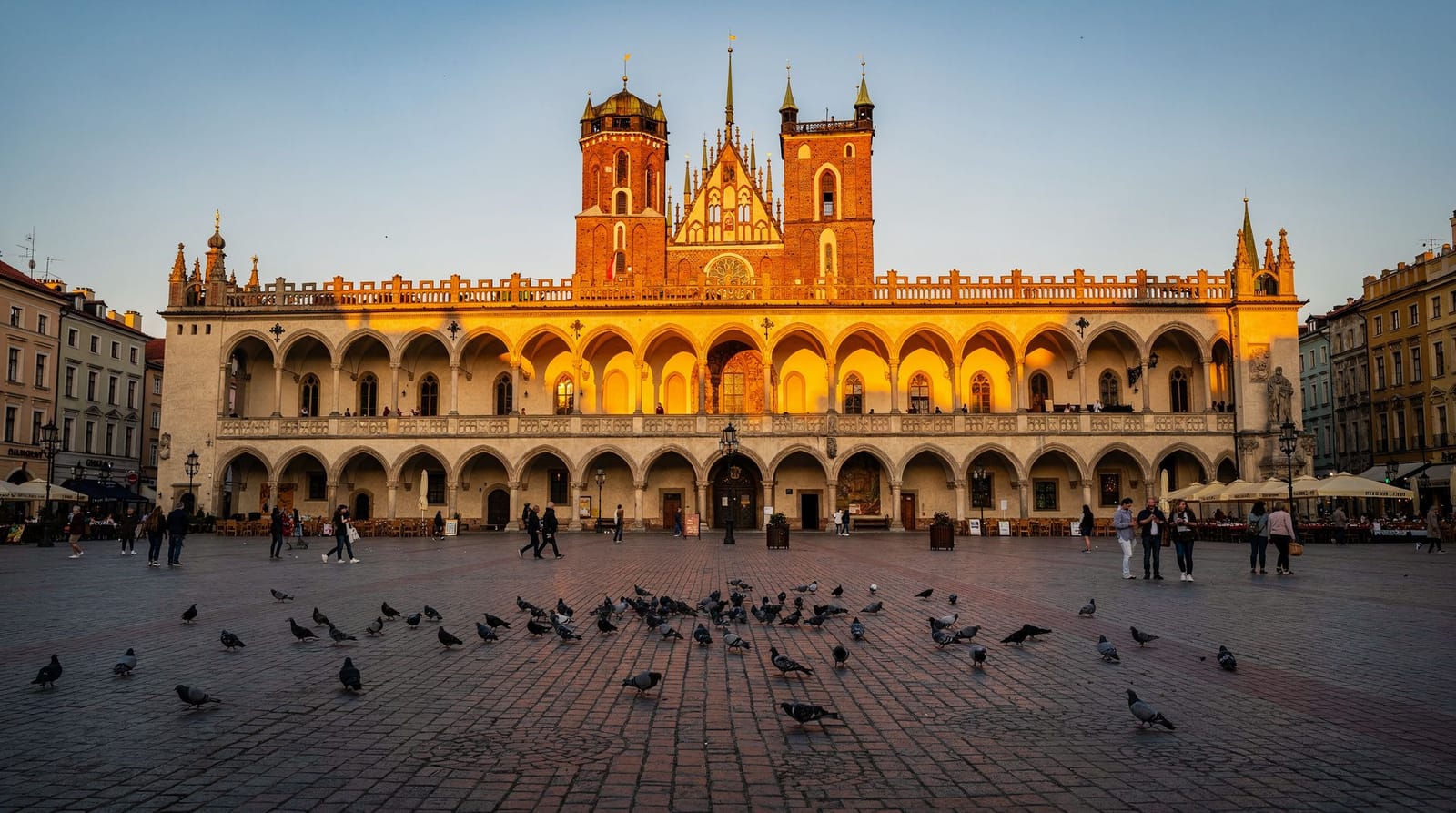
- Old Town (Stare Miasto) — Rynek Główny, Wawel Castle, St. Mary’s Basilica, Cloth Hall (Sukiennice). The tourist epicentre, deservedly.
- Kazimierz — Former Jewish quarter turned bohemian neighbourhood. Plac Nowy, synagogues, the best bars and cafés in the city.
- Podgórze — Across the Vistula from Kazimierz. The WWII ghetto district: Schindler’s Factory Museum, Ghetto Heroes Square, MOCAK contemporary art.
- Nowa Huta — 8 km east of the centre, a perfectly preserved socialist-realist town built in the 1950s. The most surprising neighbourhood in Poland.
How many days do you need?
3 days is the baseline for a first visit. Day 1: Old Town full immersion (Rynek, Wawel, St. Mary’s, Rynek Underground). Day 2: Kazimierz in the morning, Podgórze (Schindler’s Factory) in the afternoon. Day 3: one day trip — Wieliczka Salt Mine is the most accessible.
4–5 days is the sweet spot. It allows a morning in Nowa Huta, a full day at Auschwitz-Birkenau, and time to actually sit at a milk bar and not rush.
6+ days: add Zakopane and the Tatra Mountains (2 h south), and you have a genuinely varied trip combining city history with alpine scenery.
| Trip length | What fits | Best itinerary |
|---|---|---|
| 1 day | Old Town highlights only, no day trips | 1-day itinerary |
| 2 days | Old Town plus Kazimierz and Podgórze | 2-day itinerary |
| 3 days | City plus one day trip (Wieliczka) | 3-day itinerary |
| 4–5 days | City, Nowa Huta, Auschwitz-Birkenau, Wieliczka | 4-day or 5-day itinerary |
| 7 days | Full city plus Zakopane, Tatras and the wider region | 7-day Małopolska itinerary |
If you are travelling on a tight budget, the Kraków budget travel guide and the budget 3-day itinerary show how to see the essentials without overspending.
The four neighbourhoods
Old Town — the essential first day
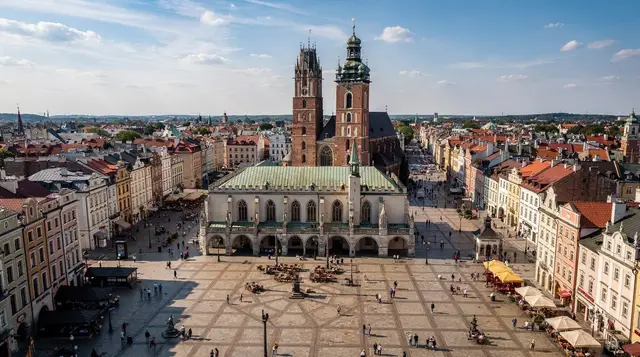
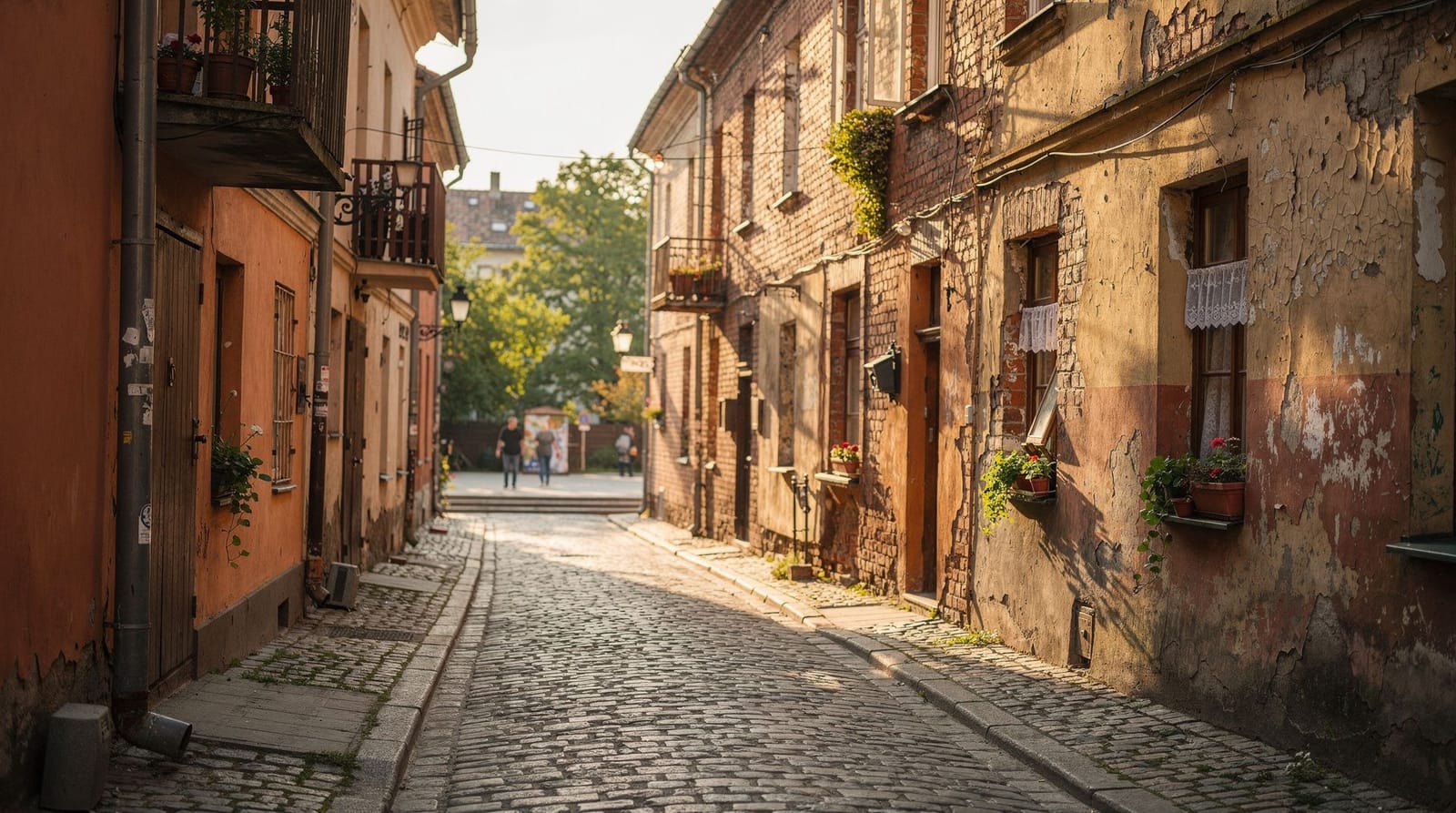
The Old Town is where most visitors spend the majority of their time. Rynek Główny (the main market square) is one of the largest medieval squares in Europe — 200 m × 200 m — and still functions as the social heart of the city. The bugle call (hejnał) sounds from St. Mary’s Basilica every hour, breaking off mid-phrase to commemorate a 13th-century trumpeter shot by a Tatar arrow.
Wawel Castle and Cathedral, on a limestone hill above the Vistula, is Poland’s most important royal complex. Allow at least two hours; book tickets in advance in summer. The Rynek Underground Museum (12 m below street level) reveals the medieval trade routes under the square — book online to avoid the queue.
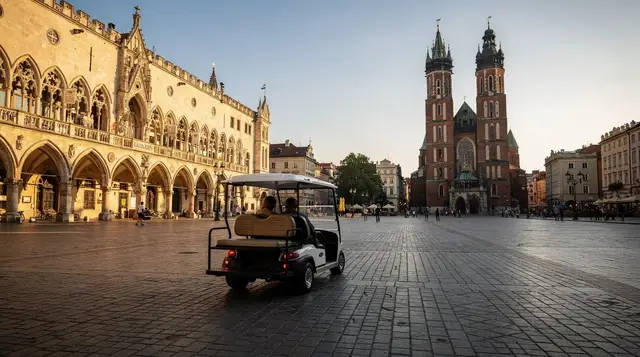
A good starting point is the popular Old Town guided walking tour, which covers the key landmarks with a local guide in around two hours. For a different pace, the guided golf cart tour of 4 districts with audioguide makes sense if you want to combine Old Town with Kazimierz and the other districts in a single morning.
Kazimierz — the Jewish quarter
Kazimierz was a separate town until the 19th century, and still feels like one. It was home to one of the largest Jewish communities in Central Europe before the war; today it is a mix of restored synagogues, independent restaurants, and a bar scene that keeps going well past midnight.
The neighbourhood requires half a day minimum. Spend the morning at the Galicia Jewish Museum and the Old Synagogue (the oldest in Poland), then lunch at Hala Targowa or the zapiekanki stands at Plac Nowy (open-face baguettes, around 12–15 PLN / ≈ €3). The Corpus Christi Basilica on the edge of the district is often overlooked by visitors focused only on the Jewish heritage — it is worth five minutes.
Podgórze — across the river
Podgórze is a 15-minute walk from Kazimierz across the Piłsudski Bridge. This is where the Nazis established the Jewish Ghetto in 1941; Schindler’s factory (now a superb museum on the occupation of Kraków) is here, along with Ghetto Heroes Square and the Eagle Pharmacy. MOCAK, the Museum of Contemporary Art, is a 5-minute walk from Schindler’s. Half a day covers both comfortably.
Nowa Huta — socialist utopia
Nowa Huta was designed in 1949 as a model communist city, complete with a steelworks, wide boulevards radiating from Plac Centralny, and no church (residents eventually built one anyway, after a 20-year battle with the authorities). The architecture is simultaneously oppressive and fascinating. Tram 4 from the centre takes around 25 minutes. Most visitors do a half-day trip; the Trabant communism tour is the most fun way to see it.
Day trips from Kraków
Wieliczka Salt Mine — the essential day trip
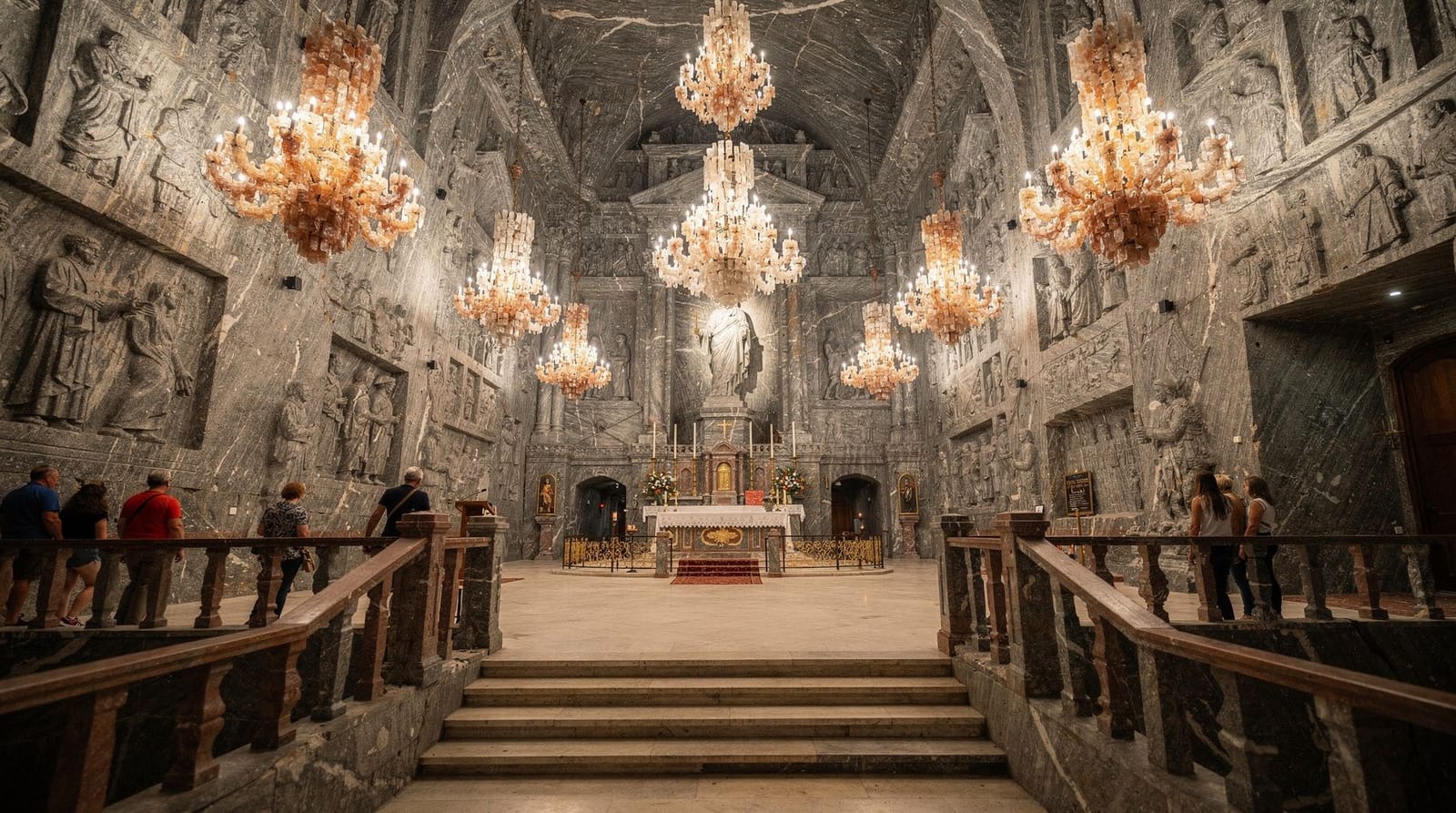
14 km from the city, 30 minutes by train or minivan. The mine is genuinely spectacular: 300 km of tunnels, carved chapels, an underground lake, a chandelier made of rock salt. Guided-only (no self-guided option), roughly 800 steps down, 135 m deep. Allow 2–3 hours inside. Book well in advance in summer — timed-entry tickets sell out. Our Wieliczka planning guide has the full logistics.
Auschwitz-Birkenau — the most important visit you will make
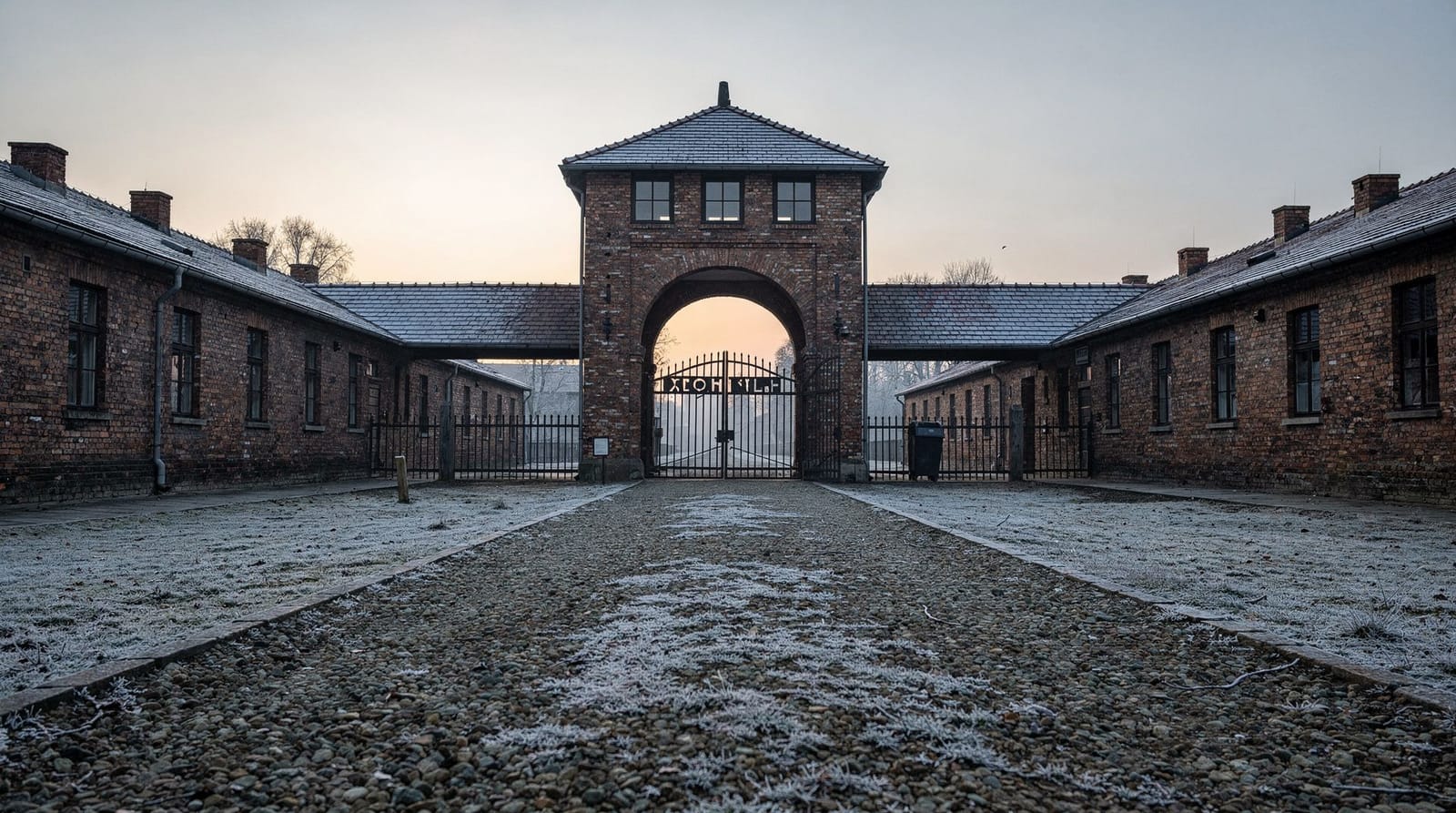
70 km from Kraków, 1.5 hours by bus or organised transport. Entry to the memorial is free but requires advance booking of a timed slot at visit.auschwitz.org. Between April and October a licensed guide is compulsory for some entry slots; book at least 2 months ahead for guided tours. This is not a tourist attraction in the usual sense — it is a place of remembrance. Read our full guide to visiting Auschwitz-Birkenau before you go.
Avoid the unofficial “Auschwitz tours” sold by street touts near the main square. These are not affiliated with the memorial, often involve unlicensed guides, and do not guarantee entry. Book directly at visit.auschwitz.org or through a licensed operator on GetYourGuide.
Zakopane — mountain escape
2 hours by bus or organised transport. Poland’s mountain capital sits at the foot of the High Tatras; in summer you can hike to Morskie Oko lake (8 km on foot from the car park at Palenica Białczańska). Best April–October for hiking; December–March for skiing. The historic centre is pedestrian-only.
Getting around Kraków
On foot: The Old Town, Kazimierz and Podgórze are all walkable if you do not mind a 20-minute walk between them. The Planty ring road is pleasant for strolling.
Tram: Kraków’s tram network is good. A single-ride ticket costs 6 PLN (≈ €1.40); a 90-minute ticket is 9 PLN (≈ €2.15). Validate on boarding. Tram 4 and 10 reach Nowa Huta.
Bolt / Uber: Widely available, significantly cheaper than official taxis. Use Bolt or Uber from the airport — official taxis outside the terminal sometimes charge 5–10× the app rate. A Bolt from the airport to the centre costs around 25–35 PLN (≈ €6–8).
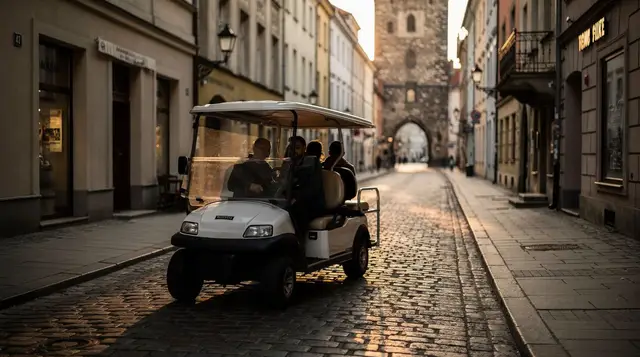
Golf cart: A quirky but genuinely useful option for covering Old Town quickly. The electric golf cart city tour is popular with families and anyone who wants commentary without a long walk.
Airport: Train from Kraków Główny (central station) to KRK Balice airport takes 20 minutes and costs 20 PLN (≈ €4.75). Trains run every 30 minutes. The Kraków airport to city centre guide covers all the transfer options in detail, and the getting around Kraków guide and public transport guide go deeper on tram routes, tickets and apps than fits here.
Where to eat — real options
Milk bars (bar mleczny): The communist-era subsidised canteens are now a Kraków institution. Milk Bar Tomasza (ul. Tomasza 24) and Bar Mleczny Pod Temidą (ul. Grodzka 43) serve pierogi, bigos and żurek for 15–30 PLN (≈ €4–7). No frills, excellent food, locals only.
Pierogarnia Mamma Mia (ul. Szewska 24): One of the best pierogi restaurants in the city. Expect to queue at lunch. Around 25–40 PLN (≈ €6–10) for a plate.
Rynek Główny restaurants: Beautiful setting, inflated prices, mediocre food. The tourist trap ratio here is high. Sit at a café for a coffee; eat elsewhere. A main course on the square costs 60–90 PLN (≈ €14–21); you can eat far better for half the price two streets away.
Kazimierz: Marchewka z Groszkiem (ul. Miodowa 14) does solid Polish cooking at honest prices. Alchemia and Mleczarnia are the bars to know if you are out late.
Hala Targowa (ul. Grzegórzecka 3): Kraków’s food hall. Market stalls, street food, local produce. Open daily. 10 minutes from Kazimierz.
For a proper overview of local eating, the traditional food tour with Old Town sightseeing combines eating with context about what you are actually eating. The full Kraków food guide covers regional dishes in depth, the best pierogi in Kraków guide ranks the specific restaurants worth queueing for, and the milk bars guide explains the etiquette of ordering at a bar mleczny if you have never used one before.
Where to stay
Old Town / Stare Miasto: Maximum convenience, premium price. Hotels on or near the Rynek start at around 350 PLN/night (≈ €83) for a three-star. Hotel Wawel (ul. Poselska) and Hotel Wit Stwosz are reliable mid-range options; Hotel Stary is the classic luxury choice.
Kazimierz: More atmosphere, better value, 15 minutes from the Old Town on foot. Increasingly popular with independent travellers. Hotel Kazimierz I and several well-reviewed boutique guesthouses are here.
Podgórze: Quiet, emerging neighbourhood. Good for travellers who want to be near Schindler’s Factory without Old Town noise. 20 minutes from the main square by tram.
Budget: Kraków has a dense hostel scene in the Old Town. Greg & Tom Beer House (ul. Pawia 12) is consistently recommended. Dormitories from around 60–90 PLN (≈ €14–21)/night.
Whichever neighbourhood you choose, book accommodation earlier for summer and the Christmas market period than you might for a similarly sized Western European city — Kraków’s popularity has grown faster than its hotel supply in the most central streets, and the best-value places on Rynek Główny and in Kazimierz sell out weeks ahead in peak months.
When to visit
April–May and September–October are the optimal months: temperatures of 15–22°C, 20–30% lower hotel prices than peak summer, and noticeably smaller crowds at Wawel and Wieliczka. Book Auschwitz 4–6 weeks ahead even in shoulder season.
June–August: Peak season. The Jewish Culture Festival in late June/early July is one of Europe’s best world music events. Wianki midsummer festival on the Vistula banks (late June) draws large crowds. Book everything 2–3 months ahead.
Winter (December–March): Cold (-4 to +5°C), but the Christmas markets on Rynek Główny (late November to early January) are genuinely beautiful and less commercialised than Vienna or Prague. Hotel prices drop significantly. Wieliczka and Auschwitz operate year-round; the Tatras are ski season.
Practical information
Visa: Poland is Schengen. US, UK, Canadian, Australian and New Zealand citizens enter without a visa for up to 90 days. ETIAS (EU travel authorisation) is expected to launch in late 2026 — not yet required as of mid-2026.
Currency: Polish złoty (PLN). Do not use euro — shops and restaurants charge a poor exchange rate if they accept it at all. ATMs (bankomats) are plentiful; avoid those operated by Euronet (poor rates). Cartes acceptées partout; carry some cash for markets and smaller milk bars.
Language: Polish. English is widely spoken in tourist areas, hotels and restaurants. Outside the centre, French and German are more useful than English.
Safety: Kraków is very safe by European standards. Standard city precautions apply. The only consistent scam targets tourists: unofficial taxis outside the station and airport, and fake amber jewellery in the Cloth Hall. The is Kraków safe guide and Kraków scams guide cover both in more detail, and the money and currency guide explains ATM fees and card acceptance more fully than the summary above. If you need visa specifics beyond the Schengen basics, the Poland visa and entry requirements guide has the current rules by nationality.
For first-time visitors who want a single starting point that ties all of this together, the Kraków for first-timers guide is the best next read.
Frequently asked questions about Kraków
How many days is enough for Kraków?
Three days covers the city itself adequately — Old Town on day 1, Kazimierz and Podgórze on day 2, a day trip on day 3. Four to five days is the sweet spot if you want to include Nowa Huta, Auschwitz-Birkenau and Wieliczka without feeling rushed.
Is Kraków expensive?
By Western European standards, no. A sit-down lunch costs 25–40 PLN (≈ €6–10); a beer in Kazimierz runs 10–15 PLN (≈ €2.40–3.50). Accommodation is the biggest variable — budget for 150–300 PLN (≈ €36–71) per person per night for a comfortable mid-range hotel.
What is the best day trip from Kraków?
Wieliczka Salt Mine (14 km, 30 min by tram) is the most impressive and logistically straightforward. Auschwitz-Birkenau (70 km, 1.5 h) is the most historically significant. Zakopane (100 km, 2 h) is the best choice if you want mountain scenery. You can combine Wieliczka and Auschwitz in a single day, but it makes for an exhausting experience — better to give each its own day.
Is the Old Town walkable?
Yes — the historic core is compact and almost entirely pedestrian. From the Barbican in the north to Wawel Castle in the south is around 1 km on foot. The entire Old Town circuit, including Planty park, is comfortably walkable without public transport.
Do I need to book Auschwitz in advance?
Yes, always. Entry is free but timed tickets must be reserved at visit.auschwitz.org. Between April and October, some entry slots require a licensed guided tour, which must be booked separately at least 2 months in advance. Other slots allow independent visits (no guide required), but entry cards still need advance booking. Check the current slot rules on visit.auschwitz.org.
Top experiences
Bookable activities with verified prices and instant confirmation on GetYourGuide.