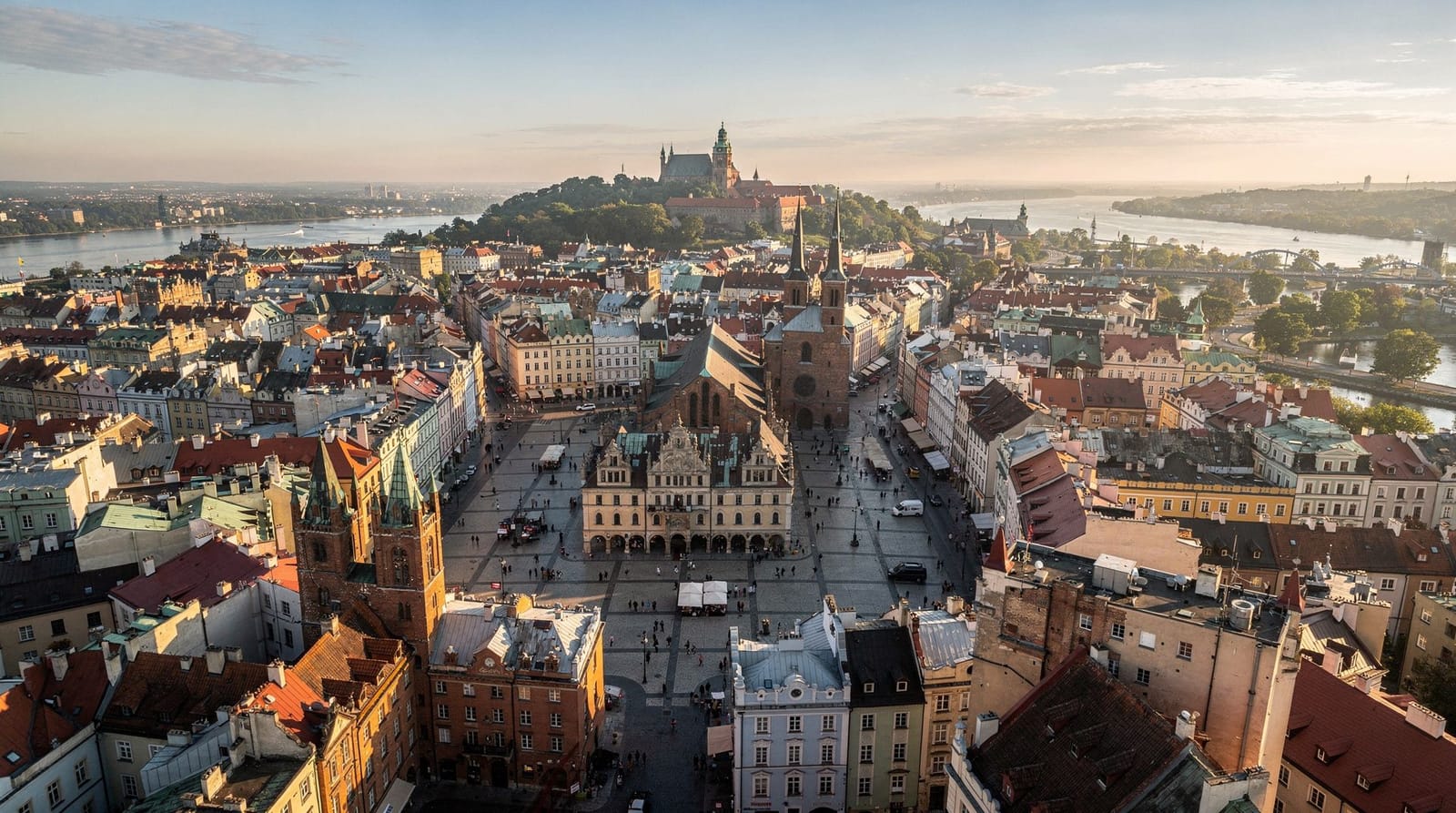
Zakopane: Poland's mountain capital and gateway to the Tatras
Poland's mountain capital at the foot of the Tatras, 2 hours from Kraków. Gubałówka funicular, oscypek cheese, thermal baths, and highland góral culture.
Krakow: Zakopane, funicular, cheese & highland day trip
Duration: 9h
Quick facts
- Distance from Kraków
- 100 km south (about 2 hours by car or bus)
- Altitude
- 838 m — Poland's highest town
- Don't miss
- Gubałówka funicular, Krupówki promenade, oscypek from a góral vendor
- Winter season
- December–March (skiing, Kasprowy Wierch)
- Thermal baths
- Chochołowskie Termy and Termy Podhalańskie open year-round
Poland’s mountain capital
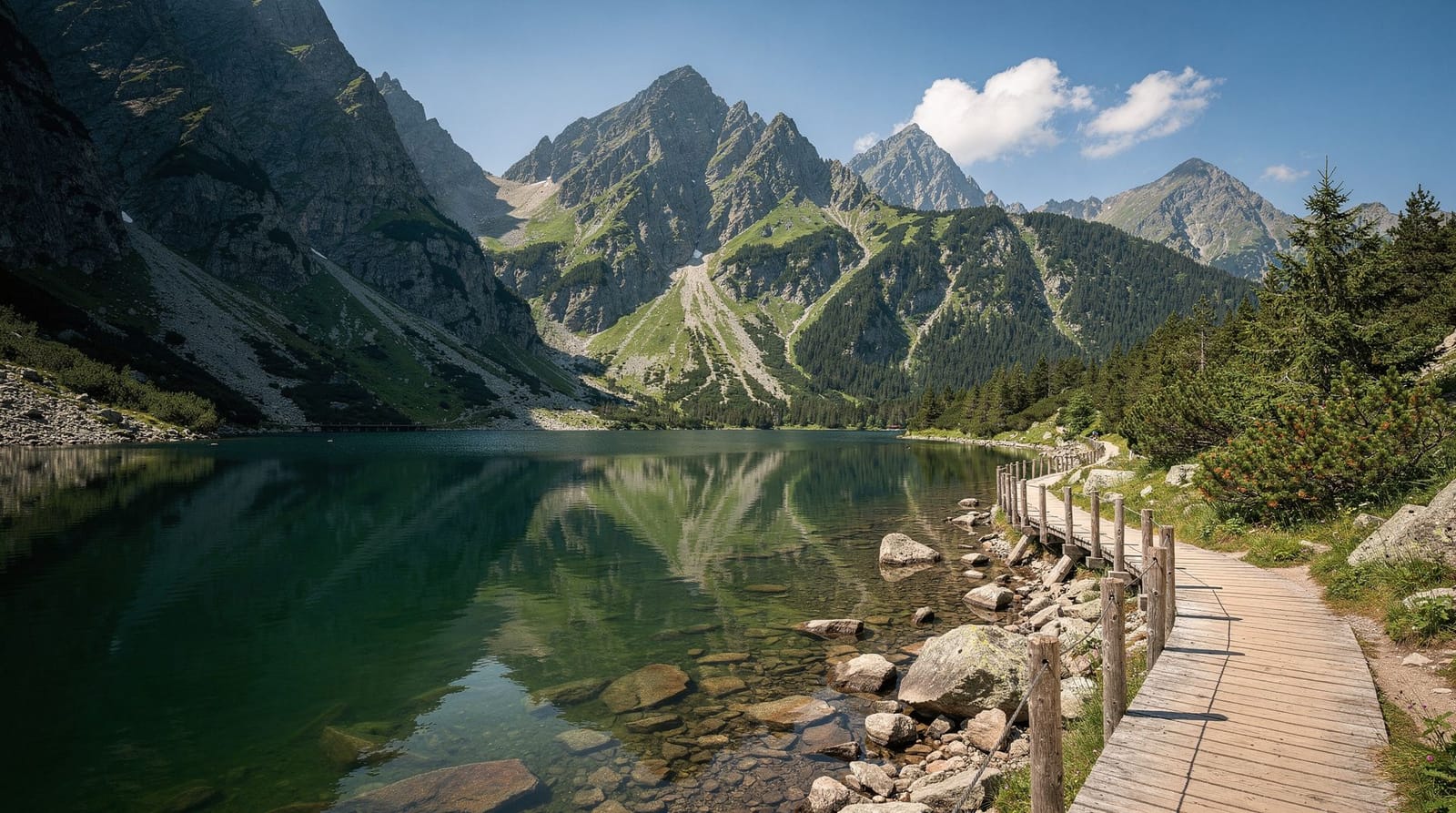
Zakopane is to Poles what Chamonix is to the French or Cortina d’Ampezzo to Italians: the mountain town where the whole country heads when it needs altitude. Sitting at 838 metres in the foothills of the High Tatras, it is the highest town in Poland and the undisputed capital of góral (highlander) culture. For international visitors arriving via Kraków, it is the primary gateway to the Tatra Mountains and the starting point for Morskie Oko lake excursions.
| Where | 100 km south of Kraków, foot of the High Tatras |
| Cost | Funicular 37–49 PLN; Kasprowy cable car 99–165 PLN (high season), 129 PLN (low season); thermal baths: check official prices |
| Time needed | Day trip possible; 1–2 nights better for hiking or Morskie Oko |
| Getting there | Car or PKS/Flixbus (~2–2.5 hrs), or an organised day trip |
| Best time | May–June and September–October for fewer crowds |
The journey from Kraków takes about two hours by car on the S7 motorway, or roughly two and a half hours by the regular PKS bus from the main coach station (tickets 20–35 PLN, ~5–8 €). The frequency is good — buses run roughly every hour during the day — and the bus terminal in Zakopane is central. Organised day-trip coaches make the journey comfortable and include an English-speaking guide who provides context en route.
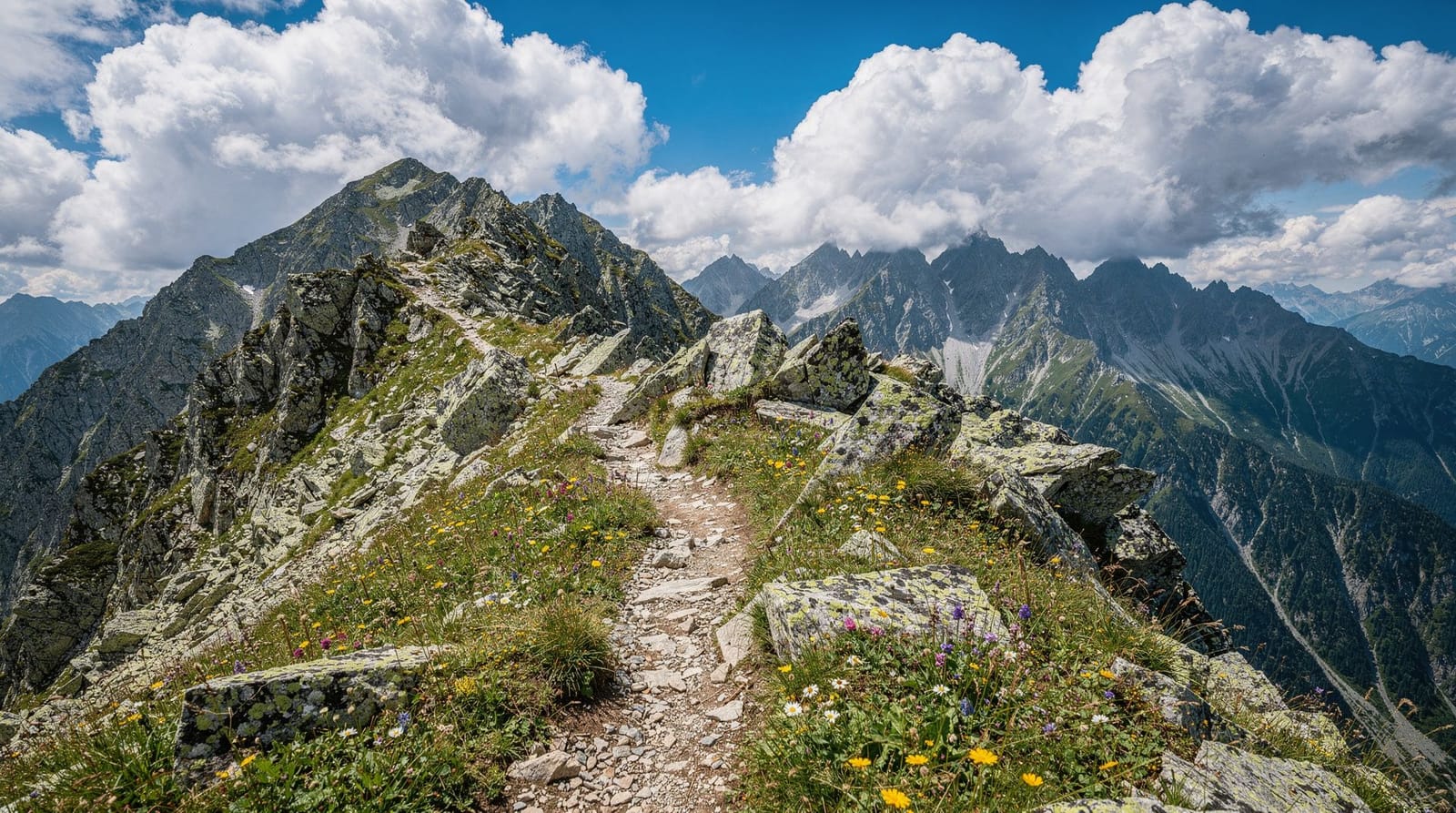
Zakopane is not a subtle place. Krupówki, the main pedestrian street, is a full-on tourist promenade of restaurants, souvenir stalls, wool shops, and smoked-cheese vendors. In peak season — July and August and the Christmas–New Year week — it is extraordinarily busy. But step two streets in either direction and you are in wooden-villa residential Zakopane, quieter and more characterful. And behind the town, the Tatras rise to 2,499 metres: serious mountain terrain with a serious hiking culture.
Krupówki and the town centre
Krupówki runs north–south through the heart of Zakopane for about a kilometre, lined with restaurants, cafés, folk-craft shops, and góral cheese vendors. It is worth one stroll to absorb the atmosphere and buy oscypek (smoked sheep’s cheese made to a traditional recipe — see below), but repeat visits are unnecessary. Prices on Krupówki are higher than elsewhere in the country; a góralski obiad (highlander lunch) at a restaurant here will cost 50–80 PLN (~12–19 €) per person, versus 35–50 PLN (~8–12 €) at a less prominent spot on a side street.
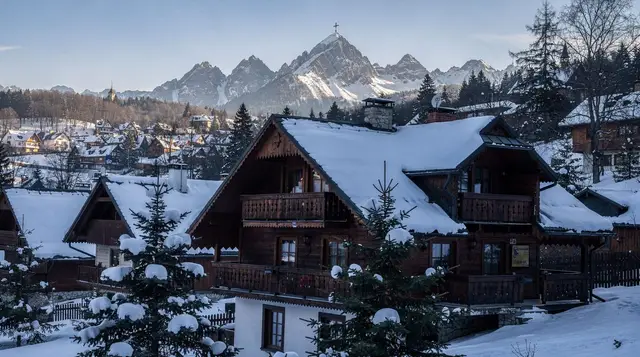
The Stary Cmentarz (Old Cemetery) at the southern end of Krupówki is one of the most beautiful wooden churchyards in Poland, with carved larch headstones marking the graves of artists, writers, and local highland families who shaped Zakopane’s culture in the late nineteenth and early twentieth centuries. The architect Stanisław Witkiewicz — father of the more famous artist Stanisław Ignacy Witkiewicz — is buried here; he was the inventor of the Zakopane Style, a distinctive vernacular architecture that blended highland folk motifs with Art Nouveau sensibility. You can see his influence everywhere in the older wooden villas.
The Tatra Museum (Muzeum Tatrzańskie) on Krupówki is a solid collection covering the ethnography, natural history, and art history of the Podhale region. Entry is around 26–34 PLN (~6.20–8.10 €) for the main building, depending on whether temporary exhibitions are included; opening days vary by season, so check the museum’s official website.
Gubałówka funicular
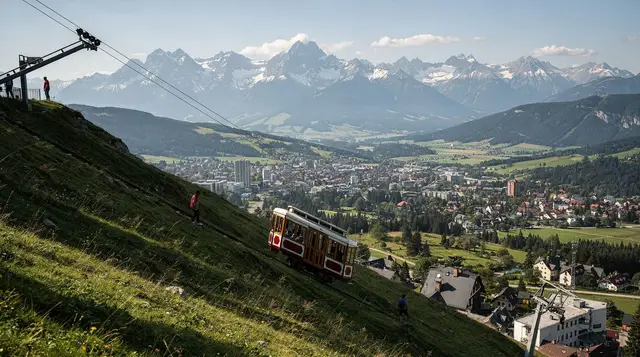
The most popular activity in Zakopane is the Gubałówka funicular (kolejka linowa), which rises 139 metres in three minutes to the Gubałówka ridge at 1,123 metres above sea level. The ridge offers a panoramic view of Zakopane spread across the valley below, with the Tatras forming a wall to the south — one of the most photographed views in the Polish mountains.
At the top, a wide grassy promenade runs along the ridge with vendor stalls, an outdoor stage, a small ski run (in winter), and several restaurants serving traditional góral food. The Oscypek Góralski restaurant at the summit is a reliable option for a proper highland lunch: bigos (hunter’s stew), kiełbasa z grilla (grilled sausage), and żurek with egg in a bread bowl, at around 40–60 PLN (~9.50–14 €) per person.
Funicular tickets cost 37–49 PLN (~8.80–11.70 €) for the return trip, depending on season and whether you buy online or at the ticket office. The funicular runs from early morning to late evening throughout the year, with a brief maintenance closure in November. Queues in summer can be long — arrive before 09:00 or after 17:00.
Zakopane, funicular, cheese and highlands day trip from KrakówOscypek: the smoked cheese you must try
Oscypek is a hard smoked cheese made from sheep’s milk (or a blend of sheep’s and cow’s milk) in the Podhale region to a recipe protected by EU geographical indication. It is made in distinctive spindle shapes and has a salty, slightly smoky flavour quite unlike any industrial Polish cheese. Góral shepherds have been making it on the mountain pastures (hale) for centuries.
Buy it directly from vendors on Krupówki or at the Gubałówka summit — look for the spindle shape and the characteristic geometric patterns imprinted on the surface. A standard piece weighing about 200 g costs 15–20 PLN (~3.50–4.70 €). Try it plain, or ask for it grilled (oscypek z rusztu) with lingonberry jam — the combination of salty smoke and sweet berry is a Podhale classic that costs around 12–15 PLN (~2.80–3.60 €) from a street vendor.
Avoid the pale, soft “oscypek” sold in pre-packaged form in supermarkets in Kraków — it bears little resemblance to the real thing from Zakopane.
Kasprowy Wierch cable car
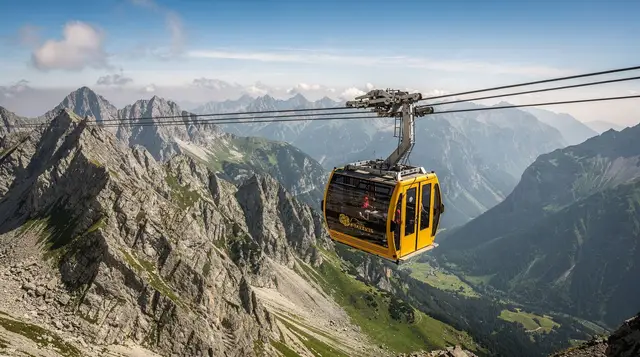
For access to genuine high-mountain terrain without technical hiking, the Kasprowy Wierch cable car (Kolej linowa na Kasprowy Wierch) is the main attraction. It departs from Kuźnice, 3 km south of Zakopane, and rises to the summit ridge at 1,987 metres — above the treeline and into the zone of permanent winds, alpine meadows, and in winter, serious snowfields.
From the top you can walk along the ridge to the east or west, look into Slovakia (the border runs along the Kasprowy Wierch summit), and in winter ski the slopes served by two chairlifts. The cable car ride itself — two stages, with a change at the Myślenickie Turnie station — takes about 20 minutes and offers spectacular views.
Return tickets cost 99–165 PLN (~23.50–39 €) in high season, depending on the time, and 129 PLN (~30.70 €) in low season (1 October–18 December 2026). During peak season (July, August, weekends in summer and winter) tickets sell out — book online in advance via the PKL website. The cable car does not operate during thunderstorms; check forecasts before going.
Thermal baths
Zakopane’s thermal baths have become a major attraction in their own right, drawing visitors who want relaxation rather than strenuous hiking. The main facilities:
Chochołowskie Termy (in Chochołów, 20 km west of Zakopane): the largest and most elaborate complex, with a dozen outdoor and indoor pools, slides, and saunas fed by natural thermal springs at 28–38 °C. Check current ticket prices on the official Chochołowskie Termy website. Open year-round, particularly magical in winter when the outdoor pools steam against a snowy landscape.
Termy Podhalańskie (in Szaflary, 15 km north of Zakopane): slightly smaller but also reliable, with good facilities and competitive pricing. Check current ticket prices on the official website.
Both complexes are accessible by car from Zakopane. Organised tours from Kraków often combine the thermal baths with a visit to Zakopane town and the funicular.
Zakopane and thermal baths — full-day trip from KrakówGóral culture and Zakopane Style architecture
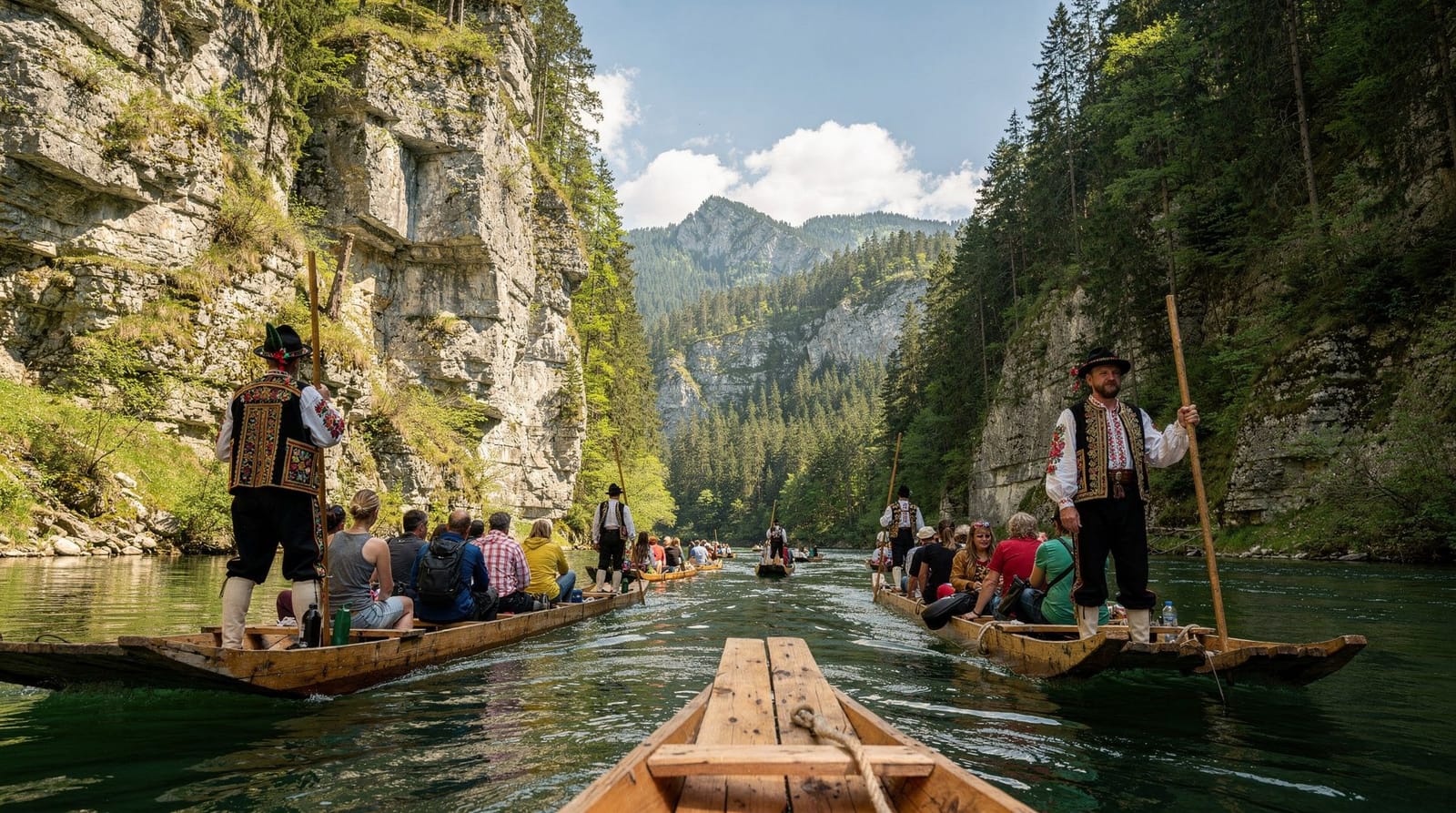
The Podhale highlander culture is a living tradition, not a museum exhibit. Górale (highlanders) maintain distinct folk music (the characteristic fiddle and bass sound of a góralska kapela), folk costume (the white loden trousers with black embroidery, embroidered waistcoats, broad-brimmed hats), and architecture. In the older parts of Zakopane — the streets around Kościeliska and Chałubińskiego — wooden villas built in the Zakopane Style between 1890 and 1939 survive in varying states of preservation. The best examples include the Villa Koliba (now a branch of the Tatra Museum), the Villa Oksza, and the Church of the Holy Family on Krupówki.
The region’s folk music is best heard at the OSP Podhale concerts held in summer, or during the Sabałowe Bajania folklore festival in August at nearby Bukowina Tatrzańska.
Private tours from Kraków
For visitors who want to see more than the standard funicular-and-cheese circuit, a private full-day tour allows you to customise the itinerary — adding the cable car, a valley walk, or a cheese-making demonstration at a working mountain farm.
Zakopane and Gubałówka cable car — private day tour from KrakówPractical logistics
From Kraków by car: S7 south to Rabka-Zdrój, then DK47 to Zakopane. Allow two hours in normal traffic; budget 2.5 hours on busy summer weekends. Parking in Zakopane itself is difficult — use the Park & Ride lots at the northern edge of town and walk or take a shuttle to the centre.
By bus: PKS/Flixbus from Kraków main bus station, approximately every 30–60 minutes. Journey time 2–2.5 hours. The Zakopane bus terminal is a 5-minute walk from Krupówki.
Honest note: Zakopane is genuinely crowded in July, August, and the New Year period. If you visit in those windows, book accommodation and cable car tickets well in advance. The experience in May, June, September, or October is significantly more pleasant: fewer people, cooler temperatures for hiking, and the landscape at its most photogenic.
Seasonal guide
| Season | Highlights | Watch out for |
|---|---|---|
| Winter (Dec–Mar) | Skiing, thermal baths in snow, Christmas market | Extreme crowds at New Year; road conditions on S7 |
| Spring (Apr–May) | Wildflowers, quiet trails, thermal baths | Tatras may have snow at altitude; some lifts closed |
| Summer (Jun–Aug) | Full hiking season, cable car, Morskie Oko | Peak crowds July–Aug; book everything early |
| Autumn (Sep–Oct) | Best mountain colours, thin crowds | Shorter days; Kasprowy cable car often winds-closed |
Planning your time around Zakopane
Zakopane rewards a little preparation. If you are still deciding how it fits into a wider trip, the Kraków and Zakopane Tatras itinerary shows how to combine the city and the mountains, while the Zakopane from Kraków guide goes deeper on transport options. For a gentler day, the Chochołowskie thermal baths guide and the broader Zakopane thermal baths guide help you choose a pool and plan your session.
If the mountains are the main draw, the Gubałówka funicular guide and the Kasprowy Wierch cable car guide explain how each ride works and when it suits you best. Walkers who prefer something less crowded than the lake trail can look at the Kościeliska Valley hike or the easy Tatra hikes. And for a taste of highland cooking beyond the cheese stalls, the oscypek and highlander food guide tells you what to look for.
Zakopane day trip or tour vs DIY
Deciding between a guided day trip and organising your own transport comes down to how much of the day you want to spend on logistics. Driving or taking the bus yourself is cheaper and gives full flexibility on timing, but parking in Zakopane is genuinely difficult in peak season and public transport connections to outlying spots like the thermal baths or Kuźnice require a taxi or additional bus. A packaged tour — like the Tatra Mountains hiking and thermal baths combined day trip — bundles transport, timing, and often skip-the-queue cable car access, which matters most in July and August. For a first visit with limited time, a guided option removes the single biggest source of wasted time: finding parking and figuring out which bus goes where.
Winter skiing basics
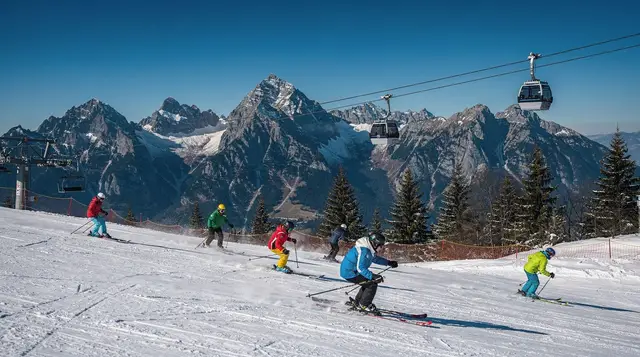
Zakopane and the surrounding Podhale region form Poland’s main ski area, though it is modest by Alpine standards. The runs at Kasprowy Wierch (served by the cable car and chairlifts) suit intermediate and advanced skiers, while gentler beginner slopes at Gubałówka, Butorowy Wierch, and Harenda are aimed at families and first-timers. Ski passes, rentals, and lessons are all available locally and considerably cheaper than in Western Europe. If you are weighing the two approaches in more depth, the Zakopane tour vs DIY guide compares them side by side. The Zakopane winter skiing guide covers the practicalities in more detail, and the Zakopane winter escape story gives a first-person sense of what a winter visit actually feels like.
Frequently asked questions about Zakopane
How long does it take to reach Zakopane from Kraków?
By car on the S7 motorway it takes approximately two hours in normal traffic, potentially 2.5–3 hours on busy summer weekends or during ski season. PKS buses from Kraków’s main bus station also take about two to two and a half hours and run regularly. Organised day trips depart from Kraków hotels.
Do I need to book the Kasprowy Wierch cable car in advance?
Yes, in peak season (July, August, school holidays in winter). Cable car tickets sell out online days in advance during these periods. Purchase via the PKL (Polskie Koleje Linowe) website. Outside peak periods, tickets are usually available on the day but joining the queue early is still advisable.
What is the best way to buy authentic oscypek?
Buy directly from a góral vendor on Krupówki or at the Gubałówka summit. Look for the characteristic spindle shape with geometric imprint patterns. A genuine oscypek weighing about 200 g costs 15–20 PLN. Try it grilled with lingonberry jam (oscypek z rusztu) for the full Podhale experience. Avoid pre-packaged versions in supermarkets.
Can I visit Zakopane as a day trip from Kraków?
Yes, and many people do. A focused day trip gives you time for the funicular, Krupówki, and either the cable car or a thermal bath session. However, Zakopane also makes an excellent base for overnight stays if you want to hike in the Tatra Mountains or visit Morskie Oko — the lake walk is best done with an early start from Zakopane rather than adding two hours of driving from Kraków each way.
Is Zakopane suitable for families with children?
Absolutely. The Gubałówka funicular is exciting for children of all ages; the thermal baths have slides and splash areas; and a mountain bike rental or horse-cart ride in the valley adds variety. For families visiting in winter, the gentle ski runs at Gubałówka and Butorowy Wierch are appropriate for beginners and children.
Is Zakopane worth visiting if I’ve already done the Tatra Mountains?
Yes — the Tatra Mountains and Zakopane town are complementary rather than overlapping. The Tatras are about hiking and alpine scenery; Zakopane adds góral culture, the Gubałówka funicular, Krupówki, and the thermal baths, none of which you get from a mountain hike alone. Most itineraries treat them as a single combined day or overnight rather than separate trips.
Top experiences
Bookable activities with verified prices and instant confirmation on GetYourGuide.