Old Town (Stare Miasto) — Kraków's medieval heart
Rynek Główny, Wawel Castle, St. Mary's Basilica, the Cloth Hall and Rynek Underground: a practical guide to Kraków's Old Town.
Krakow: Old Town guided walking tour
Duration: 3h
Quick facts
- Area
- ~1 km² within the Planty ring
- Time needed
- Full day (minimum); 1.5 days to go deeper
- Getting there
- 10-min walk from Kraków Główny station
- Must book ahead
- Wawel Castle (summer), Rynek Underground
- Ticket tip
- Wawel Castle sells out; buy online 1–2 weeks ahead
The heart of a living medieval city
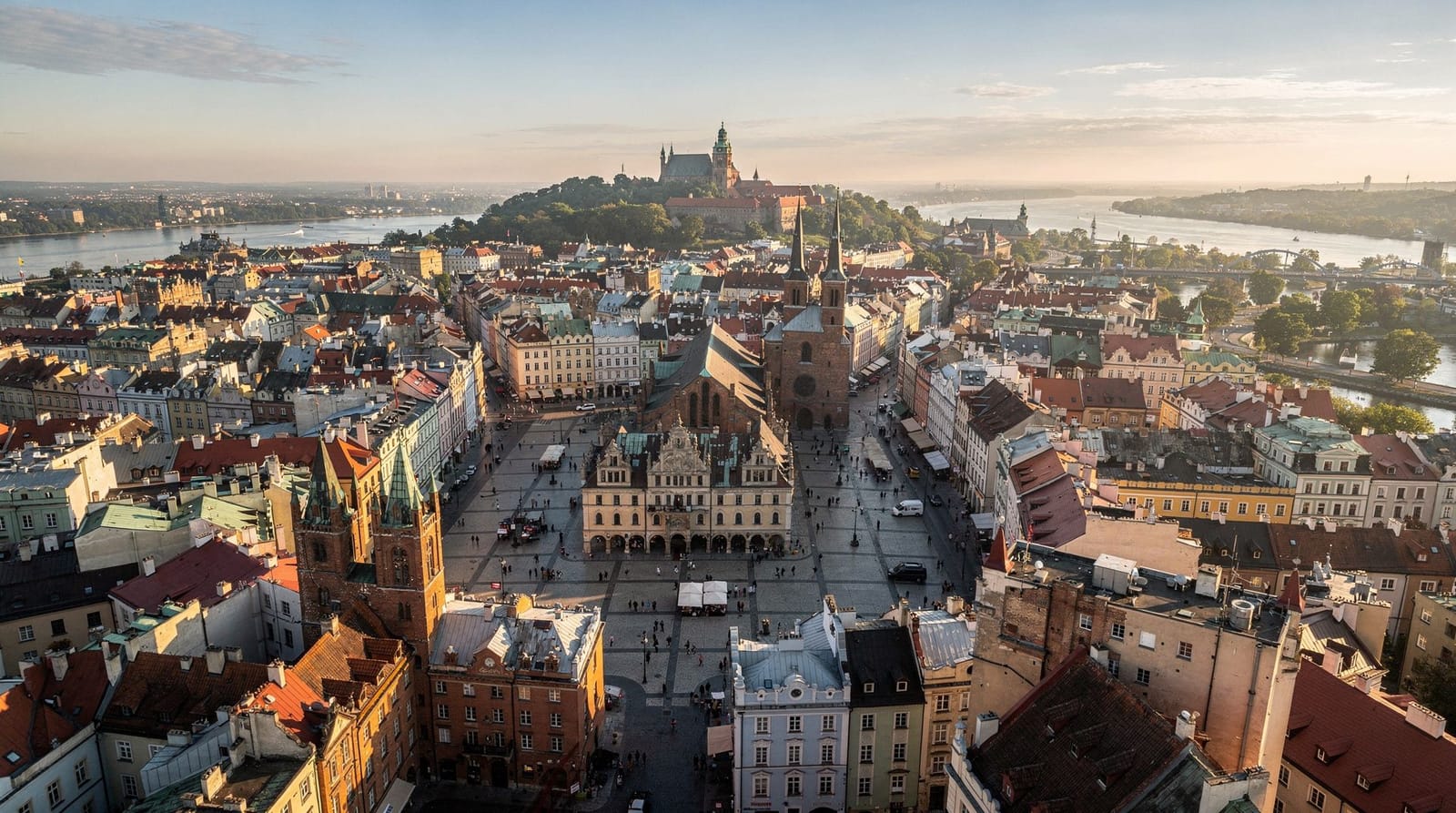
Kraków’s Old Town is one of the best-preserved medieval urban cores in Central Europe — and crucially, it was never a reconstruction. The city escaped significant wartime destruction, which means the buildings you see on Rynek Główny and along the Royal Route are genuinely old, not post-war facsimiles.
That authenticity has a price: in peak summer, the Old Town is crowded. This guide tells you which sights to book in advance, which can be done without a ticket, and how to experience the neighbourhood on your own terms rather than being swept along by tour groups.
| Where | Within the Planty ring, 10-min walk from Kraków Główny station |
| Cost | Free to walk; individual sights 15–95 PLN depending on ticket |
| Time needed | 7–8 hours minimum for a full day, 1.5 days to go deeper |
| Getting there | Walk from the main station, or see the getting around Kraków guide |
| Best time | Early morning (before 9:00) or shoulder season for fewer crowds |
Start with a good orientation. The Old Town guided walking tour (around 2 hours, covers all the major landmarks) is the most efficient way to get your bearings before exploring independently. Alternatively, the Wawel Castle skip-the-line guided tour is a sensible choice if you arrive in summer when queues form by 9:00.
Rynek Główny — Europe’s great medieval square
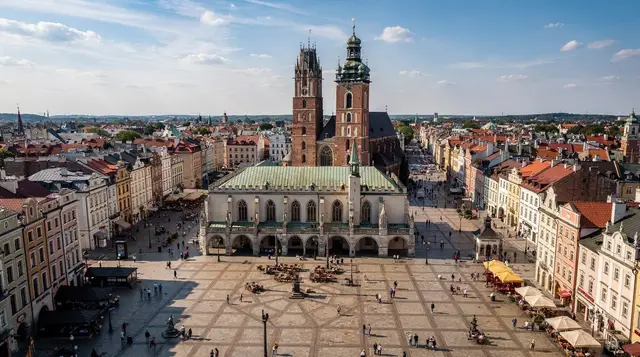
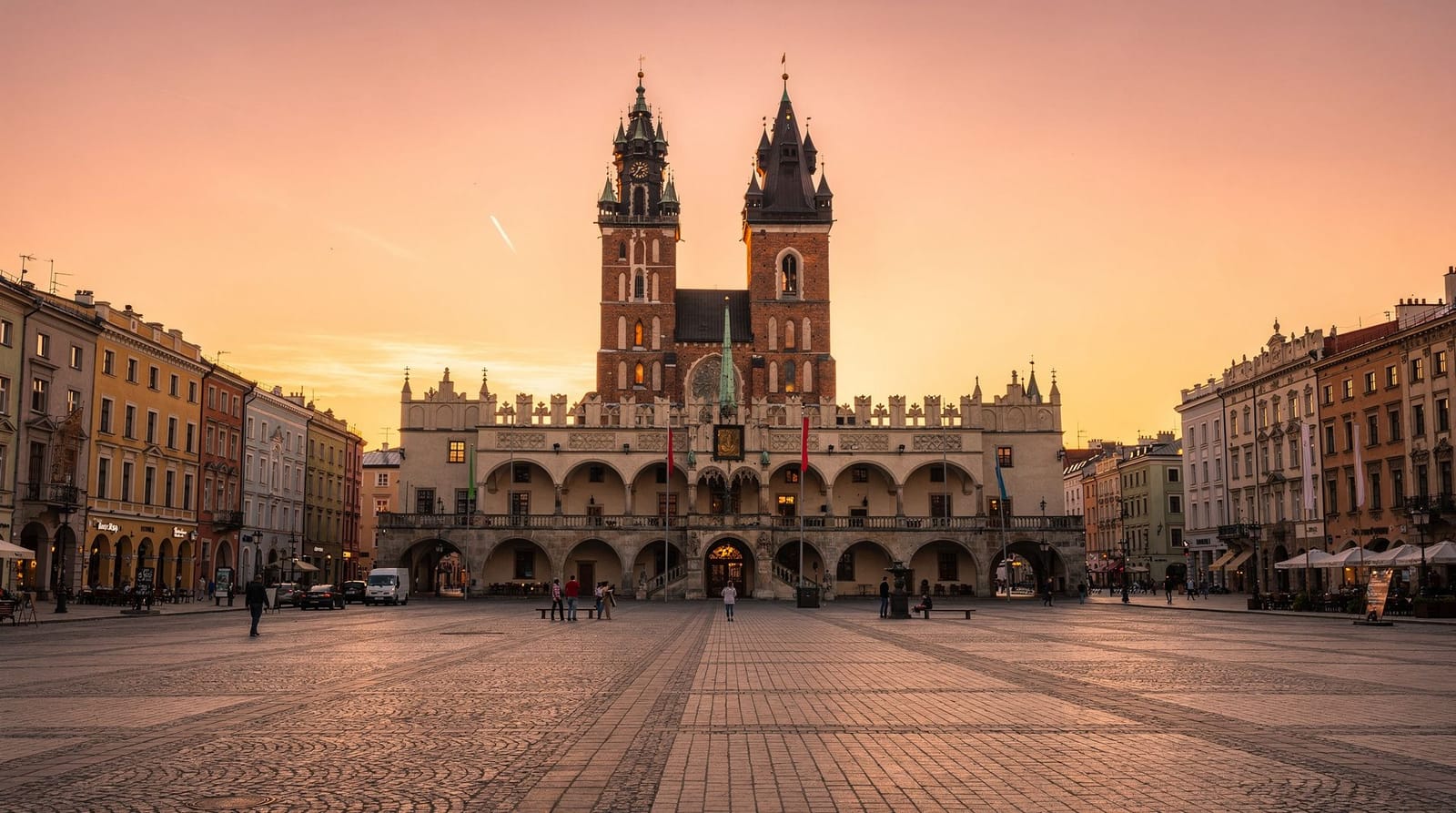
Rynek Główny is 200 m × 200 m, the largest medieval market square on the continent. It has functioned continuously as the centre of Kraków’s public life since 1257. The pigeons, flower stalls, horse-drawn carriages and outdoor café tables give it a permanent sense of event.
What is free: Walking around the square, entering the Cloth Hall (ground floor market stalls), watching the hourly hejnał trumpet call from St. Mary’s Basilica (every hour on the hour; the bugle breaks off at the same note each time, commemorating a medieval trumpeter killed mid-call by a Tatar arrow). The Town Hall Tower — all that remains of the 15th-century town hall — can be climbed for 22 PLN (≈ €5.20).
The tourist trap: The restaurants with terrace seating directly on the square charge 2–3× the city average. A main course here runs 60–90 PLN (≈ €14–21) for food that is no better than what you will get two streets away for 30–45 PLN (≈ €7–11). Have a coffee on the square; eat elsewhere.
Honest tip on the horse carriages: Kraków’s horse-drawn carriages are atmospheric but expensive (around 150–300 PLN / ≈ €36–71 for 30 minutes) and the horses often work in heat without adequate rest. If the welfare aspect concerns you, the electric golf cart city tour covers the same ground with zero animal welfare issues.
St. Mary’s Basilica (Kościół Mariacki)
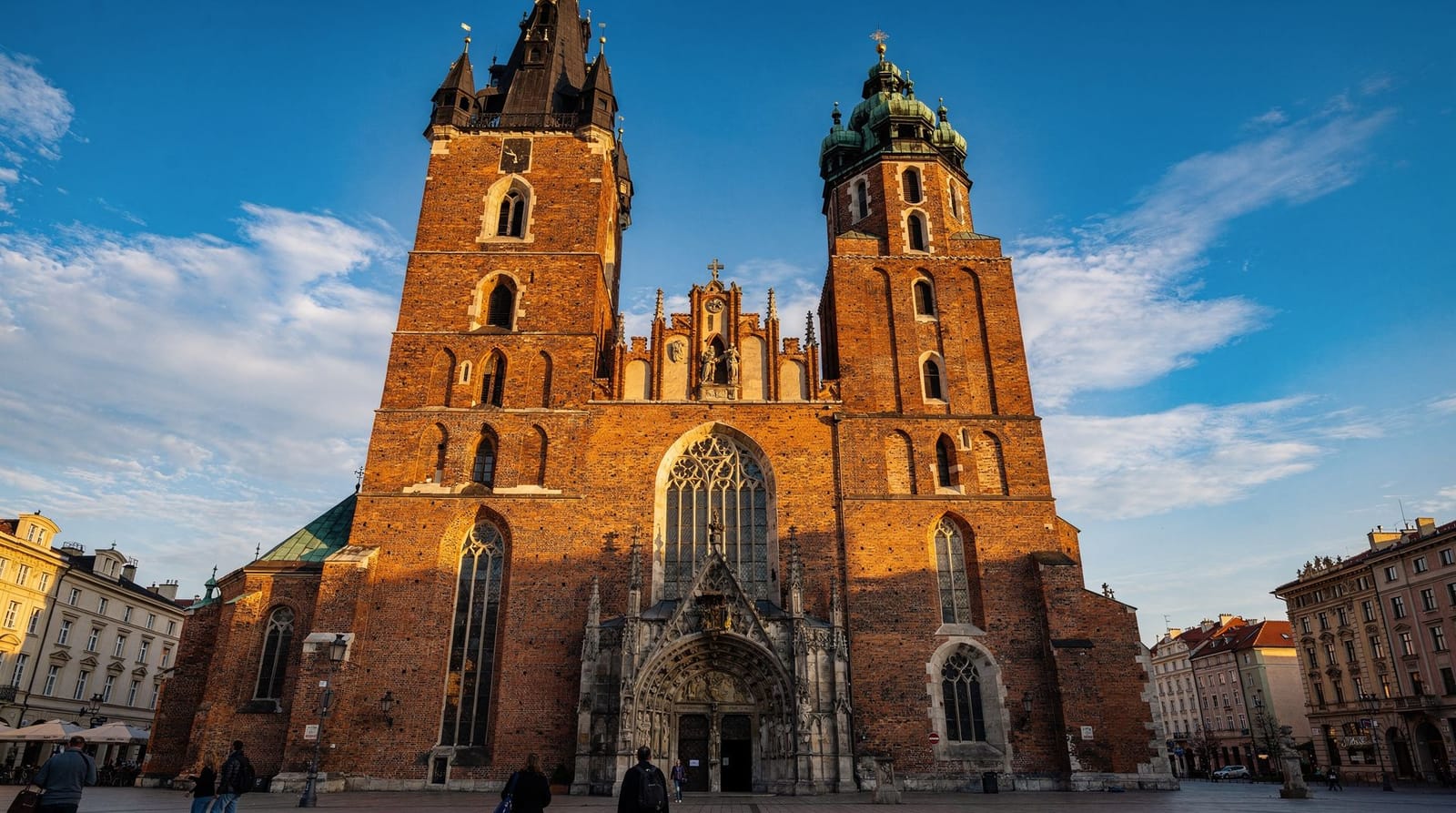
The twin towers of St. Mary’s Basilica dominate the northeast corner of the square. The taller tower (81 m) belongs to the city; the shorter one to the parish. Inside is Veit Stoss’s carved wooden altarpiece — completed in 1489, 13 m high, considered the finest example of late-Gothic wood carving in Central Europe. When the altar panels are opened (usually at 11:50), the effect is extraordinary.
Entry: The basilica is an active place of worship. Entry costs 20 PLN (≈ €4.80) for tourists (reduced 10 PLN); tickets are sold at the reception point at 7 Plac Mariacki, and the basilica is open Monday–Saturday 11:30–18:00 and Sunday 14:00–18:00. Tourists enter from the south side. If you would rather see the basilica as part of a wider visit, the Old Town, St. Mary’s Church and Rynek Underground tour combines it with the square and the museum below, and is worth booking online in advance.
Visit timing: The basilica is most atmospheric soon after it opens (11:30 Monday–Saturday, 14:00 Sunday), before group tours arrive. The interior is dim and lit by stained glass — avoid midday when flash photography is most intrusive.
Wawel Castle and Cathedral
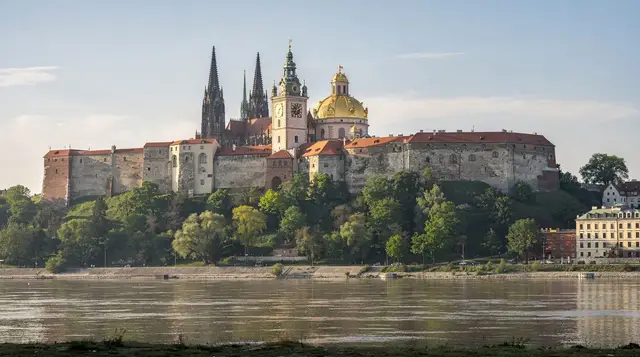
Wawel is the single most important site in Poland. The limestone hill above the Vistula has been the seat of Polish kings, the location of their coronation and burial church (the Cathedral), and the symbol of Polish national identity for a millennium. Even visitors with little interest in medieval history will find the scale and setting genuinely moving.
The Castle complex: Multiple tickets are needed for different sections — the State Rooms, Royal Private Apartments, Crown Treasury and Armoury, Dragon’s Den, and the Oriental Collection are all ticketed separately. Individual tickets cost 47–57 PLN (≈ €11–14), and the combined ticket for the first and second castle floors is 95 PLN (≈ €23); check current prices on the official Wawel website. In summer, the number of visitors admitted to the State Rooms is capped; buy tickets online or arrive before 10:00.
Wawel Cathedral: The Gothic cathedral where Polish kings were crowned and buried. A single ticket (26 PLN / ≈ €6.20) covers the cathedral, the Zygmunt Bell tower, the royal tombs and the cathedral museum. The Zygmunt Bell (1520, weighing 11 tonnes) is one of Poland’s national symbols. The crypts contain the tombs of Polish kings, queens and national heroes including Tadeusz Kościuszko and Marshal Józef Piłsudski.
Visiting logistics: Allow 2–3 hours for the full Wawel complex. The approach is a gentle uphill walk from the base of the hill; there is no cable car. The Wawel Castle skip-the-line guided tour includes access to the main exhibition areas and a local guide who provides the historical context that the rooms themselves do not supply.
The Dragon’s Den (Smocza Jama): The cave at the base of the hill, connected to the legend of Smok Wawelski, the dragon of Wawel. Entry is 15 PLN (≈ €3.60), the cave is open seasonally (closed 1 November–31 December), and the visit takes about 10 minutes. The fire-breathing dragon sculpture outside (Bronisław Chromy, 1972) breathes actual fire every few minutes — children love it.
Cloth Hall (Sukiennice)
The Sukiennice — the Renaissance cloth hall in the middle of Rynek Główny — is one of the most elegant market buildings in Europe. The ground floor has been a trading hall since the 14th century; today it sells amber, linen, wooden crafts, chess sets and souvenirs. Quality varies: the amber market has its share of fakes (dyed glass or plastic sold as Baltic amber). The legitimate stalls display certificates; ask to see one if you are spending more than 100 PLN (≈ €24).
The upper floor houses the Gallery of 19th-Century Polish Painting, part of the National Museum. Matejko’s vast historical canvases and Chełmoński’s naturalist scenes are worth an hour if you have interest in Polish Romanticism. Entry is 35 PLN (≈ €8.30).
Rynek Underground Museum
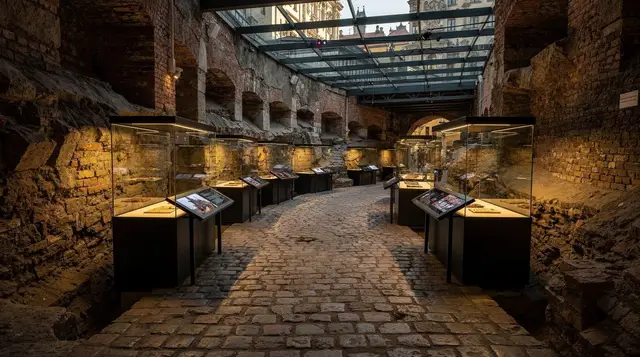
One of the most enjoyable museums in Poland. The permanent exhibition runs 12 m below Rynek Główny, through the archaeological layers of the medieval market. Medieval trade goods, interactive displays, recreated street scenes from the 13th century — it is well-produced and not aimed exclusively at specialists.
Entry is 45 PLN (≈ €10.70) for adults, and free on Tuesdays (no booking, tickets at the desk). Book in advance online — the museum has timed entry and tickets regularly sell out by 10:00 on summer days. The guided version adds about 45 minutes and substantial context. The Rynek Underground guided tour is recommended for visitors who want to understand what they are looking at rather than just walking through.
Honest note: The museum is genuinely excellent, but the queue without pre-booked tickets can be 1–2 hours in summer. There is no shortcut to this: book online the day before or earlier.
The Barbican and city walls
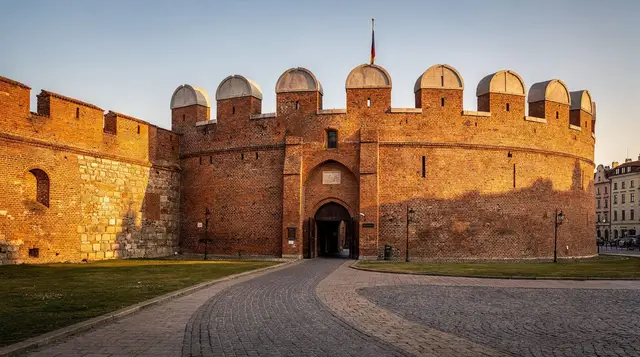
The Barbican (Barbakan) is the fortified gatehouse on the northern edge of the Old Town, connected to the last surviving stretch of the medieval city walls. Built in 1499, it was designed to protect the city from Ottoman expansion. Entry is 22 PLN (≈ €5.20); the interior has modest exhibits about Kraków’s defences. The surrounding Planty park (following the line of the demolished city walls) is a pleasant 2 km walk that takes you around the entire Old Town.
The Florian Gate (Brama Floriańska), connected to the Barbican by a short covered passageway, marks the start of the Royal Route.
The Royal Route
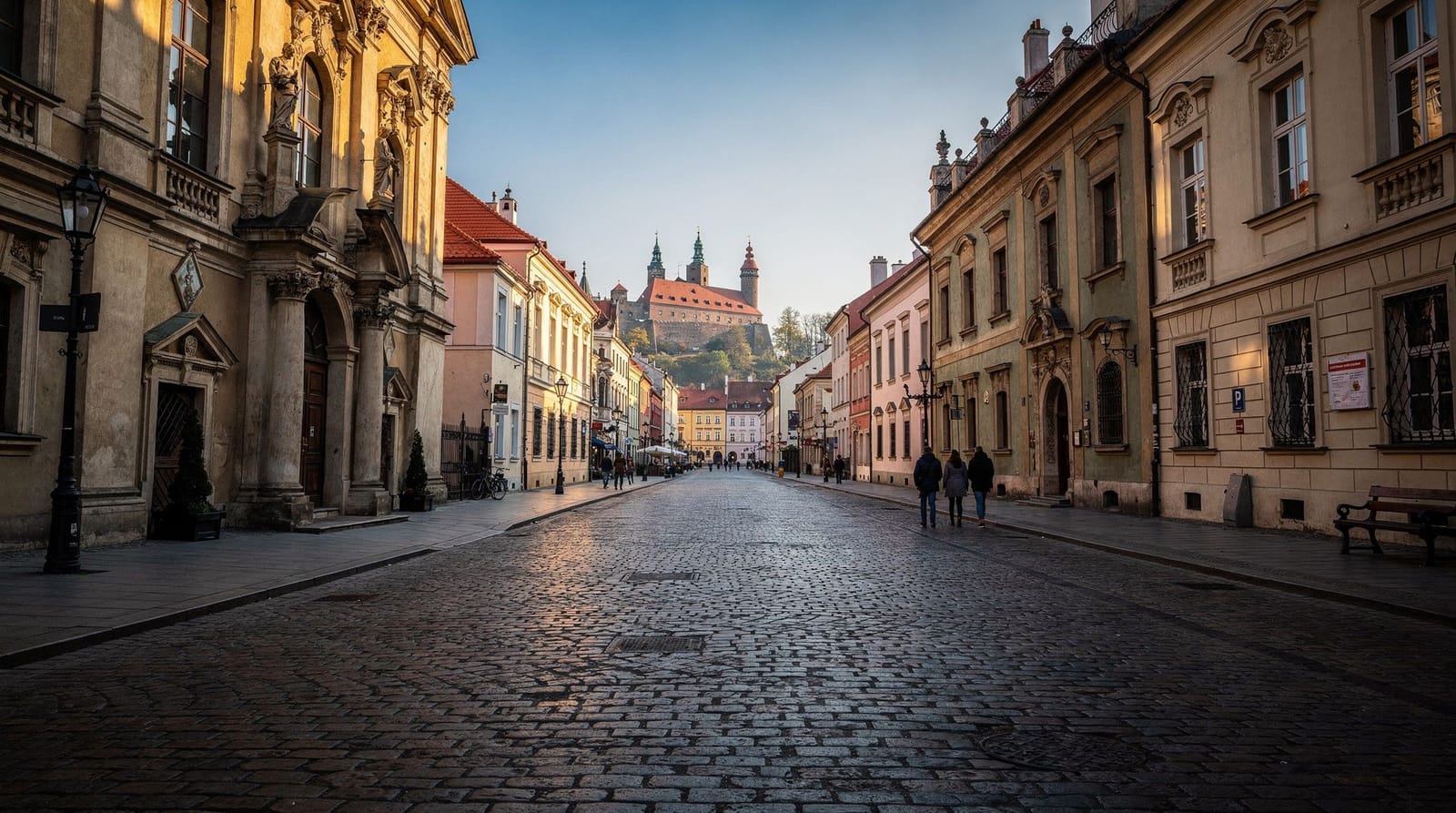
The Royal Route (Droga Królewska) runs from the Florian Gate south through the Old Town to Wawel Castle — the path that Polish kings followed from the northern gate to the castle at coronation and burial. The full route is around 1.5 km on foot and passes most of the major Old Town landmarks.
Walking it independently takes 30–45 minutes at a slow pace. The Old Town Royal Route walking tour adds historical depth to a walk you might otherwise do without understanding much of what you are seeing. Key streets: ul. Floriańska (the main thoroughfare), Rynek Główny, ul. Grodzka (south of the square).
What to eat in the Old Town
Milk bars: Bar Mleczny Pod Temidą (ul. Grodzka 43) is the most centrally located of Kraków’s legendary communist-era canteens. Pierogi, bigos, żurek (rye soup with egg and sausage) for 15–30 PLN (≈ €4–7). Cash only, no menu in English, but pointing works fine.
Café Camelot (ul. Tomasza 17): The café-bookshop that feels like Kraków used to. Excellent coffee, apple cake. Around 15–20 PLN (≈ €4–5) for coffee and cake.
Obwarzanek: The ring-shaped bread (similar to a soft pretzel) sold from street carts around the square for 3–5 PLN (≈ €0.70–1.20). The city’s unofficial snack, eaten plain or with sesame/poppy seeds. A designated obwarzanek vendor licence is a protected occupation in Kraków.
Collegium Maius and the university quarter
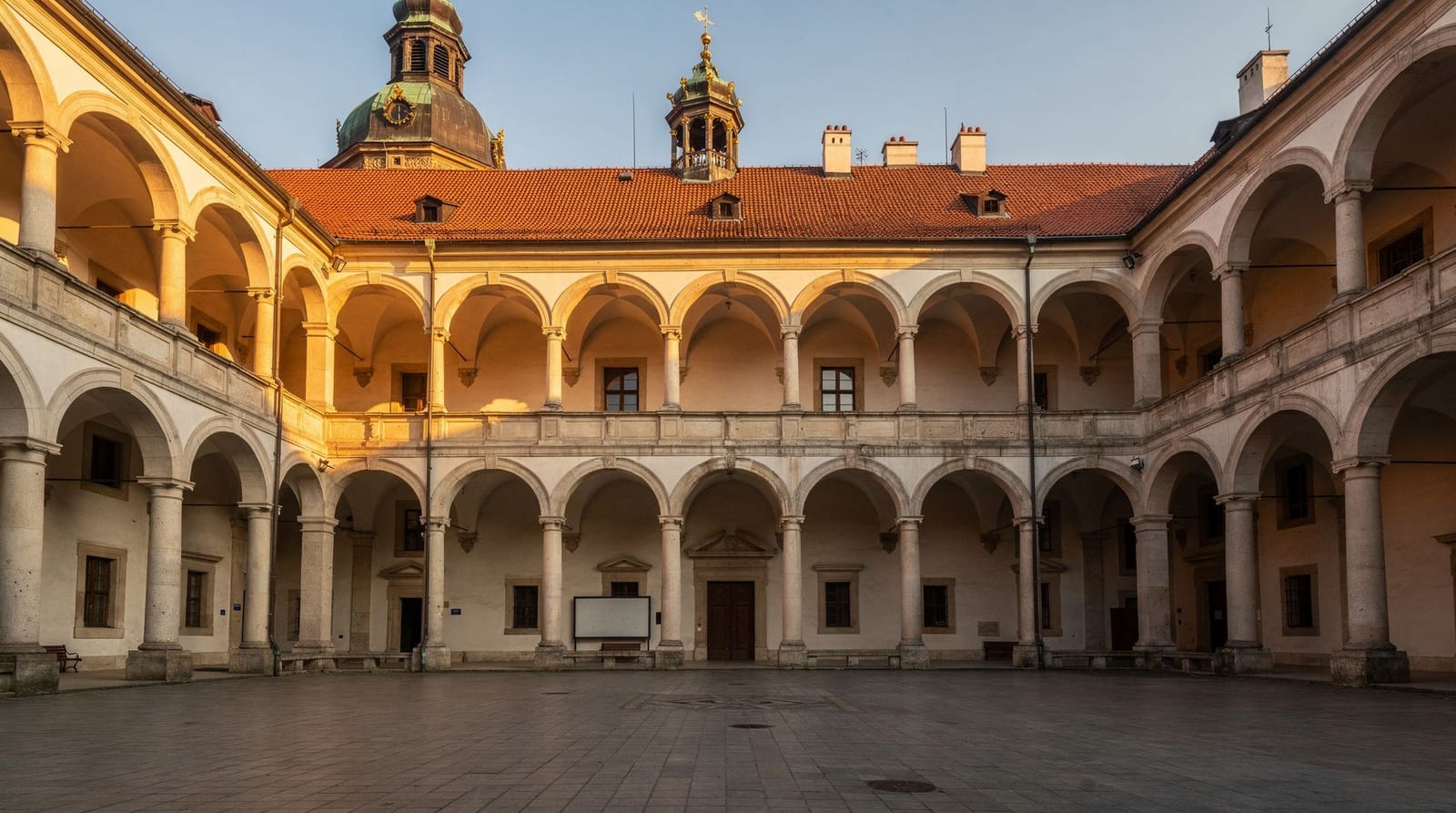
West of Rynek Główny, the streets around ul. Jagiellońska hold the oldest surviving university buildings in Poland. Collegium Maius, founded in 1400, has a beautiful Gothic arcaded courtyard that is free to enter and worth a detour even if you skip the museum inside (which displays historic scientific instruments, including an astrolabe once linked, probably apocryphally, to Copernicus, who studied here). The Collegium Maius guide covers opening hours and the guided-tour-only interior. This quieter corner of the Old Town, a five-minute walk from the square, gets a fraction of the foot traffic on the Royal Route.
Old Town after dark
The square empties of coach groups by early evening and takes on a different character: illuminated facades, café terraces filling with locals rather than tour groups, and the hejnał still sounding on the hour into the night. St. Mary’s Basilica is floodlit and the Cloth Hall arcades are at their most atmospheric after sunset. For a livelier evening, the streets just south of the square around ul. Grodzka and ul. Sławkowska hold a dense cluster of bars — see the best bars in Old Town Kraków guide for specific recommendations rather than wandering blind.
Where to stay if you want to be in the thick of it
Staying inside the Planty ring puts everything within walking distance, at a price premium over Kazimierz or the outer districts. It suits visitors on a short trip who want to fall out of bed onto the Royal Route, rather than those looking for a quieter, more local base. The where to stay in Kraków neighbourhoods guide compares the Old Town against Kazimierz and Podgórze for different trip styles and budgets.
Planning your day in the Old Town
A sensible order of visit: arrive before 9:00 at Wawel Castle (most impressive in early morning light; queues build by 10:00). Walk back through the Old Town to the square. St. Mary’s Basilica before the midday crowds. Cloth Hall browse. Rynek Underground (pre-booked ticket). Walk the Royal Route and Planty. Barbican if time allows.
Full day: allow 7–8 hours. The Kraków city overview has practical logistics for the whole trip including where to stay and how to combine the Old Town with Kazimierz and Podgórze. If you only have one day in the city overall, the Kraków 1-day itinerary builds around exactly this route.
Frequently asked questions about the Old Town
How long should I spend in the Old Town?
A minimum of one full day (7–8 hours) to cover Wawel, St. Mary’s, Rynek Underground and the square itself. To go deeper — Barbican, Collegium Maius, Czartoryski Museum — add a second morning. The Old Town walking guide has a suggested route for each time budget.
Do I need to book Wawel Castle tickets in advance?
Yes, in summer (June–August). The timed-entry slots for the State Rooms sell out by mid-morning. Buy online at the Wawel Castle official website or as part of a guided tour. Shoulder season (April–May, September–October) is more forgiving, but booking the day before is still sensible.
Is Rynek Underground worth visiting?
Yes — it is one of the most genuinely interesting museums in the city, combining archaeology with well-produced interpretation. The caveat: book timed-entry tickets online or expect a long queue. Without a pre-booked ticket in summer, waiting 1–2 hours is realistic.
Are the restaurants on the main square worth it?
Honest answer: no. The setting is unbeatable; the food-to-price ratio is poor. Pay €4 for a coffee and watch the square from a terrace. Walk two streets away for a better meal at half the price.
What is the hejnał and when does it play?
The hejnał mariacki is the bugle call played from the taller tower of St. Mary’s Basilica on the hour, every hour, 24 hours a day. It breaks off mid-phrase — the traditional explanation is that a medieval bugler was shot through the throat by a Tatar arrow as he tried to warn the city. The melody has been played continuously since the 13th century. At noon, it is broadcast live on Polish national radio (Polskie Radio Program 1).
Is the Old Town walkable, and do I need transport?
Yes, entirely walkable. The whole area within the Planty ring is about 1 km², and nothing inside it requires a taxi or tram. You will only need transport to reach the Old Town itself (from the airport or the station) or to travel to neighbouring districts like Kazimierz or Podgórze, both within easy walking or a short tram ride.
What should I skip if I only have a few hours?
If time is very tight, prioritise Rynek Główny, St. Mary’s Basilica, and Wawel Castle’s exterior and Cathedral — that trio captures the essentials in around three hours. The Cloth Hall’s upper-floor gallery and the Barbican are the easiest things to drop from a rushed itinerary without losing the core experience.
Top experiences
Bookable activities with verified prices and instant confirmation on GetYourGuide.