Wieliczka Salt Mine — the UNESCO wonder under the earth
Wieliczka Salt Mine: 800 steps down, carved chapels, underground lakes. UNESCO since 1978. Complete guide to visiting from Kraków, 14 km away.
From Krakow: Wieliczka Salt Mine tour & fast-track ticket
Duration: 4h
Quick facts
- Distance from Kraków
- 14 km southeast; 30–40 min
- Getting there
- Train to Wieliczka Rynek-Kopalnia or minibus from Galeria Krakowska
- Visit type
- Guided only — no self-guided option
- Duration
- 2.5–3 hours (Tourist Route)
- Depth
- 135 m underground; ~800 steps
- Temperature
- 17–18°C year-round (bring a layer)
- Ticket price
- From 82 PLN (≈ €19.50), guided tour included; check kopalnia.pl
Why this mine is unlike any other
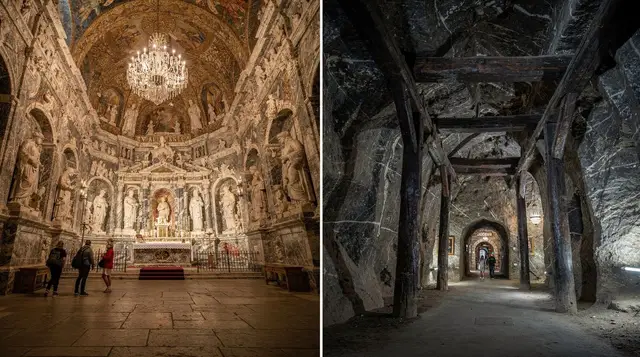
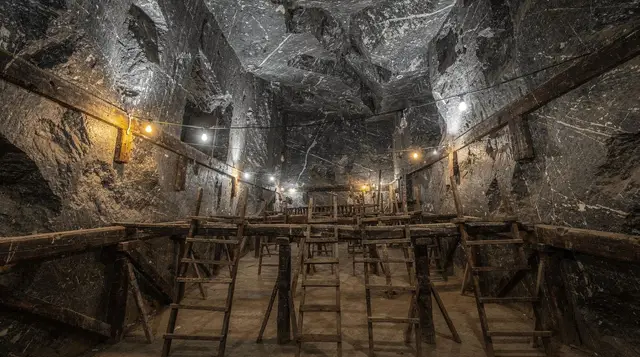
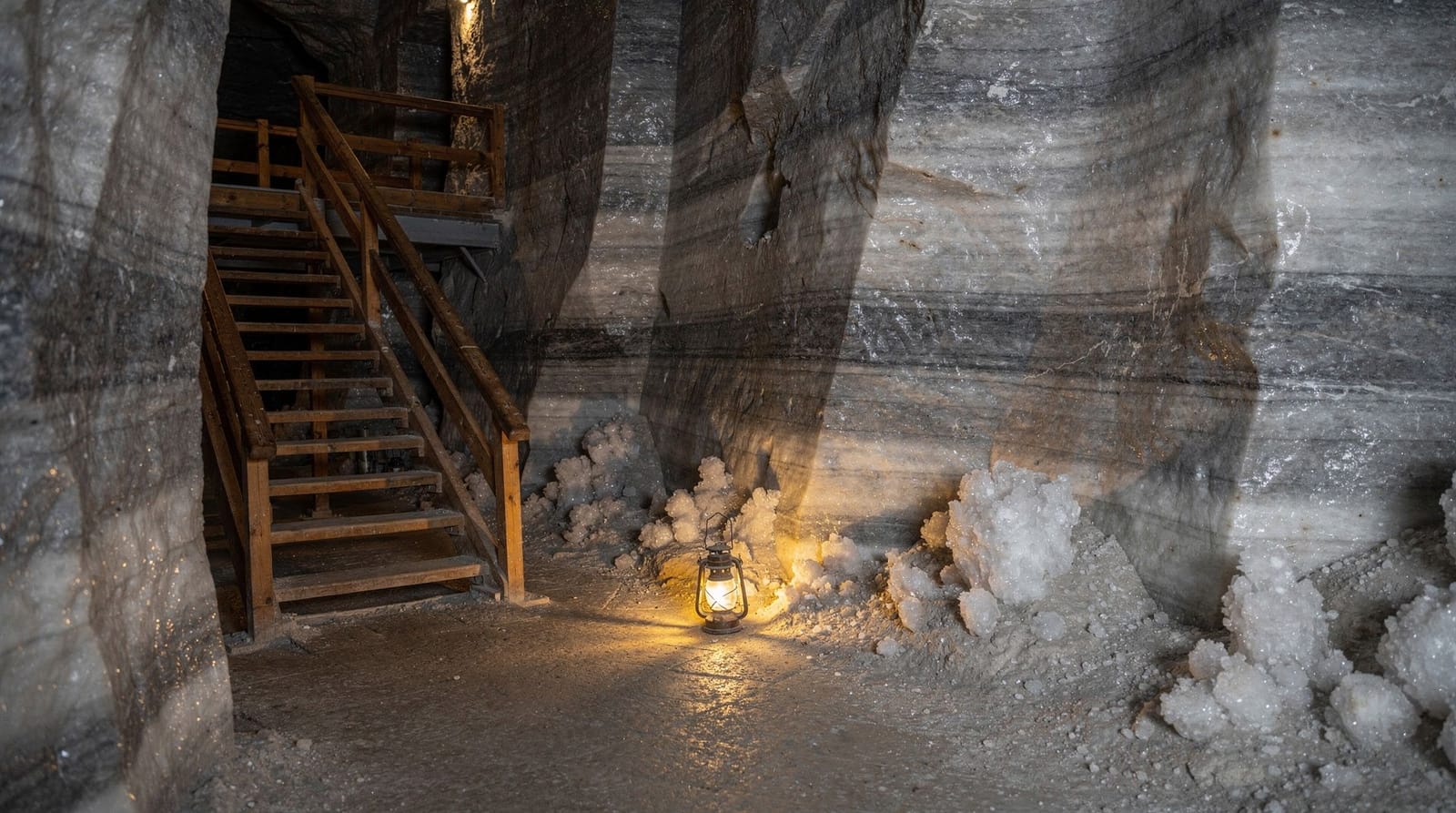
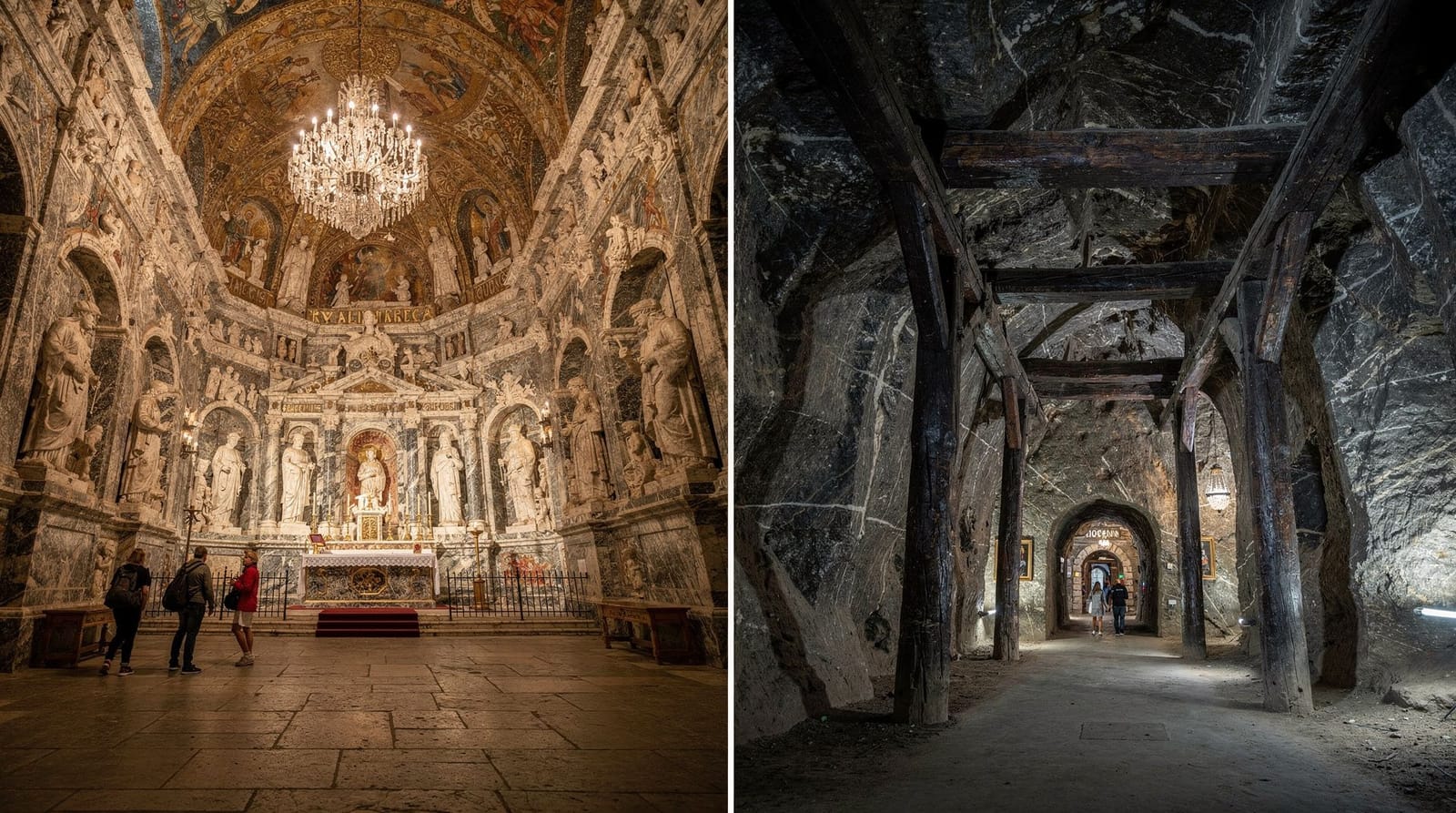
The Wieliczka Salt Mine operated continuously for 700 years, from the 13th century to 2007. In that time, the miners did something that makes it unique among industrial heritage sites anywhere in the world: they decorated it. The tunnels contain carved salt sculptures, bas-reliefs depicting Polish legends and royal portraits, and most remarkably, a series of full-scale underground chapels — including the Chapel of St. Kinga, a chamber 55 metres long, 18 metres wide and 12 metres high, with a floor, walls, altarpiece, chandeliers and decorative panels carved entirely from rock salt.
| Where | Wieliczka town, 14 km southeast of Kraków |
| Cost | From 82 PLN, guided tour included (check kopalnia.pl for English-language prices) |
| Time needed | 3.5–4 hours including travel from central Kraków |
| Getting there | Train from Kraków Główny, or an organised tour |
| Best time | Any season — 17–18°C underground year-round; book 1–2 weeks ahead in summer |
No photograph adequately prepares you for the scale. Visitors who have done many UNESCO World Heritage Sites consistently rank Wieliczka among the most surprising. It was designated in 1978, in the first cohort of UNESCO sites — the same year as Auschwitz, Yellowstone and the Galápagos.
Getting there from Kraków
Train: The most independent option. Take the Koleje Małopolskie train from Kraków Główny to Wieliczka Rynek-Kopalnia; a ticket costs 24 PLN (≈ €5.70) and luggage travels free. From the station, the mine entrance is a short walk (signs in Polish, but well marked).
Minibus (bus 304): Departs from the bus terminal at Galeria Krakowska (adjacent to the main station). About 30–35 minutes; the fare depends on the city ticket zones (check ztp.krakow.pl). Drops you closer to the mine entrance than the train station.
Organised tour with transport: The Wieliczka Salt Mine guided tour with transport handles the logistics entirely — minivan pickup, transfer and guided visit. Sensible if you are arriving early in the day or want to combine Wieliczka with another activity. The fast-track tour is the most popular for independent travellers who want guaranteed entry without queuing.
Do not drive: Parking near the mine is limited and the train is faster in practice.
The Tourist Route — what you will see
The standard visit follows the Tourist Route: a descent of around 380 steps to the first level (64 m), then a circuit of 2–3 km through the tunnels, descending further to 135 m below the surface, and an ascent by lift. The total visit takes 2.5–3 hours.
Key chambers:
- Chamber of St. Anthony (first level): Introduction to the mine’s working methods. Salt formations, historical mining equipment.
- Copernicus Chamber: A large exhibition space named after the famous visitor. Contains sculptures of Copernicus carved in salt.
- Erazm Barącz Chamber: The underground lake — grey-green water, 9 m deep, reflecting the rock salt ceiling. Atmospheric and slightly eerie.
- Chapel of St. Kinga (third level, 101 m underground): The centrepiece. The chapel has held regular Catholic masses since the 18th century; it is still used for weddings and concerts. The scale, the quality of the carving, and the context — that miners created this over centuries as an act of devotion — make it one of the most remarkable spaces in Poland.
- Weimar Chamber: Named after a visit by Goethe (1790). The tradition of notable visitors signing the guest book continues; exhibits document the mine’s history of distinguished tourism.
- Underground post office: Genuinely — you can post a letter from 135 m underground, and it will be delivered.
Guided only — no exceptions
Wieliczka does not allow independent exploration of the Tourist Route. Every visitor is assigned to a guided group; the guide sets the pace and the order of the visit. Groups form continuously at the entrance; in summer, the waiting time can be 30–60 minutes without a pre-booked time slot.
Language: Groups are organised by language. English groups are the most frequent; French, German and Spanish groups also run regularly. If you are booking independently, specify your language preference at the ticket desk or online.
Physical requirements: Around 800 steps in total (descent and ascent combined; the exit is by lift). The route is uneven in places. The mine is not fully accessible for wheelchair users; the mine’s website has detailed accessibility information.
Booking and tickets
Direct at the mine: Possible but risky in summer. In July and August, the Tourist Route regularly sells out before noon. Online booking guarantees your time slot.
Online: Book at kopalnia.pl (the mine’s official site). Tickets start from 82 PLN (≈ €19.50) for the Polish-language tour and include the guided tour; tours in English cost more and prices vary by season, so check kopalnia.pl. Children 4–16 pay a reduced rate; children under 4 are free.
Via GetYourGuide: The guided Wieliczka Salt Mine and Chapel tour (which specifically includes the St. Kinga Chapel in its routing and explanation) is worth the small additional cost for groups who want more context than the standard guided tour provides.
How far ahead: April–May and September–October: 3–7 days ahead. June–August: 1–2 weeks ahead minimum. For a Saturday or Sunday in summer: 2–3 weeks ahead. The tour vs independent visit guide compares booking directly against going with a guided package if you’re undecided.
Tour vs independent visit — which suits you
Both routes end at the same guided Tourist Route, since independent exploration is not permitted regardless of how you book. The real choice is about convenience versus cost. Booking directly at kopalnia.pl and taking the train yourself is the cheapest option and gives you full control over timing — sensible if you are comfortable navigating Polish transport and booking sites. A packaged tour with transport removes any logistics risk, often includes hotel pickup, and can be worth the premium if you are short on time or travelling with people who would rather not manage tickets and trains. Families with children benefit particularly from the packaged option, since a guide keeping the group moving is one less thing to manage underground.
Practical details
Temperature: 17–18°C inside year-round. The surface temperature does not matter — bring a light jacket or layer whatever month you visit. The mine is especially welcome on hot summer days.
Duration on site: Allow 30 minutes for arrival, waiting and equipment (hard hats, provided by the mine). 2.5–3 hours for the tour. 30 minutes to get out and for the gift shop. Total: 3.5–4 hours including travel time from central Kraków, 4–5 hours for a comfortable visit.
What to bring: Comfortable walking shoes (the surface is sometimes damp); a layer for the cold; water (no food or drink inside the mine itself). The lift exit brings you back to ground level near the mine’s café and restaurant.
Photography: Permitted on the Tourist Route; no flash in the Chapel of St. Kinga during services or concerts.
Wieliczka versus Bochnia
The nearby Bochnia Royal Salt Mine (30 km east of Kraków) is older, quieter and significantly less visited than Wieliczka. Both are UNESCO-listed. Bochnia’s distinctive experiences — an underground boat ride, a mine train, an underground health resort — are different enough from Wieliczka to justify visiting both if you have time. For a first visit with limited time, Wieliczka is the stronger choice; see the Wieliczka vs Bochnia comparison guide for a full breakdown.
Combining Wieliczka with other activities
Half-day visit: Wieliczka works well as a morning or afternoon excursion. Take the train at 9:00, complete the tour by noon, and return to Kraków for afternoon activities.
Full day: Wieliczka in the morning, the town of Wieliczka itself for lunch (the market square has decent restaurants; the Wielmożna restaurant in the historic manor is reliable at 35–55 PLN / ≈ €8–13 for a main), then return to Kraków.
With Auschwitz: Combining Wieliczka and Auschwitz-Birkenau in a single day is physically possible but emotionally exhausting — you arrive at one of the most solemn places in the world already tired. Better to give each its own day.
The mine’s history — 700 years of salt
Salt was the commodity that made medieval Poland wealthy. The Wieliczka mine, along with the Bochnia mine to the east, was part of the royal salt monopoly — administered directly by the Crown and a principal source of Polish state revenue from the 13th to the 18th century. The phrase “worth their salt” has a direct Wieliczka origin: salt was literally a measure of value.
The mine employed thousands of workers across its active centuries, operating under the authority of the Żupy Krakowskie (the Royal Salt Mines of Kraków). The kings of Poland visited, including Casimir the Great, who is said to have ordered the construction of the first underground chapel. The Veit Stoss of underground chapels is arguably the unnamed miner who spent decades carving the Chapel of St. Kinga — an act of devotion for which he received no individual credit.
In the 19th century, under Austrian partition, the mine became a tourist attraction. A bath house was built underground; the underground brine pools were used for therapeutic swimming. Guests included Goethe (1790) and Chopin. The tourism tradition pre-dates the 20th century by almost 200 years.
After World War II, the mine was nationalised and continued to operate as a working mine until 1996 (Wieliczka) and later (the deeper shafts, for brine extraction). The UNESCO designation came in 1978. The museum as it exists today developed over the following decades, with restoration of the most significant chambers completed in the 1990s–2000s.
The town of Wieliczka
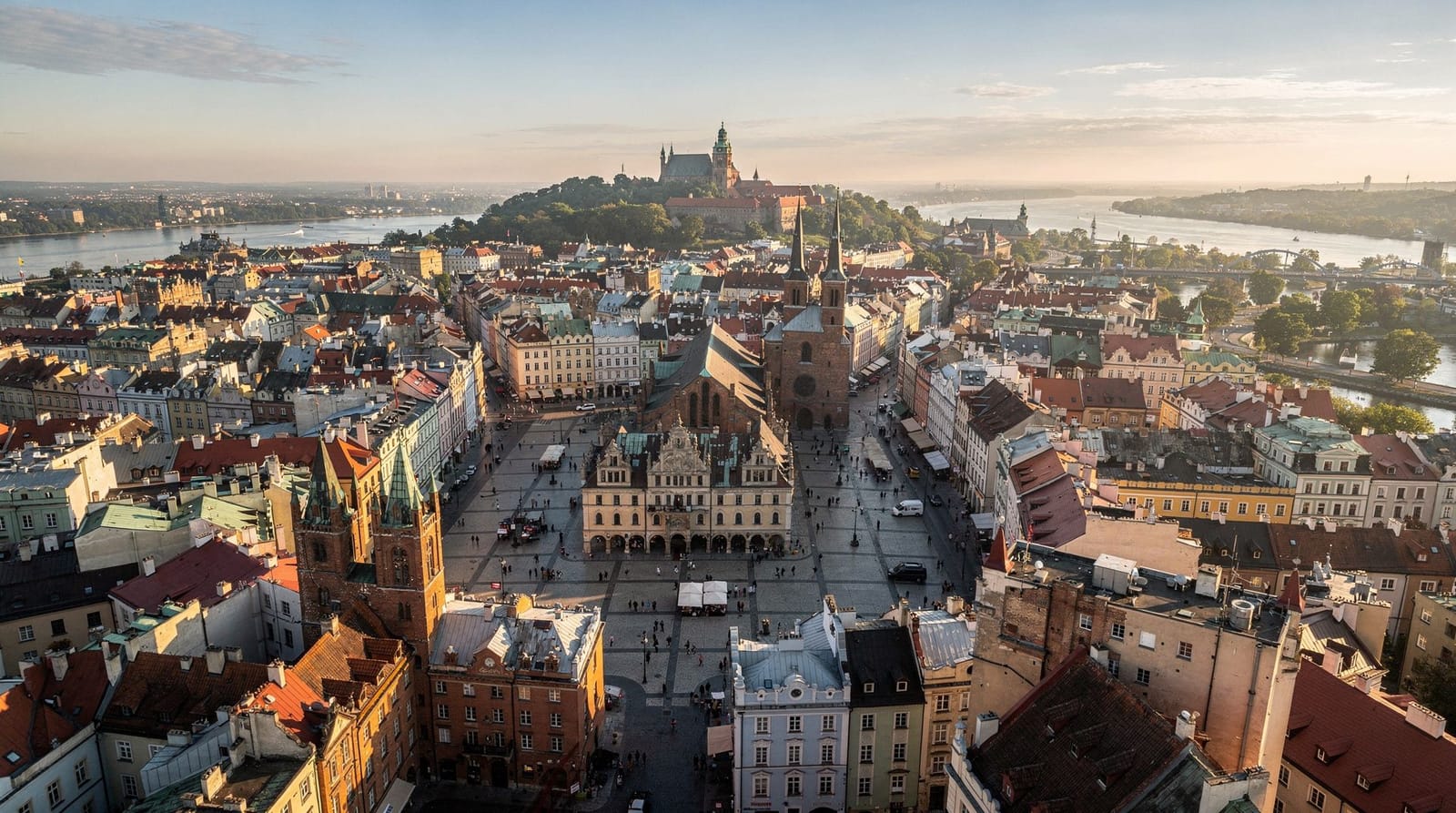
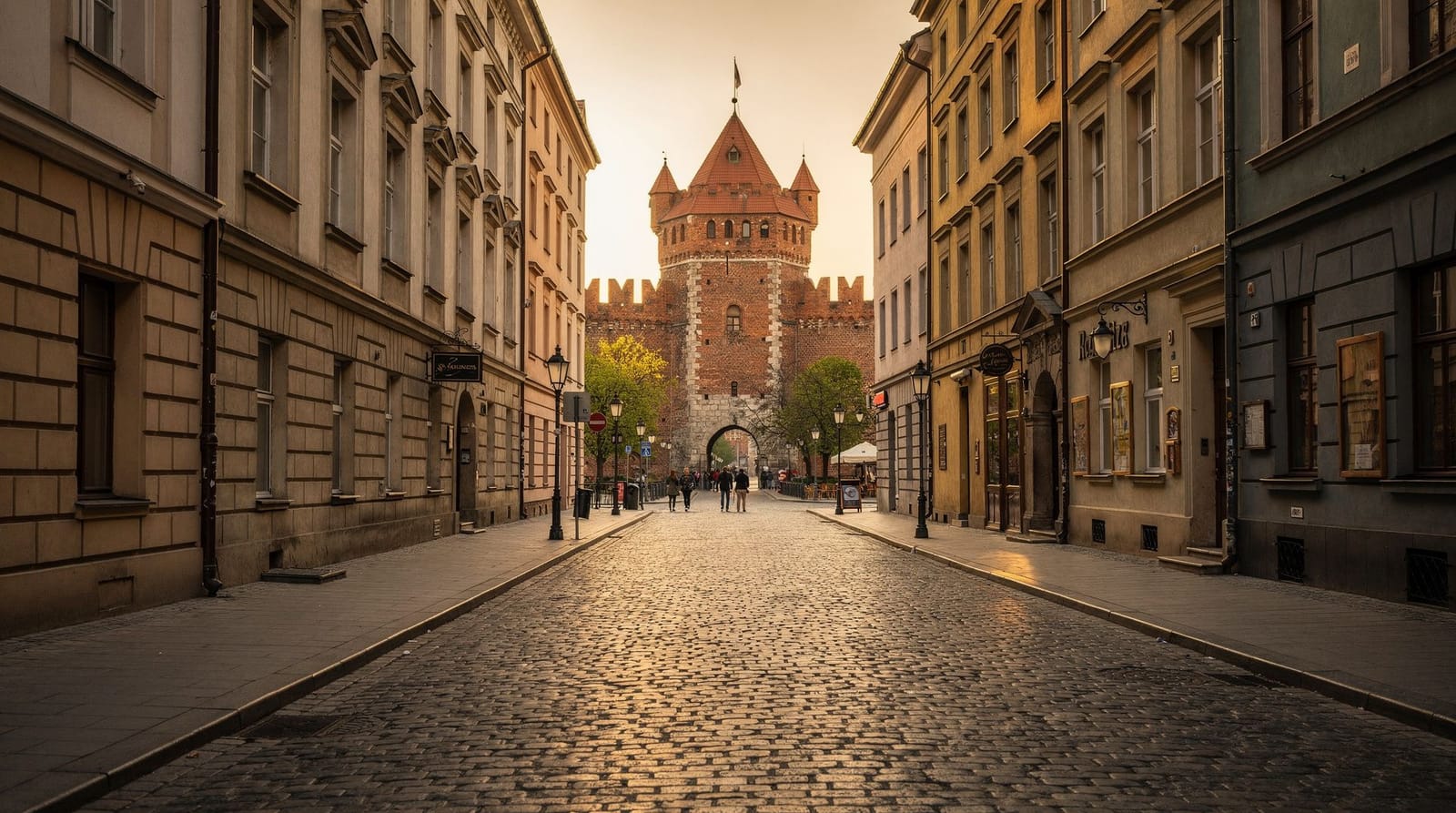
The town surrounding the mine is a normal Polish provincial town of around 22,000 people, largely bypassed by tourism. If you arrive by train from Kraków, you walk through the town centre to reach the mine — the market square (Rynek) has a church, a handful of restaurants, and the atmosphere of a town that predates its famous attraction.
Lunch in Wieliczka: Restaurant Wielmożna (ul. Regis 1, in the historic manor house near the mine entrance) is reliable for traditional Polish cooking at 35–55 PLN (≈ €8–13) for a main. Milk bar options on the Rynek are cheaper (20–28 PLN / ≈ €5–7). There is no obligation to eat at the mine’s own restaurant (underground or at the surface) — quality is average and prices reflect the captive audience.
Visiting with children
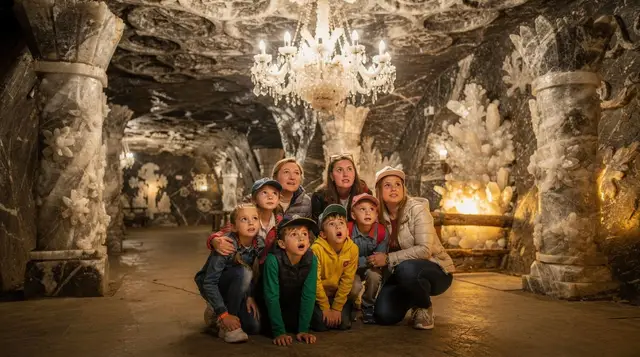
Wieliczka is a genuinely popular family excursion — the scale of the chambers and the underground lake tend to captivate children more than a typical museum would. That said, the 800 steps and 2.5–3 hour guided pace are real considerations for very young children or anyone with limited stamina; strollers are not practical on the Tourist Route. The Wieliczka with children guide has age-specific advice and covers what to expect from the pacing if you are travelling with a mixed-age family.
Combining with the wider salt mine trail
Wieliczka and Bochnia are the two most visited salt mines near Kraków, but they are not the only underground sites in the region worth knowing about. If you enjoyed Wieliczka and want more of the same experience without repeating it, the Wieliczka vs Bochnia comparison guide explains exactly how the two differ, while the Auschwitz and Wieliczka same-day guide sets out honestly why that particular combination, though offered by many tour operators, asks a lot of a single day.
Frequently asked questions about Wieliczka Salt Mine
Is Wieliczka worth visiting?
Yes — it is one of the most remarkable underground experiences in the world. Visitors who approach it expecting a standard mine tour are consistently surprised by the scale and artistry of what the miners created over seven centuries. Even children who are not particularly interested in history are usually awed by the Chapel of St. Kinga.
How do I get from Kraków to Wieliczka without a tour?
Take the Koleje Małopolskie train from Kraków Główny to Wieliczka Rynek-Kopalnia (24 PLN / ≈ €5.70). Walk to the mine entrance. Buy tickets online in advance at kopalnia.pl. This is the cheapest and most independent option.
Is it cold in the mine?
Yes — 17–18°C throughout the year. This is pleasant in summer (cool relief from surface heat) but requires preparation in winter. A light fleece or thin jacket is sufficient.
How many steps are there?
The descent involves approximately 380 steps; the route involves further stairs at various levels. Total: around 800 steps including all movement inside the mine. The exit is by lift. The mine is not recommended for people with significant mobility limitations.
Can I visit without a guide?
No. The Tourist Route requires joining a guided group. Groups form by language; English tours depart frequently throughout the day. If you book in advance, your time slot is pre-assigned. Walk-up visitors join the next available group for their language.
Should I visit Wieliczka or Bochnia if I only have time for one?
For a first visit, Wieliczka is the stronger choice — it has the famous Chapel of St. Kinga and the greater overall scale of decorated chambers. Bochnia is quieter, older, and offers a different set of experiences (an underground boat ride and train), making it a good second visit rather than a substitute for Wieliczka. The Wieliczka vs Bochnia comparison guide breaks down the differences in detail.
Top experiences
Bookable activities with verified prices and instant confirmation on GetYourGuide.