Wieliczka vs Bochnia salt mine: which one should you visit?
From Krakow: Wieliczka Salt Mine tour & fast-track ticket
Duration: 4h
Wieliczka or Bochnia salt mine — which is better?
Wieliczka is the iconic choice: stunning Chapel of St Kinga, polished infrastructure, and world-class highlights. Bochnia is older, far less crowded, and offers a genuine underground boat ride and mine train that Wieliczka does not. First-timers with one slot: Wieliczka. Second visit or adventure-seekers: Bochnia.
Two UNESCO salt mines, one difficult choice
Małopolska is the only region in the world with two UNESCO-listed working salt mines within 50 km of each other. Wieliczka (14 km south-east of Kraków) is among Poland’s most visited attractions — a million visitors a year, sculptures carved from salt, and a breathtaking underground chapel. Bochnia (40 km east) opened for mining in 1248, predating Wieliczka’s earliest records, yet receives only a fraction of the visitors.
Choosing between them is genuinely worth thinking through, not just defaulting to the famous one. This guide compares both side by side so you can make an informed decision.
| Where | Wieliczka 14 km SE of Kraków; Bochnia 40 km east |
| Cost | Entry prices: see kopalnia.pl (Wieliczka) and the Bochnia mine’s website |
| Time needed | Half a day for either; a full day to combine both |
| Getting there | Bus/train to Wieliczka; regional train to Bochnia |
| Best time | Book Wieliczka 1–2 weeks ahead; Bochnia 3–5 days |
At a glance: side-by-side comparison
| Feature | Wieliczka | Bochnia |
|---|---|---|
| Distance from Kraków | ~14 km (30 min) | ~40 km (50 min) |
| UNESCO designation | Since 1978 | Since 2013 |
| Depth reached | ~135 m | ~212 m (deepest route) |
| Descent method | 800 stairs on foot | Historic mine lift (cage) |
| Signature highlight | Chapel of St Kinga | Underground boat ride |
| Mine train ride | No | Yes |
| Crowd level (peak season) | Very high (1M+/year) | Low–moderate (hundreds/day) |
| Tour duration | ~2–2.5 hours | ~2–3 hours |
| Entry ticket (self-buy) | See kopalnia.pl (from 82 PLN) | See the Bochnia mine’s official website |
| Guided tour from Kraków | ~120–200 PLN (€29–48) | ~100–140 PLN (€24–33) |
| Guided tour mandatory | Yes | Yes |
| Languages on standard tour | Many (EN, DE, FR, etc.) | Mainly PL; EN on guided tours |
| Booking urgency | Essential (book 1–2 weeks ahead) | Less urgent, book 2–3 days ahead |
Wieliczka: the iconic choice
Wieliczka has earned its fame. The mine has been continuously worked since the 13th century, and the tourist route — developed progressively since the late 18th century — is a genuinely extraordinary engineering and artistic achievement. You descend 800 stairs to reach the first level, 64 m underground, then continue down to chambers at 135 m.
The highlights that justify the fame
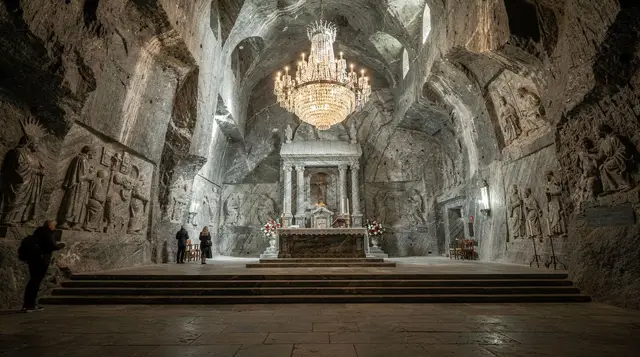
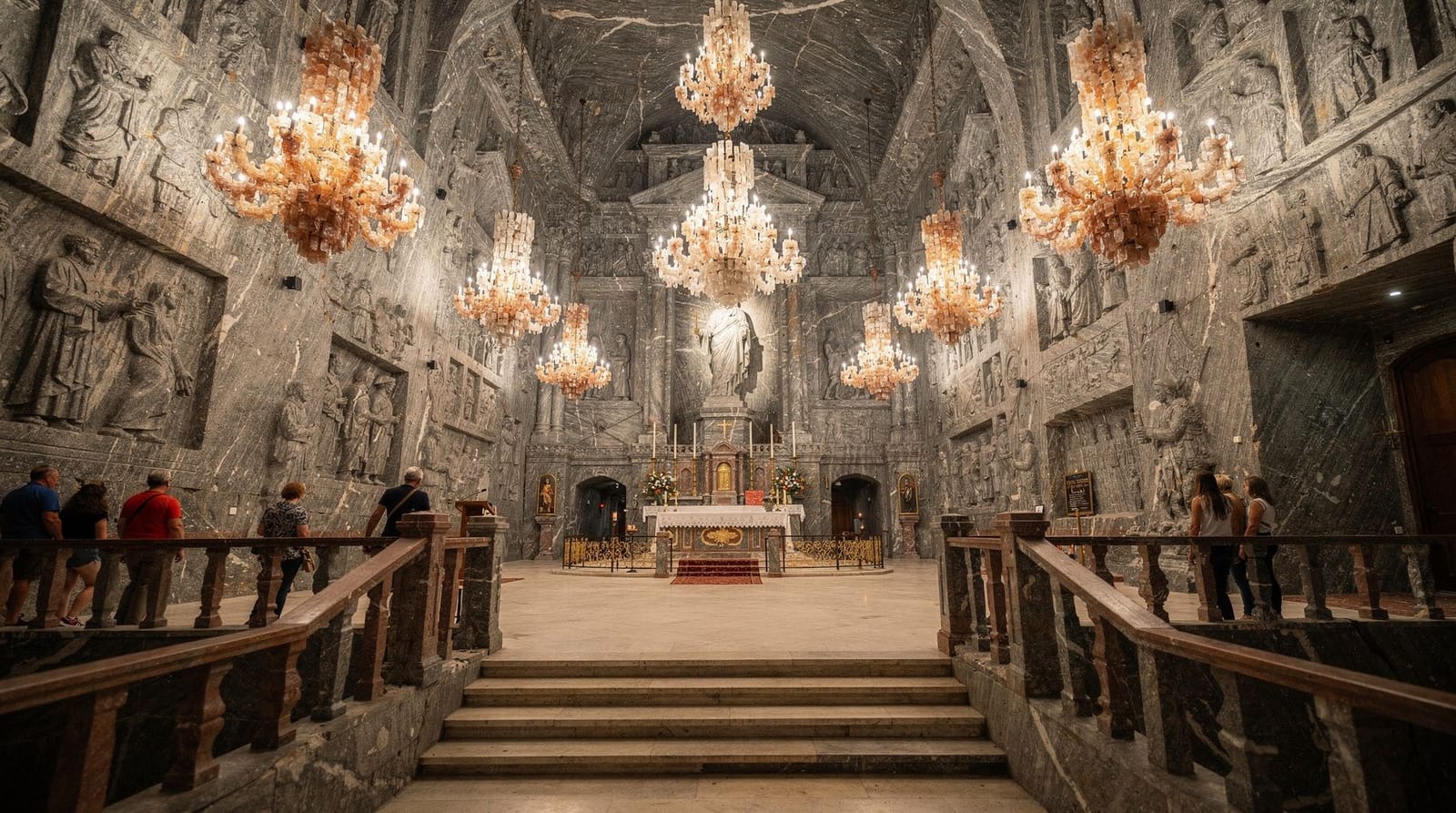
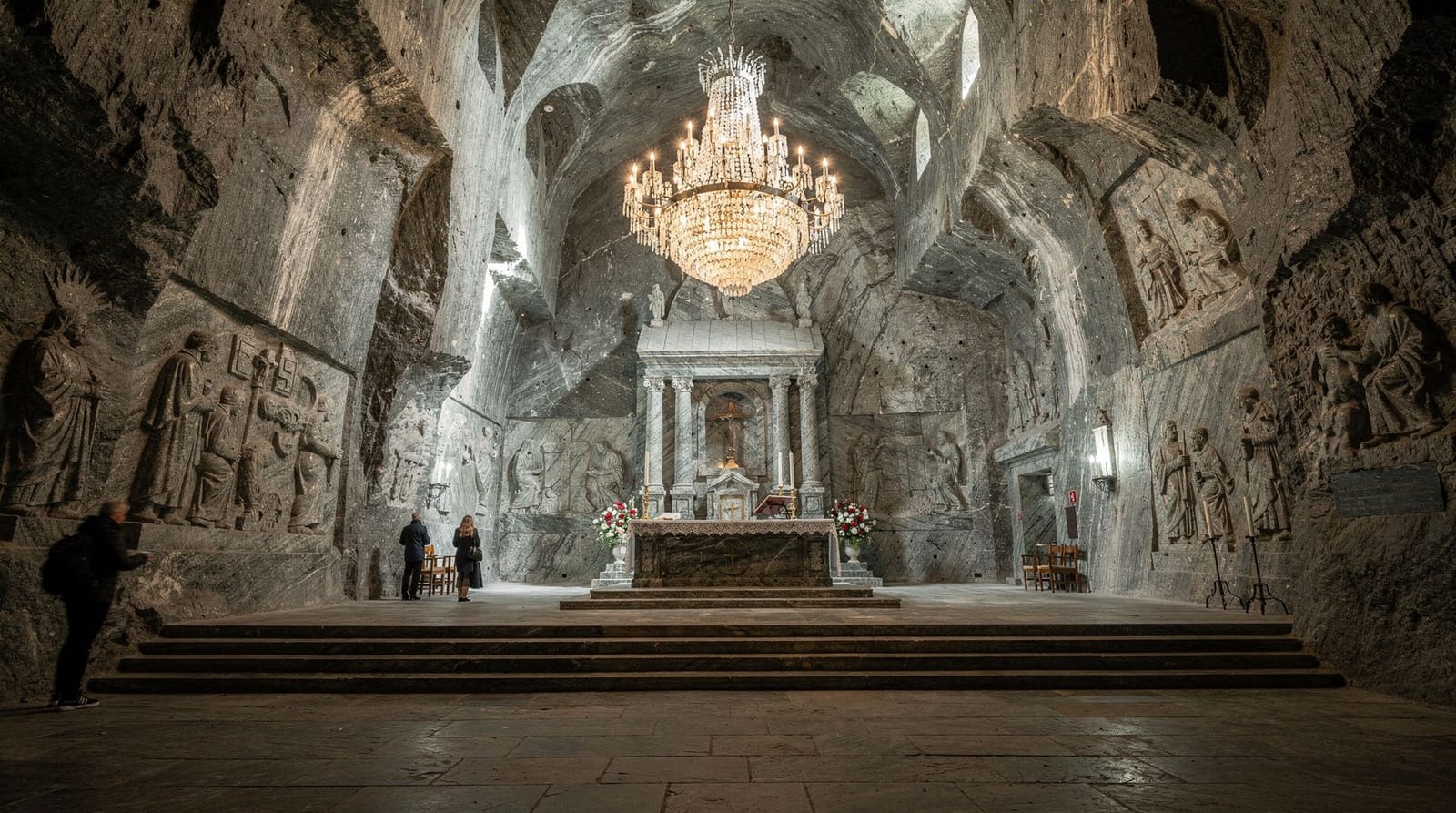
The Chapel of St Kinga (Kaplica Świętej Kingi) is the mine’s centrepiece and one of the most remarkable spaces in Poland. Every surface — floor, walls, ceiling, chandeliers — is carved from rock salt. At 54 metres long and 18 metres high, it remains an active place of worship. Salt sculptures of the Last Supper and scenes from the life of St Kinga line the walls.
Beyond the chapel, the route passes through 20 chambers over about 3.5 km, featuring salt-carved statues of dwarfs, mythological figures, and historical characters. The underground lake at Weimar Chamber glows an eerie green. The infrastructure is polished: wide walkways, good lighting, multiple languages on guided tours.
The honest downsides
In peak season (June–August), Wieliczka is genuinely overwhelming. The mine processes visitors in group waves with guides; groups of 30 or more are common. The first sections near the entrance can feel like a theme park queue underground. The staircase descent is physically demanding for some visitors — 800 steps down is one thing, but the return route includes a climb. Book at least two weeks ahead in summer; popular time slots sell out completely.
Book a Wieliczka fast-track ticket from Kraków to avoid the longest queues, or opt for the guided Wieliczka tour with transport included which handles logistics cleanly.
Bochnia: the adventurer’s pick
Bochnia is the oldest continuously operated salt mine in Poland. Mining began here in 1248 — about 40 years before the first documented extraction at Wieliczka. Despite a UNESCO listing since 2013 (added to the Wieliczka World Heritage inscription), it remains dramatically less visited. On a busy summer day when Wieliczka is turning away thousands, Bochnia might have a few hundred.
What makes Bochnia genuinely different
The mine lift: Instead of hiking down 800 stairs, you descend by a historic mine lift cage — a single, atmospheric plunge into the earth. It sets a very different tone to Wieliczka.
The mine train: You ride a narrow-gauge mine train through underground galleries, something Wieliczka cannot offer. It adds a sense of authentic industrial history.
The underground boat ride: On the Expedition route, you board a small boat and float across an underground lake. It is one of the most unusual experiences available anywhere in Małopolska, and it alone makes Bochnia worth considering.
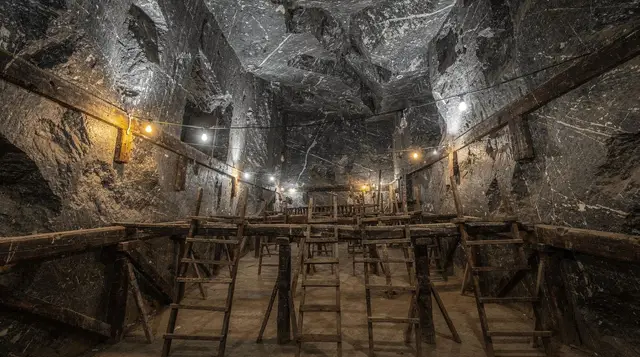
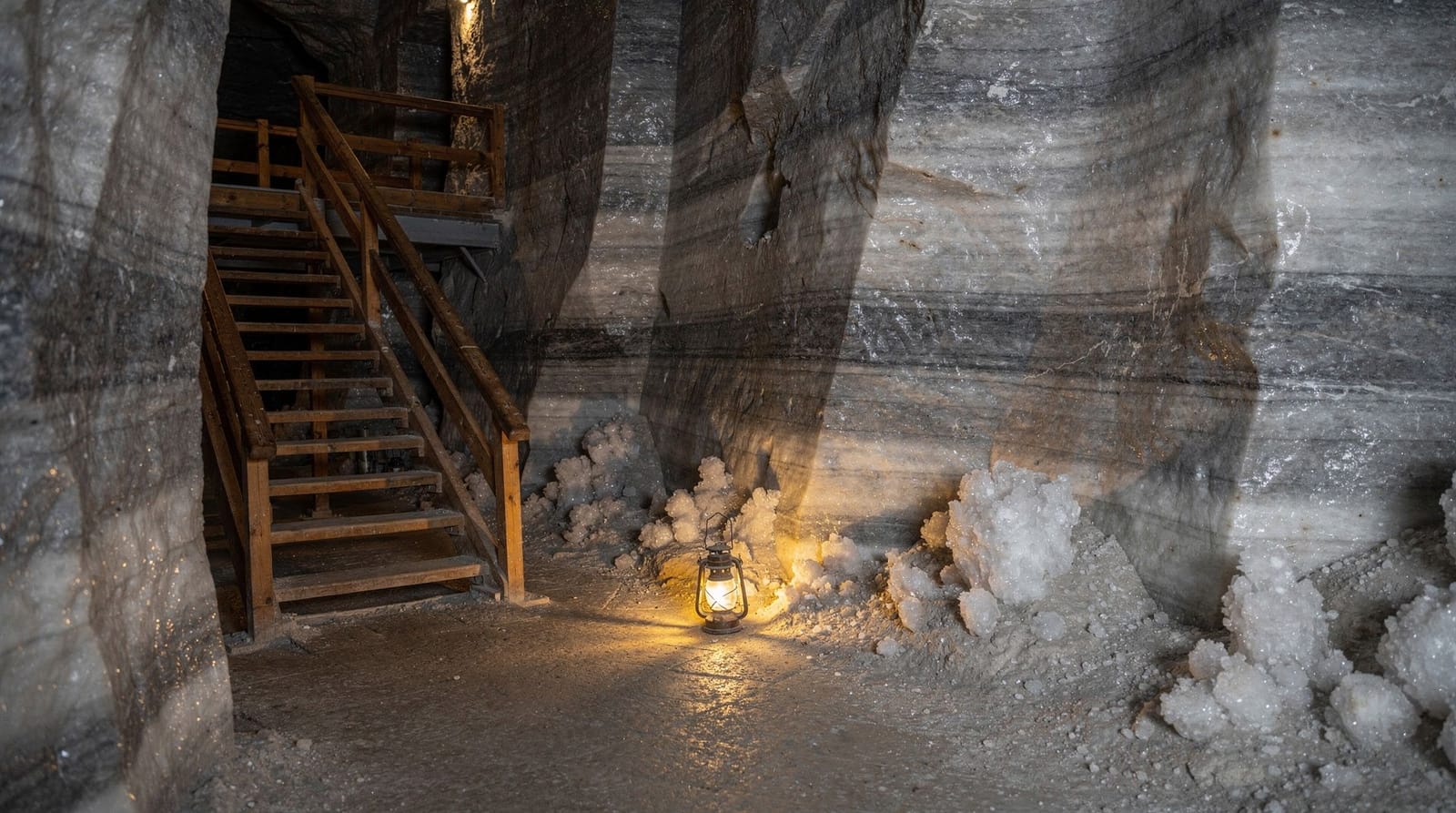
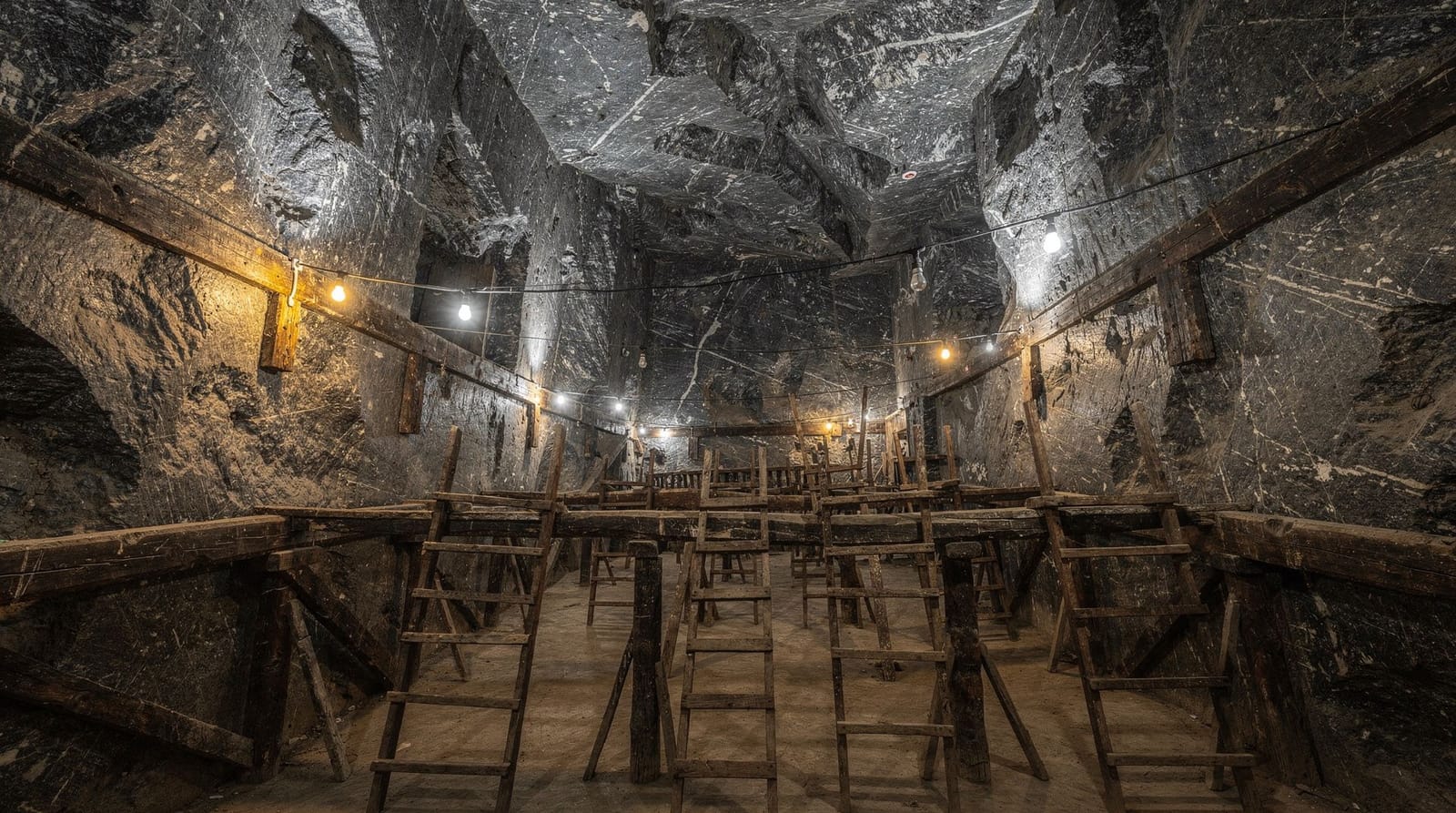
Rawer atmosphere: Bochnia’s galleries are less polished and more authentically mine-like. You see natural rock formations and saltwork that feels less curated.
The Bochnia Salt Mine tour with boat expedition from Kraków is the recommended way to visit, combining return transport, the lift, train, and boat ride. The Bochnia tour with mine train and hotel pickup adds door-to-door convenience.
The honest downsides
The main galleries are not as visually spectacular as Wieliczka’s grand chambers. Standard tour English-language availability is more limited — you want to book an English-language guided tour explicitly, rather than walking in and hoping. Getting to Bochnia independently by train (Kraków Główny to Bochnia station, ~50 min) is straightforward, but takes longer than reaching Wieliczka. The mine is shallower in tourist infrastructure terms — less for children to discover compared to Wieliczka’s interactive sections.
Which one to choose
| Situation | Recommendation |
|---|---|
| First time in Kraków, only one day trip | Wieliczka — it’s a must-see |
| Second visit to Kraków | Bochnia — Wieliczka already done |
| Tight budget | Compare current prices on both mines’ official websites |
| Peak season, hate crowds | Bochnia — no competition |
| Children aged 8–14 | Wieliczka — more child-friendly staging |
| Adventure seekers | Bochnia — boat + mine train |
| Religious or cultural interest | Wieliczka — Chapel of St Kinga |
| Limited mobility | Check both — neither is fully accessible |
Our recommendation: Wieliczka wins for first-time visitors because the Chapel of St Kinga is a genuinely unmissable sight. But Bochnia is a better experience in many ways — more authentic, far less crowded, and with a boat ride that Wieliczka simply cannot match. If you have two days to spare for day trips, doing both is entirely feasible and rewarding.
Practical logistics
Getting to Wieliczka from Kraków
- Tram line 6: from Rynek Główny area, ~25–30 minutes, transfer to local buses, cheap but slow
- Minibus 304/305: from Kraków Główny station bus stands, direct to mine entrance, ~30 min
- Guided tour with transport: handles everything, typically includes return journey, 120–180 PLN (€29–43)
- Booking: reserve tickets online at kopalnia.pl; in peak season, book 2–3 weeks ahead
Getting to Bochnia from Kraków
- Train (PKP): Kraków Główny to Bochnia, regional services roughly hourly, ~50 min
- Guided tour: tour with boat expedition includes all transport, ~100–140 PLN (€24–33)
- Booking: less urgent, but booking 3–5 days ahead is sensible
Combining both
An ambitious day-tripper can combine both mines in one long day, though it is tiring. Wieliczka in the morning (arrive at the 8 am opening to beat crowds), then train east to Bochnia in the early afternoon. Both close around 6–7 pm in peak season. The more comfortable approach is separate days.
For a broader day-trip comparison, see our day trips from Kraków hub.
Seasonal considerations
Both mines are open year-round — underground temperature is constant at around 14–18°C, making them excellent wet-weather options and surprisingly refreshing in summer heat. Wieliczka closes on a few Polish national holidays; Bochnia’s closure schedule is similar. Christmas and New Year periods see reduced hours at both. Winter weekdays are the least crowded time to visit Wieliczka.
The history behind both mines
Understanding the history of these mines enriches the visit. Salt was once as valuable as gold — the Polish word for salt, sól, gave the region of Małopolska its economic foundation for centuries. The two mines represent different chapters in that history.
Wieliczka’s fame grew in the medieval period when the Kraków bishopric and the Polish crown drew enormous revenues from salt production. The mine appears in records from 1290, though excavation certainly began earlier. By the 14th century it was one of the most significant industrial operations in Europe. The salt trade funded the Jagiellonian dynasty and the construction of the Wawel Cathedral. The phrase “worth one’s salt” finds its origin in the monetary value of salt across this era.
Bochnia’s mining history runs parallel but starts slightly earlier — the first documented salt extraction dates to 1248. The discovery of natural salt deposits at Bochnia is attributed to the foundational legend of Kinga, the Hungarian princess who became patron saint of Polish miners. According to the legend, she dropped her engagement ring into a Hungarian salt mine, which then appeared miraculously in Bochnia when the first shaft was sunk. Whether or not you credit the legend, the Chapel of St Kinga at Wieliczka (and the festival of St Kinga celebrated at both mines) honours this story.
Both mines operated continuously through the 16th, 17th, and 18th centuries, with the Wieliczka mine growing increasingly elaborate in its carved decorations as miners competed to outdo each other in salt sculpture. Commercial salt extraction ended at Wieliczka in 1996 (though some brine is still pumped); Bochnia continues to extract salt to this day, making it a genuinely active working mine even as tourists explore its galleries.
The UNESCO inscription reflects the exceptional universal value of both: the Wieliczka and Bochnia Royal Salt Mines were designated a UNESCO World Heritage Cultural Site in 1978 (Wieliczka) and 2013 (Bochnia added to the inscription). Together they form one of the oldest industrial heritage sites in Poland.
Inside both mines: what you actually see
Wieliczka’s key chambers and route
The standard Tourist Route at Wieliczka runs through three levels (64 m, 90 m, and 135 m underground) and passes through 22 chambers over a 3.5 km circuit. Beyond the famous Chapel of St Kinga, the route includes:
The Dwarfs’ Chamber (Komora Skarbowa): Carved salt dwarfs, a tradition dating to the 19th century when miners began personalising their workspace with small sculptures. The figures are quaint, slightly surreal, and give the mine a distinctive character.
The Pieskowa Skała Chamber: Named after the famous Ojców National Park castle above ground, this chamber features a large salt-carved bas-relief and gives a sense of the geological scale of extraction over 700 years.
The Weimar Chamber: Named for the German town where the mine’s Viennese management arranged cultural events in the early 19th century. The underground lake here — the most famous lake in the mine — reflects the lights in an eerie, beautiful way.
The Michałowice Chamber: One of the largest spaces on the route, demonstrating the architectural engineering required to prevent ceiling collapse in a worked-out salt void. The roof structure of timber and timber-reinforced salt pillars is remarkable.
The Warsaw Chamber: A vast space with an underground lake at 90 m depth. In the 18th and 19th centuries, the mine hosted underground balls and dinners here — a somewhat extraordinary social history.
The St Kinga’s Chapel: As covered above, the absolute centrepiece — a full church underground with every surface of salt, from the chandeliers to the bas-relief reproduction of Leonardo da Vinci’s Last Supper.
The route concludes with the lift — a mine elevator rising 30 m back to the surface, a sudden return to natural light after 2.5 hours underground.
Bochnia’s key chambers and highlights
Bochnia’s route is physically different from the outset. You descend in a historic mine lift cage — a brief drop of 80 m that feels authentic and slightly industrial, unlike the long staircase at Wieliczka.
The mine train: A narrow-gauge railway carries visitors through deep galleries that would take too long to walk. The train ride itself is a highlight — the experience of moving through underground industrial passages at speed creates a very different atmosphere to Wieliczka’s walking tour.
The Ważyn Chamber: Bochnia’s showpiece large chamber, a vast cavern created by centuries of salt extraction. The dimensions are extraordinary — 250 m long, 8 m wide, and up to 16 m high at points. Salt pillars support the ceiling in geometric arrays.
The underground lake and boat expedition: The signature Bochnia experience. The boat ride crosses an underground lake on a small vessel — guides illuminate the surrounding walls and ceiling. The combination of boat movement, enclosed space, and geological spectacle creates a memorable sensory experience unavailable anywhere at Wieliczka.
The salt-brine pool: On some routes, visitors see the natural brine pools from which salt was originally extracted — the source of the mineral wealth that drove the region’s economy for 750 years.
Healing chambers: Bochnia operates a speleotherapy facility — the underground microclimate (constant 14°C, high humidity, aerosol salt particles) is used for treating respiratory conditions. Visitors can arrange therapeutic sessions in specialised chambers.
Photography tips
Both mines allow photography in most areas, though flash photography is restricted in some chambers. A few practical notes:
Wieliczka’s Chapel of St Kinga is dim but beautifully lit for photography — the warm amber tone of the salt chandeliers creates excellent conditions for images without flash. A wide-angle lens (or the wide-angle mode on your phone) is essential for capturing the chapel’s full dimensions. During peak season, the chapel fills with tour groups, so grab your best shots during the guide’s narrative rather than when groups are milling around.
Bochnia’s underground lake is photographically striking — the reflection of lights on still water, combined with the cave atmosphere, makes for compelling images. The mine train is difficult to photograph in motion; the best shots are when the train pauses at lit chambers.
At both mines: carry your phone or camera in a pocket, not a bag that needs to be opened. Underground temperature is around 14–18°C, which can cause lens condensation when moving from warm surface air. Give your camera a minute to adjust before shooting.
What return visitors actually say
Talk to anyone who has done both mines and a pattern emerges: first-time visitors rarely regret choosing Wieliczka, but almost everyone who later adds Bochnia says they wish they’d known about it sooner. The boat ride in particular tends to surprise people — it’s the kind of experience that doesn’t photograph as dramatically as the Chapel of St Kinga but is remembered more vividly afterward precisely because it’s unexpected. If your itinerary allows for a second Małopolska day trip beyond the standard Auschwitz and Zakopane routes, Bochnia is consistently the recommendation from repeat Kraków visitors rather than a generic “second salt mine” suggestion.
Combining with other Kraków day trips
Both mines are well-positioned for combination with other nearby attractions:
Wieliczka + Old Town Kraków: Wieliczka is close enough to Kraków that you can be back in the city centre by 2 pm and spend the afternoon in Old Town, Kazimierz, or visiting Wawel Castle. This is one of the most efficient day structures available.
Bochnia + Tarnów: The historic town of Tarnów lies 25 km further east of Bochnia and makes an excellent pairing — Bochnia in the morning, lunch in Tarnów (try U Sierotki for traditional cooking), return to Kraków in the evening.
Bochnia + Zalipie: The painted village of Zalipie, where every surface of every building and farmyard object is decorated with colourful folk paintings, lies 35 km east of Bochnia. The combination is unusual but genuinely memorable — underground industrial heritage and the most colourful above-ground folk art in Poland in a single day.
For broader day-trip planning from Kraków, our day trips hub covers all major options with transport logistics.
Which mine suits families with children
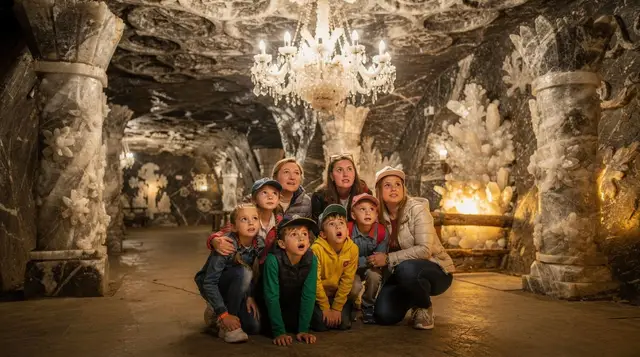
Wieliczka generally wins for families with younger children: the route is more visually varied, the Dwarfs’ Chamber and underground lake hold attention well, and the infrastructure (wide walkways, a lift for the ascent) is more forgiving for tired legs. Bochnia’s mine train and boat ride are genuinely exciting for children old enough to sit still for a guided commentary, but the overall pace suits ages 8 and up better than toddlers. If you’re building a full family itinerary around Kraków, the Wieliczka with children guide goes into much more depth on this specific decision, and the family-friendly day trips from Kraków guide covers how a salt mine visit fits alongside other kid-friendly options.
Going deeper before you book
If you want the full picture of the bigger mine, our Wieliczka salt mine from Kraków guide walks through the visit step by step, and Wieliczka: tour or independent? helps you decide how to organise it. For the smaller one, the Bochnia salt mine day trip guide covers what the visit feels like in more detail, and the Bochnia destination page and Wieliczka destination page give the wider context of each town.
Fitting a salt mine into your wider plan
A salt mine works best as one piece of a balanced stay rather than the whole of it. If you are still deciding how long to spend in the city, how many days in Kraków helps you see where a half-day underground fits. Travellers who like a ready-made structure can follow the Kraków, Auschwitz and Wieliczka 3-day itinerary or the 7-day Małopolska itinerary, which leaves room for a second, quieter mine. For more ideas beyond the mines, browse the best day trips from Kraków.
Since both mines keep a steady cool temperature underground, they also suit a bad-weather day; the rainy day activities guide lists other options for when the forecast turns. If you prefer to read a traveller’s own account of the experience, the Wieliczka underground wonder blog story is a good companion piece, and Getting around Kraków explains the local transport you will rely on to reach the departure points.
Frequently asked questions about Wieliczka vs Bochnia salt mine
Can you visit both salt mines in one day?
Yes, but it is a long day. Allow 2.5–3 hours for Wieliczka including travel, then travel east to Bochnia (about 50 km). You would arrive at Bochnia in the early afternoon with enough time for a 2–3 hour tour. Start with Wieliczka at its 8 am opening and book Bochnia for 2 pm. It works better with private transport than public trains.
Do you need a guide at both mines?
Yes — both Wieliczka and Bochnia require visitors to join a guided tour. You cannot wander independently through the active mine galleries. Tours at Wieliczka run in groups of 30 or so; Bochnia groups tend to be smaller. At Wieliczka, English-language tours depart frequently throughout the day. At Bochnia, confirm English-language availability when booking.
Is Wieliczka safe for people with claustrophobia or mobility issues?
Wieliczka has wide, well-lit galleries and does not feel claustrophobic in most sections. The 800-step descent can be challenging, and some passages require ducking. Bochnia’s mine lift may feel more enclosed but the galleries are similarly spacious. Neither mine is fully wheelchair accessible; contact them directly for specific accessibility queries.
How far in advance should I book Wieliczka?
In peak summer months (June–August), book at least 2–3 weeks ahead for a preferred time slot. English-language guided tour slots fill quickly. The fast-track option reduces queuing time but you still need a timed ticket. For Bochnia, 3–5 days ahead is usually sufficient.
Which salt mine is better value for money?
Bochnia. Compare the current entry prices on the two mines’ official websites; do not assume either is cheaper.
Can I combine Wieliczka with Auschwitz instead of Bochnia?
You can, but it’s a demanding pairing best avoided — Auschwitz is an emotionally significant visit that deserves undivided attention, and stacking it with a salt mine the same day undercuts both. If you want two day trips close together, salt mine plus salt mine (Wieliczka and Bochnia on separate days) or salt mine plus a lighter destination like Zalipie works better logistically and emotionally than combining with Auschwitz.
Is Bochnia worth visiting if I only have time for one salt mine ever?
If you’ll genuinely only ever visit one salt mine in Poland, choose Wieliczka — it’s the more complete, more iconic experience and includes the Chapel of St Kinga, which Bochnia has no equivalent to. Bochnia is the better second visit or the pick for travellers who specifically want the boat ride and mine train rather than architectural grandeur.
Top experiences
Bookable activities with verified prices and instant confirmation on GetYourGuide.