Auschwitz-Birkenau — visiting the memorial with respect
How to visit the Auschwitz-Birkenau Memorial and Museum ethically: booking official timed entry, guided tour logistics, and what to expect.
From Krakow: Auschwitz-Birkenau guided tour & hotel pickup
Duration: 3.5h
Quick facts
- Distance from Kraków
- 70 km west; approximately 1.5 hours
- Entry
- Free — but timed-entry reservation is mandatory
- Official booking
- visit.auschwitz.org (only authorised source)
- Guided requirement
- Required for some slots (April–October); check visit.auschwitz.org
- How far ahead
- At least 2 months for summer guided tours
- Duration
- 3.5–6 hours depending on visit type
A note before you read further
The Auschwitz-Birkenau Memorial and Museum is the site of the largest mass murder in recorded history. Between 1940 and 1945, the Nazi German regime murdered approximately 1.1 million people here — the overwhelming majority of them Jewish men, women and children from across occupied Europe, transported to their deaths by rail.
This guide addresses the logistics of visiting — how to book, how to get there, what to expect — with the honest framing that logistics matter because they affect whether you visit with dignity and adequate preparation, or in a rushed, chaotic way that serves no one. The Memorial itself is not a tourist attraction. It is a place of mourning and memory. This guide treats it accordingly.
| Where | Oświęcim, 70 km west of Kraków, around 1.5 hours by car or bus |
| Cost | Free entry; timed-entry reservation is mandatory |
| Time needed | 3.5–6 hours on site, plus travel — allow a full day |
| Getting there | Guided transport from Kraków, public bus to Oświęcim, or self-drive |
| Best time | Year-round; book 4–8 weeks ahead for a summer guided slot |
What the memorial consists of
Auschwitz I (the main camp): The original camp, established 1940, where the Gestapo first imprisoned Polish political prisoners and Soviet POWs before the Nazi regime’s decision to use the site for systematic mass murder. The red-brick barracks now house the permanent exhibition. The infamous “Arbeit Macht Frei” gate stands at the entrance. The gas chambers and crematoria were partially demolished by the SS before liberation; part of the original structure remains.
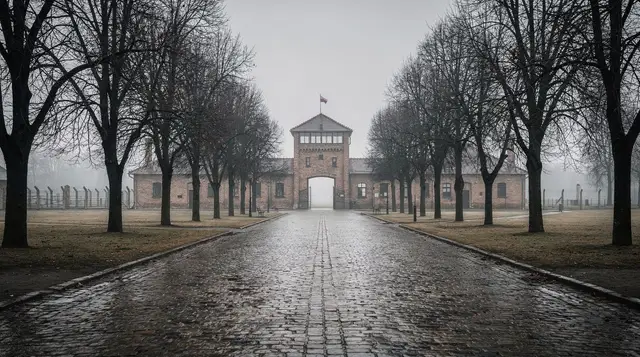
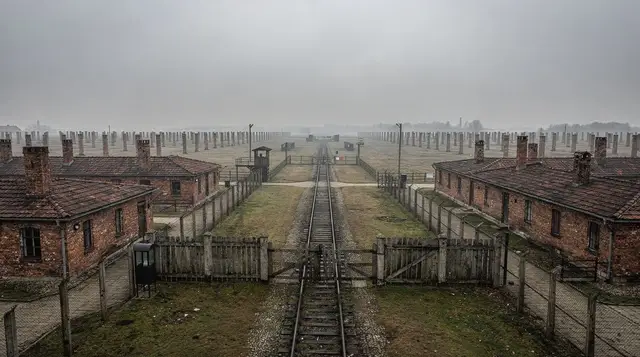
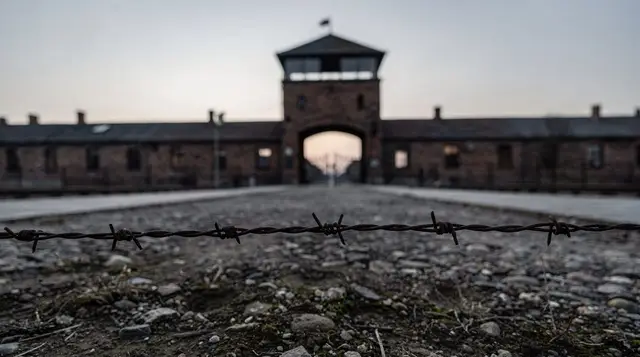
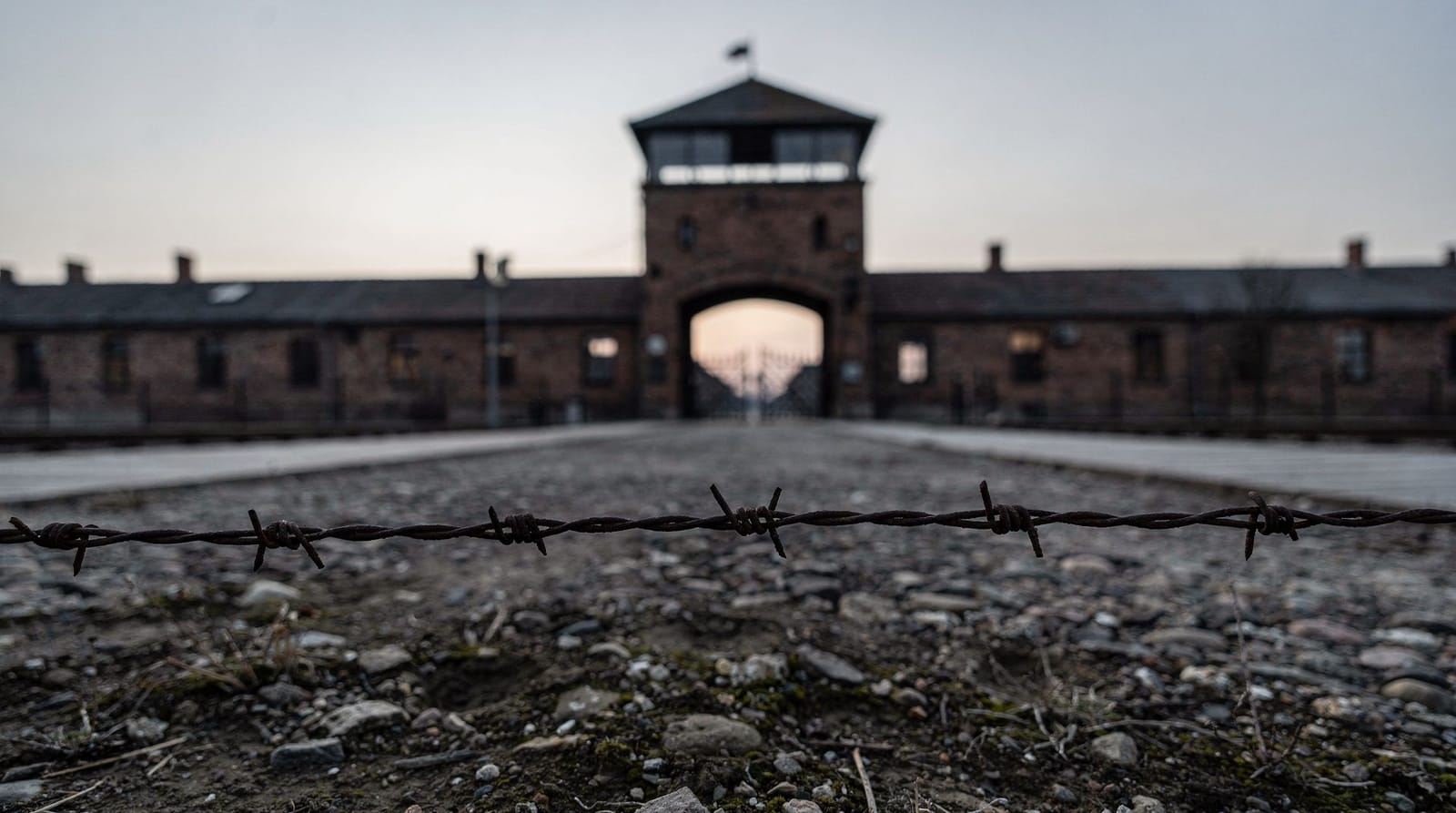
Auschwitz II-Birkenau (the extermination camp): 3 km from the main camp, built from 1941 as the principal extermination site. This is where the vast majority of victims were killed. The scale is enormous — 175 hectares, with the ruins of four large crematoria stretching across the landscape. The main gatehouse (the “Gate of Death”), the rail ramp where arriving deportees were “selected,” and the ruins of the gas chambers are all here.
A complete visit includes both sites. Buses run between them during peak hours; it is also possible to walk (about 40 minutes).
Entry — free but not open
Entry to the Memorial is free. However, a timed-entry reservation is mandatory for all visitors. Without a reservation, you will not be admitted. This is not a formality — the system exists to manage the flow of 2 million annual visitors in a way that is respectful both to the site’s character and to the experience of those visiting.
Book at visit.auschwitz.org — this is the only authorised booking system. There are no official ticket offices at the gate. Anything sold by a third party other than licensed tour operators is at best a booking service (adding unnecessary fees) and at worst a scam.
Between April and October, some entry slots require participation in a licensed guided tour — you cannot enter independently during those hours. Other slots allow independent visits (without a guide), but a reserved entry card is still required. Check the current slot rules on visit.auschwitz.org. Between November and March, individual visits are possible throughout the day.
The official guided tour requirement — and why it matters
The guided tour requirement during morning slots is not bureaucratic — it reflects the Memorial’s considered position on how the site should be experienced. A licensed guide ensures that visitors have historical context before entering, understands what they are seeing, and maintains appropriate conduct throughout.
Unlicensed guides and unofficial tours are prohibited. The Memorial’s own licensed guides are the only people who can lead tours inside the site.
How to book a guided tour: Via visit.auschwitz.org, or through a licensed tour operator. Tours are available in multiple languages; English is the most frequently available. Slots during peak season (July–August) book out weeks in advance. For summer visits, at least 2 months ahead is the realistic minimum for a licensed guided tour with a reasonable time slot.
If you are booking through a tour operator based in Kraków, ensure they are licensed — ask for their licensing details if uncertain. Legitimate operators will provide them.
Warning: unofficial “Auschwitz tours” from street touts
In and around Rynek Główny and near Kraków Główny station, individuals sometimes offer “Auschwitz tours” at appealing prices. These are not affiliated with the Memorial, often involve unlicensed guides or private arrangements that do not guarantee entry, and in some cases involve guides who have been banned from the site. Do not book these.
The honest-krakow hub has more information on Kraków scams in general. For Auschwitz specifically: book only through visit.auschwitz.org or through a licensed operator with verifiable credentials.
When to go — a season-by-season look
There is no wrong time to pay respects at the Memorial, but the practical experience — crowds, weather, how far ahead you need to book — changes considerably across the year.
| Season | Weather | Crowds | Booking lead time |
|---|---|---|---|
| Winter (Nov–Mar) | Cold, often below freezing; grey skies | Quietest months; independent slots available all day | 1–2 weeks |
| Spring (Apr–May) | Mild, occasional rain | Moderate; guided-tour requirement for morning slots begins in April | 2–4 weeks |
| Summer (Jun–Aug) | Warm, 20–28°C; little shelter at Birkenau | Busiest months — most of the 2 million annual visitors come now | 4–8 weeks |
| Autumn (Sep–Oct) | Cool and atmospheric; fewer crowds after early September | Moderate, easing toward quiet by late October | 2–4 weeks |
Winter has a stark, sobering quality that many visitors find fitting; it is also the easiest season for spontaneous independent visits. Summer offers longer daylight and easier transport connections but demands booking far ahead and patience with crowds.
Getting there from Kraków
By organised transport: The most straightforward option. The guided tour with hotel pickup from Kraków handles transport, licensed guide and entry logistics in a single booking. The official tour with hotel pickup is the alternative for those who prefer a slightly different operator. For a more intimate visit, the small group tour limited to 15 visitors allows a quieter, more personal experience.
By public transport: Buses run from Kraków bus station (MDA terminal, ul. Bosacka) to Oświęcim, the town adjacent to the Memorial. Journey time is approximately 90 minutes; several departures per day. From Oświęcim bus station, taxis or local buses connect to the Memorial. This is a viable option for independent visitors booking afternoon slots.
By car: The Memorial has parking (paid) at both sites. Journey time from central Kraków is approximately 75 minutes on normal traffic days.
Practical note: Do not underestimate journey time. Allow buffer on both ends — arriving late to a timed slot is stressful and may result in losing your reservation. Aim to arrive 30 minutes before your scheduled time.
What to expect on arrival
The Memorial receives 2 million visitors annually. Even with timed entry, the site can feel crowded during peak months (July–August). A few honest observations:
At Auschwitz I: The exhibition buildings are inside former barracks — they are indoor, climate-controlled, and contain thousands of artefacts and documents. The exhibition is unflinching. Take the time it requires. Most people need more time than they expect.
At Auschwitz II-Birkenau: The scale is different — open, vast, the ruins of the gas chambers at the far end of the camp, the rail ramp running through the centre. The experience here is spatial rather than narrative. It is the part of the visit that most people find hardest to process.
Duration: The standard guided tour of both camps takes approximately 3.5 hours. Independent visitors often spend 4–6 hours. Do not plan anything immediately after — most people find that they need time and quiet after leaving the site.
How to behave at the memorial
The Memorial requests that visitors:
- Do not eat, drink or smoke on the grounds
- Dress respectfully (this is a matter of common decency; no specific dress code is enforced, but shorts and casual holiday clothing are inappropriate in this context)
- Maintain quiet and reflective conduct
- Respect the prohibition on photography in certain areas of the exhibition, and act with sensitivity when photographing across the site in general
- Do not pick up artefacts or touch exhibits
Children can visit — many schools bring students here as part of Holocaust education — but parents should prepare young children beforehand. The exhibition is not graphic in a gratuitous way, but it is honest. A 7-year-old and a 12-year-old will have different experiences.
Visiting ethically — a few things worth saying
Auschwitz-Birkenau has become part of the tourism economy of the region. Tour operators, accommodation and transport providers profit from the fact that people want to visit. None of this is inherently wrong — the Memorial requires resources, guides and infrastructure. But the commercialisation of Holocaust sites requires self-awareness from visitors.
The Memorial does not ask for performative grief. It asks for honest engagement with what happened here. Some visitors find it helpful to read the site’s own educational materials (available at visit.auschwitz.org) before arriving. The Memorial also recommends Primo Levi’s “If This Is a Man” as preparatory reading.
Photography: You may take photographs at the site. How you share them afterwards — on social media, in personal albums — is a question only you can answer. The Memorial has published its own guidelines on the topic.
What to bring
- Water and food (you will not want to eat during the visit, but afterwards)
- Comfortable shoes — the site covers significant distance
- Layers — the barracks interiors are cooler than the open air
- Rain gear if weather is uncertain — there is limited shelter at Birkenau
- A fully charged phone or camera if you wish to photograph
Bags larger than 35 × 25 × 15 cm are not allowed and must be left in storage at the entrance.
Connecting Auschwitz to Kraków’s history
The Nazi occupation of Kraków and the creation of the Kraków Ghetto are the immediate context for Auschwitz. Visiting Podgórze — with its Schindler’s Factory Museum, Ghetto Heroes Square and Eagle Pharmacy — gives you the Kraków end of the story that the Memorial completes. Kazimierz shows you the world that existed before the ghetto; the Galicia Jewish Museum makes explicit the connection between the community who lived there and the murder site 70 km away.
The WWII Kraków guide and Auschwitz history guide provide the historical background that makes the visit more legible. For the fuller wartime picture, the Kraków under Nazi occupation guide and the Schindler’s List locations guide both connect directly to what you see at the Memorial. A dedicated WWII history itinerary sequences these sites into a coherent day-by-day plan if you want to go deeper than a single visit.
Choosing between a guided and a self-guided visit
Deciding whether to join a guided tour or, where permitted, visit independently is worth thinking through before you book. The guided versus self-guided comparison weighs the two honestly: a licensed guide adds context that is genuinely hard to replicate from a guidebook, while an independent afternoon visit suits those who prefer to move at their own pace and read the on-site materials themselves. If you are travelling as a couple or with one or two others, the group versus private tour comparison covers the trade-offs between joining a larger group and booking a smaller, private arrangement.
Combining with other day trips — a word of caution
Some itineraries pair Auschwitz-Birkenau with the Wieliczka Salt Mine on the same day, and the Auschwitz-Wieliczka same-day guide explains how the logistics work. It is possible, but think carefully before booking it: the emotional weight of the Memorial does not pair naturally with a same-day tourist attraction, however impressive the salt mine is in its own right. Many past visitors recommend giving the Memorial its own day and quiet evening afterwards rather than rushing to a second stop.
Frequently asked questions about visiting Auschwitz-Birkenau
Is entry to Auschwitz-Birkenau free?
Yes. Entry is free, but mandatory timed-entry reservation is required through visit.auschwitz.org. There is no charge to visit the Memorial. Licensed guided tours and transport from Kraków have separate costs.
Do I need a guide to visit?
Between April and October, a licensed guide is required for some entry slots. Other slots allow independent visits, but still require an entry card reserved in advance. Check the current slot rules on visit.auschwitz.org. Between November and March, independent visits are available throughout the day.
How far in advance should I book?
For summer (June–August), 4–8 weeks minimum for a guided morning slot. For shoulder season (April–May, September–October), 2–4 weeks ahead is typically sufficient. For winter visits with afternoon independent slots, 1–2 weeks ahead is usually adequate.
How long does a visit take?
The standard guided tour of both Auschwitz I and Auschwitz II-Birkenau takes approximately 3.5 hours. Independent visitors covering both sites at a thorough pace typically spend 4–6 hours. Allow a full day from Kraków including travel time.
Can children visit?
Yes. The Memorial does not recommend the visit for children under 14. Prepare children beforehand; the exhibition is honest about what happened here. Many schools bring students to the site as part of Holocaust education.
Are the unofficial Auschwitz tours at the train station legitimate?
No. Unofficial “Auschwitz tours” sold by street touts or at unofficial booths are not affiliated with the Memorial, may involve guides who are not licensed, and cannot guarantee timed-entry access. Book only through visit.auschwitz.org or through licensed tour operators.
Top experiences
Bookable activities with verified prices and instant confirmation on GetYourGuide.