Kazimierz — Kraków's Jewish quarter and bohemian heart
Synagogues, Plac Nowy zapiekanki, independent bars and the Jewish Culture Festival: a real guide to Kraków's Kazimierz district.
Krakow: Kazimierz Jewish Quarter walking tour
Duration: 2h
Quick facts
- Distance from Old Town
- 15-min walk south; 5 min by tram
- Time needed
- Half day (museums) to full day (atmosphere)
- Must-see
- Galicia Jewish Museum, Old Synagogue, Plac Nowy
- Best evening
- Plac Nowy bars and Alchemia — some of the best bars in Poland
- Annual highlight
- Jewish Culture Festival (late June / early July)
A neighbourhood with layers
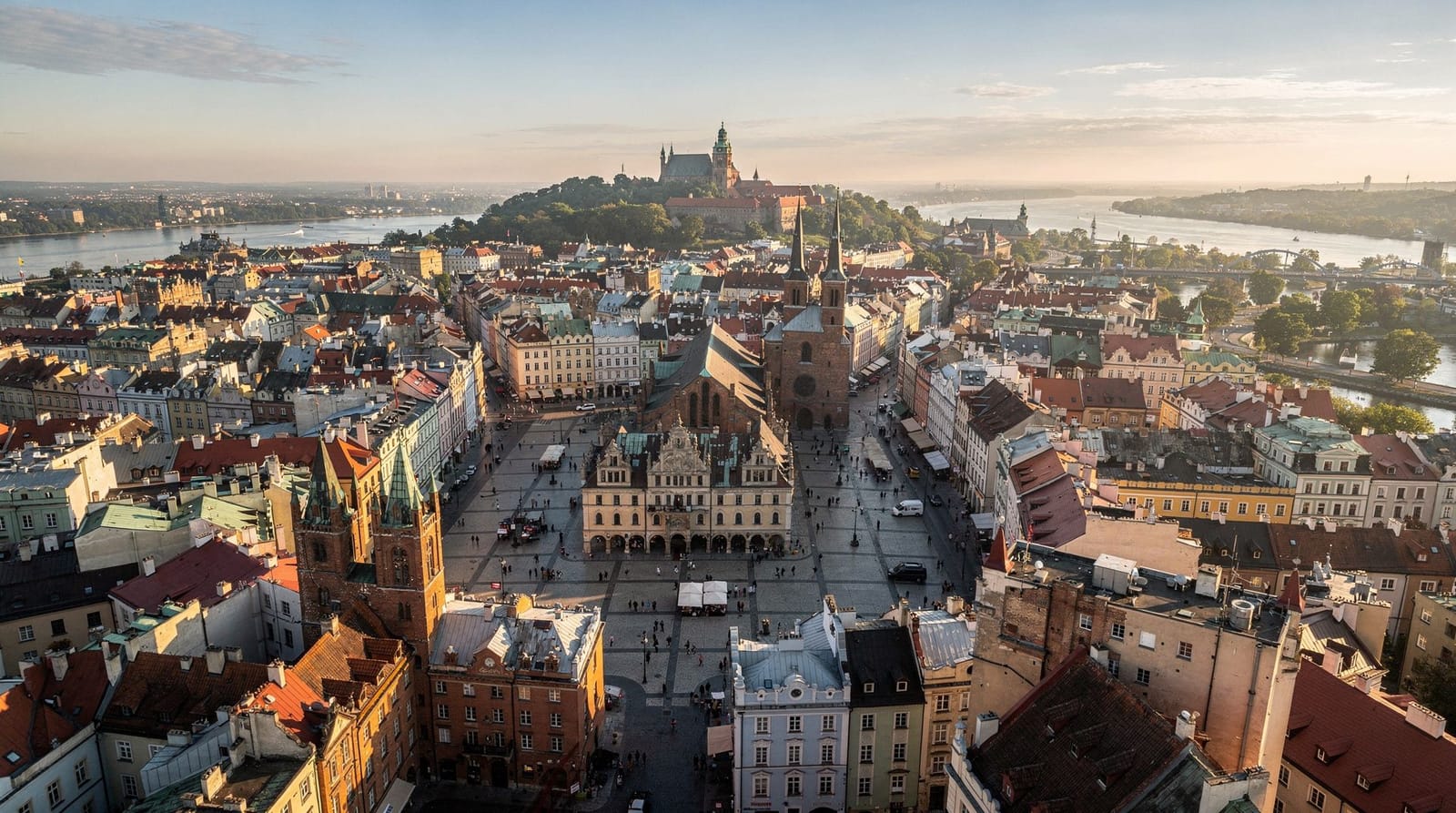
Kazimierz was a separate town from Kraków until 1791, established as a Jewish settlement in the 15th century and home to one of the most significant Jewish communities in Central Europe for four hundred years. By 1939, around 65,000 Jewish people lived in the Kraków area; most were murdered in the Holocaust, primarily at the Auschwitz-Birkenau extermination camp 60 km to the west.
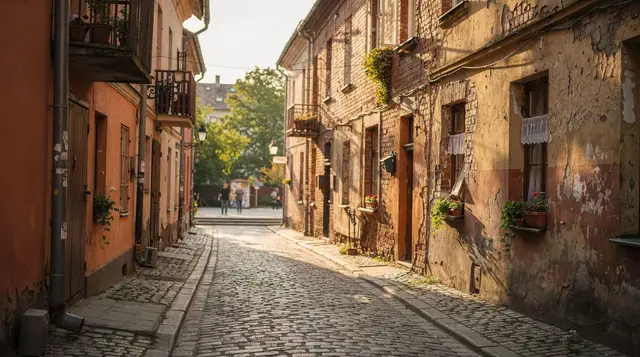
Today Kazimierz is both a place of memory and a living neighbourhood. The synagogues, cemetery and museums document a destroyed world. But the district is also genuinely vibrant — independent restaurants, coffee roasters, vinyl record shops, and a bar scene that is one of the best in Central Europe. The two realities coexist, sometimes uncomfortably, always interestingly.
| Where | South of the Old Town, 15-min walk or 5 min by tram |
| Cost | Museums 22–35 PLN each; free to walk the streets and cemeteries |
| Time needed | Half a day for the key museums, a full day with food and evening bars |
| Getting there | Walk from Rynek Główny, or trams 3, 9, 11, 13, 24 |
| Best time | May–September; Jewish Culture Festival late June/early July |
Start with orientation: the Kazimierz Jewish Quarter walking tour (around 2 hours) is the most efficient way to understand the physical geography of the neighbourhood and its history before exploring independently. The Jewish Quarter, Kazimierz and Ghetto tour extends the walk across the river to Podgórze, covering the full arc of Jewish Kraków. For deeper background before you go, the Kazimierz Jewish Quarter guide and Jewish Kraków history overview are worth reading first.
The Jewish heritage sites
Galicia Jewish Museum (Muzeum Galicja)
The Galicia Jewish Museum on ul. Dajwór 18 is one of the most thoughtfully designed Jewish heritage museums in Europe. Its permanent exhibition, “Traces of Memory,” presents large-format photographs of Jewish memorial sites across Galicia — not the familiar images of prewar life or wartime destruction, but the mundane contemporary remnants: overgrown cemeteries, crumbling synagogues, streets that no longer remember. The effect is quietly devastating.
Founded in 2004 by British photographer Chris Schwarz, the museum also runs changing exhibitions on Jewish culture and Polish-Jewish relations. Entry is 35 PLN (≈ €8.30); the Galicia Jewish Museum entry ticket includes access to all exhibitions. Allow 60–90 minutes. Open daily. The Galicia Jewish Museum guide has a fuller room-by-room breakdown if you want to plan your visit in advance.
Old Synagogue (Stara Synagoga)
The oldest surviving synagogue in Poland, built in the 15th century and reconstructed in Renaissance style after a fire in 1557. Now a branch of the Historical Museum of Kraków, it houses an exhibition on the history of Kraków’s Jews: religious objects, documents, photographs from the prewar community. Entry is 22 PLN (≈ €5.25). On ul. Szeroka, the main historic street of the Jewish quarter.
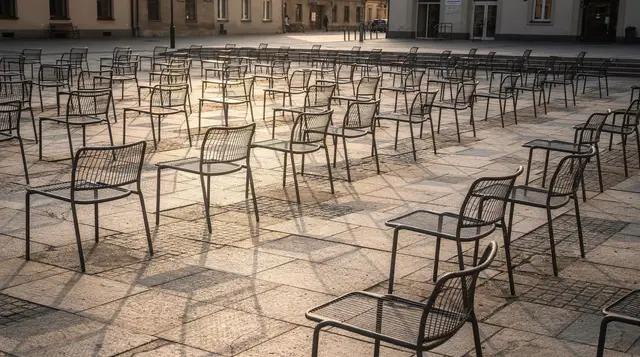
Ul. Szeroka is misleadingly named — it is actually a wide square rather than a street. The cafés and restaurants here are atmospheric but touristy; prices are above the Kazimierz average. The square was used as a filming location for several scenes of Steven Spielberg’s “Schindler’s List.”
Remuh Synagogue and Cemetery
The Remuh Synagogue (ul. Szeroka 40) is still an active house of worship — one of the few in Kraków. The adjacent Remuh Cemetery dates from 1551 and contains the grave of Rabbi Moses Isserles (the Remuh), one of the most important Jewish legal scholars of the 16th century. Jewish visitors from around the world still travel to the cemetery to leave notes and stones at his grave. Entry to both is 10 PLN (≈ €2.40). Closed on Saturdays and Jewish holidays; dress modestly.
High Synagogue (Wysoka Synagoga) and Isaac Synagogue
The 16th-century High Synagogue (ul. Józefa 38) has an exhibition on Jewish prayer and religious life. The Isaac Synagogue (ul. Kupa 18), built 1638–1644, is the largest in Kazimierz and has recently been restored. Both are worth a brief stop if you are making a circuit of the neighbourhood’s religious buildings — the High and Tempel synagogues guide and the Old Synagogue and Remuh guide cover all of them in more detail, including current opening hours.
The Jewish cemetery on Miodowa
The New Jewish Cemetery (ul. Miodowa 55) contains graves from the 19th and 20th centuries, including those of Holocaust victims. Less visited than the Remuh Cemetery, it is a place of quiet dignity. Free entry; modest dress required.
Plac Nowy — the market square
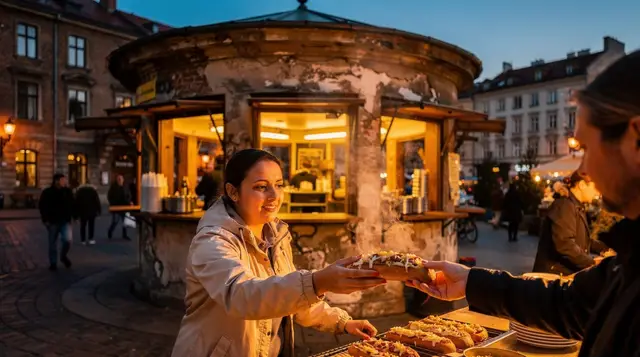
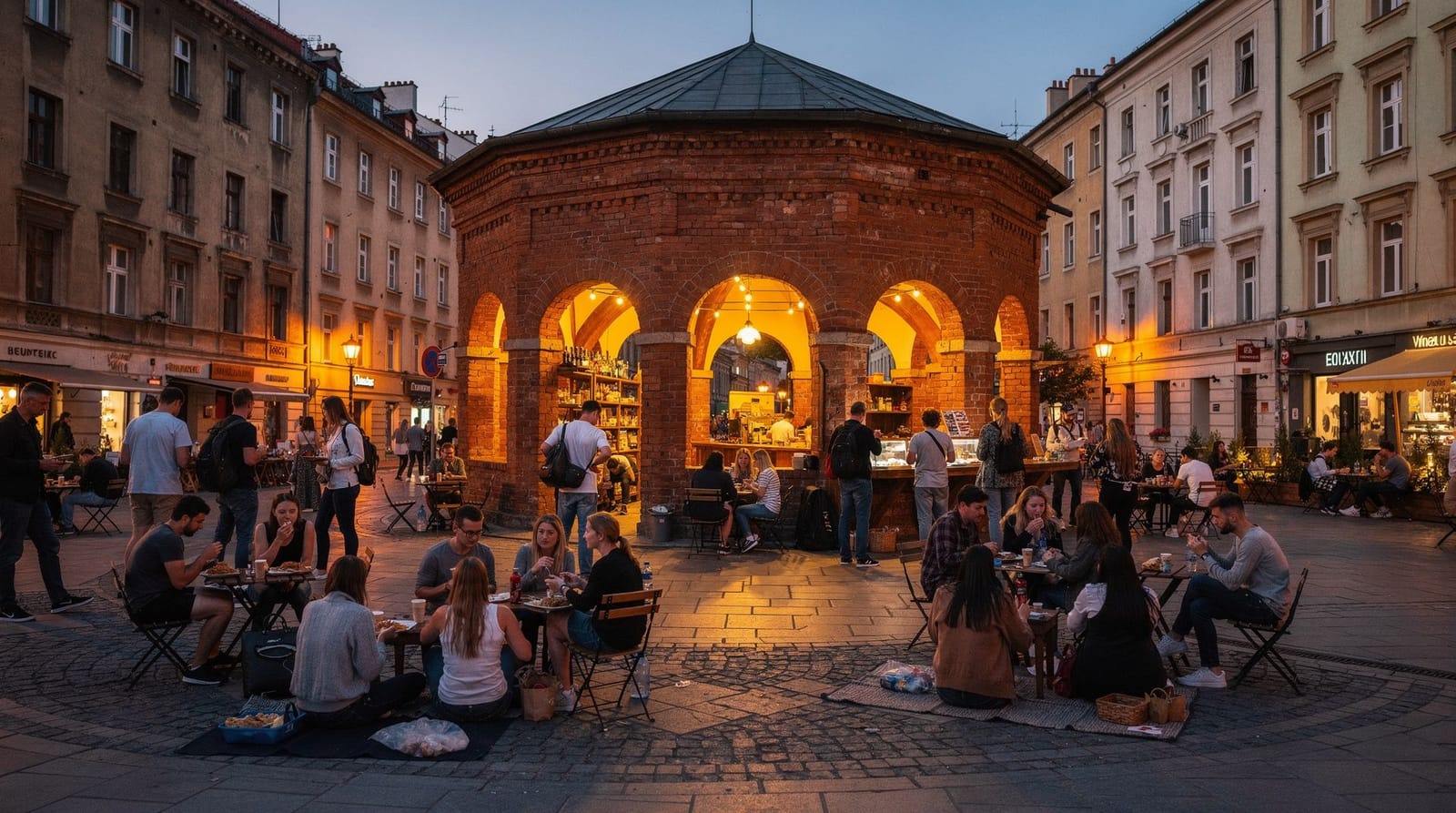
Plac Nowy is the beating heart of everyday Kazimierz. The circular brick rotunda in the centre originally served as a kosher slaughterhouse; today it houses the city’s most famous zapiekanki vendors. Zapiekanki are open-face baguettes loaded with mushrooms, cheese and toppings — Kraków’s answer to fast food, eaten standing up for 12–18 PLN (≈ €3–4.30). The queues form early and do not really stop until midnight.
The square hosts a flea market every Sunday morning (roughly 7:00–14:00) — antiques, communist-era ceramics, old magazines, vinyl records. The best finds go quickly; serious buyers arrive before 8:00.
In the evening, Plac Nowy becomes the centre of Kazimierz’s nightlife. The bars around the perimeter — Alchemia, Mleczarnia, Stajnia, Singer — are cheap, unselfconscious, and stay open until the last person leaves (sometimes 4:00 or 5:00). A beer costs 8–14 PLN (≈ €2–3.30), roughly half the price of Old Town bars.
Honest note on Kazimierz bars: They are genuinely excellent by any standard. The vodka is often homemade (nalewka — fruit vodkas). The atmosphere is un-staged. This is not a tourist recreation of bar culture; it is what bars in a Central European city actually look like.
Food and coffee in Kazimierz
Marchewka z Groszkiem (ul. Miodowa 14): Honest Polish cooking at honest prices. Żurek, pierogi, goulash, milk bar prices (15–35 PLN / ≈ €4–8). One of the best value restaurants in the neighbourhood.
Hala Targowa (ul. Grzegórzecka 3): Kraków’s covered food market, on the edge of Kazimierz. Market stalls selling local produce, cheeses, meats. Several food stalls inside for a quick lunch. Open daily.
Café Szafé (ul. Józefa 9): Independent coffee roaster with one of the best espresso bars in Kraków. A double espresso costs around 12 PLN (≈ €2.90).
Bagelmama (ul. Dajwór 10): New York-style bagels in Kazimierz, which sounds incongruous but works. The neighbourhood historically would have had its own bagel tradition — the Kraków obwarzanek is a direct relative.
Hamsa (ul. Szeroka 2): Hummus-focused restaurant with Israeli-inspired menu. Mid-range pricing (35–60 PLN / ≈ €8–14 for a main). Pleasant terrace on ul. Szeroka in summer.
The Jewish Culture Festival
The annual Jewish Culture Festival (Festiwal Kultury Żydowskiej), held over 10 days in late June and early July, is one of the most important world music events in Europe. Concerts, workshops, film screenings and debates fill Kazimierz; the closing concert on Szeroka Street draws crowds of tens of thousands. Admission to most events is free or low-cost.
The festival was founded in 1988, when Kazimierz was still a derelict neighbourhood largely avoided by Kraków residents. It has been credited with beginning the district’s revival. Today it attracts performers and visitors from across Europe and Israel. If you are visiting in late June, plan around it — accommodation books out weeks in advance.
See the Jewish Culture Festival guide for dates, programme highlights and booking logistics.
A short self-guided walking order
If you prefer to explore independently rather than joining a tour, a sensible order runs: start at the Galicia Jewish Museum (opens 10:00) for historical context, walk up ul. Dajwór to ul. Szeroka for the Old Synagogue and Remuh Synagogue and Cemetery, continue to the High and Isaac Synagogues, then cross to Plac Nowy for lunch. Spend the afternoon browsing the streets between ul. Józefa and ul. Meiselsa — independent shops, coffee roasters, vintage stores — before circling back to Plac Nowy for the evening. This route covers roughly 3 km on foot and comfortably fills a full day without feeling rushed.
How Kazimierz connects to Podgórze
The history of Jewish Kraków does not end in Kazimierz. In March 1941, the Nazi occupation forced the entire Jewish population of Kraków into a ghetto in Podgórze, across the Vistula. The Piłsudski Bridge (a 15-minute walk from Plac Nowy) connects the two districts; walking from Kazimierz to Ghetto Heroes Square in Podgórze is a 20-minute journey that traces the forced displacement of the community.
Schindler’s Factory Museum in Podgórze documents the occupation of Kraków; combined with a morning in Kazimierz, it forms the fullest possible picture of Jewish life and its destruction in this city. The former Jewish Ghetto guided walking tour is worth considering for the afternoon after a morning in Kazimierz.
Getting to Kazimierz
On foot: 15 minutes south of Rynek Główny along ul. Grodzka and then ul. Stradomska. An easy and pleasant walk.
Tram: Lines 3, 9, 11, 13, 24 stop on ul. Miodowa or ul. Starowiślna, a 5-minute walk from the centre of Kazimierz.
No car needed: The neighbourhood is compact and best explored on foot.
Where to stay in Kazimierz
Kazimierz has become increasingly popular for accommodation — it offers more atmosphere than the Old Town and prices are typically 20–30% lower. Hotel Kazimierz I (ul. Miodowa 16) is the established choice; several boutique guesthouses have opened in converted 19th-century buildings. Being based here rather than the Old Town means a 15-minute walk to Wawel and 5 minutes to Plac Nowy — a trade-off most independent travellers find worth making.
| Kazimierz | Old Town | |
|---|---|---|
| Prices | Typically 20–30% lower | Highest in the city |
| Atmosphere | Bohemian, lived-in, historic Jewish quarter | Grand, historic, more tourist-facing |
| Nightlife | Independent bars, later and cheaper | Tourist-oriented bars around the Rynek |
| Walk to Wawel | ~15 minutes | ~10 minutes |
| Best for | Travellers who want atmosphere over convenience | First-timers who want everything on their doorstep |
The full Old Town versus Kazimierz stay guide weighs this in more depth if you are still deciding, and the where to stay in Kraków guide covers the rest of the city’s neighbourhoods for comparison.
Practical information for visiting Kazimierz
Opening hours for the main museums
The Galicia Jewish Museum (ul. Dajwór 18) is open daily 10:00–18:00. The Old Synagogue (ul. Szeroka 24) is open Monday 10:00–15:00, Tuesday–Sunday 9:00–17:00. The Remuh Synagogue is closed on Saturdays and Jewish holidays; check the calendar at the entrance.
The Corpus Christi Basilica
On ul. Bożego Ciała, just south of Kazimierz’s Jewish centre, the Corpus Christi Basilica (Bazylika Bożego Ciała) is a Gothic church begun in 1340 that most visitors walk past without entering. The interior is disproportionately grand for its modest exterior — a single nave, richly furnished, with a particularly fine early-baroque high altar. Free entry; open daily. Takes five minutes and is worth it.
Schindler’s List filming locations in Kazimierz
Several streets in Kazimierz were used as film sets for the prewar Jewish quarters of Kraków in “Schindler’s List” (1993), because Kazimierz retained the correct architectural character more completely than the actual streets the film depicted. Ul. Szeroka served as the ghetto central square in several scenes. The film simultaneously brought international attention to Kazimierz and to the destruction it depicts — a complicated legacy that the neighbourhood’s ongoing cultural life continues to negotiate.
Nightlife — honest guide
Kazimierz’s bar scene is not a fabrication for tourists. The bars on and around Plac Nowy — Alchemia (ul. Estery 5), Mleczarnia (ul. Meiselsa 20), Singer (ul. Estery 20), Stajnia — have been operating since the early 2000s, when the neighbourhood was still largely derelict. They are dark, crowded, cheap and open late. Alchemia in particular has a reputation for events (jazz, acoustic concerts, film screenings) that it has maintained for two decades.
Beer is 8–14 PLN (≈ €2–3.30); shots of nalewka (fruit vodka) are 8–12 PLN (≈ €2–2.90). The outdoor terrace at Alchemia and the courtyard at Mleczarnia are the places to be in summer. The Kazimierz best bars and cafés guide and Kazimierz nightlife guide go bar-by-bar if you want a fuller crawl planned out, and a first-hand Kazimierz after dark blog account gives a sense of how a night here actually unfolds. For food beyond what is listed above, the Kazimierz food scene guide rounds up the neighbourhood’s best-value restaurants.
Frequently asked questions about Kazimierz
Is Kazimierz worth visiting?
Without question. It is the most textured and authentic neighbourhood in Kraków — historically significant, visually striking, and home to the city’s best bars and coffee shops. A morning of museums and a late evening on Plac Nowy gives you the full picture.
How long should I spend in Kazimierz?
A minimum of half a day for the key museums (Galicia Jewish Museum, Old Synagogue) and a walk through the streets. A full day allows you to eat properly, browse the market if it is Sunday, and settle into the pace of the neighbourhood. Add an evening for the bar scene.
What is the best way to see Jewish heritage in Kraków?
The Jewish Quarter extends across both Kazimierz and Podgórze. A guided tour that covers both districts — such as the Kazimierz and Ghetto walking tour — is the most efficient approach. Independent visitors should combine the Galicia Jewish Museum with the Old Synagogue in the morning, then cross to Schindler’s Factory and Ghetto Heroes Square in Podgórze in the afternoon.
What are zapiekanki and where do I get them?
Zapiekanki are open-face half-baguettes topped with mushrooms, melted cheese and various additions (ketchup, garlic sauce, olives). They are Kraków’s cheap street food staple, sold from the rotunda stalls in Plac Nowy for 12–18 PLN (≈ €3–4.30). The queue is the only reliable queue in the neighbourhood; it is worth it.
Top experiences
Bookable activities with verified prices and instant confirmation on GetYourGuide.