Kraków Jewish Culture Festival: the complete visitor's guide
Krakow: Kazimierz Jewish Quarter walking tour
Duration: 2h
When is the Kraków Jewish Culture Festival and what should I expect?
The Jewish Culture Festival takes place annually in late June or early July in Kazimierz; the 35th edition runs 1–5 July 2026. It is one of the largest celebrations of Jewish culture in the world, featuring concerts, workshops, film screenings, and guided tours. The climactic open-air concert on Szeroka Street draws 10,000–15,000 people. Book accommodation 2–3 months ahead if visiting during festival week.
What is the Jewish Culture Festival?
| Where | Kazimierz, Kraków |
| When | 1–5 July 2026 (35th edition) |
| Cost | Free finale; concert and workshop prices on the official website |
| Getting there | 15-min walk or tram 3/9/19/24 from Old Town |
| Book ahead | Accommodation 2–3 months; synagogue concerts as soon as released |
The Kraków Jewish Culture Festival (Festiwal Kultury Żydowskiej w Krakowie) is an annual celebration of Jewish culture, music, art, and history, held each year since 1988 in the Kazimierz district. It is now one of the largest festivals of Jewish culture in the world, drawing visitors from over 50 countries, with a 2025 programme that included over 200 events and attracted more than 30,000 attendees across the festival.
The festival was founded by Janusz Makuch and Krzysztof Gierat at a remarkable historical moment — just before the fall of communism in Poland, when Jewish cultural life in the country was tentatively re-emerging after decades of suppression. The festival’s founding mission was to document and celebrate what had survived, and to honour what had been lost, without falling into either sentimentality or ethnographic distance.
That mission has evolved over four decades into something more dynamic: the festival today is not merely a heritage commemoration but an active cultural platform where Israeli, American, Eastern European, and diaspora Jewish artists collaborate, where young Polish musicians learn klezmer traditions, and where the complex questions of memory, identity, and the future of Jewish culture in Europe are explored openly.
The 2026 festival
The 35th edition takes place from 1 to 5 July 2026 (jewishfestival.pl). The pattern follows the same structure each year:
Earlier days (early evening onwards): A dense programme of ticketed concerts in synagogues and cultural venues across Kazimierz, workshops open to participants (cooking, music, language, dance), film screenings, academic seminars, and free afternoon events. The Tempel Synagogue hosts intimate chamber concerts; larger venues like the Forum Przestrzenie complex hold major bands and orchestras.
Final day (typically a Sunday, starting around 17:00): The “Shalom na Szerokiej” (Shalom on Szeroka) grand finale — a free outdoor concert on Szeroka Street that is the festival’s emotional and visual centrepiece. International headline acts (recent years have featured Israeli fusion bands, American klezmer orchestras, and Polish jazz-klezmer ensembles) perform on a large outdoor stage. Attendance regularly reaches 10,000–15,000. The atmosphere is celebratory and inclusive — families, older Polish residents, young international travellers, and members of the Jewish community all gather together. This is genuinely one of the great public cultural events in Poland.
Programme highlights
Music
Klezmer is the backbone of the festival — the traditional instrumental music of Eastern European Jewish communities, with roots in liturgical music and folk dance forms. But the programming is deliberately wide: past years have included Moroccan Jewish piyyut (liturgical poetry) performers, Israeli electronica fused with Sephardic melodies, New York jazz quartets interpreting Yiddish song cycles, and Polish brass ensembles reworking traditional tunes.
The most sought-after concerts are those held inside the synagogues — the acoustics of the Tempel Synagogue and the Old Synagogue are exceptional, and the combination of the musical performance with the architectural setting creates something unrepeatable. These concerts sell out fastest; book through jewishfestival.pl as soon as tickets become available (usually April).
Ticket prices vary by event: check the programme on the official website (jewishfestival.pl). The Szeroka finale is free.
Workshops
Festival workshops run through the morning and afternoon hours and cover:
- Klezmer instrumental workshops (violin, clarinet, accordion) — beginners and intermediate levels
- Yiddish language courses — basic conversation and song
- Jewish cooking workshops — cholent, gefilte fish, babka
- Traditional Jewish dance (various styles)
- Calligraphy and Hebrew letterforms
- Midrash study with resident scholars
Workshop fees are listed on the official website (jewishfestival.pl) and workshops must be booked in advance. Popular workshops sell out within days of programme release.
Film and exhibitions
The festival runs a parallel film programme of Jewish and Israeli cinema at the Kino Pod Baranami cinema on the Rynek Główny (programme released with main festival schedule). The Galicia Jewish Museum typically opens a major new exhibition during festival week. The Jewish Community Centre of Kraków (JCC, ul. Miodowa 24) hosts documentary screenings and open community events throughout.
Educational programme
For school groups and families, the festival runs afternoon educational events including storytelling, music sessions for children, and Yiddish word workshops. Several events are free and aimed at local Polish schools — a core part of the festival’s community mission.
Practical planning for festival visits
Accommodation
Kazimierz fills up fast during the festival. Key booking guidelines:
- Book 2–3 months ahead for accommodation in Kazimierz itself
- For accommodation in the Old Town (15 minutes walk to Kazimierz), 4–6 weeks ahead is usually sufficient
- Apartment rentals in Kazimierz (Booking.com, Airbnb) are often better value than hotels during the festival; minimum stays of 3–5 nights are common
- Average Kazimierz hotel rates during the festival: 350–600 PLN / ≈€83–€143 per night for a double room
Getting to events
The festival venue map is concentrated in Kazimierz, within a 10-minute walk of most accommodation in the neighbourhood. Trams 3, 9, 19, 24 run until 23:30; night buses cover later returns. Walk home after the Szeroka finale (the streets are busy and safe); avoid unofficial taxis that appear near festival venues and charge 3–5× normal rates — use Bolt or Uber app instead.
Tickets
- Main ticket sales: jewishfestival.pl (English-language interface)
- On-site box office opens at festival venues approximately 2 hours before each event (cash and card)
- Last-minute availability for outdoor events is common; synagogue concerts sell out consistently
- The Szeroka finale requires no ticket — arrive by 16:00 for a good position; by 17:30 the square is packed
What to wear
Late June/early July in Kraków averages 20–25°C. Evening concerts in synagogues require modest dress (covered shoulders and knees) — carry a light layer or scarf. The outdoor finale can be warm; a light jacket for late evening is recommended as temperatures drop after 21:00.
The broader context of the festival
The festival exists in a specific and contested cultural space: a celebration of Jewish culture organised primarily by non-Jewish Poles in a city where nearly all Jews were murdered within living memory. Scholars and commentators have debated this dynamic for decades — questions of appropriation, authenticity, and who speaks for destroyed communities are real and valid.
The festival has generally navigated this thoughtfully. It has always involved Jewish artists and scholars from Israel, the United States, and beyond, not merely Polish commemorators. The Jewish Community of Kraków is an active partner. The Galicia Jewish Museum provides critical historical grounding. Recent festivals have included explicit discussions of these tensions — panels on Polish-Jewish memory, on restitution, on the meaning of “Jewish revival” in a country with 15,000–20,000 Jewish residents versus 3.5 million before the war.
For visitors, the most honest approach is to attend as witnesses to something complex and ongoing — the festival is simultaneously genuine celebration, active mourning, cultural bridge-building, and tourist attraction. All of those things are true at once.
Combining the festival with a guided tour of Kazimierz
If you’re visiting during the festival, a guided walking tour of the neighbourhood on the morning of your arrival gives essential context before the evening’s events begin.
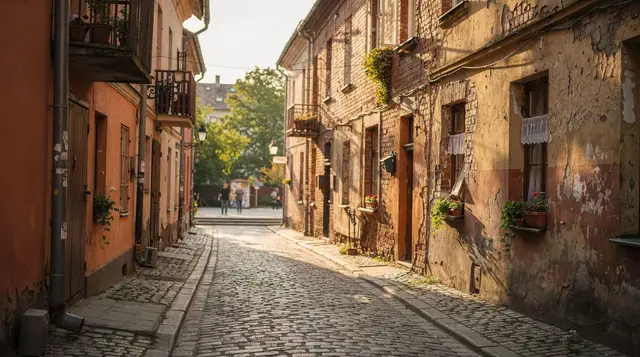
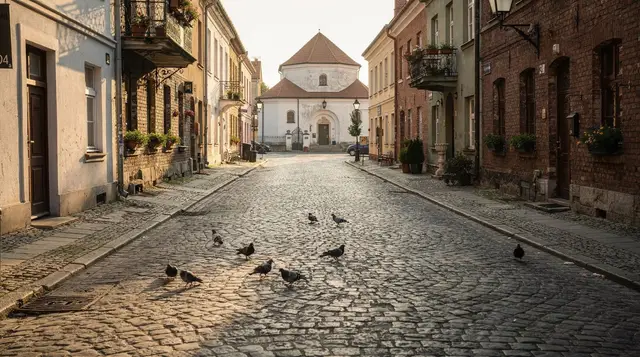
Kazimierz Jewish Quarter guided walking tour — ideal morning activity during the festivalFor a combined tour covering Kazimierz and the Ghetto in Podgórze — the historical context that frames everything the festival commemorates:
Jewish Quarter and Ghetto combined tour (3 hours)Frequently asked questions about the Jewish Culture Festival
Do I need to be Jewish to attend the festival?
No. The festival is explicitly and deliberately open to everyone regardless of background. The majority of festival-goers are non-Jewish, including large numbers of young Polish people with no direct connection to Jewish heritage. The festival has always seen cross-cultural participation as part of its core mission.
Is the Szeroka concert suitable for children?
Yes — it is a family-friendly event. Many Polish families with young children attend. The concert typically starts at 17:00–18:00, so younger children can enjoy much of it before their bedtime. Bring something to sit on; the square gets packed and standing for 3–4 hours can be tiring.
How far in advance do workshops sell out?
Popular workshops — particularly klezmer music workshops and Yiddish language courses — typically sell out within 48–72 hours of programme release (usually April). Less popular workshops (some cooking and academic sessions) often have availability until days before. Sign up for the festival newsletter to get notified when registration opens.
What is the general atmosphere like for visitors from outside Poland?
Consistently welcoming and internationally oriented. English-language events are well-integrated throughout the programme. Many performers and participants are from the US, Israel, UK, and other countries, making English a common language backstage and in workshops. The festival website and most event materials are available in English and Polish.
Can I combine the festival with the wider Jewish heritage sites of Kazimierz?
Yes, and most visitors should. The festival’s evening and night programme leaves mornings and early afternoons free, which is exactly when the synagogues of Kazimierz and the Galicia Jewish Museum are quietest and most rewarding to visit. Reading the Jewish Kraków history overview before the festival adds real depth — the celebration makes more sense once you understand what the community it commemorates actually went through, including the story told at Ghetto Heroes Square in nearby Podgórze.
Making a full day of festival week
Festival days have a natural rhythm: mornings and early afternoons are unprogrammed, so the smartest approach is to pair a heritage visit with the evening’s events rather than trying to attend everything.
Morning: Visit the Kazimierz synagogues — the Old Synagogue, Remuh Synagogue and Cemetery, and Isaac Synagogue are all a short walk from each other and best seen before the midday heat and crowds. Allow 2–3 hours.
Early afternoon: The Galicia Jewish Museum rewards at least 90 minutes and provides essential context for what the festival is actually celebrating and mourning. If you have more time, the Kraków Ghetto in Podgórze is a 15-minute walk south across the river.
Evening: Festival programming begins. Book synagogue concerts as far ahead as possible — these sell out fastest of any festival ticket. If nothing is available, the free outdoor events and the Plac Nowy atmosphere are worthwhile on their own.
Where to stay: Basing yourself in Kazimierz itself removes any need for transport during festival week. See where to stay in Kraków for neighbourhood comparisons, and book as early as the “2–3 months ahead” guidance above suggests — festival week is Kazimierz’s single busiest accommodation period of the year.
Top experiences
Bookable activities with verified prices and instant confirmation on GetYourGuide.