Galicia Jewish Museum: what to see and how to visit
Krakow: Galicia Jewish Museum entry ticket
What is the Galicia Jewish Museum and what makes it distinctive?
The Galicia Jewish Museum at ul. Dajwór 18 in Kazimierz presents a photographic documentation of Jewish heritage sites across the former Galicia region — synagogues, cemeteries, and community spaces, many of them ruined or forgotten. Its permanent exhibition 'Traces of Memory' focuses not on tragedy alone but on the depth and diversity of Jewish life that existed before the Holocaust.
| Where | ul. Dajwór 18, Kazimierz |
| Cost | 35 PLN adults, 25 PLN reduced |
| Time needed | 60–90 minutes |
| Getting there | Tram to Plac Wolnica, then 5-minute walk |
| Best time | Weekday mornings (10:00) or after 15:00 |
About the museum
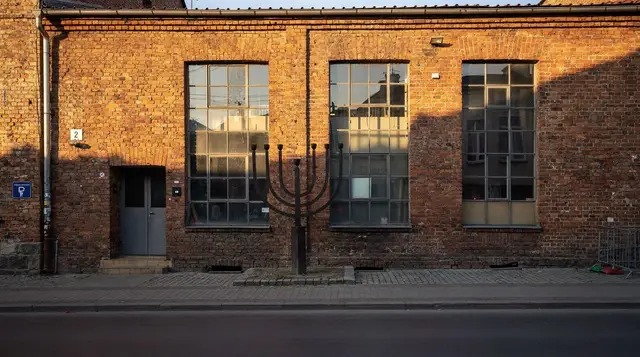
The Galicia Jewish Museum (Żydowskie Muzeum Galicja) opened in 2004 in a converted 19th-century factory at ul. Dajwór 18, on the eastern edge of Kazimierz. It was founded by the British photographer Chris Schwarz and the historian Jonathan Webber, who spent years travelling across the former Galicia region — today divided between southern Poland and western Ukraine — documenting the remains of Jewish communities that were nearly entirely destroyed in the Holocaust.
The result is an institution genuinely different from other Holocaust-related museums. The emphasis is not primarily on destruction but on presence: these were places where people worshipped, studied, married, argued, and celebrated for centuries. The photographs show what survives — often barely — but the cumulative effect is to make the lost world feel tangible rather than abstract.
The museum has become one of Kazimierz’s most important cultural institutions, running a rich programme of temporary exhibitions, lectures, film screenings, and events related to Jewish history and culture in Central Europe. Chris Schwarz died in 2007; his colleague Anna Grojec continued his work. Jonathan Webber remains closely involved.
The permanent exhibition: “Traces of Memory”
The “Traces of Memory” exhibition fills the main gallery across two interconnected spaces. It presents around 200 large-format photographs by Chris Schwarz, taken at Jewish heritage sites across the former Galicia region between 1993 and 2003.
The photographs are organised thematically rather than geographically, moving through themes including:
Jewish cemeteries: Ohels (tomb structures over the graves of important rabbis) overgrown with ivy; gravestone fragments incorporated into building walls; historic cemeteries maintained by non-Jewish locals in towns where no Jews remain. The photographs of the Łańcut cemetery and the Leżajsk ohel are among the most striking.
Synagogues and prayer houses: Baroque synagogues converted into storage facilities, cinemas, or apartment buildings; others abandoned and open to the elements; a handful still functioning as places of worship. The contrast between the architectural grandeur of the original construction and the current state is deliberate and quietly devastating.
Schools and community buildings: Cheder (Jewish elementary schools), mikveh (ritual baths), and community centres — many still standing as ordinary buildings in ordinary Polish towns, their origins unknown to current residents.
Jewish traces in towns and villages: Mezuzot (doorpost markers) still attached to homes in small towns; Hebrew inscriptions on lintels; Jewish gravestones used as paving or building material after the war.
The exhibition is presented with careful scholarly annotations and contextual essays by Jonathan Webber. There is no attempt at sensationalism; the tone throughout is one of scholarly attention and quiet grief.
Temporary exhibitions and events programme
The Galicia Jewish Museum maintains a consistently strong programme of temporary exhibitions — typically 2–3 running simultaneously in the smaller gallery spaces. Past exhibitions have covered Yiddish theatre, Galician Jewish food traditions, family testimonies of emigration to the United States and Israel, and the post-war rebuilding of Jewish communities in Poland.
The museum’s events programme includes:
- Film screenings (usually Friday evenings; 25–35 PLN / ≈€6–€8)
- Academic lectures and panel discussions (often free)
- Guided tours of the permanent exhibition in English (Saturdays at 12:00; included with entry)
- A bookshop with one of the best selections of books on Jewish Galicia in Poland
During the Jewish Culture Festival in late June/early July, the museum hosts several major events — check jewish-culture-festival.pl and the museum’s own calendar at galiciajewishmuseum.org.
Visiting information
Address: ul. Dajwór 18, Kazimierz (31-052 Kraków)
Opening hours: Daily 10:00–18:00 Check the museum’s official website for holiday closures. No closure on Mondays — unlike many other Kraków museums.
Entry fees (2026): Adults 35 PLN (≈€8.30); reduced 25 PLN (≈€6); children under 6 free. Family ticket 55 PLN (≈€13). The Saturday guided tour of the permanent exhibition is included with entry.
Photography: Permitted throughout for personal use without flash.
Café: A small café in the entrance hall serves coffee and pastries; it’s a pleasant spot for a quiet half-hour after the exhibition.
Book your Galicia Jewish Museum entry ticketFor a private guided tour combining the museum with the wider Jewish Quarter:
Galicia Jewish Museum and Jewish Quarter private guided tourCombining with a Kazimierz walking tour
The museum works best when embedded in a wider visit to Kazimierz. A logical morning itinerary:
- 09:30 — Arrive at Galicia Jewish Museum, 90 minutes in the permanent exhibition
- 11:00 — Walk along ul. Dajwór to the Remuh Cemetery (10 minutes)
- 11:15 — Szeroka Street: Remuh Synagogue and Old Synagogue (45 minutes)
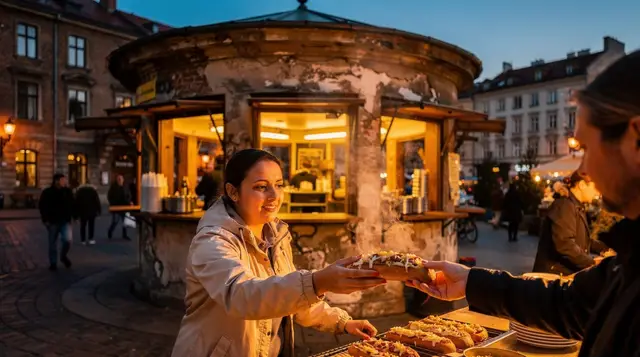
- 12:00 — Plac Nowy for coffee and a zapiekanki
- 13:00 — Guided walking tour of Kazimierz (2 hours)
For the broader historical context, the Jewish Kraków history overview is the best preparation for both the museum visit and the neighbourhood walk.
How to approach the exhibition
Take the photographs slowly. The images reward patience: a first glance shows a ruined building, a second reveals the carved lintel, the faded inscription, the ivy that has swallowed a gravestone. Many visitors find it helps to choose a handful of photographs and stay with each for a few minutes rather than trying to see everything in order. The scholarly captions are worth reading in full, because they name the towns and explain what the building once was to the people who used it.
It also helps to arrive with some background. The Jewish Kraków history overview and the wider Kazimierz Jewish Quarter guide explain how the community of Kraków fits into the larger story of Galicia, so that the towns in the photographs feel connected to the streets outside the museum door. The Polish history primer for visitors is a useful companion if the partitions and the interwar years are unfamiliar.
Where the museum fits in a Jewish heritage visit
The Galicia Jewish Museum is one stop among several in Kraków that deal with Jewish history, and each looks at a different layer. The Old Synagogue and Remuh guide covers the oldest community buildings and the historic cemetery. The High and Tempel synagogues guide shows two more prayer houses of the quarter. Across the river, the Podgórze ghetto guide and the Ghetto Heroes Square and Pharmacy guide deal with the wartime years, while Schindler’s Factory tells the story of the occupation through objects and testimony.
Seen in that order, the Galicia Jewish Museum plays a particular role: it looks beyond the city to the small towns, and it asks what remains today. Visitors who want a single structured route can follow the Kraków Jewish heritage trail itinerary, which places the museum alongside the other major sites. Those interested in the wartime context can continue with the Kraków under Nazi occupation guide.
A note on tone and respect
This is a museum about loss, but it is not built to shock. Visitors tend to speak quietly, and the galleries are calm enough that conversation carries. Photography is allowed for personal use, yet many people choose to put the camera away in the cemetery sections and simply look. If you are travelling with others, agree beforehand how long each person wants to spend, since some will want to linger while others move on. The same spirit of attention applies at other sites linked to this history; the guide to visiting Auschwitz with respect sets out the principles that apply well beyond that single place.
Pairing the museum with the rest of your day
Because the museum is on the eastern edge of Kazimierz, it makes a natural start or finish to a day in the quarter. Before or after, you can eat in the neighbourhood: the Kazimierz food scene guide and the Plac Nowy zapiekanki guide are good places to start, and the Kazimierz cafés and bars guide helps if you want somewhere to sit and reflect on what you have seen. If you only have a short time in the city, the Kraków 1-day itinerary and the Kraków 2-days itinerary show how a morning here can sit alongside the Old Town and Wawel. For travellers with more time, the guide to Kazimierz as a place to stay explains what living close to the museum is like, and the Kazimierz destination page gathers everything else in one place.
The museum’s research and education work
Beyond the public exhibition, the Galicia Jewish Museum conducts archival research and community education programmes. It maintains a significant archive of photographs and documentation on Jewish heritage sites across Poland and Ukraine. It runs school programmes for both Polish and visiting students, and has been central to the broader revival of Jewish cultural life in Kazimierz.
The bookshop is particularly strong: titles on Jewish Galicia, Polish-Jewish relations, the Holocaust in Eastern Europe, and the post-war experience of Polish Jews — including works in English not easily found elsewhere in Kraków. Prices range from 30 PLN (€7) for pamphlets to 150–200 PLN (€36–€48) for scholarly volumes.
Getting to the museum
The museum is on the eastern side of Kazimierz, about a 5-minute walk from Plac Wolnica and 10 minutes from Szeroka Street.
From the Old Town: walk south from the Rynek Główny along Grodzka Street, past Wawel, along ul. Krakowska into Kazimierz (25 minutes total). Or tram 3, 9, 19, 24 to “Plac Wolnica”, then a 5-minute walk east along ul. Miodowa.
From Schindler’s Factory/Podgórze: cross the Józef Piłsudski Bridge into Kazimierz and walk east on ul. Dajwór (15 minutes).
Frequently asked questions about the Galicia Jewish Museum
How does the Galicia Jewish Museum differ from the Old Synagogue museum?
The Old Synagogue houses the Historical Museum of Kraków’s collection on Jewish history in Kraków itself — it’s primarily about the local community, with original objects, documents, and a reconstructed prayer space. The Galicia Jewish Museum presents a photographic record of heritage sites across the broader Galicia region, with a scholarly and contemporary photography focus. They complement each other well; visiting both in a single day is very worthwhile.
Do I need to book in advance?
The Galicia Jewish Museum rarely sells out — walk-in is almost always possible. In high season (July–August) the museum can become crowded between 11:00 and 14:00; arriving at 10:00 or after 15:00 is preferable. Group visits (8+ people) should contact the museum in advance via galiciajewishmuseum.org.
Is the museum appropriate for children?
Yes, more so than many Holocaust-related sites. The photographic format is accessible and the tone is contemplative rather than graphically distressing. The exhibition does address the Holocaust and the destruction of communities, but without graphic imagery. Children aged 10 and above can engage meaningfully with the content; younger children may need parental guidance through the more emotionally weighted sections.
What language is the exhibition in?
All panels are in English and Polish. Audio guides in German, French, and Hebrew are available at the reception desk (10 PLN / ≈€2.40). The guided tours offered on Saturday mornings are in English.
How does a visit here compare to the Old Synagogue museum?
The two are complementary rather than overlapping. The Old Synagogue and Remuh guide covers Kraków’s own Jewish community with original artefacts and a reconstructed prayer space; the Galicia Jewish Museum is a photographic record of the wider Galicia region, contemporary in medium and scholarly in tone. Visitors with half a day in Kazimierz often do both, in either order.
Top experiences
Bookable activities with verified prices and instant confirmation on GetYourGuide.