Jewish Kraków: a history from the 14th century to today
Krakow: Jewish Quarter tour, Kazimierz and Ghetto
Duration: 2.5h
How long have Jews lived in Kraków and what happened to the community?
Jews have lived in the Kraków area since at least the 12th century, with a formal Jewish quarter established in Kazimierz from 1335. At its height in the 19th century, the Kraków Jewish community numbered over 65,000. The Nazis murdered approximately 98% of Kraków's Jewish population between 1939 and 1945. Around 15,000–20,000 Jews live in Poland today; Kraków has a small but active community of several hundred.
Early settlement: medieval roots
| Where the history lives | Kazimierz (medieval–1941) and Podgórze (Ghetto, 1941–43) |
| Time needed to read this | 15–20 minutes — read before, not during, your visit |
| Best paired with | A Kazimierz walking tour or the Galicia Jewish Museum |
| Key dates | 1335 (Kazimierz founded), 1941–43 (Ghetto), 1993 (Schindler’s List) |
| Community today | ~500–700 active members, centred on the JCC on ul. Miodowa |
The history of Jews in the Kraków region begins earlier than most visitors expect. Jewish traders and merchants are documented in the area from the 12th century; by the early 14th century a Jewish community had established itself within the city walls of Kraków proper, with a cemetery and prayer houses on the site of what is now the Old Town.
The medieval period was one of alternating tolerance and persecution. Kraków’s Jewish community experienced episodes of violence and forced conversion alongside periods of commercial activity and royal protection. In 1494, following riots blamed on Jews during a fire in the city, King Jan Olbracht ordered the Jewish community expelled from Kraków proper and relocated to the separate royal town of Kazimierz — founded by Casimir the Great in 1335 and located about a kilometre south.
This expulsion, though forced, had an unexpected long-term consequence: concentrated in Kazimierz, the community was able to build its own institutions, establish its own governance structures, and develop a cultural and religious life of great richness. The seven synagogues, cemeteries, and scholarly academies that survive (even in partial form) from the 16th and 17th centuries are the physical evidence of this concentrated vitality.
The golden age: 16th to 18th centuries
The 16th century was Kazimierz’s golden age. The community of perhaps 3,000–5,000 produced scholars of European and global significance. The most celebrated was Rabbi Moses Isserles (the Remuh, c. 1530–1572), whose halakhic commentaries reconciled Sephardic and Ashkenazi legal traditions and became foundational texts for Ashkenazi Judaism worldwide. His grave at the Remuh Cemetery remains a pilgrimage destination today.
Other significant scholars of this period included Rabbi Nathan Spira (author of the Megalleh Amukot), Rabbi Joel Sirkes, and numerous Talmudic academies (yeshivot) that drew students from across Eastern Europe. Kazimierz was, by the mid-16th century, one of the most important centres of Jewish learning in the world.
The community also thrived commercially — in textiles, finance, printing (Kraków had some of the earliest Hebrew printing presses in Eastern Europe), and the provision of services to the royal court. Relations with the Christian population of Kazimierz and nearby Kraków were complex and variable: periods of commercial co-operation and cultural exchange alternated with legal restrictions, periodic violence, and episodes of blood libel accusations.
The 17th century brought serious disruption: the Swedish invasions of the 1650s (the “Swedish Deluge”) devastated both Kraków and Kazimierz. The Jewish community was heavily taxed to fund the wars and suffered significant losses. Recovery was gradual through the 18th century.
The 19th century: Galicia and emancipation
The partitions of Poland (1772, 1793, 1795) placed Kraków under Austrian rule as part of the province of Galicia. This geopolitical change had profound consequences for the Jewish community. Austrian Enlightenment policies, followed by the emancipation legislation of 1867, gave Jews in Galicia legal equality for the first time — they could purchase property outside Kazimierz, attend universities, enter the professions, and participate in civic life.
The result was a complex social transformation. Many wealthier and more assimilated Jews moved out of Kazimierz into the broader city, adopting the Polish or German language and integrating into middle-class professional life. The Tempel Synagogue (1862) on ul. Miodowa represents this tendency: a Reform-movement congregation whose services were conducted partly in Polish, reflecting a community that saw itself as Polish citizens of Jewish faith rather than a separate nation within a nation.
At the same time, Kazimierz itself retained a large, predominantly Orthodox, Yiddish-speaking working-class population — artisans, traders, and labourers whose daily life continued within the neighbourhood’s dense social and religious networks. The tension between assimilation and tradition that characterised Jewish life across Central Europe was fully present in Kraków.
By 1910, the Jewish population of Kraków had grown to approximately 25,000 — about 28% of the total city population. Many were recent arrivals from smaller Galician towns and villages (shtetlekh), pushed toward the city by economic pressure and pulled by the availability of work. Kraków’s Jewish community was now the third largest in Poland, after Warsaw and Łódź.
The interwar period and the rise of Nazism
Poland regained independence in 1918, and the interwar period (1918–1939) was one of both opportunity and increasing threat. Polish Jews participated in the new state’s politics, culture, and economy; Kraków remained a significant centre of Jewish intellectual and artistic life, with Jewish newspapers, theatres, political parties, and Zionist organisations flourishing alongside traditional religious institutions.
But the 1930s brought increasing antisemitism. Polish nationalist movements promoted “boycott the Jew” campaigns; numerus clausus restrictions limited Jewish admission to Polish universities; violence against Jewish communities increased across Poland. By 1939, Kraków’s Jewish population stood at approximately 65,000 — around 25% of the city’s total — and many were already attempting to emigrate to Palestine, the United States, or Western Europe. Those who could not leave quickly enough would face the German invasion.
The occupation, the Ghetto, and the Holocaust
Germany invaded Poland on 1 September 1939. Kraków fell on 6 September; the city was designated capital of the General Government (the German-occupied territory of Poland not incorporated directly into the Reich). The rapid German advance meant that most Jewish residents had no time to flee.
The persecution of Kraków’s Jews followed a rapid and systematic escalation:
1939: Anti-Jewish regulations, forced labour, seizure of businesses, expulsion from certain professions and public spaces. Jews required to wear white armbands with the Star of David. Mass deportations of Polish intellectuals and academics began (the infamous Sonderaktion Krakau of November 1939, targeting academics, included Jews and non-Jews alike).
1940–1941: The German authorities “encouraged” Jews to leave Kraków; approximately 30,000 left for smaller towns. In March 1941, a Ghetto was established in the Podgórze district across the Vistula — 17,000–18,000 Jews crowded into an area meant for 3,000. The Ghetto wall was constructed; movement was severely restricted. The Ghetto’s forced Jewish Council (Judenrat) was required to administer the community under German orders, including providing forced labour quotas.
1942: The “final solution” policies began to be implemented. Between May and October 1942, approximately 14,000 Ghetto residents were deported in a series of “actions” — primarily to the Bełżec extermination camp, where they were killed on arrival. The remaining population was reduced to those with work permits.
March 1943: The final liquidation of the Kraków Ghetto. Over two days (March 13–14, 1943), the remaining population was divided: approximately 2,000 considered useful for labour were marched to the newly established KL Płaszów concentration camp on the outskirts of the city; the others — including families with children and those deemed unable to work — were killed on the streets of the Ghetto or immediately deported to Auschwitz-Birkenau. The Ghetto ceased to exist.
1943–1945: KL Płaszów expanded rapidly under commandant Amon Göth, eventually holding 25,000–30,000 prisoners. Conditions were brutal; arbitrary killings occurred regularly. As the Soviet army advanced in 1944–1945, the camp was partially liquidated, with prisoners transported to Auschwitz-Birkenau and other camps. The final prisoners were liberated with Kraków on 18 January 1945.
Of the approximately 65,000 Jews who had lived in Kraków in 1939, an estimated 1,500–2,000 survived the war — roughly 2–3%. The Kraków Jewish community had been almost entirely destroyed in under six years.
For the physical traces of this history in Podgórze, see the Kraków Ghetto guide. For the individual human stories of survival and rescue, the Schindler’s Factory Museum is the most comprehensive presentation.
Jewish Quarter and Ghetto combined tour — trace this history across both Kazimierz and PodgórzePost-war Kraków and the communist period
The Jewish residents who survived the war returned to a profoundly changed landscape. Kazimierz was physically intact — unlike Warsaw’s Jewish quarter, which had been deliberately razed after the 1943 Ghetto Uprising — but emptied of its community. Non-Jewish Poles had moved into the abandoned apartments; Jewish communal institutions had been looted, destroyed, or converted.
A small Jewish community reconstituted itself in Kraków in the late 1940s, supported by the Jewish Committee and international Jewish organizations. But the communist government’s ambivalent relationship with Jewish identity (oscillating between anti-Zionism and selective accommodation), combined with continuing antisemitism and the traumatic memories of wartime, pushed many survivors to emigrate — to Israel, the United States, France, and elsewhere. The 1968 anti-Semitic campaign by the communist government caused another significant wave of emigration, leaving the community drastically reduced.
By the 1980s, fewer than 500 Jewish residents remained in Kraków. The synagogues were either museums, storage facilities, or in poor repair. Kazimierz itself had become a somewhat rundown neighbourhood, occupied by working-class Poles who had little connection to its Jewish history.
The revival: 1989 to today
The fall of communism in 1989 opened the door to a transformation of Kazimierz and its Jewish heritage that continues today. Several factors converged:
Cultural memory: The release of Schindler’s List in 1993 brought global attention to Kraków’s Jewish history, driving significant tourist interest and funding for heritage preservation.
Jewish community renewal: The Jewish Community of Kraków (gmina żydowska) slowly rebuilt, supported by both local members and diaspora connections. The Jewish Community Centre (JCC, established 2008 on ul. Miodowa) became a hub for secular Jewish cultural life, with membership including both established community members and Poles who discovered Jewish ancestry.
The Galicia Jewish Museum (2004) and the broader heritage programme it supports have documented and educated around Jewish cultural heritage across the former Galicia region — a scholarly and artistic project with genuine international resonance.
The Jewish Culture Festival (annual since 1988) became a major cultural event, drawing visitors and establishing Kazimierz as a place of living Jewish culture rather than simply memorial tourism.
The neighbourhood itself has been physically transformed: historic buildings restored, synagogues reopened, cafés and bars opened by both Jewish and non-Jewish Krakovians in converted spaces. Critics sometimes note that the “revival” benefits tourists more than the small remaining Jewish community, and that the commercialisation of Jewish themes (klezmer music, Jewish-themed restaurants, Judaica souvenirs) risks becoming superficial. These critiques are fair and worth holding alongside the genuine progress.
Today Kraków has one of the most active Jewish cultural scenes in Poland, with perhaps 500–700 regular Jewish community members, a significantly larger number of Poles with Jewish ancestry (many only recently aware of that heritage), and a vibrant annual calendar of events. The Jewish Culture Festival guide covers the major annual event; the Galicia Jewish Museum is the intellectual centre of the heritage engagement.
Kazimierz Jewish Quarter guided walking tour — the best single introduction to this history on the groundWhere to go with this history in mind
Understanding this arc of history transforms a visit to Kazimierz and Podgórze. The synagogues of Kazimierz are not simply old buildings — they are the physical survival of a community that was nearly entirely destroyed. The Galicia Jewish Museum shows what was lost across the broader region. The Ghetto Heroes’ Square and Eagle Pharmacy make the occupation viscerally present. Schindler’s Factory provides the most comprehensive narrative synthesis.
Former Jewish Ghetto guided walking tour — Podgórze and the Ghetto sites with historical depthFrequently asked questions about Jewish Kraków’s history
Why was the Jewish community placed in Kazimierz rather than staying in Kraków proper?
The 1494 expulsion of Jews from Kraków proper to Kazimierz was presented as punishment after riots — but the underlying drivers were commercial competition (Christian guilds wanted to eliminate Jewish business rivals) and political pressure from the Church and local nobility. The relocation to Kazimierz, a separate royal town, actually gave the Jewish community more autonomy and protection under direct royal authority. Paradoxically, the “punishment” allowed the community to flourish.
Is there a Jewish community in Kraków today?
Yes — a small but active community of approximately 500–700 regularly participating members, organised around the Jewish Community of Kraków (Gmina Wyznaniowa Żydowska w Krakowie) and the JCC (Jewish Community Centre) on ul. Miodowa. Services are held at the Remuh and Tempel synagogues; the JCC runs educational, social, and cultural programmes. The community is disproportionately young relative to Jewish communities in Western European cities, partly because many members are Poles who recently discovered Jewish ancestry.
What is the significance of Galicia in Jewish history?
Galicia was the Austrian-ruled territory corresponding to today’s southern Poland and western Ukraine, home to the largest concentration of Jewish population in the world during the 19th and early 20th centuries — several million Jews in thousands of communities from Kraków in the west to Lviv (Lwów/Lemberg) in the east. The Hasidic movement began in eastern Galicia. The specific cultural practices, religious traditions, and Yiddish dialect of Galician Jews form a distinct strand within Ashkenazi Jewish culture. The Galicia Jewish Museum is the primary institution documenting this heritage.
How should I approach Holocaust sites respectfully?
The most important thing is attentiveness — to the history, to the people who lived and died in these places, and to the scale of what happened. Some practical guidance: maintain quiet conversation or silence at memorial sites; don’t photograph in ways that prioritise your image over the site’s dignity; engage with the on-site interpretation rather than moving through quickly; be prepared emotionally for difficult content. A guided tour with a knowledgeable guide can help structure the experience and provide context that makes the history comprehensible rather than overwhelming.
Turning this history into a visit
Reading the history is one thing; walking it is another. A practical sequence that follows the chronology above:
Start in Kazimierz. Walk ul. Szeroka, visit the Old Synagogue and Remuh Synagogue, and stand at the Remuh Cemetery where Rabbi Moses Isserles is buried — this is the golden-age chapter made physical. The Kazimierz Jewish Quarter guide covers all seven synagogues in detail.
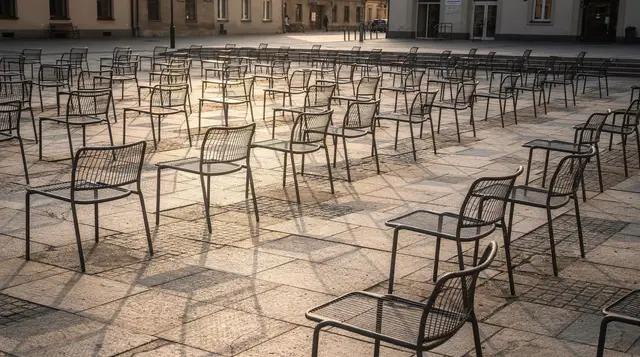
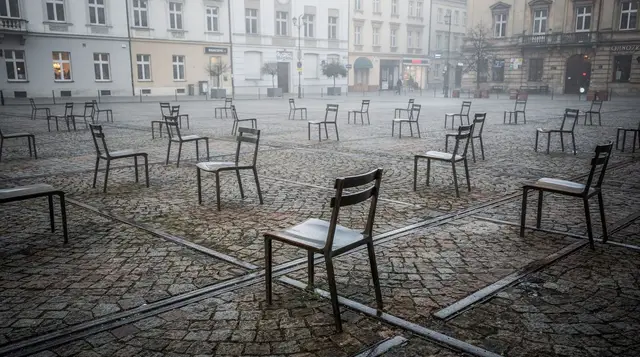
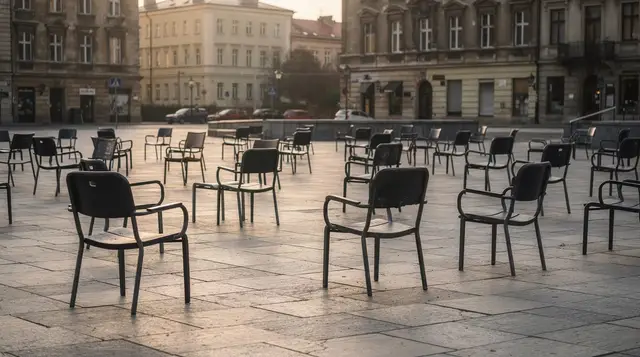
Cross to Podgórze. The 15-minute walk over the Vistula retraces the 1941 expulsion. Ghetto Heroes’ Square and the Eagle Pharmacy sit exactly where the Ghetto stood, and the empty metal chairs in the square are one of Kraków’s most quietly powerful memorials.
Visit Schindler’s Factory. The Schindler’s Factory Museum tells the occupation story at city-wide scale, not just the rescue narrative most visitors expect from the film — book ahead, as it sells out most days.
Go deeper at the Galicia Jewish Museum. For the regional context — what existed across the former Galicia beyond Kraków itself — the Galicia Jewish Museum is the essential stop, and pairs naturally with everything above.
If you have a full day, Auschwitz-Birkenau is where this history reaches its terminus for the majority of Kraków’s Jewish community; most visitors find it easier to process after having first walked Kazimierz and Podgórze rather than the other way around. Kazimierz and Schindler’s Factory combined tour — the Kazimierz-to-Podgórze sequence in one guided morning
Top experiences
Bookable activities with verified prices and instant confirmation on GetYourGuide.