Schindler's Factory Museum: everything you need to know
Krakow: Schindler Factory tour with entrance ticket
Is Schindler's Factory worth visiting and how long does it take?
Yes — the Schindler's Factory Museum is one of Kraków's most important and moving museums, covering the Nazi occupation of Kraków from 1939 to 1945 through immersive reconstructed interiors, personal testimonies, and original artefacts. Allow 2.5 to 3 hours. Booking skip-the-line tickets in advance is strongly recommended in summer.
Why this museum matters
Oskar Schindler’s Enamel Factory at ul. Lipowa 4 in Podgórze is not primarily a museum about Schindler. The film, the list, the factory owner who saved 1,200 lives — all of that is here, but the museum’s deeper subject is the occupation of Kraków itself: how a city of 250,000 people was transformed under Nazi rule between September 1939 and January 1945. It is one of the most honest and well-designed Second World War museums in Europe.
| Where | ul. Lipowa 4, Podgórze |
| Cost | 60 PLN adult, 45 PLN reduced, 120 PLN family ticket; free on Mondays |
| Time needed | 2.5–3 hours |
| Getting there | tram 3/24 to Plac Bohaterów Getta, ~10–12 min |
| Best time | after 3pm to avoid the 10:00–14:00 peak |
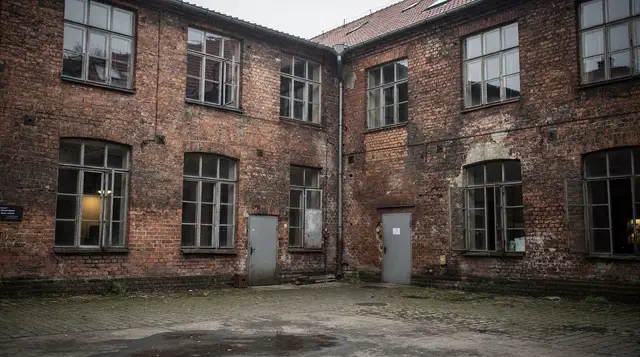
The factory was purchased by Oskar Schindler in 1939. Using Jewish workers from the Kraków Ghetto — first as forced labour, then as people he deliberately protected under the guise of essential war production — Schindler kept his workers alive while deportations and executions decimated the Jewish population of Kraków and surrounding areas. The building’s post-war history was as a pharmaceutical factory; the Museum Kraków (Muzeum Krakowa) took over and opened the current exhibition in 2010 after an extensive renovation.
What you will see
The permanent exhibition “Kraków Under Nazi Occupation 1939–1945” spans the entire factory building across two floors, covering roughly 4,000 square metres. It is organised chronologically and thematically, with each room devoted to a distinct period or aspect of occupation life.
The opening rooms establish pre-war Kraków through photographs, maps, and personal objects — this context is important for understanding what was lost. Kraków in 1939 was a cosmopolitan city with a Jewish population of about 65,000 (roughly 25% of the total). The exhibition doesn’t rush this.
September 1939 and occupation: The invasion, the transformation of civil life, the first anti-Jewish regulations. Original documentation, propaganda posters, and reconstructed interiors — including a chilling facsimile of a German administrative office — convey the systematic nature of the occupation.
The Ghetto rooms are among the most powerful sections. Reconstructed street scenes from the Podgórze Ghetto (established March 1941) include original artefacts, photography by Raimund Titsch (a factory manager who secretly documented ghetto life), and testimony from survivors. The Ghetto at its height held 17,000 people in accommodation for 3,000.
Schindler’s office has been preserved intact on the first floor — the actual room where Schindler worked and where negotiations that saved lives took place. It is one of the most photographed spots in Kraków.
The List rooms present the history of the famous list — the 1,200+ names of workers Schindler certified as essential — with original documents, photographs, and testimony from survivors and their descendants.
Liquidation and aftermath: The March 1943 liquidation of the Ghetto is documented with careful, respectful restraint — there are no gratuitous images, but the reality is not softened. The final rooms cover liberation, the fates of survivors, and post-war Kraków.
How to pace your visit
The exhibition is built to be followed in order, and it works best when you let it unfold without hurrying. Resist the urge to head straight for Schindler’s office: the rooms before it are what give that office its meaning. By the time you reach it, you will have seen how ordinary routines were dismantled, so the room reads less like a film location and more like a place where choices had consequences.
Take a short pause midway through. The reconstructed interiors are immersive, and the density of documents, photographs and recorded voices tires attention faster than most people expect. Sitting for a few minutes between the Ghetto rooms and the later sections helps you absorb what you have read. If you are visiting with a companion, agree in advance that either of you can slow down or step outside without explanation.
For broader background before you go, the guide to Kraków under Nazi occupation and the wider WWII in Kraków overview set out the timeline the museum follows. If you want the longer story of the community whose fate runs through the exhibition, the overview of Jewish Kraków’s history is a useful companion read.
Practical visitor information
Address: ul. Lipowa 4, Podgórze (30-702 Kraków)
Opening hours: Tuesday–Sunday 09:00–20:00, Monday 10:00–15:00; last entry 1.5 hours before closing. Closed on the first Tuesday of each month. Check the museum website for holiday closures.
Entry fees (2026): Full price 60 PLN (≈€14.30); reduced 45 PLN (≈€10.70); family ticket (up to 4 people) 120 PLN (≈€28.60); guided tour in English 90 PLN (≈€21.40), reduced 75 PLN (≈€17.90). Mondays are free, but advance reservations are not available on free days.
Booking: Pre-booking is essential from April to October. The museum’s own website (bilety.muzeumkrakowa.pl) sells timed-entry tickets up to 90 days ahead, which frequently sell out 1–2 weeks ahead in summer; an original ID is required for online tickets. GetYourGuide options include tickets with guaranteed entry time:
Schindler’s Factory tour with entrance ticket — skip the queue Schindler’s Factory: skip-the-line ticket with guided tourAudio guides (check languages and price on the official website of the museum) are strongly recommended for independent visitors — the exhibition is rich but text-heavy, and the audio guide covers additional testimonies not in the panels.
Photography: Permitted throughout without flash, including Schindler’s office.
Is a guided tour worth it?
For most visitors, yes. The exhibition is dense and rewards a guide who can contextualise what you’re seeing — the historical background to specific documents, the personal histories behind photographs, the connections between Kazimierz, the Ghetto, and this building. A good guide turns a 3-hour visit into a genuinely cohesive narrative.
Schindler’s Factory Museum guided tour (2.5 hours)For the most comprehensive experience, the combined Kazimierz, Schindler’s Factory, and Ghetto tour gives you the full arc of Jewish Kraków in a single day:
Schindler’s Factory and Ghetto guided tourCombining with nearby sites
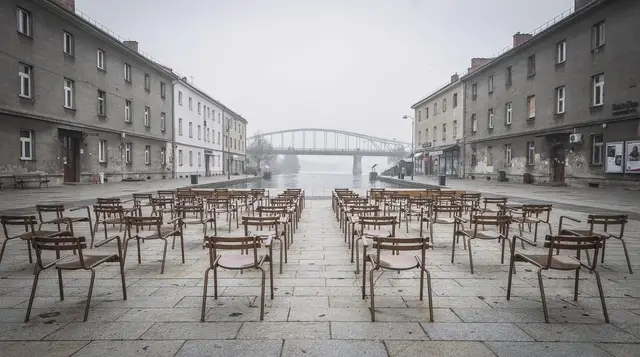
The factory is in Podgórze, a 10-minute walk from Ghetto Heroes’ Square and the Eagle Pharmacy. A logical half-day route:
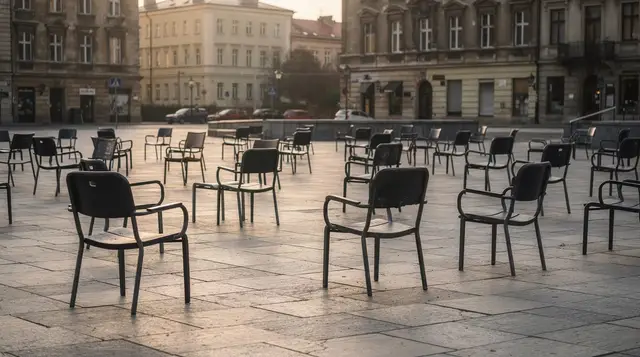
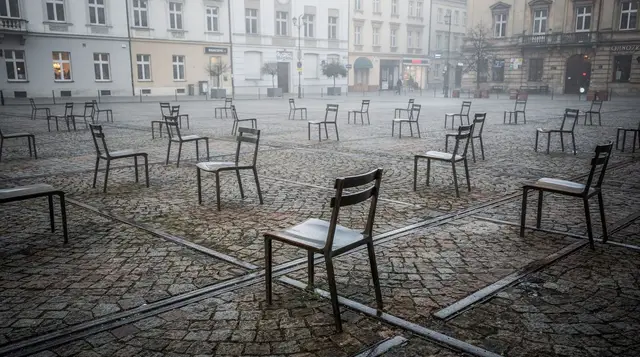
- Start at Ghetto Heroes’ Square (Plac Bohaterów Getta) — 30 minutes
- Visit the Eagle Pharmacy museum (Apteka Pod Orłem) — 45 minutes
- Walk to Schindler’s Factory — 10 minutes
- Schindler’s Factory Museum — 2.5 to 3 hours
- Walk back across the Vistula bridge to Kazimierz — 15 minutes
This gives you the full Ghetto and occupation narrative in sequence, following the historical geography. Alternatively, the Schindler’s List filming locations map the film’s key scenes across Kazimierz and Podgórze.
MOCAK (the Museum of Contemporary Art), located just behind Schindler’s Factory in the same former industrial complex, is worth 45–60 minutes if you have time — a striking contrast of contemporary Polish art in a space shaped by wartime industry.
If you are still deciding which ticket to choose, the separate Schindler’s Museum tickets guide compares the options in more detail. Once you have seen the museum, the Podgórze district page and the Ghetto and Podgórze walking guide help you read the streets outside with the exhibition fresh in your mind. A full day built around this theme is laid out in the Kraków WWII history itinerary, and the Kraków getting-around guide covers the trams that connect these neighbourhoods. For the contemporary art next door, see the MOCAK guide.
Schindler’s Factory vs other Podgórze WWII sites
Several nearby sites cover overlapping ground from different angles — worth knowing which does what before you plan your day.
| Site | Focus | Time needed |
|---|---|---|
| Schindler’s Factory Museum | occupation of Kraków 1939–1945, city-wide | 2.5–3hrs |
| Ghetto Heroes’ Square & Eagle Pharmacy | the Ghetto specifically, one pharmacist’s resistance | 45min–1hr |
| Schindler’s List filming locations | film production geography across Kazimierz/Podgórze | self-paced walk |
| Auschwitz-Birkenau | the camp system and industrial murder apparatus | full day |
None of these substitutes for another — the factory museum gives the administrative and civic picture, the square gives the human scale of one act of resistance, and Auschwitz is a separate, unavoidable step further in the same history. Most visitors doing a serious Kraków WWII day combine the factory with the square and pharmacy, saving Auschwitz for its own dedicated day.
Getting there
From Kazimierz: Walk south across the Józef Piłsudski Bridge (ul. Starowiślna), continue on Limanowskiego, 15 minutes total. Or tram 3/24 from Kazimierz to “Plac Bohaterów Getta” (2 stops).
From the Old Town/Rynek Główny: Tram 3 or 24 direct to “Plac Bohaterów Getta” (10–12 minutes), then a 5-minute walk. A Bolt/Uber costs 12–16 PLN / ≈€3–€4.
By foot from the Old Town: 25–30 minutes via Wawel Castle — a scenic route that follows the Vistula bank through Podwawelska street.
Honest notes
Monday free days: The Monday free entry sounds appealing, but it cannot be reserved in advance and the museum is only open 10:00–15:00 that day, so expect queues and limited availability.
Afternoon crowds: Peak times are 10:00–14:00. Arriving at 15:00 or later means shorter queues and a more reflective atmosphere.
Emotional weight: This is not a light afternoon’s entertainment. The exhibition deals with systematic persecution, murder, and survival. Many visitors find it emotionally draining. Budget extra time to decompress — the café in the courtyard is a reasonable spot to sit quietly afterwards.
The “Schindler tour” tourist trap: Street touts near the Old Town sell what they describe as “Schindler’s List tours” — these are often overpriced minivan trips that spend 20 minutes at each site without proper entry or historical context. Book through verified operators on GetYourGuide or directly with the museum.
Visiting with respect: The same courtesy you would show at any memorial applies here. Keep your voice low, give other visitors space in front of testimonies, and treat the photography allowance as permission rather than an invitation to photograph everything. The principles in the guide to visiting Auschwitz with respect apply just as well in this museum.
Frequently asked questions about visiting Schindler’s Factory Museum
Do I need to book Schindler’s Factory tickets in advance?
From April through October, booking 7–14 days in advance is strongly recommended — the museum sells out on most days by early evening. In November–March, walk-in is usually possible, though weekends fill up.
Is Schindler’s Factory appropriate for children?
The museum is primarily designed for adults and older teenagers. The content — Nazi occupation, the Ghetto, deportations — is presented respectfully but honestly. For children under 12, consider whether they have the emotional maturity for the content. The museum does not allow children under 6 in the permanent exhibition. For families with older children, a pre-visit conversation about the historical context makes the visit significantly more meaningful.
How is Schindler’s Factory different from Auschwitz?
Schindler’s Factory focuses on urban occupation and survival in Kraków itself — the daily life, administrative machinery, and individual human choices of the occupation period. Auschwitz-Birkenau focuses on the industrial murder apparatus and the camp system. They are complementary, not interchangeable. Both are worth visiting; many visitors do both in a two-day Kraków itinerary.
Can I visit the exterior without paying entry?
Yes — the factory courtyard and exterior are accessible freely. You can see the building, the entrance, and the memorial plaque without entry. The exterior is also used as a location marker for Schindler’s List filming sites. But the exhibition itself requires a ticket.
Should I visit Schindler’s Factory before or after Auschwitz-Birkenau?
Before, if scheduling allows. The factory museum builds the civic and administrative context of occupation — how a functioning city was transformed — which makes Auschwitz-Birkenau land with fuller weight rather than as an isolated horror. Many visitors do the factory on one day and Auschwitz as a separate full-day trip later in their stay.
Is one visit to Schindler’s Factory enough, or should I combine it with the Ghetto sites the same day?
One museum visit alone is a complete, substantial experience at 2.5–3 hours. Combining it with Ghetto Heroes’ Square and the Eagle Pharmacy the same day works well logistically (they’re a 10-minute walk apart) but makes for a long, emotionally dense day — pace yourself and don’t feel obliged to cram everything into one visit.
Top experiences
Bookable activities with verified prices and instant confirmation on GetYourGuide.