Kazimierz Jewish quarter: the complete visitor's guide
Krakow: Kazimierz Jewish Quarter walking tour
Duration: 2h
What is Kazimierz and why should I visit?
Kazimierz is Kraków's historic Jewish quarter, founded in 1335, once home to one of Europe's largest Jewish communities. Today it blends beautifully preserved synagogues, the Galicia Jewish Museum, a vibrant café culture, and the lively Plac Nowy market. It's a neighbourhood of memory and renewal — essential for any visit to Kraków.
What to expect in Kazimierz
| Where | 10-min walk south of Rynek Główny, across Stradomska St |
| Cost | Old Synagogue 22 PLN; Galicia Museum 35 PLN; other synagogues: see official sites |
| Time needed | Half day (4–5 hours) minimum; full day with Podgórze |
| Getting there | Walk (15 min), tram 3/9/19/24 to Plac Wolnica |
| Best time | Before 9:30 or after 17:00 to avoid Szeroka Street crowds |
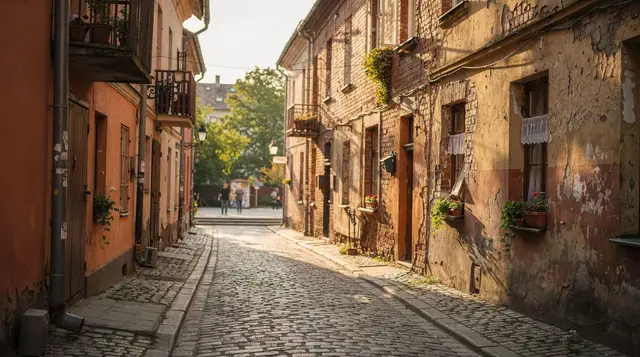
Kazimierz sits about a ten-minute walk south of the Rynek Główny, separated from the Old Town by Stradomska Street. What strikes most visitors immediately is the contrast: crumbling Art Nouveau facades beside freshly painted tenements; a Michelin-recommended restaurant three doors from a 500-year-old synagogue; klezmer music drifting from a café terrace at noon. This is a neighbourhood that has lived through founding, flourishing, occupation, near-destruction, and painstaking revival — all within a few compact streets.
For nearly six centuries, Kazimierz was a separate royal town, granted its own charter by King Casimir III the Great in 1335 (the district’s name honours him). Jewish merchants and scholars settled here from the early 15th century onward, and by the 19th century Kazimierz was one of the most important centres of Jewish life in Central Europe, home to over 60,000 Jewish residents in Kraków at its peak. The Second World War brought catastrophic loss: the Nazis expelled Kazimierz’s remaining Jewish population to the Podgórze Ghetto across the Vistula in 1941, and fewer than 2% of Kraków’s pre-war Jewish community survived the Holocaust.
Today about 200 Jewish residents live in Kazimierz, but the neighbourhood has been reborn as a place of culture and memory. The Jewish Culture Festival each July draws tens of thousands. Cafés with Yiddish menus line Szeroka Street. Young Poles mix with international visitors at the zapiekanki counter on Plac Nowy. It is simultaneously a living quarter and a memorial — a combination found almost nowhere else in Europe.
The main streets and squares
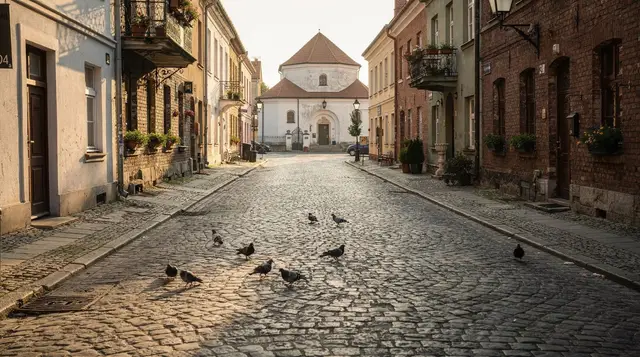
Szeroka Street is the social and symbolic heart of Jewish Kazimierz. Despite being called a “street”, it is actually a broad elongated square — the historic focal point of Jewish civic life. The Old Synagogue (Stara Synagoga) anchors its southern end; the Remuh Synagogue and Renaissance cemetery stand midway; and several restaurants offering Jewish-Polish cuisine line the rest. The street gets crowded midday; visit before 10:00 or after 17:00 for a quieter experience.
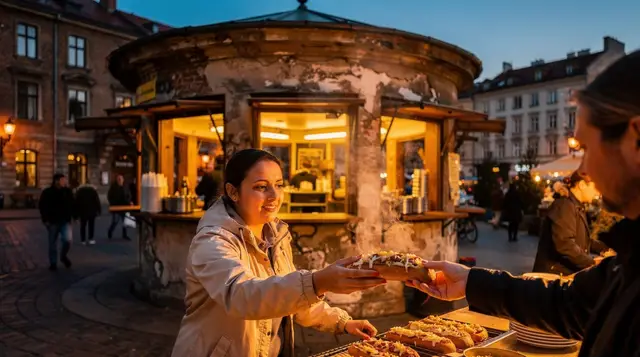
Plac Nowy (New Square) is the working heart of the neighbourhood — a round covered market hall ringed by stalls and surrounded by bars and restaurants. The central rotunda (called the “chicken rotunda” locally) sells obwarzanki, zapiekanki, and kielbasa from early morning. See the Plac Nowy zapiekanki guide for the full story. Weekend mornings draw a genuine flea market alongside the food stalls — worth a browse for old postcards, communist-era ceramics, and vinyl records (prices range 10–80 PLN / €2–€19).
Józefa Street is the gallery and café strip, with some of the neighbourhood’s best independent coffee (try Drukarnia or Cheder Café), vintage clothing shops, and small art galleries. Less touristic than Szeroka, it is where local creative Krakovians actually spend their afternoons.
Estery and Miodowa Streets run parallel to Józefa and host several smaller synagogues, including the High Synagogue (Synagoga Wysoka) and the Isaac Synagogue — each with their own hours and entry fees. See the synagogues guide for details on all seven historic synagogues.
The synagogues
Seven historic synagogues survive in Kazimierz — an extraordinary density within a few city blocks. Not all are open to the public simultaneously, and hours change seasonally, so check before planning your route.
Old Synagogue (Stara Synagoga) at ul. Szeroka 24 is the oldest surviving synagogue in Poland, dating to the late 15th century in its current Gothic form. It houses a branch of the Historical Museum of Kraków (entry 22 PLN / ≈€5; Mondays free but closes early). The prayer hall, bimah (raised reading platform), and Ark of the Torah are intact — remarkably so. Closed on Tuesdays.
Remuh Synagogue and Cemetery at ul. Szeroka 40 is the only synagogue in Kazimierz still used for regular worship. Check the current entry fee and hours on the official website of the Kraków Jewish Community. The adjacent Remuh Cemetery dates to 1551 and contains the grave of Rabbi Moses Isserles (the “Remuh”), one of the most important Ashkenazi scholars of the 16th century. His grave is a pilgrimage site: visitors leave small stones and written notes year-round.
Isaac Synagogue (Synagoga Izaaka) on ul. Kupa 18 dates to 1644 and is among the largest Baroque synagogues in Poland. After decades as a warehouse and factory, it was restored in the 1990s and now hosts a permanent exhibition on Jewish life and a short documentary film on the Kazimierz community. Check the current entry fee on the official website of the Isaac Synagogue.
High Synagogue (Synagoga Wysoka) and the Kupa, Poppera, and Kaczmarska synagogues are detailed in the High Temple synagogues guide.
The Galicia Jewish Museum
The Galicia Jewish Museum at ul. Dajwór 18 deserves at least 90 minutes of your time. Founded in 2004 in a former factory, it presents a photographic study of Jewish heritage sites in the former Galicia region — many of them ruined, overgrown, or forgotten. The photographs by Chris Schwarz are striking not for what they show but for what they imply: these were places of life, now mostly silent. The permanent exhibition “Traces of Memory” is supplemented by changing temporary exhibitions and a strong programme of lectures and events. Entry 35 PLN / ≈€8.30.
Book your Galicia Jewish Museum entry ticket via GetYourGuideKazimierz reads as a bar district until someone points out what the buildings were: a Jewish heritage tour of the district puts the seven synagogues, the cemeteries and the empty plots back into one story.
Guided tours: which one to choose
Self-guided exploration is rewarding, but a knowledgeable guide transforms Kazimierz: the stories behind specific tenement doors, the families who lived here, the micro-history of each synagogue. Allow 2–3 hours for a proper walking tour.
Kazimierz Jewish Quarter walking tour (2 hours, small group)The standard walking tours cover Szeroka Street, the Old and Remuh synagogues, Plac Nowy, and the main streets — ideal for first-time visitors. For a more detailed exploration that also crosses into Podgórze, the combined Jewish Quarter and Ghetto tour adds real historical depth:
Kazimierz and Ghetto combined tour (3 hours)If you want to combine Kazimierz with Schindler’s Factory Museum in a single morning, the combo tour saves logistics:
Jewish Quarter Kazimierz and Schindler’s Factory tourWhere to eat and drink
Kazimierz has Kraków’s most interesting food scene beyond the Old Town — genuinely good value, and authentic to the neighbourhood rather than aimed purely at tourists.
Milk bar-style spots: Café Bergson on Plac Nowy is a good all-day option for traditional Polish-Jewish dishes like cholent (bean stew), latkes, and herring in cream. Budget 30–50 PLN / ≈€7–€12 per person.
Mid-range restaurants: Starka on ul. Józefa 14 specialises in Polish cuisine with Jewish and Galician influences; their borscht and stuffed cabbage are excellent. Expect 60–90 PLN / ≈€14–€21 for a full meal. Klezmer Hois on Szeroka 14 is more touristy but the klezmer concerts on weekend evenings (from 20:30, 40 PLN entry separately) are genuinely good.
Coffee and pastries: Cheder Café at ul. Józefa 36 serves exceptional single-origin coffee and Jewish-inspired pastries including rugelach and apple cake. Very popular with locals — arrive before 10:00 for a table on weekdays.
Zapiekanki: For the authentic Kazimierz street food experience, the Plac Nowy rotunda sells zapiekanki (open-face baguette with toppings) from 8–12 PLN / ≈€2–€3. See the full guide to Plac Nowy.
Evening bars: The best bars in Kazimierz cluster around Plac Nowy and ul. Meiselsa — see the Kazimierz bars and cafés guide for specific recommendations.
The Jewish Culture Festival
Each year in late June or early July, Kazimierz hosts the Jewish Culture Festival — one of the largest celebrations of Jewish culture in the world. Over ten days, concerts, film screenings, workshops, and guided tours fill the neighbourhood. The climactic open-air concert on Szeroka Street regularly draws 10,000+ people. Check jewish-culture-festival.pl for dates (2026 edition: late June/early July). Book accommodation 2–3 months ahead if visiting during the festival.
Getting to Kazimierz
From the Rynek Główny: 15-minute walk south along Grodzka Street, past Wawel Castle, then right along Krakowska Street. Trams 3, 9, 19, 24 stop near Plac Wolnica (the square at the western end of Kazimierz). Bolt and Uber from the Old Town cost 6–10 PLN / ≈€1.50–€2.50 (3 minutes).
From Podgórze/Schindler’s Factory: Kazimierz is a 15-minute walk across the Józef Piłsudski bridge over the Vistula — a natural pairing for a half-day combining both neighbourhoods.
Honest notes on visiting
Shabbat: Most synagogues are closed Saturday. The Remuh operates restricted hours. Plan your visit for Sunday–Friday.
Crowds: Szeroka Street and the Old Synagogue are very busy July–August between 10:00 and 16:00. Arrive before 9:30 or after 17:00 for a more contemplative experience.
Respectful conduct: The Remuh Synagogue is a functioning religious site — modest dress required (covered shoulders and knees; kippot provided for men). The Old Synagogue is a museum, but the same courtesy applies. At the Remuh Cemetery, stay on marked paths.
Klezmer “performances” on Szeroka: Several restaurants hire musicians to perform outside for tips — this is tourist-oriented street performance, not an authentic cultural event. The genuine klezmer musicians appear at festival events and ticketed concerts.
For the full story of Kazimierz and the Kraków Ghetto, the Jewish Kraków history overview provides essential context before your visit.
Frequently asked questions about visiting Kazimierz Jewish quarter
How long do I need to explore Kazimierz properly?
Allow at least half a day (4–5 hours) to cover the main synagogues, Plac Nowy, and the Galicia Jewish Museum. A full day gives you time for a guided tour plus independent exploration and a meal. If combining with the Kraków Ghetto in Podgórze and Schindler’s Factory, plan a full 7–8 hour day.
Do I need to book synagogue visits in advance?
The Old Synagogue (museum) and Isaac Synagogue accept walk-ins; queues rarely exceed 15 minutes except on the busiest summer days. The Remuh Synagogue also accepts walk-ins but has limited capacity — if you arrive with a large group, call ahead. The Galicia Jewish Museum benefits from pre-booking in high season.
Is Kazimierz safe at night?
Yes — Kazimierz is one of Kraków’s most popular evening destinations with busy bars and restaurants until late. The area around Plac Nowy is lively until 02:00–03:00 at weekends. Normal city precautions apply; the neighbourhood is as safe as the Old Town.
How does Kazimierz connect to Schindler’s List filming locations?
Kazimierz served as a filming location for several scenes in Steven Spielberg’s film, including the liquidation sequences. A dedicated Schindler’s List locations guide maps the key sites. Note that while several scenes were filmed in Kazimierz, the actual historical Ghetto was in nearby Podgórze, not Kazimierz.
What’s the best souvenir to buy in Kazimierz?
Hand-painted Judaica ceramics from workshops on ul. Józefa (200–600 PLN / ≈€48–€143), books on Jewish Galicia from the Galicia Museum shop, and vintage photographs from the Sunday flea market are all genuinely local. Avoid mass-produced Jewish figurines sold on Szeroka — these are tourist imports unconnected to local craft traditions.
Building Kazimierz into a fuller Kraków day
Kazimierz rarely stands alone in a well-planned itinerary — it connects naturally to several other parts of the city. For the food side of the neighbourhood, which this guide only touches briefly, the Kazimierz food scene guide and Kazimierz bars and cafés guide go much deeper on specific addresses and prices. For the after-dark scene beyond the synagogues and cafés, the Kazimierz nightlife guide covers jazz clubs and late venues.
Historically, Kazimierz is only half the story. The Jewish Kraków history overview traces the arc from the 14th century founding through the Holocaust to today’s small but active community, and makes the physical sites in this guide far more meaningful once read. For the wartime chapter specifically, walk on to Ghetto Heroes’ Square in Podgórze, where the actual Ghetto stood — a common and worthwhile misunderstanding to clear up is that Kazimierz itself was never the Ghetto; the Nazis expelled the Jewish community across the river in 1941.
If you’re planning your Kraków days around Jewish heritage specifically, see how many days you need in Kraków for how a full Kazimierz-Podgórze-Auschwitz sequence fits into a 3–5 day trip.
Top experiences
Bookable activities with verified prices and instant confirmation on GetYourGuide.