Old Synagogue and Remuh: Kraków's most important Jewish sites
Krakow: Kazimierz Jewish Quarter walking tour
Duration: 2h
What are the Old Synagogue and Remuh and why are they significant?
The Old Synagogue (Stara Synagoga) is the oldest surviving synagogue in Poland, dating to the late 15th century, now a museum of Jewish history. The Remuh Synagogue next door is the only Kazimierz synagogue still in active use, with an adjacent Renaissance cemetery containing the grave of the revered Rabbi Moses Isserles. Both are on Szeroka Street in Kazimierz.
Szeroka Street: the heart of Jewish Kazimierz
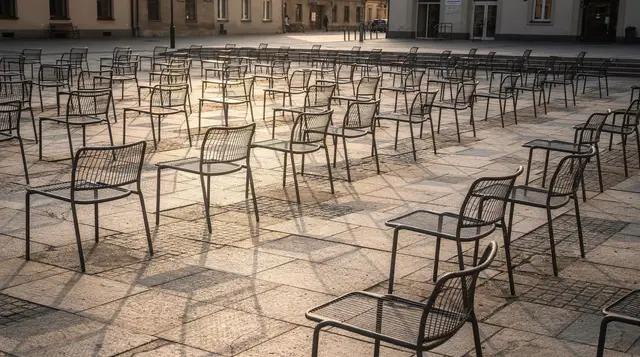
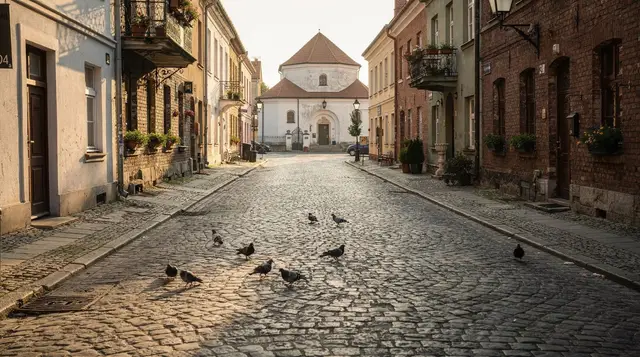
Szeroka Street — pronounced “sheh-ROH-kah”, meaning “wide” — is technically a street but functions as an elongated square, the traditional social and civic centre of Jewish Kazimierz. It has been the symbolic focal point of the neighbourhood since the Jewish community first settled here in the early 15th century.
Today Szeroka hosts the two most important and most visited Jewish sites in Kazimierz: the Old Synagogue at the southern end and the Remuh Synagogue midway along. The street is lined with restaurants (some good, some tourist traps — see below), and in late June/early July it hosts the climactic outdoor concert of the Jewish Culture Festival, drawing upwards of 10,000 people.
The street becomes very busy between 10:00 and 16:00 in summer. For a more contemplative visit, arrive before 09:30 or after 17:00.
| Where | ul. Szeroka, Kazimierz district |
| Cost | Old Synagogue 22 PLN; Remuh + cemetery entry donation 10–20 PLN |
| Time needed | 90 minutes–2 hours for both |
| Dress code | Covered shoulders/knees at Remuh; kippot provided |
| Best time | Before 09:30 or after 17:00 to avoid tour groups |
For the wider neighbourhood context, see the Kazimierz Jewish Quarter guide and the destination page for Kazimierz.
The Old Synagogue (Stara Synagoga)
Address: ul. Szeroka 24, Kazimierz
The Old Synagogue is not merely Kraków’s oldest synagogue — it is the oldest surviving synagogue in Poland and one of the finest examples of Gothic-Renaissance sacred architecture in Central Europe. The current structure dates primarily to the late 15th and early 16th centuries; rebuilding after a fire in 1557 was overseen by the Italian architect Matteo Gucci, who gave the building its distinctive Renaissance attic and vaulting.
The building served as a functioning synagogue until 1939, when the Nazis seized it and used it for storage. After the war, it was converted into a museum. Today it operates as the Jewish department of the Historical Museum of Kraków (Muzeum Historyczne Miasta Krakowa).
What you will see inside
The main prayer hall retains its original Gothic rib-vaulting supported on two slender columns — a rare and beautiful space. The bimah (raised reading platform, from which the Torah is read) is a Renaissance iron construction, restored to its original form. The Ark of the Torah (Aron ha-Kodesh) is a 16th-century sandstone structure with carved decorative elements.
The permanent exhibition covers the history of Jews in Kraków from the medieval period to the 20th century, with original documents, Torah scrolls, religious objects, photographs, and reproductions of historical records. Allow 45–60 minutes.
Practical information
- Opening hours: Monday (free entry) 10:00–15:00; Tuesday–Sunday 09:00–17:00.
- Entry: 22 PLN / ≈€5.25 full price; 16 PLN / ≈€3.80 reduced; free Mondays (queues possible).
- Photography: Permitted in the prayer hall; restricted in some exhibition rooms.
The Remuh Synagogue
Address: ul. Szeroka 40, Kazimierz
The Remuh Synagogue (Synagoga Remuh), a few metres further along Szeroka, is the sole remaining synagogue in Kazimierz still operating as a place of active worship. It was built in 1553 by Israel ben Josef Isserles, a wealthy merchant, as a memorial to his wife. The synagogue is named for his son, Rabbi Moses Isserles (known by the acronym “Remuh”), who became one of the most influential Ashkenazi Jewish scholars of the 16th century, reconciling the Sephardic legal code of Joseph Karo with Ashkenazi practice in his commentary known as the Mappah.
The synagogue interior is modest but beautifully maintained, with original 16th-century frescoes partially visible, a Renaissance Aron ha-Kodesh, and wooden furnishings that convey the space’s long continuity of use. Friday evening and Saturday morning services are held regularly; visitors are welcome outside service times.
- Opening hours: Summer 10:00–18:00, winter 10:00–16:00; closed Saturdays and Jewish holidays.
- Entry: donation of 10–20 PLN / ≈€2.40–4.80. Visitors are asked to dress modestly — covered shoulders and knees; kippot (head coverings) provided free at the entrance for men.
The Remuh Cemetery
The cemetery adjacent to the synagogue — entered through a separate gate — is one of the most important Jewish cemeteries in Europe. Dating to 1551, it served as the main burial ground for Kazimierz’s Jewish community for over two centuries. The most celebrated grave is that of Rabbi Moses Isserles himself (died 1572), which has been a pilgrimage site for over 450 years. Visitors leave stones, notes, and prayers at his grave year-round.
What makes this cemetery particularly striking is the survival of approximately 700 Renaissance and early Baroque gravestones (matzevot), many with intricate carvings — hands in priestly blessing, the Magen David (Star of David), Torah scrolls, and animals symbolic of the deceased’s name or profession. After the main cemetery was closed in the 18th century (and a new one opened on ul. Miodowa), this site fell into disrepair; the Nazis used the stones as paving material and for fortifications. After the war, hundreds of stone fragments were recovered and reassembled in the “Wailing Wall” along the cemetery’s perimeter — a haunting mosaic of recovered memory.
Cemetery entry is included with synagogue admission. No photography of individual graves without respectful intent; stay on marked paths.
Putting Szeroka Street in context: Kraków’s Jewish history
The synagogues on Szeroka Street are best understood as one chapter in a much longer story. For the full arc — from the medieval settlement of Kazimierz through the interwar golden age, the Nazi occupation, and the postwar decades — the Jewish Kraków history overview is the essential companion piece. The wartime chapter specifically, including the liquidation of the ghetto across the river in Podgórze, is covered in the Kraków ghetto and Podgórze guide and the WWII Kraków guide; together they explain why Kazimierz’s synagogues stood empty for decades after 1945.
For a deeper dive into the museum housed in the former Nazi administrative building nearby, the Galicia Jewish Museum guide covers a more contemporary, photograph-led approach to the same history — a useful complement if the Old Synagogue’s older artefacts leave you wanting a 20th-century perspective as well.
Galicia Jewish Museum private guided tourThe other Szeroka Street sites
Restaurant Klezmer Hois (ul. Szeroka 6): A well-established restaurant serving Polish-Jewish cuisine with live klezmer music on weekend evenings (from 20:00; 40 PLN / ≈€9.50 music cover, separate from dining). The food is reliably good if not exceptional; the music is the draw. Expect 80–120 PLN / ≈€19–€28 for a full meal.
Restaurant Pod Złotą Różą (ul. Szeroka 17): On the site of the historic Golden Rose Synagogue (destroyed by the Nazis), this restaurant serves Polish food in a setting that acknowledges its history. A commemorative plaque on the exterior marks the original synagogue. Mid-range; 60–90 PLN / ≈€14–€21 per person.
Caution on Szeroka restaurant prices: Several restaurants on Szeroka display menus at tourist pricing significantly above comparable places on ul. Józefa or Plac Nowy. Check menus before sitting down; a beer on a Szeroka terrace typically runs 20–28 PLN (≈€5–€6.70) versus 12–16 PLN on Plac Nowy.
A guided tour of Kazimierz’s synagogues
The synagogues of Kazimierz are best appreciated with historical context. A walking tour that covers the synagogues, the cemetery, and the neighbourhood’s broader history typically runs 2 hours and costs 70–100 PLN / ≈€17–€24 per person (group tour).
Kazimierz Jewish Quarter walking tour — covers the main synagogues with expert guideFor the most complete Jewish heritage coverage, combining Kazimierz with the Ghetto in Podgórze:
Jewish Quarter and Ghetto combined tour (3 hours, both districts)The other Kazimierz synagogues
Kazimierz has seven historic synagogues within a few city blocks — an extraordinary concentration. Beyond the Old Synagogue and Remuh, the following are worth visiting. Full details are in the High Temple and other synagogues guide.
- Isaac Synagogue (Synagoga Izaaka), ul. Kupa 18 — the largest Baroque synagogue in Kraków, with an atmospheric vaulted interior and documentary screenings about Kazimierz’s Jewish community
- High Synagogue (Synagoga Wysoka), ul. Józefa 38 — unusual for having its prayer hall on the first floor above street-level
- Kupa Synagogue, ul. Miodowa 27 — currently used by the Jewish community for services and events
- Poppera Synagogue, ul. Szeroka 16 — now an arts and community centre
- Tempel Synagogue (Synagoga Tempel), ul. Miodowa 24 — the most ornate of Kazimierz’s synagogues, a Reform-movement building from 1862 with elaborate Moorish-influenced interior
Frequently asked questions about the Old Synagogue and Remuh
Can I visit both synagogues in the same visit?
Yes — they are 50 metres apart on the same street. Allow 45–60 minutes for the Old Synagogue museum and 30–40 minutes for the Remuh (including the cemetery). A combined visit runs 90 minutes to 2 hours. Both are on the standard Kazimierz walking tour routes.
What is the difference between the Old Synagogue and the Remuh Synagogue?
The Old Synagogue is a museum — it no longer functions as a place of worship. The Remuh is an active synagogue with regular services. The Old Synagogue is larger and its museum content is more extensive. The Remuh is more intimate and includes the important cemetery. Both are worth visiting; they serve complementary purposes.
Is the Remuh Cemetery still being used for burials?
No — the cemetery has been closed to new burials since the 18th century (when the Jewish community opened the New Jewish Cemetery on ul. Miodowa). The Remuh Cemetery is entirely historical, with the youngest graves dating to the 18th century.
Why is Rabbi Moses Isserles so important?
Rabbi Moses Isserles (c. 1530–1572) was one of the most important Ashkenazi Jewish legal scholars of the 16th century. His commentary the Mappah (“Tablecloth”) supplemented the Shulchan Aruch (the principal code of Jewish law compiled by Sephardic scholar Joseph Karo) with Ashkenazi customs and rulings, making the code relevant and authoritative for the large Ashkenazi Jewish population of Eastern Europe. For centuries, a saying circulated: “From Moses [the biblical prophet] to Moses [Isserles], there was none like Moses.” His grave at Remuh remains one of the most visited Jewish pilgrimage sites in Europe.
Should I visit with a guide or independently?
Both work well. Independently, you can read the information panels at your own pace and linger at the cemetery; a guide adds historical depth, particularly on the Solidarity-era and postwar history that isn’t always well explained on-site. If you only have time for one guided element in Kazimierz, the Kazimierz Jewish Quarter walking tour covering these synagogues is a good use of it.
Top experiences
Bookable activities with verified prices and instant confirmation on GetYourGuide.