Kazimierz synagogues guide: High, Tempel, Isaac, and the rest
Krakow: Kazimierz Jewish Quarter guided walking tour
Duration: 2h
How many synagogues are in Kazimierz and which ones can I visit?
Seven historic synagogues survive in Kazimierz. Five are open to visitors: the Old Synagogue (museum), Remuh (active worship), Isaac, High, and Tempel synagogues. The Kupa and Poppera synagogues have more limited public access. You can visit all five open ones in a single day with careful timing.
| Where | Kazimierz, within a few compact blocks |
| Cost | varies by synagogue; check krakow.travel |
| Time needed | Half day (3.5 hrs) for the main five |
| Getting there | Walkable from Old Town in 20–25 minutes |
| Best time | Weekday mornings, avoiding Saturday closures |
Seven synagogues, one neighbourhood
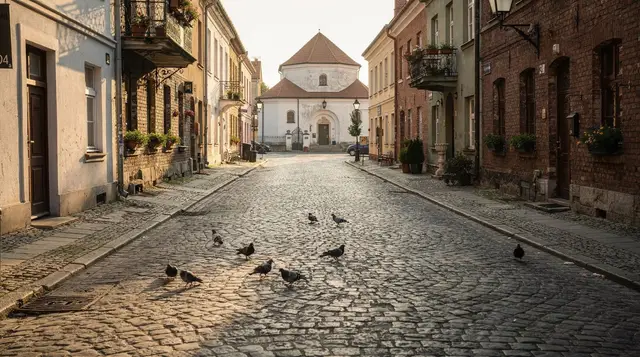
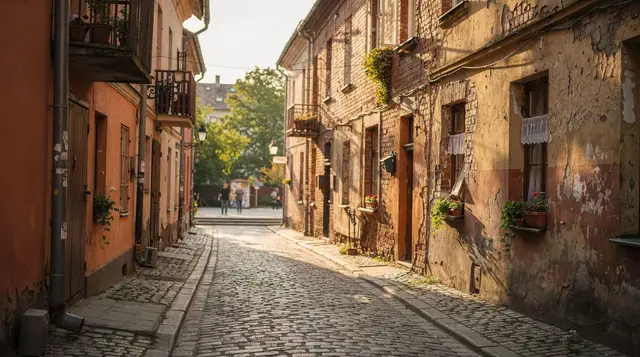
Within a few compact blocks of Kazimierz, seven historic synagogues survive — an extraordinary density that reflects the vitality and scale of the Jewish community that lived here for almost six centuries. No other city in Poland has preserved this many synagogues in such a small area.
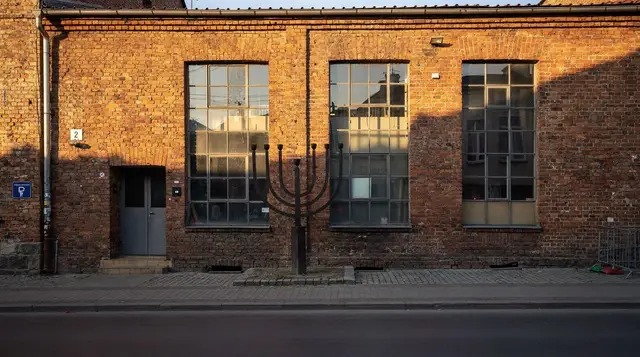
Not all are immediately visible from the street. Some have unassuming exteriors (particularly the High Synagogue, whose prayer hall is above street level). Others, like the ornate Tempel Synagogue, announce themselves immediately. Finding all seven is itself a rewarding exercise in the layered geography of the neighbourhood.
This guide covers the five most accessible synagogues beyond the Old Synagogue and Remuh (which have their own detailed guide), and provides practical visiting information for each.
If you are still shaping your trip, the Kazimierz district page and the wider Kazimierz Jewish Quarter guide show how the synagogues fit with the streets, squares and cafés around them. Those staying nearby may also like the comparison in Old Town vs Kazimierz as a base, since being on foot makes an early synagogue start much easier.
Tempel Synagogue (Synagoga Tempel)
Address: ul. Miodowa 24, Kazimierz
The Tempel Synagogue is architecturally the most dramatic of Kazimierz’s synagogues — a Reform-movement congregation built in 1862 in an eclectic Moorish Revival style, with a facade influenced by Sephardic Spanish synagogues and an interior that would not look out of place in Vienna or Budapest. The two-storey nave features gallery seating for women (a Reform concession to mixed-gender spaces), ornate iron balustrades, and walls of geometric tile and painted decoration.
The Tempel was the liberal synagogue of Kazimierz’s more assimilated, Polish-speaking Jewish bourgeoisie. Its congregation held services in Polish as well as Hebrew, reflecting the broader currents of Jewish emancipation in 19th-century Galicia. During the Second World War it was looted and used as a stable; major restoration was completed in 2005.
Today the Tempel hosts religious services on Shabbat and festivals (Friday evening from 19:00, Saturday morning from 10:30 — visitors welcome during prayer but must dress modestly and wait at the entrance). It is also open for general visits.
- Opening hours: seasonal, closed Saturday; check the official city tourism website krakow.travel for current hours
- Entry: 10 PLN regular, 5 PLN reduced (krakow.travel)
- Photography: Permitted; no flash.
- Highlight: The restored painted ceiling panels and the gallery ironwork are exceptional examples of 19th-century synagogue decoration.
Isaac Synagogue (Synagoga Izaaka)
Address: ul. Kupa 18, Kazimierz
The Isaac Synagogue is the largest Baroque synagogue in Kraków, built between 1638 and 1644 by Izaak Jakubowicz, a banker and financial adviser to King Władysław IV. The construction was controversial: Christian residents protested against the building of a “too grand” Jewish structure near their own churches, and the synagogue was completed only after Jakubowicz secured a royal decree. The result was an imposing single-nave Baroque hall with a classical portal and stucco interior decoration.
The synagogue served its congregation until the Second World War. The Nazis stripped and desecrated it; post-war it was used as a warehouse, then a sculpture studio, before restoration began in the 1980s. Full restoration was completed only in the 1990s.
The current exhibition inside presents the history of Kazimierz’s Jewish community with photographs, documents, and oral history recordings. A short documentary film on Kazimierz (in English) runs on a loop; it’s a useful 20-minute orientation if this is your first stop in the neighbourhood. The vaulted interior, though stripped of its original furnishings, remains architecturally impressive.
- Opening hours and entry: the official city tourism website (krakow.travel) lists the Isaac Synagogue as closed to visitors until further notice, so check its current status before you go
- Photography: Permitted throughout.
- Highlight: The carved stone portal and the scale of the Baroque interior space.
High Synagogue (Synagoga Wysoka)
Address: ul. Józefa 38, Kazimierz
The High Synagogue is the most architecturally unusual of Kazimierz’s synagogues — the main prayer hall is on the first floor above a commercial ground floor, a configuration designed to separate the sacred space from the street noise and activity of the 16th century. It was built around 1556–1563 in a late-Gothic style, with a small Renaissance-influenced attic above.
The “High” name refers to the elevated prayer hall rather than to any religious status. The building served as a synagogue until the war; post-war it housed a bookshop and then a printing press. It is now operated by the Jewish Community of Kraków and functions as an exhibition space.
The current exhibition focuses on the Judaica — prayer objects, ritual textiles, and religious artefacts — held by the Jewish community, some returned from hiding or recovered after the war. The selection rotates periodically.
- Opening hours and entry: the official city tourism website (krakow.travel) lists the High Synagogue as closed to visitors until further notice, so check its current status before you go
- Photography: Permitted in the exhibition spaces; restricted in the prayer hall itself.
- Highlight: The original Gothic late-Renaissance carved stone bimah surround on the first floor.
Kupa Synagogue
Address: ul. Miodowa 27, Kazimierz
The Kupa Synagogue (also known as the Kupah Synagogue or Chevra Kadisha Synagogue) was built around 1643 by the Chevra Kadisha — the Jewish burial society — with funds partly from public (“kupah” in Hebrew) contributions. It has a more modest exterior than the grand Baroque synagogues of the same period but an interior with significant original painted decoration.
The Kupa Synagogue was restored in the 1990s and is now used for services and community events. Public visiting hours are more restricted than at the other Kazimierz synagogues; it is typically open for tourists only during morning hours or by appointment.
- Opening hours: variable; check krakow.travel or the Jewish Community of Kraków (kjc.pl)
- Entry: 10 PLN regular, 5 PLN reduced (krakow.travel)
- Photography: Restricted; ask at entry.
- Note: During Shabbat and Jewish festivals, visiting hours are suspended; the synagogue is in use for worship.
Poppera Synagogue (Synagoga Poppera)
Address: ul. Szeroka 16, Kazimierz
The Poppera Synagogue — also known as the “Bocian” (Stork) Synagogue — was built around 1620 by Wolf Popper, a wealthy merchant, and is one of the smaller synagogues on Szeroka Street. The facade is unassuming; the interior was designed with a single-nave Baroque layout.
After use as a storage facility during and after the war, the building underwent restoration. It now functions primarily as a cultural and events space for the Jewish Community of Kraków and for events during the Jewish Culture Festival. Public visiting is limited and often related to scheduled events; the synagogue is not primarily a tourist destination.
- Access: Generally only during events or by pre-arrangement via the Jewish Community of Kraków. Check kjc.pl for the current events schedule.
- When open for events, entry is event-priced and depends on the programme.
Planning your synagogue route
With five synagogues accessible to visitors plus the Old Synagogue and Remuh, a complete Kazimierz synagogue tour is a full day’s undertaking if done with proper attention. A more practical itinerary for a half-day:
Morning (09:30–13:00, 3.5 hours):
- Old Synagogue and Remuh Synagogue + cemetery (90 minutes, see the detailed guide)
- High Synagogue on ul. Józefa (20 minutes)
- Isaac Synagogue on ul. Kupa (30–40 minutes, documentary film worth watching)
- Tempel Synagogue on ul. Miodowa (20 minutes)
Between stops: The walk from Szeroka to ul. Miodowa takes about 10 minutes through the heart of Kazimierz. Stop at Cheder Café (ul. Józefa 36) for coffee.
A guided tour that covers the main synagogues with historical context is the most efficient option if time is limited:
Kazimierz Jewish Quarter guided walking tour — includes the main synagoguesFor a private tour with a specialist guide who can adapt the itinerary:
Galicia Jewish Museum and Jewish Quarter private guided tourCombining the synagogues with the rest of Jewish Kraków
The synagogues are only one layer of the story. Many visitors pair them with the Schindler’s Factory museum and the memorial spaces across the river, described in the Podgórze ghetto guide and the Ghetto Heroes Square and Pharmacy guide. Doing the synagogues first and Podgórze on a separate morning keeps each day emotionally manageable and lets you take in the pre-war world before the account of its destruction.
If you want a ready-made sequence, the Jewish heritage trail itinerary strings these sites together, and Schindler’s List filming locations is a useful companion for anyone drawn here by the film. For the wartime background, Kraków under Nazi occupation explains what happened to the buildings described above.
Timing matters too. If you are travelling in July, the Jewish Culture Festival guide explains how the synagogues, including the otherwise restricted Poppera, take on a different life during festival events. For lunch after a morning of visits, the Kazimierz food scene guide and the lively Plac Nowy zapiekanki guide point to places within a short walk.
Historical context
The proliferation of synagogues in Kazimierz reflects not only the size of the community but its internal diversity. Different synagogues served different congregations — Ashkenazi and Sephardic traditions, different chevrot (brotherhoods), different occupational groups, and from the 19th century, different theological orientations (Orthodox versus Reform). The Tempel represented the liberalising Reform movement; the Remuh and Isaac synagogues were more traditionally Orthodox.
This diversity also meant that no single synagogue served the entire community — different families and groups maintained their own separate houses of prayer within a few hundred metres of each other. The density of the neighbourhood’s synagogues is therefore also a map of its social and theological diversity.
For the broader historical arc, the Jewish Kraków history overview provides essential context. For the specific story of how this community was destroyed and what has been rebuilt, the Galicia Jewish Museum is the essential contemporary companion to a synagogue visit.
Frequently asked questions about Kazimierz synagogues
Do I need to dress modestly to enter the synagogues?
Yes, at all active and former synagogues. Covered shoulders and knees are required; head coverings are required for men at the Remuh and strongly recommended at the Tempel. Kippot are provided free at synagogue entrances. Scarves are available to borrow at most venues for women who need to cover bare shoulders. This is standard respectful conduct at all religious heritage sites worldwide.
Which synagogue is most worth visiting if I only have time for one?
If you want a museum experience: the Old Synagogue (most comprehensive historical exhibition). If you want an architecturally striking space: the Tempel Synagogue (the most ornate interior). If you want a living religious site with historical depth: the Remuh (active worship, important cemetery).
Are the synagogues closed during Jewish festivals?
The Remuh and Tempel (for active services) observe Jewish festival schedules — major festivals (Rosh Hashanah, Yom Kippur, Pesach) affect visitor hours. The Old Synagogue as a municipal museum follows standard museum hours. Check synagogue websites or kjc.pl for specific dates during your visit.
Is there a combined ticket for multiple synagogues?
No combined ticket exists; each synagogue charges separately. The Muzeum Kraków (which operates the Old Synagogue) does offer a combined ticket with other Historical Museum branches, but this does not cover the independent synagogues.
Should I do the synagogue route on my own or with a guide?
Independent visiting works well if you enjoy self-paced museum time and don’t mind the modest architectural and historical labelling at each site. A guide adds the connective narrative — why five distinct synagogues sit within a few hundred metres, and how each congregation related to the others — which is easy to miss without context. For a first visit, a guided option such as the Kazimierz Jewish Quarter guided walking tour is the more efficient use of a half day.
Top experiences
Bookable activities with verified prices and instant confirmation on GetYourGuide.