Schindler's List filming locations in Kraków: a self-guided map
Krakow: Kazimierz Jewish Quarter guided walking tour
Duration: 2h
Where were the main Schindler's List scenes filmed in Kraków?
Most exterior scenes were filmed in Kazimierz (standing in for the pre-war Jewish Quarter), Podgórze (the historical Ghetto district), and at Schindler's actual factory on ul. Lipowa 4. Spielberg filmed on location in Kraków in 1993; many key streets, courtyards, and buildings remain essentially unchanged.
The film and the city
Steven Spielberg shot Schindler’s List in Kraków between February and May 1993. The film was shot almost entirely in black and white in and around the actual historical locations — a deliberate choice that collapses the distance between past and present. Walking the same streets today, with the same cobblestones and the same apartment facades, can produce an uncanny sense of temporal proximity.
| Where | Kazimierz, Podgórze, and the factory on ul. Lipowa 4 |
| Cost | free to walk; Schindler’s Factory Museum 60 PLN |
| Time needed | 2–3hrs walking; a full day with the museum |
| Getting there | walkable between Kazimierz and Podgórze via the Piłsudski Bridge |
| Best time | morning start (9am) to fit everything in daylight |
Important context: the film’s geography is compressed. Scenes depicting the Jewish Quarter were filmed in Kazimierz, but the historical Jewish Quarter before the war was also in Kazimierz — so this accuracy holds. However, scenes depicting the Ghetto were partly filmed in Kazimierz (for logistical convenience) and partly in Podgórze — where the actual Ghetto was established in 1941. Understanding this helps you read the historical reality rather than the film geography.
This guide traces the main locations across three areas: Kazimierz, Podgórze, and the Schindler Factory site. For the fuller historical picture beyond what the film shows, our Kraków Ghetto Podgórze guide and Kazimierz Jewish Quarter guide are the natural companions to this location map.
Kazimierz locations
Szeroka Street
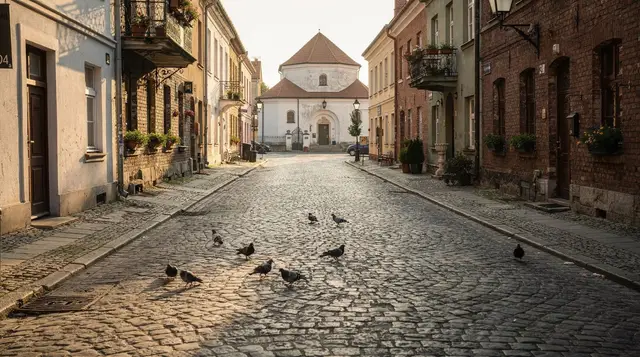
Szeroka Street — the long rectangular “square” at the heart of Kazimierz — appears in several scenes depicting Jewish commercial and social life before and during the early occupation. The street’s proportions, the surrounding tenement facades, and the synagogues at each end are immediately recognisable. The Old Synagogue (Stara Synagoga) at Szeroka 24 appears in background shots. Today it houses the Historical Museum of Kraków’s exhibition on Jewish history in the city.
The courtyard scenes
Several courtyard scenes — including the depicted liquidation of the Ghetto — were filmed in the courtyard complexes off ul. Józefa and ul. Meiselsa. These internal courtyards (podwórze), accessible through arched gateways, are characteristic of Kazimierz’s architecture. The courtyard at ul. Józefa 12 and the surrounding area are the most frequently referenced. These spaces are semi-private; enter respectfully and do not photograph residents.
Plac Nowy
The circular market hall at Plac Nowy (the so-called “chicken rotunda”) and the surrounding square appear in crowd and street scenes. The market’s rough character in 1993 matched the pre-war period it represented; today it is cleaner and tourist-friendly but structurally identical.
Ul. Ciemna and ul. Jakuba
The narrow streets of Ciemna and Jakuba, which cut between Kazimierz’s main axes, appear in several walking and crowd scenes. They remain among the most visually unchanged streets in the neighbourhood — the lamp fittings, paving, and facades are largely as they were during filming.
Podgórze locations
Plac Bohaterów Getta (Ghetto Heroes’ Square)
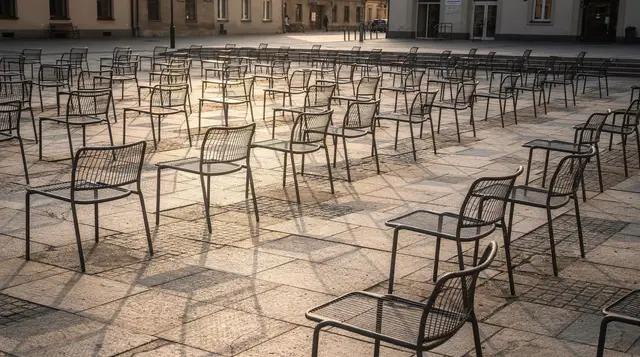
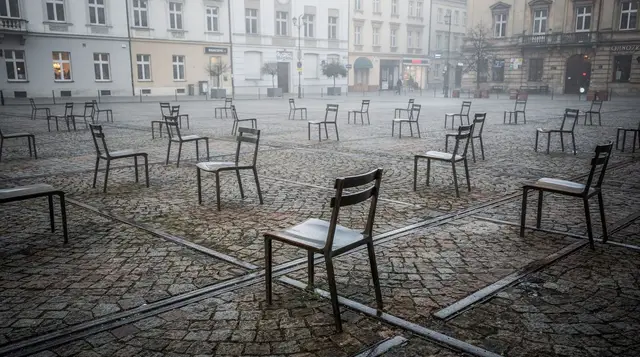
This square — now a solemn memorial space with 70 metal chairs representing the possessions left by deported Jews — was the historical assembly point and deportation site for the Kraków Ghetto. In the film it appears during the Ghetto liquidation sequences. Today the Eagle Pharmacy on the square (plac Bohaterów Getta 18) houses a moving museum of Ghetto life; the square itself is a permanent outdoor memorial. See the full guide to Ghetto Heroes’ Square.
The Ghetto wall fragments
Two fragments of the original Kraków Ghetto wall survive — one on ul. Lwowska 29 and one on ul. Limanowskiego — with their distinctive semicircular tops designed to resemble Jewish gravestones (a deliberate humiliation by the Nazi architects). These walls appear in the film; visiting them today requires knowing exactly where to look.
ul. Lwowska 29: The largest preserved section, about 30 metres long, with an interpretive plaque. Access through the courtyard of a school — ring the bell during school hours, or pass through on weekends.
ul. Limanowskiego: A shorter section, more accessible, near a small playground. Easily missed without a map.
The Schindler Factory exterior (ul. Lipowa 4)
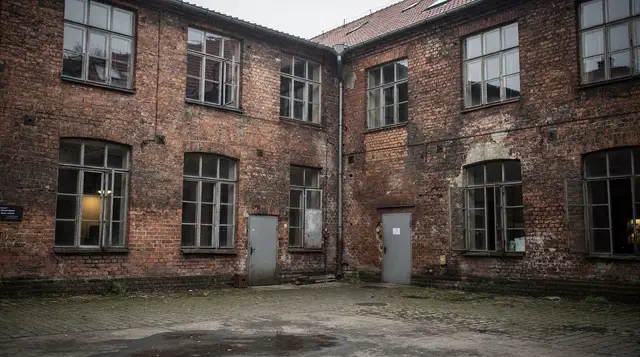
The factory building itself appears throughout the film — the exterior, the gate, and the general industrial setting. The actual exterior is largely unchanged since the 1940s, giving the film’s scenes a documentary quality. Today the building houses the Schindler’s Factory Museum, which is essential visiting. From the street, you can see the main building and gate without purchasing entry.
Zabłocie and the railway sidings
The Zabłocie district east of the factory was used for several railway deportation scenes. The area has been substantially redeveloped since 1993 (it’s now Kraków’s design and tech district), but the Płaszów freight railway line still runs through the area, and portions of the track and signal infrastructure from the early period survive.
The Płaszów camp site
The former KL Płaszów concentration camp — commandant Amon Göth’s camp, which plays a major role in the film — is located southeast of Podgórze, about 2 km from Ghetto Heroes’ Square. The camp was demolished by the Nazis before liberation; the site today is an open memorial park with low-profile monuments, fragments of road, and mass grave markers.
The iconic scene filmed on a hill overlooking the camp (Göth’s villa survives at ul. Heltmana 22, a private residence not open to the public) was actually shot on Krzemionki Hill nearby. Walking the Płaszów memorial site takes 30–45 minutes and is free to enter at all times. A small information shelter at the entrance provides context in Polish and English.
Self-guided walking route
A practical order for covering the main sites on foot:
Start at Plac Bohaterów Getta (tram to “Plac Bohaterów Getta”) — 30–40 minutes including Eagle Pharmacy.
Walk to ul. Lwowska 29 (10 minutes) — Ghetto wall fragment, 10 minutes.
Walk to Schindler’s Factory (10 minutes via ul. Lipowa) — 2.5 to 3 hours in the museum if visiting.
Walk to Kazimierz via Józef Piłsudski Bridge (15 minutes) — explore Szeroka, Józefa, Plac Nowy.
Optional extension to Płaszów: Tram 3 or 13 from Kazimierz toward Podgórze and change, or a 35-minute walk. Worth it for those with particular interest in the camp history.
Total walking time (excluding museum visits): 2–3 hours. With Schindler’s Factory: a full day.
Film accuracy vs historical reality
The film compresses and rearranges geography for production reasons, which is worth knowing before you go looking for something that “should” be somewhere it isn’t.
| What the film shows | What actually happened |
|---|---|
| Ghetto scenes partly filmed in Kazimierz | the real Ghetto was in Podgórze, not Kazimierz |
| A single continuous liquidation sequence | the historical liquidation happened over several days in March 1943 |
| Auschwitz interior scenes | filmed on a set adjacent to the real memorial, not inside it |
| Göth’s hilltop villa scene | shot on Krzemionki Hill near the real villa, not at it |
None of this diminishes the film’s power, but it matters for anyone trying to map scenes onto real locations — the geography on screen is dramatised, while the history underneath it, documented in our Schindler’s Factory Museum guide, is not.
Guided Schindler’s List tours
A specialist guide who knows the film and the history adds enormous value — they can point out specific buildings, explain what has changed since filming, and connect what you see on screen with the documentary record.
Kazimierz Jewish Quarter guided walking tour Jewish Quarter and Ghetto combined tour (covers both Kazimierz and Podgórze) 2-hour World War II Ghetto walking tour (focuses on Podgórze and the historical Ghetto)Honest notes about film tourism
The line between film tourism and Holocaust memory is worth reflecting on. The sites listed here are not film sets — they are historical places where real people suffered, were killed, and in some cases were saved. The film brought global attention to Kraków’s Jewish history, which has had largely positive effects on preservation and education. But it’s worth approaching these places as historical sites first and film locations second.
Several tour operators sell “Schindler’s List tours” at premium prices (80–150 PLN / ≈€19–€36 per person) that are often faster and shallower than the combined Jewish Quarter and Ghetto tours at similar or lower prices. The jewish-heritage category lists verified, well-reviewed operators.
Frequently asked questions about Schindler’s List locations
Can I visit all the main locations in one day?
A focused day — starting at 09:00 and finishing at 18:00 — can cover Ghetto Heroes’ Square, the Eagle Pharmacy, the Ghetto wall fragments, Schindler’s Factory Museum (2.5 hours minimum), and a walk through Kazimierz. This is a full day with significant walking (8–10 km total). The Płaszów site requires either a separate half-day or very early start.
Was the film allowed to use actual Holocaust sites?
Spielberg had full co-operation from Polish authorities and the Kraków authorities. The Auschwitz-Birkenau Memorial and Museum declined to allow filming on the actual memorial site; the interior Auschwitz scenes in the film were shot on a set built adjacent to the real site. All Kraków city locations were used with permission.
Is there a map or app for the filming locations?
The official Muzeum Kraków (Museum of Kraków) produces a printed map of Schindler’s List locations available free at the Schindler’s Factory entrance. Several unofficial apps also map the key sites; search for “Schindler Kraków map” in your app store. A guided tour with a local expert remains the most informative approach.
How does visiting these sites compare with an Auschwitz visit?
They are different experiences serving different purposes. Auschwitz-Birkenau is the primary memorial to the industrial extermination system. The Kraków sites — Ghetto, Schindler’s Factory, Kazimierz — show occupation, displacement, and survival within an urban community. Both are important; if you can only do one, Auschwitz is the more significant and emotionally powerful experience. If you have two days, doing both is the most complete way to understand what happened to Kraków’s Jewish community.
Do I need to have seen the film to get value from this walking route?
No. The route and the history stand on their own — the Kraków Ghetto Podgórze guide and Kazimierz Jewish Quarter guide cover the same ground without reference to the film. Having seen the film adds a layer of recognition at specific spots, but it isn’t a prerequisite for a meaningful visit.
Which single location should I prioritise if I only have an hour?
Ghetto Heroes’ Square and the Eagle Pharmacy together, at around 45 minutes to an hour — it’s the most concentrated combination of historical weight, film significance and manageable time, and it anchors the rest of the route if you decide to continue on foot afterward.
Top experiences
Bookable activities with verified prices and instant confirmation on GetYourGuide.