Old Town walking tour guide: the best self-guided route in Kraków
Krakow: Old Town guided walking tour
Duration: 3h
How long does it take to walk Kraków's Old Town and what should you see?
A thorough self-guided Old Town walk covering the Barbican, Rynek Główny, St. Mary's Basilica, Cloth Hall, Wawel Castle hill, and the main streets takes 3–4 hours of walking plus any time inside museums. With one or two interior visits, plan a full day.
Kraków’s Old Town: how to walk it well
Kraków’s Stare Miasto (Old Town) is compact — about 900 metres across at its widest point — and entirely within a UNESCO World Heritage Site designation that has kept it largely intact since the medieval town plan of 1257. Every major sight is within 10–15 minutes’ walk of every other. The density is a gift to visitors: you don’t need a taxi or tram to get between Wawel Castle, the Rynek, St. Mary’s Basilica, and Collegium Maius. You can walk all of them in a single morning if you don’t go inside everything.
The challenge is that because everything is close, it’s easy to move too quickly and end up having seen a lot of facades without any depth. This guide gives you a structured route with honest time estimates and enough context for each stop to make the walking meaningful.
| Where | Kraków Old Town, within the Planty ring |
| Time needed | 3–4hrs walking; full day with 2–3 interior visits |
| Cost | Free to walk; ~200–250 PLN/adult for major paid sights |
| Getting there | Walkable from most hotels; start at the Barbican |
| Best time | Early morning (before 09:00) or golden hour for photos and fewer crowds |
Route summary at a glance
| Stop | Time | Cost |
|---|---|---|
| Barbican & Florian Gate | 30–45min | Free exterior, 22 PLN interior |
| Ul. Floriańska | 15–20min | Free (café stops optional) |
| Rynek Główny + Cloth Hall + St. Mary’s | 60–120min | 20–45 PLN per site |
| Side streets west of Rynek | 20–30min | Free–cheap |
| Ul. Grodzka & churches | 20–30min | Free |
| Collegium Maius (optional) | 45min | Museum requires booking |
| Wawel Hill | 90min minimum | 26–57 PLN per exhibition |
The self-guided route: north to south
Stop 1: Barbican and Florian Gate (30–45 minutes)
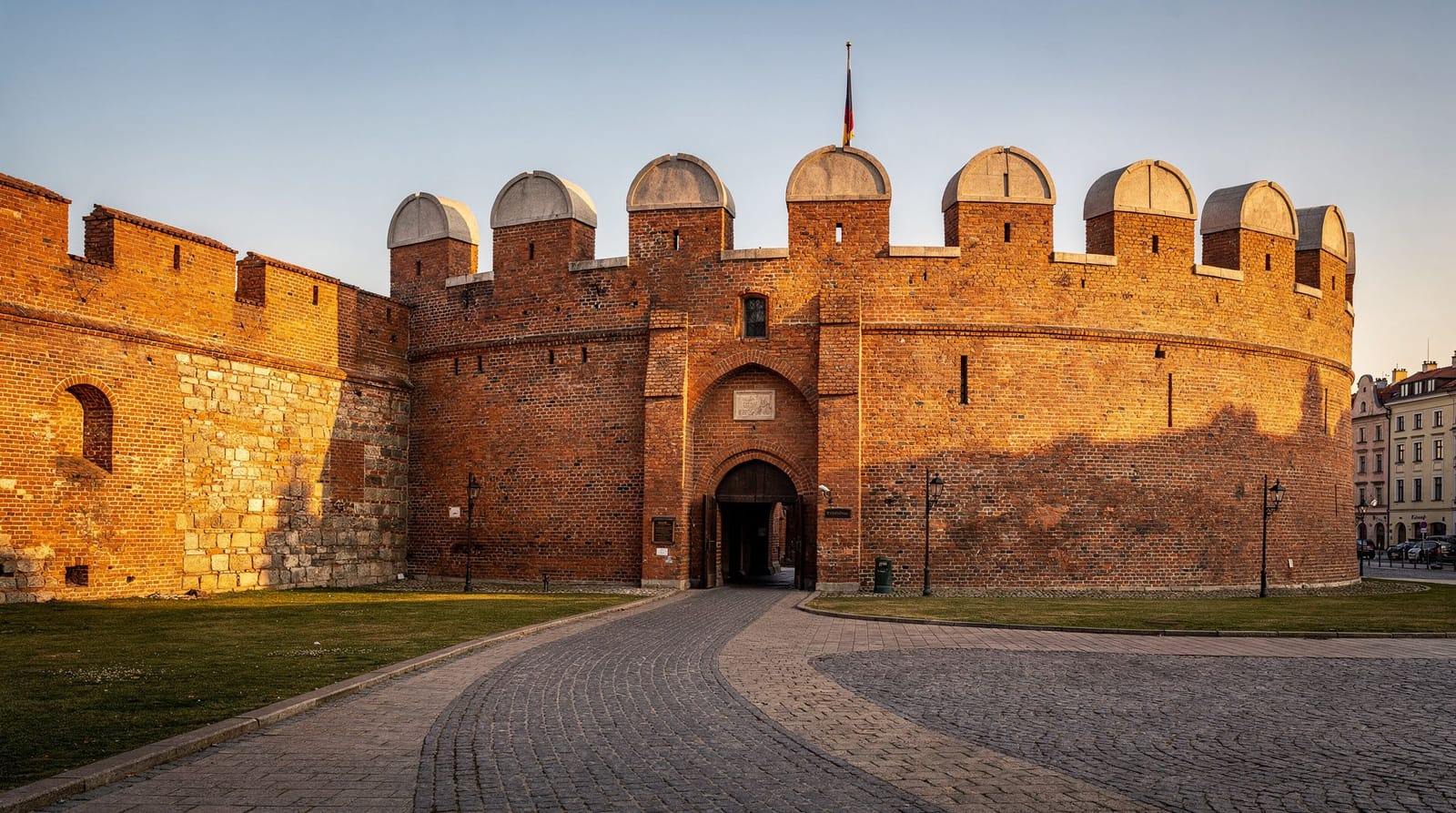
Start at the Barbican on pl. Matejki, the circular Gothic outwork built in 1498. Walk around its exterior in the Planty — the moat garden gives you the best angle for photographs. If the interior is open (April–October), 22 PLN gets you the exhibition and the views from the crenellations.
Pass through the Florian Gate (Brama Floriańska) — the main surviving medieval gate — and you are now on ul. Floriańska, the first section of the Royal Route.
Stop 2: Ul. Floriańska (15–20 minutes walking, longer with stops)
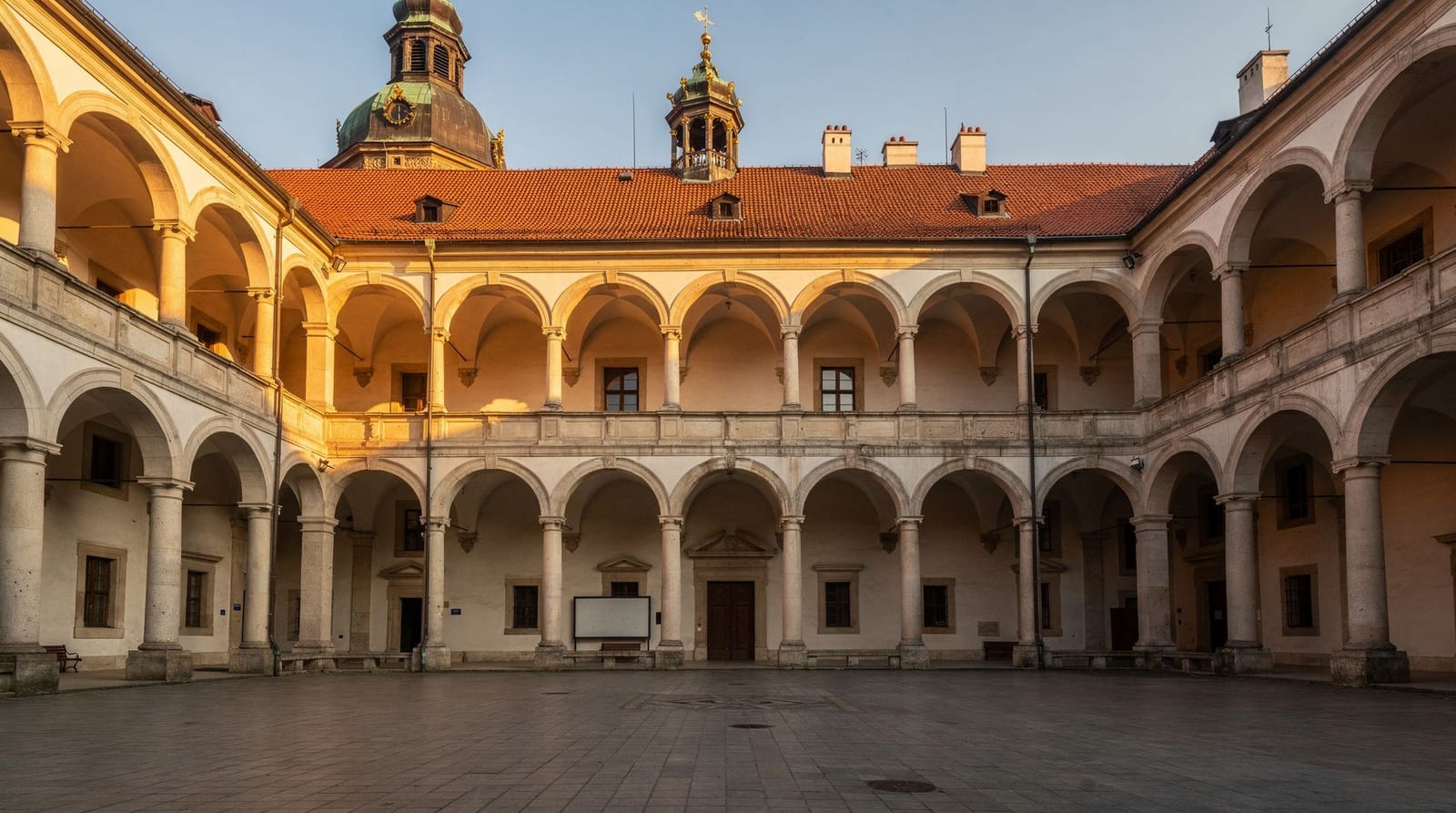
Walk south down ul. Floriańska. On your left: number 41, the Jan Matejko House (a branch of the National Museum; 45 minutes if you go in). On your right: the Renaissance courtyard of Pod Różą Hotel at number 14 — push the door and look into the inner court (free, just duck in). At number 15, U Literatów cafe: coffee and a seat if you need one.
The street ends where it meets Rynek Główny.
Stop 3: Rynek Główny (60–120 minutes depending on visits)
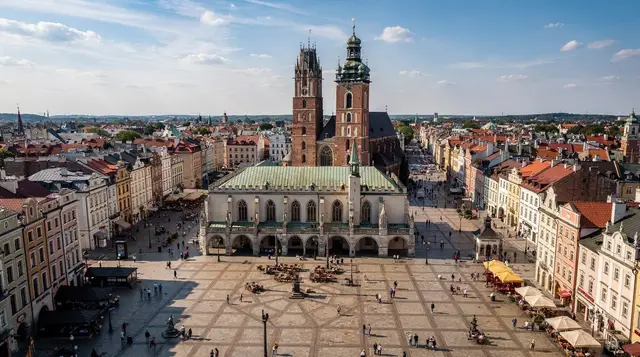
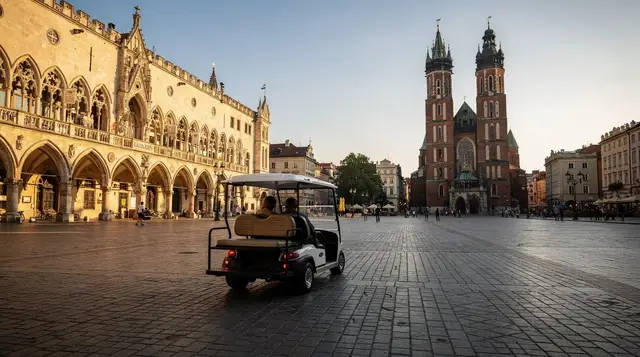
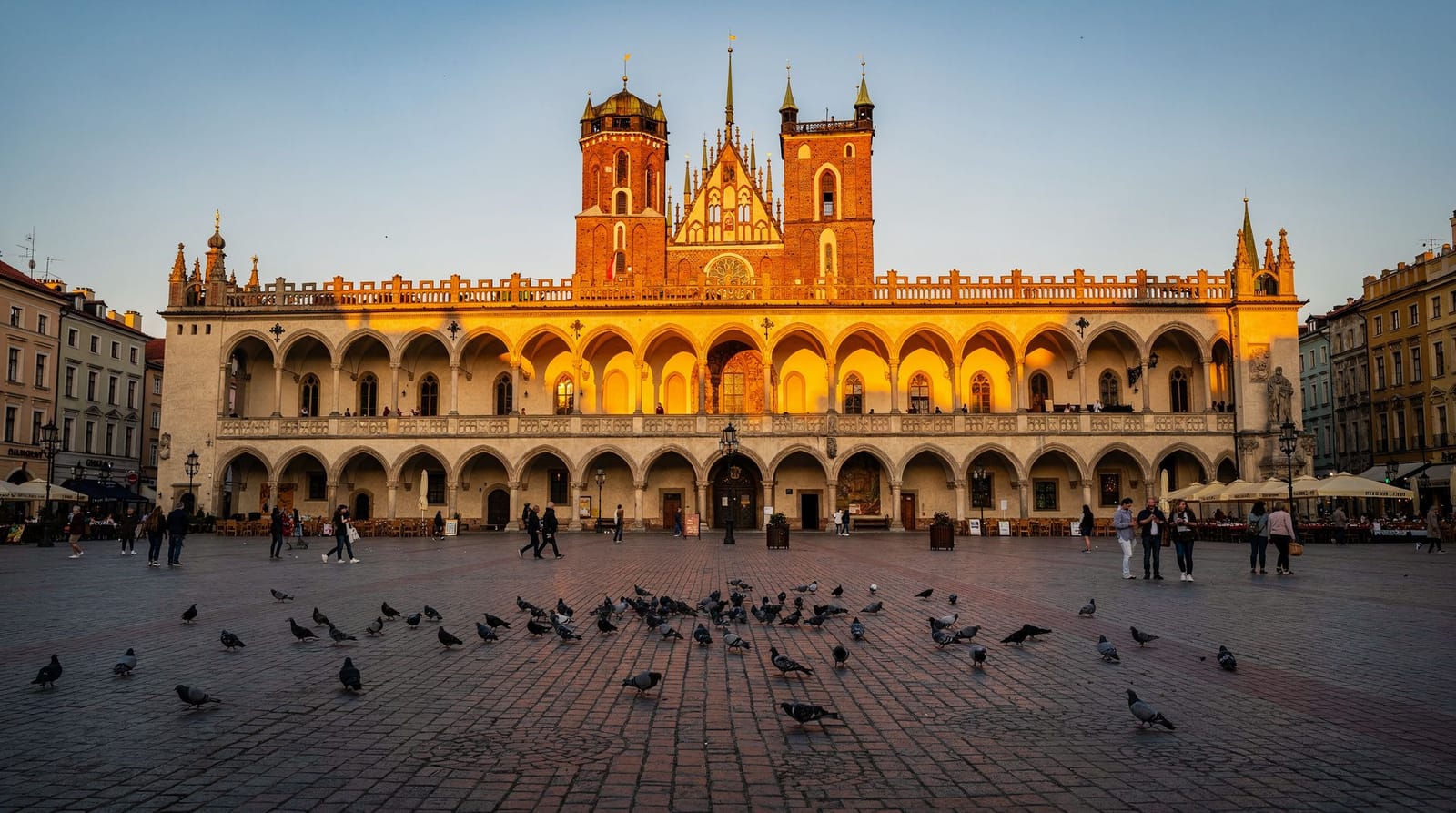
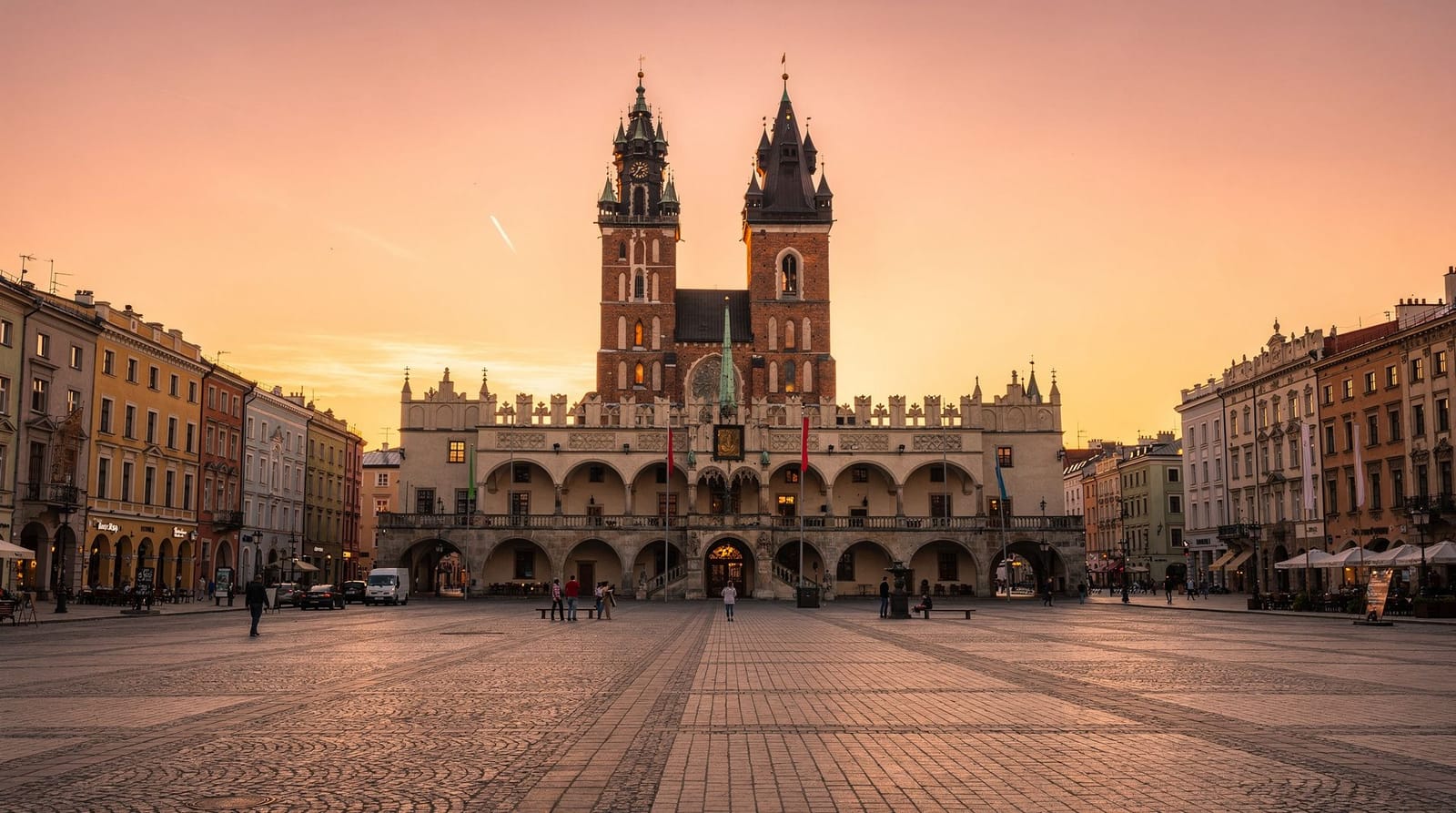
Step into the main square. Take 2 minutes to orient: the Cloth Hall in the centre, St. Mary’s Basilica to the northeast, the Town Hall Tower to the west, the Adam Mickiewicz monument in the southwest.
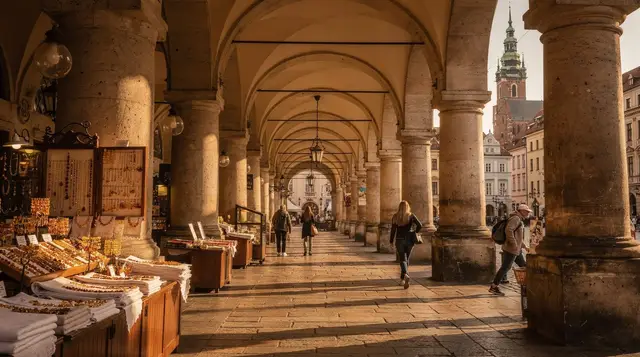
Inside the Cloth Hall: ground floor market (free, browse if you like); gallery of 19th-century painting upstairs (35 PLN, 45–60 minutes). St. Mary’s Basilica: enter after 11:30 (20 PLN; see the full guide). Rynek Underground Museum: 45 PLN, 60–90 minutes (excellent; free on Tuesdays, first come, first served). Town Hall Tower: 22 PLN, 20 minutes including climb; views are good.
Honest food advice: eat on the square only at Kawiarnia Noworolski (inside the Cloth Hall, first floor; coffee and cake around 18–22 PLN / ≈ 4.30–5.20 €) or Zapiecek (pierogi chain on the square, 25–35 PLN / ≈ 6–8 €). For real meals, continue to Mały Rynek (Little Market Square, 2 minutes east of St. Mary’s) — several restaurants at 30–40 % lower prices. Bar Stary (ul. Szczepańska 5) does solid Polish food for 25–35 PLN per main.
Stop 4: Side streets west of the Rynek (20–30 minutes)
Before heading south to Wawel, explore the streets west and southwest of the square. Ul. Szczepańska leads to Plac Szczepański, where the Bunker of Art (Bunkier Sztuki) contemporary art gallery occupies a 1960s building — free or cheap entry, often excellent. The square itself has a pleasant outdoor cafe scene.
Ul. Sw. Jana leads north from the Rynek through a neighborhood of galleries, antique shops, and quieter restaurants. If you are making a second pass through the Old Town on a later day, this area repays slower exploration.
If a pause is welcome here, the Old Town restaurant guide and the café guide help you pick somewhere good rather than somewhere merely nearby, and the advice on avoiding Rynek restaurant overpricing explains why stepping off the square pays off.
Stop 5: Ul. Grodzka and the churches (20–30 minutes)
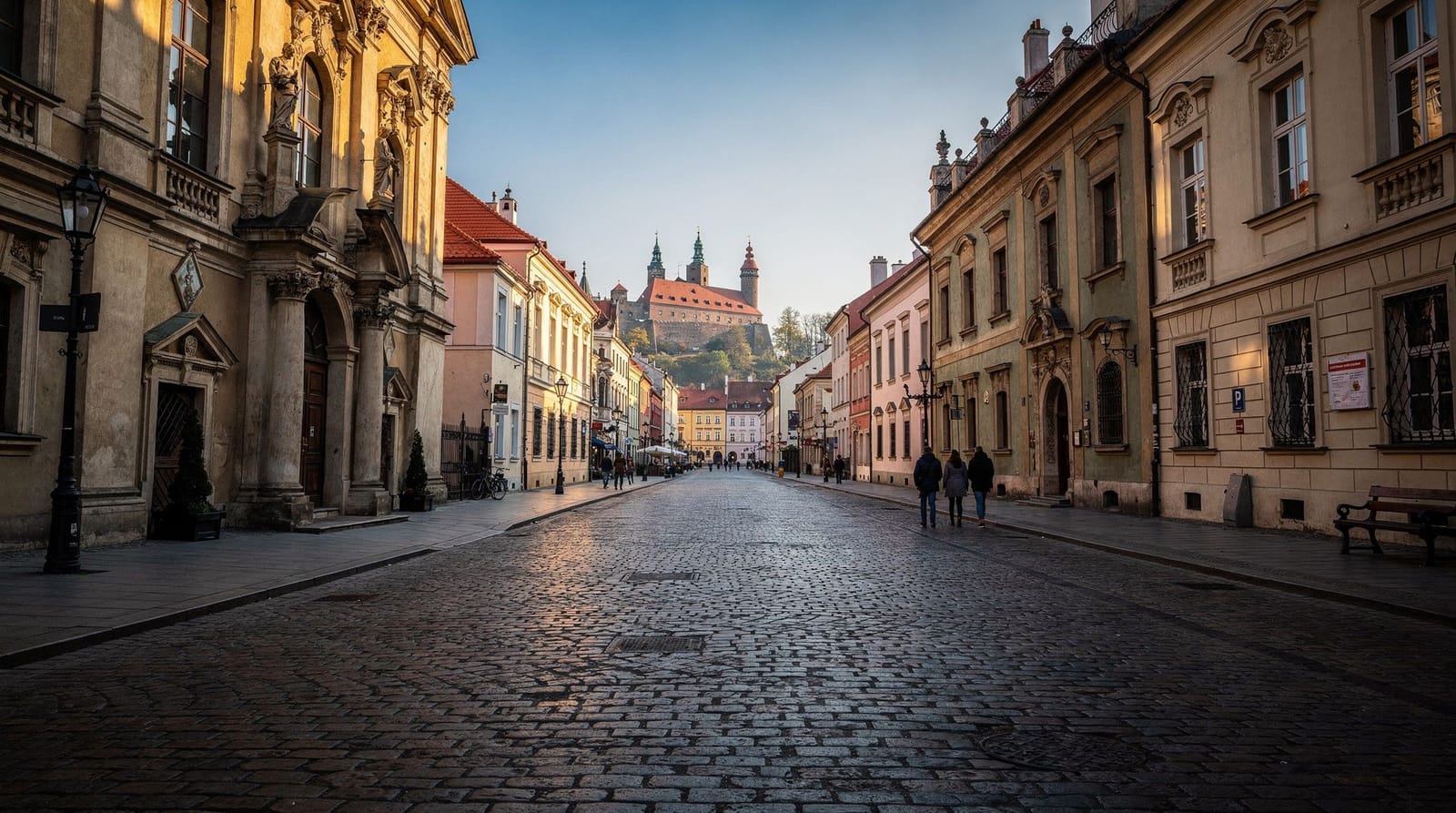
Head south from the Rynek on ul. Grodzka — the southern section of the Royal Route. The first major intersection brings you to the Church of Saints Peter and Paul (no. 52, first Baroque church in Kraków, free) immediately beside the Romanesque Church of St. Andrew (no. 54, 11th century, free). Seeing both side by side — Baroque and Romanesque, 600 years apart and separated by 5 metres — is one of the most efficient architecture moments in the Old Town.
A block further south on Grodzka: the Palace of the Bishops of Kraków (no. 53), where Karol Wojtyła lived as Archbishop. Plaques and a window the city has marked.
Stop 6: Collegium Maius detour (optional, 45 minutes)
If you are interested in the university: at the junction of Grodzka and Franciszkańska, head left on Franciszkańska and then right on Gołębia to reach ul. Jagiellońska and Collegium Maius. The Gothic courtyard is free; the museum tour requires advance booking. This detour adds 45 minutes (plus tour time).
Stop 7: Wawel Hill (90 minutes minimum)
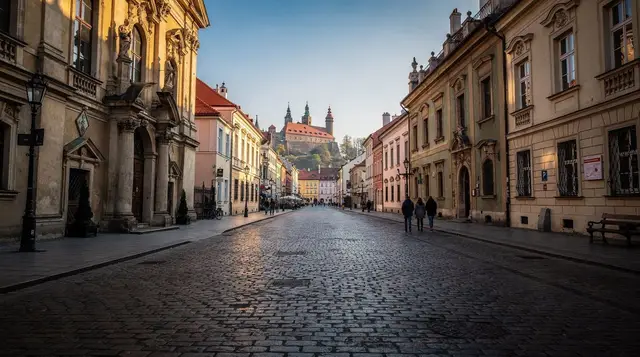
Ul. Grodzka ends at the base of Wawel Hill. Take the road up to the Vasa Gate and enter the castle complex. The Renaissance courtyard is free. Choose your exhibitions (see the Wawel Castle guide for ticket logistics). Minimum satisfying visit: State Rooms or Crown Treasury plus the courtyard = 90 minutes. Full castle plus cathedral = 3.5–4 hours.
After Wawel, the Dragon’s Den entrance is on the western slope (15 PLN, 10 minutes, open seasonally) and the Vistula embankment walk back toward the city is pleasant. The story behind the cave is told in the Wawel dragon legend, worth a read before you arrive, and the cathedral guide covers the royal tombs if you decide to go inside.
If the walk leaves you wanting more, the Kazimierz district is the natural next stop, and the one-day Kraków itinerary shows how to fit this route into a wider plan. First-time visitors may also like the first-timers guide.
Guided vs. self-guided
The route above is fully doable without a guide — Kraków’s Old Town is well-signposted and walkable. However:
An Old Town guided walking tour with a licensed guide covers the route in 2–3 hours with historical context that the signs don’t provide. Worth it particularly for the Rynek, Grodzka churches, and Wawel approach.
A private Old Town highlights walking tour (3 hours) gives you flexible pacing and a guide who can answer specific questions — better for couples or small groups who want in-depth explanations rather than group tour pace.
For those with limited time or energy for walking, the city sightseeing tour by electric golf cart covers the Old Town circuit in about 45 minutes with driver commentary — good for an orientation before exploring on foot.
The Planty perimeter option
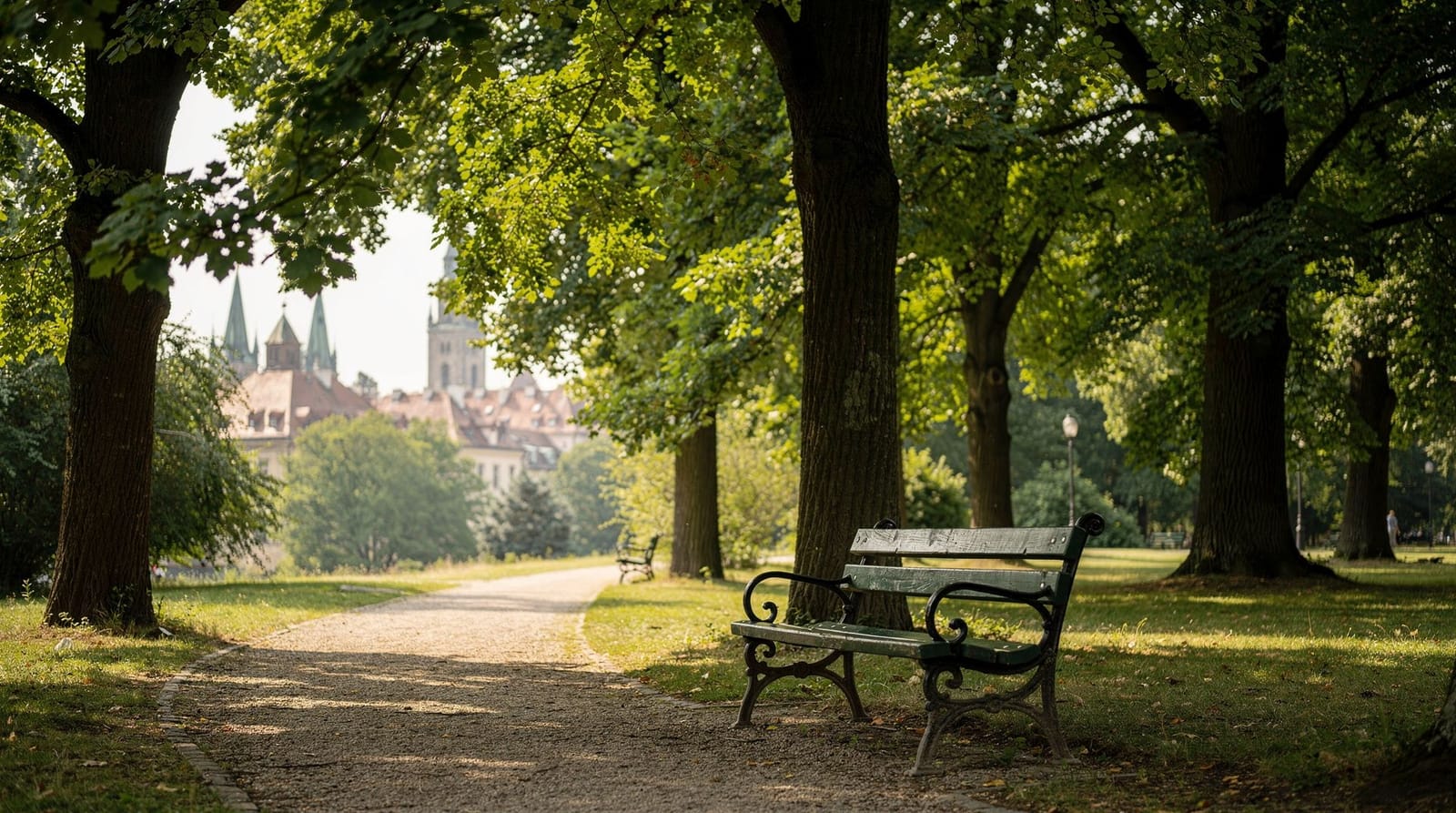
Rather than walking directly between stops, consider building in sections of the Planty Park ring. The Planty runs around the entire Old Town on the site of the demolished medieval walls — a 4 km garden circuit of paths, benches, and views of the surviving wall towers. Walking the Planty between the Barbican and Collegium Maius (heading west), or between Wawel and the Rynek via the southern Planty, adds green breathing space to what can otherwise feel like an intense urban walk.
Practical notes
Cobblestones throughout: the entire Old Town is paved with traditional stone setts. Comfortable, flat-soled shoes are essential. Heels are genuinely difficult.
Timing: the Old Town is a morning-first destination. Major sights open by 09:00–10:00; crowds build from 10:30. In summer, the 11:00–15:00 window is the busiest. Late afternoon (15:00–18:00) is calmer with excellent light for photographs.
Photography: the Old Town is spectacular for photography at golden hour (early morning in summer, about 05:30–07:00; late afternoon 17:00–19:30). The Rynek at dawn, before the market stalls set up, is virtually empty and luminous.
Free sights on this route: the Planty, the Rynek exterior, Wawel courtyard, church interiors (Peter and Paul, St. Andrew, St. Barbara), the Barbican exterior.
Budget for paid sights: Barbican (22 PLN), St. Mary’s (20 PLN), Rynek Underground (45 PLN), Cloth Hall gallery (35 PLN), Wawel State Rooms (57 PLN), Wawel Cathedral (26 PLN). Planning to see all of them in one day? Budget about 200–250 PLN (≈ 48–60 €) per adult.
Frequently asked questions about an Old Town walking tour
What is the best order to walk Kraków’s Old Town?
North to south — Barbican to Wawel — follows the historical logic of the Royal Route and gives you the best sense of arrival at the castle. Start at the Barbican (pl. Matejki), walk down Floriańska to the Rynek, continue down Grodzka to Wawel. Return via the Vistula embankment or the Planty west side.
How many days do you need for Kraków’s Old Town?
One long day covers the exterior walk and two or three interior visits (for example: St. Mary’s + Rynek Underground + Wawel State Rooms). Two days allows you to be less rushed and add Collegium Maius, the Cloth Hall gallery, Wawel Cathedral, and the Crown Treasury. If you have three days, you can add Kazimierz, Podgórze, and a half-day trip.
Is Kraków’s Old Town free to visit?
The streets, squares, park (Planty), and church exteriors are all free. Each museum and attraction has its own entry fee (typically 20–57 PLN / ≈ 4.80–13.60 €). The Old Town itself — walking it, sitting on the Rynek, watching the world go by — costs nothing.
What is the most important thing to see in the Old Town?
If you can only do one thing: Wawel Castle and its Renaissance courtyard, combined with Wawel Cathedral. If you can do two: add St. Mary’s Basilica and the Rynek. If you can do three: add the Rynek Underground Museum. These four experiences are irreplaceable and genuinely representative of why Kraków is a World Heritage city.
Should I do the Old Town before or after Kazimierz?
Old Town first is the more natural order for most visitors — it’s the more compact, monument-dense area and gives context for Kraków’s royal and religious history before you see Kazimierz’s very different Jewish-heritage and nightlife character. That said, if your hotel is closer to Kazimierz, there’s no real downside to reversing the order; the two districts are about 15–20 minutes apart on foot.
Top experiences
Bookable activities with verified prices and instant confirmation on GetYourGuide.