Kraków's Barbican and city walls guide
Krakow: Old Town and Barbican Museum private guided tour
Duration: 2.5h
Is the Kraków Barbican worth visiting and how much does it cost?
Yes — it is one of the best-preserved medieval barbicans in Europe and the only surviving example of its type in Poland. Entry costs 22 PLN (about 5.25 €), reduced 16 PLN. The interior houses exhibitions on medieval fortifications and offers views of the city walls and Florian Gate. Allow 30–45 minutes.
The city’s last line of defence
At the northern edge of Kraków’s Old Town stands one of the most complete examples of medieval urban fortification in Europe. The Barbican (Barbakan) is a circular Gothic fortress built in 1498 as an outwork — a forward defensive position — protecting the main Florian Gate (Brama Floriańska) behind it. From the outside, it looks like something from a children’s book: round, crenellated, with seven cylindrical towers and a moat that no longer holds water. From the inside, it is a serious piece of military engineering that explains a great deal about how medieval cities were defended.
| Where | Northern edge of Old Town, top of ul. Floriańska |
| Cost | 22 PLN adult, 16 PLN reduced |
| Time needed | 30–45 minutes; 1.5–2hrs with Florian Gate + Planty walk |
| Getting there | 5-min walk from Rynek Główny, or tram to Basztowa |
| Best time | arrive at opening to beat groups; hours are seasonal, check before you go |
Together with the surviving stretches of the city walls and the Florian Gate, the Barbican represents the last substantial remains of Kraków’s medieval fortification system. Most of the walls were demolished between 1806 and 1820 under Austrian rule and replaced by the Planty garden ring. That loss makes what survives here more significant — and more visited.
The Barbican itself
The Barbican was built by King John I Albert (Jan I Olbracht) in 1498, following the rapid Ottoman advance northward after the fall of Constantinople (1453) and the increasing threat to Central European cities. It is a classic example of a Gothic fortified outwork — a structure designed to be held independently from the main gate, forcing attackers to take two successive fortified positions rather than one.
Dimensions: the circular fortress measures 24 metres in diameter internally, with walls up to 3 metres thick. The seven towers around the circumference gave defenders firing positions covering all angles. The connecting neck of wall linking the Barbican to the Florian Gate passes over what was originally a drawbridge over the moat.
The moat: the dry ditch around the Barbican’s perimeter is now a pleasant garden space used for small outdoor events and photography. In its active defensive period it would have been water-filled and significantly deeper.
The Barbican was never tested in a major siege — by the time Kraków faced serious military threats in the 17th century, fortification technology had moved on to bastioned systems that rendered circular Gothic outworks less effective. It was used as a military armoury into the 19th century, then threatened with demolition before conservationists (including painter Jan Matejko) successfully campaigned for its preservation in the 1870s.
Inside: what the exhibition covers
The interior of the Barbican houses a permanent exhibition on Kraków’s medieval and early modern fortification system. The exhibition is modest by large museum standards but effective — scale models of the full defensive circuit as it existed in the 15th century, weaponry, and architectural details that are hard to understand from the exterior alone.
The upper walkways give excellent views of the Florian Gate, the surviving stretches of wall, and the surrounding Planty gardens. The medieval crenellations are genuine — not restored for tourism, but the actual 15th-century stonework.
Tickets: 22 PLN (≈ 5.25 €) for adults, 16 PLN reduced; family ticket 44 PLN. Check the Florian Gate and city walls access separately on the official website of the Museum of Krakow (muzeumkrakowa.pl).
Opening hours: Tuesday–Sunday 10:00–16:00, closed Monday; hours are seasonal, so check the official website of the Museum of Krakow (muzeumkrakowa.pl) for current hours.
A private guided tour of the Old Town and Barbican Museum provides the historical context for the fortifications that makes the visit substantially more informative. A licensed guide can explain the defensive logic — why the outwork was positioned here, how the gate system worked, what the surviving towers indicate about the broader circuit.
The Florian Gate (Brama Floriańska)
Connected to the Barbican by a short neck of wall, the Florian Gate is the main surviving city gate of Kraków. The Gothic tower dates from around 1300, with additions in the 14th and 15th centuries. It is the only gate that survived the early 19th-century demolition campaign; eight others were torn down.
The gate is pierced by a road (now pedestrianised) — ul. Floriańska runs through the archway. The interior of the tower contains a small permanent exhibition on the history of the gate and the artists who painted Kraków’s streetscapes in the 19th century (the Gate was a favourite subject). The tower can be climbed for views.
Outside the gate, on the city-facing side, the tradition of exhibiting outdoor paintings on the Planty-side sections of the wall continues through summer — local artists hang work on the surviving wall stretches, creating a kind of outdoor gallery.
The surviving wall sections
Of the medieval city wall circuit — originally about 2 km long with 47 towers and 8 gates — only fragments remain:
- The Barbican and connecting neck to the Florian Gate (most complete section)
- The Joiners’ Tower (Baszta Stolarska), Haberdashers’ Tower (Baszta Pasamoników), and Carpenters’ Tower (Baszta Ciesielska) along the Planty on the eastern side
The towers on the eastern section of the Planty are externally intact but not currently open to visitors on a regular basis. The wall walk that would have connected them no longer exists. The best view of these towers is from the Planty Park garden paths.
The Planty and the lost walls
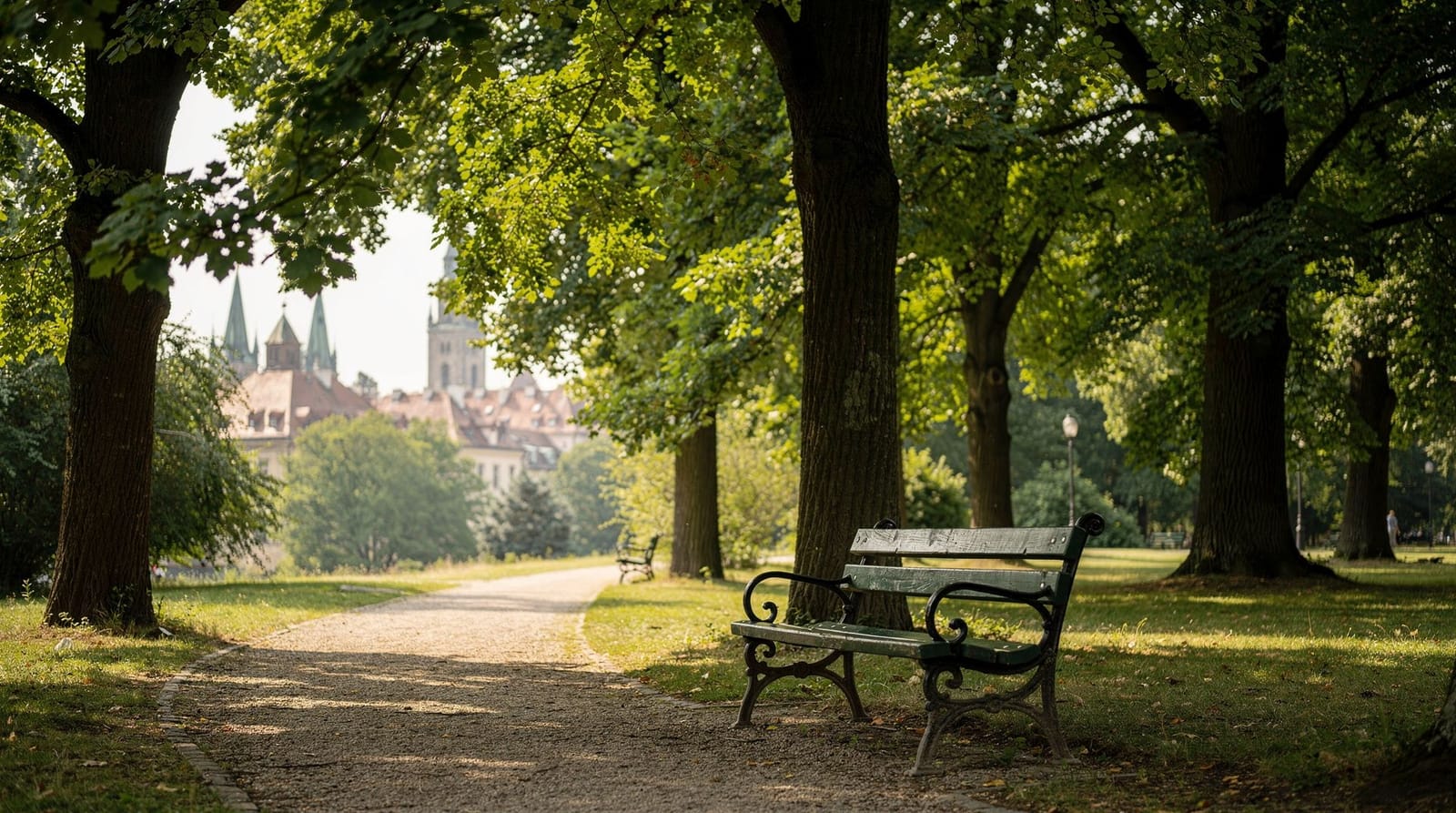
Understanding the Barbican requires understanding what was lost. The early 19th-century demolition of most of the walls was not vandalism by modern standards but a considered urban planning decision: the walls were in poor repair, the defensive threat had changed, and the Austrian administration saw an opportunity to create a modern green ring around the Old Town. The result — the Planty — is one of the most pleasant green spaces in any Central European city centre.
The trade-off was the loss of most of the medieval fabric. The Planty replaced the moat as well as the walls; it runs in an almost complete ring around the Old Town on the former defensive perimeter. Walking the full Planty circuit (about 4 km) gives you the shape of the medieval city even though the walls are mostly gone.
How to read the fortifications as you walk
The Barbican rewards a slow look before you go in. Stand on the moat side and trace the line of the neck of wall back to the Florian Gate: the whole point of the design is that an attacker who got past the outwork would still face a second gate, with defenders above and on both sides. Notice how the towers are spaced and where the openings sit. Once you see the logic from outside, the scale models in the exhibition make far more sense.
From the Barbican, look south along the street and imagine the full ring of wall closing around the Old Town. Most of that line is now trees and benches, but a few clues remain in the layout of the streets and in the way the green belt hugs the historic centre. The Planty Park guide explains how the garden ring was laid out and which sections follow the old defensive line most closely.
Pairing the walls with other Old Town stops
The Barbican is a short stop, so it pairs easily with other sights on the same morning. A walk down ul. Floriańska brings you to St. Mary’s Basilica on the edge of the main square, and from there the Town Hall Tower and the Cloth Hall are only a few steps apart. If you prefer to keep the medieval theme going underground, the Rynek Underground Museum shows the early city from below the square.
Travellers who want the bigger picture of the city’s origins and its royal past can continue toward the hill with the Wawel Castle guide, which picks up the story where the defensive history leaves off. For a full-day plan that includes this area, the one-day Kraków itinerary places the Barbican early in the day, when the walls and the Planty are at their quietest.
Photography and pacing
The best photographs of the Barbican tend to come from the moat garden and from the Planty paths rather than from the street directly in front. Early light is kind to the brick and stone, and the crowds are thinner. Give yourself time to stop rather than rushing through: the exhibition is compact, but the walkways, the views over the gate and the quiet corners of the garden are what make the visit memorable. If you are travelling with children, the round towers and the idea of a hidden drawbridge usually hold their attention; the Kraków with kids guide has more ideas for the rest of the day.
Getting to the Barbican
The Barbican is at the northern end of ul. Floriańska, a 5-minute walk from Rynek Główny. It is the natural starting point for the Royal Route and the beginning of any walking tour of the Old Town. Trams stop on ul. Basztowa (Barbican stop) and ul. Planty — both a 2-minute walk.
The approach from the Planty side — walking the garden ring around from the east or west — gives you the best initial view of the Barbican from a distance, which is how it would have appeared to a medieval traveller approaching the city.
Practical tips
- Arrive early (at opening) to have the Barbican to yourself before group tours arrive around 11:00.
- The combination of Barbican + Florian Gate + a Planty walk takes about 1.5–2 hours total.
- The Barbican’s moat garden sometimes hosts outdoor events and craft markets in summer — check local listings.
- Comfortable, flat shoes recommended; the upper walkways of the Barbican have medieval-height steps in some sections.
The medieval history walk option
The Kraków medieval history city walking tour covers the Barbican, Florian Gate, the surviving wall sections, and the broader medieval urban history of the Old Town in a single 2–2.5 hour walk — ideal for those who want to understand the city’s development from its 13th-century foundation through the height of the Jagiellonian kingdom.
Combining with the rest of the Old Town
The Barbican sits at the natural start of a walk down into the Old Town proper. From here, most visitors continue south along ul. Floriańska to Rynek Główny, Europe’s largest medieval market square, then on to the Royal Route toward Wawel. If you want a structured route rather than wandering, the Old Town walking tour guide lays out a logical sequence that starts here.
For visitors interested in Kraków’s academic history alongside its military history, Collegium Maius — the oldest building of the Jagiellonian University — is a 10-minute walk southwest and pairs well as a second stop on the same morning.
If you are still deciding how long to stay in the city, the how many days in Kraków guide helps you decide how much time the Old Town sights deserve, and the Old Town and Kazimierz stay comparison is useful if you want to sleep within walking distance of the walls.
Frequently asked questions about the Barbican
What is the Barbican in Kraków?
The Kraków Barbican (Barbakan) is a circular Gothic defensive outwork built in 1498, connected to the Florian Gate by a neck of wall. It is the best-preserved medieval barbican in Poland and one of the finest in Europe. The circular fortress with seven towers protected the main city gate and served as a forward defensive position.
Is the Kraków Barbican the same as the Florian Gate?
They are two separate but connected structures. The Barbican is the circular outwork outside the city perimeter; the Florian Gate is the Gothic gate tower in the city wall. They are linked by a short passage over what was originally a drawbridge. Check the official website of the Museum of Krakow (muzeumkrakowa.pl) to see whether your ticket covers both.
When does the Barbican close?
The Barbican is open Tuesday–Sunday 10:00–16:00 and closed on Mondays; hours are seasonal. Check the official website of the Museum of Krakow (muzeumkrakowa.pl) for current hours before visiting.
Are there other city walls visible in Kraków?
Three towers survive on the eastern section of the Planty — the Joiners’, Haberdashers’, and Carpenters’ towers — visible from the Planty gardens but not regularly open for climbing. The Barbican-Florian Gate complex is the most complete and publicly accessible section of the former defensive circuit.
Is the Barbican worth visiting if I only have one day in Kraków?
Yes, if that day includes a walk from the Old Town’s north end southward — it costs little time and money as a starting point for the Royal Route toward Wawel. If your one day is already packed with major sights, viewing it from the outside on your way past still gives you the impression of the fortification, even without going in.
Top experiences
Bookable activities with verified prices and instant confirmation on GetYourGuide.