Planty Park guide: Kraków's garden ring around the Old Town
Krakow: Old Town guided walking tour
Duration: 3h
What is Planty Park in Kraków and is it worth walking?
Planty is a 4 km ring of gardens encircling Kraków's Old Town, planted on the site of the demolished medieval moat and city walls in the early 19th century. It is free, always accessible, and provides a quieter, greener alternative to the busy Old Town streets — ideal for walking between sights or for a morning or evening stroll.
The green moat around a medieval city
Where a medieval city had a moat and walls, Kraków now has the Planty — a continuous ribbon of parkland that circles the Old Town for about 4 kilometres, planted with chestnut and linden trees, threaded with footpaths, and punctuated by benches, fountains, and small monuments. It is one of the most pleasant urban green spaces in Central Europe: not a large park, but a long, linear garden that gives the historic centre a green collar.
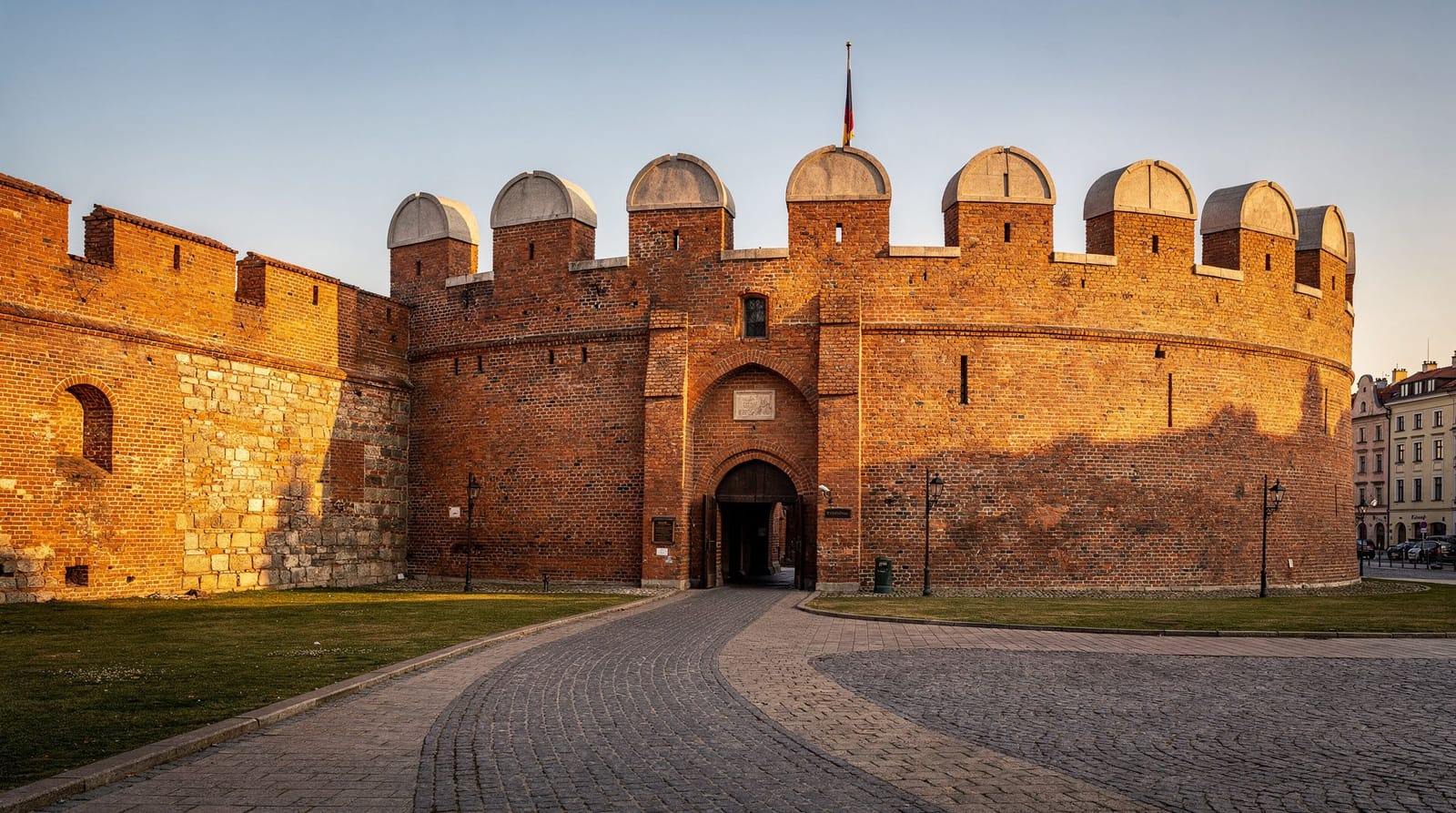
Understanding the Planty means understanding what was lost to create it. At the beginning of the 19th century, Kraków was under Austrian rule and the city’s medieval walls — originally some 2 km of circuit with 47 towers and 8 gates — were in poor repair. The Austrian administration, following the then-fashionable model of converting obsolete urban fortifications into public promenades, demolished most of the walls between 1806 and 1820 and planted the resulting cleared band with trees and gardens. The moat was filled; the wall circuit was reduced to three surviving towers on the eastern section and the Barbican-Florian Gate complex in the north.
The result, from our perspective, is a serious loss of medieval heritage and a genuine urban gain. The Planty is both.
| Where | Ring around the Old Town, following the demolished city walls |
| Length | ~4km full circuit |
| Time needed | 50–60min brisk walk; 2hrs with stops |
| Cost | Free, always open |
| Best time | April–May (blossom) or September–October (autumn colour) |
Walking the Planty circuit
The full circuit of the Planty is approximately 4 km. Walking at a relaxed pace without stopping, it takes about 50–60 minutes. With stops to sit, look at the surviving towers, or enter the Old Town at various points, two hours is more satisfying.
The park is not uniform in character. Different sections have distinct atmospheres:
The northern section (Barbican to Czartoryski Museum)
The most architecturally significant section. The Barbican stands at the northern midpoint, surrounded by its moat garden — a natural stopping point. West of the Barbican, the path passes near the old Piarist church and the Dominican convent. East of the Barbican, the path leads past the three surviving medieval towers: the Joiners’ Tower (Baszta Stolarska), Haberdashers’ Tower (Baszta Pasamoników), and Carpenters’ Tower (Baszta Ciesielska). These are externally intact 15th-century towers with tiled roofs, standing in the gardens like stone sentinels. They are not open for climbing but they are architecturally significant.
Further east, the Czartoryski Museum borders the Planty — home to Leonardo da Vinci’s Lady with an Ermine, one of only approximately 20 surviving Leonardo paintings in the world. Entry 65 PLN (≈ 15.50 €), free on Tuesdays. If you have time for one museum beyond the main Old Town circuit, this is it.
The eastern section (Czartoryski to Stradomska)
A quieter stretch running past the backs of Old Town institutions — the Filharmonia Krakowska (Kraków Philharmonic), the historical museum gardens, and several university buildings. The paths are shadier here and less trafficked by tourists. In spring, the chestnuts flower and the scent is strong. Students from the university use this section for studying on benches.
The southern section (near Wawel)
The Planty narrows and becomes more formal as it approaches Wawel Hill, eventually connecting to the Vistula embankment. The approach to the castle from the Planty side — walking toward the hill through the gardens — gives a better sense of Wawel’s physical dominance than approaching from the street.
The western section (Wawel to Barbican)
Passes behind the Dominican and Franciscan churches, through the area around pl. Wszystkich Świętych (All Saints’ Square), and through the Planty section adjacent to Collegium Maius and the Czartoryski collections. Quieter than the northern section; good for an evening walk.
The Planty as navigation
One practical use of the Planty: instead of walking through the busy streets of the Old Town between major sights, you can walk around the edge. From the Barbican to Wawel via the Planty is about 25 minutes (eastern route) or 20 minutes (western route) — compared to 15 minutes via the Rynek. The Planty route adds time but subtracts crowds and adds shade in summer.
Entry points from the Planty into the Old Town are frequent — every major cross-street has a passage. The park is not a ring road around a traffic system; it is permeable from both sides.
Seasonal character
Spring (April–May): the best time. Chestnut trees flower; linden trees follow in June. The Planty feels light and fresh. Locals come out in large numbers.
Summer (June–August): pleasant in early morning and evening but can be hot in full sun on the less shaded stretches. The eastern section’s shade makes it the best summer walk.
Autumn (September–October): the second-best season. Chestnut leaves turn gold and fall across the paths. The quality of autumn light makes the park atmospheric in a way it isn’t in any other season.
Winter (December–February): stripped of leaves, the Planty reveals the surviving medieval towers most clearly. Snow on the paths with the towers and gates illuminated is visually striking. Heated outdoor Christmas market adjacent to the Old Town entry on ul. Basztowa — see the Kraków Christmas markets guide for the full seasonal picture.
The monuments
The Planty contains a number of monuments that are easy to miss. Among the more significant:
Jadwiga and Jagiełło monument: near the Barbican, celebrating the Polish-Lithuanian Union of 1386.
Artur Grottger monument: the Romantic painter (1837–1867), one of several artistic figures commemorated in the park.
Michał Bałucki memorial: the 19th-century playwright, near the Jagiellonian University section of the park.
The Park Bears: several carved stone bears sit on plinths at various points around the park — a tradition that dates to the 19th century and whose origin is debated. Local children treat them as landmarks.
Practical notes
The Planty is free and always open — no gates, no entry requirements. Dogs are welcome. Cycling is technically permitted in sections but practically awkward given the number of pedestrians; it is better to walk.
Public toilets are available at several points: near the Barbican, at the main entry from pl. Wszystkich Świętych, and near the Wawel approach. A small fee (2–3 PLN) is sometimes charged.
Cafes on the Planty: a handful of small kiosks operate in summer with coffee and drinks. For full cafes, step into the Old Town at any of the many entry points.
The Planty after dark: the park is lit and used by locals in the evenings. In summer, the evening Planty walk — warm air, the smell of linden blossom, the silhouette of the Barbican — is one of the most pleasant experiences the city offers. It is safe and busy enough at normal evening hours; use common sense late at night as with any urban park.
Combining the Planty with tours
An Old Town guided walking tour typically incorporates sections of the Planty as transition between major sights, particularly the northern section past the Barbican. The private Old Town and Barbican tour focuses on the northern Planty section with the fortification remains.
The Planty works well as a before-or-after extension to any Old Town tour day. An early morning walk of the western section before the city wakes up, followed by a full day of sights, is a structure many visitors find satisfying. For a fully structured walking route through the Old Town itself, see the Old Town walking tour guide and the Royal Route walking guide, both of which cross the Planty at several points.
Choosing which Planty section to walk
| Section | Character | Best for |
|---|---|---|
| Northern (Barbican–Czartoryski) | Most architecturally significant, busiest | First-time visitors, photography |
| Eastern (Czartoryski–Stradomska) | Quiet, shaded, student atmosphere | Escaping crowds, a calm walk |
| Southern (near Wawel) | Formal, dramatic approach to the castle | Building anticipation before Wawel |
| Western (Wawel–Barbican) | Quiet, passes Collegium Maius | Evening walks |
If your interest runs to the university buildings the western and eastern sections pass, the Collegium Maius guide covers the Gothic courtyard and museum in detail.
Fitting the Planty into your days
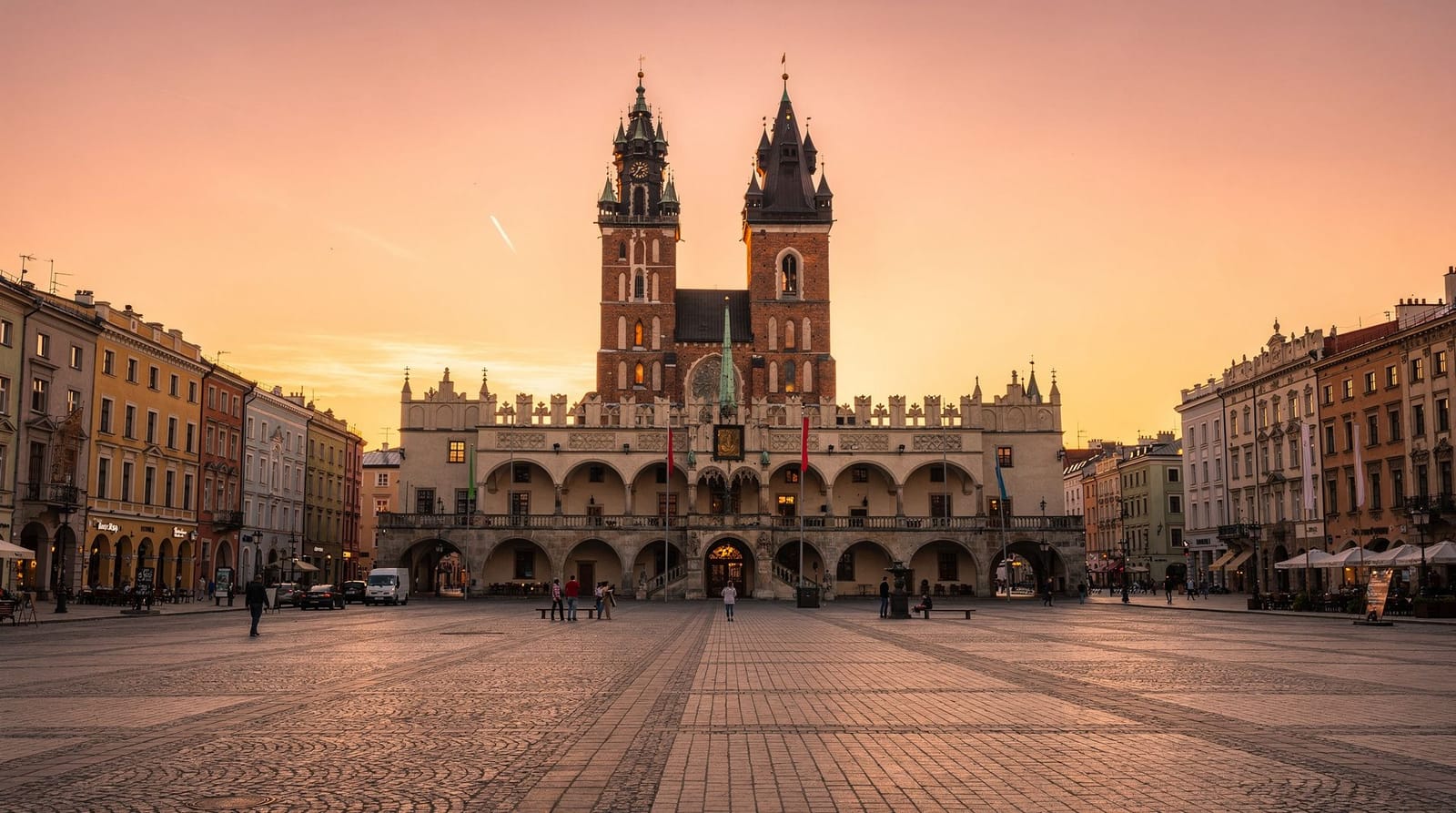
The Planty is best thought of as a connective tissue rather than a single attraction. On a first visit, it makes a natural pause between the heavier sights: after the crowds of the Main Market Square and the interior of St Mary’s Basilica, a short stretch under the trees resets the senses before the next stop. The same goes for the Cloth Hall, which sits in the middle of the busiest part of town; the park is only a short step away in any direction.
If you are still deciding how long to stay, the how many days in Kraków guide helps with the overall shape of a trip, and the first-timers guide places the Planty among the other essentials. Short itineraries such as the one-day Kraków itinerary and the weekend city break can both absorb a Planty stroll as a low-effort, no-ticket segment.
Planty and the seasons
Because the park changes so much through the year, it rewards a return visit. The Kraków in spring and Kraków in autumn guides describe the wider seasonal picture the Planty belongs to, and they are a good way to decide when to time a longer walk.
Planty with a story
Walking the park is more engaging if you bring a few stories with you. The ring of gardens sits at the foot of Wawel, so it pairs naturally with the Wawel dragon legend and the wider collection of Kraków legends and myths. Children in particular tend to enjoy treating the stone bears and monuments as a kind of trail, and a slow loop with a few of these tales in mind turns a simple walk into something closer to a game.
Where to go next
When you leave the park, the Old Town is never more than a few steps away, and the southern end leads towards the Wawel Castle guide for the hill itself. If you would rather leave the historic core behind for an afternoon, Kazimierz is the natural next neighbourhood to explore on foot, and the Kazimierz Jewish quarter guide gives a route through it. For readers who like to understand a city by its layers, the Planty is a good starting point: it shows, in a single walk, how the medieval town, the 19th-century promenade, and the modern city fit together, and it asks nothing of you except time.
Frequently asked questions about Planty Park
How long does it take to walk all of Planty Park?
The full circuit is approximately 4 km. Walking at a steady pace without stopping takes about 50–60 minutes. Allow 2 hours if you want to sit, look at the medieval towers, and enter the Old Town at a couple of points along the way.
Is Planty Park free?
Yes — completely free and always accessible. There are no entry gates or tickets. The park is public open space maintained by the city. The only costs are if you buy food at a kiosk or use a paid public toilet.
What can you see from Planty Park?
The three surviving medieval towers (Joiners’, Haberdashers’, Carpenters’) are visible from the eastern Planty section. The Barbican and Florian Gate are the northern anchor. The outer walls of numerous Old Town institutions (the Philharmonic, university buildings, churches) border the park. From the southern section, you get views toward Wawel Hill.
When is the best time to visit Planty Park?
Spring (April–May) and autumn (September–October) are the best seasons for walking the Planty — comfortable temperatures and beautiful foliage. Summer evenings (after 18:00) are very pleasant. Winter is atmospheric but colder and stripped of leaves, though the towers and gates are more visible.
Can I run or cycle on the Planty?
Running is common and welcomed, especially early morning. Cycling is technically permitted in marked sections but the paths are narrow and heavily used by pedestrians, particularly in the northern section; most locals prefer to walk their bikes through the busiest stretches rather than ride.
Top experiences
Bookable activities with verified prices and instant confirmation on GetYourGuide.