Royal Route walking guide: Kraków's historic processional road
Krakow: Old Town Royal Route walking tour
Duration: 2.5h
What is the Royal Route in Kraków and how long does it take to walk?
The Royal Route (Droga Królewska) follows the historic processional road from the Florian Gate and Barbican in the north to Wawel Castle in the south, through the heart of the Old Town. The core walk of about 1.2 km takes 20–25 minutes at a stroll, but with stops at the major landmarks allow 3–4 hours.
The road that kings walked
Every Polish king from Władysław I (crowned 1320) to Stanisław August Poniatowski (the last king, died 1798) made the ceremonial procession from the city gate to Wawel Castle at their coronation. This procession followed a fixed route through the heart of Kraków, lined with cheering subjects, draped with banners, and marked by the ringing of bells from St. Mary’s Basilica and every church along the way. The street is still here. The procession no longer takes place. But walking it — deliberately, with some sense of what it meant — is one of the finest ways to understand Kraków’s old urban fabric.
The Royal Route (Droga Królewska) runs approximately 1.2 kilometres from the Barbican and Florian Gate in the north to the gate of Wawel Castle in the south. It is almost entirely pedestrianised. Every building along it has a story.
| Where | Barbican/Florian Gate to Wawel Castle, through Rynek Główny |
| Cost | free to walk; attractions along it charge their own entry fees |
| Time needed | 20–25 min brisk walk; 3–5hrs with stops |
| Getting there | entirely within walking distance of the Old Town |
| Best time | before 9:30am for quiet streets; avoid midday in July–August |
The northern anchor: Barbican and Florian Gate
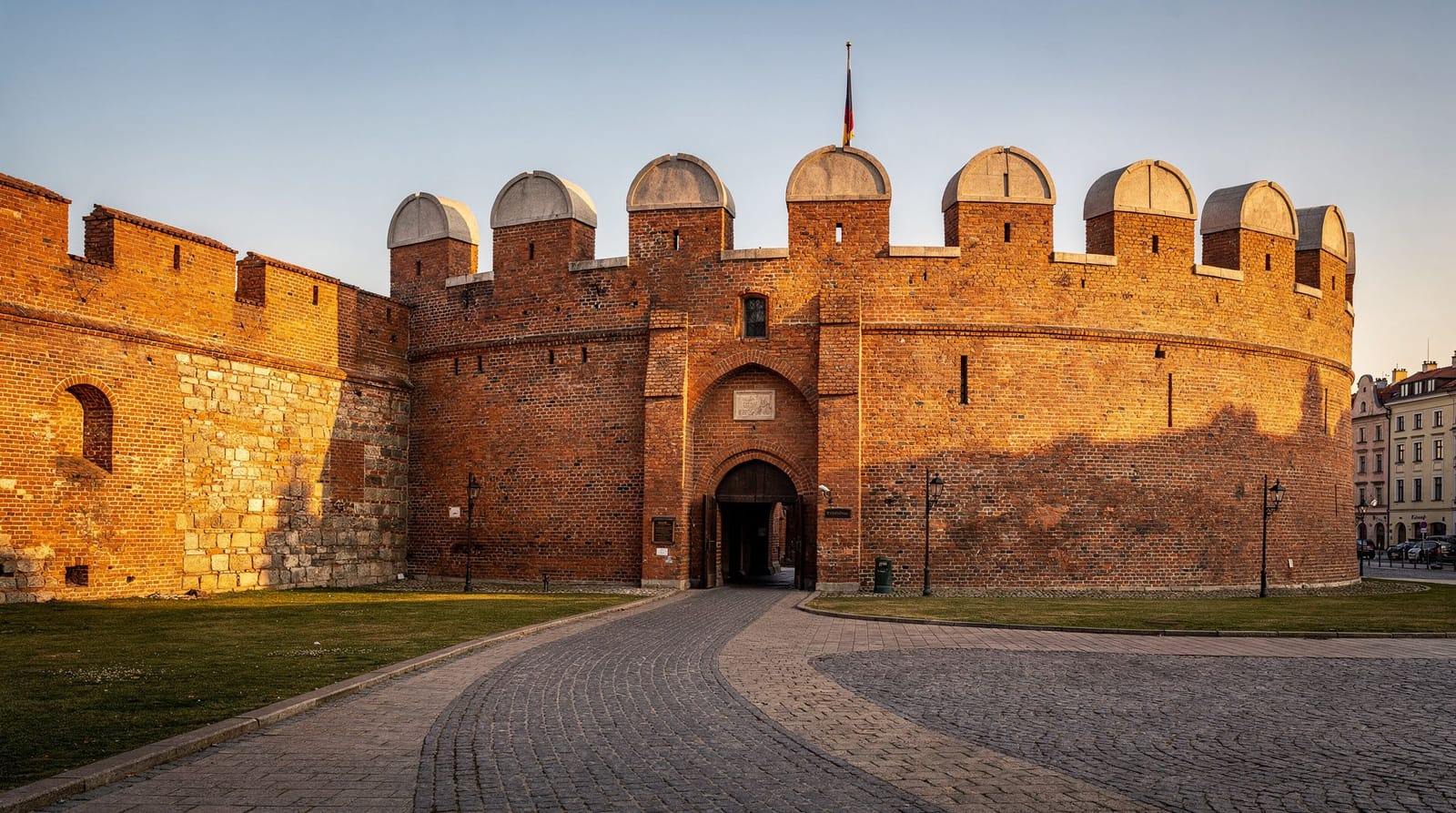
The Royal Route begins — or ends, depending on your direction — at the Barbican: the circular Gothic fortification built in 1498, connected to the Florian Gate (Brama Floriańska) by a short neck of wall. Kings arriving in Kraków from Warsaw or from the north would have entered through these gates. Both are still standing; the Barbican is open for climbing (22 PLN / 5.20 €, open seasonally); the Florian Gate’s interior is used for small exhibitions.
The wall fragments running along Planty Park to the east and west of the gate are among the last surviving sections of the medieval city walls. Three towers survive in reasonable condition: the Joiners’ Tower, the Haberdashers’ Tower, and the Carpenters’ Tower. The original circuit of walls was largely demolished in the early 19th century and replaced by the Planty garden ring.
Ul. Floriańska: the first section
Passing through the Florian Gate, the route follows ul. Floriańska — one of Kraków’s finest streets. The townhouses here date from the 15th to 18th centuries, many with restored facades.
Notable buildings on ul. Floriańska:
-
Jan Matejko House (Floriańska 41): The birthplace and home of Poland’s greatest historical painter, now a branch of the National Museum. Matejko’s studio has been preserved as it was at the time of his death in 1893. Check current prices on the official website of the National Museum in Kraków (mnk.pl). Worth the 45-minute visit if you plan to spend time in the Cloth Hall gallery.
-
Pod Różą Hotel (Floriańska 14): One of Kraków’s oldest inns, operating on this site since at least the 16th century. Franz Liszt and Tsar Alexander I are among the recorded guests. The interior courtyard is beautiful — ducking in for a look is free.
-
U Literatów Cafe (Floriańska 15): A traditional literary cafe that was a meeting point for Kraków’s intellectuals in the early 20th century. The pre-war atmosphere is somewhat preserved; good coffee.
Rynek Główny: the heart
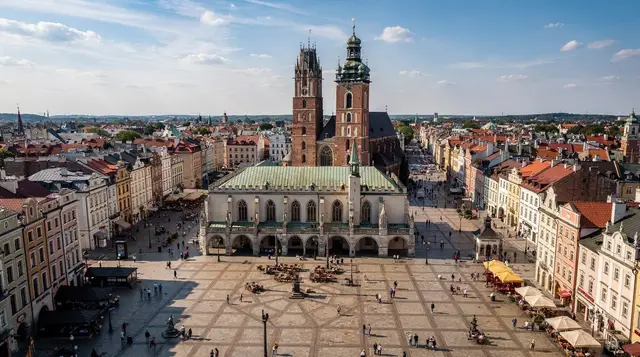
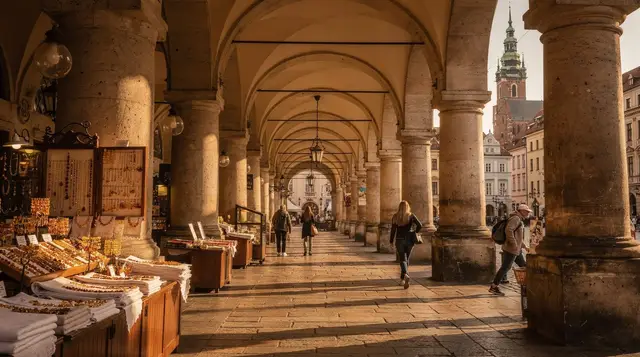
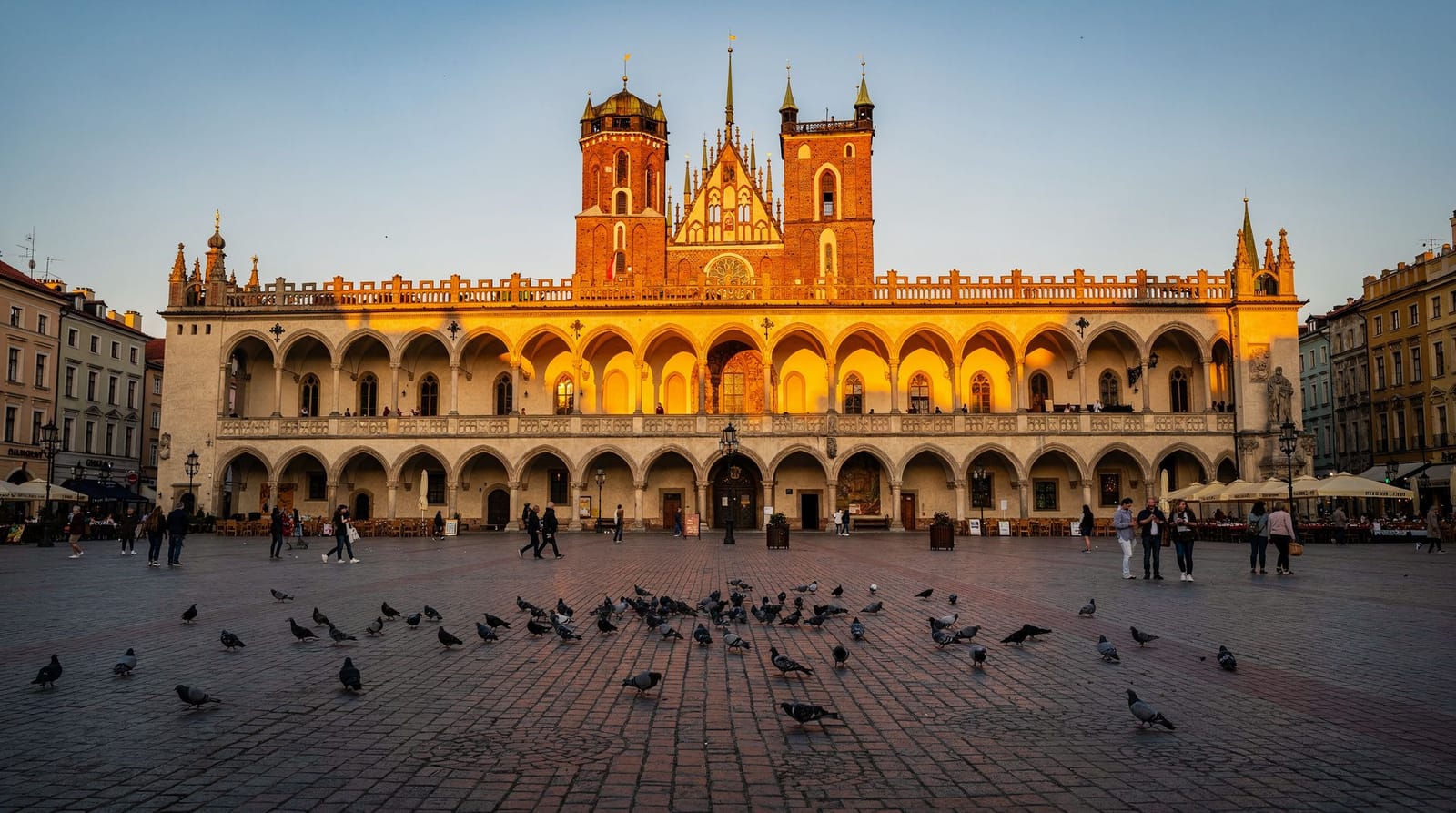
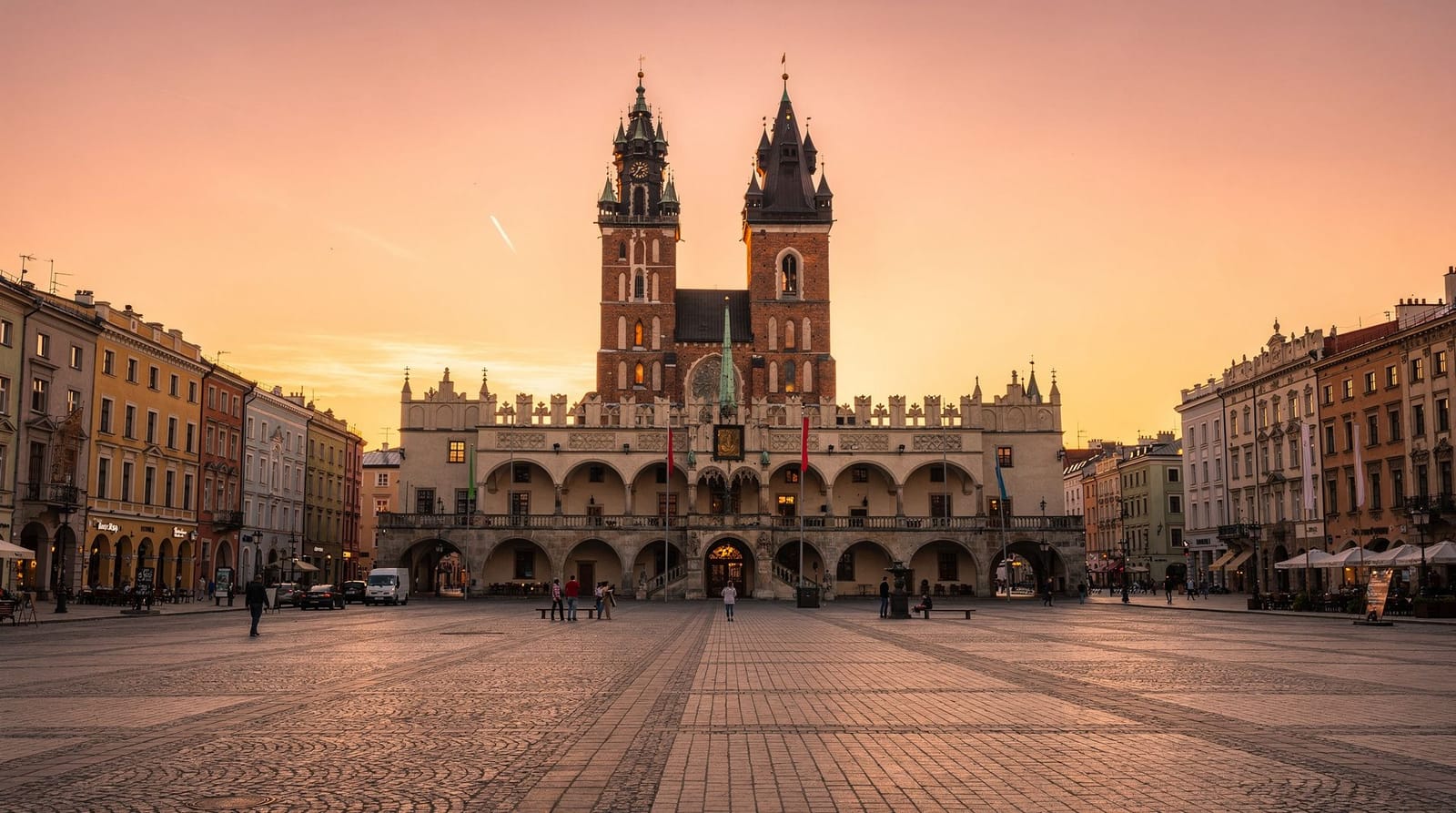
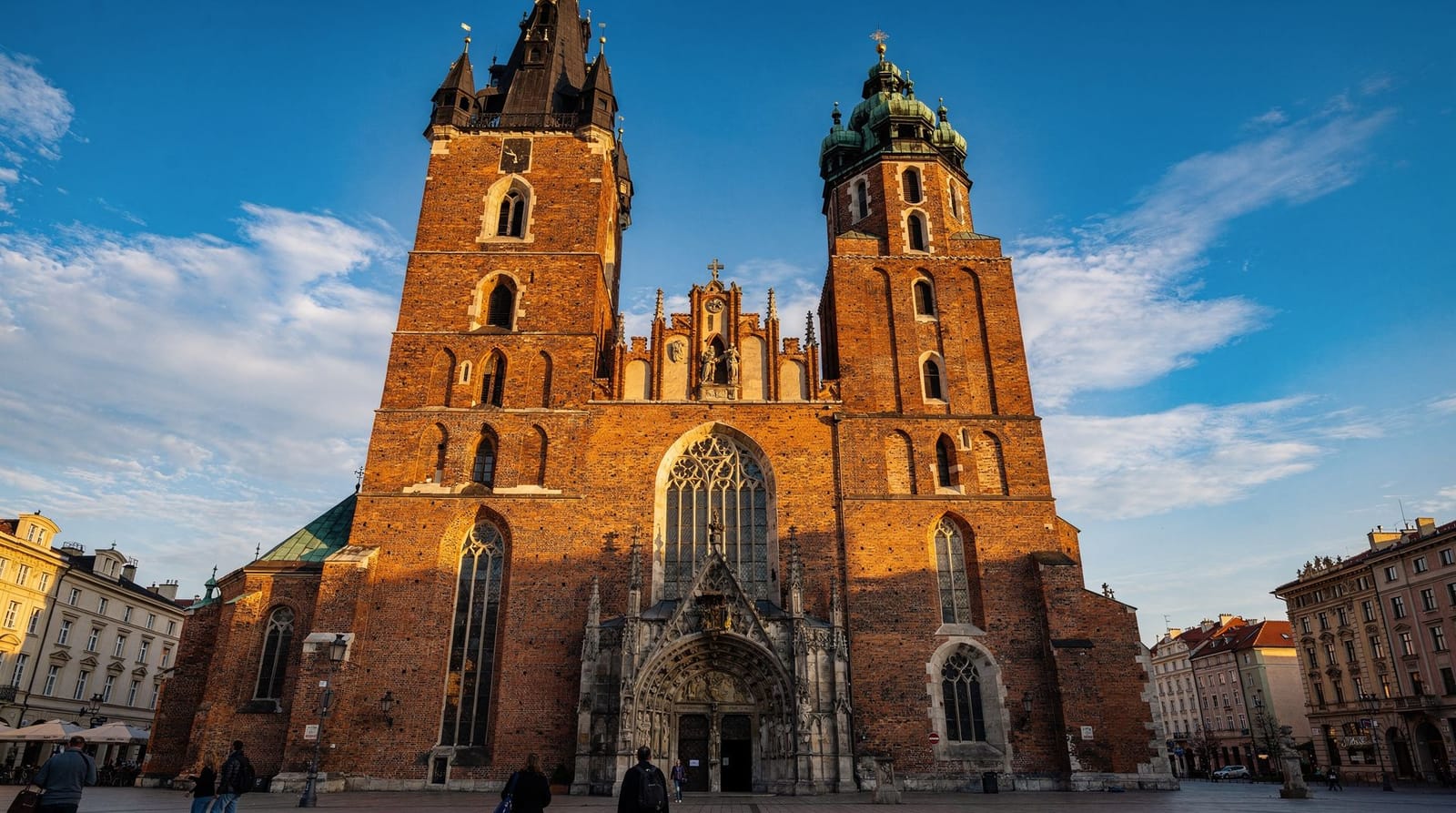
Ul. Floriańska leads directly into Rynek Główny — the main market square. The Royal Route crosses the square diagonally, traditionally passing the Cloth Hall and continuing south. The square is the natural pause point: St. Mary’s Basilica, the Town Hall Tower, the Cloth Hall, the Rynek Underground Museum, and the Adam Mickiewicz monument are all here.
At Rynek Główny, the procession would have paused for ceremonies. The bishops of Kraków typically greeted incoming kings here, and the Cloth Hall’s merchants would have prepared elaborate displays. Today, the square is free to walk through at any time.
Ul. Grodzka: the final section
South of the Rynek, the route continues on ul. Grodzka — a broad, beautiful street that sweeps slightly leftward toward Wawel Hill. The churches along ul. Grodzka make it worth walking slowly.
Notable buildings on ul. Grodzka:
-
Church of Saints Peter and Paul (Grodzka 52): The first Baroque church in Kraków (completed 1619), commissioned by the Jesuit order and modelled loosely on Il Gesù in Rome. The apostle statues along the facade fence are copies — the originals are inside. Free entry.
-
Romanesque Church of St. Andrew (Grodzka 54): Immediately beside the Jesuit church, the contrast could not be starker — an 11th-century Romanesque church with round towers, one of the oldest standing buildings in Kraków and almost entirely unchanged since the medieval period. Free entry.
-
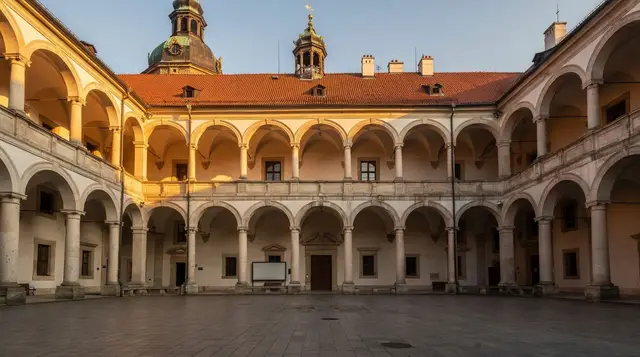
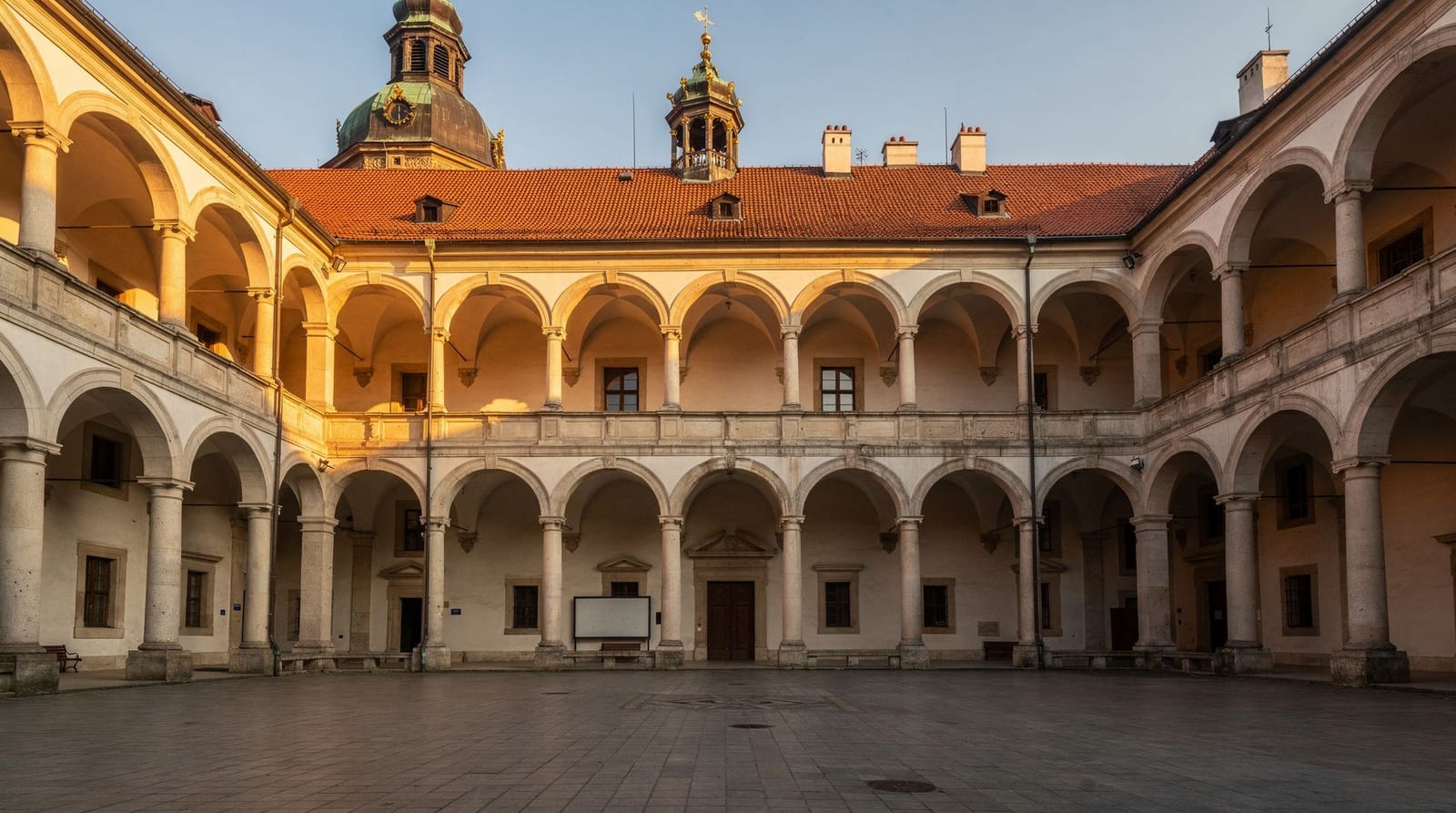
Collegium Iuridicum: The legal faculty of the Jagiellonian University, with an elegant Renaissance courtyard that is occasionally open to visitors.
-
Palace of the Bishops of Kraków (Grodzka 53): The palace where the future Pope John Paul II (Karol Wojtyła) lived as Archbishop of Kraków from 1958 to 1978. The window from which he would greet crowds is still pointed out; a plaque marks the building.
Arriving at Wawel
Ul. Grodzka curves and eventually delivers you to the base of Wawel Hill. The formal entry to the castle complex is via Vasa Gate or Bernardine Gate. The Royal Route effectively ends when you pass through the castle gate and enter the courtyard — where every coronation procession ended before the ceremony in the Cathedral.
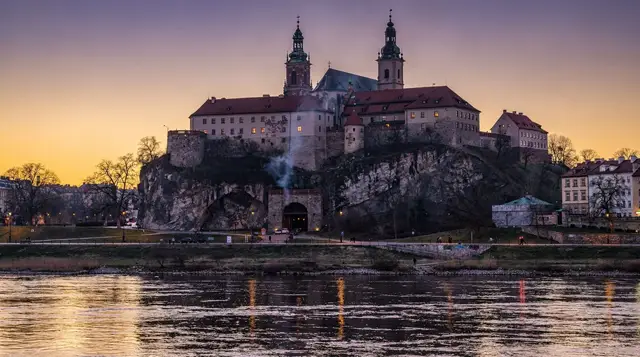
From the base of Wawel Hill, the Dragon’s Den entrance is a short distance around the western cliff — a natural add-on to anyone doing the full route. See the Wawel Dragon legend guide.
Coronation route vs funeral route
Kings walked this street twice in the ceremonial sense — once alive, at their coronation, and once dead, at their funeral procession to burial in the Wawel Cathedral crypts. The Royal Route as most guides describe it refers to the coronation direction: north to south, Barbican to Wawel, arriving to be crowned. The funeral route technically ran the same physical streets, but the symbolic weight is inverted — a king’s body carried from Wawel back through the city before returning for burial, or occasionally along a different ceremonial path depending on the era. Most walking tours and this guide focus on the coronation direction, since it is the one street-level context and signage in the Old Town assumes.
Self-guided vs a guided walk
| Self-guided | Guided walk | |
|---|---|---|
| Time | 2–3hrs at your own pace | fixed 2–3hrs, less flexible |
| Cost | free (plus attraction entries) | tour price on top |
| Context | what this guide + plaques provide | guide fills in stories plaques miss |
| Best for | independent travellers, repeat visitors | first-timers wanting the full story |
Neither is objectively better. A self-guided walk with this page open on your phone covers the essentials; a guided walk, similar in spirit to the broader Old Town walking tour guide, earns its price mainly through stories about individual buildings — the kind of detail a plaque never has room for.
Doing the route self-guided
The full walk from Barbican to Wawel Castle covers approximately 1.5 km (including the square crossing) and takes 20–25 minutes at a brisk pace without stops. With reasonable pauses at the Florian Gate, key buildings on Floriańska, the square, the churches on Grodzka, and the castle gate, allow 2–3 hours. Adding the Barbican interior, the Rynek Underground, and a Wawel Castle exhibition takes a full day.
Start at the Barbican (northern end) and walk south toward Wawel — this follows the historical direction of the royal procession and gives you the best sense of arrival at the castle. Starting from the south and walking north is equally valid logistically but inverts the ceremonial narrative.
Guided options
A Krakow Old Town Royal Route walking tour provides a guide who explains the historical and architectural significance of buildings that are easy to walk past without context. Most run 2–3 hours and cover the full route with stops.
For a faster overview, the Segway tour of Old Town and Wawel Castle covers the Royal Route on electric scooters — faster and more active, good for those with limited time who want an overview before exploring on foot.
The standard Old Town guided walking tour covers similar ground with more flexibility in what it emphasises, depending on the guide.
Practical notes
- The entire route is pedestrianised — no cars between Florian Gate and Wawel. Trams and buses use parallel streets.
- Best time: early morning (before 09:30) for the streets themselves; mid-morning for businesses and attractions to be open. Avoid 11:00–15:00 in July–August if crowds bother you.
- Comfortable shoes: the route involves cobblestones throughout. Heels or thin-soled shoes will be uncomfortable.
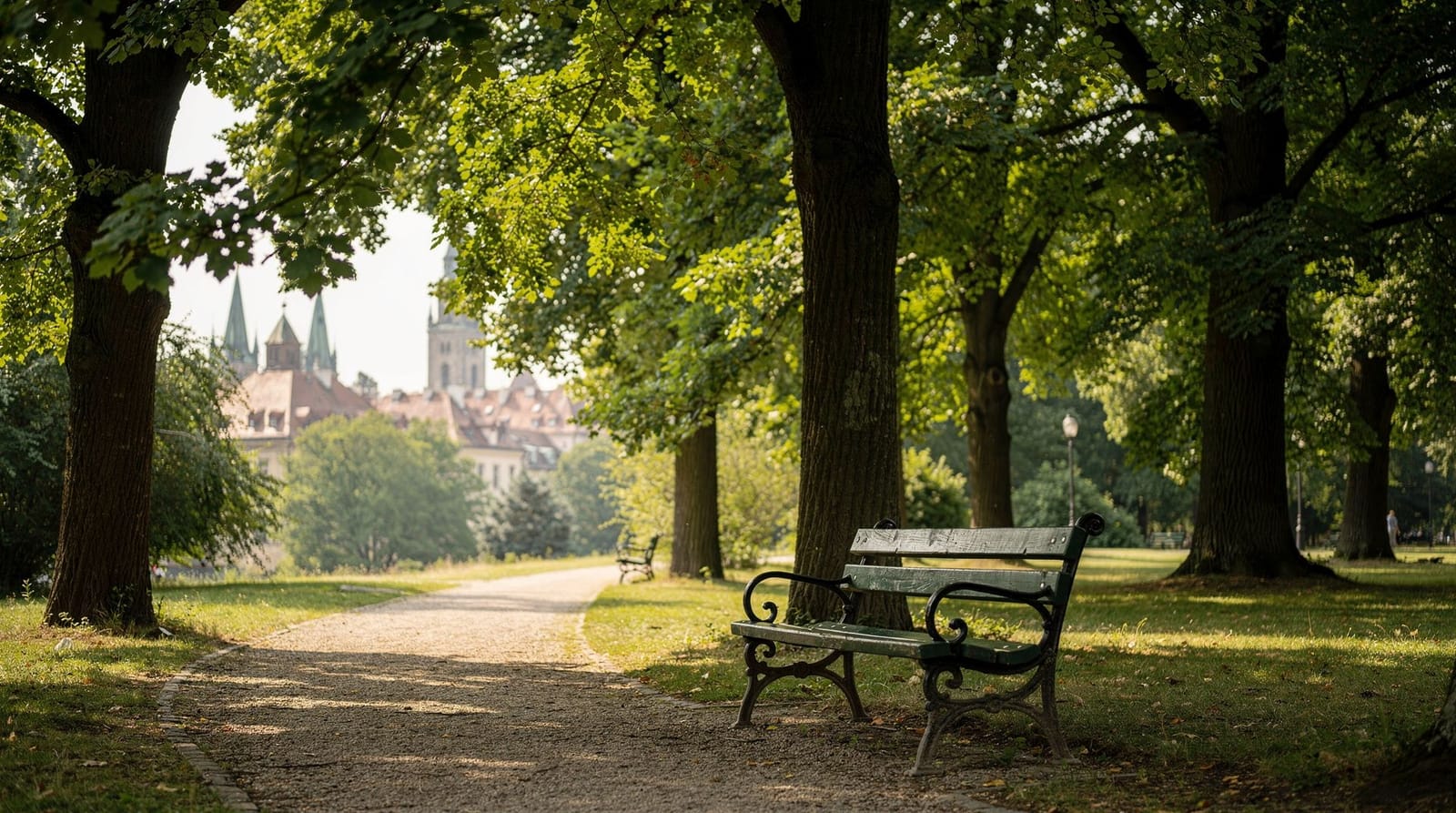
- Combine with Planty: the Planty Park ring of gardens runs parallel to the Old Town walls and provides a quieter, greener parallel to the busier streets of the Royal Route. Walking both — the park ring and the Route itself — gives a complete picture of the Old Town’s structure.
Frequently asked questions about the Royal Route
How long is the Royal Route in Kraków?
The core route from the Barbican (northern anchor) to Wawel Castle (southern anchor) is approximately 1.2–1.5 km. The walking time without stops is 20–25 minutes. With the major sights — Florian Gate, Rynek Główny, churches on Grodzka, Wawel — a proper visit takes 3–5 hours.
Is the Royal Route free to walk?
The streets are public and free. Individual attractions along the route have their own entry fees: the Barbican (22 PLN), the Rynek Underground (45 PLN), St. Mary’s Basilica (20 PLN), Wawel Castle exhibitions (most 47–95 PLN, depending on the exhibition). The churches (St. Peter and Paul, St. Andrew, St. Barbara) are typically free.
What is the best starting point for the Royal Route?
Start at the Barbican — this is the historical starting point of the royal procession. From there, walk through the Florian Gate, down Floriańska, across Rynek Główny, and down Grodzka to Wawel. This direction follows the ceremonial logic and ends at the most dramatic site.
Can I do the Royal Route on a bike or segway?
Cycling is theoretically possible on some sections but ul. Floriańska and ul. Grodzka are heavily pedestrianised and congested with tourists — cycling is not comfortable in practice. Guided segway tours are available and cover the route legally; they operate on specific paths.
Does the Royal Route connect well with a Wawel Castle visit on the same day?
Yes, and this is the natural pairing — the route physically ends at the Wawel gate, so most visitors walk the Royal Route in the morning and continue straight into Wawel Castle exhibitions afterward. Just budget separately for castle tickets, which are not included in the Royal Route walk itself.
Is the Royal Route suitable for visitors with limited mobility?
Partially. The route itself is flat and paved, but entirely cobblestone, which is uncomfortable for wheelchairs and difficult with mobility aids. Some individual attractions (Barbican interior, some church interiors) involve stairs. Contact specific venues ahead if mobility is a concern.
Top experiences
Bookable activities with verified prices and instant confirmation on GetYourGuide.