St. Mary's Basilica guide: Veit Stoss altarpiece & visiting tips
Cracow's Old Town, St. Mary's Church and Rynek Underground
Do you need to book tickets for St. Mary's Basilica in advance?
Advance booking is recommended in summer. A skip-the-line ticket avoids a potentially long queue at the door. The Veit Stoss altarpiece is the centrepiece and opens at 11:50 (Monday–Saturday); the church is free during morning Mass (06:00–08:00) but tourist visits are not permitted then.
The basilica that defines the Rynek
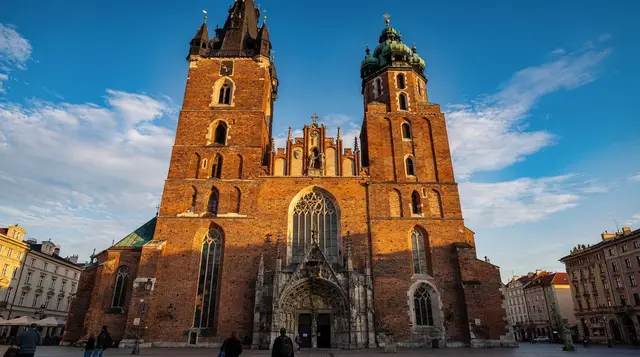
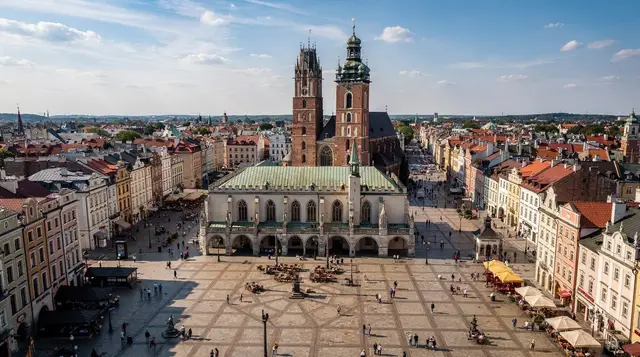
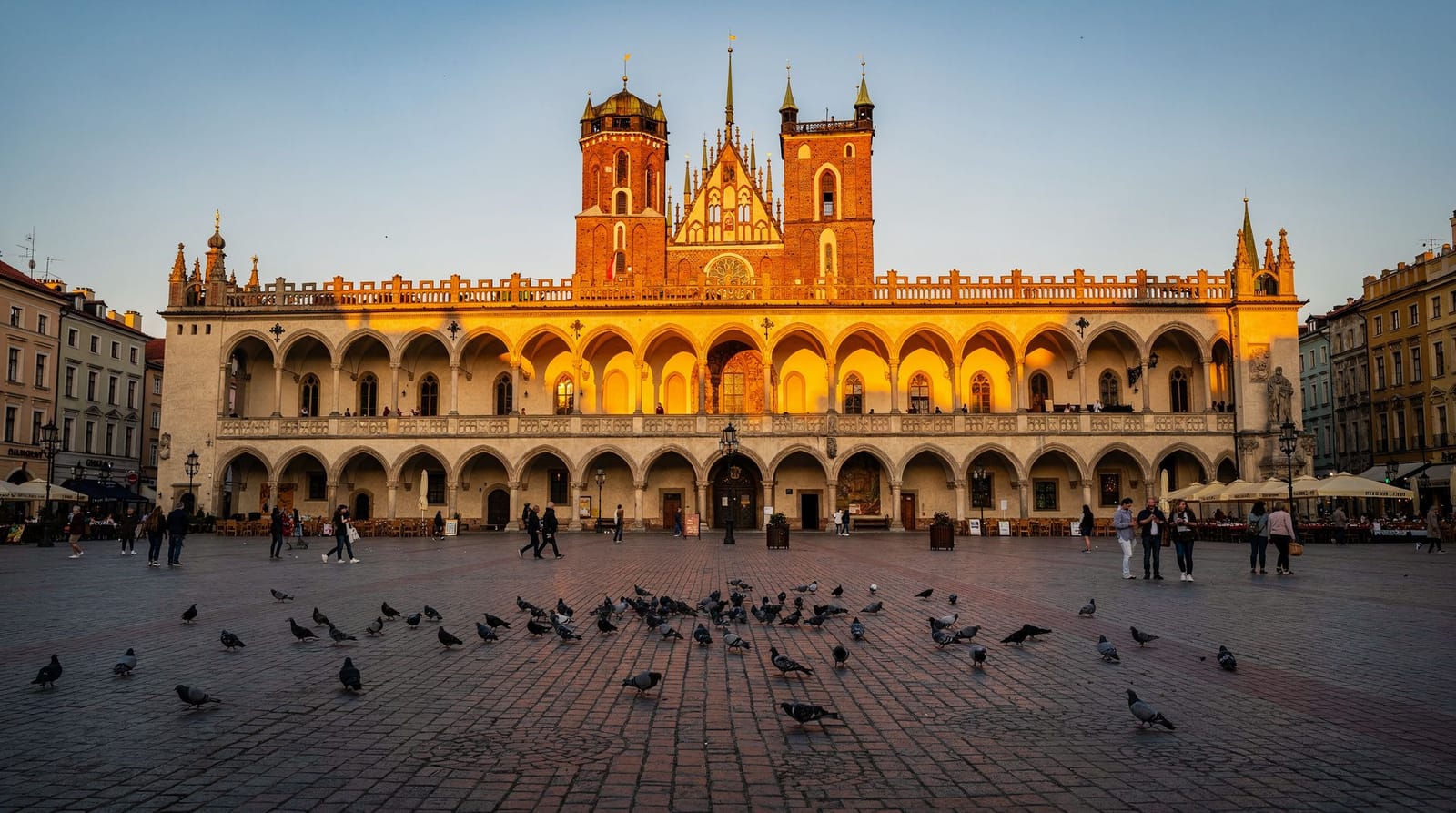
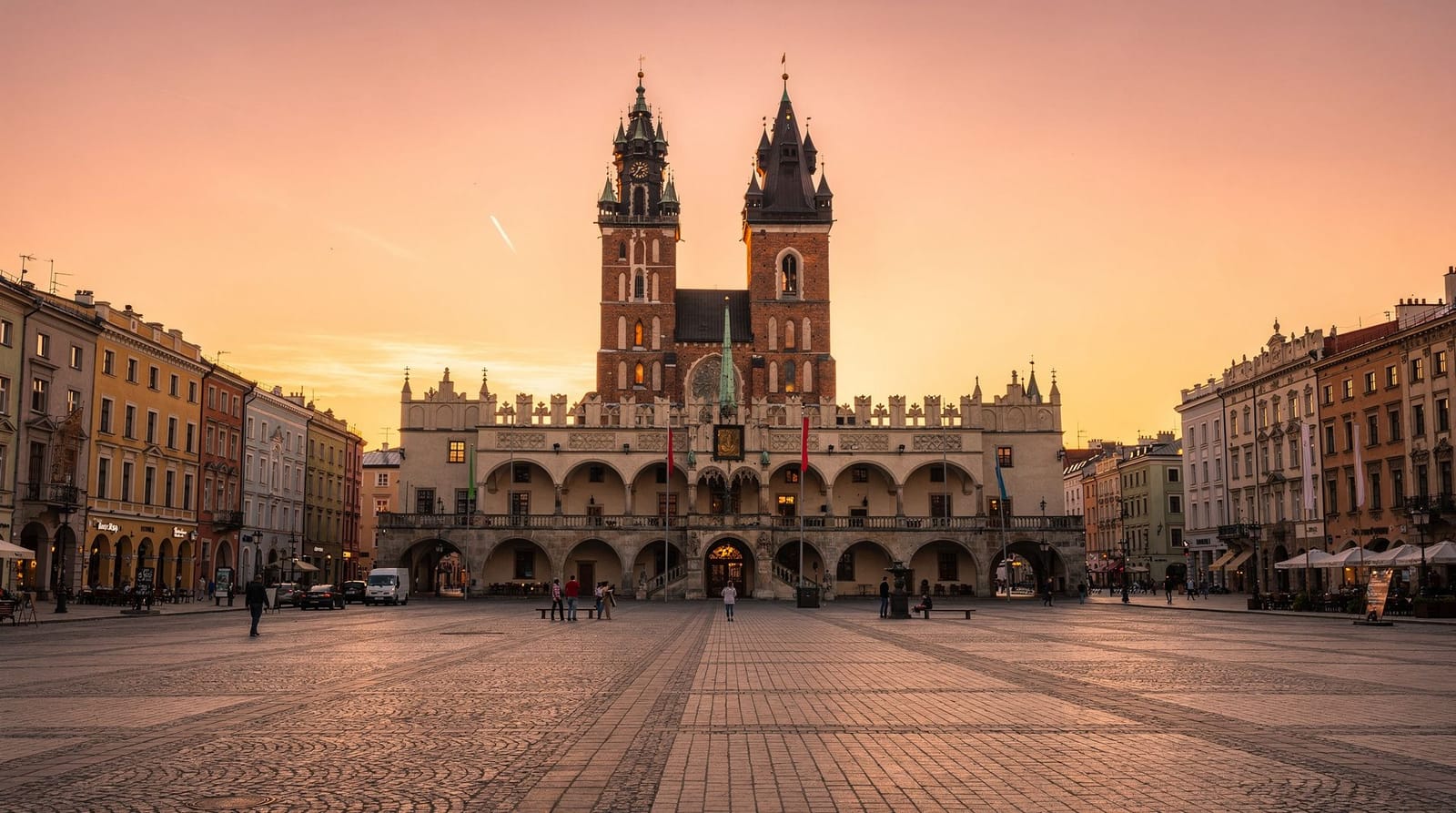
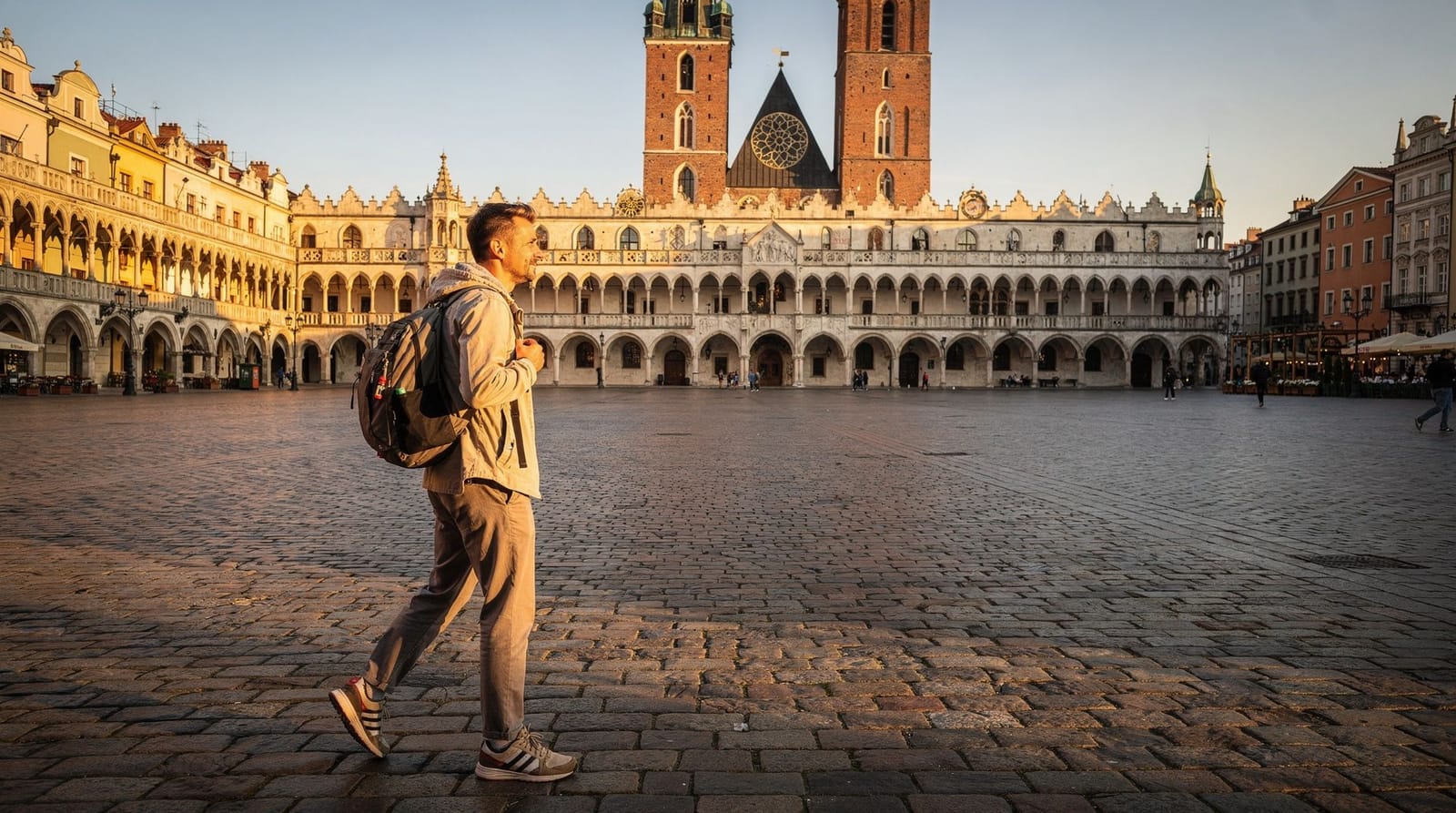
Of all the buildings ringing Kraków’s Rynek Główny, St. Mary’s Basilica (Bazylika Mariacka) is the one that stops you in your tracks. The two asymmetric brick towers — one taller and crowned with a Gothic helmet and gold crown, one shorter and octagonal — create an instantly recognisable silhouette that appears on every image of the square. The taller tower reaches 81 metres; it has been the city’s watchtower since the Middle Ages.
Inside the basilica is one of the great Gothic interiors in Europe, and at its eastern end stands the carved limewood altarpiece by Veit Stoss — one of the finest works of late-Gothic sculpture in existence, completed in 1489 after 12 years of work. Coming here without seeing the altarpiece would be like visiting the Louvre and skipping the Mona Lisa; unlike the Mona Lisa, the altarpiece repays a long look.
| Where | Rynek Główny (northeastern corner), Old Town |
| Cost | 20 PLN adult, 10 PLN reduced; skip-the-line ticket recommended in summer |
| Time needed | 30–60 minutes |
| Getting there | walk-in; 2 minutes from Town Hall Tower |
| Best time | the altarpiece opening at 11:50, before tour groups arrive |
The Veit Stoss altarpiece
The pentaptych altarpiece (a folding altarpiece with five panels) measures 13 metres tall by 11 metres wide when open — it fills the entire eastern apse. Carved from lime wood and painted, it depicts the Dormition of the Virgin in the central scene: twelve life-size figures surround a dying Mary, each face individualised with an expressiveness unusual for the period. The figures average 2.7 metres tall, yet Stoss gave each one specific anatomy, specific grief, specific presence.
The wings, when open, show scenes from Mary’s life and the life of Christ. The predella depicts the Tree of Jesse. The gilt and painted surfaces were restored in the 1950s after the altarpiece was dismantled and hidden during World War II — the Nazis had removed it to Nuremberg, Stoss’s birthplace, and were attempting to claim it as German art. Its return in 1946 was a major cultural moment for postwar Kraków.
The altarpiece opens at 11:50 (Monday–Saturday) and the church closes to visitors at 18:00 (the ticket point closes 15 minutes earlier). Before 11:50, the central panels are closed and the full image is not visible. Plan your visit accordingly.
The trumpet call (hejnał)
Every hour, on the hour, a trumpeter appears at the opening of the taller tower and plays the hejnał mariacki — a short melody that stops mid-phrase. The truncated ending commemorates a medieval legend: a trumpeter sounding the alarm against a Tartar raid was killed mid-note by an arrow. Whether the legend is historically accurate is debated; the tradition is not. The hejnał has been played continuously since the 14th century, is broadcast live on Polish Radio every noon, and is arguably Kraków’s most distinctive sound.
The trumpet call is audible throughout the Rynek and from Planty Park. At noon, crowds gather in the square to watch and listen. It costs nothing and takes 60 seconds; don’t miss it if you’re on the square at the right time.
Interior highlights beyond the altarpiece
The basilica’s nave is 26 metres high, entirely blue-painted with gold stars — an extraordinary starry vault that creates a jewel-box atmosphere. The polychrome decoration, including historicist paintings by Jan Matejko (who was born around the corner) and his student Stanisław Wyspiański’s stained glass windows, was completed in the late 19th century. The combination of medieval architecture, 15th-century altarpiece, and 19th-century painting creates a slightly anachronistic layering that is distinctly Polish in character.
The crucifix hanging in the arch separating the nave from the choir was also carved by Veit Stoss, around 1491. It is often overlooked in the rush to photograph the altarpiece — worth noting as you enter.
Near the main entrance, look for the early-Gothic paintings on the north wall — fragments of original 14th-century decoration that predate the current decorative scheme.
Tickets and opening hours
Entry to St. Mary’s Basilica for tourists costs 20 PLN (≈ 4.80 €) for adults and 10 PLN reduced (ages 7–18, students aged 19–26, 65+). Tickets are sold at the reception point at 7 pl. Mariacki. There is no official timed-entry system, but the doorway can develop a significant queue by mid-morning in summer.
Tourist visiting hours (approximate, verify at mariacki.com):
- Monday–Saturday: 11:30–18:00 (altarpiece opens at 11:50)
- Sunday and feast days: 14:00–18:00 (morning reserved for worship)
- The basilica opens for early Masses at 06:00 but tourist entry is not permitted during services
If you would rather not stand in the door queue alone in summer, the Cracow’s Old Town, St. Mary’s Church and Rynek Underground tour is a close alternative — it covers the church together with the Old Town and the Rynek Underground rather than being a ticket for St. Mary’s alone. Combined visits combining St. Mary’s with Collegium Maius and the Cloth Hall via this tour are efficient if you want to cover the Old Town’s major indoor highlights in one guided session.
For a private, in-depth visit combining Wawel Cathedral and St. Mary’s Basilica, the Wawel Castle, Cathedral and St. Mary Basilica private tour covers both sites without the pace pressure of a group.
The two towers
The taller south tower (81 m) is the trumpet tower and the city watchtower — it is not open to the public for climbing. The shorter north tower belongs to the parish rather than the city and houses the church bells; it is also not accessible for visitors.
The dramatic difference in height between the two towers is explained by a legend of two brothers — one an architect who built the taller tower, the other jealous and violent — but is more proscopically explained by the towers having been built at different times for different purposes.
The church as an active parish
St. Mary’s is one of the most active parish churches in Poland. Daily Masses draw genuine congregations, not only tourists. The atmosphere shifts perceptibly during Mass — the space feels used, not preserved. Visitors who enter during a service and behave respectfully are typically tolerated, but photographing worshippers or the liturgy is inappropriate. The tourist visiting hours (starting at 11:30) are designed to separate worship from tourism as far as possible.
Location and access
St. Mary’s Basilica stands on the northeastern corner of Rynek Główny, with its main entrance facing the square. The tourist entrance is on the south side (left of the main door as you face the church from the square). It is a 2-minute walk from the Town Hall Tower and within the natural circuit of any Old Town walking tour.
What to do after
The space directly behind the basilica — a small square called Mały Rynek (Little Market) — is one of the most pleasant and least crowded spots in the Old Town. Several good cafes and restaurants line it, generally at lower prices than the main square. It is also the location of one of Kraków’s former Jewish-owned trading buildings, predating Kazimierz as the centre of Jewish commerce.
From St. Mary’s it is a 10-minute walk to Wawel Castle via the Royal Route along ul. Grodzka.
Photography and etiquette
Photography without flash is generally tolerated in the nave, but flash photography is prohibited — it damages the pigments on the altarpiece and the polychrome ceiling over time, and staff will ask you to stop. Tripods and monopods are not permitted. During Mass, keep phones away entirely and avoid walking through the nave; use the side aisles instead. If you want a genuinely quiet look at the altarpiece without a crowd of phones raised around you, arriving right at 11:50 on a weekday morning is your best chance, before the first big tour groups from the Old Town walking tour circuit arrive.
Combining with the rest of the Rynek
St. Mary’s works naturally as the anchor of a Rynek Główny morning: the Cloth Hall sits a two-minute walk across the square, the Rynek Underground Museum beneath the square covers medieval Kraków in depth, and the Rynek Główny main square guide has a fuller walking order for the whole area. Many visitors do all three plus St. Mary’s in a single morning, then head south toward Wawel in the early afternoon before the crowds peak.
Shaping your visit around the basilica
The easiest way to get more from St. Mary’s is to decide in advance what you want from it. If the altarpiece is the goal, arrive at opening, walk straight to the front, and give it a slow ten minutes before looking at anything else. Let your eye move from the central Dormition scene out to the wings, then down to the predella. If you would rather feel the atmosphere of the building, wait for the crowd around the altar to thin and sit for a few minutes in the nave, looking up at the starry vault. Both approaches work; trying to do everything at speed does not.
Visitors with limited time often ask where the basilica fits in a short stay. It belongs in the first morning of almost any plan, because the square is the natural starting point for the city. The one-day itinerary and the weekend city break both build the Old Town around it, and the Old Town destination page shows how the surrounding streets connect. If you are planning a longer stay, the three-day itinerary leaves room to return to the square at a quieter hour, perhaps for the evening hejnał.
Understanding what you are looking at
The basilica rewards a little background reading before you go in. The altarpiece is easier to appreciate once you know its story: the wartime removal and postwar return are covered in more depth in the WWII Kraków guide and the Polish history primer for visitors. The legends attached to the towers and the trumpeter sit comfortably alongside the other tales gathered in the Kraków legends and myths guide, which makes a good companion if you enjoy the folklore as much as the architecture.
Children often connect with the hejnał and the stories before they connect with Gothic carving. If you are travelling as a family, the Kraków with kids guide suggests how to pace the Old Town so that a quiet church visit does not become a struggle. Keep the visit short, point out the faces on the altarpiece, and let younger visitors listen for the moment the trumpet call stops.
Planning the rest of the day
Because the basilica opens late in the morning, the early hours are free for other things. A walk through Planty Park before opening is a gentle way to arrive, and the Royal Route guide can carry you on toward Wawel afterwards. For lunch, the best restaurants in the Old Town are a better bet than the tables directly on the square, and the guide to avoiding Rynek restaurant overpricing explains why. If the weather turns, the rainy day activities guide has indoor ideas that pair well with a church visit.
Frequently asked questions about St. Mary’s Basilica
What time does the altarpiece open at St. Mary’s Basilica?
On Monday–Saturday the Veit Stoss altarpiece opens at 11:50. Before this time the central triptych is folded shut and the carved scenes are not visible. Tourist entry to the basilica begins at 11:30 Monday–Saturday and 14:00 on Sundays and feast days. If you are in Kraków for only one day, make sure your Old Town morning includes St. Mary’s after 11:50.
Is there a dress code for St. Mary’s Basilica?
Yes: covered shoulders and no shorts for both men and women. This is an active Catholic church, not a museum. Scarves are sometimes available at the entrance for those who need them. The dress code is enforced; visitors may be turned away.
How long does a visit to St. Mary’s Basilica take?
Allow 30–45 minutes to see the altarpiece properly and walk the nave. If you are reading the information panels, looking at the stained glass, and spending time with the Stoss crucifix in the arch, 60 minutes is more satisfying. It can be done in 15 minutes if you are simply passing through, but that doesn’t do the altarpiece justice.
When is the hejnał trumpet call at St. Mary’s?
Every hour, on the hour, from 06:00 to midnight — the trumpeter appears at the tall tower window and plays the hejnał melody. The noon call is the most ceremonial and is broadcast live on Polish Radio. You can hear it from anywhere on the Rynek without buying a ticket.
Can I take photos inside St. Mary’s Basilica?
Yes, without flash — flash photography and tripods are not allowed, out of respect for both the artwork’s pigments and the active parish. Photographing the altarpiece is fine as long as you’re not disturbing worshippers, and photographing people during Mass is not appropriate.
Is St. Mary’s Basilica worth it if I’ve already seen the Cloth Hall?
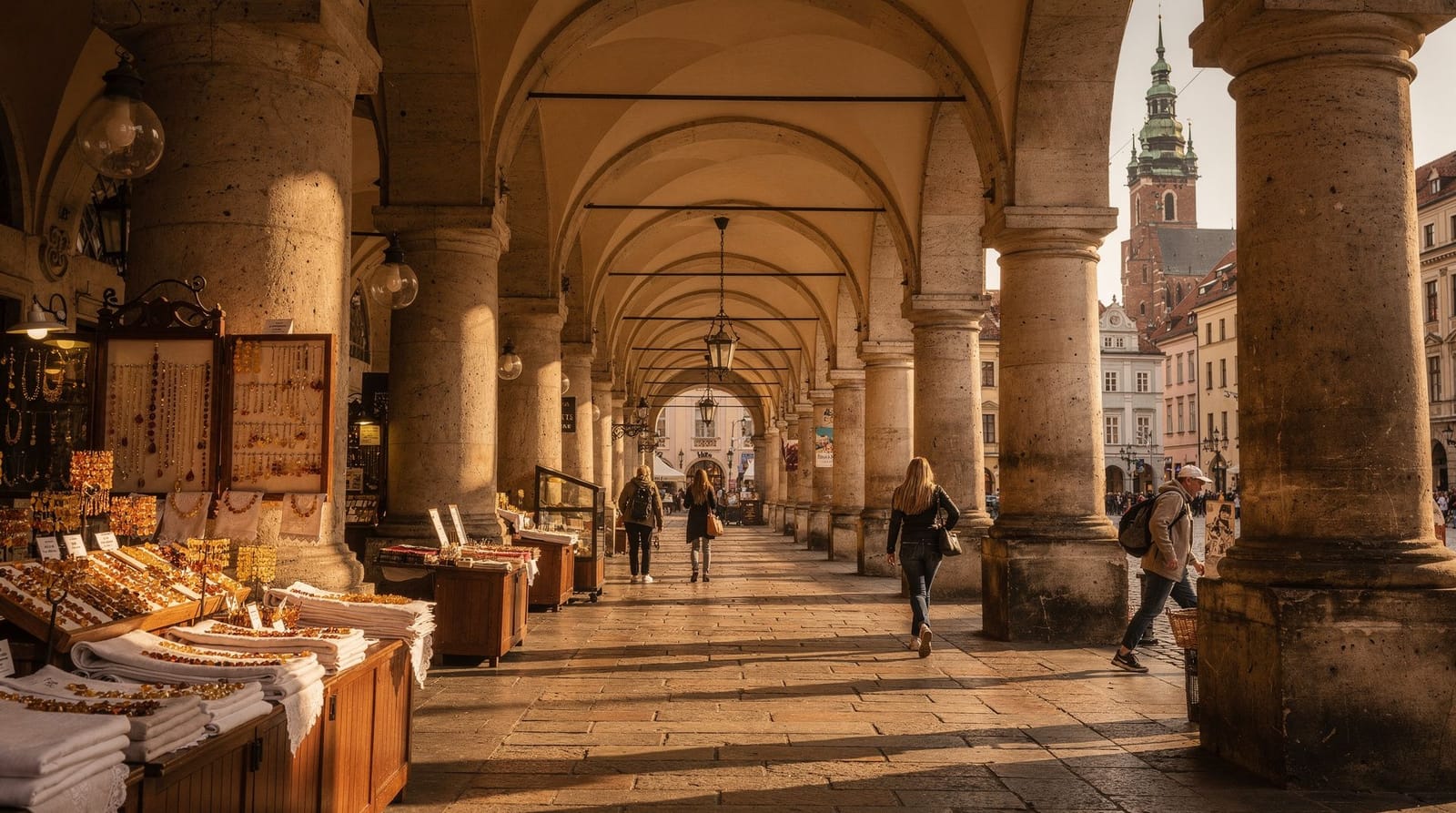
Yes — they’re different kinds of highlight entirely. The Cloth Hall is a Renaissance trading hall with stalls and a gallery; St. Mary’s is a working Gothic church with one of Europe’s great altarpieces inside. Seeing both takes under two hours combined and covers the two most important buildings on the square.
Top experiences
Bookable activities with verified prices and instant confirmation on GetYourGuide.