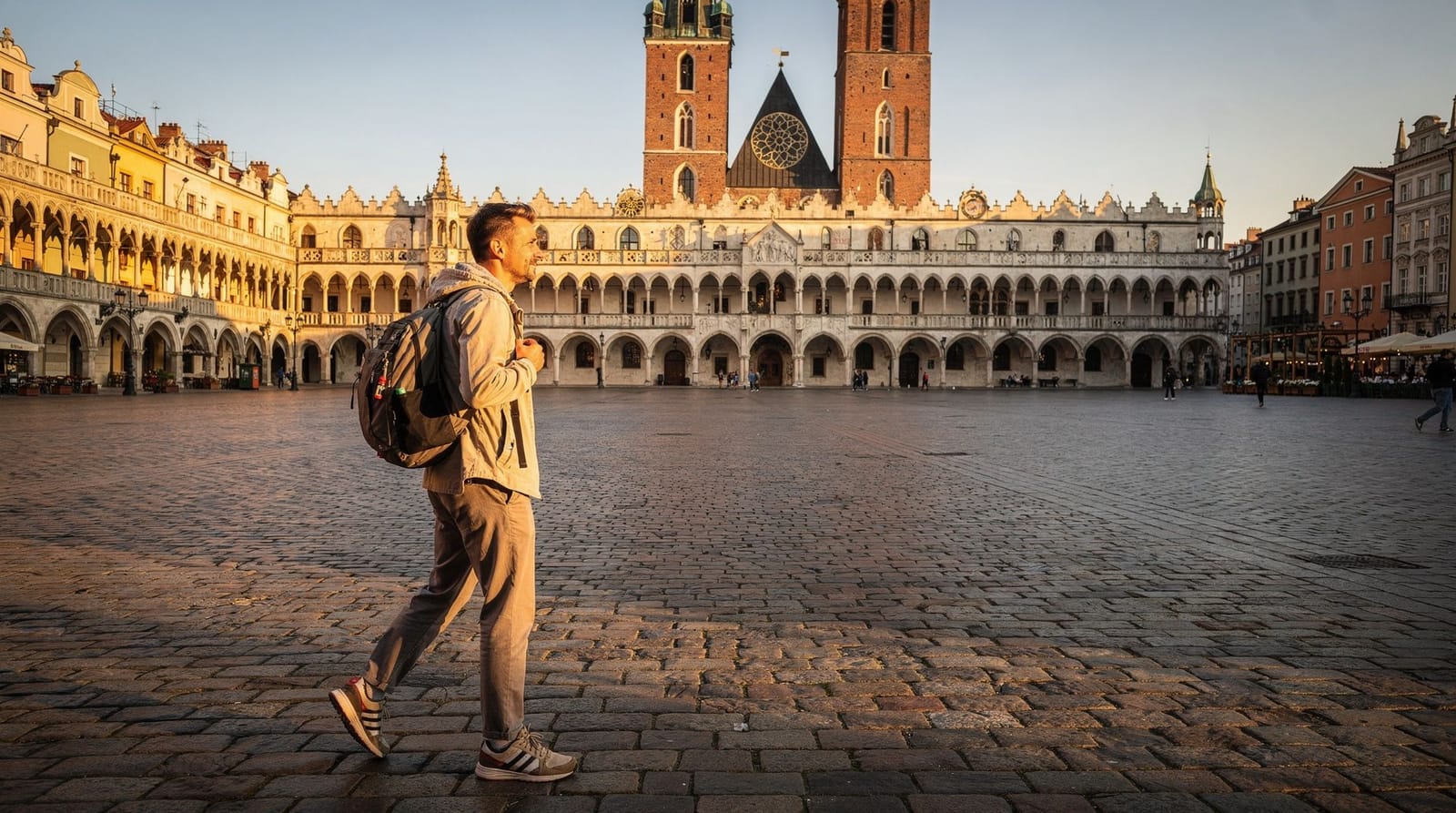
Town Hall Tower guide: climb Kraków's Rynek landmark
Krakow: Old Town guided walking tour
Duration: 3h
Is it worth climbing the Town Hall Tower in Kraków?
Yes if you want a panoramic view over the Rynek and Old Town from an authentic Gothic tower for a small fee (22 PLN / 5.20 €). The climb is 70 steps up a narrow staircase. The views are excellent and the tower itself — all that remains of the 15th-century town hall — has a good small exhibition.
The last piece of a demolished town hall
Standing at the western end of Rynek Główny, slightly apart from the Cloth Hall, the Gothic tower is impossible to miss — 70 metres tall, tapering to a Baroque octagonal cupola and clock, leaning slightly to the southeast (about 55 cm from true vertical, a quirk that has been stable for centuries). It is the only remaining piece of the medieval Kraków town hall, which was demolished in 1820 by the Austrian administration on the grounds that it was in poor structural condition and impeded traffic on the square.
The demolition was controversial at the time and remains so in retrospect. What was lost was a major 15th-century Gothic town hall with a great hall, treasury, prison, and administrative offices. What survived is the tower — and the memory of the building, which is documented in 18th and early 19th-century paintings and etchings.
The tower itself dates from the 14th century, with the Baroque cupola added in 1680s after the top of the original spire was damaged in a storm.
| Where | Western end of Rynek Główny, Old Town |
| Cost | 22 PLN adult, 16 PLN reduced, 44 PLN family ticket; free on Mondays |
| Time needed | 20–30 minutes |
| Getting there | walk-in, no advance booking needed |
| Best time | year-round; early morning for the quietest climb |
Climbing the tower
The interior of the tower can be climbed via a narrow Gothic staircase — 70 steps to the viewing gallery. The staircase winds inside the thick walls; it is dark and the steps are uneven. Not suitable for those with severe mobility difficulties or strong claustrophobia. Children who are not afraid of tight spaces enjoy it.
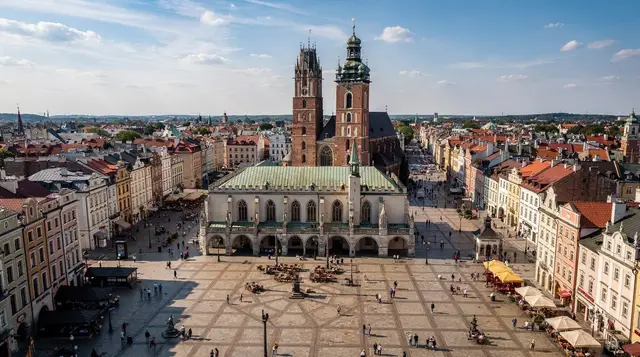
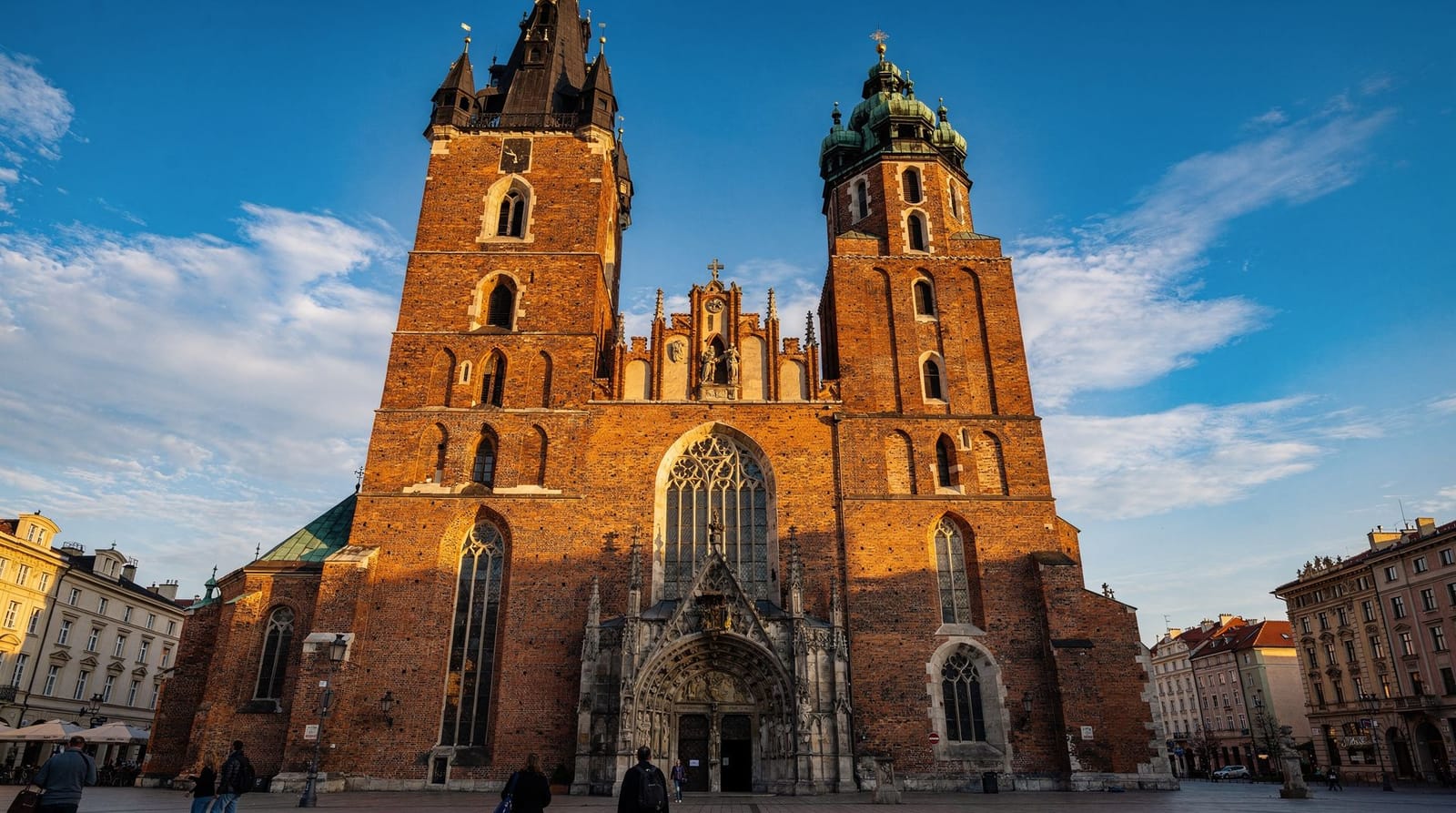
Views from the top: the panorama over Rynek Główny is one of the best in the Old Town — higher than the Cloth Hall gallery windows and positioned to give a clear view of the entire square: St. Mary’s Basilica to the northeast, the Adam Mickiewicz monument below, the ring of historic townhouses, and beyond them the Old Town’s rooflines. On a clear day you can see Wawel Castle and, in the far distance, the hills to the south.
Tickets: 22 PLN (≈ 5.20 €) for adults, 16 PLN reduced, 44 PLN for a family ticket (up to 4 people). Entry is free on Mondays. The ticket is sold at the base of the tower. No advance booking required.
Opening hours: Tuesday–Sunday 10:00–18:00 and Monday 11:00–16:00, all year. The tower is closed on 1 and 11 November; check the Museum of Krakow website for current hours.
The exhibition inside
The ground floor and mezzanine of the tower contain a small but worthwhile permanent exhibition on the history of the town hall and Kraków’s medieval civic governance. Models of the original town hall as it stood in the 15th and 18th centuries make it possible to visualise what was demolished. The exhibition also documents the controversy around the demolition and the subsequent history of the square.
The cellar of the tower is occupied by the Ludowy Theatre (Teatr Ludowy) rehearsal space and a small bar — an unusual combination of underground venue and historic fabric. The bar is accessible from the square level and is a reasonable option for a drink before or after climbing the tower.
The tower in the context of the Rynek
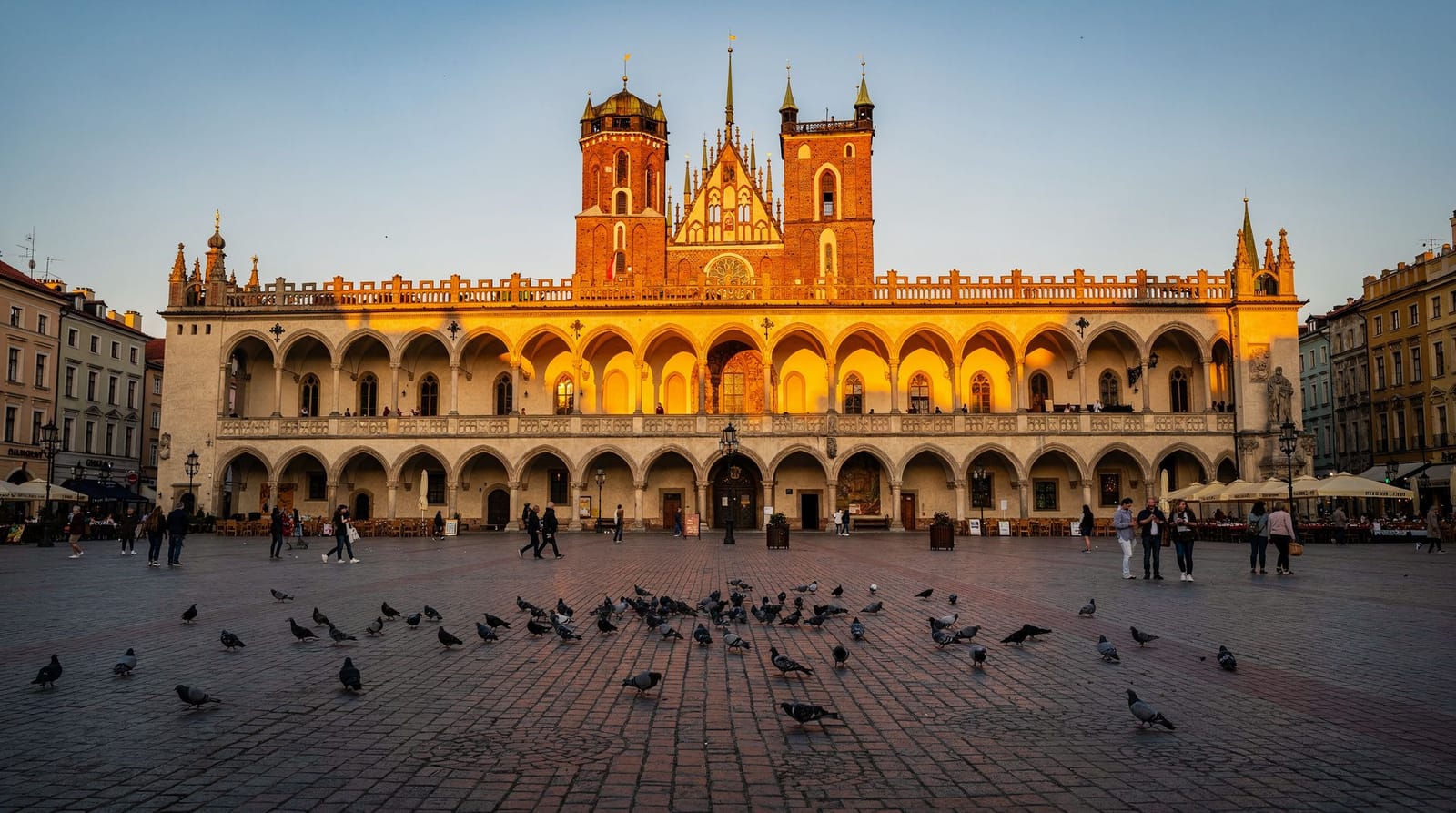
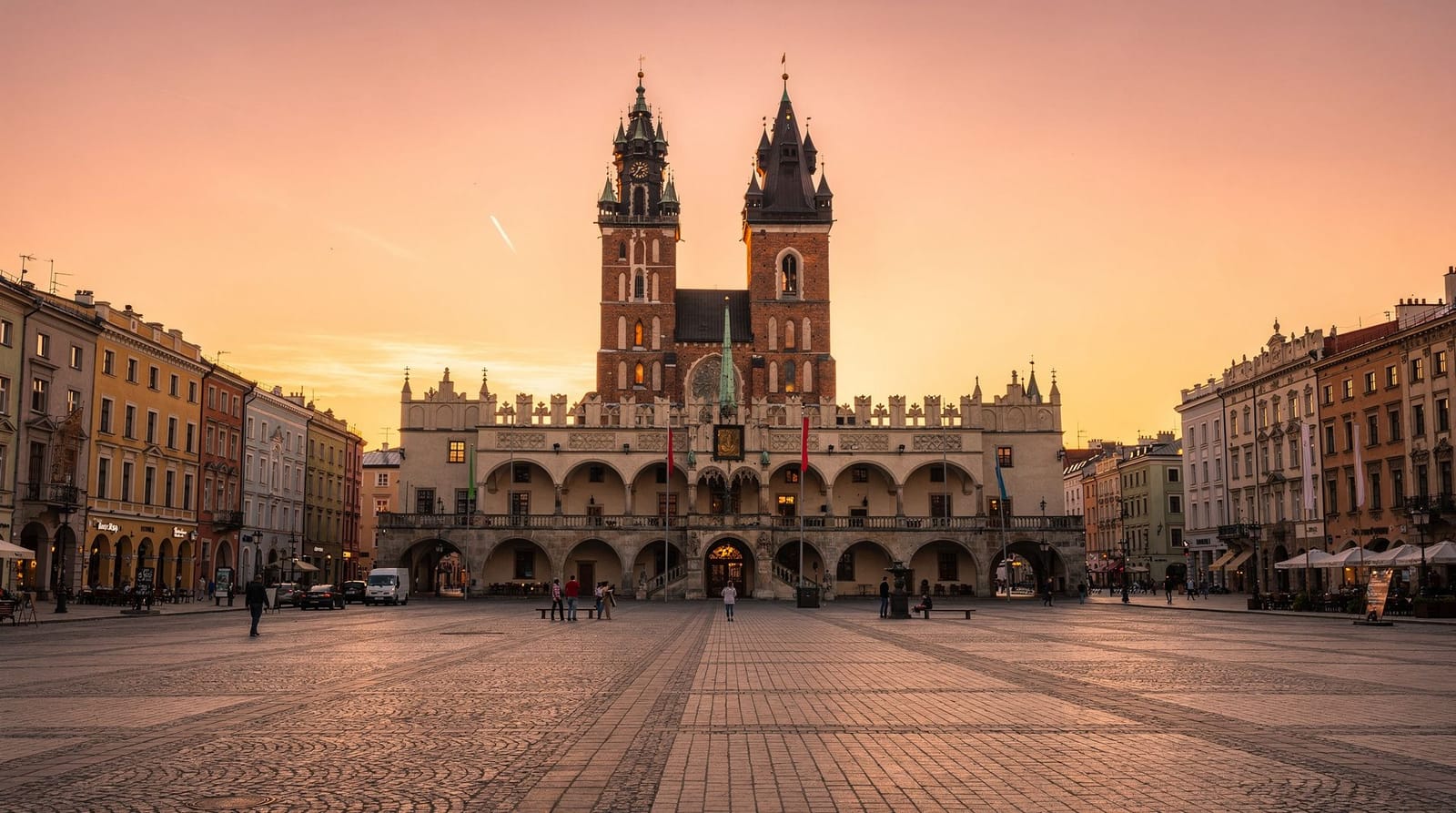
The three main vertical elements on the square — St. Mary’s Basilica (south tower, 81 m), the Cloth Hall’s attic parapet (lower, horizontal), and the Town Hall Tower (70 m) — define the square’s skyline from different angles. The tower gives the western end of the square its visual punctuation. Without it, the square’s geometry would be purely flat and the Cloth Hall would float without an anchor at either end.
The slight lean of the tower is best visible from the south side of the square, looking north-northwest at the tower. It leans toward the southeast — meaning toward the viewer from most positions on the square. This is not structural instability; the lean has been measured and monitored for centuries and is geologically stable.
Pairing with the Rynek Underground
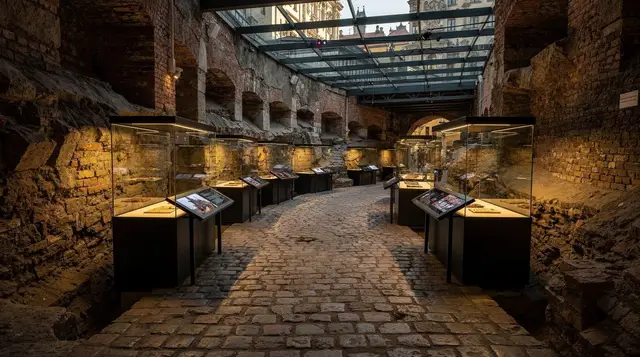
The Town Hall Tower and the Rynek Underground Museum are the two paid attractions directly on the square. An Old Town guided walking tour covers the tower and the square’s history without you needing to queue for separate tickets. If you want to visit both the tower and the Underground on the same day, buy them separately: the tower (22 PLN) is quick (30 minutes total); the Underground (45 PLN) needs 60–90 minutes and benefits from advance booking. Do the Underground first and the tower climb last — the tower views are better when you have some sense of the subterranean layer below the square you just walked through.
The Rynek Underground Museum guided tour is the deeper experience; the tower is a shorter complement.
Practical tips
- The ticket queue at the tower base is rarely more than 5–10 minutes. No advance booking needed.
- The staircase is narrow — one-way traffic. If you meet someone coming down as you go up, one party waits in a wider section.
- Photography from the top is excellent. A wide-angle lens (or phone equivalent) is useful for capturing the full square from one position. The best light for photographing the square from above is morning (south-facing facade of the Cloth Hall is lit) or late afternoon (the northwest-facing St. Mary’s towers).
- The base of the tower is a good meeting point. It is visible from all parts of the square and identifiable immediately.
A note on the demolished town hall
The 1820 demolition is a useful lens for understanding how 19th-century urban planners and Austrian administrators thought about the historic city. The town hall was a symbol of Polish civic identity — the seat of the elected city council through centuries of Jagiellonian, Vasa, and subsequent rule. Removing it was not ideologically neutral. The subsequent history of the Rynek as a space dominated by the Cloth Hall (a trade building) rather than a civic hall (a political building) is part of how the square’s symbolic character shifted.
The tower was kept — perhaps because it was visually too dominant to demolish without transforming the square’s character entirely, perhaps because of the popular protest that greeted the demolition of the main building. Whatever the reason, the tower’s survival gives the square a vertically Gothic counterpoint to the Renaissance Cloth Hall. The two sit side by side — 14th-century Gothic and 16th-century Renaissance — as monuments to different centuries of the same city.
Building it into a Rynek morning
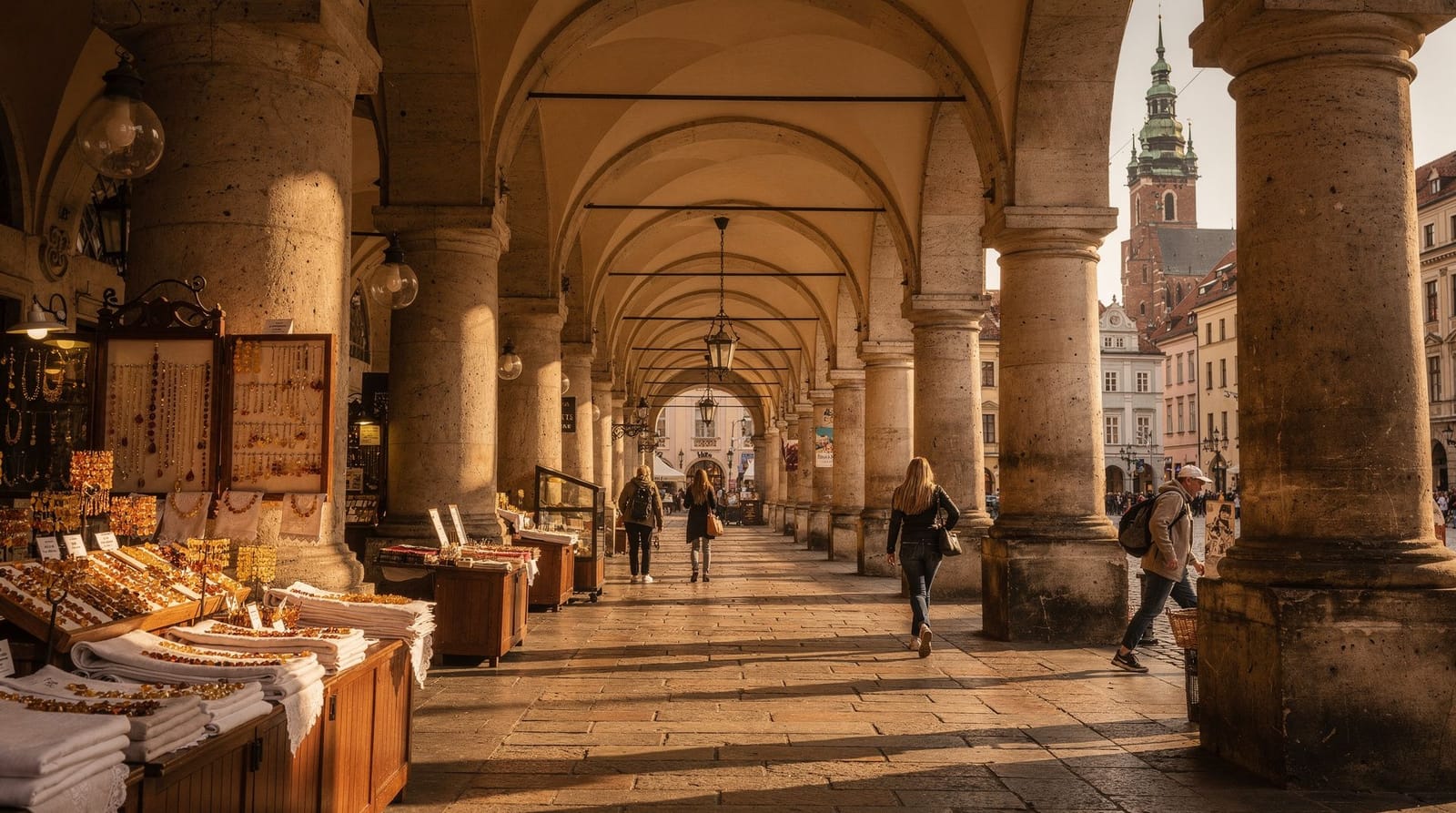
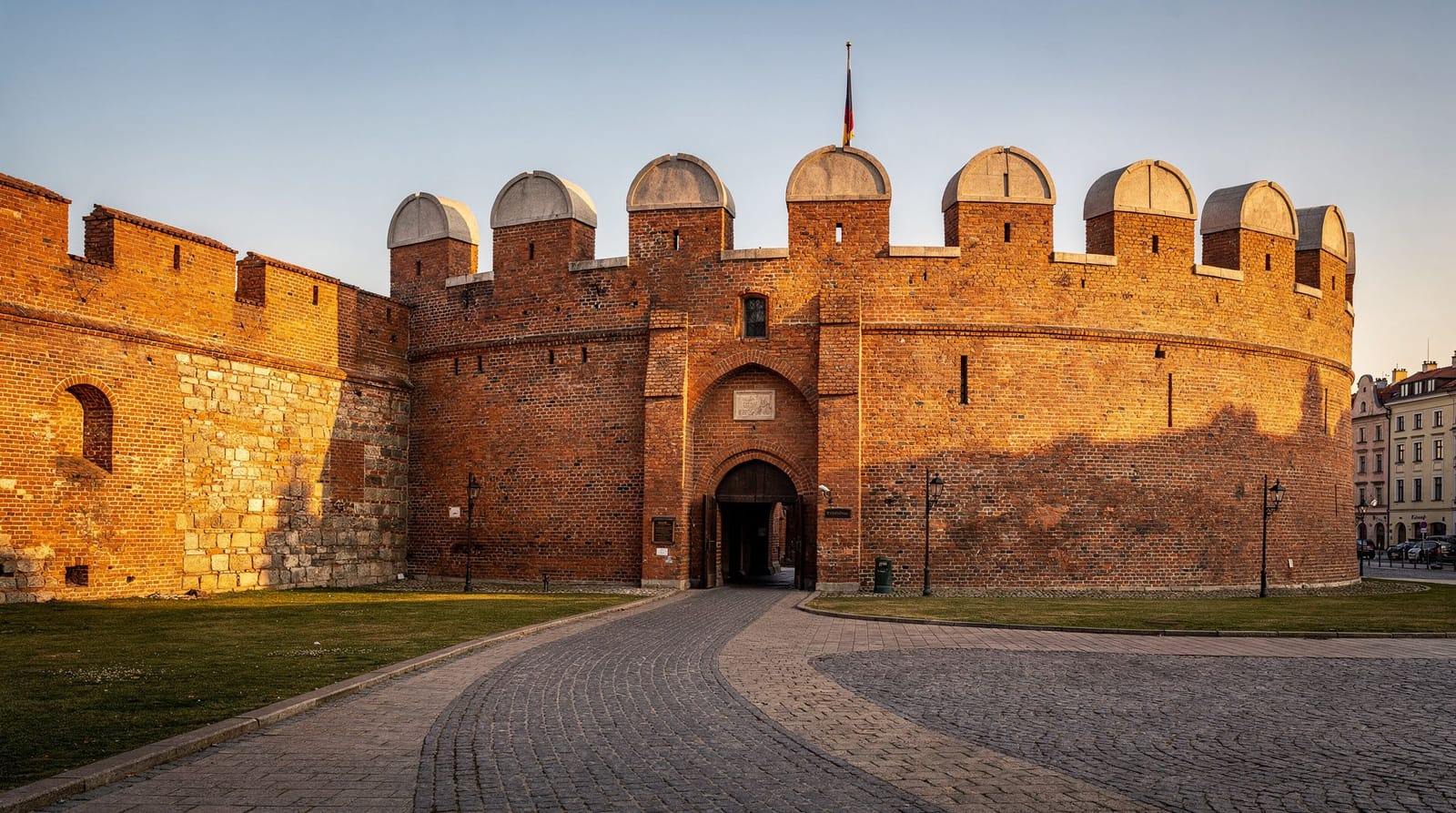
The tower works best as one stop on a broader circuit of the square rather than a destination in its own right — the climb itself takes only 20–30 minutes. A logical order: St. Mary’s Basilica first (the Veit Stoss altarpiece opens at 11:50), then the Cloth Hall for the market stalls and gallery, then the Town Hall Tower climb to look back down on both from above, finishing at the Rynek Underground Museum if you want the medieval layer beneath the square too. The full Rynek Główny main square guide has the fuller walking order and timing for all four. If you’re continuing on to the Barbican and city walls afterward, the tower’s height gives you a useful preview of where the old fortifications used to run.
What to do before and after the climb
Because the climb is short, it helps to decide what surrounds it. Most visitors arrive on the Rynek with a loose plan and let the tower fill a gap between bigger stops. That works well, as long as you keep the order sensible and don’t try to cram every paid attraction on the square into one hour.
If you are staying in the Old Town, the tower is easy to fit into the first morning, when you are still getting your bearings. The elevated view acts as a map: you see how the streets leave the square, where the green ring of the Planty Park wraps around the centre, and the direction of Wawel Hill to the south. After coming down, it is much easier to follow the Royal Route walking guide on foot, because you have already seen the line it takes from above.
For a first visit with a tight schedule, the tower slots naturally into a one-day plan. The Kraków 1-day itinerary uses the Rynek as its starting point, and the tower is the quickest way to add height and perspective to that route without losing time. If you have longer, the Kraków 2-day itinerary gives the square more breathing room, so you can climb at a quieter hour and linger afterward.
Travellers who are new to the city may also find the first-timers guide to Kraków useful alongside this page. It explains how the main sights relate to each other, which makes the view from the gallery easier to read: you can pick out the districts and landmarks you will visit later in your stay.
Choosing your moment
The tower rewards a little planning around light and crowds. Early in the day, the square below is calmer and the staircase is less likely to feel busy. Later in the afternoon, the light on the surrounding facades changes and the view looks different, so a second visit on the same trip is not wasted if you enjoy photography. Weather matters more than most guides admit: a clear day lets you pick out distant landmarks, while a hazy or overcast one flattens the view and makes the climb feel less rewarding. If the forecast is poor, move the tower to another day and spend the grey hours indoors at a museum instead.
Climbing with children or older relatives
The staircase is the main factor to weigh. Children who like adventure often treat the climb as part of the fun, and the small exhibition at the base gives them something to look at before or after. Older relatives, or anyone who tires quickly on stairs, should think honestly about the narrow, uneven steps. A good compromise is to let part of the group climb while the others wait at the base or at one of the cafés on the square, then swap stories afterward. The Kraków with kids guide has more ideas for keeping younger travellers engaged around the Old Town, and the accessibility guide covers what to expect more broadly if mobility is a concern.
Reading the square from above
Once you are at the top, take a few minutes to look slowly rather than rushing to photograph everything. Start with the geometry: from this height the Rynek’s regular outline and the grid of streets leaving it become obvious. Then look at the Cloth Hall running down the middle, and notice how the basilica anchors the far side. Finally, look at the people. Watching the square from above, with its crowds, horse carriages and street performers, gives a sense of how the place has worked as the city’s meeting point for centuries.
Frequently asked questions about the Town Hall Tower
How tall is the Town Hall Tower in Kraków?
The tower is approximately 70 metres tall, with the Gothic stone shaft making up the majority of the height and a Baroque cupola (added in the 1680s after the original spire was damaged) forming the top. It is shorter than St. Mary’s Basilica’s taller tower (81 m) but provides excellent views from its gallery.
Why is the Town Hall Tower leaning?
The tower leans approximately 55 cm from true vertical toward the southeast. The lean is the result of differential settling of the foundations over the centuries and is geologically stable — it has not increased significantly in the period of modern monitoring. It is best visible from the south side of the square.
Is the Town Hall Tower the original medieval building?
The tower itself is original (14th century) and the Baroque cupola was added in the 1680s. The town hall that it was part of — a major Gothic civic building — was demolished in 1820 under Austrian rule, leaving only the tower. A small exhibition inside documents the original building’s appearance.
What else is there to do near the Town Hall Tower?
The Cloth Hall is immediately adjacent (free market, paid gallery upstairs). The Rynek Underground Museum entrance is 50 metres away. St. Mary’s Basilica is at the other end of the square. The Old Town walking tour guide covers all four in a single route.
Is the Town Hall Tower worth it if I’m short on time in Kraków?
Yes, if you have even 30 spare minutes on the Rynek — it’s quick, cheap, and gives the best elevated view of the square without needing to book ahead, unlike the Cloth Hall gallery or Rynek Underground Museum which benefit from advance tickets in peak season. It’s an easy add-on rather than something that needs its own dedicated time slot.
Can I skip the tower and still see the square from above?
Not really — the Town Hall Tower is the only publicly climbable structure directly on Rynek Główny. St. Mary’s towers aren’t open for public climbing. If height isn’t essential, the Rynek Główny main square guide covers good ground-level vantage points instead.
Top experiences
Bookable activities with verified prices and instant confirmation on GetYourGuide.