Collegium Maius guide: Jagiellonian University's medieval heart
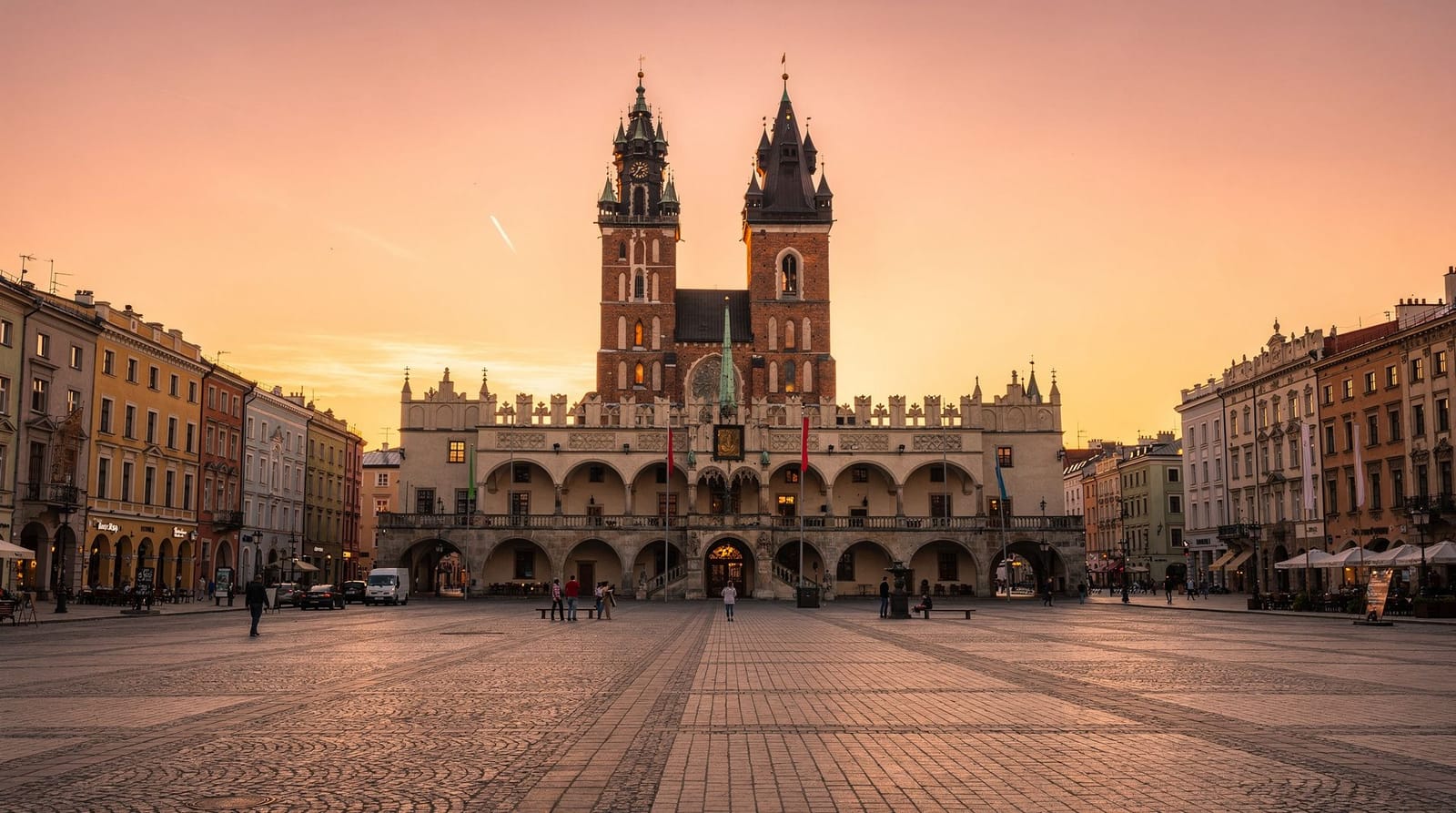
Krakow: Collegium Maius, St. Mary Basilica & Cloth Hall
Duration: 2.5h
What is Collegium Maius and do you need to book in advance?
Collegium Maius is the oldest surviving building of Jagiellonian University (founded 1364), with a beautiful Gothic courtyard and a university museum. The museum interior can be visited on a guided tour or on a cheaper self-guided ticket — book ahead at bilety.uj.edu.pl, especially for English tours in summer. The courtyard can be seen freely.
| Where | Ul. Jagiellońska, Old Town, 2 min from the Rynek |
| Cost | Free courtyard; museum 26 PLN guided, 17 PLN self-guided |
| Time needed | 10 min courtyard only; 45–50 min with the tour |
| Getting there | Short walk from Rynek Główny, within the Old Town |
| Best time | Book English tours ahead in summer; courtyard anytime |
The university that shaped Central Europe
Jagiellonian University was founded in 1364 by Casimir the Great — making it the second-oldest university in Central Europe after Prague (Charles University, 1348) and the oldest continuously operating institution of higher learning in Poland. Among its alumni are Nicolaus Copernicus (studied here 1491–1495), who proposed the heliocentric model of the solar system, and later John Paul II, who studied philosophy here clandestinely during the Nazi occupation. The university has remained in continuous operation for 660 years, surviving wars, occupations, and political upheavals that closed most other European universities of comparable age.
Collegium Maius, the university’s oldest building, sits on ul. Jagiellońska in the heart of the Old Town, two minutes’ walk from Rynek Główny. It is a Gothic complex built around a arcaded courtyard — beautiful, quiet, and largely overlooked by tourists who don’t think to look for it. It is one of the finest medieval spaces in Kraków.
The Gothic courtyard
The inner courtyard is the architectural heart of Collegium Maius and the most immediately beautiful space in the building. Arcaded loggias run along all four sides, with Gothic ogival arches at ground level and more delicate tracery above. The stone is warm yellow-grey limestone; in good light it glows. A well stands in the centre of the courtyard.
The courtyard is accessible without a museum ticket during opening hours. You enter from ul. Jagiellońska through a narrow doorway that suddenly opens into this unexpectedly large and quiet space. Even in peak tourist season, the courtyard is generally calmer than the nearby Rynek — most visitors don’t know it exists.
The automaton clock: on the west wall of the courtyard, an ornamental clock with mechanical figures plays three times a day — daily at 09:00, 11:00, 13:00, 15:00, and 17:00. The figures represent famous alumni and professors of the university, including Copernicus and Jadwiga of Anjou (the queen who refounded the university in 1400). The 13:00 performance draws a small crowd. It is free to watch from the courtyard.
The university museum
The interior of Collegium Maius houses the Jagiellonian University Museum, one of the oldest university museums in the world. The collections span the history of the university from the 14th century to the 20th, and include:
Scientific instruments: a collection of astronomical and mathematical instruments that was used by Copernicus or by his teachers — including the globes, astrolabes, and armillary spheres that equipped a 15th-century astronomer. The Jagiellonian Globe (circa 1510) is the first globe known to include the Americas.
The Treasury and Library: original documents, illuminated manuscripts, and the earliest records of the university’s foundation. The 15th-century illuminated graduation registers include the signature of young Mikołaj Kopernik (Copernicus’s Polish name).
Academic rooms: the Professors’ Common Room (Stuba Communis), the library, the auditorium, and the treasury are all preserved with period furnishings. The library interior — wooden shelves, vaulted ceiling, the smell of old books — is remarkable.
Portraits and memorabilia: the collection includes portraits of notable alumni and faculty across six centuries, and objects associated with John Paul II’s time as a student and later as Archbishop.
The Copernicus connection
Nicolaus Copernicus enrolled in Jagiellonian University in 1491 at age 18 and studied here for approximately four years. He did not graduate (he completed his formal education in Italy), but the years in Kraków were formative: the university had one of the strongest astronomy faculties in Europe at the time, with instruments and teaching that gave Copernicus his mathematical and observational foundations.
The museum treats the Copernicus connection carefully — neither over-claiming the relationship nor dismissing it. The instruments on display are not “Copernicus’s instruments” in the sense that he owned them personally, but they are of the period and type he would have used. The globe that includes the Americas is in the same collection.
The 550th anniversary of Copernicus’s birth was celebrated in 2023 with a major exhibition at the museum. The permanent collection retains some of the exhibition’s contextual materials.
Visiting: what you need to know
Access: the courtyard is free to enter (daily, roughly 09:00–18:00). The museum interior can be visited on a guided tour or with a self-guided ticket.
Guided tours are one way to see the interior rooms. Tours run in small groups (maximum 10–12 people) and last approximately 45–50 minutes. English tours run several times daily but fill quickly — booking ahead at uj.edu.pl/muzeum or by email is strongly advised in summer.
Tickets: guided tour 26 PLN (≈ 6.20 €), reduced 14 PLN; self-guided 17 PLN (≈ 4 €), reduced 10 PLN. Self-guided entry is free on Wednesdays in the afternoon slot. Buy online at bilety.uj.edu.pl or at the museum shop.
Opening hours: guided and self-guided slots differ by weekday and change by season, so check the opening hours page on maius.uj.edu.pl before you go.
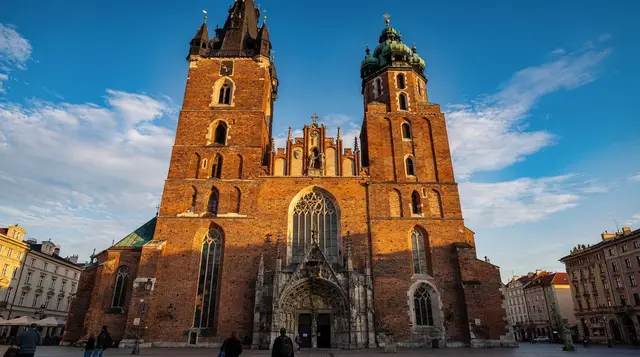
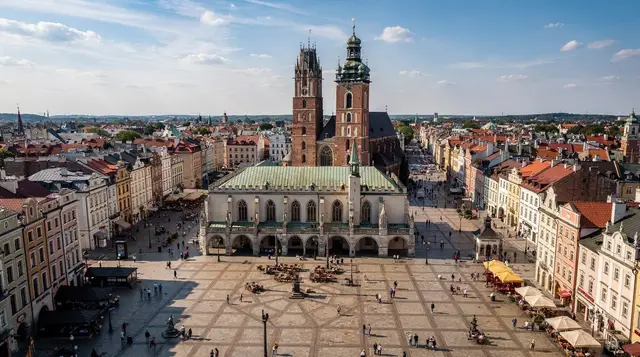
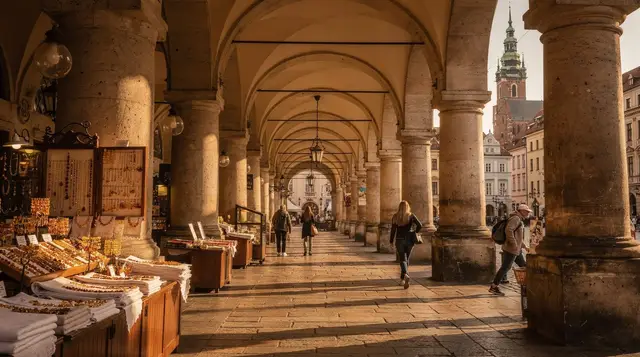
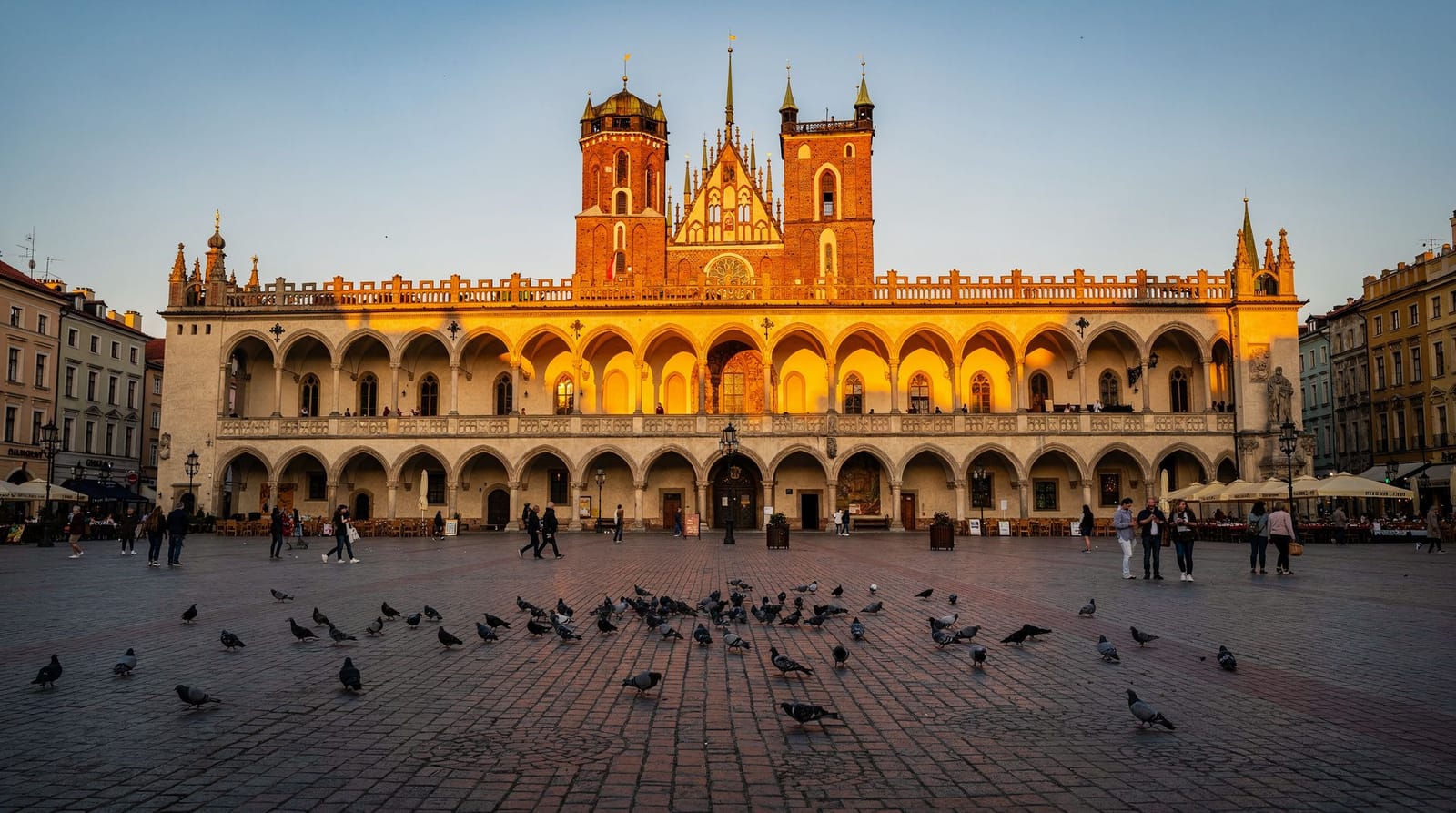
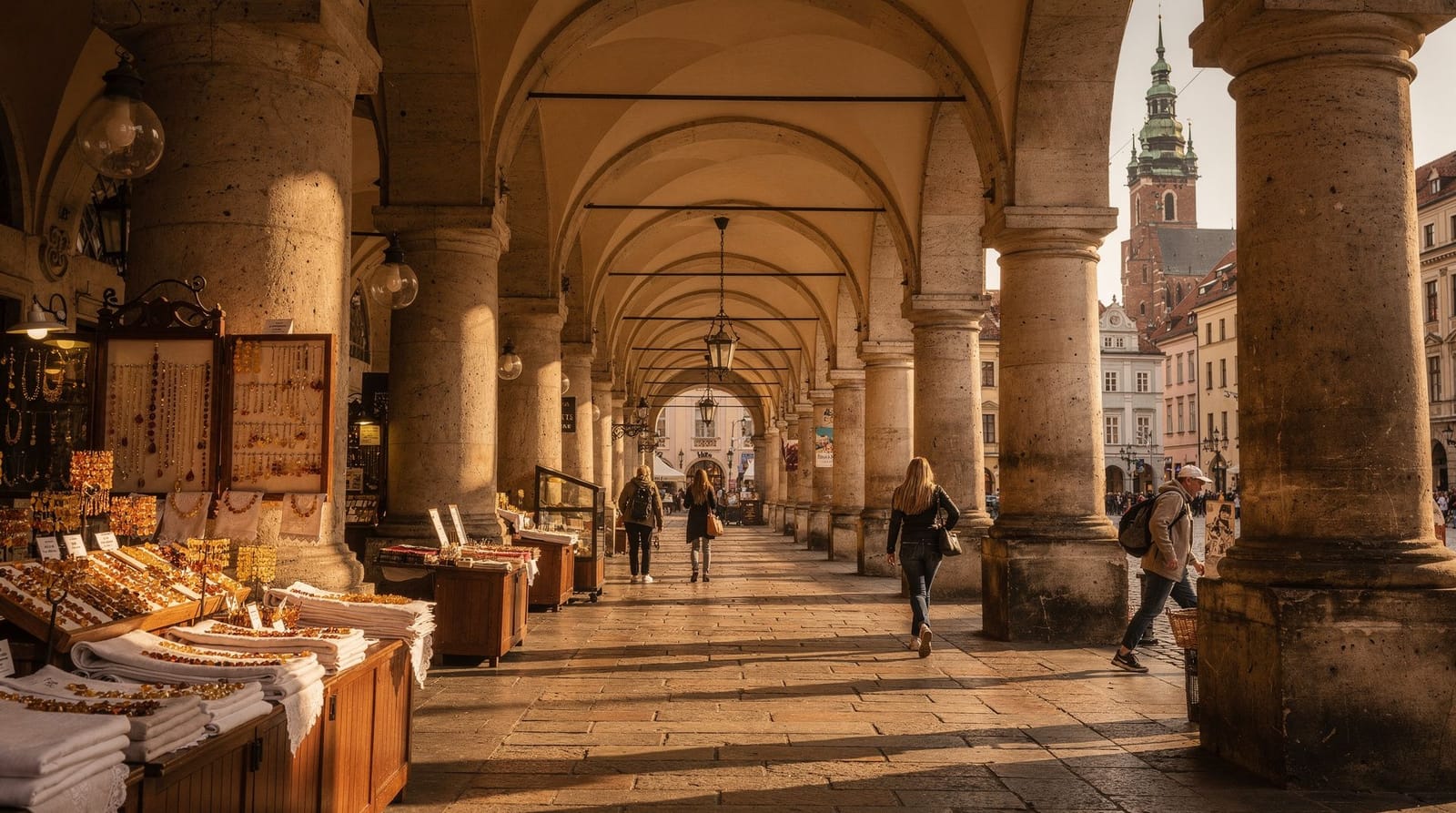
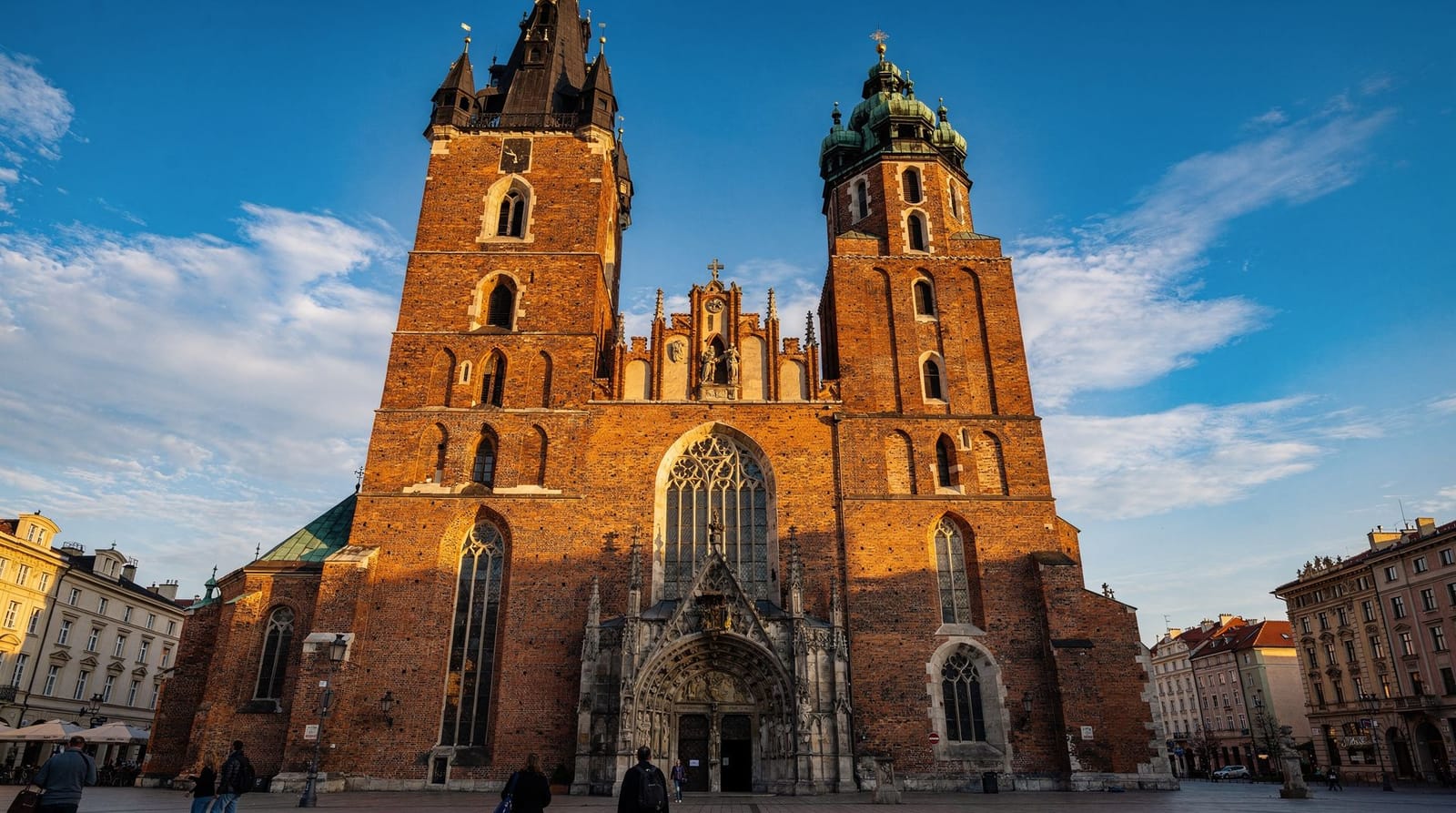
A combined tour of Collegium Maius, St. Mary’s Basilica, and the Cloth Hall is the most efficient way to cover the three major indoor heritage sites of the Old Town in one guided morning, without managing separate bookings for each.
The wider Jagiellonian University presence in the Old Town
The university is not only at Collegium Maius — it is woven into the fabric of the entire Old Town. More than 20 university buildings are located within the Old Town, most on or near ul. Gołębia and ul. Jagiellońska (the two streets adjacent to Collegium Maius). The Collegium Novum (19th-century Neo-Gothic, the main administrative building), Collegium Phisicum, and various faculty buildings are all within a few minutes’ walk.
The cafes and restaurants on ul. Jagiellońska and the surrounding streets cater to students as well as tourists — prices are generally somewhat lower than on the Rynek. Bar Mleczny U Stasi (ul. Mikołajska 16) is the student milk bar closest to the university: soup around 6 PLN (≈ 1.40 €), mains 12–15 PLN (≈ 2.90–3.60 €).
The university and the Nazi occupation
One of the darkest moments in the university’s history came on 6 November 1939, when the German occupation authorities summoned the entire academic staff (183 professors and lecturers) to a lecture supposedly explaining new regulations. Once assembled in Collegium Novum, they were arrested, taken to Sachsenhausen and Dachau concentration camps. Younger professors were interned elsewhere. Several died; most eventually returned.
The event — known as Sonderaktion Krakau — was a deliberate attempt to destroy the Polish intellectual class by eliminating the university. The university reconstituted clandestinely under the occupation, continuing teaching in secret. This history is documented in the museum and is part of what makes the building’s continued existence as a living university institution feel meaningful rather than merely historic.
Reading the building: what to look for
Collegium Maius rewards slow looking. Once you are inside the courtyard, stand still for a minute and let the proportions settle: the arcades frame a small patch of sky, the noise of the street drops away, and the whole space feels built for conversation rather than spectacle. Notice how the stone changes colour as the light moves across the walls, and how the upper tracery looks lighter than the heavy arches below. It is a very different register from the open-air bustle of the Old Town squares just around the corner.
If you join the museum tour, pay attention to the guide’s framing. The rooms are not a theme park of “famous scientists” but a record of how a medieval school became a working institution, with all the ordinary furniture, ceremony and rules that implies. Visitors who arrive curious about Polish history tend to get the most from it, because the university sits at the crossroads of royal patronage, church life and the Renaissance. The royal context is easier to grasp if you also read the Wawel royal history guide, since the same dynasty that backed the university built the hill up the road.
How it fits with the rest of your trip
Collegium Maius is a good counterweight to heavier days. If you are planning visits to Auschwitz-Birkenau or the Jewish heritage of Kazimierz, a calm morning among the arcades gives you space to breathe between emotionally demanding stops. The university’s wartime story also connects naturally to the Kraków under Nazi occupation guide and the broader WWII Kraków overview, which place Sonderaktion Krakau in its wider setting.
For first-time visitors, the Kraków for first-timers guide and the one-day itinerary show where a short stop here can slot in, while the two-day itinerary leaves room for the full museum tour. Anyone interested in the city’s other collections can pair this visit with the best museums in Kraków and the National Museum guide. If the weather turns, the university museum is also a sensible indoor option alongside the ideas in rainy-day activities. Finally, Pope John Paul II’s Kraków traces the later chapter of a former student whose name is tied to the university.
After Collegium Maius
The building is on ul. Jagiellońska, a 3-minute walk from Rynek Główny, 5 minutes from St. Mary’s Basilica, and 8 minutes from Wawel Castle. It fits naturally into any morning in the Old Town alongside the Cloth Hall gallery and St. Mary’s. The Planty Park ring is immediately accessible from ul. Jagiellońska — a good place to sit and process the visit.
Building a morning around Collegium Maius
Because the courtyard visit is short and free, Collegium Maius works best as one stop within a longer Old Town loop rather than a destination on its own. A practical order: start at Collegium Maius early (courtyard access begins with opening hours and is quietest before 10:00), walk the Royal Route toward the Rynek, take in the Cloth Hall and St. Mary’s, and finish at Wawel by early afternoon. If you’d rather not plan the sequence yourself, the Old Town walking tour guide compares guided options that typically include this exact cluster of sights, and the destination overview gives the wider context for what else sits within the Planty ring. Anyone who prefers a single thread through the whole area can also join a guided walking tour of the Old Town, which saves you from checking the map between stops.
If you want more of the medieval story the university grew out of, a walking tour focused on the city’s medieval history pairs naturally with a visit to the courtyard, since the university’s founding belongs to the same period as the street plan around it.
Frequently asked questions about Collegium Maius
Who studied at Collegium Maius?
Nicolaus Copernicus studied at Jagiellonian University (1491–1495) before completing his education in Bologna and Padua. Pope John Paul II (Karol Wojtyła) studied philosophy here clandestinely during the Nazi occupation in the early 1940s. The university has produced 15 Nobel laureates in total, including Wisława Szymborska (Literature, 1996) and Olga Tokarczuk (Literature, 2018), who also studied here.
Do I need to book a Collegium Maius tour in advance?
Yes, especially in summer (June–August). English-language guided tours run several times daily but fill quickly, and walk-ins are not always possible. Book via bilety.uj.edu.pl or by email at least a few days ahead. The combined guided tour with St. Mary’s Basilica and Cloth Hall handles the booking logistics for you.
Can I visit Collegium Maius without a tour?
The Gothic courtyard is accessible without a ticket during opening hours. The museum interior — the Stuba Communis, the library, the treasury, the instrument collection — can be visited on a guided tour or with a cheaper self-guided ticket. The courtyard alone is worth a visit even if you don’t book the tour.
What is the connection between Copernicus and Collegium Maius?
Nicolaus Copernicus (Polish name Mikołaj Kopernik) enrolled at Jagiellonian University in 1491. The university had a strong astronomy faculty and the instrument collection he would have encountered here helped form his mathematical and observational approach. His name appears in the graduation records of the period, and instruments of the type he used are displayed in the museum.
Is Collegium Maius worth it if I only have one day in the Old Town?
If your day is genuinely tight, prioritise the free courtyard over the paid guided tour — ten minutes is enough to see the Gothic arcades and, if timed right, catch the automaton clock. The full museum tour is worth adding back in on a second day or a slower first day, since it covers ground (the Copernicus connection, the Sonderaktion Krakau history) that the courtyard alone doesn’t convey.
Top experiences
Bookable activities with verified prices and instant confirmation on GetYourGuide.