Morskie Oko: Poland's most famous glacial lake
Poland's most famous glacial lake in the Tatras. An 8 km walk from Palenica Białczańska — best seasons, horse carts, and crowd management tips.
From Krakow: Morskie Oko lake tour in the Tatra Mountains
Quick facts
- Distance from Kraków
- ~120 km (about 2.5 h by car or tour)
- Walk to the lake
- 8 km (about 2 hours) from Palenica Białczańska
- Altitude
- Morskie Oko sits at 1,395 m above sea level
- Horse cart
- Available for ~35–40 PLN one way to Włosienica (5 km)
- Open season
- April–October (road may be snow-blocked in early spring)
The eye of the sea
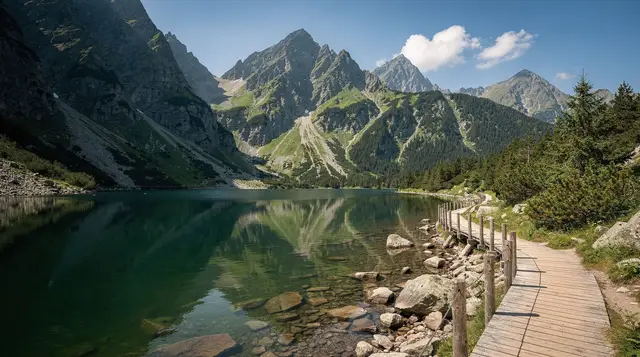
Morskie Oko — literally “Eye of the Sea” — is the largest and deepest lake in the Polish Tatras, sitting at 1,395 metres above sea level in a glacially carved cirque surrounded by peaks reaching over 2,000 metres. Its name comes from an old folk belief that the lake was connected by an underground passage to the sea. The waters are a deep, shifting green-blue, and on a clear day the reflections of the surrounding granite walls and the summit of Rysy (Poland’s highest peak) turn the surface into a mirror of extraordinary beauty.
It is Poland’s most visited mountain destination: in peak season (July–August), upwards of 20,000 people arrive on a single day. This makes Morskie Oko a curious case — one of the most genuinely stunning natural landscapes in Central Europe, and also one of the most crowded. Managing the crowds requires planning, but the lake itself remains worth the effort.
| Where | Palenica Białczańska, ~120 km south of Kraków, 10 km east of Zakopane |
| Cost | 11 PLN park entry; horse cart around 35–40 PLN one way |
| Time needed | Full day from Kraków (10–12 hours door to door) |
| Getting there | Car to Palenica, minibus from Zakopane, or an organised tour |
| Best time | June and September for the walk; avoid August weekends |
For a fuller walkthrough of the route and logistics, see the Morskie Oko complete guide and the Morskie Oko hike from Kraków guide.
The walk from Palenica Białczańska
There is only one access route to Morskie Oko for most visitors: the mountain road from Palenica Białczańska, a roadhead parking area 10 km east of Zakopane. Cars and motorbikes are not permitted beyond Palenica; the road from here to the lake is reserved for pedestrians, cyclists, and horse carts.
Distance: approximately 8 km one way, with 450 metres of ascent.
Walking time: 1 hour 45 minutes to 2 hours 30 minutes depending on pace.
Route character: The trail follows a wide gravel mountain road — not a narrow path. It is well-graded and not technically demanding, but it is long and continuously ascending. The views along the way are good: the Roztoka stream valley below to one side, the forested slopes above, and increasingly dramatic limestone and granite scenery as you near the lake.
The final kilometre is the steepest section, with a hairpin climb through stone blocks before the lake suddenly appears — the theatrical reveal is one of the great payoffs in Polish hiking. The first view of Morskie Oko from the path is a moment most visitors remember.
Horse carts
For visitors who prefer not to walk the full distance, horse-drawn carts (bryczki) carry passengers from Palenica Białczańska to Włosienica, 5 km up the road — leaving a 3 km walk to the lake itself (about 45–60 minutes from Włosienica). The carts run throughout the season and are available at the Palenica parking area.
Cost: approximately 35–40 PLN (~8.30–9.50 €) per person one way; 65–75 PLN (~15.50–18 €) return. The carts are popular and queues can be long in peak season — expect to wait 30–60 minutes on a busy August day.
Honest note: the horse-cart ride is comfortable but slow (about 50 minutes), and you will still need to walk the final 3 km. Many visitors find it more efficient to simply walk the full 8 km and take the cart downhill on the return if their legs are tired.
At the lake
The area around the lake is managed by the Tatra National Park. There is a mountain hut — the Schronisko nad Morskim Okiem — at the lake shore, one of the oldest mountain refuges in Poland, offering simple meals (bigos, żurek, grochówka) and hot drinks. It is open throughout the hiking season and in winter for ski-touring groups. Expect to pay 18–30 PLN (~4.30–7 €) for a bowl of soup; a full meal costs 40–60 PLN (~9.50–14 €).
The lake can be walked around its perimeter in about 45 minutes. A secondary trail from the south-eastern shore leads up to Czarny Staw pod Rysami (Black Lake below Rysy), a smaller, darker, and even more dramatic glacial lake another 200 metres higher — a steep 45-minute ascent that rewards the effort with outstanding views and significantly fewer people.
From Czarny Staw, experienced and properly equipped hikers can continue to the summit of Rysy (2,499 m) — a demanding ascent of 3–4 hours from the lake, recommended only in good conditions and for fit walkers with mountain experience.
Morskie Oko lake tour from Kraków — guided full-day excursionGetting there from Kraków
By car: Drive south from Kraków on the S7 to Zakopane (approximately 2 hours), then follow the DK49 road east to Palenica Białczańska. The total journey from Kraków is about 2 hours 20 minutes to 2 hours 40 minutes. The Palenica car park fills quickly in summer; arrive before 08:00 to secure a space. Later in the morning, you may be directed to overflow parking further down the road, adding extra walking.
By minibus from Zakopane: Shared minibuses (busy) run from Zakopane’s bus station to Palenica Białczańska in the morning and return in the afternoon. Journey about 25 minutes, cost around 8–12 PLN (~1.90–2.90 €). This is the option used by most visitors staying in Zakopane overnight.
Organised day trip from Kraków: The most convenient option. The tour handles transport (avoiding parking stress), includes a guide for the walk, and typically combines Morskie Oko with a stop in Zakopane.
Tatra Mountains and Morskie Oko hike from KrakówSeasonal advice
June: Excellent. Snow has retreated from the access road; the lake may still have ice floes. Crowds are manageable. Wildflowers in the valley approach their best.
July: Peak crowds. The lake area in August especially is overwhelmingly busy. Start by 07:00 if possible to be at the lake by 09:00–09:30 before the day-trip coaches arrive.
August: Most crowded month. Also most stable weather. Early departure from Kraków (06:30) is strongly recommended. The Palenica parking area overflows by 08:00 on sunny August weekends.
September: The ideal month. Crowds drop dramatically after school holidays end. Weather remains warm and stable. Autumn colours begin on the lower slopes from mid-September. Highly recommended.
October: Beautiful colours, very few people, cooling temperatures. The walk requires a warm jacket; there may be first snow on the upper peaks. The horse-cart service runs until late October.
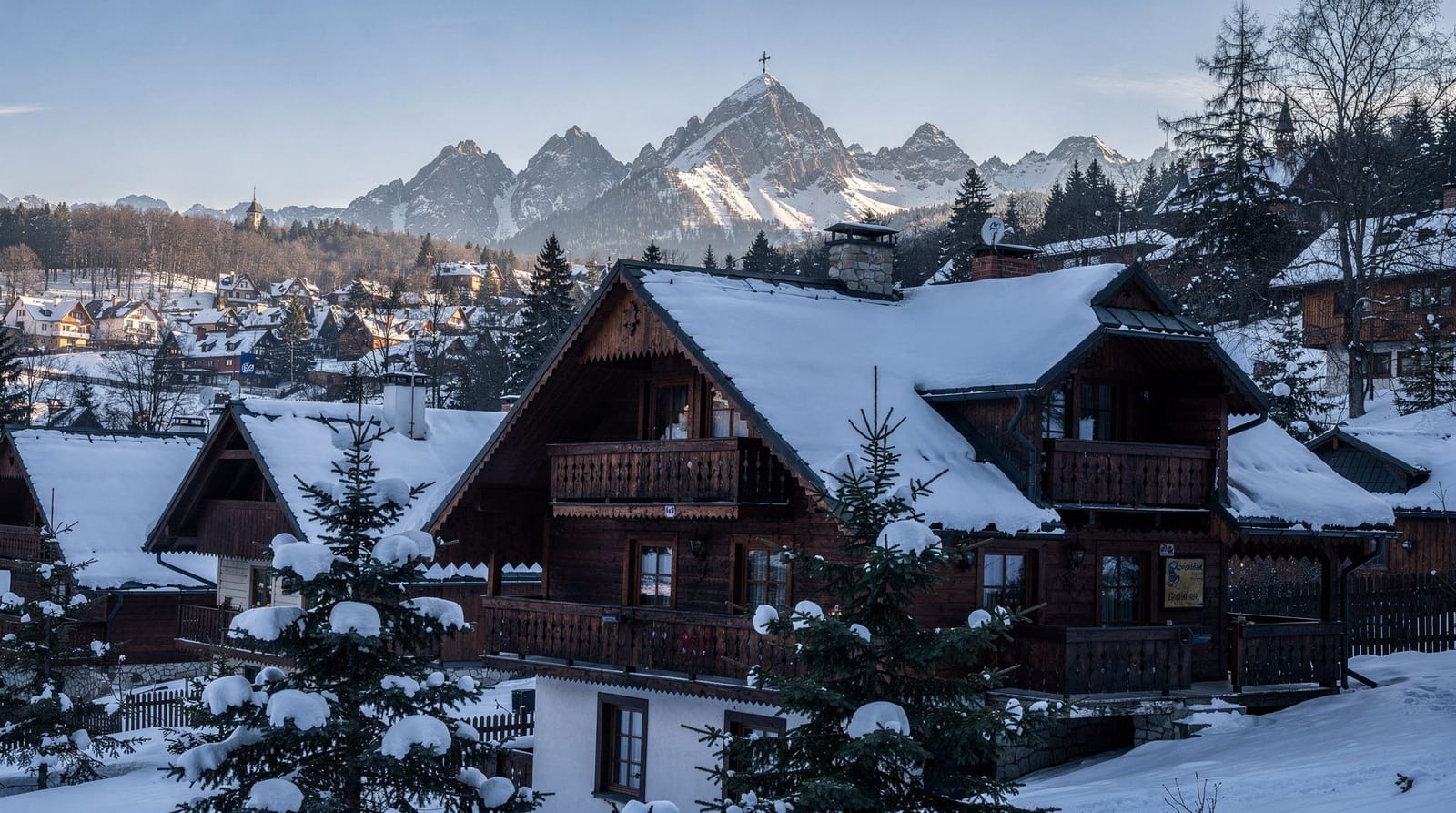
November–March: The road is open in winter but the walk is serious in snowpack — crampons or microspikes are needed. The area transforms into a ski-touring destination used by experienced winter mountaineers. Not recommended as a casual day trip.
April–May: Transition season. The road may be partially snow-blocked in April. Crowds are low. Check with the Tatra National Park (TPN) for current conditions before going.
| Month | Conditions | Crowds |
|---|---|---|
| April–May | Road may be partially snow-blocked; check TPN conditions first | Low |
| June | Snow retreated, possible ice floes, wildflowers approaching best | Manageable |
| July | Peak crowds building; arrive by 07:00 to beat coach groups | Very busy |
| August | Most crowded month, most stable weather | Overwhelming on weekends |
| September | Crowds drop sharply after school holidays; warm, stable weather | Quiet — the ideal month |
| October | Beautiful colours, cooling temperatures, first snow possible on peaks | Very quiet |
| Nov–March | Serious winter conditions; crampons needed, no horse carts | Minimal, experienced hikers only |
A first-hand sunrise hike account captures what the early-departure strategy actually looks like on the ground, if you want a sense of the timing before committing to a 05:30 alarm.
What to expect and how to manage it honestly
Morskie Oko in July or August is genuinely overwhelming. The narrow path near the lake gets congested; selfie spots are queued; the mountain hut has a waiting list for tables. None of this diminishes the lake itself — the water and the peaks remain extraordinary — but the human density is real.
Strategies that genuinely help:
- Start very early. 07:00 departure from Kraków means arriving at Palenica before 09:30, giving you 2 hours at the lake before the midday peak. By early afternoon, over 5,000 people can be on the access road simultaneously.
- Go in September. Seriously. The lake is exactly as beautiful, the crowds are a fraction of August, and the autumn light is superior.
- Go to Czarny Staw. The secondary lake above Morskie Oko is 45 minutes further and substantially less crowded. If you can make the climb, it is worth it.
- Skip the horse cart up and take it down. Many visitors underestimate the return walk when they are tired. Taking the cart downhill from Włosienica after a full lake day saves the knees.
Combining Morskie Oko with Zakopane
Most organised tours combine the Morskie Oko walk with time in Zakopane — typically the walk first (arriving by 09:00, leaving the lake by 13:00) and then two to three hours in Zakopane for lunch on Krupówki, the Gubałówka funicular, and oscypek shopping. This is a sensible sequence and a satisfying full day.
For those with two days in the area, spend the first day in Zakopane and the second day at Morskie Oko, starting from Palenica early.
Beyond Morskie Oko
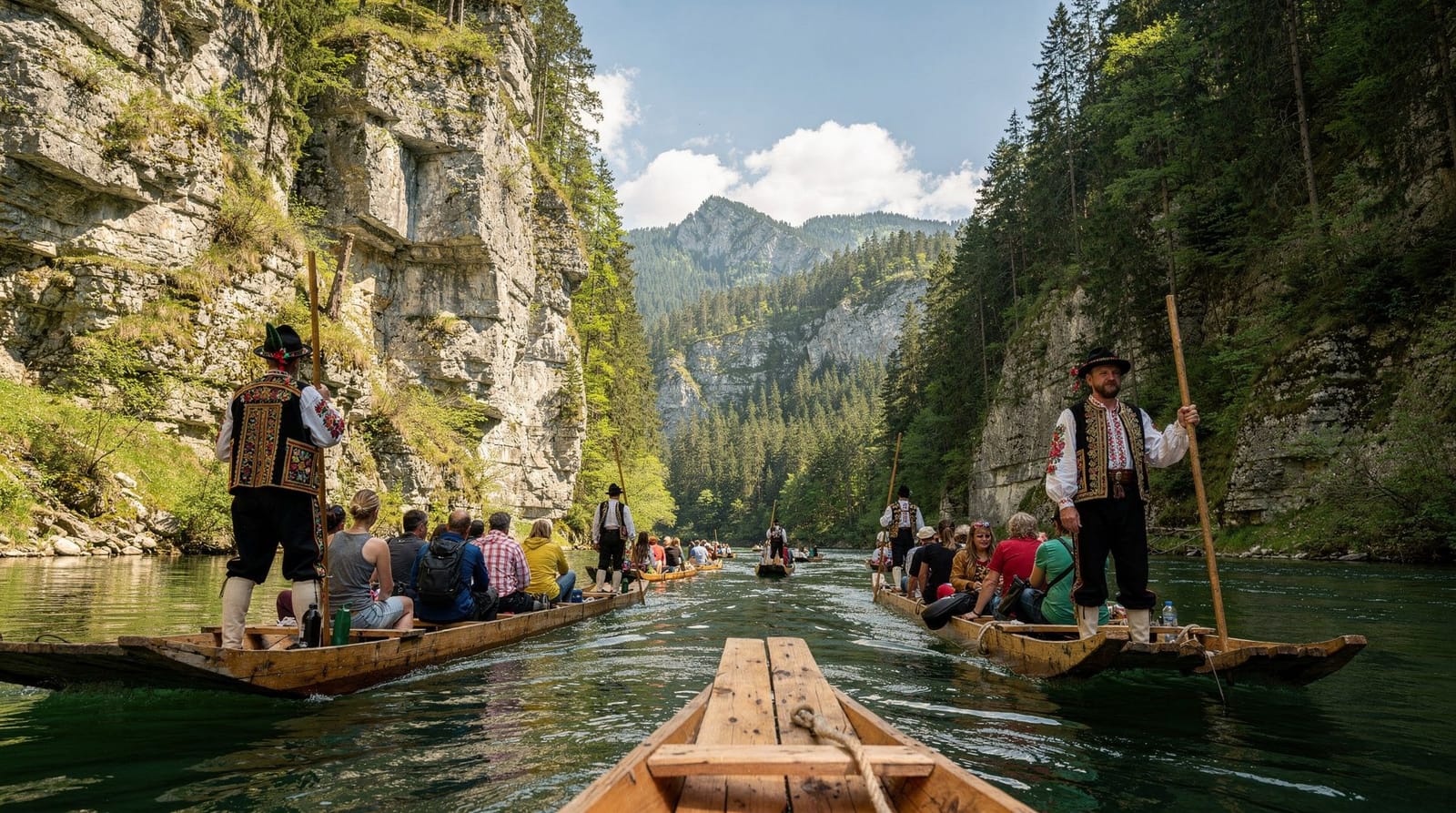
If the walk leaves you wanting more of the Tatras, the Tatra Mountains destination page and the Tatra Mountains hiking guide cover other routes at a range of difficulties, and the best easy hikes in the Tatras guide is a good next stop if Morskie Oko’s 8 km felt comfortable and you want something gentler for a second day. Travellers combining mountains with the region’s other natural highlight often add the Dunajec Gorge raft trip — a completely different, low-effort way to see the same mountain range.
Practical checklist
- Arrive at Palenica Białczańska by 08:00 in summer (07:00 on August weekends).
- Wear or carry layers — the lake area at 1,395 m is significantly cooler than Zakopane.
- Bring at least 1.5 litres of water; the hut has drinks but queues.
- Park entry: 11 PLN (~2.60 €) per person, paid at the checkpoint near Palenica.
- The walk is not technically difficult but is long — 8 km each way, 450 m of ascent. Children from about 8 years old can manage it; younger children will tire.
- Emergency number: TOPR (Tatra Mountain Rescue) 601 100 300.
Frequently asked questions about Morskie Oko
How difficult is the walk to Morskie Oko?
The walk follows a wide, well-graded mountain road — not a narrow hiking path. The distance is 8 km one way with 450 metres of ascent. It is classified as easy to moderate in Polish hiking terms. Anyone in reasonable health can complete it, though children under about 8 and elderly visitors may find the distance and constant uphill challenging. The horse-cart option to the 5 km mark reduces the walk to 3 km (about 45–60 minutes).
How long does a full Morskie Oko day trip from Kraków take?
Budget a full day: approximately 10–12 hours from door to door. Allow 2–2.5 hours driving each way, 2 hours walking up, 1–2 hours at the lake, and 1.5–2 hours walking back down (or 45 minutes on the horse cart). Many tours combine it with time in Zakopane, making it a 10–11 hour day.
What facilities are there at the lake?
The Schronisko nad Morskim Okiem mountain hut serves simple meals (soups, stews) and hot drinks. There are basic toilet facilities. There are no shops, no ATM, and no Wi-Fi. Bring cash, food, and water from below. The hut can be very crowded at midday in summer.
Is it worth visiting Morskie Oko in winter?
For experienced winter mountain walkers, yes — the lake frozen in February is spectacular and the silence is extraordinary. But the walk requires crampons or microspikes, warm mountain clothing, and ideally some experience of winter trail conditions. It is not appropriate as a casual tourist excursion in winter. The horse-cart service does not operate.
Top experiences
Bookable activities with verified prices and instant confirmation on GetYourGuide.