Tatra Mountains: hiking, cable cars, and alpine Poland
Poland's only alpine range, rising to 2,499 m. Hiking trails, Kasprowy Wierch cable car, Kościeliska Valley, and thermal baths accessible from Kraków.
Tatra Mountains: full-day hiking tour from Krakow
Duration: 13h
Quick facts
- Distance from Kraków
- ~100 km south (2–2.5 h via Zakopane)
- Highest Polish peak
- Rysy: 2,499 m (Polish side of the Tatra range)
- Key cable car
- Kasprowy Wierch (1,987 m) from Kuźnice
- Best easy valley
- Kościeliska Valley — flat, family-friendly, 8 km one way
- Season
- Hiking June–September; ski season December–March
The only alpine mountains in Poland
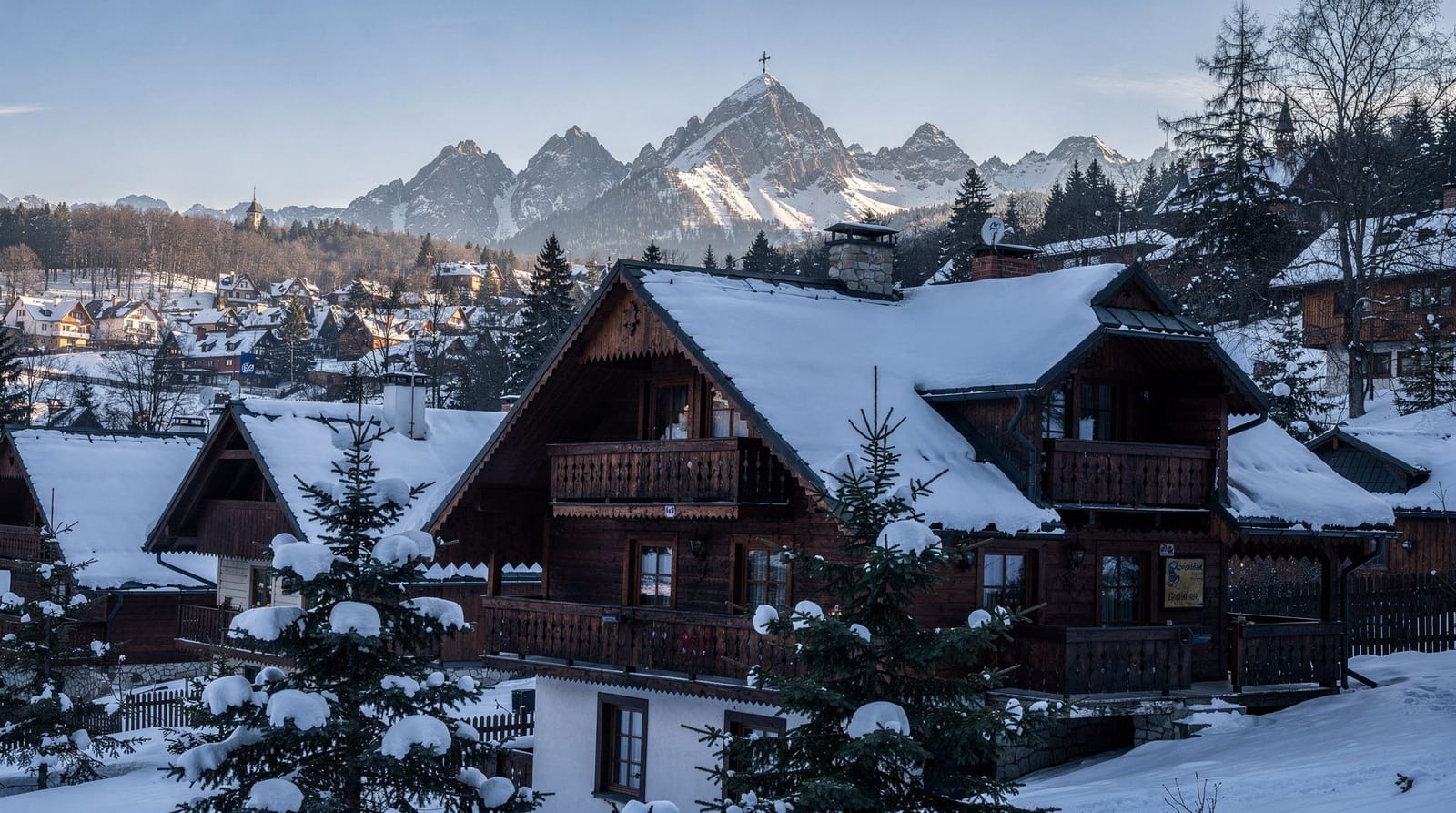
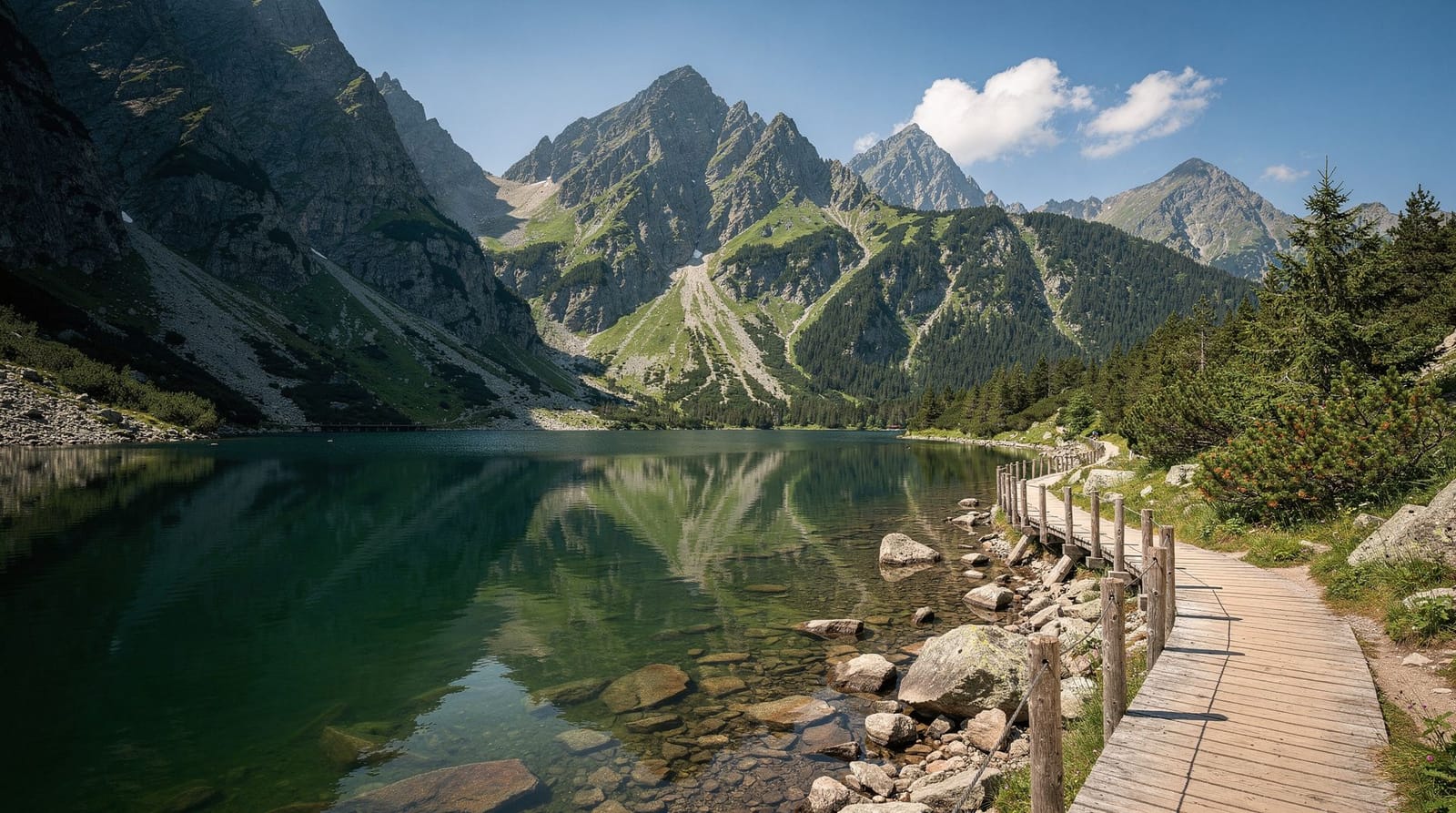
The Tatra Mountains form the highest and most dramatic section of the Carpathian arc, straddling the border between Poland and Slovakia for about 60 km. On the Polish side, the range rises sharply from the Podhale plateau south of Zakopane, reaching its highest point at Rysy (2,499 m on the Polish flank, 2,503 m on the Slovak side). The Tatras are the only truly alpine mountains in Poland — granite peaks, glacially carved valleys, permanent snowfields in the highest cirques, and a tree line at around 1,500 metres. Everything above is rock, grass, and sky.
| Where | ~100 km south of Kraków, via Zakopane |
| Cost | Park entry 11 PLN/day; Kasprowy cable car 99–165 PLN return (high season), 129 PLN (low season) |
| Time needed | Full day (12–14 hrs round trip), or 2 days with a night in Zakopane |
| Getting there | Car or organised tour via the S7 to Zakopane |
| Best time | June–September for hiking; December–March for skiing |
Access from Kraków is via Zakopane — about two hours by car on the S7 motorway. Most visitors treat the Tatras as a long day trip from Kraków or as part of a one- or two-night stay in Zakopane. If you’re deciding between an organised tour and driving yourself, the Tatra day trip guide and Tatra hiking guide both cover the logistics in more depth.
The Tatras are divided into two massifs with different characters:
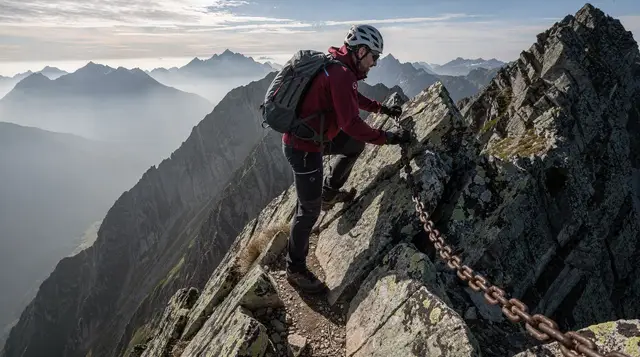
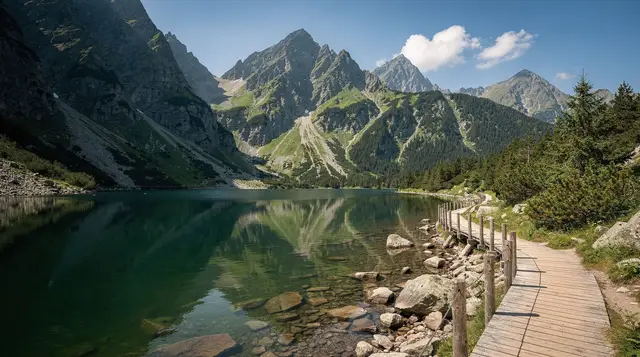
The High Tatras (Tatry Wysokie): Granite peaks, steep ridges, and mountain lakes (stawy). This is the area served by the Kasprowy Wierch cable car and containing Morskie Oko. Hiking here requires care — trails are well-marked but conditions change rapidly.
The Western Tatras (Tatry Zachodnie): Lower, more rounded limestone terrain. The Kościeliska and Chochołowska valleys run deep into this massif. More accessible for families and casual walkers; gentler gradients and more forested sections.
All hiking in the Polish Tatras takes place within the Tatra National Park (Tatrzański Park Narodowy, TPN). Entry to the park costs 11 PLN (~2.60 €) per person per day (reduced 5.50 PLN) and is paid at staffed checkpoints at valley entrances.
Kasprowy Wierch and the cable car
The Kasprowy Wierch cable car (Kolej Linowa na Kasprowy Wierch) is the most popular single attraction in the Polish Tatras. It departs from Kuźnice, a suburb of Zakopane, and rises in two stages to the summit ridge at 1,987 metres — the boundary between Poland and Slovakia. The journey takes about 20 minutes. At the top:
- A meteorological station has operated continuously since 1938 and is the source of the official high-mountain weather data for Poland.
- On clear days, views extend south into Slovakia and north across the entire Podhale plateau.
- Two chairlifts serve ski runs in winter (December–April depending on snow conditions).
- A simple café and snack bar operate year-round at the summit station.
Return tickets cost 99–165 PLN (~23.50–39 €) in high season, depending on the time, and 129 PLN (~30.70 €) in low season (1 October–18 December 2026). In July and August, book in advance via the PKL website — tickets sell out days ahead during school holidays. The cable car closes during thunderstorms and high winds; check the PKL website for operational status on the day.
From the Kasprowy Wierch summit, fit walkers can continue on marked trails: west along the main ridge towards the Czerwone Wierchy peaks, or east toward Świnica and eventually Morskie Oko via a long, challenging ridge route (allow 5–7 hours; proper mountain gear required).
Tatra Mountains full-day hiking tour from KrakówKościeliska Valley
For visitors who want to experience genuine mountain scenery without altitude-related challenges, the Kościeliska Valley (Dolina Kościeliska) in the Western Tatras is the outstanding choice. A flat gravel track runs 8 km up the valley from the entrance near Kiry (5 km west of Zakopane) through an increasingly dramatic limestone gorge. The walls close in as you go, with waterfalls emerging from side couloirs and the limestone cliffs taking on orange and grey striations in afternoon light.
The main trail passes several caves — including Mylna and Raptawicka caves, open to visitors in summer — and ends at the Ornak mountain hut (Schronisko PTTK Ornak), an excellent spot for a bowl of żurek or bigos before the return walk. Allow 3–4 hours round trip at a relaxed pace.
A horse-drawn cart (wóz konny) runs from the valley entrance part-way up for those who prefer not to walk both ways; prices are approximately 30–40 PLN (~7–9.50 €) per person for the one-way trip.
Kościeliska Valley trek with thermal baths — guided tour from KrakówChochołowska Valley
Less well-known than Kościeliska but arguably more beautiful in late spring, the Chochołowska Valley (Dolina Chochołowska) is the largest valley in the Polish Western Tatras. The entrance is at Siwa Polana, 20 km west of Zakopane. The valley floor opens into wide mountain meadows — the hale — where the snowdrops and crocuses emerge as snowmelt recedes (typically late April to mid-May), creating a carpet of colour across the pastures that draws photographers from across Poland.
The walk to the Chochołowska mountain hut is about 7 km one way; the hut serves simple mountain food. Above the hut, the trail continues to the ridge and the border with Slovakia. Allow at least 4 hours round trip for the basic route.
What to wear and bring hiking in the Tatras
The Tatras demand respect. Weather changes quickly — clear skies at 09:00 can become a thunderstorm by 14:00 during summer. Basic preparedness applies even on easy trails:
- Layered clothing: a waterproof jacket regardless of forecast; temperatures drop significantly at altitude.
- Sturdy footwear: ankle-supporting boots for any trail above 1,500 m; trainers are sufficient for Kościeliska valley floor.
- Water: at least 1.5 litres per person; mountain springs are drinkable but not always accessible.
- Cash: mountain huts and trail entry kiosks often prefer cash. Park entry (11 PLN, ~2.60 €) is collected at the checkpoints.
- Trail app: Polish hiking app Mapa Turystyczna (available free on iOS and Android) has offline Tatra trail maps. Mountain Rescue numbers: TOPR 601 100 300 (for Poland Tatras).
Hiking seasons and trail closures
June–September: Main hiking season. All trails open. Expect crowds on the popular routes (Kasprowy ridge, Morskie Oko) especially at weekends and in August. Start early — trailheads get busy by 08:00 in peak season.
October–November: Beautiful autumn colours but shortening days and increasing risk of first snowfall above 1,500 m. The Kasprowy cable car often runs reduced hours. A good time for the valley walks.
December–March: Ski season. Most ridge trails require crampons and ice axe above 1,500 m. The lower valley walks (Kościeliska, Chochołowska) are passable with microspikes in packed snow conditions. The TPN requires prior registration for winter ascents of technical routes.
April–May: Transition season. Snow retreats from the lower valleys by mid-April but the high ridges remain under significant snowpack until late May or even June. Cable car typically runs in limited mode. The valley meadow flowers (Chochołowska crocuses) are at their best in this period.
Thermal baths: the perfect mountain recovery
After a day’s hiking, the thermal bath complexes near Zakopane are the most popular recovery option. The Chochołowskie Termy (20 km west of Zakopane) and Termy Podhalańskie (15 km north) are both fed by natural thermal springs at 28–38 °C, with outdoor pools, saunas, and in the case of Chochołowskie Termy, a substantial water-park component with slides and wave pools. Both are open year-round.
Tatra Mountains hiking and thermal baths — combined day trip from KrakówDay trip logistics from Kraków
The standard approach for a Tatra day trip from Kraków:
- Depart Kraków by 07:00–07:30 to arrive in the Tatras by 09:00–09:30.
- Spend 4–6 hours hiking (Kościeliska valley, Kasprowy Wierch ascent, or Morskie Oko — not all in one day).
- Return via Zakopane for a late lunch on Krupówki.
- Optionally add 2 hours at the thermal baths before the drive back.
- Return to Kraków by 20:00–21:00.
This is a long day — 12–14 hours — and is tiring but very satisfying. Most organised tours handle all transport and set a reasonable pace.
Alternatively, stay one night in Zakopane and spread the experience over two days: the cable car and town exploration on day one, a valley hike or Morskie Oko on day two. Zakopane accommodation ranges from budget hostels (50–90 PLN, ~12–21 €) to comfortable mountain hotels (250–450 PLN, ~60–107 €).
Easiest routes for beginners and families
Not every visitor wants a full ridge hike, and the Tatras offer genuine easy options. Beyond the flat Kościeliska Valley floor already covered above, the short walk from Palenica Białczańska towards Morskie Oko can be shortened at any point — even 30–40 minutes along the paved road gives a real sense of the mountains without committing to the full 8 km. The best easy hikes in the Tatras guide ranks routes by difficulty and is worth checking before you commit to a plan, especially with children or older relatives in the group. For a longer but still moderate day, the Kasprowy Wierch cable car combined with a short ridge walk near the summit station gives high-altitude views without technical hiking.
Slovak side day trips
Because the border runs directly along the main ridge, it is possible to cross into Slovakia on foot from several Polish trailheads, most notably near Kasprowy Wierch and Rysy. Some visitors combine a Tatra day with a short excursion to the Slovak treetop walk near the border — see the Slovakia treetop walk day trip guide for how this pairs with a Tatra hike. A passport or EU ID is sensible to carry even though both countries are in the Schengen area, since mountain rescue and border checkpoints occasionally require identification.
Frequently asked questions about the Tatra Mountains
Do I need to be fit to visit the Tatras?
It depends on which trails you choose. The Kościeliska Valley floor walk is flat and accessible to all ages and fitness levels — even families with young children or visitors with moderate mobility can enjoy it. The Kasprowy Wierch cable car ascent requires no walking at all. Ridge hikes above 2,000 metres require reasonable fitness and proper footwear. Morskie Oko involves an 8 km walk on a well-graded mountain road — challenging for very young children or unfit adults.
Is the Kasprowy Wierch cable car worth it?
For the views, yes — on a clear day it is extraordinary. But go early (before 09:00) to beat queues, and book tickets in advance in summer. The summit weather is unreliable; if you arrive in cloud, the experience is significantly diminished. Check the webcam on the PKL website the morning of your visit. Return tickets cost 99–165 PLN (~23.50–39 €) in high season and 129 PLN (~30.70 €) in low season.
What is the park entry fee and how is it paid?
Entry to Tatra National Park costs 11 PLN (~2.60 €) per adult per day (reduced 5.50 PLN). It is collected at staffed checkpoints at the main valley entrances — Palenica Białczańska (for Morskie Oko), Kiry (Kościeliska), and Siwa Polana (Chochołowska). Payment is usually cash; a card terminal may be available at busier checkpoints.
When is the best time to hike in the Tatras?
June and September are the best months — weather is more stable than July and August, trails are less crowded, and the light for photography is excellent. July and August are the most popular (and most congested) months. Avoid hiking above 1,500 m in late October–May unless you have winter equipment and experience.
Should I book a guided tour or drive myself to the Tatras?
Both work, but they suit different priorities. Driving gives flexibility on timing and route but means one person in the group cannot fully relax and enjoy the scenery, plus finding parking at Kuźnice or Palenica Białczańska can add 30–45 minutes in peak season. A guided tour removes that burden, sets a realistic pace, and often includes skip-the-queue arrangements for the cable car. For a first visit, the Tatra Mountains full-day hiking tour from Kraków is the simplest way to see the highlights without logistics stress.
Can I visit both the Tatra Mountains and Zakopane town in one day?
Yes, and most itineraries do exactly that — the mountains and the town are only 15–20 minutes apart. A typical plan spends the morning on a valley hike or the Kasprowy Wierch cable car, then lunch and a stroll along Krupówki in Zakopane before the drive back to Kraków. See the Zakopane from Kraków guide for how to sequence the day.
Top experiences
Bookable activities with verified prices and instant confirmation on GetYourGuide.