Auschwitz guided tour vs self-guided: which is right for you?
From Krakow: Auschwitz-Birkenau guided tour & hotel pickup
Duration: 3.5h
Should I take a guided tour of Auschwitz or visit self-guided?
A guided tour is strongly recommended for first-time visitors — guides provide historical context that transforms what you see, and handle the complex logistics of visiting both Auschwitz I and Auschwitz II-Birkenau. Self-guided is best for returning visitors or those with specialist knowledge who want more time at specific sites and the freedom to linger.
A memorial that demands preparation
Auschwitz-Birkenau is not a conventional tourist attraction — it is a UNESCO World Heritage Site and the largest Nazi German concentration and extermination camp, where over 1.1 million people, mostly Jewish, were murdered between 1940 and 1945. How you visit matters. The choice between a guided tour and self-guided exploration shapes your experience profoundly, and getting it right is a mark of respect for the site’s gravity.
This comparison is honest: there are real arguments on both sides, and the right choice depends on your background knowledge, travel style, and what you want to take away.
| Where | Oświęcim, around 70 km / 1.5hrs west of Kraków |
| Cost | around 80–200 PLN guided, transport-only (~30–60 PLN) self-guided |
| Time needed | 4–6 hours self-guided; around 3.5 hours guided |
| Getting there | train from Kraków Główny, or included transport on guided tours |
| Best time | self-guided entry is only possible in the afternoon (hours depend on the month; see below) |
At a glance: comparison table
| Factor | Guided tour | Self-guided |
|---|---|---|
| Entry to site | Free (timed reservation required) | Free (timed reservation required) |
| Cost of option | 80–200 PLN (€19–48) transport + guide | Transport only (~30–60 PLN/€7–14 return bus) |
| Historical context | Excellent — provided in real time | Entirely self-sourced (books, apps, podcasts) |
| Group size | 30 (standard) / 10–15 (small-group) | Individual |
| Duration at site | ~3.5 hours (including both camps) | Self-determined (allow 4–6 hours) |
| Access to exhibitions | Guided route covers key blocks | You choose; some exhibitions have guided-only areas |
| Emotional pacing | Set by guide | Self-controlled |
| Logistics | Handled by tour operator | Self-managed (transport, timed entry, maps) |
| Best for | First-time visitors | Return visitors; specialists; solo slow visitors |
The case for a guided tour
Context that changes everything
Auschwitz I and Auschwitz II-Birkenau look, on the surface, like old brick buildings and wooden barracks in flat countryside. Without context, the scale of what happened here is almost impossible to grasp from physical evidence alone. A licensed guide provides that context — walking you through the specific buildings, explaining which selections happened where, identifying individual stories within the overwhelming statistics.
The difference between standing outside Block 11 knowing it as a punishment block where starvation and suffocation were used systematically, versus seeing a brick building with a sign — that is the difference a good guide makes.
Logistics handled for you
The memorial covers two large sites: Auschwitz I (the original camp, with the famous gate) and Auschwitz II-Birkenau (2 km away, the vast extermination camp). Getting between them, understanding which exhibitions to prioritise in your time, and securing timed-entry tickets all require advance planning. Most guided tours from Kraków handle all of this: transport from your hotel, timed entry, and a licensed guide.
The guided Auschwitz-Birkenau tour with hotel pickup from Kraków is the most popular format — it covers both camps, includes a licensed guide, and handles transport both ways.
Self-guided entry is capped at a fixed slot, which is the real constraint: an extended-time self-guided visit buys the additional hours that make the Birkenau half possible without rushing.
Emotional framing
Licensed guides at Auschwitz are trained specifically for this site. They understand how to present information respectfully, how to pace the visit emotionally, and how to handle the inevitable weight of the experience. For visitors without prior knowledge of the Holocaust, this framing can be the difference between a meaningful memorial experience and being overwhelmed without anchor.
The case for self-guided
Freedom to spend time where it matters to you
A guided tour moves as a group. The guide sets the pace and the route. If you want to spend 40 minutes in Block 6 (the everyday life exhibition) or return to the Birkenau guard towers for a long view over the vast site, you cannot — the group must continue.
Self-guided visitors can linger, double-back, and choose their own focus. Visitors with prior knowledge of specific blocks, specific individuals connected to the camp (via family history or research), or academic interest often find guided-tour pacing too fast and too general.
Returning visitors
If you have visited before with a guide and want to return with more personal or reflective intent, self-guided makes sense. The exhibitions in many blocks are rich enough to occupy several hours; visitors who have already had the foundational context can explore more independently.
How to make self-guided work
- Book your free timed-entry ticket at visit.auschwitz.org well in advance — as early as possible in peak season
- Read thoroughly beforehand: Nikolaus Wachsmann’s KL: A History of the Nazi Concentration Camps is the authoritative scholarly overview
- Download the official Auschwitz Memorial app for site navigation and exhibition information
- Allow at least 4–5 hours; 6 hours if visiting both sites carefully
- The shuttle bus between Auschwitz I and Birkenau is free and frequent
The self-guided Auschwitz-Birkenau tour from Kraków provides transport from Kraków without the group guide element — useful if you want to prepare independently and handle your own time at the site.
Special consideration: peak season reality
According to the Memorial, a visit without a guide-educator is only possible in the afternoon, with a free entry pass booked online. Self-guided entry to both sites starts from 17:00 in April–September, 16:00 in March and October, 15:00 in February, 14:00 in January and November, and 13:00 in December. Earlier entry requires joining a guided tour.
If you want a self-guided visit, book an afternoon entry pass and plan your transport accordingly. Regional trains run from Kraków Główny to Oświęcim (the town adjacent to the memorial); the journey takes about 1.5 hours. Check current fares on the official website of the rail operator (Koleje Małopolskie).
Small-group guided: the middle ground
If you want the benefits of a guide but find the idea of a 30-person group uncomfortable given the setting, small-group tours (typically capped at 10–15 visitors) offer a genuine alternative. The pace is more personal, questions are easier, and the experience feels less crowded.
Auschwitz-Birkenau tour limited to 15 visitors is the most booked small-group option from Kraków, and for many visitors it strikes the best balance between guided context and intimate experience.
Practical details for both options
Transport from Kraków
From Kraków Główny, regional PKP trains run to Oświęcim (the town) roughly every 1–2 hours; journey ~1.5 hours; check current fares on the official website of Koleje Małopolskie. Buses (Lajkonik/PKS) take a similar time and also serve the route. Guided tours collect from central Kraków hotels and handle all transport.
By car: ~70 km via the A4 motorway, roughly 60–75 minutes. Free parking at the memorial.
Timed-entry booking
Free admission to the memorial requires a personalised entry card reserved online at visit.auschwitz.org (none are sold at the site). In peak season, popular slots fill months in advance. Book as soon as your travel dates are confirmed. If you cannot get a free slot, licensed tour operators have reserved allocations — this is the practical advantage of booking through a tour operator.
What to bring
Comfortable shoes (you will walk 4–7 km), water, a light layer (some indoor areas can be cool), and ID. Photography is permitted in most outdoor areas and some exhibitions; specific blocks prohibit it — follow signs carefully. No selfie sticks. No loud behaviour. Dress respectfully.
For detailed historical preparation, see our guide to Auschwitz-Birkenau history and our full Auschwitz from Kraków guide.
Understanding the two sites: Auschwitz I and Auschwitz II-Birkenau
Most visitors do not fully understand before they arrive that “Auschwitz” is actually two distinct sites located 3 km apart, with very different characters and histories.
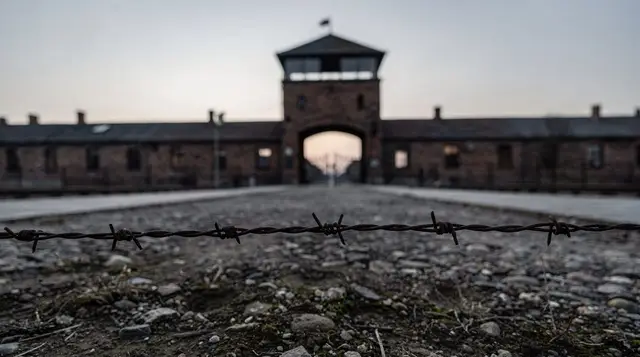
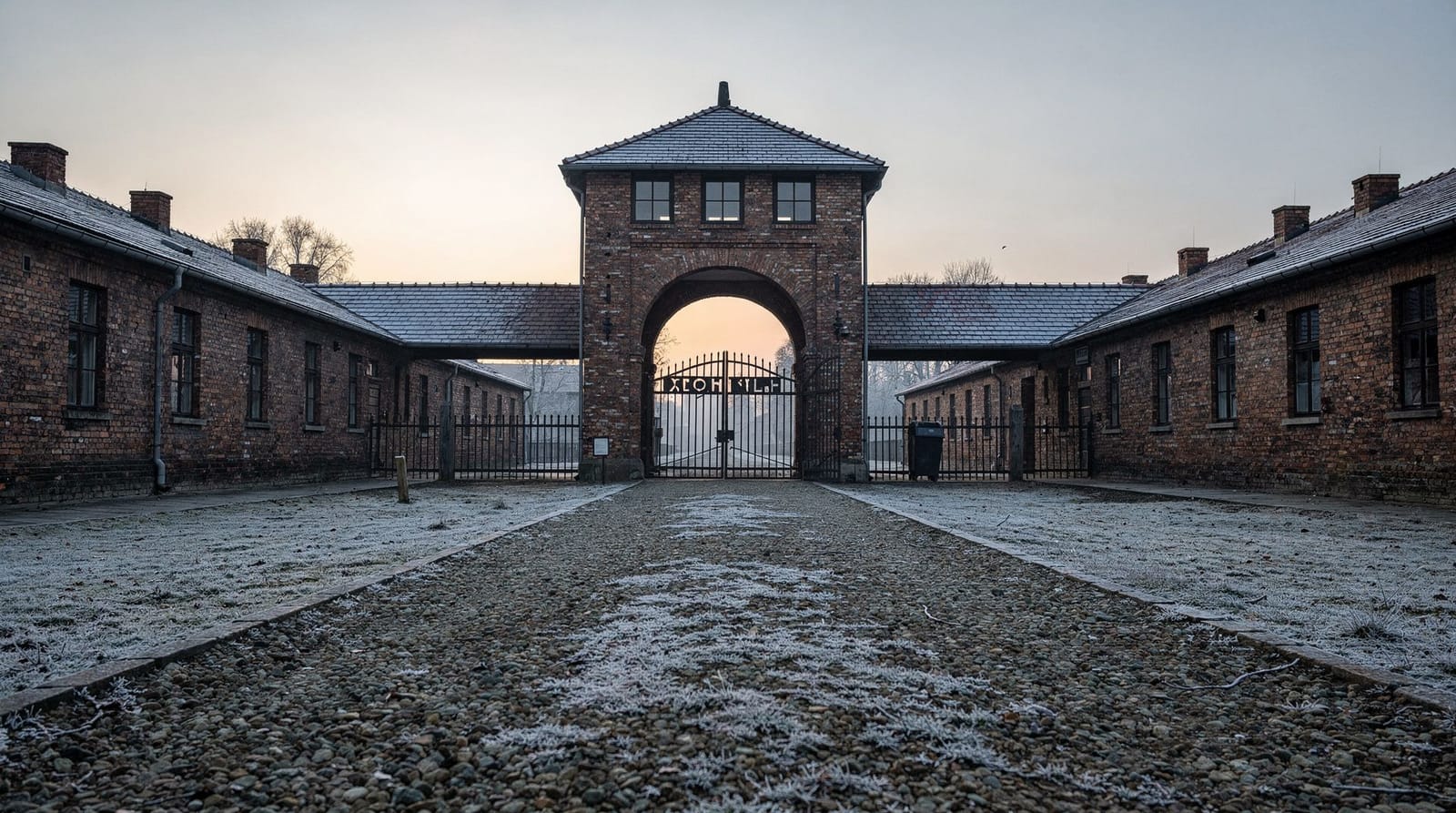
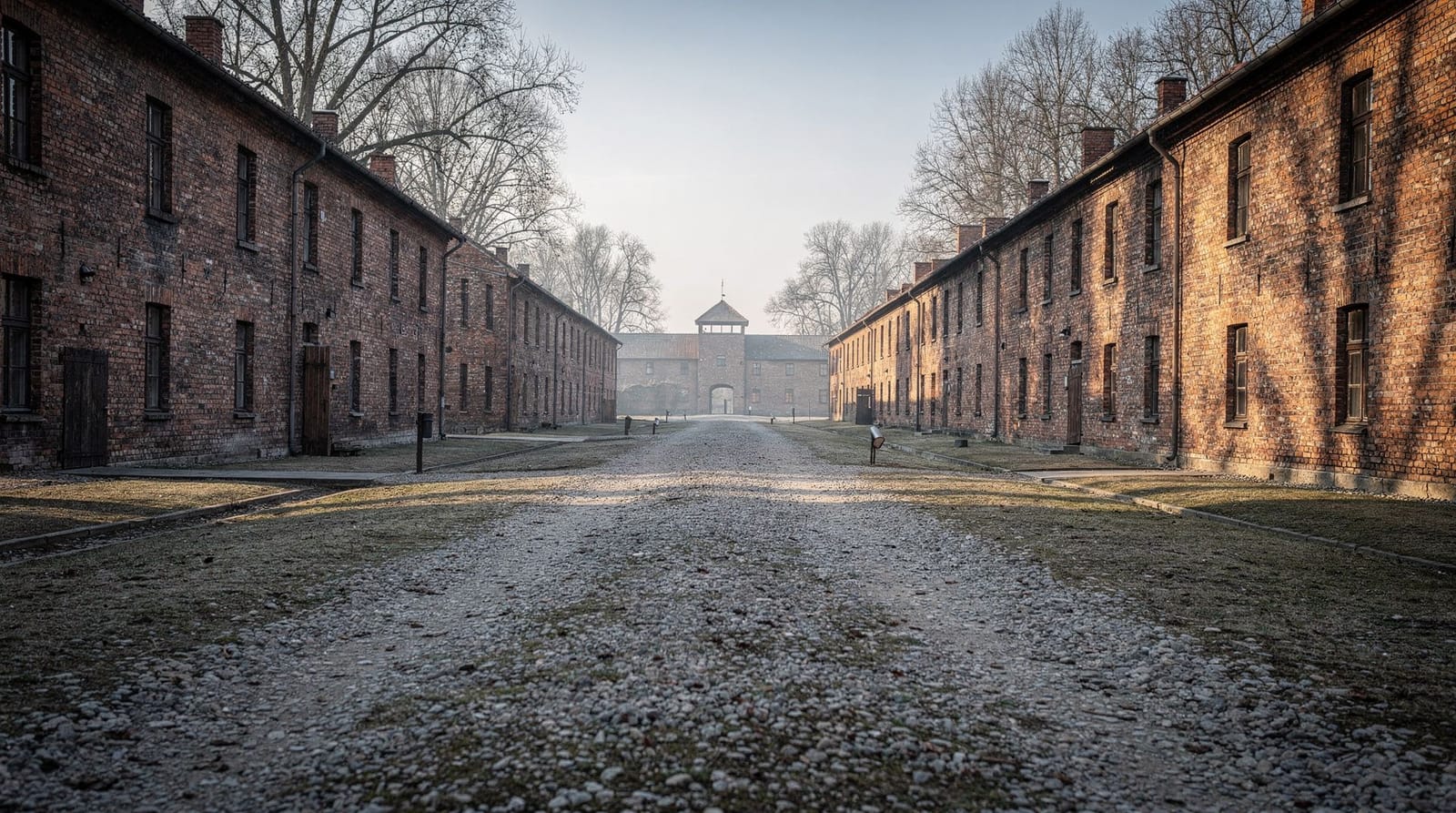
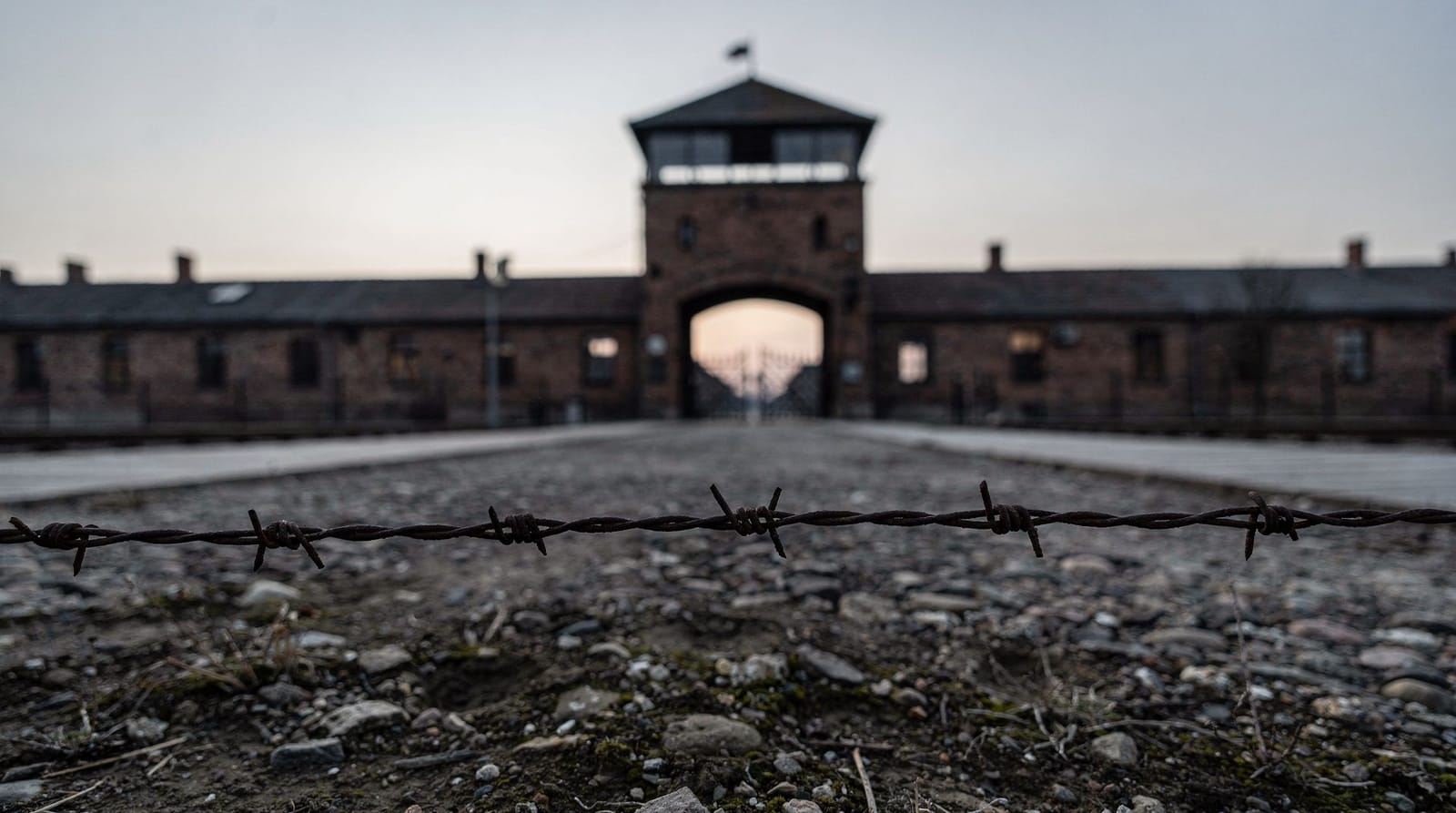
Auschwitz I was the original camp, established in 1940 in former Polish army barracks in the town of Oświęcim. It held primarily Polish political prisoners in its early years. The infamous gate with the words “Arbeit Macht Frei” (Work Sets You Free) is here. The camp is well-preserved: original brick blocks, barracks, the gas chamber and crematorium at Auschwitz I (smaller than Birkenau’s), and the execution wall between Blocks 10 and 11. The exhibitions across multiple blocks cover the categories of victims, the methods of the camp, the daily reality of life and death, and individual testimony.
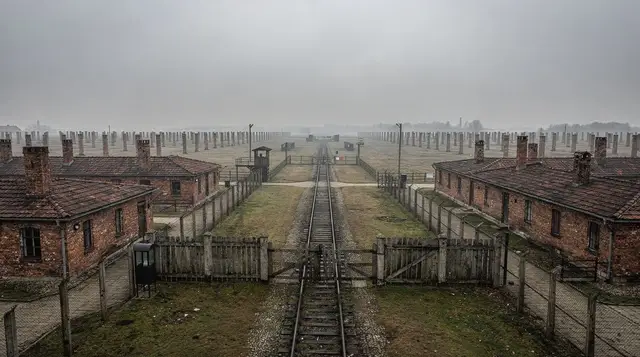
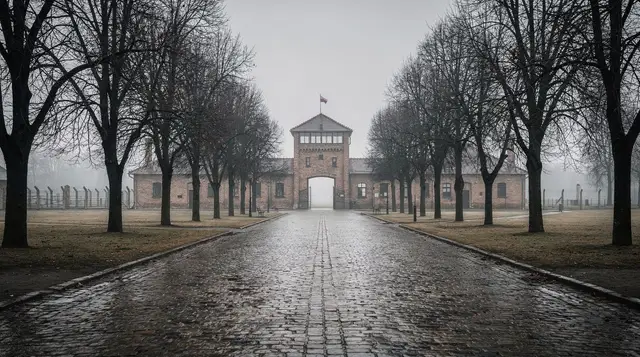
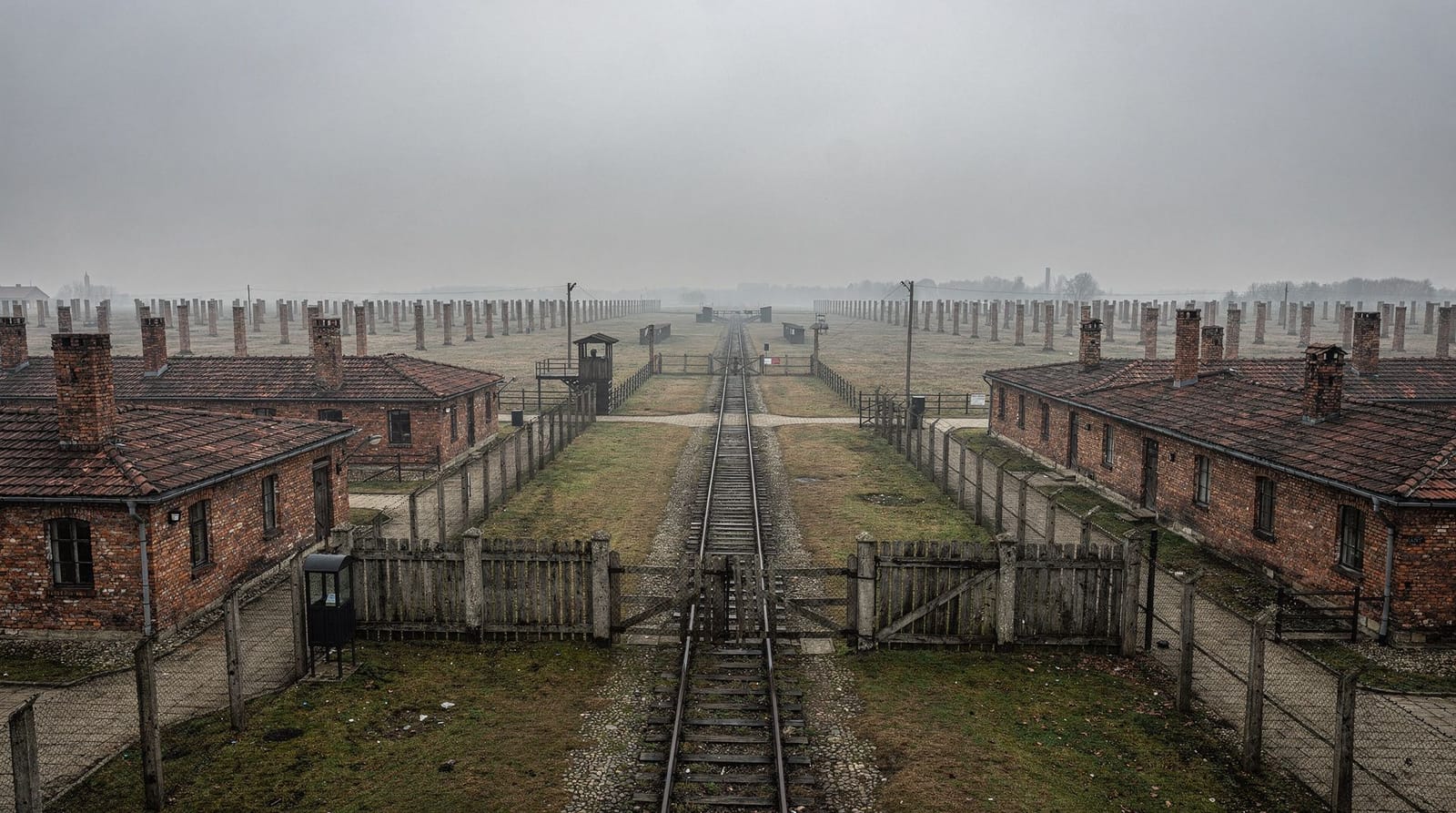
Auschwitz II-Birkenau was built from 1941 as the main extermination facility. It is vast — 175 hectares, capable of holding 100,000 prisoners at its maximum. The wooden and brick barracks, the ruins of the gas chambers (blown up by retreating SS troops in January 1945), the unloading ramp where selections took place, the “Canada” warehouses where confiscated property was sorted, and the International Monument at the far end of the rail line are all here. The scale of Birkenau — the long straight rail line, the wooden watchtowers along the perimeter, the brick barracks stretching to the horizon — conveys the industrial nature of the extermination in a way that no photograph and no text fully prepares you for.
Both sites take minimum 4 hours combined to visit meaningfully. A guided tour typically covers both; self-guided visitors must allocate time carefully.
Ethical considerations for your visit
The Auschwitz-Birkenau Memorial and Museum has published guidance on how to visit respectfully. A few principles:
The site is a cemetery. More than 1.1 million people were murdered here and their remains are still present in the soil of Birkenau. Walk quietly and speak in low voices. Do not sit on ruins, do not touch memorial elements, and do not perform entertainment-focused photography (jumping shots, selfies with grinning poses).
Dress respectfully. There is no formal dress code, but shorts and sleeveless tops feel inappropriate at many visitors’ instinct. Comfortable shoes are essential; you will walk 4–7 km.
Photography guidance. Photography is permitted in most outdoor areas of both sites. Some indoor exhibitions restrict photography — follow the signs. The question of what to photograph, and how, is worth thinking through in advance. Images of human remains (hair, shoes, suitcases) are permitted in some exhibitions but warrant careful consideration of how they will be shared.
Do not bring large groups of noisy children. The memorial explicitly advises against bringing children under 14. Above 14, group school visits are common but should be prepared with classroom education in advance.
Souvenirs. The memorial has a bookshop and educational materials — these are appropriate. Commercial Auschwitz merchandise (mugs, t-shirts, “visit Auschwitz” novelty items) sold around the car park area is not. The memorial itself does not sell novelty merchandise.
What licensed guides at Auschwitz are trained to do
Licensed guides working at the Auschwitz-Birkenau Memorial complete specialised training specific to this site. Their role goes beyond historical narration. They are trained to:
- Frame the visit in its broader historical context: the rise of Nazism, the German occupation of Poland, the stages of persecution that preceded the Final Solution
- Navigate the emotional dimensions of the visit for groups — pacing, pausing, creating space for reflection
- Handle difficult questions sensitively, including from visitors with personal family connections
- Explain the specific architecture and layout of each camp in ways that clarify what happened where
- Contextualise the scale — statistics alone are numbing; guides are trained to use individual stories to make the numbers human
A licensed guide is not a tour guide in the conventional sense. They are closer to a memorial educator. This distinction is worth holding in mind when comparing guided vs self-guided — you are not just hiring someone to identify the buildings, but someone specifically trained to help you understand what the buildings mean.
Planning your visit: practical timeline
A well-structured Auschwitz visit typically follows this sequence:
Guided visit (morning): Arrive at least 30 minutes before your tour starts (the site opens at 7:30). Auschwitz I first — the exhibitions are indoor and detailed; 2–2.5 hours here. Shuttle bus to Birkenau (free, runs continuously). Birkenau in late morning — walk the full site including the unloading ramp, the ruins of Crematoria II and III, the Sauna building, the “Canada” area, and the International Monument at the end of the rail line. 1.5–2 hours minimum.
Afternoon: Return to Oświęcim town (15-minute walk or free shuttle) or Kraków via train. Allow time to process — many visitors find the return journey quiet and contemplative.
Guided tour timing: Tour operators from Kraków typically depart at 8–9 am, arrive at the memorial by 10 am, complete the tour by 2–2.5 pm, and return to Kraków by 4 pm. Some operators offer afternoon departures (2 pm) if you prefer.
Food and practical needs: There is a cafe and restaurant at Auschwitz I near the visitor centre. Many visitors find eating at the memorial uncomfortable; an alternative is to eat a good breakfast before departing Kraków and have a late lunch on return. Water bottles are permitted and should be carried — dehydration is common on long walking tours.
Weather and seasonal considerations for each format
The season affects guided and self-guided visits differently. In summer, both camps can be hot with limited shade, especially at Birkenau’s exposed grounds — self-guided visitors control their own water and rest breaks more freely than a group on a fixed schedule. In winter, Birkenau’s open barracks and windswept rail line get bitterly cold; a guided tour’s structured pace can actually help here, keeping you moving rather than lingering in the cold. Shoulder season (April–May, September–October) tends to offer the most comfortable conditions for either format, with smaller crowds than peak summer.
Cost comparison for couples and small groups
The cost gap between formats narrows and widens depending on party size:
| Party size | Guided (per person) | Self-guided (per person) | Gap |
|---|---|---|---|
| Solo | 80–200 PLN | 30–60 PLN | Guided costs 2–4× more |
| Couple | 80–200 PLN each | 30–60 PLN each | Same ratio; total gap grows |
| Family of 4 | Often discounted per person on group tours | 30–60 PLN each | Guided becomes relatively more affordable |
For solo travellers and couples on a tight budget, self-guided offers real savings. For families, the per-person guided cost often drops enough that the convenience becomes close to free relative to self-guided hassle.
Booking timeline recap
- 4–8 weeks ahead (peak season, June–September): book timed entry independently, or reserve a guided tour slot, especially for small-group or private formats.
- 2–4 weeks ahead (shoulder season): usually sufficient for either format.
- 1–2 weeks ahead (winter, November–March): often enough; last-minute self-guided visits are more realistic in this period.
Preparing beyond the visit itself
Whichever format you choose, the visit sits within a wider story, and reading around it makes both options more rewarding. Krakow under Nazi occupation explains what the war meant for the city you are travelling from, and the WWII Kraków guide links that history to places you can see before or after the memorial. For the ethics of how to behave and what to photograph, visiting Auschwitz with ethics and respect is worth reading in advance, particularly if you plan to go self-guided without a guide to set the tone.
Booking carefully matters too. The unofficial Auschwitz tours warning describes why street offers and unlicensed sellers are best avoided, whichever format you prefer. If you are weighing how Auschwitz fits into a longer stay, the Kraków, Auschwitz and Wieliczka 3-day itinerary shows one way to pace it, and the Auschwitz-Birkenau destination page gives an overview of the site itself. Pairing the memorial with another long excursion on the same day is possible but rarely advisable given the emotional weight; the Auschwitz and Wieliczka same-day guide lays out the trade-offs honestly.
Finally, the Jewish heritage trail itinerary and the Kazimierz Jewish Quarter guide give a living counterpart to the memorial, showing the culture and community that the camp sought to destroy. Many visitors find that spending time there after Auschwitz helps them process what they have seen.
Frequently asked questions about guided vs self-guided at Auschwitz
Is it disrespectful to visit Auschwitz without a guide?
No — thousands of informed, respectful visitors choose self-guided visits. What matters is the intention and preparation you bring, not the format. Read before you go, approach the site with respect, follow the memorial’s Code of Conduct, and give yourself adequate time. A well-prepared self-guided visit is more meaningful than a guided one where you tune out.
Can I take children self-guided?
The memorial recommends that children under 14 are not brought to Auschwitz; above 14, it is at parents’ discretion. If bringing teenagers, a guided tour is generally better — the guide frames the experience appropriately and handles questions that can be difficult for parents to answer in the moment.
How do I book free timed-entry tickets?
At visit.auschwitz.org. Tickets are released on a rolling basis; check early morning when new slots often appear. Peak months (June–September) require booking well in advance. If you cannot secure free tickets, book through a licensed tour operator — their allocations have reserved entry slots.
Does the self-guided option include an audio guide?
Guided tours include a headset. For audio content on a self-guided visit, check the official Auschwitz Memorial website for current options. If using the self-guided transport option, look into audio options for better orientation.
How long should I allow for a self-guided visit?
A minimum of 4 hours; 5–6 hours if you want to see both Auschwitz I and Birkenau thoroughly, including the vast open landscape of Birkenau. Many visitors underestimate the physical and emotional stamina required — build in time to sit, reflect, and process. Rushing is the most common mistake.
How does this decision compare to other day-trip choices from Kraków?
The same guided-vs-independent logic comes up elsewhere in the region, though the stakes are lower. The Wieliczka vs Bochnia salt mine guide covers a comparable decision for a very different kind of site. If you are deciding whether to split Auschwitz into its own day or pair it with other travel, the Auschwitz group vs private tour guide covers the related question of group size once you’ve settled on guided.
Top experiences
Bookable activities with verified prices and instant confirmation on GetYourGuide.