Visiting Auschwitz with respect: ethics, behaviour, and how to prepare
From Krakow: Auschwitz-Birkenau guided tour & hotel pickup
Duration: 3.5h
How should I approach visiting Auschwitz-Birkenau respectfully?
Book in advance via visit.auschwitz.org or a licensed operator. Dress modestly, speak quietly, and do not take selfies at sites of suffering. Allocate at least 3.5–4 hours — rushing is disrespectful and leaves visitors without the context they need. Choose a licensed guide who treats the visit as educational, not theatrical.
Why this guide exists
Auschwitz-Birkenau is the largest Nazi concentration and extermination camp complex, where approximately 1.1 million people — the overwhelming majority of them Jewish — were murdered between 1940 and 1945. It is also, by visitor numbers, one of the most-visited historical sites in Europe, receiving over 2 million visitors per year. That combination creates a tension that no guide can fully resolve, but that every visitor should think about before they arrive.
This guide does not try to make Auschwitz into a tourist attraction. It tries to help you visit in a way that honours what happened there.
| Where | Oświęcim, around 70 km / 1h15 from Kraków |
| Cost | entry free; licensed guide fee shown on visit.auschwitz.org, or 150–250 PLN with transport included |
| Time needed | at least 3.5–4 hours on site, 6–7 hours including travel |
| Getting there | licensed operator with pickup, or train/bus plus advance timed-entry booking |
| Best time | book 2–4 weeks ahead April–October; early morning slots are quieter |
What you are visiting
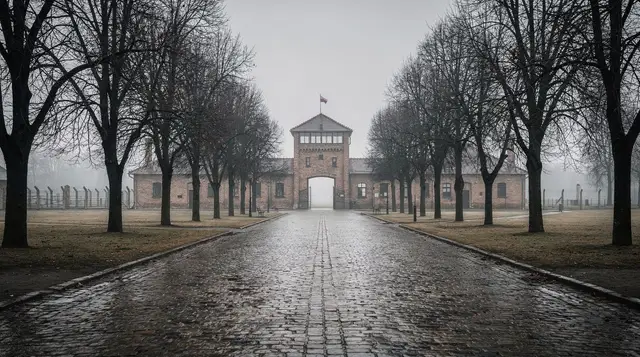
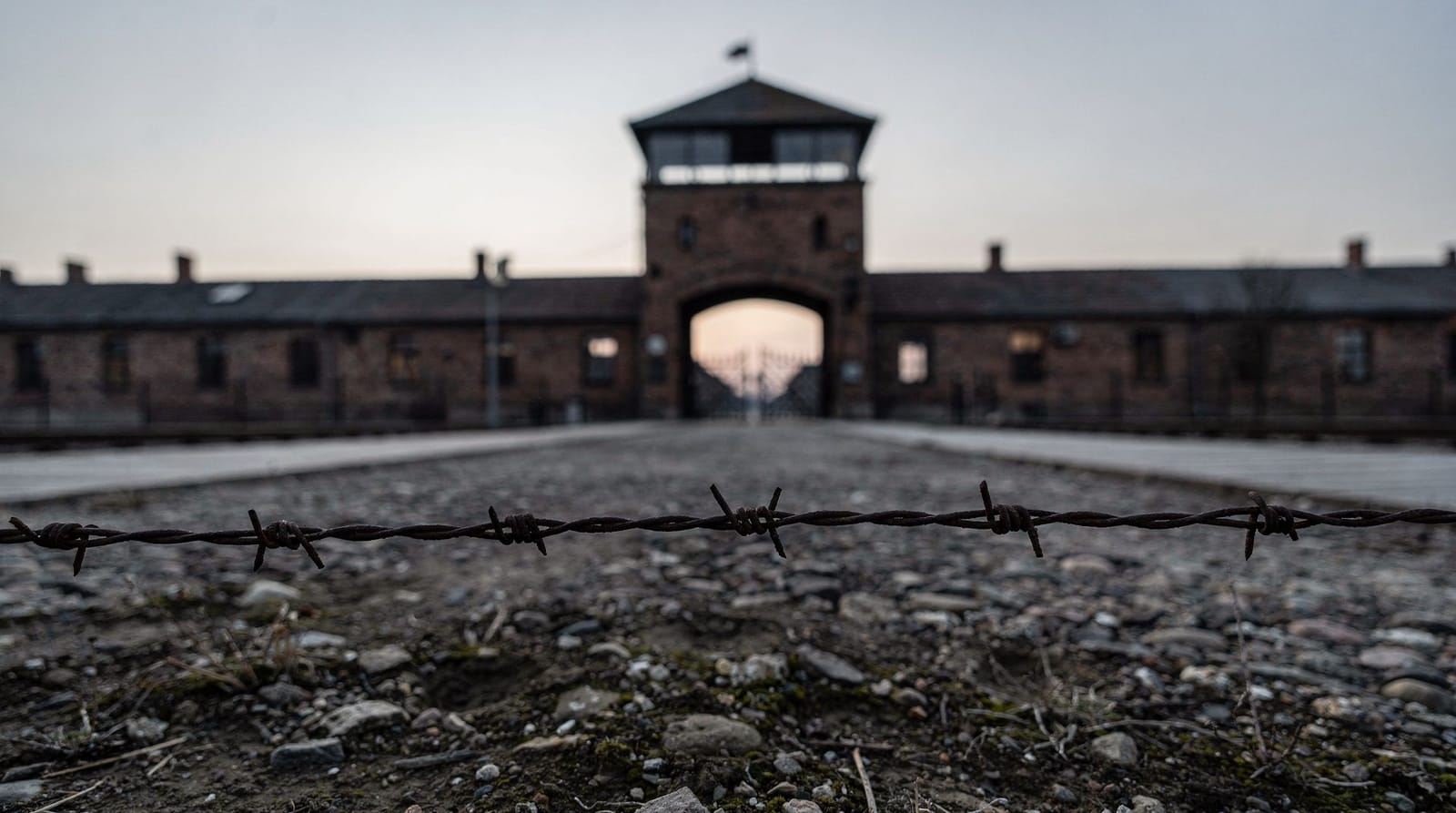
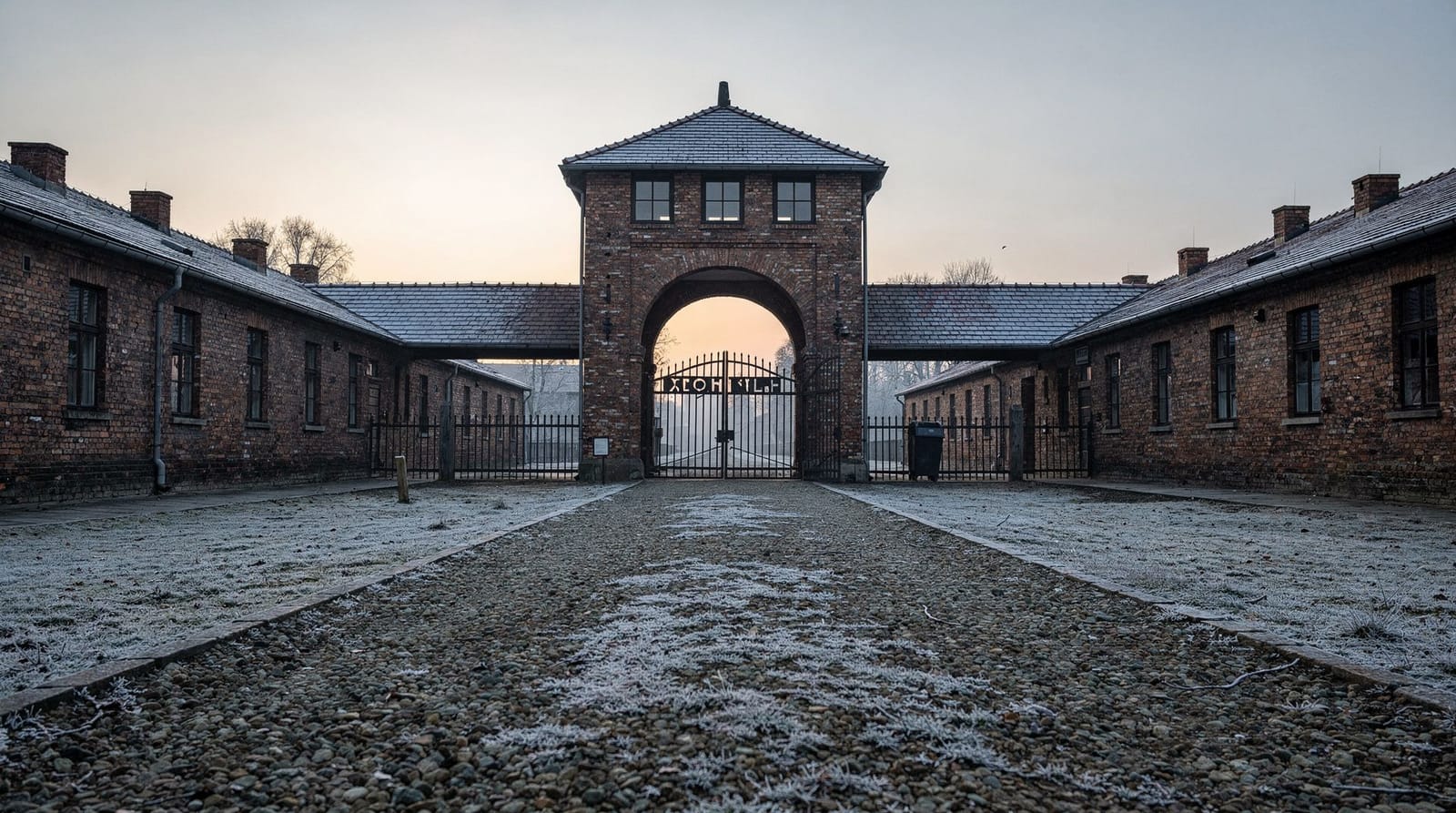
Auschwitz I is the original camp — 28 brick blocks that were converted from a Polish army barracks. The main gatehouse with its infamous “Arbeit Macht Frei” inscription is here, as is the gas chamber, the execution wall, and the permanent exhibition in the blocks. This part of the site is dense with documentation and requires a guide during peak season (April–October) when individual timed-entry slots without a guide are restricted.
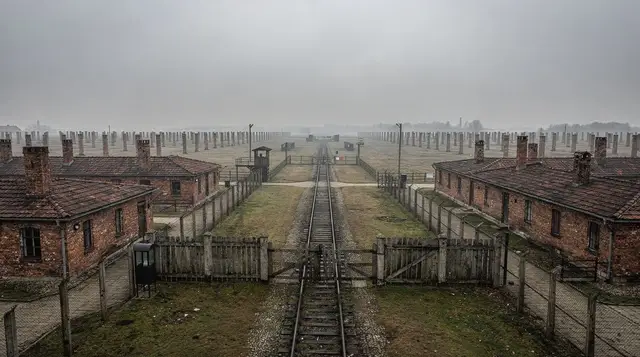
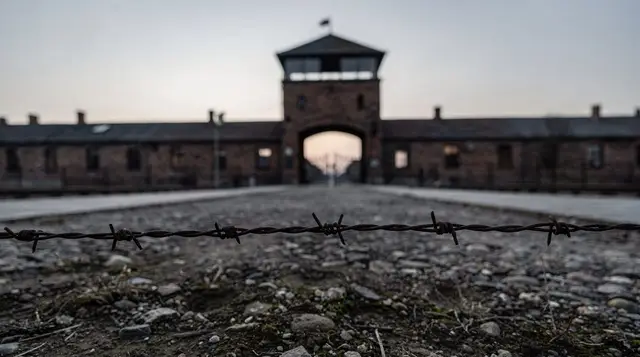
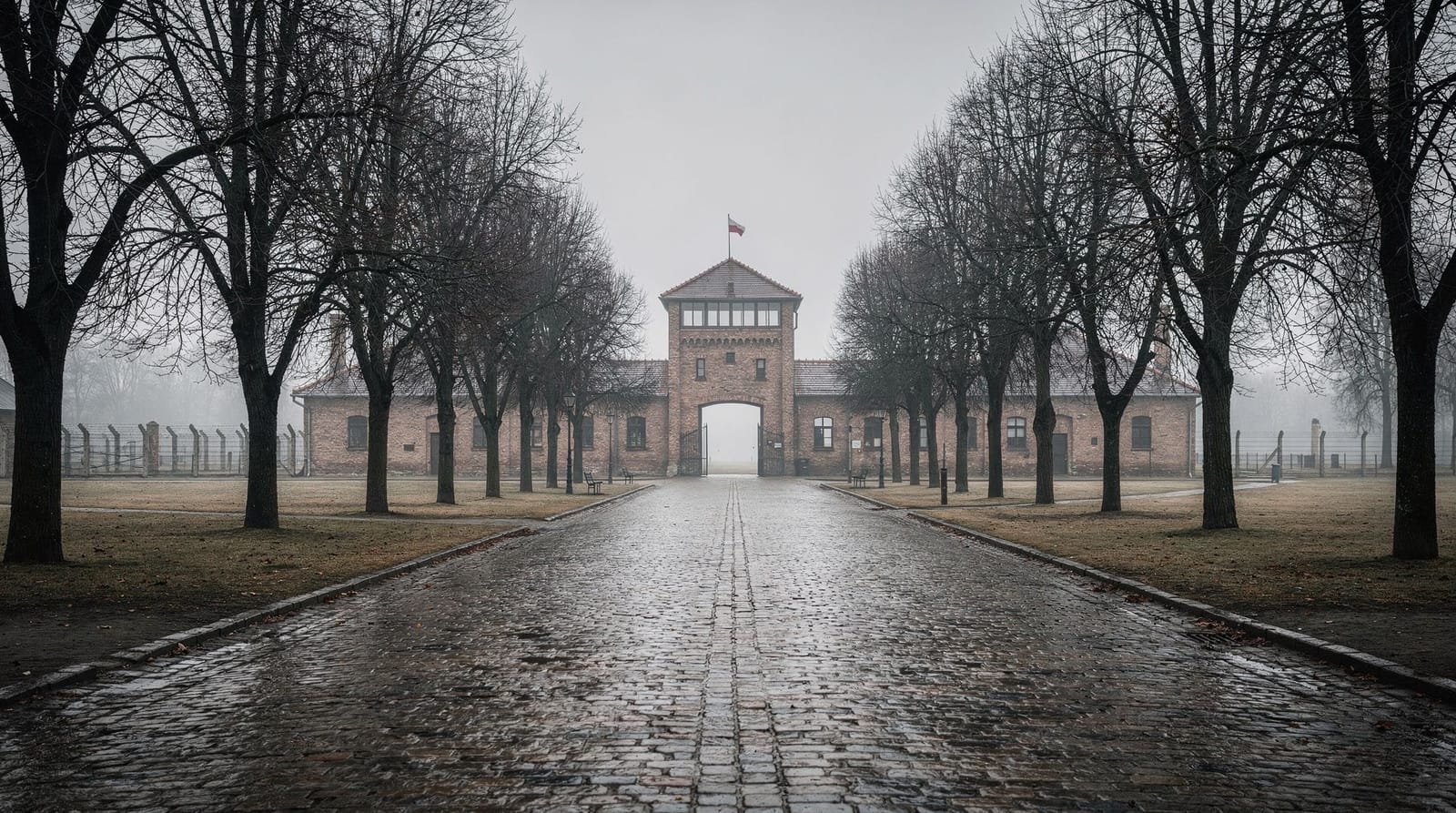
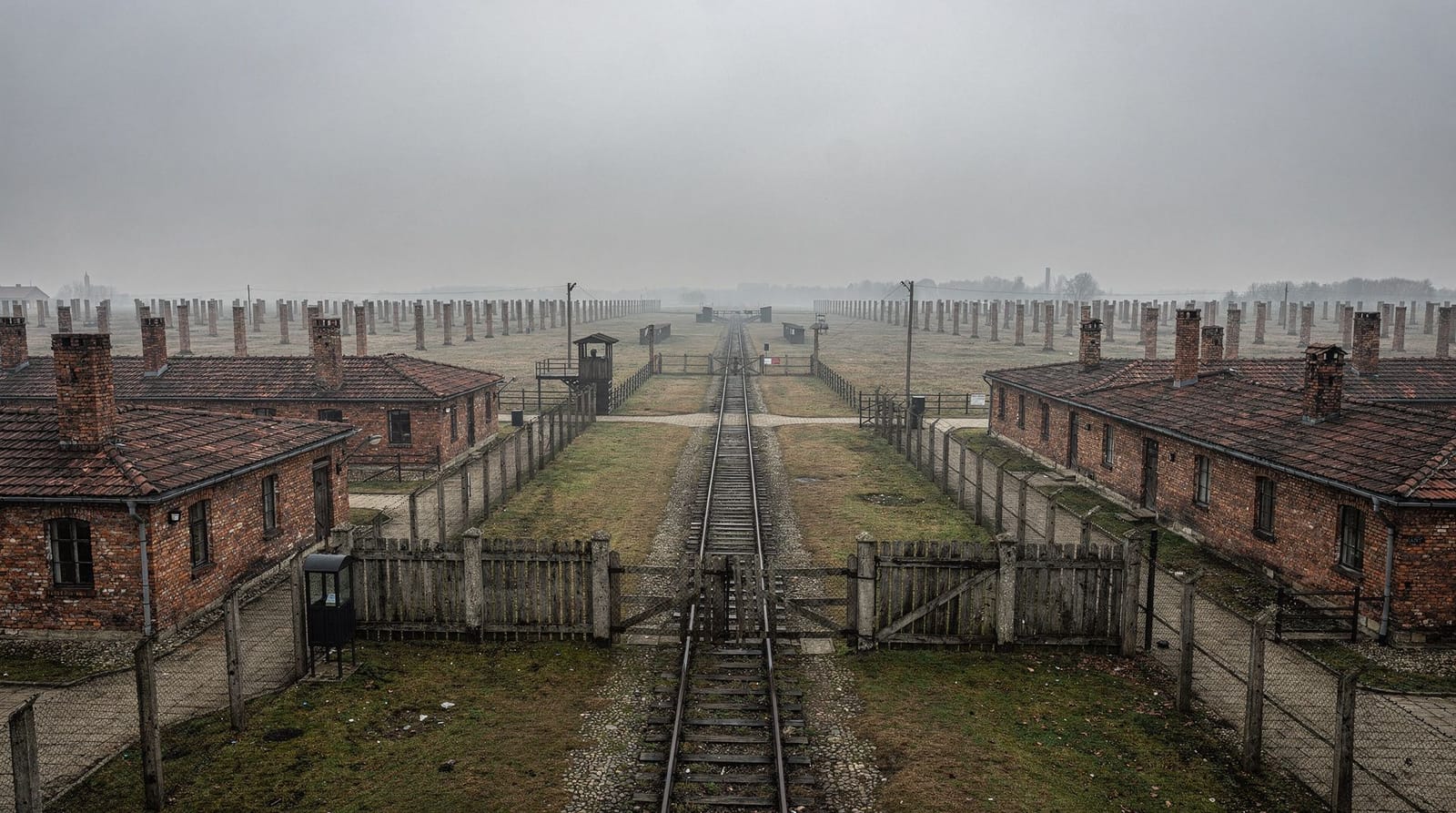
Auschwitz II-Birkenau is 3 km from Auschwitz I. This is the extermination camp built in 1941–42 — the one with the iconic watchtower and railway tracks leading to the ruins of the crematoria. The scale here is overwhelming: the camp covers 170 hectares, and the remaining barracks and ruins stretch to the horizon. This site has less interpretive infrastructure than Auschwitz I; the openness is itself part of the testimony.
Both sites are part of the Auschwitz-Birkenau State Museum and UNESCO World Heritage Site.
Booking: the one non-negotiable
The single most important practical step is to book in advance. During peak season (April–October), particularly on weekends and in summer, timed-entry slots with licensed guides are fully booked 2–4 weeks ahead or longer. Showing up without a booking in July or August means a very high chance of not being admitted during the main visiting hours.
How to book legitimately:
- Via the official Memorial website: visit.auschwitz.org (study tours, educational visits, individual timed entries)
- Via a licensed operator from Kraków who has pre-booked a guided slot — these operators have confirmed arrangements with the Memorial and their guides are Museum-licensed
The Unofficial Auschwitz tours warning: why street operators are a problem guide explains why the alternative — booking via street touts or unlicensed sellers near the station — is not just financially risky but practically and ethically problematic.
Choosing a guide: what matters
The quality of your visit to Auschwitz depends significantly on your guide. This is a site where having someone who understands both the historical facts and the weight of what those facts represent makes an enormous difference.
What a good guide does:
- Explains the historical sequence calmly and factually — the progression from discrimination to deportation to industrialised murder
- Identifies specific victims where individual testimonies are available, treating the statistics as made up of individual human lives
- Allows space for silence at key points — particularly at the death wall, inside the gas chamber, and at the ruins of the crematoria at Birkenau
- Answers questions thoughtfully without sensationalising
- Manages group behaviour — gently redirecting inappropriate photography or conversation
Red flags in guide selection:
- A guide who treats the visit as a story to be “told entertainingly”
- A guide who races through exhibitions to meet a schedule
- An operator who cannot confirm their guide is Museum-licensed
- Anyone who uses language like “the most shocking thing you will see today” or positions suffering as spectacle
The guided Auschwitz-Birkenau tour with hotel pickup uses licensed guides and includes both sites with transport. The official Auschwitz-Birkenau tour with hotel pickup offers an alternative reputable operator. If you prefer a full-day paced visit, the full-day guided tour from Kraków allocates more time at both sites.
How long to allow
A visit that covers both Auschwitz I and Auschwitz II-Birkenau properly requires at least 3.5–4 hours on site, not counting travel time. Many visitors spend 5–6 hours. Rushed visits — 90 minutes at Auschwitz I, nothing at Birkenau — are common among those who did not plan their time, and they leave without the part of the site that most clearly communicates the scale of the genocide.
Practical timeline from Kraków:
- Transport: 1 hour 15 minutes each way by organised tour transport
- Auschwitz I: 90–120 minutes minimum with guide
- Auschwitz II-Birkenau: 60–90 minutes minimum
- Total day: 6–7 hours, including travel
Plan to travel from Auschwitz-Birkenau and return to Kraków by late afternoon if possible. Evening visits in summer (the Memorial is open until 19:00 from June to August) are sometimes less crowded and can be meaningful for those who prefer quieter conditions.
Behaviour on site
The Memorial has published guidelines for visitor behaviour. These are not bureaucratic rules; they reflect what respect for the site means in practice.
Expected behaviour:
- Dress modestly. There is no formal dress code, but very short shorts or clothing with slogans is inappropriate.
- Speak quietly. The group areas — particularly inside the exhibition blocks and at the ruins of the crematoria — should be approached with quiet and attention.
- Photography is permitted in most areas but not inside the gas chamber at Auschwitz I or in areas specifically marked. The question to ask yourself before photographing anything is: would this image constitute testimony, or would it be a memento?
- Do not eat on site. There are cafeteria facilities in the visitor centre before or after your visit.
- Do not remove anything. Taking a stone, a piece of brick, or any material from the site is both prohibited and deeply wrong.
What to avoid:
- Selfies in front of the gatehouse inscription, at the ruins of the crematoria, or with the railway tracks as a scenic backdrop. This is the most commonly cited behaviour that other visitors and Memorial staff find distressing. A photograph of the site itself is appropriate; a photograph of yourself smiling at a site of mass murder is not.
- Theatrical expressions of emotion. This is a place for genuine response, not performative grief.
- Treating exhibits as attractions. The hair, the shoes, the personal belongings behind glass are evidence, not displays.
What to bring and not to bring
Bring:
- Water (the visit is long and Poland in summer can be warm)
- Comfortable shoes (both sites involve significant walking on uneven ground — Birkenau in particular involves muddy paths between barracks)
- A light jacket even in summer (the brick buildings of Auschwitz I are cool)
- Something to eat for after (not on site)
Do not bring:
- Large bags (lockers are available but queues form)
- Food for on-site consumption
- Children under 14 without careful preparation. The Memorial does not prohibit young children, but the documentation on display — particularly the photographs and the physical evidence of mass murder — is genuinely disturbing. Parents should consider whether their child is ready for this experience.
Preparing mentally
Auschwitz is not like other historical sites. The scale of the crime, the explicitness of the evidence, and the fact that survivors are still alive (though increasingly elderly) gives the site a weight that many visitors are not fully prepared for.
Some practical preparation:
- Read something beforehand. Primo Levi’s If This Is a Man (published in English as Survival in Auschwitz) remains the most important first-person account. Elie Wiesel’s Night is shorter and equally essential. The Memorial’s own website has historical summaries.
- Know what you will see. The exhibition in Block 4 includes photographs of arrivals and selections. Block 5 contains the physical evidence — the hair, the shoes, the canisters. Understanding in advance that you will encounter these helps you approach them with appropriate attention.
- Give yourself recovery time. Many visitors find they need a quiet hour after the visit. Plan for dinner somewhere calm in Kraków rather than heading immediately to the next tourist site.
Specific situations visitors often find difficult
The gas chamber at Auschwitz I: This is the original gas chamber and crematorium, partially destroyed by the SS before liberation and subsequently restored. It is a small building that visitors enter and move through. The space is confined and the context is explicit. Many visitors find this the most emotionally difficult part of the visit. There is no requirement to enter; some people choose to stand outside. Allow time for whatever response arises.
Block 4 — the exhibition on extermination: This block contains photographic documentation of the arrival process at Auschwitz-Birkenau: the trains, the selection on the platform, the separation of families. The photographs were taken by SS personnel and by the Sonderkommando (the prisoner units forced to work in the crematoria). The images are not graphic in the gore-and-violence sense, but they are deeply disturbing because they document the last hours of people’s lives. Walk slowly.
Block 5 — the evidence: This block contains the physical evidence that was found at liberation: 3,800 kg of human hair, 80,000 shoes, suitcases with names painted on them, prosthetic limbs, children’s clothing. These items are behind glass. Looking at them carefully — particularly the names on the suitcases — is one of the most important things you can do in this building. It is not comfortable, and it should not be.
Block 11 — the death block: The punishment block where executions took place, including the execution wall in the courtyard. The basement cells where prisoners were held in standing-only conditions are accessible. This block requires particular quiet.
Birkenau (Auschwitz II) — the ruins of the crematoria: In January 1945, the SS destroyed the four large crematorium-gas chamber complexes at Birkenau before retreating. The ruins remain in place — partly as historical evidence and partly as the Memorial’s deliberate decision to preserve the site as found. Standing at the ruins of Crematorium II or IV at the far end of the main camp road is one of the most significant experiences the site offers. Allow time here; most tour schedules rush it.
Working with your guide during the visit
A good guide is not a lecturer who delivers a pre-packaged narrative. They are a mediator between you and the site. Practical things to do with your guide:
- Ask questions — including difficult ones about what the Museum does not know or cannot verify
- Tell them if you need to slow down, take a moment, or step outside for air
- After you have seen the exhibition, ask: “What do you think is the most important thing for visitors to leave with?”
- If the guide is moving too fast, it is appropriate to say so. Licensed guides are trained to adjust pace for their group.
After the visit: what to do with the experience
Many visitors return to Kraków from Auschwitz in a state of emotional heaviness that they did not anticipate. This is appropriate. A few suggestions for the remainder of the day:
Eat something ordinary: A simple lunch or coffee in a quiet cafe. The milk bars in Kazimierz (Bar Mleczny u Babci Maliny, ul. Szewska 8, or others) are good for this — unpretentious, local, and calming in their ordinariness.
Give yourself time before moving to the next activity: Do not schedule a walking tour immediately after your return from Auschwitz. An evening walk in Kazimierz or along the Vistula is more appropriate than an afternoon of museum-hopping.
Speak with someone about what you saw: The experience is processed better in conversation than in isolation. If you are travelling alone, writing notes that evening is an alternative.
Consider what action you take forward: The most common question survivors and educators ask of visitors is: “Now that you know, what will you do?” The educational purpose of the Memorial is partly answered by how visitors subsequently speak about what they saw.
Don’t feel obligated to “move on” quickly: Some visitors want to talk about the visit that evening; others need a day or two of quiet reflection before they can put it into words. Both are normal responses. If you’re travelling with others, check in with each other rather than assuming everyone processes the day the same way — a visit this heavy can affect people very differently even within the same group.
Visiting with a private guide versus a group tour
There are meaningful differences between the two formats:
Group tour (typically 10–25 visitors): Efficient use of time; a shared experience; the guide adapts to the group’s pace and questions. The risk is that the group dynamic can feel rushed or that individual questions are suppressed. Most visitors book group tours and have good experiences.
Private guide: A licensed guide works solely with your group (family, small group of friends). You set the pace entirely; the guide tailors the narrative to your backgrounds and questions; you can linger at sites that affect your group most. Private tours cost significantly more per person but offer qualitatively different access to the experience.
Self-guided (individual timed entry): Available for early-morning visits and in low season. You move at your own pace with an audio guide or site map. This works well for visitors who have strong pre-existing knowledge of the history and want to spend time at specific sites rather than covering the standard circuit. It is not recommended as a first visit format for most people.
For full logistics on all three formats, see Auschwitz from Kraków: complete planning guide.
The ethical question of the visit itself
It is worth acknowledging that visiting Auschwitz raises a genuine ethical question: is mass tourism to a site of genocide appropriate? The Memorial’s position — and the position of most Holocaust scholars — is that informed, respectful visits are part of the site’s purpose as a place of education and remembrance. The alternative (closing the site to tourism) would remove the living testimony that millions of people carry away each year.
This does not resolve the tension between education and spectacle, but it establishes that visiting, done thoughtfully, is the right thing to do.
The Memorial itself is maintained by the Auschwitz-Birkenau Foundation, which accepts donations. Entry to the Memorial is free (guided tours with licensed guides have a fee; the guide fee goes to the guide’s operator, not to the Memorial). Supporting the Foundation separately is one way to contribute to the preservation work.
Getting there from Kraków
The Auschwitz-Birkenau page covers the logistics in detail. From Kraków’s centre, the Memorial is approximately 70 km / 1 hour 15 minutes by organised transport. The easiest option for most visitors is an organised tour that handles transport, timed entry, and licensed guiding in one booking.
See also Unofficial Auschwitz tours warning: why street operators are a problem for information on what to avoid when booking, and Auschwitz from Kraków: complete planning guide for the full logistics guide.
Understanding the history before you go
A respectful visit is easier when you arrive with at least a basic grasp of the site’s history rather than encountering everything for the first time in front of the exhibits. The Auschwitz-Birkenau history guide covers the camp’s construction, its role in the Holocaust, and its liberation in more depth than fits in this ethics-focused guide — read it alongside this one if you have time before your visit.
Auschwitz in the context of responsible travel in Kraków
Visiting Auschwitz thoughtfully is part of a broader question about how tourism interacts with a city carrying this much history. The Kraków overtourism and responsible travel guide covers this more generally — how to be a considerate visitor across the city, not only at the Memorial. The same principle that applies at Auschwitz (slow down, pay attention, don’t treat gravity as spectacle) extends to how you move through Kazimierz’s former Jewish quarter and other sites with difficult histories.
Unfortunately, sites with high emotional stakes also attract bad actors looking to profit from rushed decisions. The Kraków scams guide and Kraków tourist traps to avoid guide cover the wider pattern of pressure tactics and inflated pricing that visitors encounter around the city, beyond just Auschwitz tour touts.
Frequently asked questions about visiting Auschwitz with respect
Is it disrespectful to visit Auschwitz as a tourist?
The Memorial was established specifically to ensure that what happened there is not forgotten. Visiting — with preparation, attention, and appropriate behaviour — is an act of bearing witness, not an act of tourism in the entertainment sense. What would be disrespectful is visiting without care: treating the exhibition as a theme park, photographing suffering as spectacle, or arriving without any understanding of what the site represents.
Can I visit Auschwitz without a guide?
Individual timed-entry without a licensed guide is available primarily in the early morning (before 10:00) and in the lower-season months (November–March). In peak season, most time slots require a licensed guide. Self-guided visits with an audio guide are also available but provide less depth than a live licensed guide. See Auschwitz from Kraków: complete planning guide for the booking logistics.
How should I explain Auschwitz to children who are old enough to visit?
Be honest and use age-appropriate language. Explain that this was a place where a government decided to kill people because of their religion and background, and that the world decided this must never be forgotten. The Memorial has educational materials designed for younger visitors. The most important preparation is ensuring children know what they will see — the photographs and physical evidence are disturbing, and encountering them without context is harder than encountering them with it.
What is the difference between visiting as part of a tour group versus independently?
An organised tour from Kraków handles transport, timed entry, and guiding. An independent visit means booking your own timed entry via visit.auschwitz.org, arranging transport (bus or train to Oświęcim, then a local bus or taxi to the Memorial), and either joining an on-site guided tour or visiting on an individual entry slot. Both are legitimate. The organised tour is easier to arrange and more reliable; independent visits give more flexibility over timing.
Are there things I should not photograph at Auschwitz?
Photography is not permitted inside the gas chamber at Auschwitz I, and some rooms in the exhibition blocks are marked. Beyond the formal rules, the broader ethical question is what constitutes appropriate documentation versus inappropriate appropriation of suffering. Photographs of the architecture, the railway tracks, the barracks — as historical documentation — are appropriate. Selfies with sites of death as backdrop are not.
Should I visit Auschwitz on the same day as something lighter, like Wieliczka Salt Mine?
Think carefully before combining them. Some licensed operators run combined day tours, and logistically it works, but many visitors find the emotional whiplash between the two sites uncomfortable. If you have the days available, giving Auschwitz its own day — with time afterward to process rather than rushing to another attraction — tends to produce a more meaningful visit.
How do I know if my guide is actually licensed?
Ask directly, and book through an operator that states this clearly rather than vaguely. Licensed guides carry Memorial-issued identification that can be checked at the entrance. The unofficial Auschwitz tours warning guide covers the specific signs of a legitimate versus problematic operator in detail.
Top experiences
Bookable activities with verified prices and instant confirmation on GetYourGuide.