Auschwitz group vs private tour: which format fits your visit?
Auschwitz-Birkenau: private tour from Krakow
Duration: 6h
Should I book a group or private tour to Auschwitz?
Group tours (up to 30 people) are the most affordable option and work well for most visitors. Private tours cost significantly more but offer a licensed guide entirely to yourself and your party, your own pace, and flexible timing. Small-group tours (10–15 people) are a strong middle ground at moderate cost.
Why format matters at this particular site
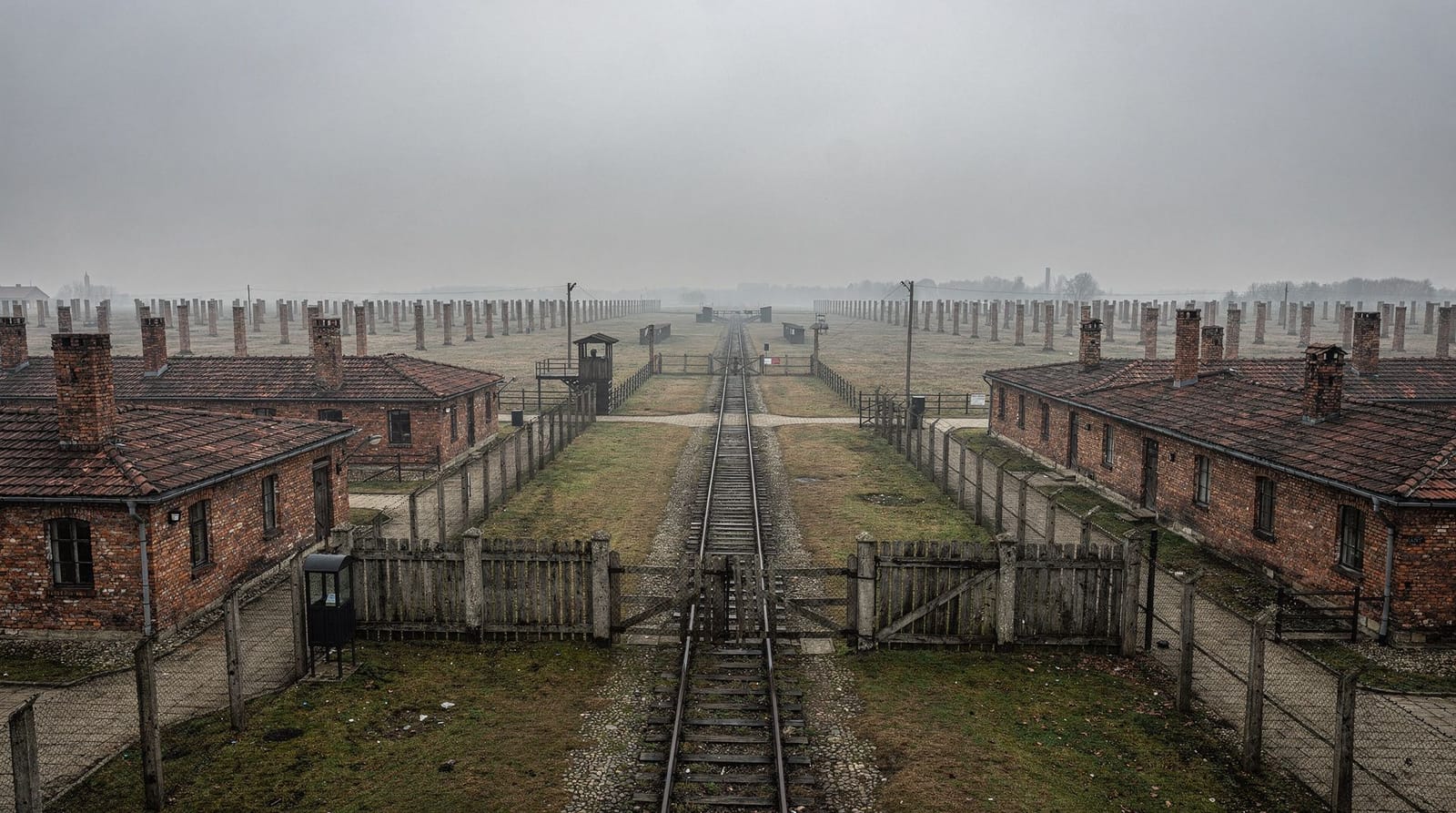
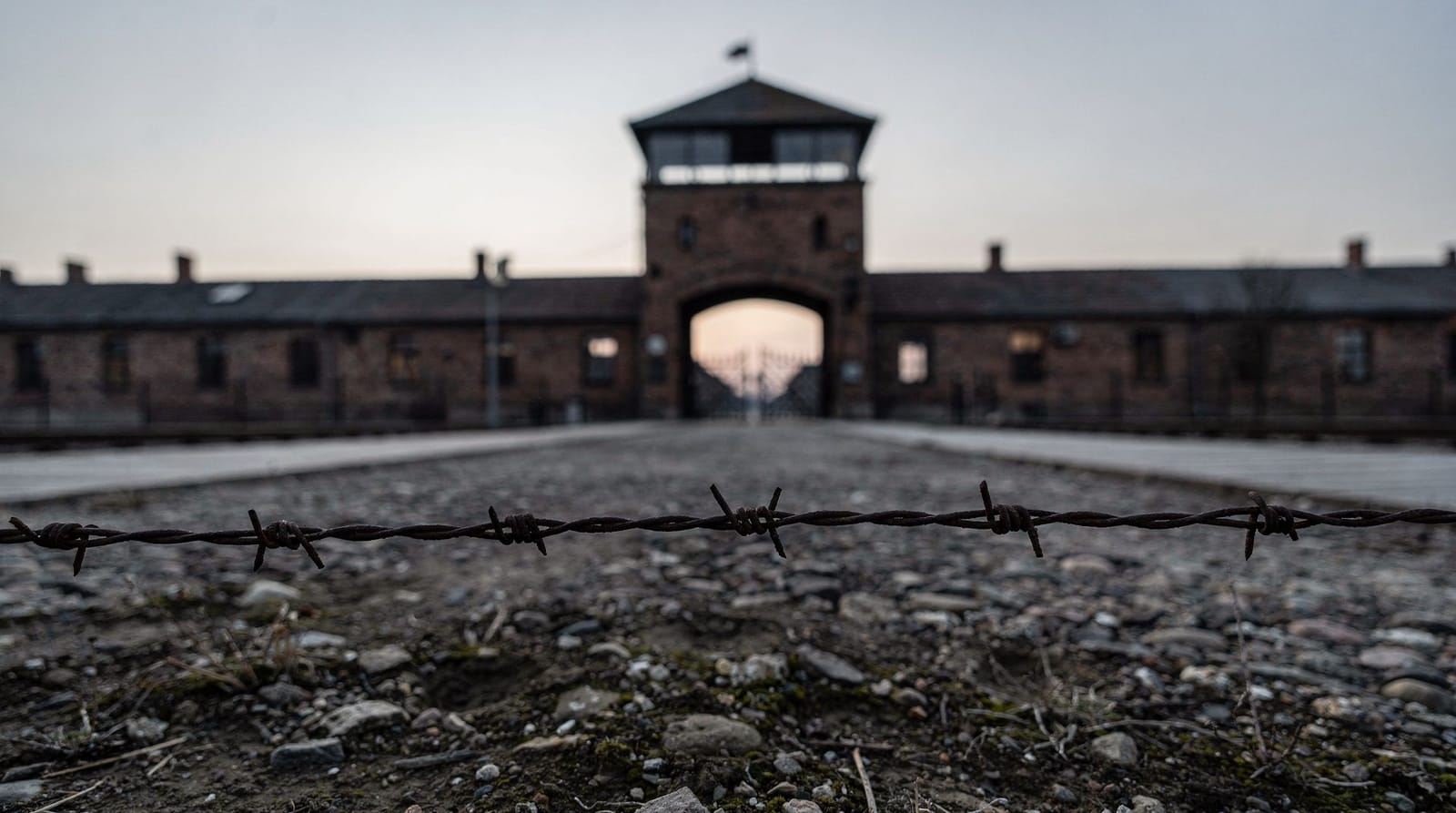
Auschwitz-Birkenau is not just a historical site — it is a place of immense grief, and the format of your visit shapes how you experience it. A group of 30 strangers moving through the exhibition blocks at a prescribed pace feels very different from a private guide walking slowly alongside your family, answering your specific questions, and pausing where you need to pause.
This guide breaks down the three formats available — standard group, small-group, and private — with honest assessments of what each delivers and who each suits.
| Where | Oświęcim, around 70 km / 1.5hrs west of Kraków |
| Cost | around 130–180 PLN group, 180–250 PLN small-group, 350–600 PLN private |
| Time needed | full day — around 3.5 hours on site plus travel |
| Getting there | included transport with all guided formats |
| Best time | book 2–4 weeks ahead; longer in peak season |
The three formats compared
| Factor | Standard group (up to 30) | Small group (10–15) | Private tour |
|---|---|---|---|
| Typical group size | 20–30 visitors | 10–15 visitors | Your party only |
| Guide | Licensed (shared) | Licensed (shared) | Licensed (dedicated) |
| Transport included | Yes (from Kraków) | Yes (from Kraków) | Yes (often private vehicle) |
| Flexibility on pace | Low | Moderate | Full |
| Q&A opportunities | Limited | Good | Excellent |
| Price per person (approx.) | 130–180 PLN (€31–43) | 180–250 PLN (€43–60) | 350–600 PLN (€83–143) |
| Booking lead time needed | 1–3 weeks | 2–4 weeks | 2–4 weeks |
| Best for | Solo travellers, budget-conscious, first visits | Couples, small friend groups | Families with children, specialists, emotionally sensitive visitors |
Standard group tours
Standard group tours from Kraków are the most popular choice and work well for the majority of visitors. A licensed guide leads a group of up to 30 through both Auschwitz I and Auschwitz II-Birkenau over approximately 3.5 hours. Transport is typically by air-conditioned minibus or coach from a central Kraków pickup point or your hotel.
The guided Auschwitz-Birkenau tour with hotel pickup represents this format at its most convenient — door-to-door service, licensed English-speaking guide, both camps covered.
What works well in a group
The guided narrative structure is strong. Licensed Auschwitz guides are trained specifically for this site and deliver information in a way that is respectful, accurate, and calibrated to a general audience. For visitors without deep prior knowledge, the group tour provides the foundational understanding that makes the experience meaningful.
There is also something quietly appropriate about experiencing the memorial alongside others. Auschwitz is not a site most people want to navigate in isolation — being part of a small community of visitors can be emotionally grounding.
What to be aware of
In peak season, 30 people moving through relatively narrow exhibition corridors creates a congested experience. You may feel rushed past exhibitions you want to linger on. Questions during the tour can be awkward in a large group — many visitors hold back rather than ask. The group moves at an average pace, which may be too fast for some and too slow for others.
Small-group tours (the middle ground)
Small-group tours, capped at 10–15 visitors, genuinely improve the experience over standard groups without the full cost of a private tour. The difference in dynamic is significant: asking questions feels natural, the guide can notice individual reactions and adjust their narrative, and the group does not crowd individual exhibition rooms.
The Auschwitz-Birkenau tour limited to 15 visitors is consistently among the highest-rated options on GetYourGuide for this reason. The additional cost over a standard group tour (typically 50–70 PLN/€12–17 more per person) is, for many visitors, straightforwardly worth it.
Small-group is the recommended format for:
- Couples and friend pairs who want a more personal experience
- Visitors who know they will want to ask questions
- Those who find crowded spaces difficult
- Visitors who have done background reading and want a guide who can engage at a deeper level
Private tours
A private tour means a licensed guide is dedicated entirely to your party. The guide adapts the narrative to your specific interests, background, and pace. If you want to spend 20 minutes at a particular photograph in one of the Block exhibitions, you can. If you have family connection to the history, the guide can focus time accordingly. If your party includes teenagers processing difficult information, the guide can calibrate their presentation.
Auschwitz-Birkenau private tour from Kraków covers both camps with a dedicated licensed guide and private transport — the most comprehensive format available.
When private makes sense
Families with children or teenagers. A private guide manages difficult questions from young people much more effectively than a group setting. The guide can also adjust the depth of detail based on ages present.
Visitors with personal or family connection to the history. If your family’s history is connected to Auschwitz — as is the case for many Jewish visitors from around the world — a private guide allows a far more personal and focused experience.
Academic or specialist visitors. Researchers, teachers, and others who want to engage at depth with specific aspects of the site’s history can direct the guide’s narrative accordingly.
Emotionally sensitive visitors. The ability to pace your own visit and step outside if needed without disrupting a group is a genuine practical benefit for visitors who anticipate finding the experience very difficult.
The honest cost reality
Private tours cost approximately 3–5 times as much as standard group tours per person. For a couple, this may be 700–1,200 PLN (€167–286) total versus 260–360 PLN (€62–86) for two on a standard group tour. The additional cost is significant. If budget matters and you do not have specific reasons for wanting privacy, the small-group option at intermediate cost is the rational middle ground.
Practical details
Getting to Auschwitz from Kraków
Auschwitz is approximately 70 km west of Kraków via the A4 motorway. All guided tours from Kraków include transport — this is one of the conveniences of booking through an operator rather than making your own way.
Independent transport options: train from Kraków Główny to Oświęcim (~1.5 hours; check current fares on the Koleje Małopolskie website), then local bus or taxi the 2 km to the memorial. This is cost-effective but adds logistical complexity.
Entry and booking for guided tours
Licensed tour operators hold reserved entry allocations, which is a major advantage in peak season when free entry cards at visit.auschwitz.org sell out months in advance. When you book a guided tour through GYG, entry is typically handled by the operator.
For independent visitors taking the self-guided approach: book a free entry card at visit.auschwitz.org as far in advance as possible. June–August slots fill months ahead. Without a guide-educator, entry is only possible in the afternoon (from 17:00 in April–September; earlier in other months).
Duration
Standard tours at the memorial last approximately 3.5 hours covering both Auschwitz I and Birkenau. Private tours can run shorter or longer based on your preference — many serious visitors spend 5–6 hours.
Dress and conduct
Dress respectfully. Keep voices low. Photography in most outdoor areas and some exhibitions is permitted; signs indicate where it is prohibited. No selfie sticks. The Auschwitz Memorial’s Code of Conduct is available at visit.auschwitz.org.
For historical background and preparation, see Auschwitz-Birkenau history and our Auschwitz from Kraków guide.
Making the decision: a simple framework
- Solo budget traveller: standard group tour
- Couple wanting a quality experience: small-group tour
- Family with children over 14: private tour (worth the cost for flexibility)
- Researcher or specialist: private tour
- Large friend group (6+): private tour becomes cost-competitive per person
- Return visitor: consider self-guided (see guided vs self-guided comparison)
What a licensed Auschwitz guide actually does
All guides working at the Auschwitz-Birkenau Memorial must be licensed by the museum. The licensing process involves specialised training in the site’s history, the mechanics of the Holocaust, and the ethical dimensions of memorial education. This is not a standard tourism licence — it is site-specific.
A good Auschwitz guide does several things simultaneously. They provide historical context that clarifies what you are looking at — which buildings served which function, the chronology of the camp’s expansion, the different categories of victims and how their experiences differed. They use individual testimony to connect the statistics to human reality. They manage the emotional pacing of the visit — creating space for quiet when groups need it, answering questions thoughtfully, and navigating moments when visitors are visibly overwhelmed.
The difference between a good and an average guide is noticeable at a site like this. If you are booking a private tour specifically for the quality of interpretation rather than just the convenience, ask the tour operator who your guide will be and check reviews of that specific guide if possible.
Comparing specific tour options in detail
Standard group tour: the full-day guided experience
The most common format. Tours from Kraków depart around 8–10 am, arrive at the memorial by 10 am, complete guided visits to Auschwitz I and Birkenau over 3–3.5 hours, and return to Kraków by mid-to-late afternoon.
The guided Auschwitz tour with hotel pickup handles transport, timed entry, and a licensed guide in a single booking. The group typically numbers 20–30; English is the standard language, though many operators offer multiple language options.
What makes standard group tours work: the guide sets a structured narrative through both sites, which prevents the disorientation many visitors experience when trying to navigate independently. Birkenau particularly — 175 hectares with limited signage on many paths — benefits from guided navigation.
Small-group tour: the recommended middle ground
The Auschwitz tour limited to 15 visitors is consistently rated the best balance of quality and cost. In a group of 15, questions flow naturally during pauses. The guide can read the group and spend more time where it is clearly needed. Outdoor spaces like Birkenau — which can feel overwhelming in their scale — are more manageable with a smaller, more cohesive group.
The premium over a standard group tour is typically 50–80 PLN per person — a meaningful but not prohibitive difference for most visitors.
Private tour: the full-flexibility option
The Auschwitz private tour from Kraków provides a dedicated licensed guide for your party alone, private transport, and the ability to shape the visit around your specific interests. The guide can spend extended time at specific blocks, cover particular exhibitions in depth, or explain the broader context of the camp’s history in relation to your family background or prior knowledge.
Private tours are particularly valuable for visitors with family history connected to Auschwitz. Many Jewish visitors come to Auschwitz as a pilgrimage of sorts — to stand in the place where relatives were murdered, to see the suitcases and the photographs, to say Kaddish. A private tour honours this intention in ways that a group format cannot.
Honest assessment of popular operators
Most Kraków-based tour operators offering Auschwitz excursions are legitimate and use licensed guides. The key variables that determine quality are:
Guide quality: Licensed but variable in depth and communication. Small-group and private bookings give you more opportunity to request an experienced, English-specialist guide.
Transport quality: Minibuses (8–20 seats) versus coaches (30–50 seats). Minibuses are faster and more personal; coaches are less flexible on timing. Standard group tours typically use coaches or large minibuses.
Entry allocation: All legitimate operators have reserved entry allocations for the mandatory timed-entry system. In peak season, this is the primary reason to book through an operator rather than independently.
Avoid: Street tours sold near Rynek Główny with low prices and immediate departure. These sometimes use unlicensed guides and may not have legitimate entry slots. Always book through verifiable operators with GetYourGuide, the memorial’s official partners, or directly through established agencies.
How the timed-entry system works in practice
The mandatory timed-entry system at Auschwitz-Birkenau was introduced to manage the million-plus annual visitors sustainably. Here is how it functions:
Free tickets at visit.auschwitz.org: Available at specific time slots throughout the day. In peak season (June–September), morning slots fill months in advance. Afternoon slots are often more available and also cooler in summer.
Licensed tour operator allocations: Tour operators licensed by the memorial have reserved blocks of entry slots that are not available on the public ticketing system. This is the practical reason why booking through an operator is often the only way to secure a morning entry slot in July or August.
Self-directed visits: according to the Memorial, a visit without a guide-educator is only possible in the afternoon: from 17:00 in April–September, 16:00 in March and October, 15:00 in February, 14:00 in January and November, and 13:00 in December. Earlier entry requires a guided tour. Plan your arrival time based on whether you want flexibility or are joining an organised tour.
After the visit: processing what you have seen
The Auschwitz-Birkenau Memorial can be emotionally exhausting — the weight of what you have seen and heard does not lift immediately on returning to Kraków. Some things that help:
Allow transition time. Build a quiet hour into your schedule after returning from Auschwitz. Walking along the Vistula river, sitting in the Planty gardens, or simply resting at your accommodation before the next activity gives your mind space to process.
Visit Kazimierz the same evening. Many visitors find that an evening in Kazimierz — Kraków’s historic Jewish quarter, now a vibrant neighbourhood of cafes and culture — provides a meaningful counterpoint to the memorial. The living Jewish culture of Kazimierz and the connection to pre-war Polish Jewish life adds a layer of context and humanity.
The museum’s bookshop. The Auschwitz-Birkenau Memorial has an on-site bookshop with serious historical works. Primo Levi’s Survival in Auschwitz and The Drowned and the Saved are the most widely read survivor testimonies. Nikolaus Wachsmann’s KL: A History of the Nazi Concentration Camps is the definitive scholarly overview.
For deeper orientation on the site and its history, see our Auschwitz-Birkenau history guide and full visiting guide.
What guides say visitors ask most
Licensed guides at Auschwitz-Birkenau report that the questions visitors ask most often are not about dates or numbers but about the people: how prisoners survived psychologically, what happened to specific groups after liberation, and whether individual perpetrators faced justice. A good guide — in any format — anticipates these questions and weaves the human element through the historical timeline rather than delivering facts in isolation. This is one of the clearest arguments for a licensed guided visit over a purely self-directed one: the training that goes into answering these questions thoughtfully is not something you can replicate from a guidebook alone.
Cost per person by group size
Private tours are priced per group, not per person, so the economics shift considerably depending on how many people you are travelling with:
| Party size | Private tour (approx. total) | Cost per person | vs. small-group (per person) |
|---|---|---|---|
| 2 people | 700–1,200 PLN | 350–600 PLN | roughly 2–3× more |
| 4 people | 900–1,400 PLN | 225–350 PLN | comparable or cheaper |
| 6+ people | 1,100–1,700 PLN | under 200–280 PLN | often cheaper than small-group |
This is why private tours become genuinely cost-competitive for families or friend groups of four or more — at that point, the flexibility comes at little or no premium over booking several small-group seats.
Seasonal timing and booking lead times
Booking lead times shift with the season, and this matters more for private and small-group formats than standard group tours, since fewer time slots are set aside for smaller parties:
- Peak season (June–August): book private and small-group tours 4–6 weeks ahead; standard group tours 2–3 weeks ahead.
- Shoulder season (April–May, September–October): 2–3 weeks is usually sufficient for any format.
- Winter (November–March): 1–2 weeks’ notice is often enough, and last-minute private bookings are sometimes possible — useful if your plans firm up late.
Preparing for the day, whichever format you choose
Whatever you book, the visit goes better with some preparation. Reading the ethics and respect guide beforehand helps you decide how you want to behave on site, and the background in Kraków under Nazi occupation and the WWII Kraków guide puts the camp in the context of the city you are leaving each morning. A guide in any format can then build on what you already know rather than starting from zero.
Be wary of anything that looks like a bargain at the last minute. Our warning about unofficial Auschwitz tours explains what to look out for, and the wider scams guide covers the other common traps for visitors.
If you are weighing how much of your trip to give to the region’s heavy history, the Auschwitz and Wieliczka same-day guide and the Kraków, Auschwitz and Wieliczka three-day itinerary show how others have organised it. The destination page for Auschwitz-Birkenau gathers the essentials in one place, and the personal reflection from a visitor gives a sense of what the day can feel like. For the rest of your stay, the Jewish heritage trail is a natural companion to the memorial.
Frequently asked questions about group vs private Auschwitz tours
Can I switch from a group to private on the day?
No. Private tours require a dedicated licensed guide and advance booking. You cannot convert a group booking to private at the site. Book in advance.
Are private guides licensed differently from group guides?
All guides working at Auschwitz-Birkenau Memorial must be licensed by the museum. The content they deliver is subject to the same standards regardless of group size. Private guides are not “better” in credential terms — the difference is in time and personal attention, not qualification.
Is a private tour worth it for just two people?
At 350–600 PLN per person, a private tour for two costs 700–1,200 PLN total. A small-group tour for two would cost roughly 360–500 PLN total. The extra 300–700 PLN for privacy and pace control is a personal value judgement. Many couples find the small-group a satisfying compromise. If your visit is particularly meaningful (family history, research, emotional sensitivity), the private option is worth it.
What languages are standard group tours conducted in?
English is the most widely available language. German, French, Spanish, Italian, and other languages are available with advance booking — check the specific tour listing. The guided tour with hotel pickup is typically offered in multiple languages; confirm your language requirement at booking.
Can I choose which exhibitions to visit on a group tour?
On a standard group tour, the route is set by the guide and covers the main exhibitions. On a private tour, you can request specific blocks or areas. If there is a particular exhibition or memorial element you want to prioritise, specify this when booking a private tour.
Does the same group-vs-private logic apply to Wieliczka Salt Mine?
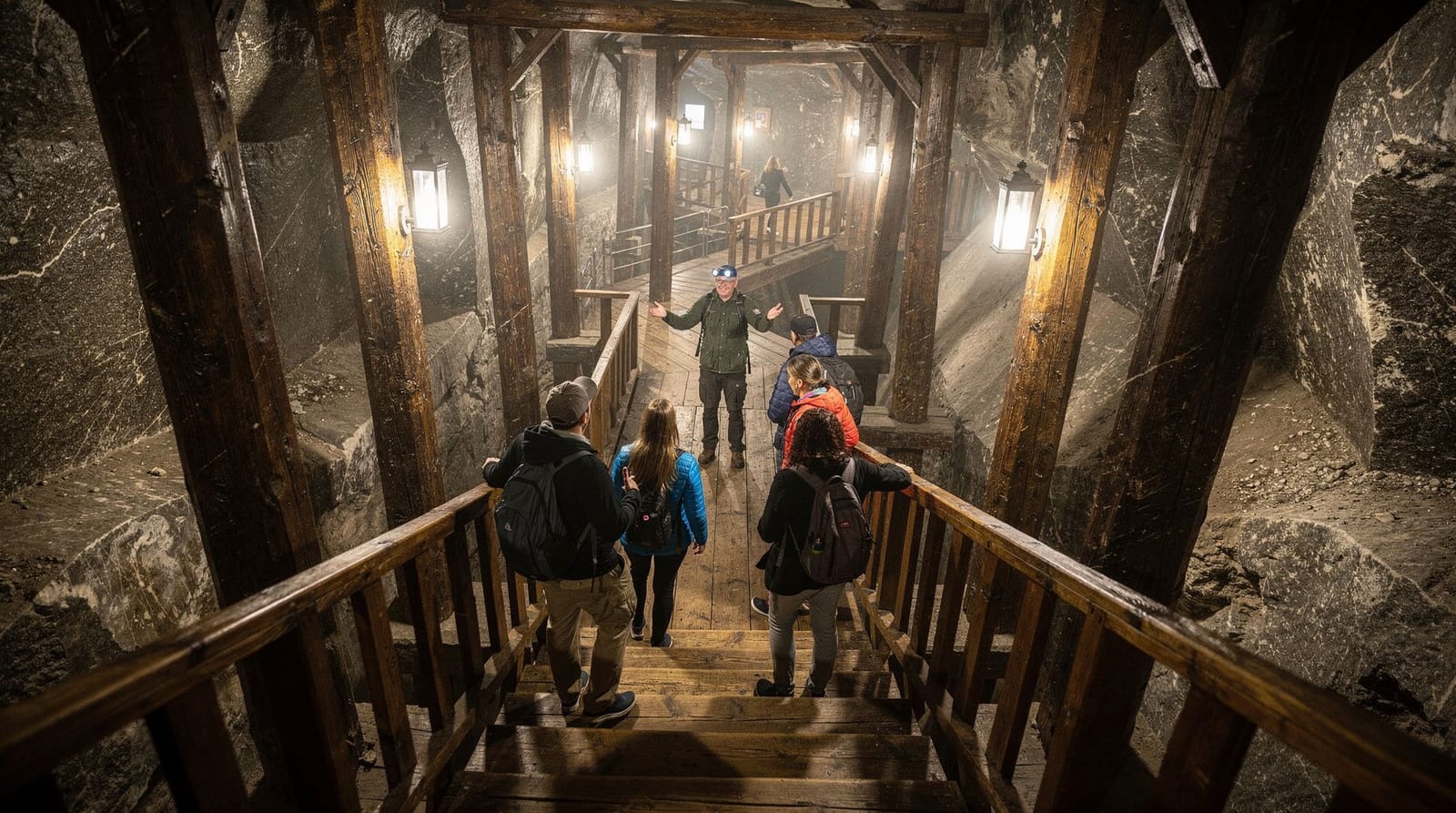
Broadly yes — the Wieliczka tour vs independent guide covers the equivalent decision for that site, though the stakes are lower there since Wieliczka is a less emotionally demanding visit. If you are combining both sites across your trip, it is worth reading both comparisons before booking either.
Top experiences
Bookable activities with verified prices and instant confirmation on GetYourGuide.