Wieliczka Salt Mine tour review: fast-track, small group, or private?
From Krakow: Wieliczka Salt Mine tour & fast-track ticket
Duration: 4h
What makes Wieliczka worth your half-day
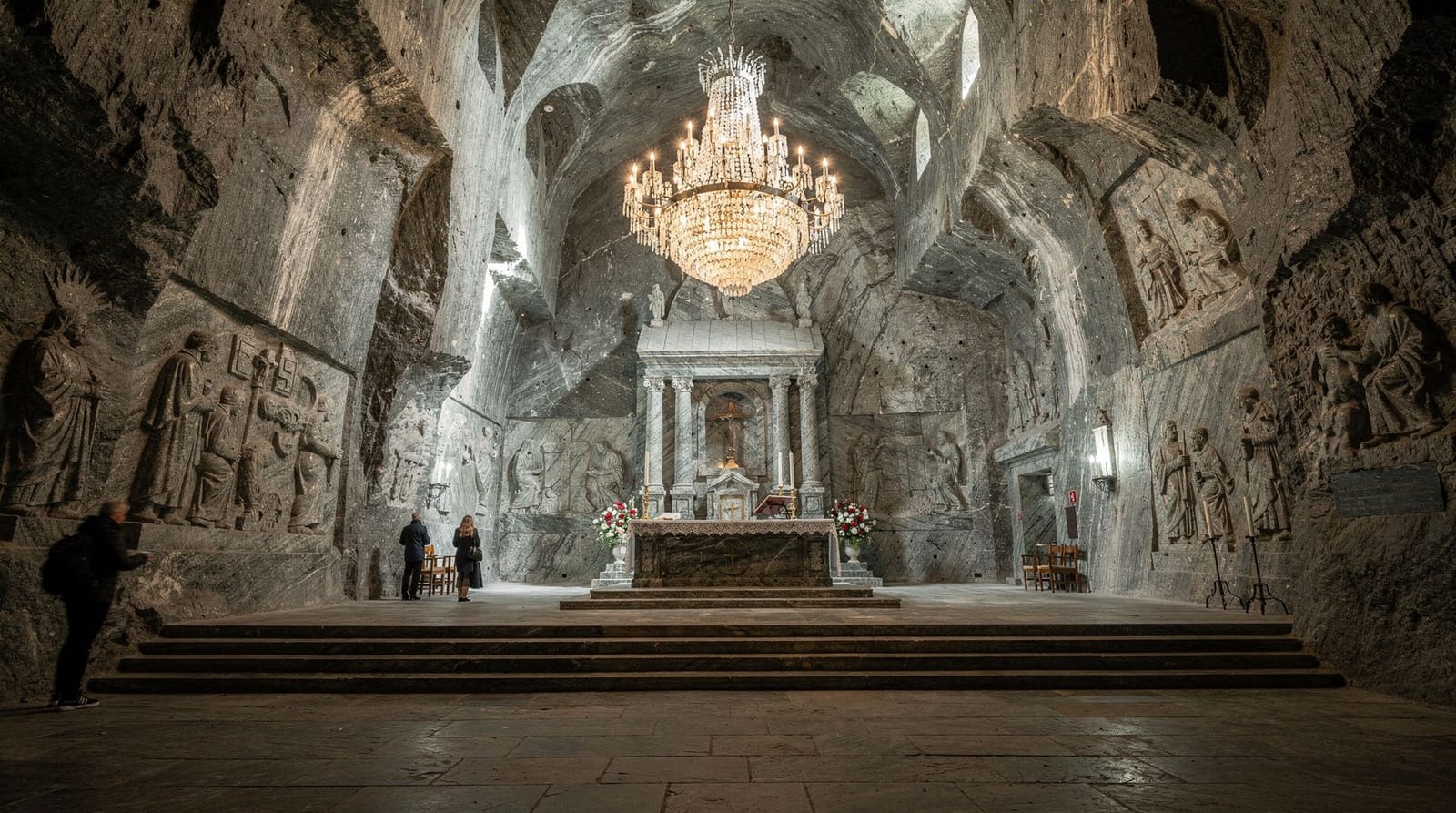
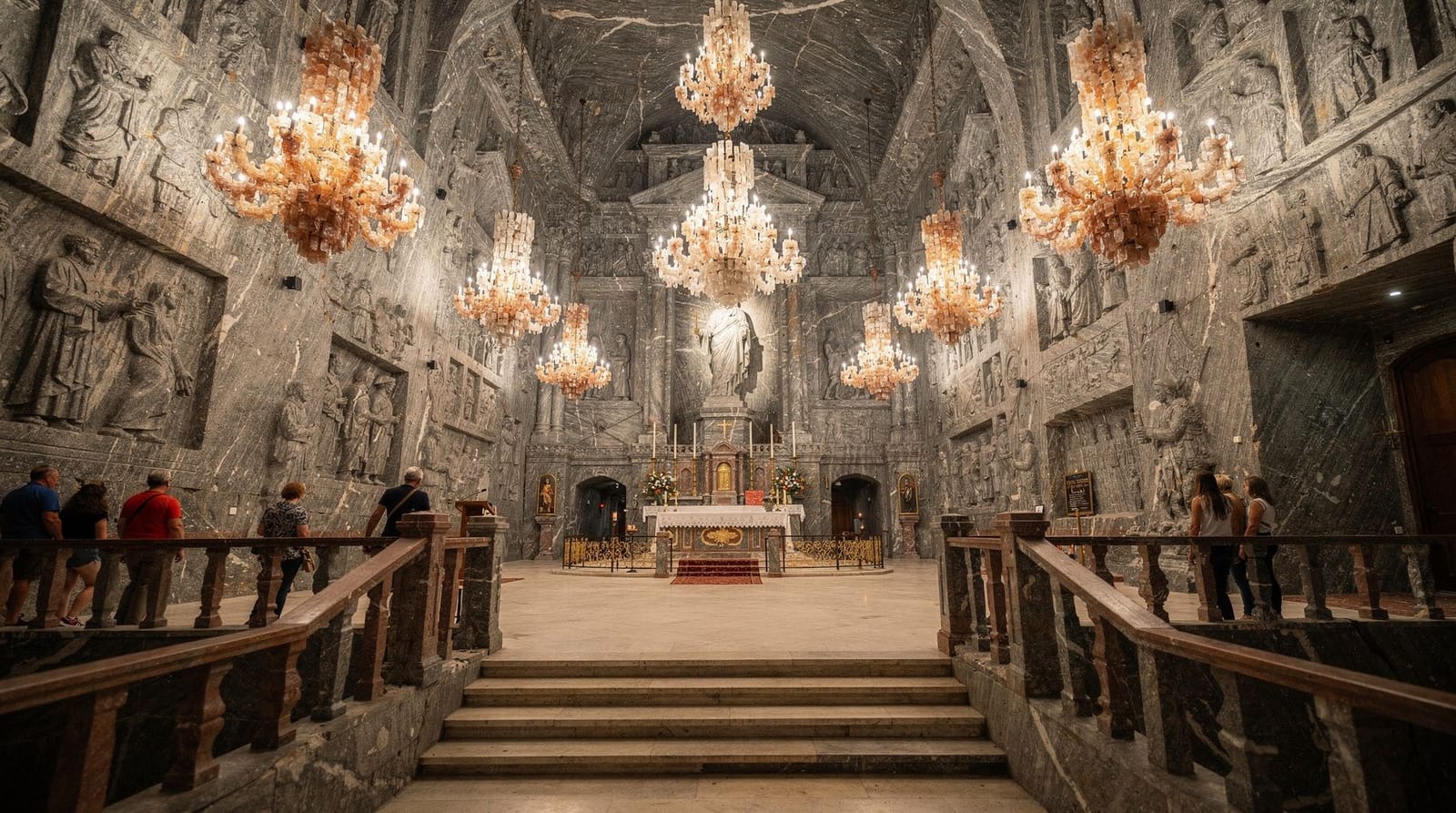
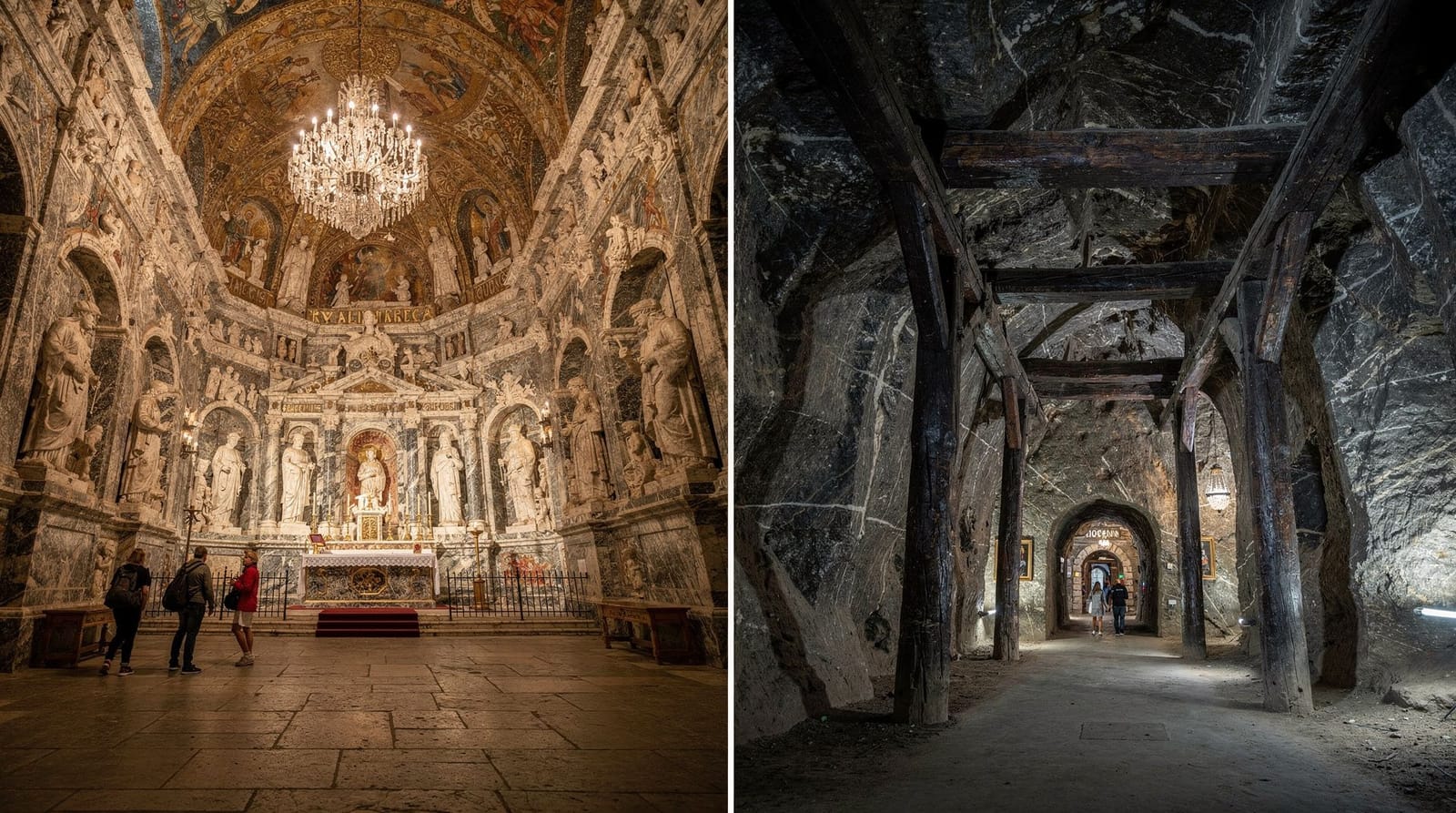
The Wieliczka Salt Mine, a UNESCO World Heritage Site since 1978, is one of the most visited attractions in Poland — and for good reason. Carved across nine levels to a depth of 327 metres, it contains 300 km of galleries, underground chapels carved entirely from salt, and sculptures that miners created over seven centuries. The centrepiece, the Chapel of St. Kinga, is a functioning place of worship roughly 54 metres underground, with chandeliers, altarpieces, and floor reliefs all cut from salt rock.
The mine is 14 km south-east of Kraków and genuinely easy to reach. The question is not whether to visit, but how to structure the visit to avoid the one genuine frustration: queues and sold-out time slots in peak season.
| Where | Wieliczka, 14 km south-east of Kraków |
| Cost | around 140–420 PLN depending on option |
| Time needed | 4–5 hours round trip from central Kraków |
| Getting there | Tram 6 from Kraków Główny, or tour transport included |
| Best time | Morning slots (9 am–1 pm) in summer benefit most from fast-track |
The featured pick: fast-track tour with transport included
The Wieliczka fast-track tour combines pre-booked transport from central Kraków with a priority-entry ticket, meaning you join a guided group that skips the standard walk-up queue at the entrance. In high summer, this is the single biggest practical advantage you can buy.
What’s included:
- Return transport from central Kraków (minibus or coach, ~14 km each way)
- Fast-track entry ticket (pre-booked timed slot bypasses the on-site queue)
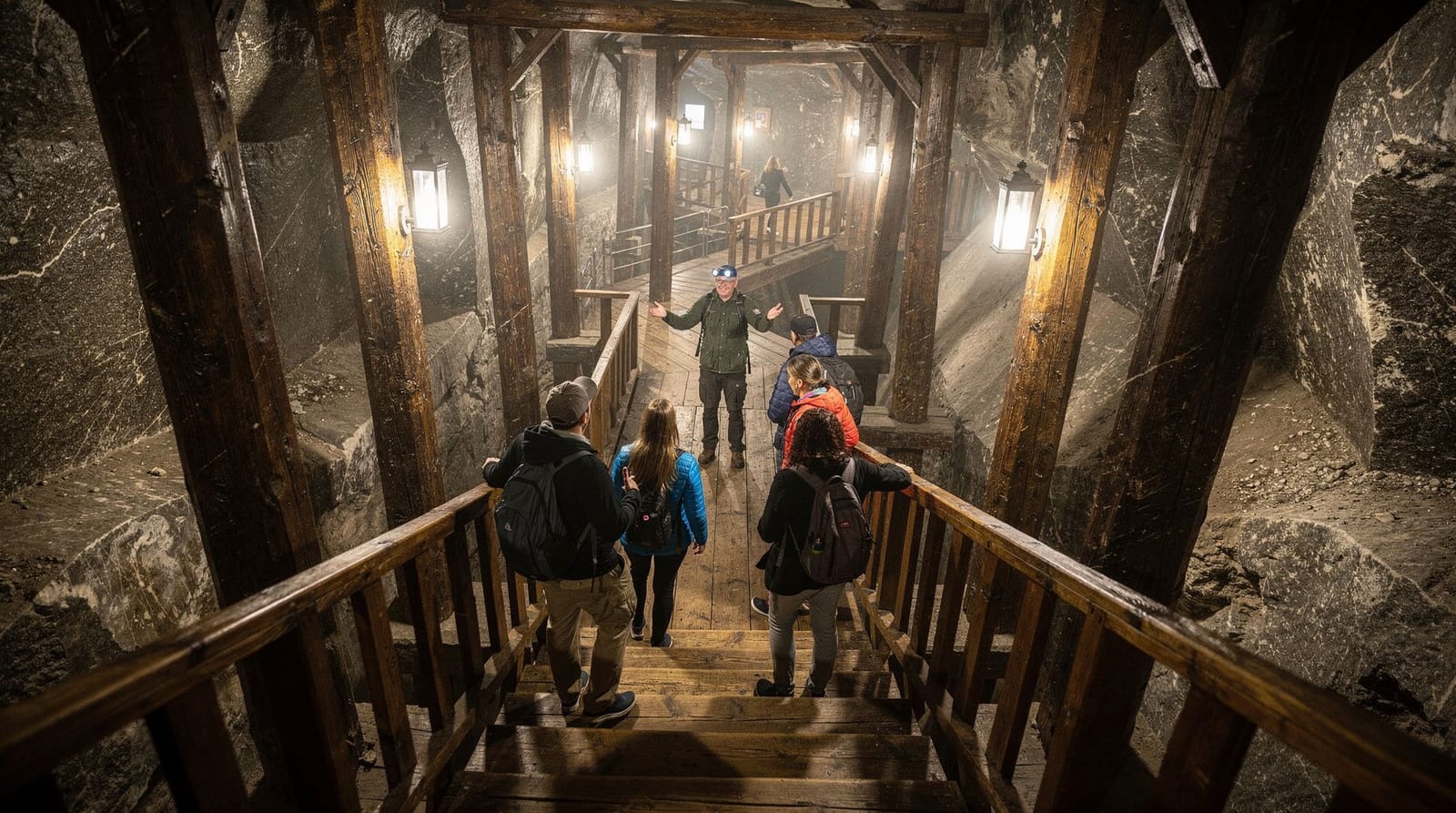
- Licensed English-speaking guide for the 3 km underground tourist route
- Headsets or audio group system
Duration on site: 2–2.5 hours underground, 45 min for a descent of about 380 steps via the Daniłowicz shaft (or a lift for those with mobility needs), visits to 20+ chambers including the Chapel of St. Kinga
Group size: Typically 15–25 people.
Price band: 200–240 PLN per person (approximately €48–57).
Best for: Visitors arriving in peak season (June–August), anyone who wants a reliable schedule without worrying about availability, and first-timers who prefer a guided structure.
Honest note: The fast-track advantage is most valuable between 9 am and 1 pm in summer. Later afternoon visits (from 2 pm) typically face shorter queues even without fast-track. If you are visiting in winter, the standard transport-included tour may offer equivalent value at a lower price.
Comparing the alternatives
Option 2: Guided tour with transport (standard)
This is the most straightforward tour format: a minibus from Kraków, a licensed guide at the mine, and a standard (non-fast-track) timed entry ticket. Availability of entry slots is handled by the operator, so you are not buying a walk-up ticket — but you won’t have the priority queue position of the fast-track option.
Best for: Visitors in shoulder season (April–May, September–October) or winter, when queues at the entrance are manageable. Also a good value pick for budget travellers who book early enough to secure a morning time slot.
Price band: 180–220 PLN (€43–52).
Wieliczka Salt Mine guided tour with transportOption 3: Small-group tour
The small-group Wieliczka tour (typically capped at 10–15 people) means fewer people around you in the narrower gallery sections and a guide who can answer questions without constantly managing a large crowd. The underground experience is genuinely improved — the Chapel of St. Kinga feels less congested, and the guide can explain the engineering and history of individual chambers more thoroughly.
What it adds: Smaller group, often a more specialist guide, sometimes access to sections slightly off the main tourist route (the operators’ supplement tours occasionally include the sanatorium level or specific historical galleries not covered by the standard route).
Price band: 250–320 PLN per person (€60–76).
Best for: Anyone who found group tours too crowded at other UNESCO sites, photographers, history enthusiasts, and travellers visiting as a couple or small family.
Option 4: Private tour with hotel pickup
A private Wieliczka tour gives you and your group a dedicated vehicle and guide. The guide inside the mine is still the mine’s own licensed guide (individual visitors cannot bring external guides underground for the tourist route), but your private guide accompanies you, acts as translator, and provides context before and after the underground section.
Price band: 350–480 PLN total for a group of 2–4 (making it competitive with small-group pricing per person for couples and small families).
Best for: Families with young children (a private guide sets the pace), travellers with mobility needs who want flexibility around the lift vs stairs decision, and anyone who wants hotel-door pickup rather than a central meeting point.
Wieliczka Salt Mine private tour with hotel pickupAt a glance: which option fits you
| Option | Price band | Duration | Best for |
|---|---|---|---|
| Featured: fast-track with transport | 200–240 PLN | 4–5h | Peak season, reliable schedule |
| Standard guided tour with transport | 180–220 PLN | 4–5h | Shoulder season, budget travellers |
| Small-group tour | 250–320 PLN | 4–5h | Less crowding, more guide attention |
| Private tour with hotel pickup | 350–480 PLN (group) | 4–5h | Families, mobility needs, flexibility |
What the Wieliczka tour always includes (no matter which option)
Every tour of the tourist route includes the same core content:
- Daniłowicz shaft descent (~380 steps, or lift available)
- 20+ underground chambers and galleries
- Chapel of St. Kinga (the highlight — chandelier lighting, altarpiece, and bas-reliefs all in salt)
- Copernicus Chamber, Crystal Caves, and the horse-powered winch replica at the Kraków Salt Miners Memorial
- Exit by lift from level 3 (depth: 135 metres)
What the tour does not include:
- The Wieliczka Mine Health Resort (a separate therapeutic facility, underground)
- The Mine Museum (separate ticket)
- Food or drinks underground (though a restaurant operates on level 3 — the deepest level you visit)
Getting to Wieliczka independently
If you prefer to arrange your own transport:
- Train from Kraków Główny to Wieliczka Rynek-Kopalnia: about 20–30 minutes.
- Bus 304 from Kraków: ~30 minutes.
- Taxi/Bolt/Uber: Around 50–70 PLN one way from central Kraków.
Tickets for the tourist route start from 82 PLN for the Polish-language tour; foreign-language tours cost more and vary by season, so check current prices on the official website (kopalnia.pl). In peak months, time slots sell out — booking online via the mine’s official site is advisable even for independent visitors.
Wieliczka vs Bochnia — which salt mine?
The less-visited Bochnia Salt Mine, 40 km east of Kraków, is a UNESCO site in its own right. It offers a boat ride underground, a unique oval shape to its main chapel, and significantly smaller crowds. The trade-off: less visual spectacle than Wieliczka’s St. Kinga Chapel, and fewer tour options from Kraków. See our Wieliczka vs Bochnia comparison guide to decide.
Seasonal notes
Summer (June–August): The mine is fully booked several days in advance. Always pre-book. Fast-track entry is most valuable.
Spring/Autumn (April–May, September–October): Steady visitor numbers but pre-booking still advisable, especially for mornings.
Winter (November–March): The mine operates year-round. Underground temperature is a constant 17–18°C — warmer than the surface in winter. Bring a light layer even in summer. Crowds are significantly smaller; walk-up tickets sometimes available, but pre-booking remains recommended.
The Chapel of St. Kinga: what makes it extraordinary
Most visitors list the Chapel of St. Kinga as the highlight of the Wieliczka visit — and it genuinely earns this reputation. Carved between 1895 and 1963 (across multiple generations of miner-sculptors), it lies 101 metres underground and is 54 metres long, 15–18 metres wide, and 10–12 metres high. The floor, walls, altarpiece, bas-reliefs depicting the Stations of the Cross, and the three chandeliers are entirely carved from rock salt. The chandeliers (made from salt crystals, not glass) produce a warm, slightly amber light.
What makes it extraordinary beyond the technical achievement is the devotional intent. The miners who carved it did so as an act of faith, not as a tourist attraction — the chapel was their workplace church, where they held Mass underground before shifts. It became accessible to tourists only after the salt extraction in this section ended in the 20th century. You are visiting a functioning sacred space, not a museum exhibit.
The guide should explain the legend of Princess Kinga of Hungary, who became patroness of Polish salt miners when (according to the 13th-century tradition) she threw her Hungarian engagement ring into a salt mine in Máramaros before journeying to Poland — the ring, it was said, miraculously appeared in the first salt extracted at Wieliczka. Whether historical or legendary, the story shaped the miners’ relationship with the site across centuries.
Practical prep for the underground visit
Beyond booking the right tour, a little preparation makes the visit smoother. Wear comfortable, closed shoes for the roughly 380-step descent and the uneven salt-carved floors — flip-flops or sandals are a genuinely bad idea here. Our Kraków packing guide covers what to bring for day trips like this one in more detail. If you’re relying on public transport rather than a tour operator’s minibus, the getting around Kraków guide explains the tram and bus network beyond just the Wieliczka line.
Families weighing Wieliczka against other options should also see our family-friendly day trips from Kraków roundup, and active travellers curious whether a half-day underground fits around a hiking-heavy trip can check Kraków for active travellers. For a broader sense of what else counts as “nature near Kraków” beyond the underground galleries, our nature near Kraków guide rounds up the above-ground options too.
Planning links
- Wieliczka destination guide
- Wieliczka Salt Mine full planning guide
- Wieliczka with children
- Auschwitz & Wieliczka on the same day
- Kraków day trips ranked
- Kraków 3-day itinerary (includes Wieliczka)
- Bochnia Salt Mine day trip
- Best day trips from Kraków