Krakow, Auschwitz, and Wieliczka: 3-day memorial and UNESCO itinerary
From Krakow: Auschwitz-Birkenau guided tour & hotel pickup
Duration: 3.5h
Kraków’s two UNESCO world heritage sites and one memorial site in three days
This itinerary is designed for visitors with a specific purpose: seeing Auschwitz-Birkenau properly, visiting Wieliczka Salt Mine fully, and using Kraków’s Old Town as a base without compressing either major excursion into a half-day rush. The three days have a deliberate rhythm — city context first, the memorial in the middle alone, and the mine as the final experience.
On the logic of the sequence: Spending Day 1 in Kraków establishes context before Auschwitz. You understand the city the Nazis occupied, the Kazimierz neighbourhood from which Jews were deported, the Schindler Factory in Podgórze where some were protected. Then Day 2 at Auschwitz-Birkenau lands differently. Day 3 at Wieliczka provides a genuinely different kind of wonder — human ingenuity and underground beauty — as the closing note.
| Where | Old Town, Auschwitz-Birkenau, Wieliczka Salt Mine |
| Cost | around 625–865 PLN/person, excl. accommodation |
| Time needed | 3 full days |
| Getting there | Old Town base; guided or public transport for both day trips |
| Best time | April–May or September–October |
Day 1: Kraków — context, history, and Jewish heritage
9:00 — Old Town orientation
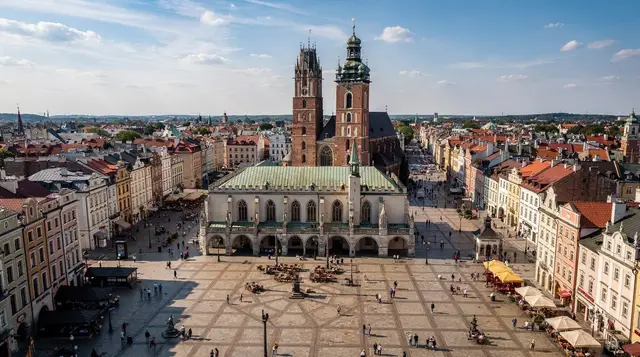
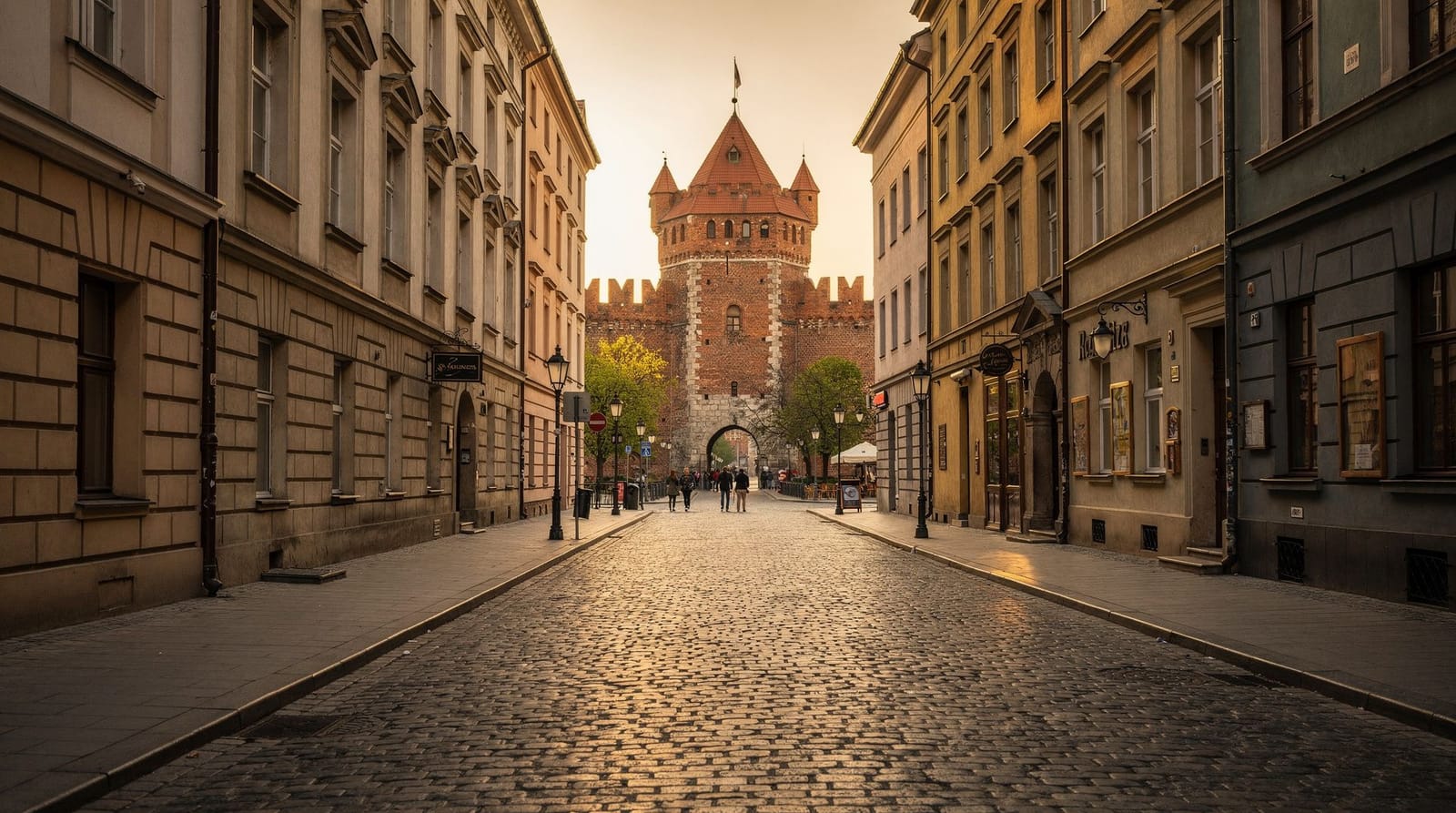
Start with a walk from the Florian Gate south along the Royal Route. The medieval defensive system — Barbican, gate, city wall — established Kraków as the political and commercial capital of Poland from the 11th century. Under Nazi occupation from September 1939, the entire Jewish population of this city was first persecuted, then concentrated in the Kazimierz neighbourhood, then transferred to the Podgórze Ghetto, then deported to death camps. Understanding Kraków before you visit Auschwitz is important.
Krakow Old Town guided walking tour provides the historical framework in 2 hours — recommended for anyone whose primary interest is the occupation and memorial history.
11:30 — Schindler’s Factory Museum
Cross to Podgórze for the most direct museum preparation for Auschwitz. Schindler’s Factory Museum (ul. Lipowa 4, 60 PLN, free on Mondays with no booking) covers Nazi occupation of Kraków chronologically, from the 1939 invasion through the Ghetto liquidation in 1943 to liberation. Book timed entry in advance.
Krakow Schindler Factory Museum guided tour. The guided visit covers the specific histories of individuals who lived and died in the city — not statistics, but people. Allow 2 hours.
14:00 — Ghetto memorials and Kazimierz
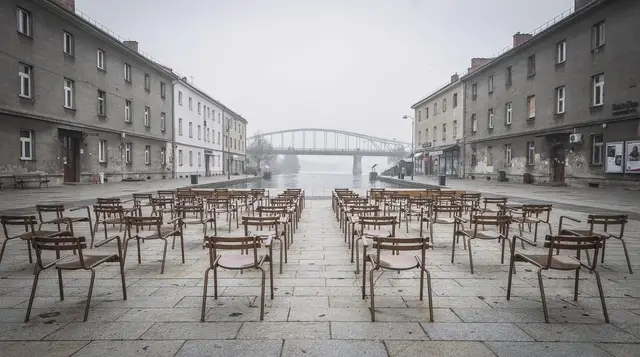
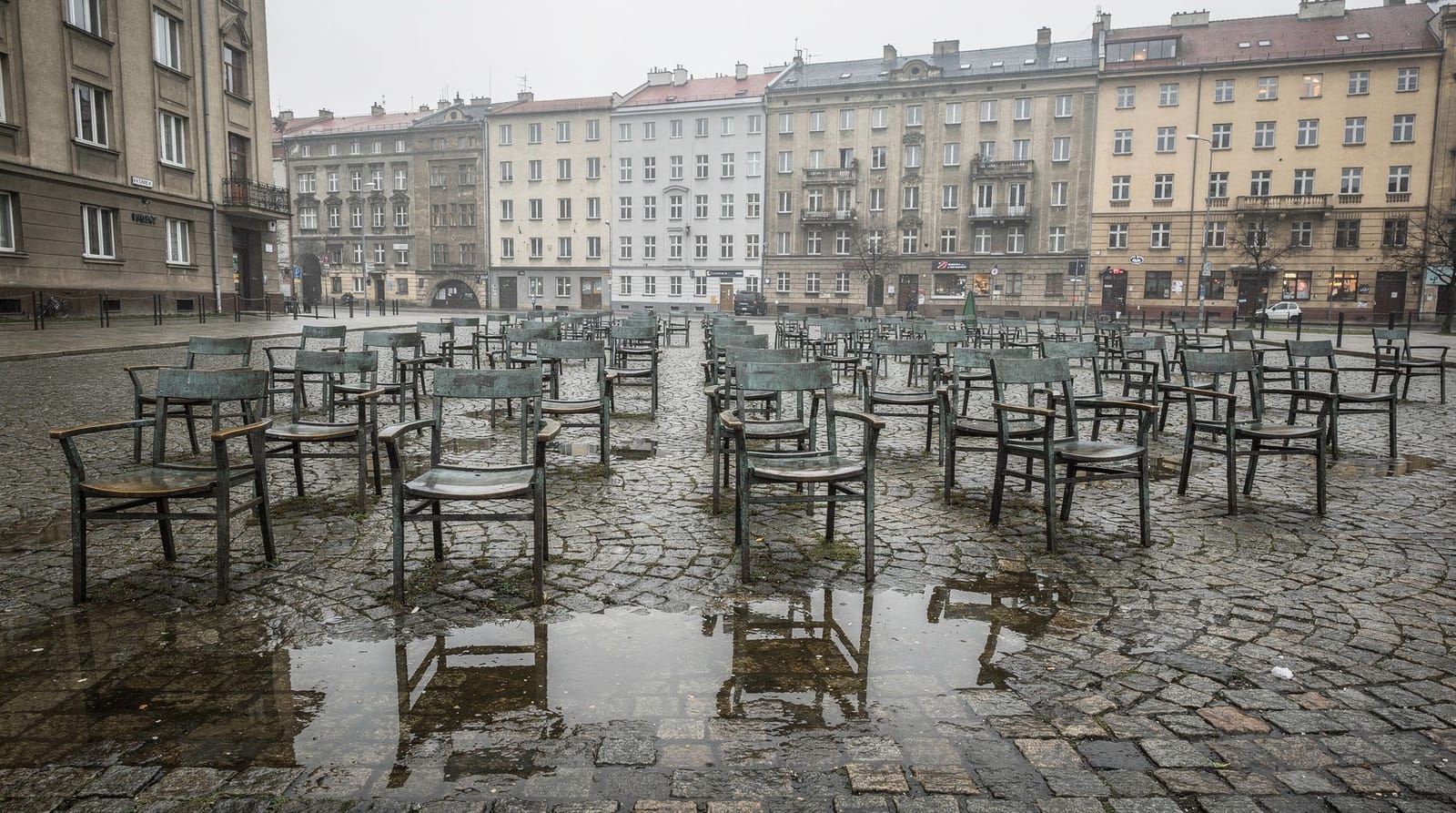
Walk west to Plac Bohaterów Getta — the 33 chairs memorial. The Pharmacy Under the Eagle (22 PLN) tells Tadeusz Pankiewicz’s story of remaining in the Ghetto by choice, as the only non-Jewish Pole permitted to stay. Find the Ghetto wall fragments on ul. Lwowska — tombstone-shaped blocks, a deliberately dehumanising architectural choice.
Then cross to Kazimierz. The Galicia Jewish Museum (ul. Dajwór 18, 35 PLN) uses photography to document Jewish Galicia before and after the Holocaust — “Traces of Memory” is the right exhibition to see before Auschwitz. The Old Synagogue (ul. Szeroka 24, 22 PLN) is Poland’s oldest synagogue, in a 15th-century building that survived the war.
17:00 — Return to the Old Town
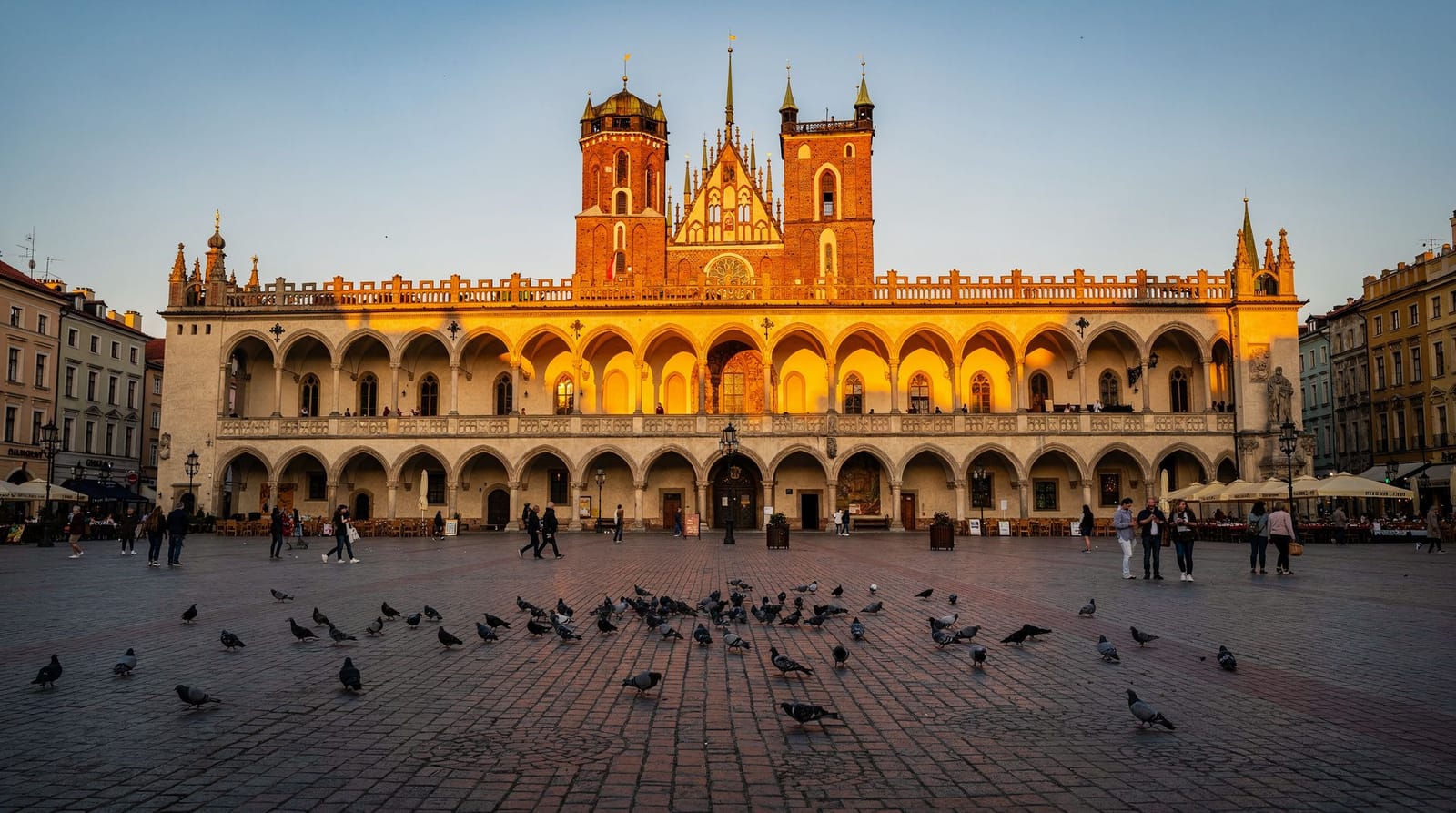
Walk back through the Planty and into the Rynek. Stop at the Rynek Underground Museum if you have energy: the medieval trade city that existed here for 700 years before the 20th century provides a deeper sense of what was destroyed.
19:30 — Quiet dinner
Keep this evening simple and early. Bar Mleczny Centralny (ul. Jagiellońska 1) for traditional Polish food at 15–25 PLN per dish. Or soup and pierogi at Pierogarnia Mandu (ul. Sławkowska 14). Tomorrow will be demanding — sleep is more important than an elaborate evening.
Day 2: Auschwitz-Birkenau (full day)
Prepare emotionally: Auschwitz-Birkenau is the site where 1.1 million people — approximately 90% of them Jews — were systematically murdered between 1940 and 1945. Visiting requires preparation and appropriate comportment. Read the visiting Auschwitz guide before you go. Dress modestly. Do not take selfies at the execution sites or crematoria. Do not treat the visit as tourism.
7:30 — Depart from Kraków
From Kraków: Auschwitz-Birkenau guided tour with hotel pickup. Book 4–6 weeks ahead in summer — tours fill completely. The guided tour includes licensed guide throughout both camps, transport from your hotel, and return. The guide is licenced by the Auschwitz-Birkenau Memorial and Museum — this is the appropriate way to experience the site.
Independent option: Train from Kraków Główny to Oświęcim (journey 1h 40–1h 50 min, 18–25 PLN). Trains run approximately every 2 hours; check schedules at pkp.pl. From Oświęcim station, local bus 24/29 or taxi to the Memorial (3 km). Book a free entry card at visit.auschwitz.org (required; no cards are sold at the entrance). Guided tours at the Memorial itself must be booked well in advance, at least two months ahead.
9:00 — Auschwitz I (Stammlager)
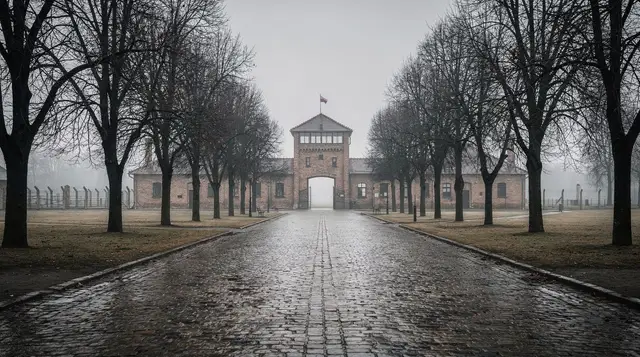
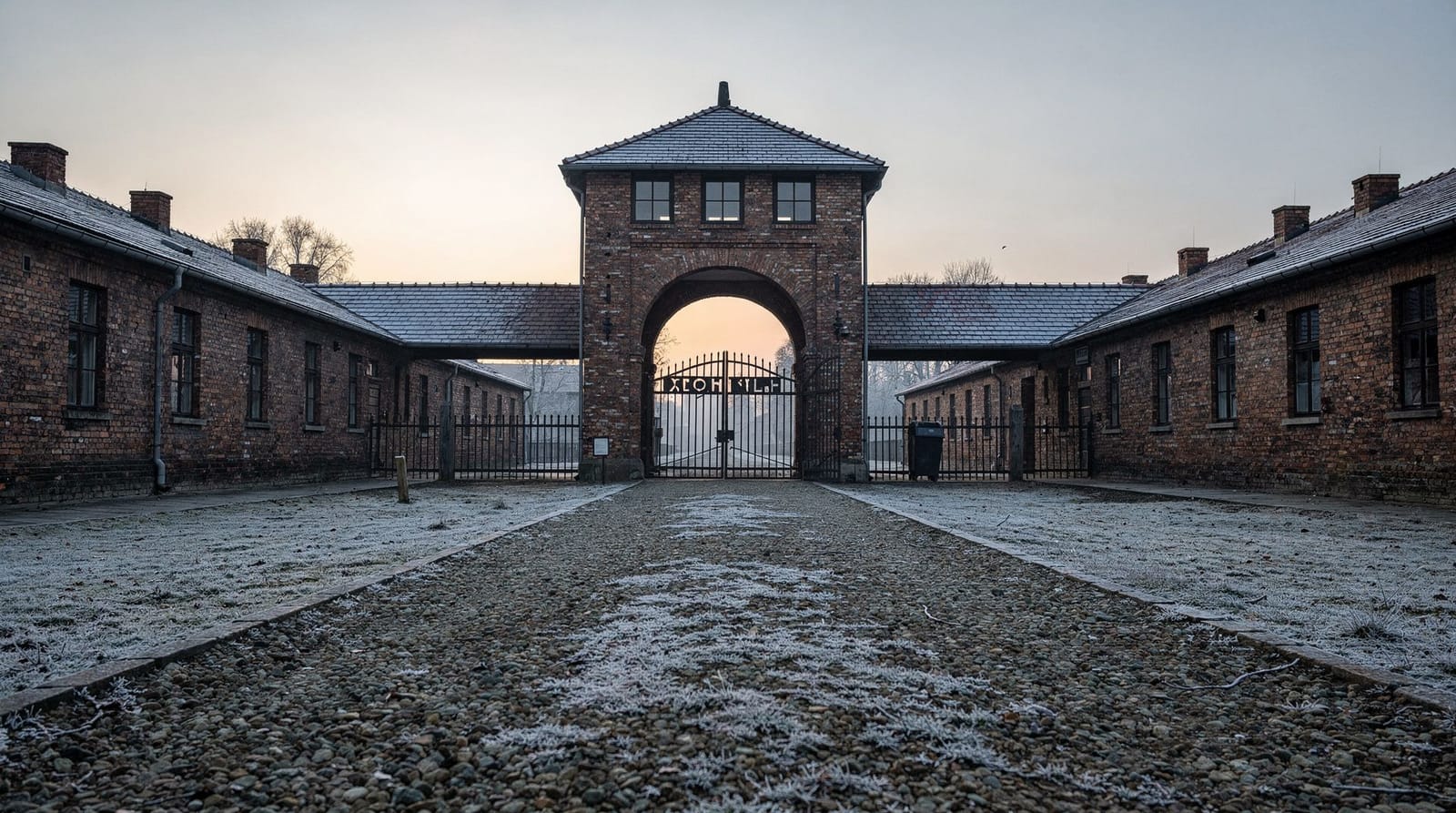
Begin at the main camp. The gate with Arbeit Macht Frei (“Work sets you free”) — the cynical motto ordered by Commandant Rudolf Höss — has been there since the camp opened in 1940 for Polish political prisoners. The camp expanded rapidly, with the systematic murder of Jews beginning in 1942 as part of the Final Solution ordered at the Wannsee Conference in January 1942.
The 28 brick barracks contain exhibitions. Block 4: the mass murder — evidence of the scale of killings and the mechanism of the Final Solution. Block 5: physical evidence — 7.7 tonnes of human hair shaved from victims found in the camp warehouses after liberation, 3,800 suitcases bearing the names of their owners, shoes of the murdered. Block 11: the Bunker (punishment cells) and the yard between Blocks 10 and 11 where prisoners were executed by shooting.
The gas chamber and crematorium at the end of the main camp is the original structure (partially reconstructed after the Nazis demolished it — the reconstructed version approximates what it looked like in operation). Standing inside the gas chamber is an experience of a different order from reading about it.
Allow 2–2.5 hours for Auschwitz I.
12:00 — Birkenau (Auschwitz II)
Shuttle bus (free) or 3-km walk between the sites. Birkenau is an entirely different experience from Auschwitz I — vast, open, and largely ruined. 175 hectares. 300 barracks surviving; over 600 original structures destroyed or dismantled. The scale of the site makes abstract numbers physically real.
Enter through the main gate tower (the iconic “gatehouse of death” — the building photographed on every memorial). Walk the main camp road to the International Monument between the ruins of Crematoria II and III. The ruins are not reconstructed — the Nazis blew them up in November 1944 as Soviet forces approached. The concrete rubble is as it was left on 27 January 1945.
Walk east to the selection ramp where deportees arrived by train and underwent “selection” — left toward the gas chambers, right toward forced labour. The rail line was extended inside the camp in 1944 specifically to handle the unprecedented scale of deportations from Hungary (437,000 Hungarian Jews in 56 days).
Walk the women’s camp section and the family camp section, noting the conditions of the barracks. Allow 90 minutes minimum.
15:00 — Return to Kraków
Arrive back in Kraków ≈ 16:30–17:00.
Evening
This evening must be quiet. Walk. A simple meal. Do not plan activities. The Vistula embankment below Wawel provides space for reflection. Dinner at a milk bar or neighbourhood restaurant without spectacle — Zalewajka (ul. Józefa 26) in Kazimierz if you want a short walk, or soup and pierogi anywhere near your hotel.
Day 3: Wieliczka Salt Mine
9:00 — Depart for Wieliczka
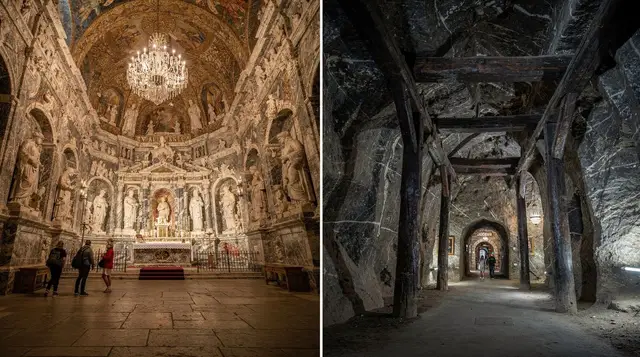
The Wieliczka Salt Mine has been operating continuously since the 13th century, making it one of the oldest industrial sites in the world. It was included on the first UNESCO World Heritage List in 1978 — not only for its industrial history but for the extraordinary carved chambers created by generations of miners.
From Kraków: Wieliczka Salt Mine tour and fast-track ticket. Skip-the-line access is valuable here: the standard entry queue can reach 45–60 minutes in summer, especially for English-language guided tours.
Public transport: bus 304 from Rondo Grunwaldzkie (35–40 minutes; fare depends on the city ticket zones, check ztp.krakow.pl).
10:00–13:00 — Underground Wieliczka
The Tourist Route is the main experience: 2 km through 20 chambers and corridors at 64–135 metres below the surface, guided by a licensed mine guide in English. The tour takes 2.5–3 hours.
What to expect:
- Copernicus Chamber: life-size salt figure of Copernicus, who is connected to Wieliczka through the Jagiellonian University
- Chapel of St. Anthony: the first underground chapel, carved in the 17th century
- Crystal Grottoes: natural salt crystal formations that look entirely unlike anything at the surface
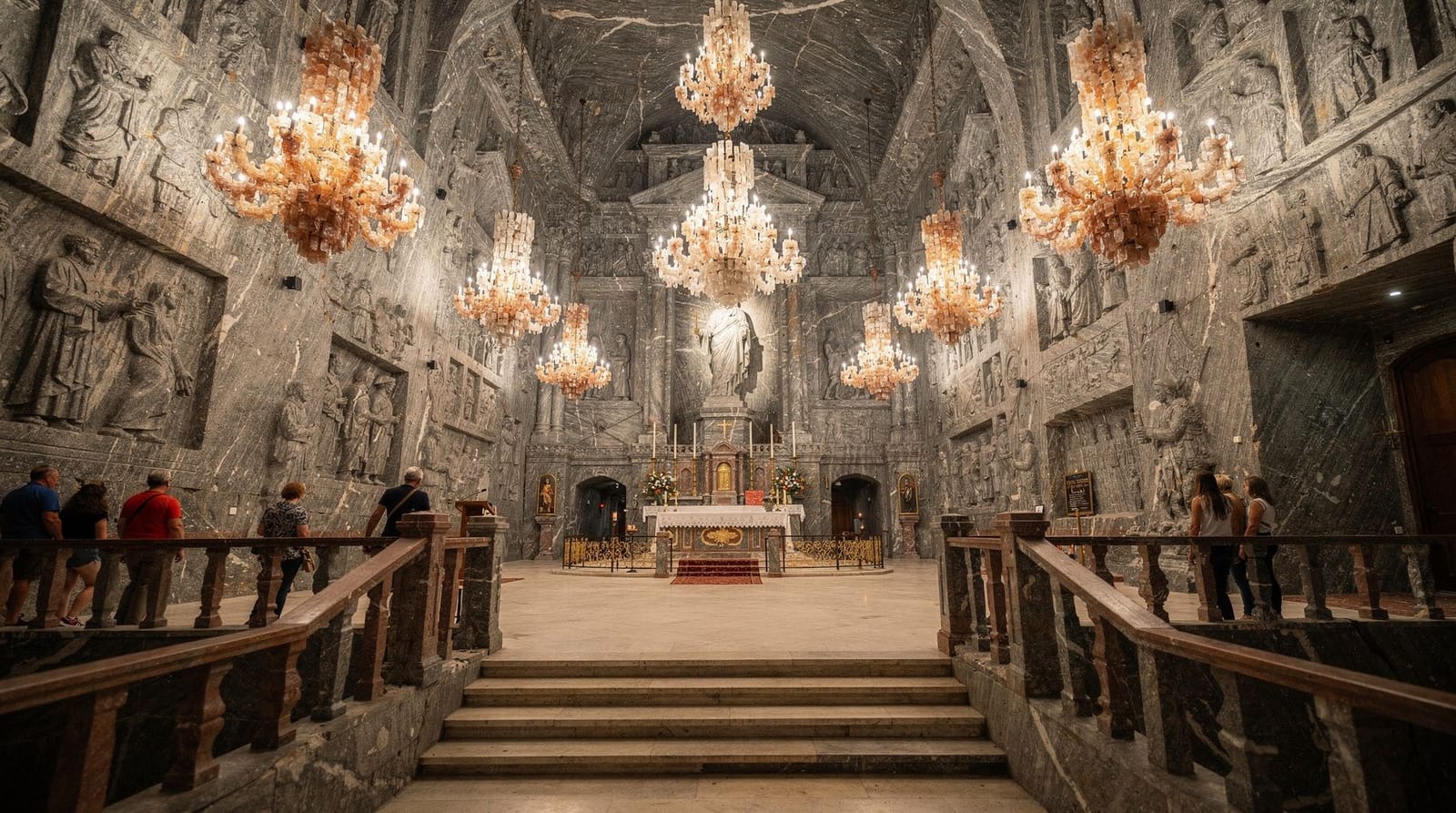
- St. Kinga’s Chapel: the centrepiece of the mine and one of the most extraordinary interiors in Poland — 54 metres long, 12 metres high, carved entirely in salt crystal. The floor, the altar, the chandeliers (salt crystals dissolved and recrystallized on wire frames), the bas-relief carvings of the Last Supper and the life of St. Kinga — all carved by miners working unpaid in their own time from 1895 to 1963. Mass is still celebrated here.
- Underground lakes: illuminated from below, glowing turquoise
Temperature underground: 17–18°C year-round. Humidity: 75%. Bring a light jacket.
Tickets start from 82 PLN (≈ 19.50 €) for the Polish-language tour; tours in English cost more and prices vary by season, so check kopalnia.pl.
13:30 — Return to Kraków and final afternoon
Back in Kraków by 14:30. A final afternoon for:
- Wawel Castle: If Day 1 skipped it. State Rooms (57 PLN) and Cathedral (26 PLN). See the Wawel guide.
- Czartoryski Museum (65 PLN, free on Tuesdays with a timed ticket collected the same day): Leonardo’s Lady with an Ermine — one of only 20 paintings by Leonardo in the world. Czartoryski Museum skip-the-line ticket.
- Collegium Maius: Copernicus’s university building. See the Collegium Maius guide.
- Planty walk: The 4-km ring of gardens on the Old Town perimeter — free and peaceful.
19:00 — Final dinner
Miód Malina (ul. Grodzka 40, mains 55–80 PLN) for a final Polish dinner in the Old Town. The barszcz czerwony is excellent, and the pierogi are better than most.
Important pre-visit notes for Auschwitz
Book as early as possible: guided tours with transport from Kraków book out 4–6 weeks ahead in summer. Timed-entry slots at visit.auschwitz.org go 30–60 days ahead for popular hours. If you can’t get your preferred slot, the 8:00 am or 15:00 pm slots are usually available longer.
What to bring: comfortable shoes (extensive walking on uneven surfaces), a layer for the cooler exhibition buildings, water, and snacks (there is a café near the Auschwitz I site, closed at certain times). Bags larger than 35 x 25 x 15 cm are not permitted inside the Memorial.
Children: The Memorial recommends children under 14 do not visit, as the content — especially Block 5 with the physical evidence of mass murder — is disturbing beyond what most children can process appropriately. This is a judgment for individual families, but the recommendation should be taken seriously.
Three-day budget summary
| Day | Major costs | Approx. PLN |
|---|---|---|
| Day 1 | Schindler’s Factory, Pharmacy Under the Eagle, Galicia Museum, dinner | 175–235 |
| Day 2 | Auschwitz guided tour (incl. transport) | 250–350 |
| Day 3 | Wieliczka (entry + transport), optional museum, dinner | 200–280 |
| Total per person | ≈ 625–865 PLN (≈ 149–206 €) |
Add accommodation: central hotels from 200 PLN/night. This is a purpose-built itinerary — most of the budget goes to the two major excursions rather than city sightseeing.
How this differs from the general 3-day itinerary
This itinerary and the classic 3-day Kraków plan share a structure but diverge on Day 3: the general itinerary uses Wieliczka as a half-day with a free afternoon for city sights, while this one keeps Day 1 focused on Jewish heritage and history specifically to prepare for Auschwitz, rather than covering the full Royal Route. Choose this version if Auschwitz is your primary reason for visiting Kraków; choose the general 3-day itinerary if you want a broader first taste of the city with Wieliczka as the day trip.
Frequently asked questions about the Auschwitz and Wieliczka 3-day itinerary
Why should I not do Auschwitz and Wieliczka on the same day?
Auschwitz requires 3.5–4 hours at the Memorial, plus 3 hours of travel. Wieliczka requires 2.5–3 hours underground, plus 1.5 hours of travel. Combining them requires a 10+ hour day with no time for lunch, rest, or emotional processing. More importantly, both deserve your full attention — Auschwitz cannot be experienced properly after 4 hours at Wieliczka, or vice versa. Separate days allow proper engagement with each site.
Is a guided tour of Auschwitz obligatory?
Groups must be accompanied by a Memorial guide-educator, while individual visitors may tour independently. However, the guided 3.5-hour tour covering both Auschwitz I and Birkenau is strongly recommended for any first-time visitor — the licensed guides have completed specific training in Holocaust history and know how to navigate the emotional complexity of the site.
What is the difference between Auschwitz I and Auschwitz II-Birkenau?
Auschwitz I (the main camp) was the administrative centre and original camp, established in 1940 for Polish political prisoners. It became the showpiece camp with brick barracks, exhibitions, and the preserved gas chamber and crematorium. Auschwitz II-Birkenau was built in 1941–42 as the extermination camp where the systematic murder of Jews took place on an industrial scale — four gas chambers and crematoria, capable of murdering up to 8,000 people per day. Both sites must be visited to understand the full scope of what happened.
Can I visit Wieliczka independently without a tour?
Yes — the public bus (line 304) from Rondo Grunwaldzkie is straightforward and cheap (fare depends on the city ticket zones; check ztp.krakow.pl). Buy an entry ticket online at kopalnia.pl (advisable in summer to avoid long queues). The guided tour inside the mine is mandatory for the Tourist Route — you join an English-language group at the entrance. The fast-track tour bundles transport and skip-the-line access for visitors who prefer a single booking.
How do I get the most out of Wieliczka?
Book the first English-language slot (usually 9:00 or 9:30) to get the smaller morning groups. The 2-km Tourist Route is guided — you can’t explore independently — but the guides vary in quality and enthusiasm. Tip your guide at the end (20–30 PLN per person). The exit lift has a maximum capacity; the guide will manage queuing. After the tour, the Wieliczka mine restaurant in the underground chambers (Karczma Górnicza) offers lunch in one of the mine’s decorated rooms — unusual and worth it for the setting.
Should I add Wawel Castle or the Rynek if I have spare time?
If Day 1 finishes early, yes — Wawel Castle and Rynek Główny are both a short tram or walk from Kazimierz and worth 2–3 extra hours if your energy allows. But don’t compress Day 1’s Jewish heritage sites to make room; if you want the full Old Town experience alongside this trip, the general 3-day itinerary or 4-day itinerary both give it proper time.
Is this itinerary appropriate for a solo traveller?
Yes — Auschwitz and Wieliczka both work well solo, since both involve joining a guided group at the site regardless of whether you booked independently or as part of a couple or family. Evenings on Days 1 and 3 in the Old Town are easy to fill solo with a milk bar dinner and a walk; Day 2’s evening should be quiet regardless of who you’re travelling with.
Top experiences
Bookable activities with verified prices and instant confirmation on GetYourGuide.