Krakow WWII history itinerary: 3 days of wartime sites and memory
From Krakow: Auschwitz-Birkenau guided tour & hotel pickup
Duration: 3.5h
Three days of WWII history in Kraków and its surroundings
Kraków was not bombed in World War II — the German army occupied the city intact in September 1939 and used it as the administrative capital of the General Government, the Nazi-occupied zone of Poland that excluded the territories annexed directly to the Reich. This is why the city’s medieval architecture survived, and why so much physical evidence of the occupation remains: the Ghetto wall fragments, Schindler’s factory, the Podgórze apartment blocks where Jewish families lived before deportation, and the Auschwitz-Birkenau camp 70 km to the west.
This itinerary is designed for visitors who want to understand the history thoroughly, not check memorial boxes. Each site is given the time it deserves. Reading before the trip is strongly recommended: Tadeusz Pankiewicz’s The Pharmacy in the Kraków Ghetto, Thomas Keneally’s Schindler’s Ark, and Levi’s If This Is a Man. The experience will be proportionally richer.
| Where | Old Town, Kazimierz, Podgórze, Auschwitz-Birkenau |
| Cost | around 185–235 PLN in museum entries + Auschwitz transport (150–250 PLN if guided) |
| Time needed | 3 full days |
| Getting around | on foot in the city; guided or train transfer for Auschwitz |
| Best time | year-round; book Auschwitz 4–6 weeks ahead for summer |
This itinerary pairs closely with the Jewish heritage trail, which covers Kazimierz and Podgórze in more depth from the community’s perspective rather than the occupation’s; the Auschwitz and Wieliczka 3-day itinerary is a lighter alternative if you want history balanced with a non-wartime site.
Day 1: Pre-war Kraków and the beginning of occupation
9:00 — The city before 1939
Begin not at a war site, but at the living city that existed before the occupation. Walk from the Florian Gate south through the Old Town — these same streets were walked by the 57,000 Jews who lived in Kraków before 1939 (26% of the population). The Rynek Główny, the university, the cafés along ul. Floriańska: the city Kraków’s Jews inhabited was this city, not a separate space.
Stop at the Collegium Maius (ul. Jagiellońska 15): the Jagiellonian University where, on 6 November 1939, 183 professors were arrested by the SS (called to a “lecture” and taken instead to Sachsenhausen concentration camp — Operation Sonderaktion Krakau). The courtyard is free to visit; the plaque is on the facade.
10:30 — Kazimierz: the pre-war Jewish Quarter
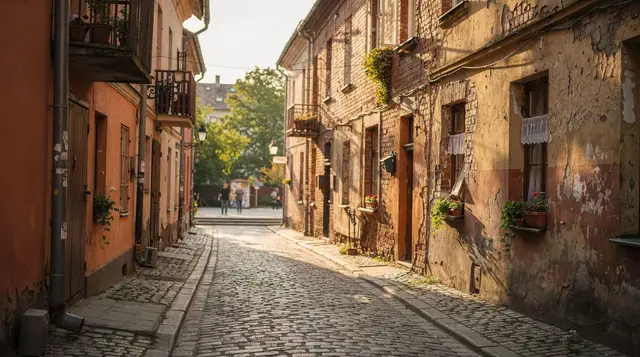
Walk south to Kazimierz. This was the historic Jewish quarter — not where all of Kraków’s Jews lived in 1939 (by then they had dispersed across the city), but the symbolic and communal heart of Jewish life in the region since the 14th century.
A guided tour of Kazimierz provides the communal history of what existed here: Krakow Kazimierz Jewish Quarter walking tour. Understanding Kazimierz before visiting the Ghetto and Auschwitz gives the sites their necessary human scale.
Visit:
- Old Synagogue (ul. Szeroka 24, 22 PLN): the oldest surviving synagogue in Poland, with exhibits on Jewish religious life and community history pre-war
- Galicia Jewish Museum (ul. Dajwór 18, 35 PLN): the photographic exhibition “Traces of Memory” documents the Jewish communities of Galicia — what existed, what was destroyed, what remains
13:30 — Lunch in Kazimierz
Fabryczna No 5 (ul. Fabryczna 5, 35–65 PLN): one of the better restaurants in the neighbourhood without tourist mark-up. Or Mleczarnia (ul. Meiselsa 20) for a lighter lunch at lower cost.
15:00 — The occupation timeline walk
Walk with the history of the occupation in mind:
September 6, 1939: German troops enter Kraków. Within days, Jews are ordered to wear white armbands with a blue Star of David. Jewish businesses are confiscated.
December 1939: Jews are expelled from the city centre and confined to Kazimierz and Podgórze. All Jewish property is registered.
November 1940: The Kraków Ghetto is formally established in Podgórze, across the Vistula. The 15,000 Jews of Kraków are ordered to move into the Ghetto (previously occupied by Polish Gentiles who are expelled). The Ghetto wall is built.
March 13, 1943: The Kraków Ghetto is liquidated. Approximately 8,000 Jews are murdered on-site; the remainder are transferred to Plaszów concentration camp.
Walk these dates across the geography. The distance from Kazimierz (the pre-war Jewish quarter) to Podgórze (the Ghetto) is 15 minutes on foot — across the Vistula by the Józef Piłsudski Bridge.
16:30 — Podgórze: the Ghetto geography
Cross the bridge into Podgórze. Walk ul. Lwowska to see the Ghetto wall fragments — two short sections of the original wall survive, deliberately built in a tombstone shape by the Nazi architects. The tombstone design was a statement. The wall sections are marked but easy to miss; find them at the corner of ul. Lwowska and ul. Józefińska.
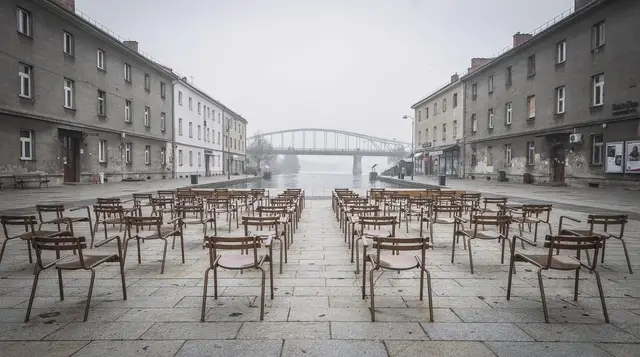
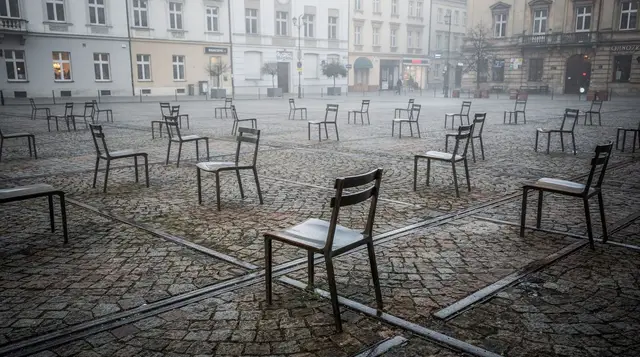
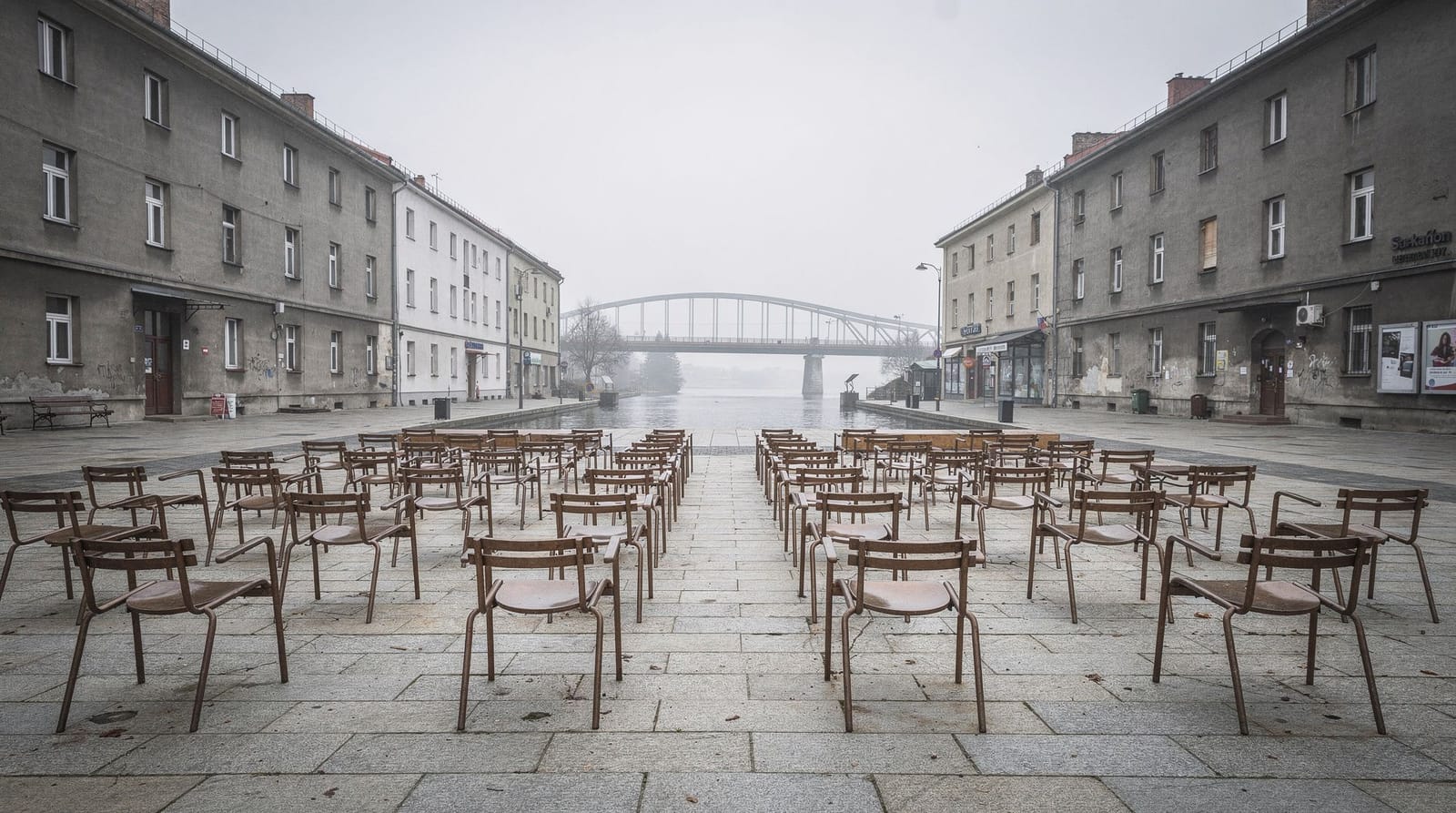
Walk to Plac Bohaterów Getta (Ghetto Heroes’ Square). The 33 chairs — each representing 2,000 of the 65,000 Jews murdered from the Kraków Ghetto — stand in an empty square where a Ghetto market once operated. The emptiness of the chairs in an otherwise ordinary urban square is a deliberate choice: absence, not reconstruction.
Pharmacy Under the Eagle (Apteka Pod Orłem, corner of Plac Bohaterów Getta, entry 22 PLN, free on Wednesdays): Tadeusz Pankiewicz was the only non-Jewish Pole permitted to remain in the Ghetto. He kept his pharmacy open throughout, providing medicines and, at significant personal risk, smuggling information and documents. His memoir is the primary eyewitness account of the Ghetto. Allow 45 minutes for the museum.
19:00 — Evening
Return to the Old Town or Kazimierz for a quiet dinner. Zalewajka (ul. Józefa 26, Kazimierz, mains 40–65 PLN) or a milk bar. This is not an evening for elaborate dining.
Day 2: Auschwitz-Birkenau (full day)
7:30 — Departure
This is the most demanding day of the itinerary. Prepare emotionally and practically. Read the ethics guide for visiting Auschwitz before going. Dress modestly. Bring water and small snacks. Do not plan anything social or celebratory for the evening.
From Kraków: Auschwitz-Birkenau guided tour with hotel pickup. Book 4–6 weeks in advance for summer. The licensed guide is essential for visitors approaching the site with serious historical intent — they provide the biographical and chronological context that makes the individual elements of the site cohere.
Independent visit: Train from Kraków Główny to Oświęcim (1h 40–1h 50 min, 18–25 PLN). Minibus from Oświęcim station to the Memorial. Entry is free, but you need an entry card reserved at visit.auschwitz.org.
9:00–15:00 — The Memorial
Auschwitz I: The main camp was established in May 1940 for Polish political prisoners and Soviet POWs. It became the administrative centre of the camp complex. Specific sites:
- Block 4: the exhibition on the mass murder — documents from the Wannsee Conference (January 1942), the mechanism of the Final Solution, the chronology of deportations
- Block 5: the physical evidence — 7.7 tonnes of human hair shaved from murdered prisoners (displayed behind glass), 3,800 suitcases with names painted on them, thousands of shoes, children’s clothing, prosthetic limbs. The accumulation of personal objects is one of the most harrowing aspects of the site.
- Block 11: the Bunker punishment cells where prisoners were starved to death in standing cells (four people, no room to sit, sometimes for weeks). The courtyard between Blocks 10 and 11 (the Wall of Death) where thousands were shot.
- Crematorium I: the gas chamber and crematorium at the main camp, reconstructed after the war to approximately its operational appearance. The sign on the wall indicating the oven capacity was put there by the Nazis.
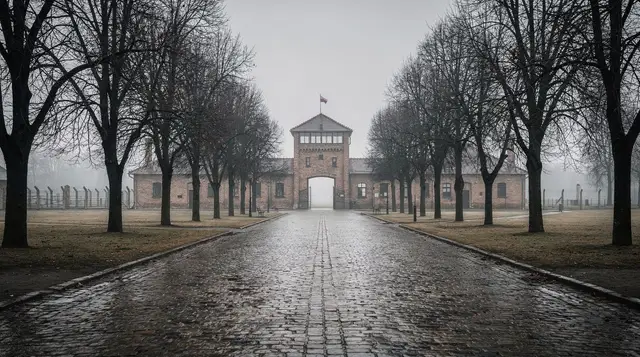
Auschwitz II-Birkenau: 3 km by shuttle. The scale is not comprehensible until you’re standing in it. The 175-hectare site held up to 90,000 prisoners at its peak. Four gas chambers and crematoria operated simultaneously, capable of murdering 8,000 people per day during the peak deportations from Hungary in summer 1944.
Sites at Birkenau:
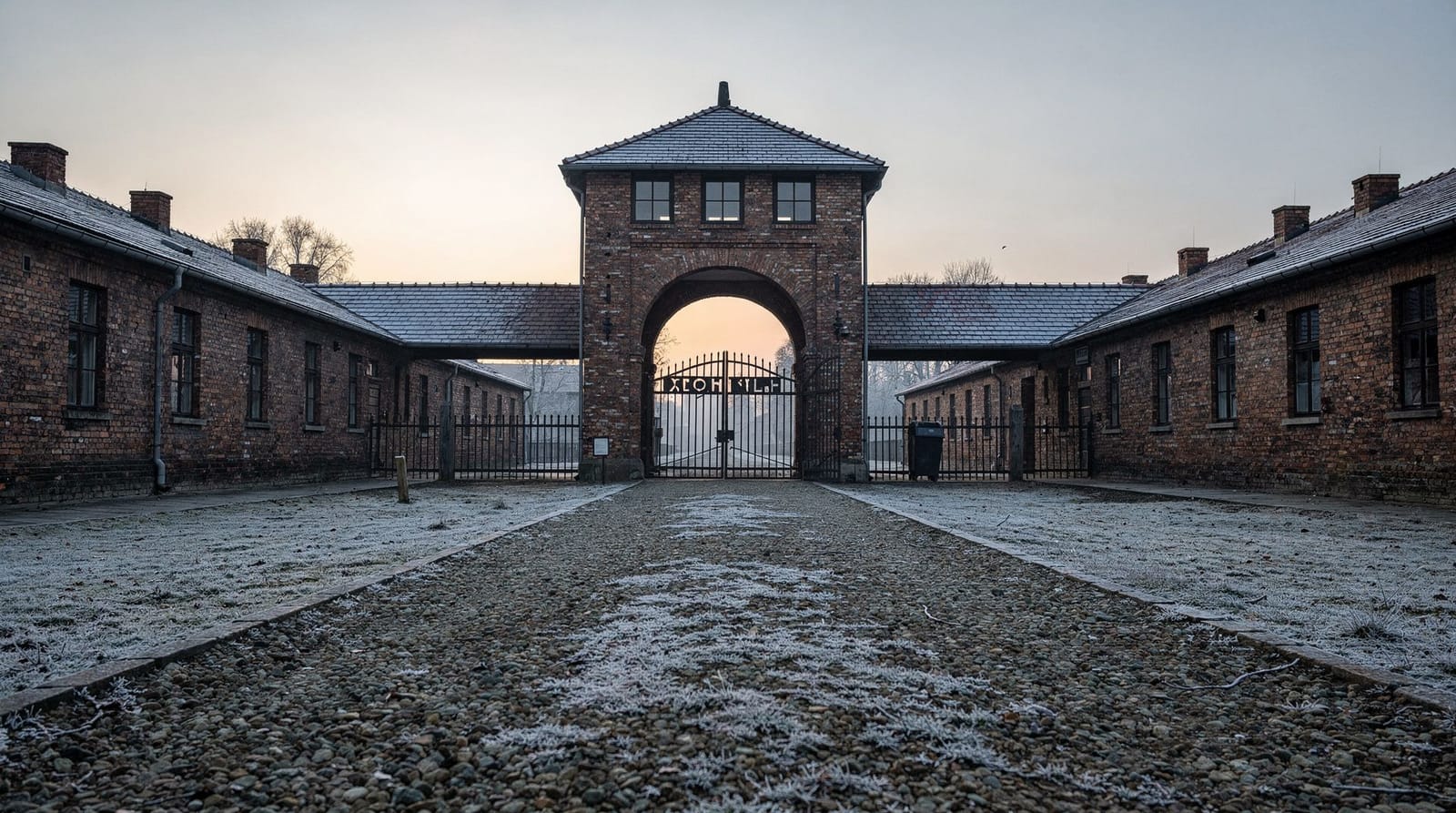
- Entrance gate tower: the building on every photograph, through which the railway line entered the camp
- Selection ramp: where deportees underwent selection — fit for labour or immediate death
- Ruins of Crematoria II and III: deliberately blown up by the SS in November 1944 as Soviet forces approached. The concrete rubble lies as it fell on liberation, 27 January 1945.
- International Monument: between the ruins of two crematoria, with memorial plaques in 30 languages
- Women’s barracks section: the conditions in which women prisoners were kept
- The ash pond: where human ash and fragments of bone were dumped from the crematoria
15:00 — Return to Kraków
Arrive back 16:30–17:00. A quiet evening is necessary. Do not plan activities. Walk the Planty park, eat simply at a milk bar or soup restaurant. The Vistula embankment at dusk is a place for quiet reflection.
Day 3: Schindler’s Factory, the Plaszów site, and WWII Krakow walk
9:00 — Schindler’s Factory Museum
Schindler’s Factory (ul. Lipowa 4, 60 PLN, free on Mondays with no booking) is the most important WWII museum in Kraków for the occupation context. The permanent exhibition covers the Nazi administration of Kraków, the Jewish community under occupation, the Ghetto, and the liberation. The Schindler story is included but not foregrounded — this is a museum about the occupation, not a film-based visitor attraction.
Krakow Schindler Factory Museum guided tour — the guided version provides the individual case histories that the exhibition itself presents more abstractly. Allow 2 hours.
11:30 — The Plaszów camp site
Take a 20-minute walk (or tram 9/10 from ul. Wielicka) to the site of the former Plaszów forced labour camp (ul. Heltmana direction). The camp where Schindler’s workers were concentrated before being transferred to his factory no longer has buildings — the Nazis demolished most of it before liberation. What remains is an open field with the Grey House (camp commandant’s villa — now a private residence), the Jewish cemetery that the camp was built on top of, and two small monuments. The main monument is reached via ul. Heltmana — a 15-minute walk from the museum.
The Plaszów site is not a formal museum; it’s a preserved area. The absence of structures where thousands lived and died gives it a particular quality of erasure.
13:00 — WWII walking tour of the city
Return to the city centre for a structured walking tour: Krakow 2-hour World War II Ghetto walking tour. The guided walk covers the Ghetto area, the wall fragments, Plac Bohaterów Getta, and the Schindler-era geography with a knowledgeable guide. Running daily, it’s the most efficient way to consolidate the geography of the occupation into a coherent narrative.
15:00 — Afternoon: historical Kraków
Return to the Old Town for remaining sites:
National Museum (al. 3 Maja 1): The permanent collection includes extensive material on Polish resistance during the occupation — Home Army (Armia Krajowa) documents, resistance press, weapons. Entry 45 PLN, free on Tuesdays; closed Mondays. See the guide to wartime Kraków for specific rooms.
Kraków History Museum (Rynek Główny 35, Krzysztofory Palace): Has rotating exhibitions on city history including the occupation period. Entry 34 PLN, free on Tuesdays.
Eagle Pharmacy memorial room if not visited on Day 1: the small room at plac Bohaterów Getta 13 is a fitting final stop — small, specific, and deeply human in its scale.
18:30 — Final dinner
After three days of heavy historical content, a meal that doesn’t require planning. Miód Malina (ul. Grodzka 40, mains 55–80 PLN) in the Old Town is a good choice for a proper final dinner with good wine and Polish food done carefully. Or the simpler but excellent Restauracja Różowy Słoń (ul. Straszewskiego 24).
3-day summary at a glance
| Day | Focus | Emotional weight |
|---|---|---|
| Day 1 | Pre-war Kazimierz, occupation timeline, Podgórze Ghetto sites | building context |
| Day 2 | Auschwitz-Birkenau (full day) | heaviest day of the trip |
| Day 3 | Schindler’s Factory, Plaszów site, WWII walking tour | processing and synthesis |
Before you go: essential context
Books to read first: Tadeusz Pankiewicz, The Pharmacy in the Kraków Ghetto (first-person account from inside the Ghetto); Thomas Keneally, Schindler’s Ark (the factual account the Spielberg film is based on, considerably more detailed); Primo Levi, If This Is a Man (Auschwitz survival testimony).
The Schindler story: Oskar Schindler was a German industrialist who operated an enamel factory in Podgórze using Jewish forced labour from the Plaszów camp. He bribed Amon Göth (camp commandant) and SS officials to keep his workers alive, eventually bribing his workers’ way onto the transport to Brünnlitz in October 1944. He saved approximately 1,200 Jews. He was not a hero from the start — he was an opportunist who became one. The museum is honest about this complexity.
The wider context of resistance: The Schindler story is the best-known rescue narrative, but it sits within a much broader Polish resistance movement. The Home Army (Armia Krajowa) operated throughout the occupation, and Kraków was a significant centre of clandestine activity — underground printing, intelligence gathering, and sabotage against the occupying administration. The Home Army resistance guide and the Kraków under Nazi occupation guide place the specific sites in this itinerary within that wider picture, useful reading for Day 1’s timeline section in particular.
Auschwitz’s specific history: Auschwitz began in May 1940 as a camp for Polish political prisoners before its later, larger role in the genocide of European Jews. The Auschwitz-Birkenau history guide covers this evolution in more depth than a single day’s visit allows, and is worth reading either before Day 2 or as follow-up afterward, when questions tend to surface that the site visit itself doesn’t fully answer.
Frequently asked questions about the Kraków WWII history itinerary
Is this itinerary appropriate for a school group?
For secondary school students (age 14+), yes — with modifications. Auschwitz is recommended by the Memorial for students 14 and over. The Schindler Factory Museum and Pharmacy Under the Eagle are appropriate from 12. The Plaszów site requires less prior knowledge but more contextual explanation. A specialist educational guide for school groups is available through several operators — ask at the Auschwitz bookings.
How do I visit Auschwitz responsibly?
Book through official channels (visit.auschwitz.org for independent visits, licensed tour operators for guided tours). Dress modestly. Do not take photographs in certain areas (marked on-site). Do not take selfies at execution sites or gas chambers. Behave as you would at a place of burial — which it is. The full ethics guide has more detail.
What’s the difference between Schindler’s Factory Museum and the actual Auschwitz memorial?
Schindler’s Factory is a municipal history museum in Kraków about the occupation of the city — comprehensive, multimedia, and focused on the period 1939–1945 in Kraków specifically. Auschwitz-Birkenau is the preserved and partially reconstructed site of the largest Nazi extermination camp — a place of actual historical events. Both are necessary; they complement each other. The museum explains the context; the Memorial site presents the physical reality.
Can I do this itinerary in winter?
Yes, and winter has some advantages — smaller crowds at Auschwitz (still busy but more manageable), lower hotel prices, and a particular atmospheric quality to the memorial sites in cold weather. Auschwitz is open year-round. Schindler’s Factory is open year-round. The Pharmacy Under the Eagle is open Wednesday–Sunday only (and closed on some public holidays). The Plaszów site is accessible in all weather.
What should I not miss if time is very limited?
Prioritise: (1) Auschwitz-Birkenau — there is nowhere else in the world like it, and no substitute for being there. (2) Schindler’s Factory Museum — the best preparation for Auschwitz and the best contextual museum in Kraków. (3) Plac Bohaterów Getta and the Pharmacy Under the Eagle — small, overlooked, and genuinely moving. The rest of this itinerary adds depth; these three are the core.
Should I combine this itinerary with Wieliczka Salt Mine?
It’s possible but not recommended in the same three days — the Auschwitz and Wieliczka 3-day itinerary is built for visitors who want to balance heavy history with a non-wartime site, and follows a gentler pacing than this itinerary, which is deliberately concentrated on WWII sites throughout.
Is a guide essential for Auschwitz, or can I visit independently?
Groups must be accompanied by a Memorial guide-educator, while individual visitors may tour independently, but most serious visitors find the context a guide provides significantly improves understanding. Comparing guided vs. self-guided Auschwitz visits covers the practical trade-offs in more depth than this itinerary has room for.
How should I prepare emotionally for this itinerary?
Read at least one of the recommended books before arriving — it changes how the sites register on the ground, turning abstract history into specific, remembered detail. Plan quiet evenings, especially after Day 2. Avoid scheduling this itinerary immediately before a celebratory event (a wedding, a birthday trip extension); give yourself time to process afterward rather than switching mood abruptly. Travelling with someone who shares your reasons for visiting, rather than doing it entirely alone, also helps many visitors.
Top experiences
Bookable activities with verified prices and instant confirmation on GetYourGuide.