Krakow Jewish heritage trail: 2-day guide to Kazimierz and Podgórze
Krakow: Kazimierz Jewish Quarter walking tour
Duration: 2h
Kraków’s Jewish heritage: a trail through Kazimierz and Podgórze
Kraków was one of the great centres of Jewish life in Central Europe for 600 years. At its peak in the 1930s, the city had a Jewish population of 57,000 — intellectuals, merchants, craftspeople, rabbis, students, workers, and artists — spread across every neighbourhood but concentrated in Kazimierz, the quarter granted to Jews by King Kazimierz III in 1335. The Holocaust reduced this population to near zero. Of the 65,000 Jews in the Kraków district who were concentrated in the Ghetto and deported, fewer than 6,000 survived.
Today, Kraków has approximately 200 Jewish residents. But the physical traces of what existed — the synagogues, the cemetery stones, the market squares, the tenement facades — are remarkably intact. Kazimierz survived the war without major damage. Podgórze (the Ghetto district) was not bombed. The wall fragments, the pharmacy, the squares: they are still there.
This two-day trail visits all the major surviving sites, with time to understand the depth of what existed here and what was lost.
| Where | Kazimierz (Day 1), Podgórze (Day 2) |
| Cost | around 180–220 PLN in museum entries per person over 2 days |
| Time needed | 2 full days |
| Getting there | on foot; tram 18/19 or 3/24 for the river crossing |
| Best time | year-round; late June/early July adds the Jewish Culture Festival |
This trail pairs naturally with the WWII history itinerary if you want to extend into Auschwitz-Birkenau, and with the 2-day itinerary if you’re combining it with the wider Old Town.
Day 1: Kazimierz — the Jewish Quarter
9:00 — Arriving in Kazimierz
Walk from the Old Town south for 15 minutes (or tram 18/19 two stops from ul. Dietla) to the edge of Kazimierz. The neighbourhood begins where ul. Stradom becomes ul. Szeroka. Your first marker: the Old Synagogue at ul. Szeroka 24, visible from the street.
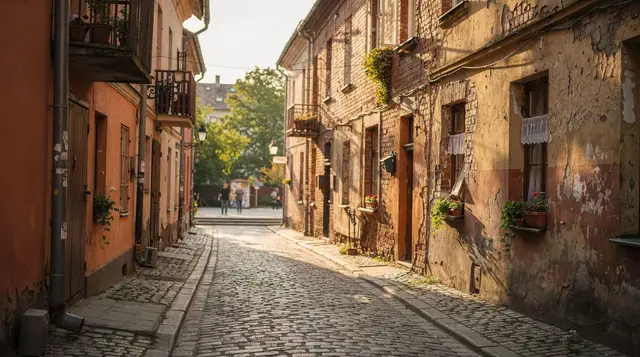
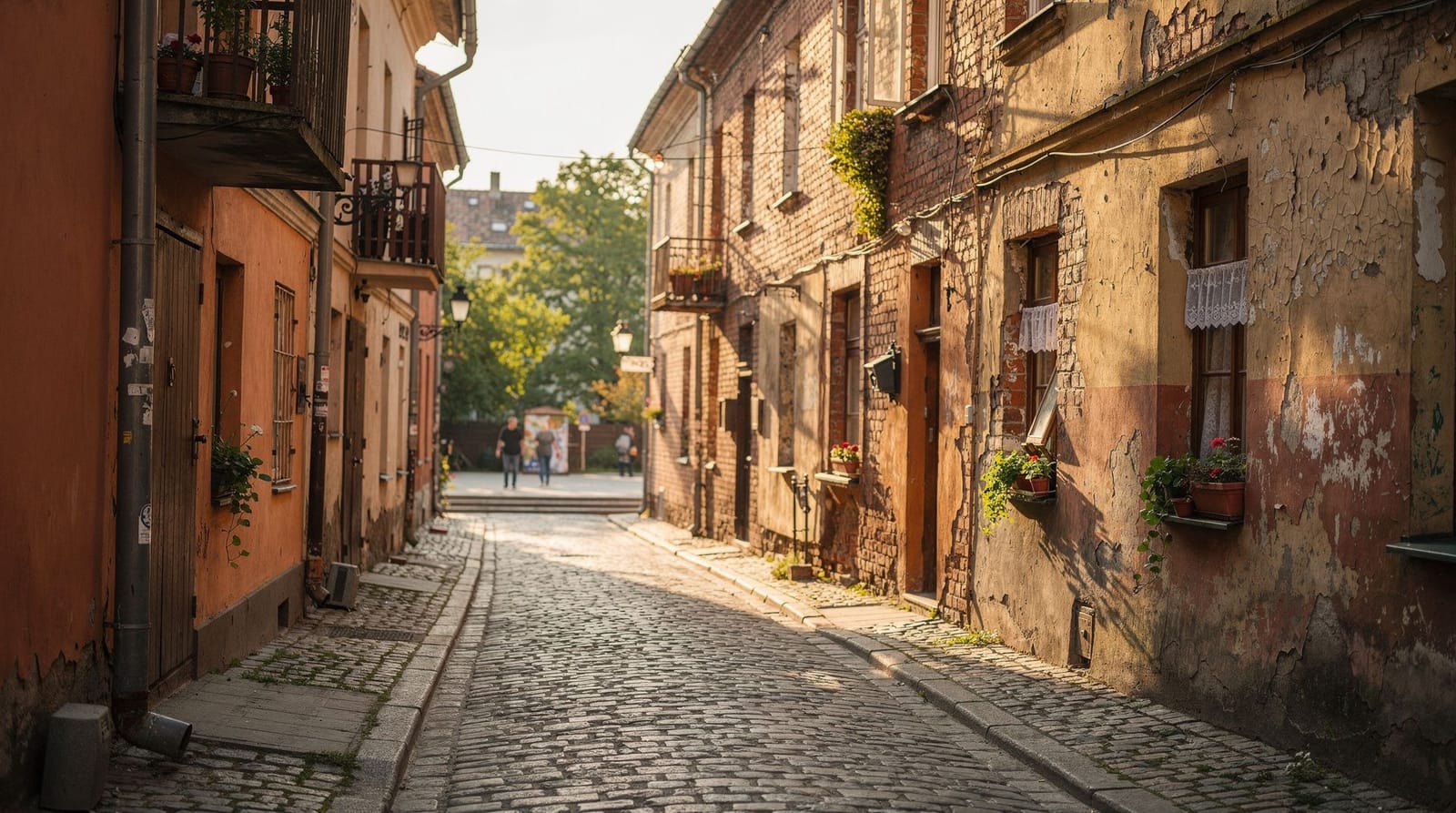
Before entering any museum, stand in ul. Szeroka and look at the street. This is one of the oldest streets in Kazimierz — the former centre of the Jewish commercial district. The long, low synagogue on the left (Old Synagogue), the buildings on both sides with their layered facades, the Remuh synagogue and cemetery at the far end: this street was the heart of Jewish Kraków for four centuries.
9:30 — Old Synagogue (Stara Synagoga)
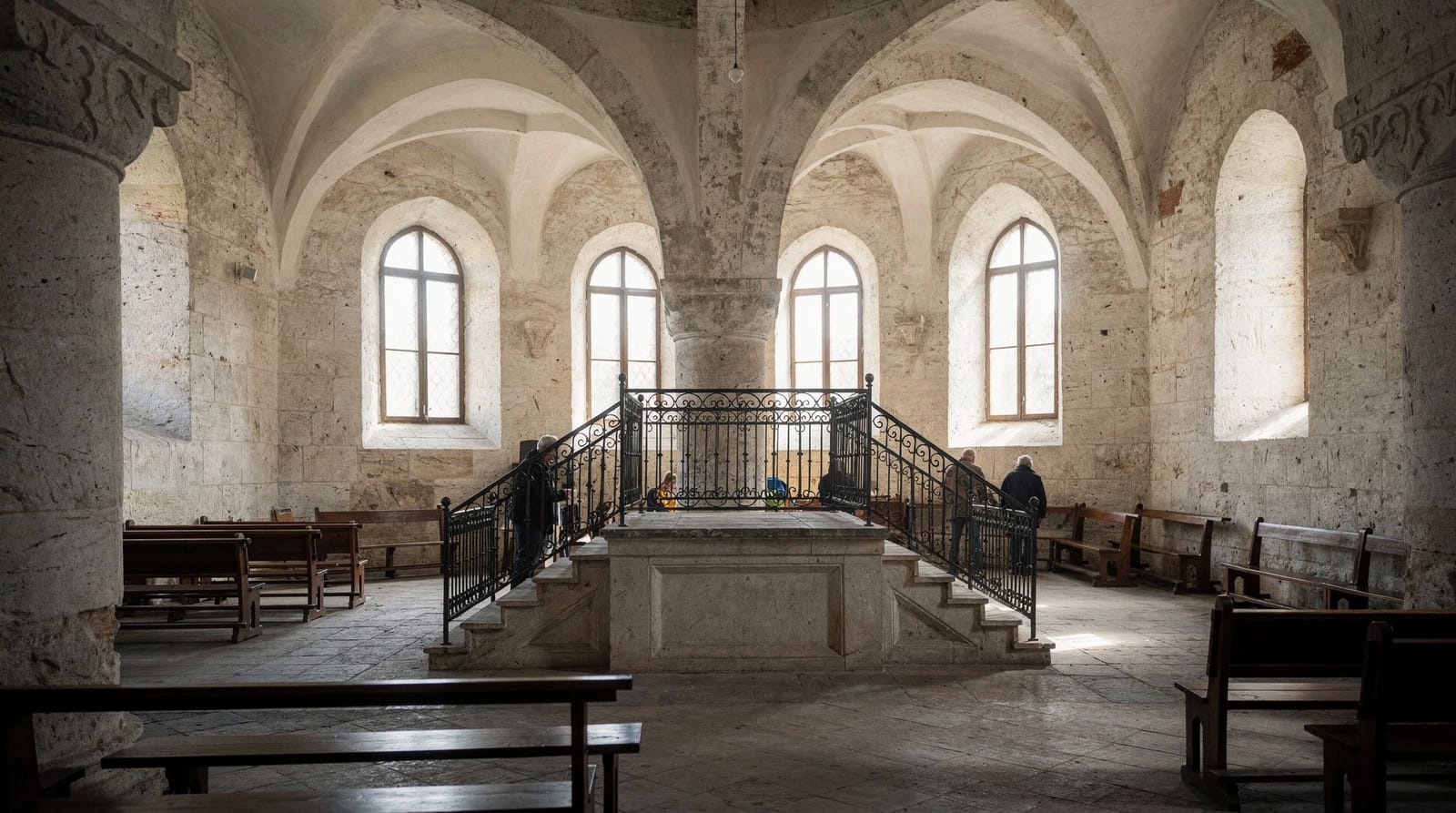
Entry 22 PLN (free on Mondays). The Old Synagogue is the oldest surviving synagogue in Poland — the Gothic shell dates from the 15th century, rebuilt in Renaissance style after a fire in 1557. During the Nazi occupation, the building was looted and used as a warehouse; the Jewish community converted it into a branch of the Historical Museum of Kraków after the war. The permanent exhibitions cover:
- Medieval synagogue architecture and its function
- Liturgical objects from Kraków’s Jewish community
- Jewish festivals and calendar
- The history of Jews in Kraków from 1335 to the Holocaust
Allow 45 minutes. The bimah (the raised prayer platform) in the centre is original; the women’s gallery above is 16th century.
10:30 — Remuh Synagogue and Cemetery
Entry 10 PLN (ul. Szeroka 40). The Remuh Synagogue is still an active house of worship — one of very few functioning synagogues in Kraków. Modest dress required; men must cover their heads (paper kippot available at the entrance). The interior is Baroque, with an ornate carved ark from the 18th century.
The Remuh Cemetery beside the synagogue is one of the oldest Jewish cemeteries in Poland, in use from 1533 to 1799. The gravestones are exceptionally fine Renaissance and Baroque examples. Many were buried beneath a wall during the war and discovered in the 1950s — the excavated stones are displayed against the perimeter wall. The tomb of Rabbi Moses Isserles (the Remuh, after whom the synagogue is named), one of the greatest 16th-century Jewish legal scholars, is marked with candles and prayers left by visitors from around the world.
Allow 30 minutes.
11:30 — Galicia Jewish Museum
The Galicia Jewish Museum (ul. Dajwór 18, 35 PLN) is the essential Kazimierz experience for understanding the community that existed here and what happened to it. The permanent exhibition “Traces of Memory” is a series of large-format photographs by Chris Schwarz documenting Jewish sites across Galicia — synagogues in various states of decay, cemeteries reclaimed by forest, memorial plaques on ordinary walls, the few elderly survivors photographed at their homes.
The exhibition is not chronologically structured. It moves between what existed, what was destroyed, what was erased, and what has been remembered — forcing the viewer to constantly reassemble the picture. Allow 60–75 minutes. The museum shop has the best selection of books on Jewish Kraków and Galicia in Poland.
Krakow Galicia Jewish Museum entry ticket.
13:00 — Lunch in Kazimierz
Cafe Mleczarnia (ul. Meiselsa 20): a café-style lunch in a relaxed interior. 25–45 PLN per person. The name “Mleczarnia” (dairy) echoes the old Jewish dairy restaurants that occupied similar premises in this neighbourhood before the war.
Or Fabryczna No 5 (ul. Fabryczna 5, 40–65 PLN mains) for something more substantial.
14:30 — More synagogues
Kazimierz has seven synagogues surviving — the most in any district in Europe outside of Israel. After the Old Synagogue and Remuh, consider:
- High Synagogue (ul. Józefa 38, 10 PLN): 16th century, three storeys, Gothic windows; the prayer hall is on the upper floor above street-level storage (a common design in the period). The interior has recently been restored and has interesting Hebrew inscriptions on the walls.
- Isaak Synagogue (ul. Kupa 18, 10 PLN): 17th-century Baroque; inside, a short film on the Kazimierz Jewish community runs continuously. The ceiling ornament (decorative painted cartouches) is partially restored.
- Kupa Synagogue (ul. Warszauera 8, 10 PLN): small and atmospheric; operates as an exhibition space.
- Temple Synagogue (ul. Miodowa 24, 10 PLN): 19th-century Moorish Revival, the grandest in Kazimierz; prayer services on Shabbat and holidays.
Pick two based on time and interest.
16:00 — Guided walking tour
Krakow Kazimierz Jewish Quarter walking tour. An afternoon guided tour of Kazimierz synthesises the history you’ve been absorbing in individual sites — the communal infrastructure, the relation between the Polish and Jewish communities over six centuries, and the events of 1939–1945 in this specific geography. Many guides include personal family histories of Kraków Jews and specific stories from the wartime period.
18:30 — Plac Nowy and evening in Kazimierz
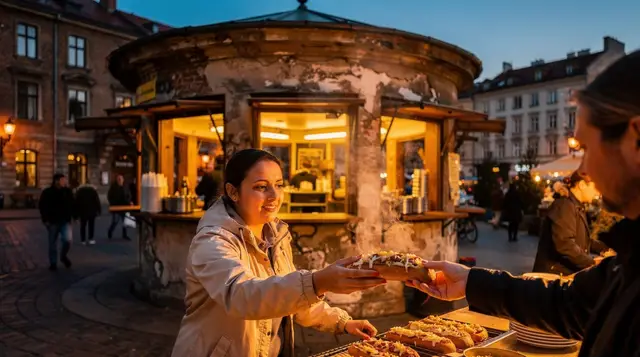
Plac Nowy was the pre-war Jewish market square — the commercial heart of the neighbourhood, with market stalls, butcher shops, and community life. The round kiosk in the centre of the square was built in 1900 as a kosher chicken slaughterhouse. Today it sells zapiekanki (12–18 PLN). The transition from kosher slaughterhouse to snack stand is part of the neighbourhood’s layered history.
Walk ul. Józefa for the evening café atmosphere. Alchemia (ul. Estery 5) for drinks; Café Singer (ul. Estery 20) for coffee in the sewing-machine-decorated interior. The café culture in Kazimierz today has Jewish Galician roots — the combination of intellectual conversation, music, and long evenings over coffee was established here long before 1939.
20:00 — Dinner
Dawno Temu na Kazimierzu (“Once upon a time in Kazimierz,” ul. Szeroka 1): Jewish-Polish cuisine in a traditional setting, mains 50–80 PLN. The food is genuinely good — cholent (slow-cooked stew, Friday–Saturday), gefilte fish, borscht. A fitting final dinner for Day 1 of a Jewish heritage trail.
Or Klezmer Hois (ul. Szeroka 6, mains 50–80 PLN): similar tradition, with occasional live klezmer music (check schedule).
Day 2: Podgórze — the Ghetto and Schindler
9:00 — Cross the Vistula
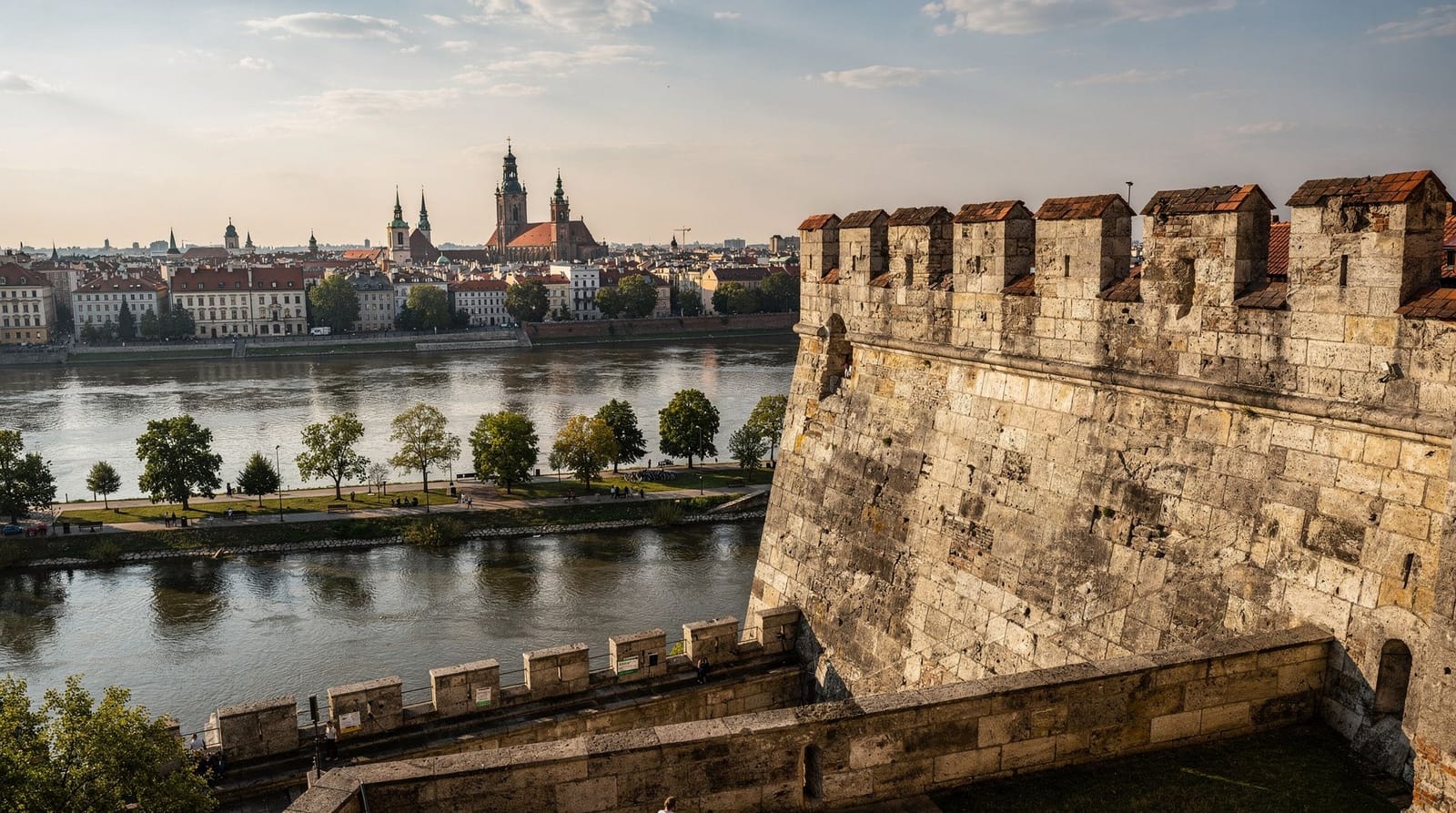
Walk from Kazimierz across the Józef Piłsudski Bridge (or tram 3/24 across). The bridge connects the pre-war Jewish quarter to the Ghetto established by the Nazis in 1941. Jewish families were ordered to move from their homes across the city into the Podgórze Ghetto — taking what they could carry. The distance from Kazimierz to Podgórze is 15 minutes on foot. The bureaucratic violence of that forced move is easier to imagine standing on the bridge.
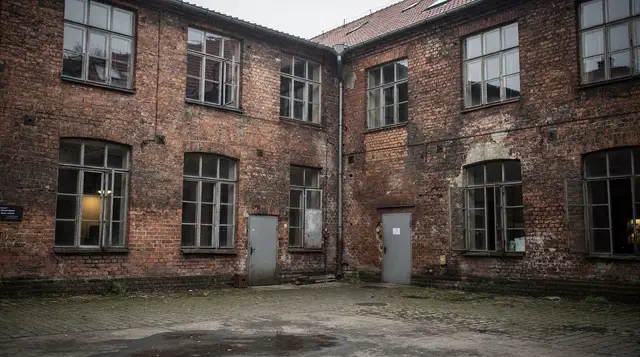
9:30 — Schindler’s Factory Museum
Schindler’s Factory (ul. Lipowa 4, 60 PLN, free on Mondays with no booking). Book timed entry in advance — essential in summer.
Krakow Schindler Factory Museum guided tour provides the individual stories within the occupation context. For visitors specifically interested in the Jewish community perspective, ask the guide to focus on the Ghetto liquidation (March 13, 1943) and the selection process for Schindler’s list, which was genuinely life-or-death.
Allow 90–120 minutes.
11:30 — Ghetto Heroes’ Square
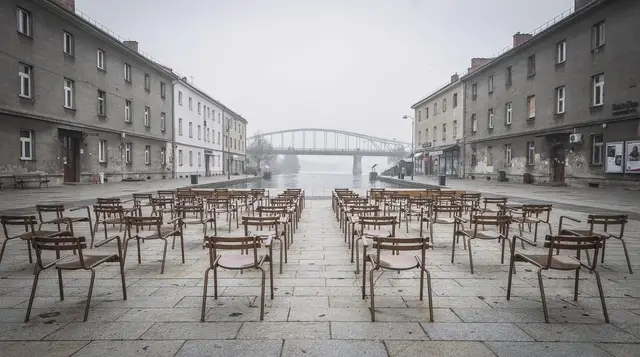
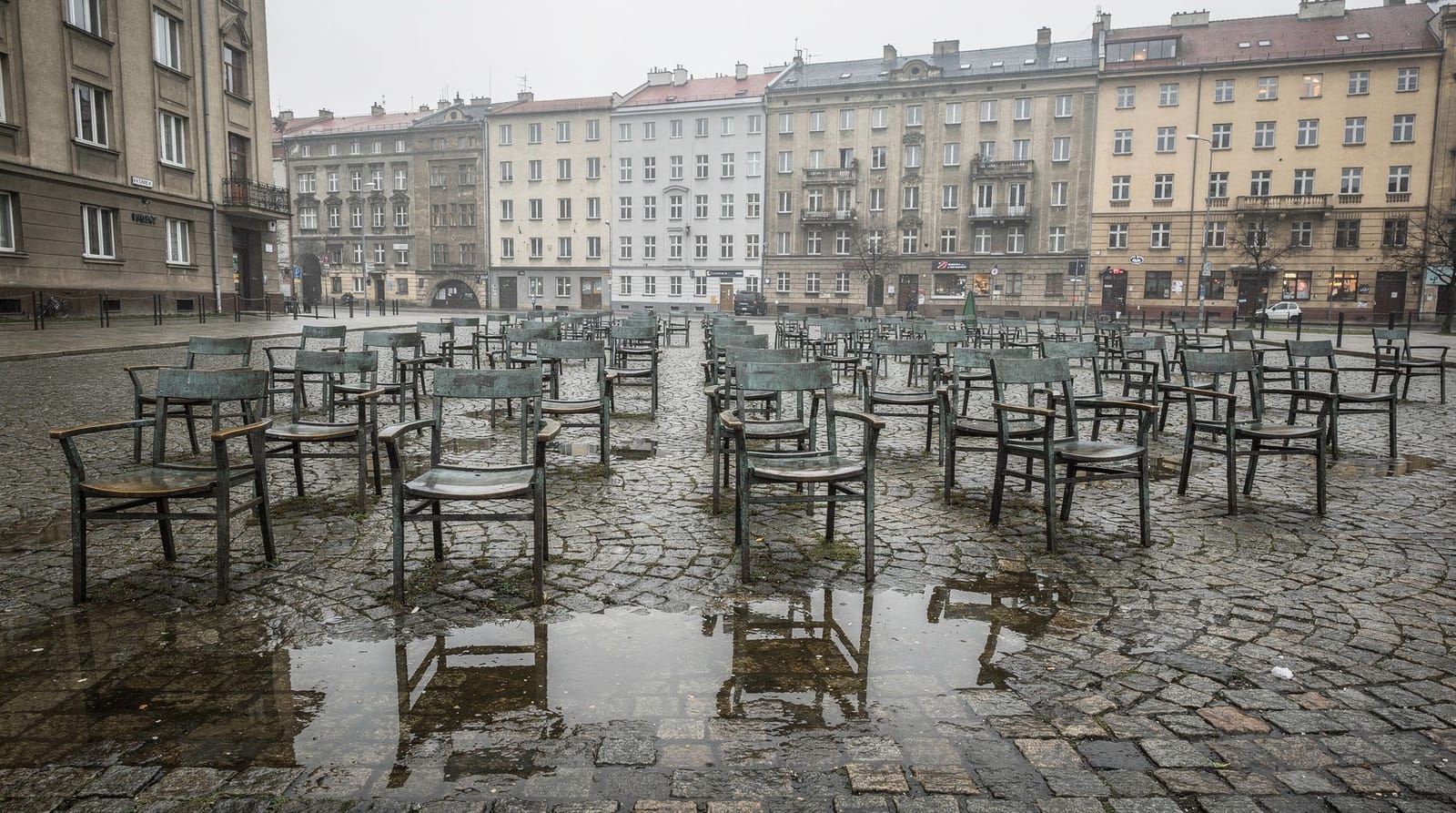
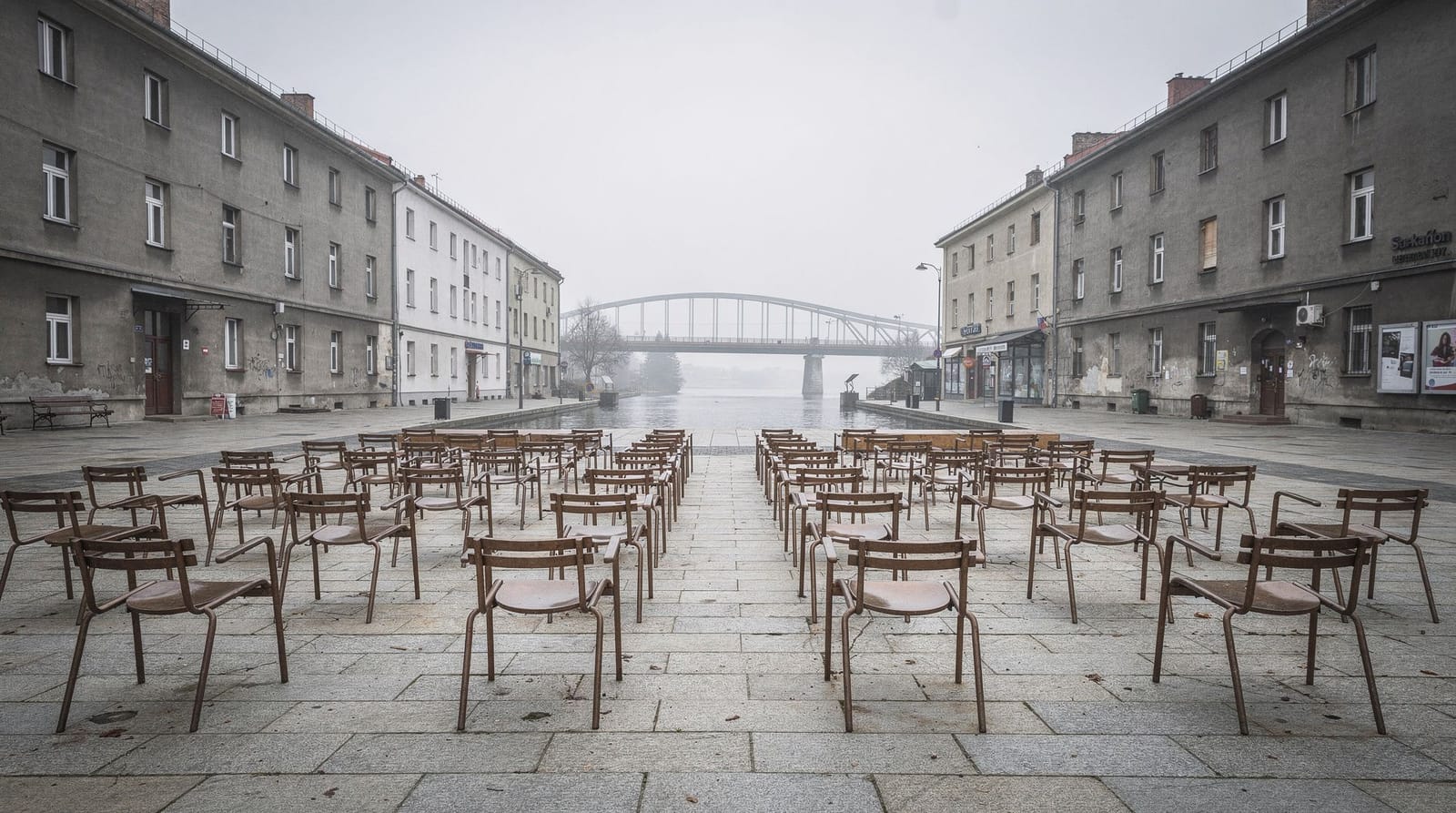
Walk west to Plac Bohaterów Getta (Ghetto Heroes’ Square). Before 1941 this was an ordinary Podgórze market square. From 1941 to 1943 it was inside the Ghetto wall. Today the 33 chairs in the empty square — each representing 2,000 murdered people — create a memorial space that is deliberately understated and deliberately public.
The square is overlooked by ordinary apartment buildings whose residents walk past the chairs daily. This integration of memorial and living space is not accidental — Kraków has chosen not to create an enclosed museum-memorial zone but to leave the chairs in the open air of an ordinary neighbourhood.
12:00 — Pharmacy Under the Eagle
Apteka Pod Orłem (ul. Plac Bohaterów Getta 13, entry 22 PLN, free on Wednesdays). Tadeusz Pankiewicz’s pharmacy is the subject of the only first-person civilian account of life inside the Kraków Ghetto. His memoir (The Pharmacy in the Kraków Ghetto, available in the museum shop) describes three years of witnessing: the daily degradation, the random violence, the deportations, and the specific acts of humanity that occurred within them.
The museum is small — three reconstructed rooms from the pharmacy period, personal objects, documents, photographs. Allow 45 minutes. The scale is appropriate: this is a story about specific people in a specific building, not statistics.
13:00 — The Ghetto wall fragments
Walk south on ul. Lwowska to the two surviving sections of the Ghetto wall. The wall ran 3 km around the Ghetto perimeter. The surviving sections (approximately 30 metres in total, in two locations) are made of the same tombstone-shaped blocks throughout — a deliberate design choice by the Nazi architects. The original boundary ran through streets, between buildings, and across courtyards; the physical remnant shows how much of the urban fabric it cut through.
A guided tour of the Ghetto area provides the spatial history that’s hard to reconstruct from a map: Krakow Jewish Ghetto walking tour.
14:00 — Lunch in Podgórze
Cafe Ważka (ul. Józefińska 10): good café lunch in the Podgórze neighbourhood, 30–50 PLN. The neighbourhood around Plac Bohaterów Getta is not yet heavily touristified — the restaurants are local and the prices reflect it.
15:30 — Jewish Culture Festival note (seasonal)
If visiting in July: the Jewish Culture Festival (Festiwal Kultury Żydowskiej, krakowjewishfestival.pl) takes place in late June/early July (2026 edition: 1–5 July), centred on Kazimierz. It is Europe’s largest Jewish cultural festival — concerts, film screenings, exhibitions, workshops, and the Grand Finale concert in ul. Szeroka (free, 30,000+ attendees). The festival is secular and celebratory, not memorial — it’s about the living culture, not only the destruction. Visiting during the festival adds a profound dimension to this itinerary.
16:00 — MOCAK and the factory site
MOCAK Museum of Contemporary Art (ul. Lipowa 4, adjacent to Schindler’s Factory, 30 PLN): the museum building incorporates original factory structures from the Schindler era. Even if contemporary art is not your primary interest, walking the building’s relation to the Schindler-era footprint is historically interesting. The permanent collection is free on Thursdays.
17:30 — Return to Kazimierz
Tram 3 back north across the Vistula. Spend the final evening in Kazimierz. The Vistula embankment at the Kazimierz side has views of Wawel Castle upstream; in summer the barki (floating bars) are moored here.
19:30 — Final evening
The Jewish Culture Festival aside, the best Jewish Kraków evening is a slow walk through Kazimierz after dinner. The streets are quieter than in the afternoon, the cafés are full, and the neighbourhood’s particular combination of beauty and melancholy is most present after dark.
Final dinner at Marchewka z Groszkiem (ul. Mostowa 2): straightforward Polish food at local prices, 35–60 PLN mains. Or return to Dawno Temu na Kazimierzu for a second night.
2-day summary at a glance
| Day | Focus | Tone |
|---|---|---|
| Day 1 | Kazimierz synagogues, Galicia Jewish Museum, Plac Nowy | living heritage, pre-war community |
| Day 2 | Podgórze Ghetto sites, Schindler’s Factory, Pharmacy Under the Eagle | occupation and memory |
Extending the trail
Two natural extensions deepen this trail if you have a third day. Auschwitz-Birkenau, 70 km west, is where the majority of the people whose lives this trail traces were murdered — treat it as its own day, not an add-on (see the Auschwitz from Kraków guide for logistics). Closer to the city, the former ghetto and Plaszów camp site has additional context on the geography of the occupation that this trail covers only in outline. For visitors specifically researching family history, the Jewish Krakow history overview is a useful primer to read before arriving.
Jewish Kraków context: practical notes
The community today: There are approximately 200 Jewish residents in Kraków today, served by the Jewish Community Centre (ul. Miodowa 24) — an active social hub with cultural programming, a café, and language classes. The JCC is open to visitors; check their programme at jcckrakow.org.
Genealogy research: For visitors researching family roots in Kraków and Galicia, the Jewish Genealogical Society of Poland has an office in Kraków, and the Galicia Jewish Museum has staff who assist with genealogical queries. The main archive is the State Archive of Kraków (ul. Sienna 16).
Respectful visiting of synagogues: Men must cover their heads in active synagogues; paper kippot are provided. Dress modestly (covered shoulders and knees). The Old Synagogue and High Synagogue are museums; the Remuh and Temple are active houses of worship with more specific guidelines.
On the Nazi occupation of Kraków more broadly: This trail focuses on Jewish Kraków specifically, but the occupation affected the whole city — professors deported in Operation Sonderaktion Krakau, the Home Army resistance operating clandestinely throughout, and the administrative machinery of the General Government headquartered at Wawel Castle itself. The Kraków under Nazi occupation guide and the Home Army resistance guide fill in this wider context if you want to understand how the Jewish community’s fate connected to the occupation of the city as a whole.
Frequently asked questions about Kraków’s Jewish heritage trail
Is there a living Jewish community in Kraków today?
Yes, though small — approximately 200 members. The Jewish Community Centre (ul. Miodowa 24) runs cultural events, Shabbat dinners, and educational programmes. The Remuh and Temple Synagogues hold regular services. The community has grown significantly since the 1990s, partly through returning descendants of Kraków Jewish families and partly through the influence of the Jewish Culture Festival, which has renewed international interest in the neighbourhood.
What is the Jewish Culture Festival and when does it run?
The Festiwal Kultury Żydowskiej (krakowjewishfestival.pl) takes place in late June/early July (2026 edition: 1–5 July). It’s the largest Jewish cultural festival in Europe — concerts, klezmer music, film screenings, exhibitions, workshops, and the free Grand Finale concert in ul. Szeroka attended by 30,000+ people. It is a celebration of living Jewish culture, not a memorial event, though the historical context of Kazimierz is always present. Visiting during the festival adds a completely different dimension to the neighbourhood.
How many synagogues survived in Kazimierz?
Seven synagogues survive in Kazimierz: Old Synagogue, Remuh, High Synagogue, Isaak Synagogue, Kupa Synagogue, Temple Synagogue, and Poper Synagogue. Several more were destroyed during the Nazi occupation. The surviving synagogues represent architectural styles from the 15th century (Gothic) to the 19th century (Moorish Revival), making Kazimierz one of the most architecturally diverse Jewish heritage sites in Europe.
Should I visit Auschwitz as part of this heritage trail?
That is a personal decision. Auschwitz-Birkenau is the place where the majority of Kraków’s Jews were murdered — it is the end of the story that begins in Kazimierz. Many visitors on a Jewish heritage trail find the visit to Auschwitz necessary for the full historical picture. It should be treated as its own day, not appended to this itinerary. See the Auschwitz visiting guide and the WWII history itinerary.
Can I hire a specialist Jewish heritage guide in Kraków?
Yes — several licensed guides specialise in Jewish history and heritage in Kraków and Galicia. The Jewish Quarter walking tour on GetYourGuide uses licensed guides trained in the period. The Galicia Jewish Museum can also recommend specialist guides for more in-depth genealogical or academic visits. A specialist guide makes a substantial difference to the depth of the experience.
Is one day enough for the Jewish heritage trail?
It’s possible but compressed. One day realistically covers either Kazimierz’s synagogues and the Galicia Jewish Museum, or Podgórze’s Ghetto sites and Schindler’s Factory — not both properly. If you only have one day, most visitors get more from Podgórze’s specific, human-scale sites than from a rushed synagogue circuit. Two days, as this trail is structured, is the honest minimum for both halves of the story.
How does this trail differ from the WWII history itinerary?
This trail focuses specifically on the Jewish community’s story — its 600-year presence in Kraków, the Kazimierz quarter, and the Ghetto and Holocaust as the culmination of that history. The WWII history itinerary covers the broader occupation of Kraków, including Auschwitz-Birkenau and the Plaszów camp, with the Jewish community’s experience as one strand among several. They overlap at Kazimierz and Podgórze but serve different purposes.
Is Kazimierz safe to walk at night?
Yes, generally — Kazimierz is a well-lit, busy neighbourhood with cafés and bars open well into the evening, and it’s one of the more walked-through parts of Kraków after dark. The usual city precautions apply, but there’s no specific reason to avoid an evening walk through the streets this trail covers; several of the recommended dinner spots are best experienced after dusk.
Top experiences
Bookable activities with verified prices and instant confirmation on GetYourGuide.