Krakow 4-day itinerary: city plus Auschwitz and Wieliczka
From Krakow: Auschwitz-Birkenau guided tour & hotel pickup
Duration: 3.5h
Four days in Kraków: the complete city and its most important excursions
Four days allows Kraków to unfold at a natural pace. The city itself — Old Town, Kazimierz, Podgórze — needs two full days. Auschwitz-Birkenau deserves its own day, not a rushed morning. Wieliczka is a genuine half-day underground, not an hour. This itinerary gives each destination what it needs.
A note on Auschwitz: visiting Auschwitz-Birkenau is not an entertainment option. It is an encounter with the systematic murder of 1.1 million people, mostly Jews, at a specific site that still exists. The ethics of how to visit matter. Plan the day with emotional space — don’t schedule an evening show or a vodka tour after.
| Where | Old Town, Kazimierz, Podgórze, Auschwitz-Birkenau, Wieliczka |
| Cost | around 1,505–3,665 PLN/person incl. 3 nights |
| Time needed | 4 full days |
| Getting there | walkable city core; guided transport for both day trips |
| Best time | April–May or September–October for lighter Auschwitz crowds |
Day 1: Royal Route, Old Town, and Wawel
9:00 — Old Town orientation walk
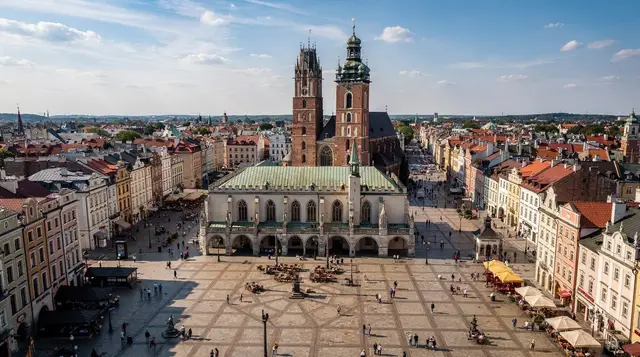
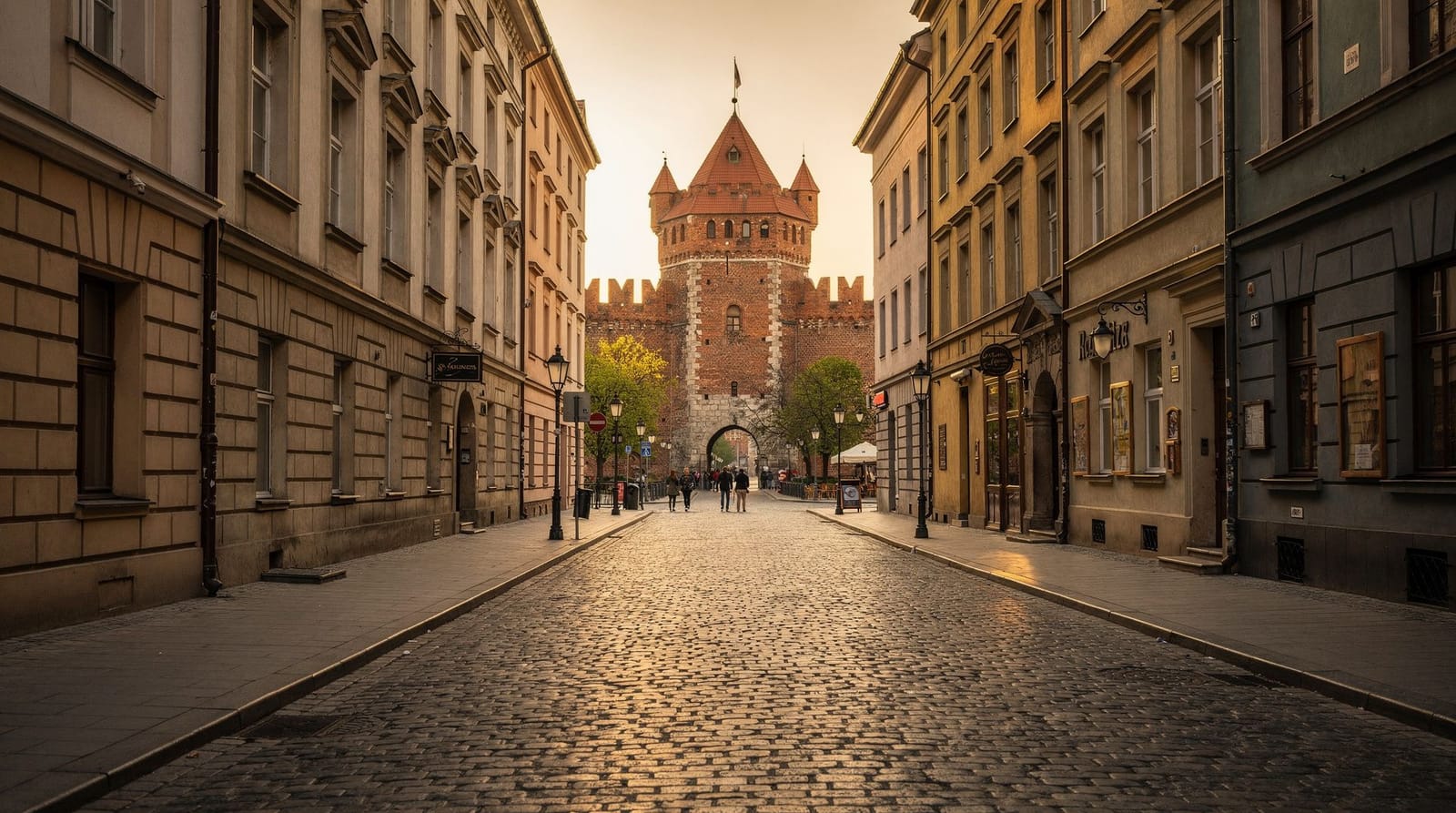
Begin with a guided Old Town walk to get your bearings: Krakow Old Town guided walking tour. A 2-hour guided walk at 9:00 (daily departures) covers the Barbican, Florian Gate, Rynek Główny, St. Mary’s Basilica, Town Hall Tower, and the start of the Royal Route. With the layout established, you can explore more efficiently for the rest of the trip.
11:00 — St. Mary’s Basilica and Sukiennice
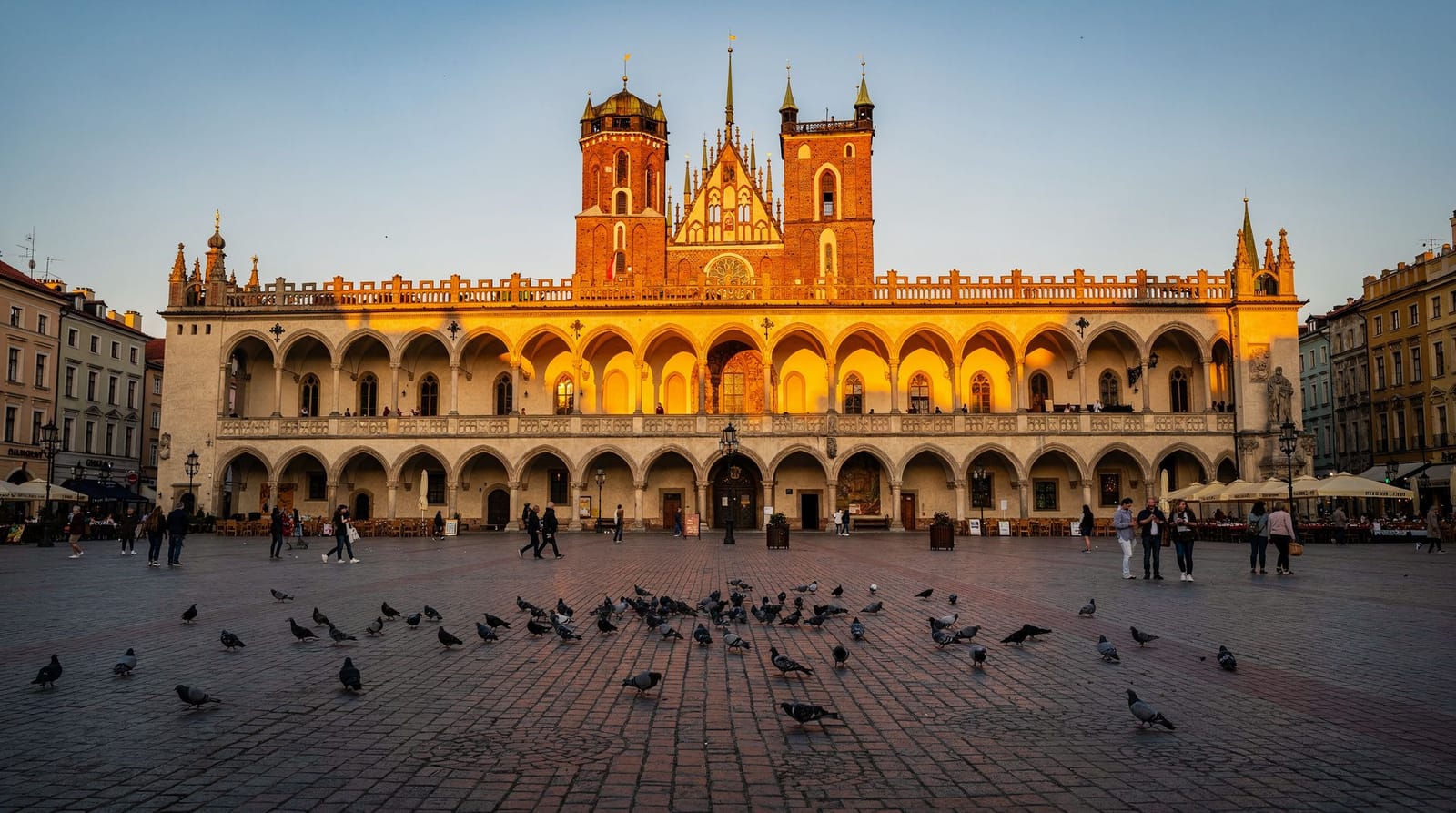
Enter St. Mary’s Basilica (20 PLN, side entrance on plac Mariacki; open Monday–Saturday 11:30–18:00, Sunday 14:00–18:00). The altarpiece by Veit Stoss is the main event — plan to be inside at 11:50 when the side panels open. The Sukiennice (Cloth Hall) gallery on the upper floor (35 PLN) has 19th-century Polish Romantic paintings including Jan Matejko’s monumental history canvases. Allow 30 minutes for the gallery.
13:00 — Lunch and Rynek Underground
Lunch at Pierogarnia Mandu (ul. Sławkowska 14) or Bar Mleczny Centralny (ul. Jagiellońska 1) — genuine Polish food at 15–35 PLN per dish.
At 14:00, descend into the Rynek Underground Museum (45 PLN, free on Tuesdays): Rynek Underground Museum guided tour. The medieval trade routes and market archaeology are fascinating — budget 75 minutes.
15:30 — Wawel Castle
Walk the Royal Route south to Wawel. Buy tickets for the State Rooms (57 PLN) and Wawel Cathedral (26 PLN) at the ticket pavilion. The State Rooms contain the collection of 142 Flemish tapestries ordered by King Sigismund Augustus — one of the largest and finest tapestry collections in the world. The cathedral holds the royal crypts; every major Polish ruler from Władysław I (1333) to recent decades has their tomb here.
The Dragon’s Den (15 PLN, open seasonally) is a 10-minute detour down limestone caves to the riverside, where a bronze dragon breathes fire every few minutes. Fun for all ages; the view of the Vistula from the base of Wawel is worth the descent.
18:00 — Evening on the Vistula
The embankment path below Wawel (Bulwar Czerwieński) runs east toward Kazimierz. Walk it at dusk for the best view of Wawel Castle illuminated against the sky. In summer, the floating bars (barki) are moored along the Kazimierz side — reach them in 20 minutes’ walk.
19:30 — Dinner in the Old Town
Miód Malina (ul. Grodzka 40): refined Polish cuisine in a vaulted cellar, mains 45–75 PLN. Or Szara Gęś (Rynek Główny 17): the best restaurant directly on the main square (mains 70–110 PLN, pricey but the terrace view is worth it once in the trip).
Day 2: Kazimierz and Podgórze
9:00 — Schindler’s Factory Museum
Book timed entry in advance (essential May–September). The museum (60 PLN, free on Mondays with no booking) at ul. Lipowa 4 covers the Nazi occupation of Kraków from 1939 to 1945 with installations, personal testimony, and period documents. Allow 2 hours.
Krakow Schindler Factory Museum guided tour with a guide is strongly recommended — the exhibition is dense and emotionally complex; a guide helps pace it and provides survivor stories the plaques can’t fully convey.
11:30 — Ghetto area
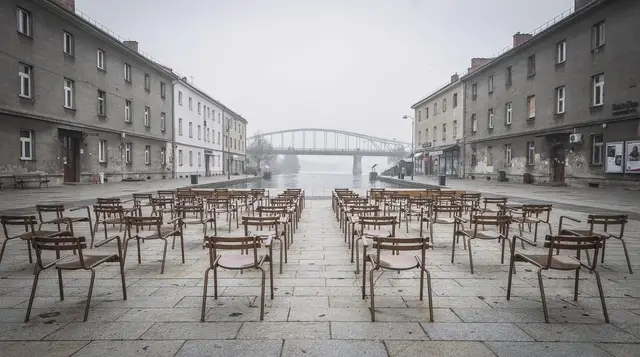
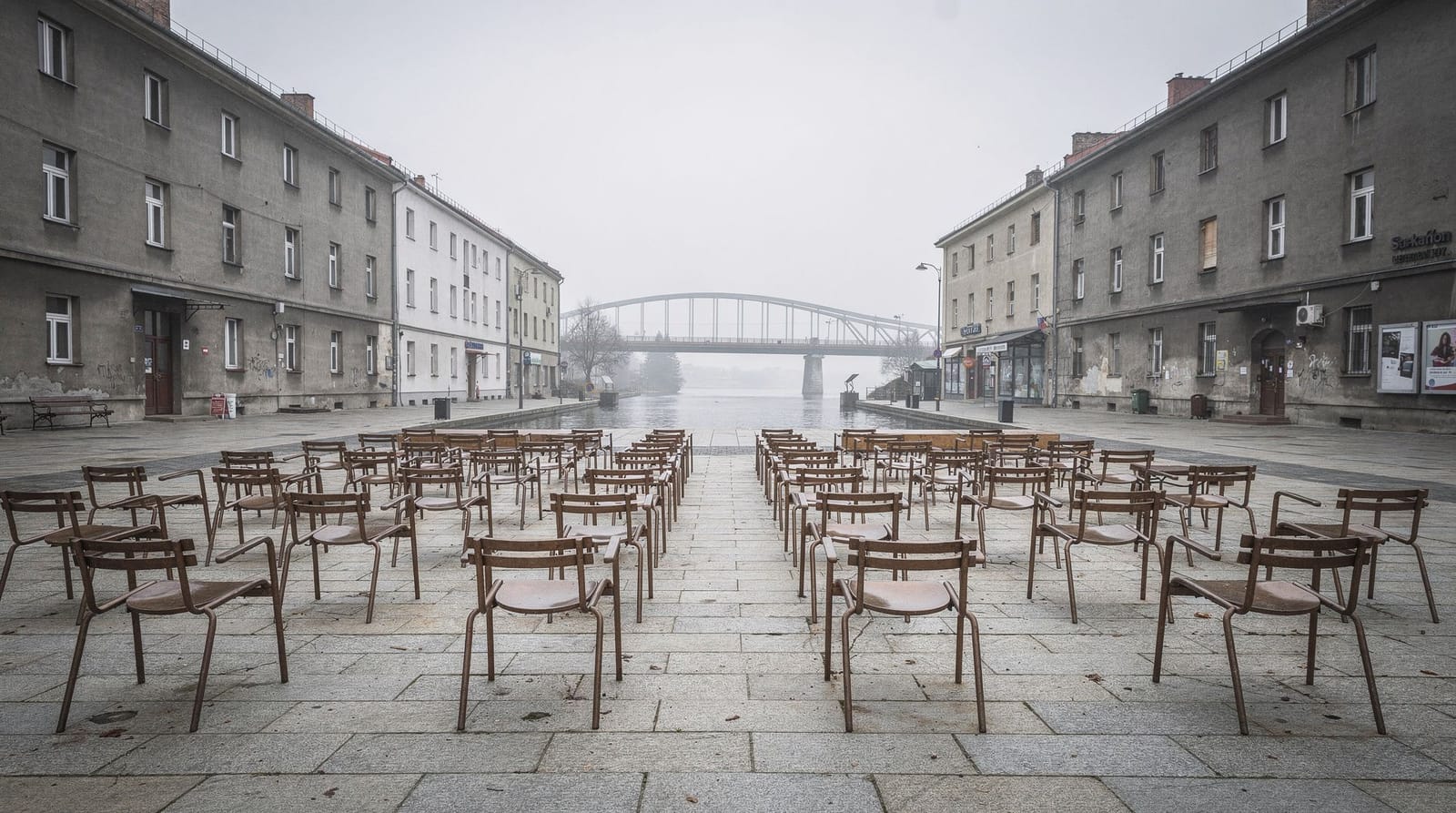
Walk west to Plac Bohaterów Getta: 33 chairs in an empty square, each one representing 2,000 people deported. The Pharmacy Under the Eagle (22 PLN) at the corner is the museum of Tadeusz Pankiewicz, who kept his pharmacy open throughout the Ghetto years, supplying medicine and hiding documents. The two remaining Ghetto wall sections on ul. Lwowska are 5 minutes’ walk south.
13:00 — Lunch in Kazimierz
Cross the Vistula on foot or by tram (3/19 toward Kazimierz). Café Mleczarnia (ul. Meiselsa 20): a bohemian milk-bar-style café with good soup and lunch plates (25–40 PLN). Or Hala Targowa market hall (ul. Grzegórzecka 3): cheap food stalls, closes at 14:00.
14:30 — Kazimierz synagogues and streets
Spend the afternoon in Kazimierz. The Galicia Jewish Museum (ul. Dajwór 18, 35 PLN) is the single most moving photographic exhibition in Kraków — “Traces of Memory” documents what existed before and what remains. The Old Synagogue (ul. Szeroka 24, 22 PLN) is Poland’s oldest, now a museum with Jewish religious objects, art, and historical documents. The Remuh Synagogue (ul. Szeroka 40, 10 PLN) is still active; the cemetery adjacent has 16th-century gravestones.
Join a guided walking tour of the quarter for context on the community that lived here: Krakow Kazimierz Jewish Quarter walking tour.
17:30 — Café and Plac Nowy
Rest at Alchemia (ul. Estery 5) — the neighbourhood institution for Kraków’s students and artists. Order a beer or kawa po turecku (Turkish-style coffee, 12–15 PLN). Then explore Plac Nowy — zapiekanki from the round kiosk (12–18 PLN), surrounded by the 19th-century market stalls that operate daily.
19:30 — Dinner
Zalewajka (ul. Józefa 26): bigos, żurek, roast duck — 40–65 PLN per main, no tourist premium. Or book the evening food tour for a structured exploration of both cuisines: Krakow 4-hour Polish food tour.
Day 3: Auschwitz-Birkenau (full day)
7:30 — Departure from Kraków
Auschwitz-Birkenau is 70 km west of Kraków — approximately 1 hour 20 minutes by car/minibus, or 1 hour 45 minutes by train to Oświęcim station plus 10 minutes’ walk to the Memorial.
The most reliable and contextually appropriate option is a guided tour with transport from Kraków:
From Kraków: Auschwitz-Birkenau guided tour with hotel pickup. This includes door-to-door transport, a licenced guide throughout the visit (mandatory for groups in peak season), and return to Kraków. Book 2–4 weeks ahead in summer; tours fill completely.
If travelling independently: trains from Kraków Główny to Oświęcim run approximately every 2 hours (journey 1h 30–1h 45 min, 15–25 PLN). From Oświęcim station, minibuses and taxis serve the 3-km distance to the Memorial.
Entry to the Auschwitz-Birkenau Memorial and Museum is free, but you need an entry card reserved in advance at visit.auschwitz.org. Arrive 30 minutes before your slot; many visitors prefer the early or late slots.
9:00 — Auschwitz I (main site)
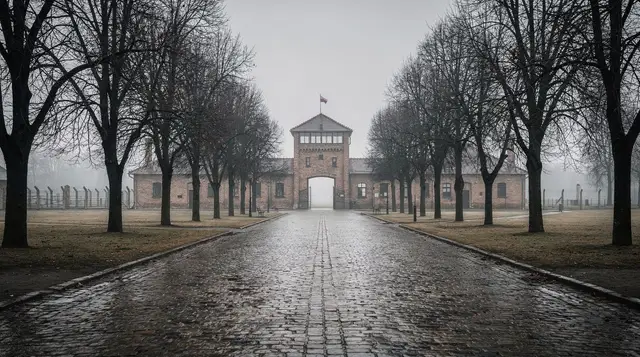
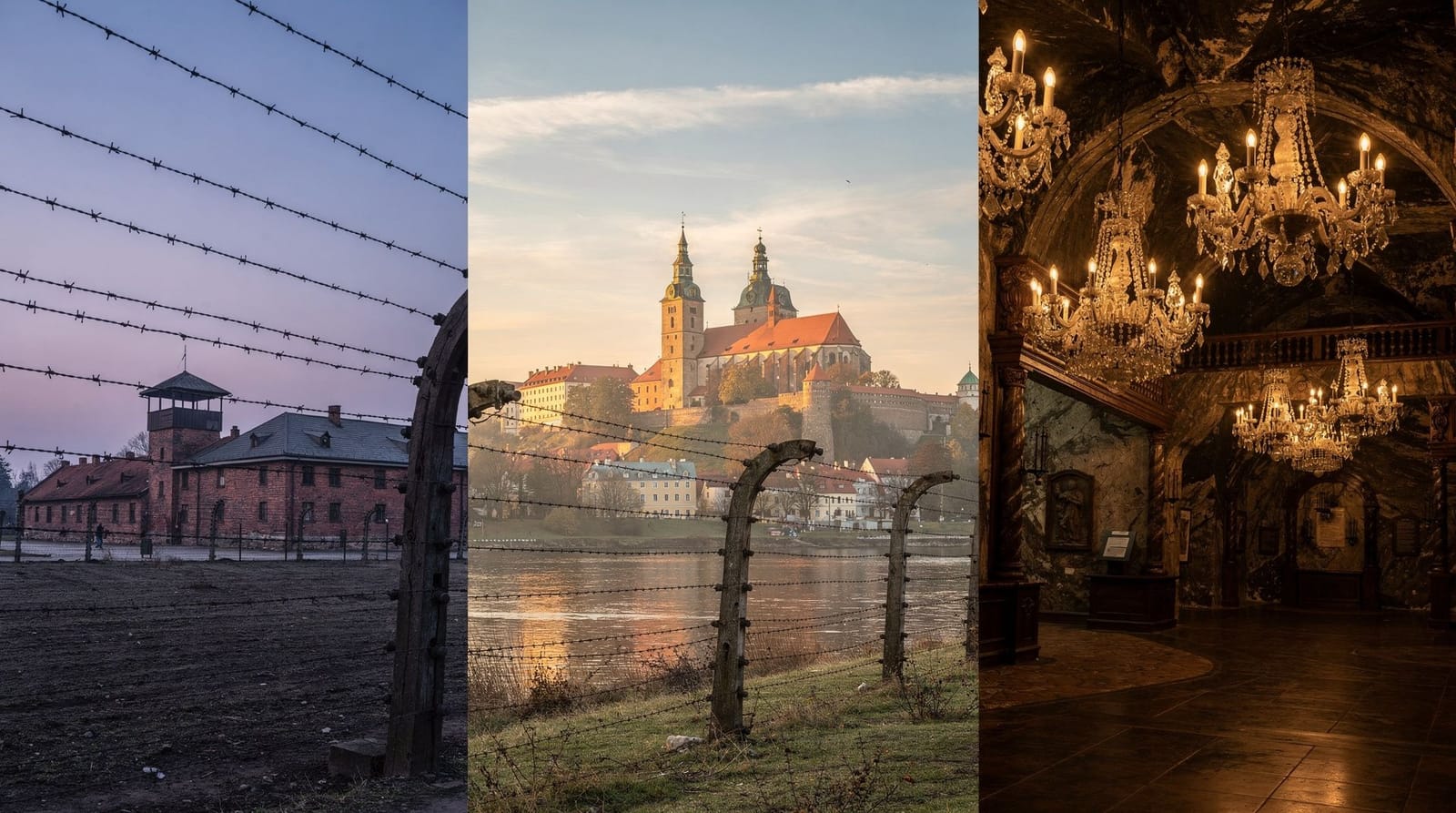
Begin at the main Auschwitz I camp — the administrative and punishment centre. The gate with the Arbeit Macht Frei inscription, the brick barracks converted into national and thematic exhibitions, the Wall of Death (Block 11 execution yard), and the gas chamber and crematorium reconstructed after the war (the original was demolished by the Nazis before liberation).
The main camp requires 2–2.5 hours for a thorough visit. English-language guided tours run continuously; the 3.5-hour guided tour covers both sites.
12:00 — Birkenau (Auschwitz II)
A 3-km bus or 40-minute walk links Auschwitz I to Birkenau. Birkenau is on a different scale entirely — 175 hectares, 300 original barracks, and the ruins of four crematoria deliberately destroyed by the SS before liberation in January 1945. The scale of industrial murder carried out here is only comprehensible on site. The International Monument between crematoria II and III marks where the bulk of the deportees were killed. Walk to the monument, walk the main camp road, and allow 90 minutes minimum.
14:00 — Depart for Kraków
Return transport with your tour operator, or retrace your route to Oświęcim station.
Evening in Kraków
This evening should be quiet. The visit to Auschwitz is psychologically heavy; plan for a simple dinner, a walk, or an early night. Do not book evening entertainment or large social dinners. The Planty park is good for a slow walk; the Vistula embankment is peaceful.
Day 4: Wieliczka Salt Mine and afternoon free time
9:00 — Depart for Wieliczka
The Wieliczka Salt Mine is 14 km southeast of Kraków. Options:
- Public bus MPK line 304: From Rondo Grunwaldzkie (or connecting tram); journey 35–40 minutes; the fare depends on the city ticket zones (check ztp.krakow.pl). Runs every 20–30 minutes.
- Guided tour with transport: From Kraków: Wieliczka Salt Mine tour and fast-track ticket includes transport, skip-the-line entry (valuable: walk-in queues can reach 45 minutes in summer), and guided tour underground.
10:00–13:00 — Underground
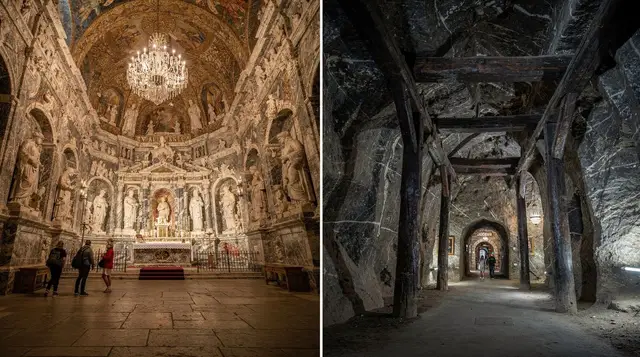
The Tourist Route covers 2 km and 800 steps (all descending, exit by lift). Highlights: St. Kinga’s Chapel (54 metres long, 12 metres high, every surface hand-carved in salt crystal by miners over 68 years), the salt lake chambers (Lakes Wessel and Erazm), and the carved salt figures in the corridors. Temperature underground: 14°C year-round. Wear a light layer.
Tickets start from 82 PLN (≈ 19.50 €) for the Polish-language tour; tours in English cost more and prices vary by season, so check kopalnia.pl. The tour takes 2.5–3 hours.
13:30 — Return and lunch
Return to Kraków for a late lunch. Bar Mleczny Centralny (ul. Jagiellońska 1) or any of the Kazimierz options. Allow 45 minutes for the bus journey.
15:00 — Afternoon options
Use the remaining afternoon for:
- Czartoryski Museum (ul. Pijarska 15, 65 PLN, free on Tuesdays with a timed ticket collected the same day): Leonardo’s Lady with an Ermine, one of only 20 paintings by Leonardo in the world. The painting was stolen by the Nazis in 1939, recovered in 1945, and is now in its permanent home in Kraków. Czartoryski Museum skip-the-line entry.
- Nowa Huta: Take tram 4 east for 30 minutes. The 1949 planned socialist city district is unlike anything in medieval Kraków — Soviet-scale boulevards, monumental architecture, a working steel mill. Walking tours run daily. See the Nowa Huta guide.
- Collegium Maius (ul. Jagiellońska 15, 15 PLN): Copernicus’s university, with the astronomical instruments he used in the 15th century. Guided tours every 30 minutes, last admission 16:00.
- Vistula cruise: A relaxed hour on the water. Krakow 1-hour evening Vistula River cruise.
18:30 — Final evening
Kraków’s best craft beer scene is a short walk from the Rynek. Craft Beer Corner (ul. Floriańska 13) and House of Beer (ul. Sławkowska 7) carry 30+ Polish craft taps. Or walk to the basement bars of Kazimierz for a final night with live music — Alchemia (ul. Estery 5) runs evening concerts Thursday–Sunday.
4-day budget per person
| Category | Low-end PLN | Mid-range PLN |
|---|---|---|
| Accommodation (3 nights) | 540–750 (budget) | 900–1 800 (boutique) |
| Day 1 (Old Town, Wawel) | 205–255 | 255–325 |
| Day 2 (Schindler, Kazimierz) | 150–200 | 200–250 |
| Day 3 (Auschwitz tour) | 120–200 | 200–280 |
| Day 4 (Wieliczka + museum) | 190–240 | 240–310 |
| Food (3 dinners + lunches) | 300–450 | 450–700 |
| Total | ≈ 1 505–2 095 PLN | ≈ 2 245–3 665 PLN |
How 4 days compares to 3 or 5
| Itinerary | Adds over 4 days | Drops from 4 days |
|---|---|---|
| 3 days | — | Auschwitz-Birkenau |
| 4 days | Auschwitz + Wieliczka, both given full days | — |
| 5 days | A full day in Zakopane and the Tatra Mountains | — |
If Auschwitz isn’t a priority for you, the 3-day itinerary covers the same city core plus Wieliczka in one day less. If you have an extra day and want mountains rather than more history, 5 days adds Zakopane without cutting anything here.
Booking sequence for a 4-day trip
Book in this order, as far ahead as you can: Auschwitz-Birkenau guided tour first (4–6 weeks ahead in summer — it sells out completely), Schindler’s Factory Museum second (1–2 weeks ahead), then Wieliczka and Wawel, which can usually be secured a few days out even in peak season. The poland visa and entry requirements guide is worth a check before you book flights if you’re travelling from outside the EU/Schengen area — requirements vary by nationality and change periodically.
Frequently asked questions about the 4-day Kraków itinerary
Should I do Auschwitz or Wieliczka first?
Do Auschwitz on Day 3 and Wieliczka on Day 4. Auschwitz is emotionally draining — doing it later in the trip means you have the city (Days 1–2) to establish a positive baseline before the Memorial, and Wieliczka the next day provides a lighter contrast. Don’t do both on the same day — each deserves its own full or half-day.
How far in advance should I book Auschwitz?
Book 4–6 weeks ahead in summer (June–August) for guided tours with hotel pickup, which fill completely. Timed-entry slots at visit.auschwitz.org go 30–60 days ahead for popular morning slots. The 8:00 am slot is often available within 1–2 weeks; midday slots are the hardest to get in July. If you’re visiting out of season (November–March), 1–2 weeks is usually sufficient.
Is the Wieliczka Salt Mine suitable for claustrophobic visitors?
The Tourist Route corridors are generally 2–4 metres wide and well-lit, though some sections are narrow and low. The main chambers (particularly St. Kinga’s Chapel) are cathedral-scale. Most moderately claustrophobic visitors manage without difficulty, though a few sections of tight stairway can be uncomfortable. The Miner’s Route and other specialist routes are more confined — stick to the Tourist Route.
Can I combine Auschwitz and Wieliczka in one day?
Not comfortably, and not recommended. Auschwitz takes 3.5–4 hours minimum on site, plus 3 hours’ transport from Kraków (1.5 hours each way), for a total of 6.5–7 hours. Wieliczka takes 2.5–3 hours underground plus 1.5 hours’ transport. The combined logistics make it a 10+ hour day with no space for meals or emotional processing. The dedicated combo 3-day itinerary shows how to do both without compressing them.
What is the best neighbourhood to stay in for a 4-day visit?
Stay within the Planty ring (the belt of gardens encircling the Old Town) for maximum walkability. The Old Town itself is pedestrianised; most sights are within 15 minutes on foot. Kazimierz is 20 minutes’ walk south and is a valid alternative with more affordable accommodation and a younger atmosphere. Avoid hotels in Podgórze or Nowa Huta — interesting neighbourhoods but inconveniently distant for a sightseeing-focused stay.
Should children join the Auschwitz day?
The Memorial itself recommends against visits for children under 14, given the disturbing physical evidence in some exhibition blocks. If you’re travelling as a family, consider having one adult stay in Kraków with younger children while another visits Auschwitz, or skip Day 3 entirely — the family-friendly day trips guide has age-appropriate alternatives for that day.
What’s the best way to handle Auschwitz photography and etiquette?
Dress modestly, keep your voice down throughout, and avoid posed or smiling photographs anywhere near the gas chambers, crematoria, or the execution wall — this applies even where photography is technically permitted. The visiting Auschwitz ethics guide covers specific dos and don’ts in more depth than a single FAQ answer can.
Top experiences
Bookable activities with verified prices and instant confirmation on GetYourGuide.