Fake amber souvenirs in Kraków: how to spot the difference
Krakow: Old Town guided walking tour
Duration: 3h
How do I know if amber sold at Kraków's market is genuine?
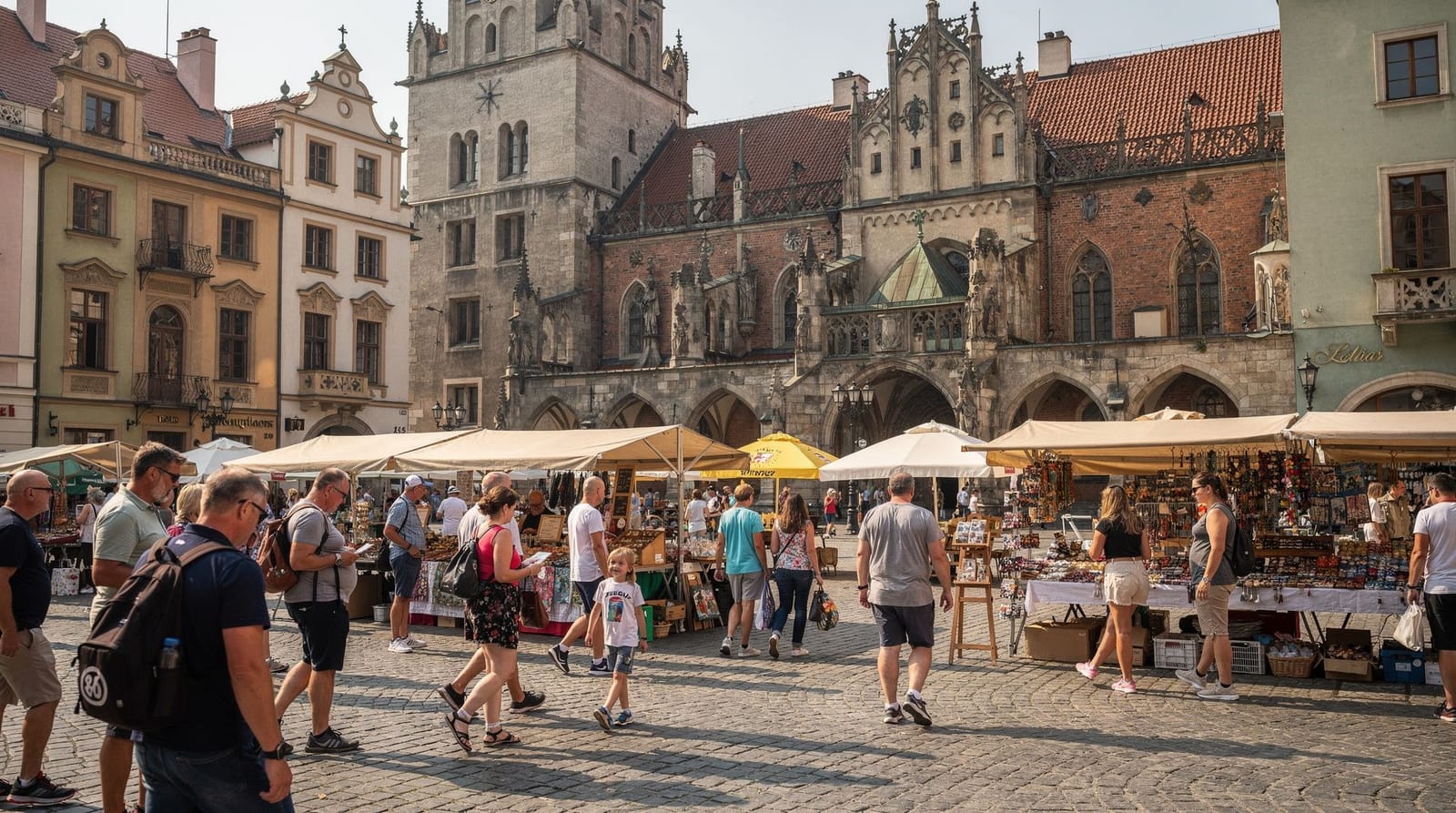
The Sukiennice (Cloth Hall) market stalls sell a mix of genuine and synthetic resin. Genuine Baltic amber floats in saturated saltwater and feels warm to the touch; glass and plastic sink. Buy from certified jewellers with provenance documentation, or ask for written certification. Price alone is not a reliable indicator — both real and fake can be expensive.
| Where | Sukiennice (Cloth Hall), Rynek Główny; certified jewellers on ul. Grodzka/Kanonicza |
| Cost | around 80–350 PLN for genuine simple pieces |
| Time needed | 15–30 minutes to test and buy carefully |
| Best test | Saltwater float test (bring your own solution) |
| Best time | October–April, outside peak tourist crowds |
Poland and amber: the background
Baltic amber — known in Polish as bursztyn — is fossilised tree resin approximately 44 million years old. The Baltic Sea coast (primarily the Kaliningrad Oblast in Russia and the Polish coastline near Gdańsk) is the world’s largest source of high-quality amber, containing an estimated 80% of the world’s accessible deposits. Amber with inclusions — ancient insects, plant matter, or bubbles trapped inside — is particularly valuable.
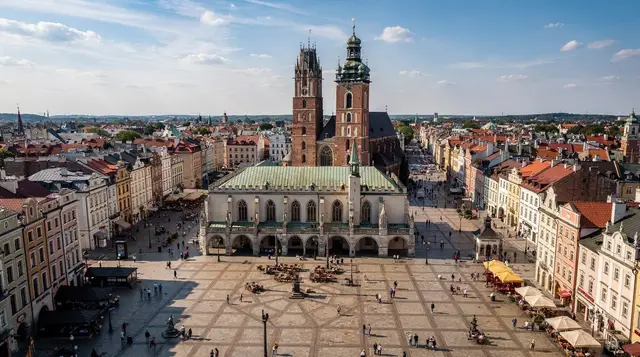
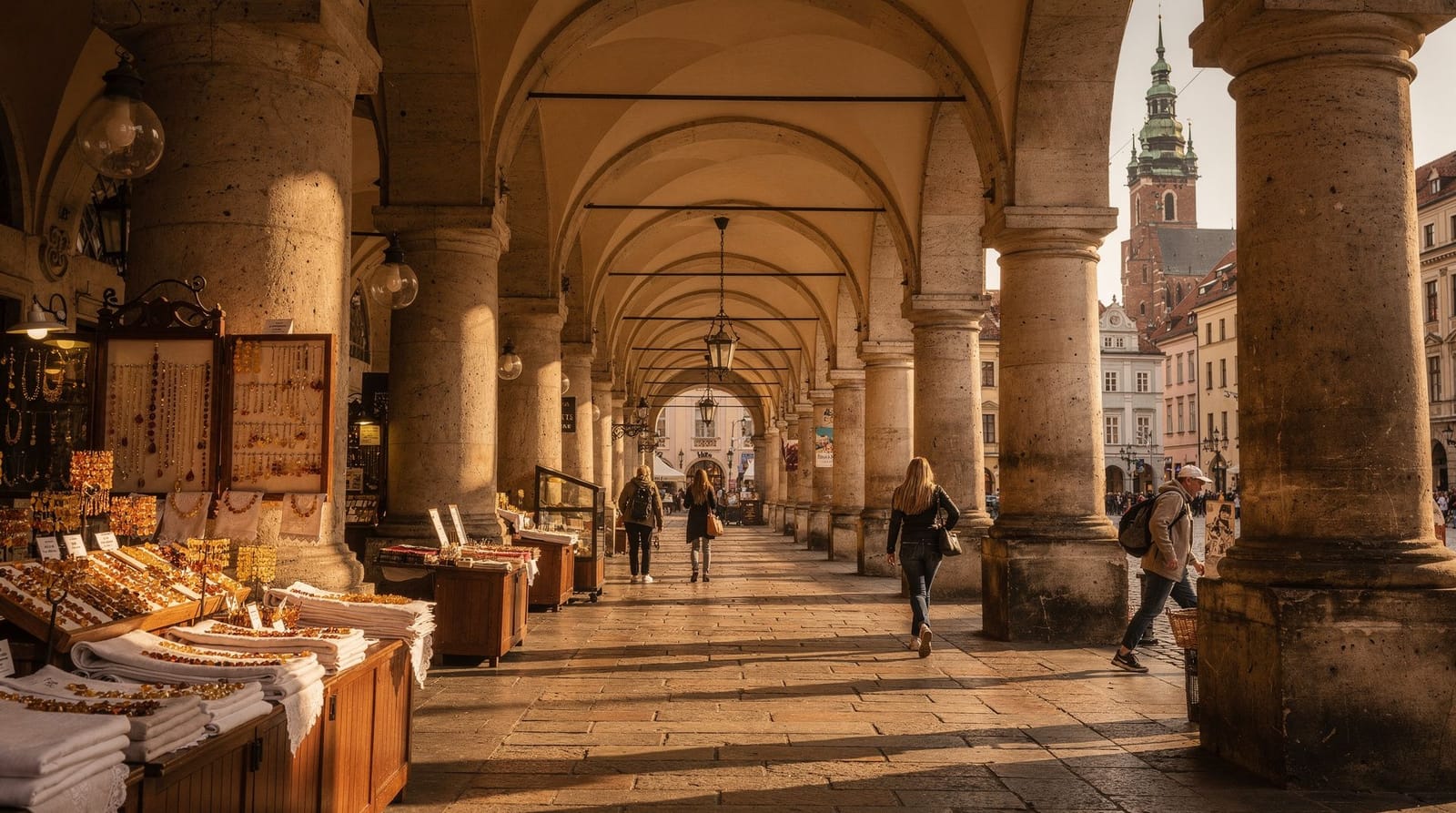
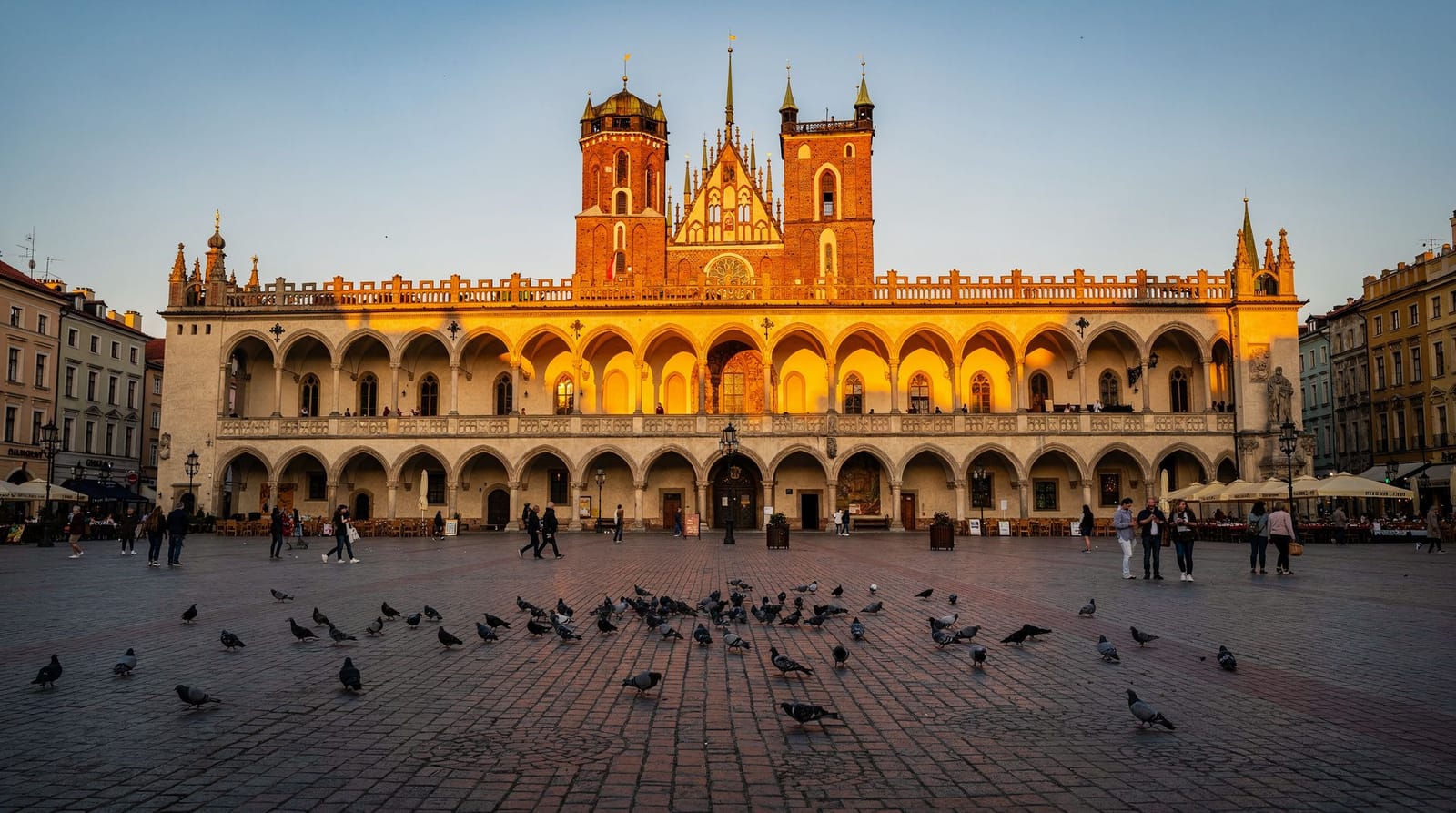
Poland has a strong tradition of amber craft and jewellery, centred in Gdańsk and the Baltic coast. Kraków is not a primary amber-producing area, but it is the country’s largest tourist city and therefore a major retail market for amber goods. The Sukiennice (Cloth Hall) in the centre of Rynek Główny has been a market for crafts and goods since the 14th century, and its lower level today hosts amber stalls that attract millions of visitors.
The problem: the tourist demand for amber, combined with the difficulty of authenticating it without tests, has created a substantial market for substitutes — synthetic resin (copal, glass, or thermoplastics) sold as genuine amber.
What you are buying at the Sukiennice
The Sukiennice’s lower level markets — accessed via the arched arcade around the ground floor of the building — are a legitimate craft market. They sell amber, folk crafts, lace, leather goods, regional ceramics, and general souvenirs. Some sellers are entirely honest; others operate in the grey area between genuine and synthetic.
The challenge for the visitor is that genuine amber and good-quality synthetic resin look nearly identical to the naked eye, particularly in the warm lighting of the market. Colour (amber’s characteristic honey-gold, orange, or cognac shades) can be replicated in resin; inclusions can be manufactured; even the tactile qualities are increasingly difficult to distinguish without testing.
Price is not a reliable indicator. Genuine amber stalls may price reasonably (a simple pendant: 60–150 PLN / ≈ €14–36); synthetic resin stalls may price ambitiously (200–400 PLN for a piece that would cost 15 PLN in resin wholesale). The premium for “amber” is partly based on the buyer’s inability to test it on the spot.
The three main substitutes
Copal: Young fossilised resin, often from tropical trees, that looks very similar to amber. It is not 44-million-year-old Baltic amber; it may be 200–1,000 years old. It has similar optical properties but different physical properties. Copal is sometimes sold honestly (it is a legitimate material in its own right) and sometimes sold as genuine amber at amber prices.
Glass: Glass amber imitations are heavy, cold to the touch, and harder than genuine amber. They do not float in saltwater. Good-quality glass can look convincing, but the weight and temperature sensation are different from genuine amber.
Thermoplastic resin: Modern synthetic materials moulded to amber shapes. Often fluorescent under UV light in ways that genuine amber is not (though this test has limitations).
Pressed or reconstituted amber: This is genuine amber — but not in the form implied. Small amber chips are ground up and heat-pressed into larger pieces. These are technically amber but sell at a significant premium over their component value, and inclusions in pressed amber are almost always fake (insects added during the pressing process).
How to test amber at the point of purchase
You cannot run laboratory tests in a market. But several field tests help:
The saltwater test
Dissolve enough salt in water to float a fresh egg (roughly 4–5 tablespoons per litre). Genuine Baltic amber floats in this solution. Most glass and plastic substitutes sink. Copal gives a mixed result — it may float initially and slowly sink. This is the most reliable field test but requires the seller’s cooperation (they need to allow you to dip the piece in your test).
The warmth test
Amber feels warm to the touch — warmer than glass or metal. It is a poor thermal conductor. Rub a piece quickly between your fingers; genuine amber warms more readily than glass. This is imprecise but useful for eliminating obvious glass fakes.
The static electricity test
Amber generates static electricity when rubbed vigorously. Rub the piece on a cloth and bring it close to small paper scraps; genuine amber will attract them. Most plastics also generate static, so this eliminates glass more reliably than resin.
The UV light test
Genuine Baltic amber fluoresces under UV light — typically a pale blue or green colour. Synthetic resins often fluoresce differently (brighter, more yellow, or not at all). A small UV torch is inexpensive and useful. Ask the seller if they object to you using one; refusal is informative.
Where to buy amber you can trust
Certified amber jewellers in Kraków
Several established jewellers on ul. Grodzka, ul. Floriańska, and ul. Kanonicza sell certified Baltic amber with provenance documentation. These are shops that serve local buyers alongside tourists — they have reputations to maintain and are less likely to substitute synthetic material. Look for:
- A certificate of authenticity (świadectwo autentyczności) issued by the seller
- The gemologist’s stamp or Polish Chamber of Commerce jeweller registration
- A shop that allows returns if the piece proves inauthentic
Galeria Amberada (ul. Grodzka) and several other named jewellers on the Royal Route offer certified pieces at premium prices. You pay more than at the Sukiennice, but the provenance is verifiable.
Ask for written certification
Any reputable seller at the Sukiennice should be able to provide a written receipt that describes the piece (type: “genuine Baltic amber,” weight in grams, description of inclusions if any). A seller who refuses to put “genuine Baltic amber” on a receipt is telling you something important.
Hala Targowa
The covered market at ul. Grzegórzecka (tram stop Hala Targowa) has vendors selling amber at considerably lower prices than the Old Town. These are less curated than certified jewellers but also less tourist-oriented — the price pressure of a local market tends to be more honest than a tourist market stall.
Fair prices for genuine amber
These ranges reflect genuine Baltic amber in simple settings (sterling silver pendant, bracelet, earrings) as of May 2026:
- Simple pendant (no inclusions, 1–3 grams): 80–180 PLN (≈ €19–43)
- Pendant with clear insect inclusion (genuine): 300–800+ PLN depending on the quality and rarity of the inclusion
- Bracelet (multiple amber beads): 150–350 PLN
- Earrings (matched amber drops): 80–200 PLN
Prices significantly below these ranges suggest synthetic material or very low-grade amber. Prices significantly above without corresponding certification suggest tourist premium pricing.
The amber grading system
Genuine Baltic amber is not a uniform material. Understanding the grading helps you interpret prices:
By colour: Baltic amber occurs in approximately 250 colour varieties. The most common are honey-amber (translucent golden), cognac amber (darker brown-amber), butter amber (opaque, creamy), and cherry amber (dark red-brown). Clarity generally adds value: clear amber with good optical transparency is more valuable than cloudy amber, unless the opacity is the specific type called “bone” or “foam” amber, which has its own collectors’ market.
By inclusions: Amber with preserved inclusions (insects, plant matter, air bubbles, water droplets) is significantly more valuable than clear amber. The value of an inclusion depends on: the rarity and completeness of the organism, the clarity of the amber around it, and its provenance documentation. A clearly visible, well-preserved ant in clear amber might retail for 200–500 PLN in a genuine jeweller’s; a complete spider or bee can run to thousands.
By origin: Amber described as “Baltic amber” should come from the Baltic coastal region. Blue amber (from the Dominican Republic), Burmese amber (Burmite), and Mexican amber are legitimate amber types but are different products. Most amber sold in Kraków should be Baltic origin; ask specifically.
By age: Baltic amber is 44 million years old. Copal — a frequent substitute — is 200–1,000 years old, technically “recent” resin. Legally it cannot be sold as amber, but it often is.
Detailed guide to the tests
The tests described briefly above deserve fuller explanation for use in the field:
Saltwater float test (most reliable)
How to prepare: Dissolve 4 tablespoons of table salt in 200 ml of water, stir until fully dissolved. At this concentration (approximately 30g of salt per 100ml), the solution is dense enough to float genuine amber.
How to test: Drop the unmounted amber piece into the solution. Observe for 30 seconds.
- Genuine Baltic amber floats or is neutral in the solution
- Glass sinks immediately
- Most plastics sink (high-density polyethylene, polystyrene)
- Copal may float briefly then slowly sink
Limitation: The test works only on unmounted pieces. Amber set in metal (rings, pendants with metal frames) cannot be tested without removing the setting.
Getting seller cooperation: Most legitimate sellers at the Sukiennice will accept a polite request to test a piece. Bring your own saltwater solution in a small container. A seller who refuses the test on a piece they claim is genuine amber is providing useful information.
Heat/friction test
Hold the piece between two fingers and rub quickly and firmly for 10–15 seconds. Genuine amber will produce a faint pine-resin smell when warmed by friction. Plastic typically smells like burning plastic; glass has no smell. This test is crude but helps eliminate glass.
UV fluorescence test
A basic UV torch (keyring size, inexpensive) emits 365nm or 395nm UV light. Under UV:
- Genuine Baltic amber typically fluoresces blue-white or pale greenish-white
- Copal fluoresces yellow-orange or does not fluoresce clearly
- Many synthetic resins fluoresce differently (brighter, more yellow, or patchy)
This test is useful for distinguishing copal from genuine Baltic amber but has limitations — some genuine amber varieties do not fluoresce strongly, and some high-quality resins are formulated to approximate amber’s UV response.
Professional confirmation
For a significant purchase (above 300 PLN), you can request third-party testing. Gemological laboratories in Kraków (affiliated with the Chamber of Commerce or Kraków’s Fine Arts university) can test amber using infrared spectroscopy, which is the definitive authentication method. This takes several days and costs 50–100 PLN — appropriate for a piece worth several hundred zloty.
Fitting amber shopping into your Kraków days
Amber hunting works best as a short, deliberate stop rather than an all-day mission. Most visitors pass the Sukiennice anyway while exploring the Rynek Główny main square, so you can look at the stalls first, note which sellers welcome your questions, and come back to buy once you have compared. If you are planning a longer stay, the Kraków 1-day itinerary and the Kraków 2-days itinerary both pass through the Old Town, and a few minutes of testing fits easily between the bigger sights.
Because the stalls sit right beside the other busiest spots of the square, it also helps to know that amber is only one of several things where visitors overpay. The Kraków scams guide and the guide to Rynek restaurant overpricing cover the same logic: the closer to the main square, the more you should ask before you pay.
What else is sold at the Sukiennice
Beyond amber, the Sukiennice market offers:
Folk crafts: Kraków-style woodcarving, painted boxes, and folk art. Generally authentic; look for “Kraków style” rather than mass-produced imports.
Lace: Polish hand-made lace (koronka), particularly Koniaków-style lace from the Silesian Beskids. Genuine handmade pieces are expensive (100–300+ PLN per piece) and slow to make; very cheap “lace” is likely machine-made.
Regional ceramics: Boleslawiec stoneware (from the Silesian town of the same name) is sold in various shops in Kraków and is genuinely made in Poland. The distinctive blue-and-white sponge-dot pattern is the authentic style.
Salt crystals: Crystalline salt from Wieliczka. A legitimate souvenir, inexpensive (20–50 PLN for a decorative piece), and genuinely Polish. The Wieliczka Salt Mine has its own gift shop at the mine exit — buying there is both convenient and authentic.
An honest overview of the Sukiennice
The Sukiennice market is a legitimate, centuries-old commercial space and worth visiting. It is beautiful — the Renaissance arcade, the stone columns, the atmosphere of a functioning medieval market. Not every stall is trying to deceive you. But some are, and amber is where the problem is most concentrated.
Go, look around, and buy what appeals to you — just know what you are testing and ask for certification. The Old Town guided walking tour typically includes a stop at the Sukiennice with an explanation of what to look for. The guided Polish food and culture tour with tastings covers the broader craft and market landscape of the Old Town alongside the food stops. For the full Sukiennice history and architecture, see Cloth Hall (Sukiennice) guide: market, gallery & medieval history.
For the full honest-planner overview of Kraków’s tourist traps, see Krakow tourist traps to avoid: the honest guide and the Honest Kraków hub.
Buying amber ethically: the sustainability angle
Baltic amber is a finite prehistoric resource. The mining of amber — primarily from the Kaliningrad region and the Polish Baltic coast — has ecological implications that are worth briefly understanding:
Amber mining methods: Amber is primarily extracted by pumping away the sand layer above the amber-bearing blue earth layer. This process significantly disrupts the coastal ecosystem. The Polish amber industry operates under environmental regulation; Russian Kaliningrad extraction has received more criticism for environmental damage.
Amber with inclusions and scientific value: Amber with unusual inclusions — particularly insects in extraordinary preservation — has significant scientific value. Some of the most scientifically important pieces have been acquired by researchers and institutions rather than entering the retail market. When purchasing inclusion amber, awareness that particularly exceptional pieces may have provenance implications is part of responsible buying.
Longevity: Genuine Baltic amber, properly cared for, lasts indefinitely. It does not tarnish, corrode, or degrade under normal wear conditions. An amber pendant purchased in Kraków and properly maintained will outlast any synthetic substitute by centuries. This is one argument for buying genuine amber when the intent is a lasting piece of jewellery.
Amber as a legitimate souvenir
Despite the existence of fakes, Baltic amber is a genuinely meaningful souvenir from Poland. It is:
- Authentically Polish: Poland is the world’s primary amber-crafting country, with a tradition centred in Gdańsk stretching back to the Bronze Age (amber trade routes from the Baltic to the Mediterranean are one of the oldest-documented European trade networks)
- Unique to the region: Baltic amber is not found elsewhere in the world in comparable quality or quantity
- Handcraft-compatible: Polish amber craftspeople produce distinctive jewellery that incorporates the material’s natural qualities (colour variation, inclusions, organic shape) in ways that machine-made jewellery does not
Buying genuine certified amber from a verified jeweller on ul. Grodzka or ul. Kanonicza is one of the most authentically Polish purchases you can make in Kraków. The fact that some stalls sell fakes does not negate the value of the authentic product — it simply requires knowing how to find it.
The Old Town guided walking tour gives you a foundation for understanding the Old Town’s commercial geography, including which streets have more authentic commerce. The Kazimierz Jewish Quarter walking tour extends this to the most interesting shopping neighbourhood beyond the immediate Old Town.
Budgeting for souvenirs
Decide what you are willing to spend before you reach the stalls. A fixed souvenir budget makes it easier to walk away from a pushy seller, and it keeps amber from eating into the money you planned for food or tickets. The Kraków budget travel guide helps you place souvenirs within the wider trip, and the money and currency guide explains how to handle cards and cash so you are not tempted into a poor exchange at the stall. If you prefer to buy something edible instead, the traditional Polish dishes guide and the obwarzanek guide point to souvenirs that are hard to fake.
Year-round buying conditions
Amber buying conditions vary seasonally:
Summer (June–August): Maximum tourist volume at the Sukiennice. The stalls are busiest and the opportunity to negotiate or ask questions is reduced. Sellers are less likely to engage with detailed authentication queries when there is a queue behind you.
Christmas market season (late November–January): The outdoor Rynek market has amber stalls among its vendors. These are variable in quality but the atmosphere is generally more relaxed than summer, and some of the certified jeweller shops run seasonal promotions.
Low season (October–April): The best time to buy amber from the Sukiennice stalls or certified jewellers. You have time for conversation, testing, and comparison without queue pressure. Sellers are more likely to engage seriously with provenance questions.
Year-round, the certified jewellers on ul. Grodzka and ul. Kanonicza offer the most reliable purchase environment regardless of visitor volume.
Keep the rest of the trip in view
Once you have your amber, the Old Town still has plenty to see on foot. The Old Town district page lists the nearby sights, and St. Mary’s Basilica stands on the same square, a few steps from the market arcade. For the neighbourhood across the river with a very different shopping feel, see Kazimierz.
Real vs fake amber: quick reference
| Test | Genuine Baltic amber | Glass | Plastic/resin | Copal |
|---|---|---|---|---|
| Saltwater float | Floats | Sinks | Usually sinks | Floats briefly, then sinks |
| Touch | Warm quickly | Cold, slow to warm | Neutral, light | Similar to amber |
| UV light | Pale blue/green glow | No glow | Often bright/patchy | Yellow-orange or none |
| Weight | Light for size | Noticeably heavy | Very light | Light, similar to amber |
| Typical price (simple pendant) | around 80–180 PLN | Under 40 PLN | Under 40 PLN | Variable, often sold as amber |
No single test is conclusive on its own — combine at least two (saltwater plus UV, or touch plus weight) before deciding.
Frequently asked questions about fake amber in Kraków
Is it illegal to sell fake amber as genuine amber in Poland?
Yes. Selling synthetic material as genuine Baltic amber is consumer fraud under Polish law. In practice, enforcement is rare and the burden of proof is on the buyer to demonstrate they were deceived. The most practical protection is to get certification in writing before you pay.
Are inclusions (insects in amber) reliable indicators of authenticity?
Not at the tourist market level. Synthetic amber with manufactured inclusions is common — dead insects are introduced into liquid resin during production and allowed to set. The specific insect species, the position and natural spread of the wings or legs, and the clarity of the resin around the inclusion are all indicators experts use to distinguish genuine from manufactured inclusions. Without UV testing and a loupe, these are difficult to assess at the point of purchase.
Can I bring amber from Poland through customs?
Amber is not a controlled substance and can be exported from Poland in reasonable quantities without restrictions. You may need to declare it on customs forms in your home country if the value exceeds your personal allowance threshold.
Is amber from Gdańsk better than amber from Kraków?
The amber itself is the same material regardless of where it is sold — it is all Baltic amber. Gdańsk has a larger, more established amber craft industry and more specialist amber jewellers with stronger quality control. But genuine Baltic amber sold in Kraków from certified jewellers is the same product.
How do I find a certified amber jeweller in Kraków?
Look for the Polish Amber Chamber certificate displayed in the shop window, or ask for the seller’s registration number with the Gdańsk-based Association of Polish Amber Industry (Stowarzyszenie Branży Bursztynowej). Shops on ul. Grodzka and ul. Kanonicza with mixed Polish-tourist clientele are generally more reliable than pure tourist-facing stalls.
Should I buy amber on a guided walking tour instead of alone?
A guide won’t authenticate the amber for you, but a good Old Town walking tour will usually point out which streets have the more reliable jewellers versus the purely tourist-facing stalls, which is useful context before you buy. The Old Town guided walking tour covers this as part of its broader orientation to the Old Town’s commercial geography.
Top experiences
Bookable activities with verified prices and instant confirmation on GetYourGuide.