Krakow tourist traps to avoid: the honest guide
Krakow: Old Town guided walking tour
Duration: 3h
What are the biggest tourist traps in Kraków?
The main ones are overpriced restaurants around Rynek Główny (charging 2–3× the going rate), fake street 'Auschwitz tours' sold by commission touts, unofficial taxis at the train station and airport (5–10× metered prices), and counterfeit amber sold as genuine at the Sukiennice market. None of these are hard to avoid once you know the pattern.
None of the traps below are exotic or hard to dodge — they are a handful of predictable, well-documented patterns concentrated around Rynek Główny, the train station, and the airport arrivals hall. Read this once before you land and you’ll spend your trip enjoying Kraków rather than second-guessing every price.
| Where traps cluster | Rynek Główny restaurants, station/airport, Old Town nightlife |
| Typical markup | 2–10× local price depending on the scam |
| Riskiest moment | Your first 24 hours, before you know local prices |
| Lowest-risk areas | Kazimierz, Podgórze, milk bars (bar mleczny) citywide |
| Best single defence | Know the price before you agree to anything |
Why Kraków has more tourist traps than average
Kraków receives around 15 million visitors per year, making it one of the most-visited cities in Central Europe. That volume creates a predictable economy: some vendors, drivers, and operators orient their business entirely around first-time visitors who do not know local prices and will not be returning. The traps in Kraków are not unique to the city, but a few are specific enough to be worth naming precisely.
This guide covers the six main categories. Each has its own dedicated page in the Honest Kraków section if you want the full detail. This overview gives you the key facts quickly.
The Rynek restaurant markup
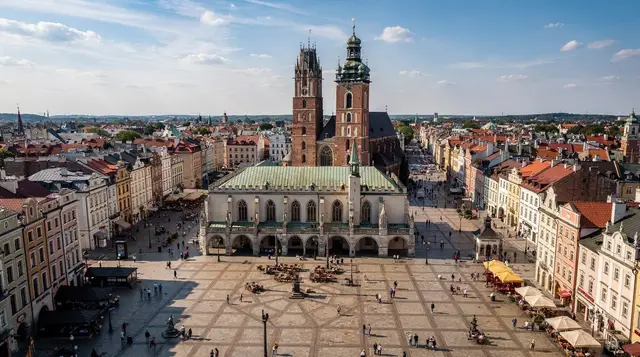
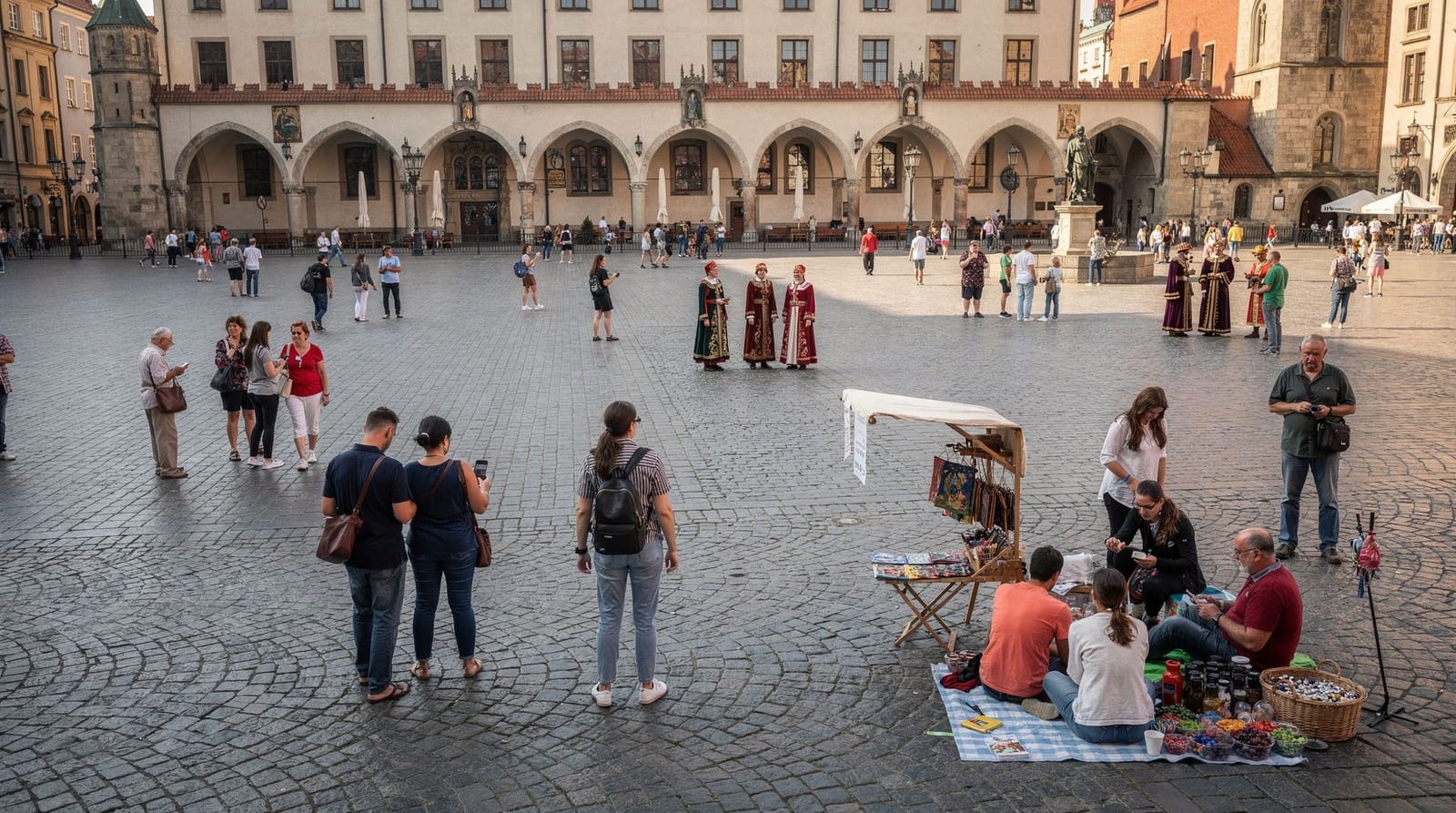
Rynek Główny — the Main Market Square — is Kraków’s central space and one of the largest medieval squares in Europe. The restaurants with tables facing the square charge 2–3× what you would pay five minutes away. A main course at a Rynek-ring restaurant typically runs 80–130 PLN (≈ €19–31); the identical dish on ul. Grodzka, ul. Bracka, or in Kazimierz costs 40–65 PLN (≈ €10–15).
The markup is for the view and the location, not the cooking. The menus are often laminated, the portions shrunken, and the upselling aggressive. A few exceptions exist — Wierzynek (operating since 1364) and Hawełka are genuinely good restaurants that happen to be on the Rynek. But they are the minority.
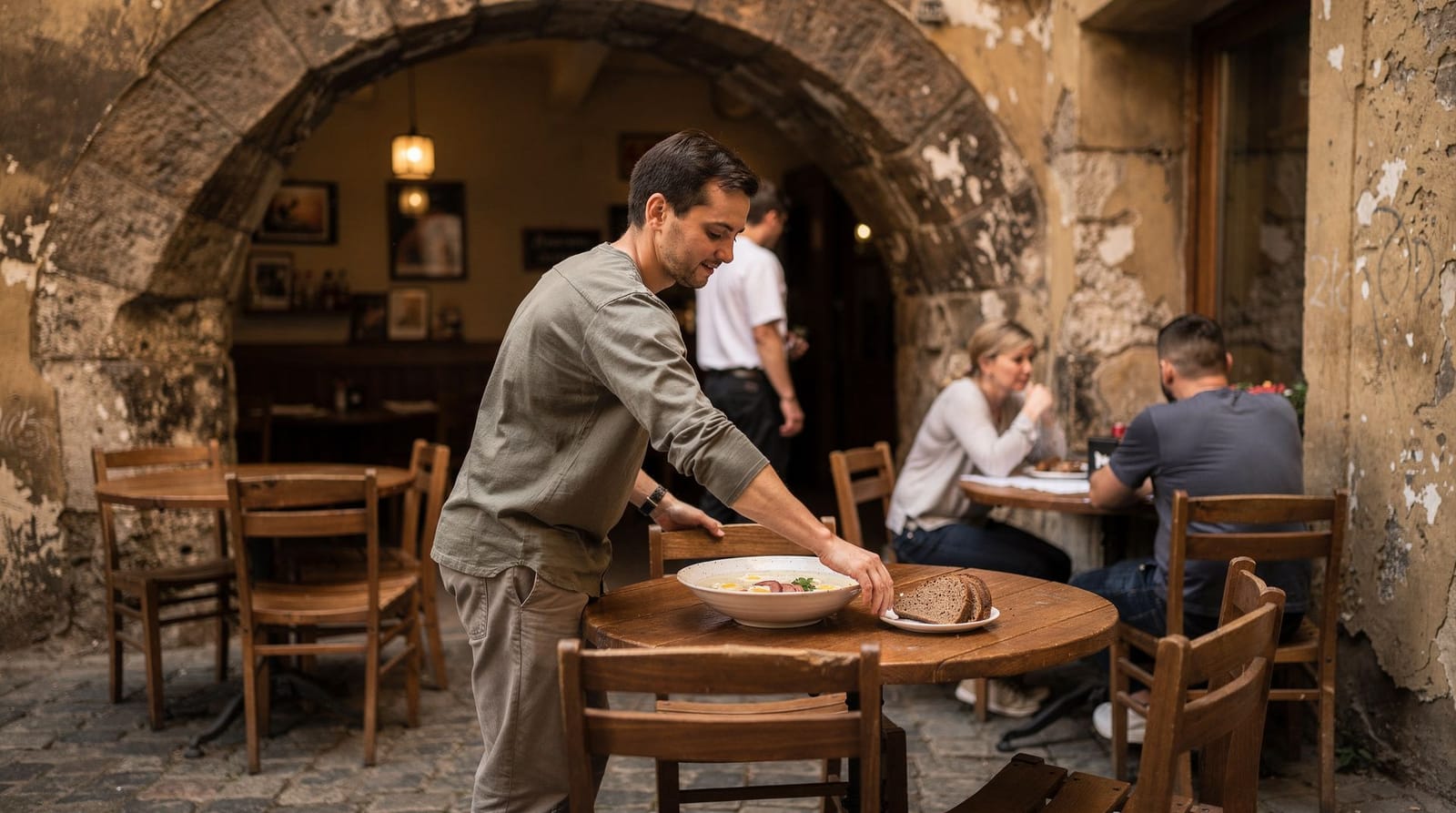
The fix: Walk two minutes off the square onto ul. Grodzka, ul. Szewska, or ul. Bracka. See the Avoid Rynek restaurant overpricing: how to eat well near the main square guide for a list of restaurants worth eating at, and the full breakdown of what the Rynek premium actually costs you.
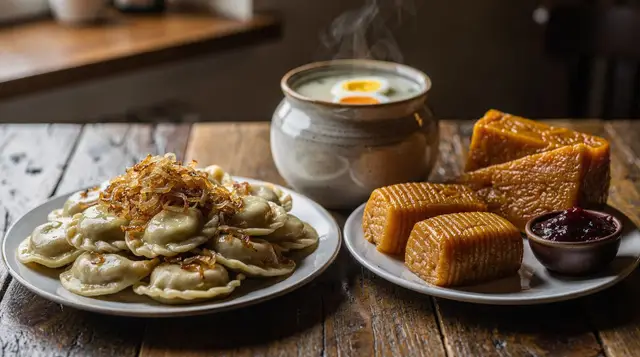
The guided Polish food and culture tour with tastings takes you to verified spots around the city — this is how you learn which places are worth their prices.
Fake Auschwitz tours sold on the street
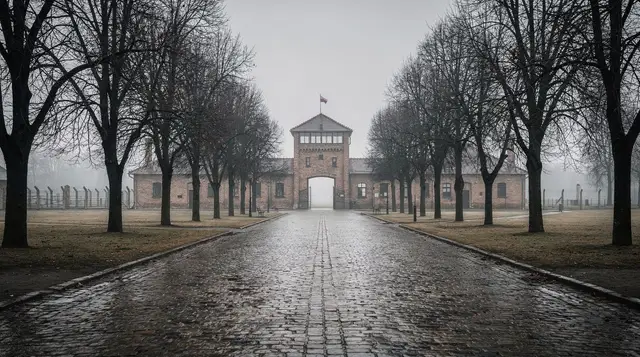
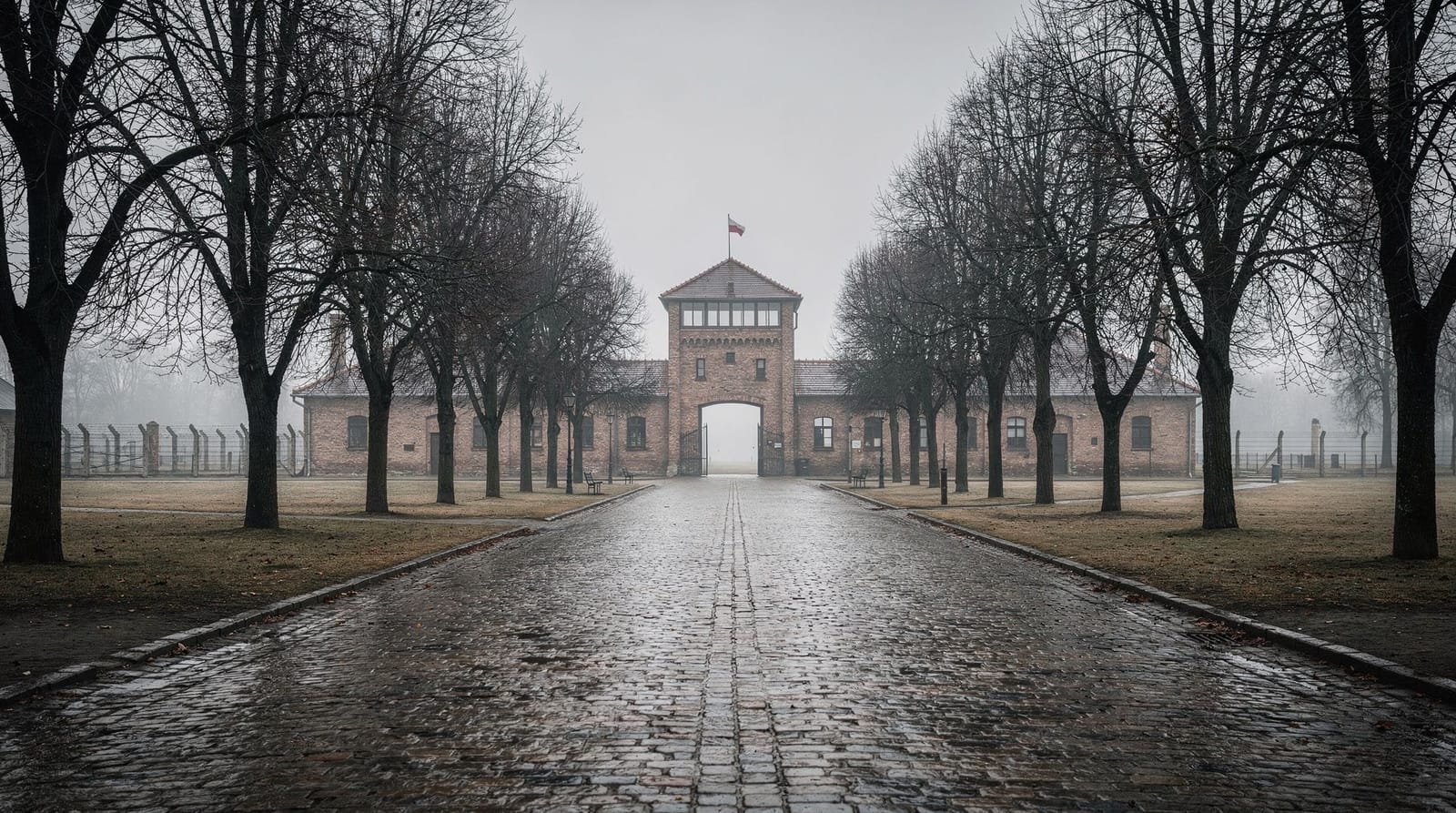
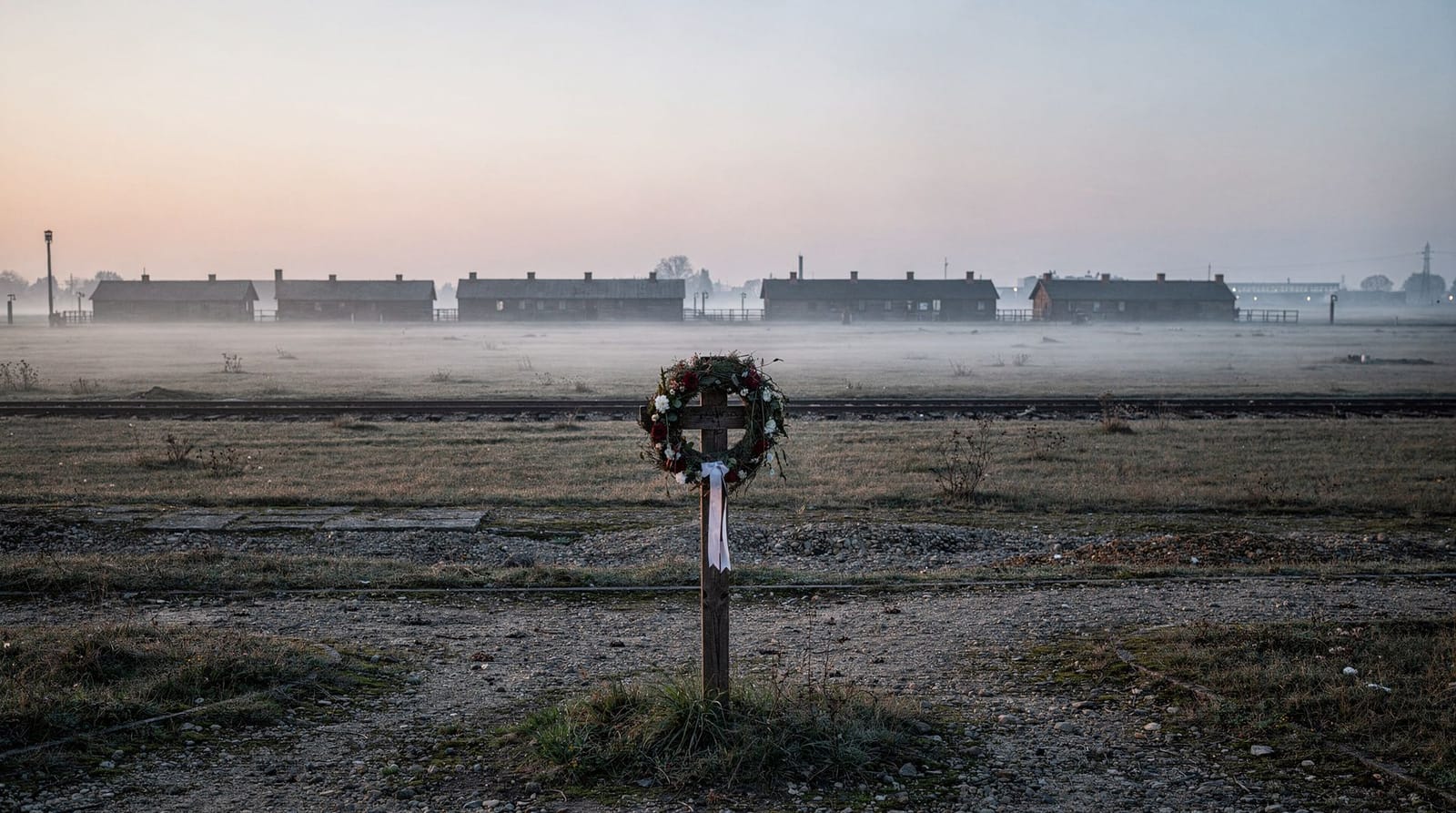
This is the trap that has the most serious consequences. Around Kraków’s train station (Kraków Główny) and in the Old Town, you will see people offering same-day “Auschwitz tours” — often written on clipboards or printed flyers, with prices that seem lower than the official operators. Some of these are unlicensed transport operators with no affiliation to the Auschwitz-Birkenau Memorial and Museum; others are outright commission touts who collect payment and then fail to show.
The real problem is not money — it is that unauthorised “guides” (not licensed by the Museum) are not permitted to guide groups inside the Memorial. Visitors who arrive with unofficial operators end up at the gate either unable to enter during peak hours or forced to join an unguided walk through a site that requires context to understand.
The fix: Book only via the official Memorial website (visit.auschwitz.org) or a reputable licensed operator. The Unofficial Auschwitz tours warning: why street operators are a problem guide explains exactly what to look for. For transport with proper licensed guidance, see options like the Auschwitz-Birkenau guided tour with hotel pickup.
Unofficial taxis at the station and airport
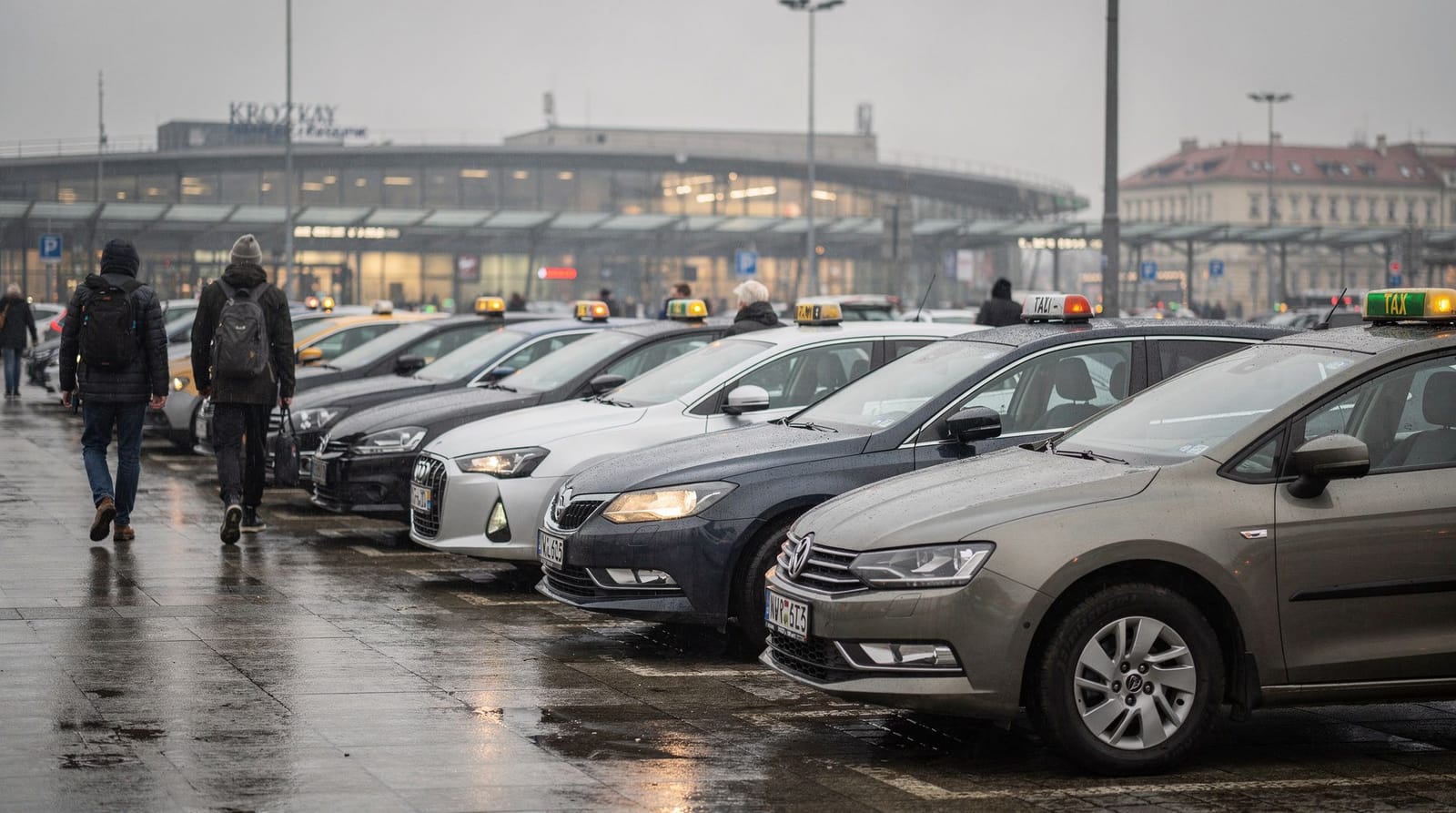
Unofficial taxi drivers — called “fare hunters” or “pirate taxis” locally — wait at Kraków Główny station and KRK Airport (Balice) and approach arriving passengers. They offer rides that appear reasonable until you are en route: the final price is 5–10× what a metered official taxi or app-based ride would cost. The mechanism varies: an unlicensed meter running fast, a “flat rate” agreed verbally that is far above market, or simply demanding more money at the destination.
Official prices for reference: Kraków city centre to the airport (11 km) should cost 50–70 PLN (≈ €12–17) via Bolt or Uber. Some unofficial drivers have charged 200–350 PLN (≈ €48–83) for the same route.
The fix: Use Bolt or Uber (both work well in Kraków), book an official transfer in advance, or take the train from the airport (20 minutes, around 20 PLN). Do not accept rides from anyone approaching you proactively at arrivals. See Krakow taxi scams: how to avoid unofficial drivers at the station and airport for the full breakdown. Pre-booking via the private transfer to or from Krakow airport eliminates the uncertainty entirely.
Fake amber at the Sukiennice
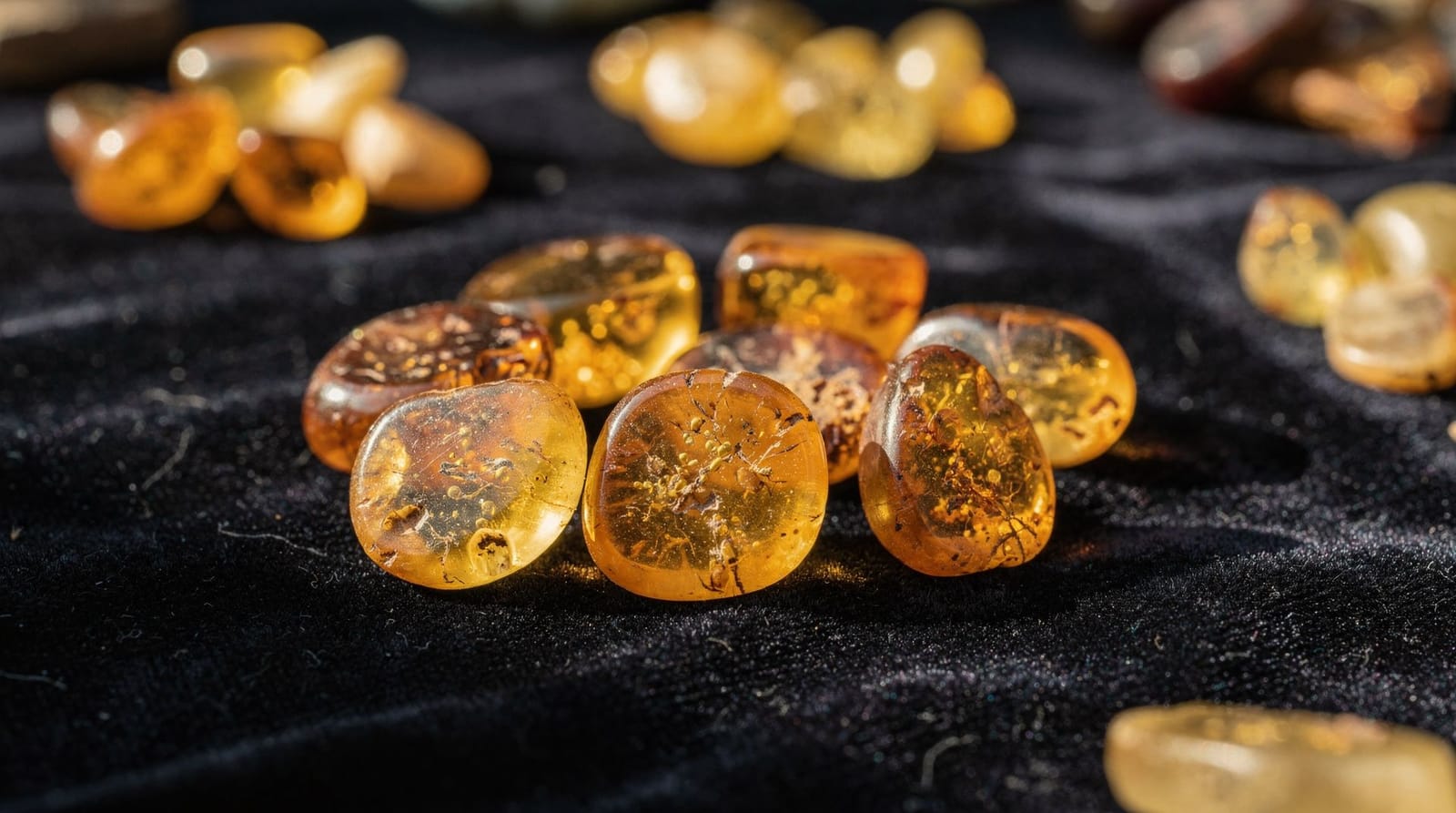
The Sukiennice (Cloth Hall) at the centre of Rynek Główny houses a market of souvenir stalls selling amber jewellery, folk crafts, and gifts. Amber is Poland’s national gemstone — genuine Baltic amber is fossilised resin 44 million years old, often with inclusions of ancient insects. The tourist-facing stalls sell a lot of synthetic resin (copal, glass, or plastic) presented as amber at genuine amber prices.
Prices for “amber” at tourist stalls can run 80–300 PLN for pieces that would cost a fraction of that in synthetic resin at a craft shop. Some sellers are honest; many are not.
The fix: Buy amber from certified jewellers with provenance documentation, or from shops on ul. Floriańska or ul. Grodzka that cater to local buyers as well as tourists. The saltwater test (amber floats, most fakes sink) is crude but useful. See Fake amber souvenirs in Kraków: how to spot the difference for the detail on how to identify genuine amber.
The drink/bar scam
This operates most often around the Old Town at night, near ul. Szewska and the streets feeding off Rynek Główny. The approach: you meet friendly locals (often young women) who suggest a drink somewhere. The venue is a bar or nightclub they are connected to. Drinks arrive without a menu or with an unmarked menu. The bill for two or three drinks is 300–600 PLN (≈ €71–143); if you question it, security becomes involved.
The drinks most commonly named in complaints are premium imported spirits — whisky and vodka from brands such as Johnnie Walker Blue or similar high-end labels — ordered on your behalf without price discussion.
The fix: Never enter a bar recommended by a stranger on the street at night. Choose your own venue, check the drink menu and prices before ordering, and keep your group together. The Krakow scams guide: what to watch for and how to avoid them has the full rundown.
Nightclub touts and strip-club commissions
Around Rynek Główny and ul. Szewska after 22:00, you will encounter touts offering “free entry” to clubs or advertising “the best club in Kraków.” The free entry is genuine; the economics are made up in overpriced drinks, aggressive table minimums, or — in the strip-club cases — escalating charges once inside.
The stag-party circuit has made Kraków a particular target for these operations. Venues on the Rynek or within a few hundred metres of it are disproportionately likely to be operating on the commission model.
The fix: Choose venues in advance using TripAdvisor reviews filtered for recent experiences, or ask your accommodation for recommendations. Legitimate nightlife in Kraków is excellent — the clubs in Kazimierz and around ul. Dietla are generally honest about their pricing. See Krakow scams guide: what to watch for and how to avoid them for the full nightlife scam profile.
Overpriced horse-drawn carriages
The horse-drawn carriages on Rynek Główny are a traditional feature of the square, and a legitimate experience if you go in knowing the price. The trap is that prices are not always posted, and tourists who do not ask first have been charged 300–600 PLN (≈ €71–143) for a short circuit of the Rynek and surrounding streets. The standard price for a full circuit is around 150–200 PLN (≈ €36–48) per carriage.
The fix: Agree on the total price before you board. Ask for the exact route and duration. Do not take a ride if the driver will not name a price.
Souvenir pricing traps beyond amber
Beyond counterfeit amber, several other souvenir categories attract tourist-premium pricing or outright misrepresentation:
“Handmade” folk crafts from China: The Sukiennice and souvenir stalls throughout the Old Town sell wood carvings, painted boxes, embroidered items, and figurines labelled as handmade Polish crafts. Many are manufactured in China. Genuine handmade Polish folk crafts — particularly the intricate paper-cut art (wycinanki) from Łowicz, lace from Koniaków, and woodcarvings from Podhale — are distinctive in technique and quality. If you want genuine folk art, visit the Ethnographic Museum (Muzeum Etnograficzne, ul. Wolnica 1, Kazimierz) to calibrate what authentic pieces look like before buying.
Salt crystal souvenirs: Genuine Wieliczka salt crystals make for an interesting and legitimately Polish souvenir. However, salt crystal products sold at Old Town stalls are not necessarily from Wieliczka — generic salt products are imported and repackaged. The Wieliczka Mine’s own gift shop (at the mine exit, accessible only to paying visitors) sells verified mine-origin products.
Oscypek imitations: Oscypek is a smoked sheep’s cheese from the Tatra region, produced according to a protected geographical indication (PGI). Only cheese made in specified highland villages from specified sheep breeds can legally be called oscypek. The “oscypek” sold at the Rynek’s street stalls includes both genuine PGI cheese (brought down from the highlands) and regular smoked cow’s milk cheese imitating its appearance. Genuine oscypek has a distinctive spindle shape, a darker smoke coating, and a denser, more complex flavour. The best place to buy it is from highland vendors at the Hala Targowa market or from verifiable Podhale producers.
Spotting tourist-trap restaurants before you sit down
You can assess a restaurant before you commit to sitting, using a few observable indicators:
A tout standing outside: Legitimate restaurants in Kraków do not station staff outside to recruit customers. If someone approaches you with a menu before you have stopped to look, walk past.
Laminated menus with photos: This is not universal, but a laminated A4 menu with glossy food photographs is more commonly found at tourist-facing operations than at quality restaurants. Local restaurants typically use printed menus updated seasonally.
No Polish on the menu: If the menu is English-only (or English with German/French translations), the restaurant is calibrated exclusively for tourists. Most good restaurants in Kraków serve local customers as well and will have Polish as the primary language on the menu.
Prices without PLN denomination: Some Rynek restaurants display menu prices without currency markings, relying on visitors to assume they are paying the same currency as their home country.
Undisclosed service charge: Look for “service charge not included” in the fine print. Many Rynek restaurants apply a mandatory service charge (10–15%) on top of menu prices, making the effective price higher than listed.
Understanding Polish tipping culture
Tipping etiquette confuses some visitors and has been used by some restaurants to extract additional charges. In Poland:
- Tipping 10–15% is customary at sit-down restaurants when service has been good
- You tip by telling the server the total you want to pay (rounding up is standard), or by leaving cash on the table when you leave
- A gratuity added automatically to the bill (“gratuity included”) is not standard practice and should be questioned if unexpected
- At milk bars (bar mleczny), tipping is not expected — these are cafeteria operations
Local pricing as your benchmark
Understanding what things should cost in Kraków calibrates everything else:
| Item | Local price | Rynek-area tourist price |
|---|---|---|
| Coffee (espresso) | 8–12 PLN | 14–22 PLN |
| Beer (0.5L) | 10–16 PLN | 18–30 PLN |
| Żurek soup | 18–25 PLN | 35–55 PLN |
| Pierogi (portion) | 24–38 PLN | 45–80 PLN |
| Main course | 40–65 PLN | 80–130 PLN |
| Taxi (station to Old Town) | 15–22 PLN | 80–250 PLN (unofficial) |
These are approximate figures for May 2026. They give you an immediate sense of whether a price is within local range or inflated.
What Kraków does well (so you can relax about the rest)
The traps above are real but bounded. They cluster in specific places (Rynek Główny at night, the station, the airport arrivals area) and target specific moments (arrival, first evening, souvenir-shopping). Once you know where they are, they are easy to sidestep.
The rest of Kraków is a remarkably honest destination. Public transport is cheap and well-run. Museums are affordable. The milk bars (bar mleczny) — the communist-era cafeterias that survive throughout the city — are among the best value food experiences in Europe. Kazimierz is a neighbourhood with genuine culture and mostly honest pricing. The Kraków overview covers what is worth your time and money here.
A walking tour of the Old Town is the best orientation tool — it gets you out of the Rynek bubble quickly and introduces the city in context. The Old Town guided walking tour is a solid start.
How this site approaches the tourist trap problem
This site — Honest Kraków is the hub — exists because the mainstream travel content for Kraków is mostly written by people who have not been recently, or by publishers with commercial relationships with the venues they recommend. We flag problems directly and name them specifically, rather than burying warnings in fine print.
Every guide in the honest-planner category applies this standard. The Visiting Auschwitz with respect: ethics, behaviour, and how to prepare guide, for example, goes beyond the logistics to explain how to visit with appropriate understanding of what the site represents.
How to calibrate quickly on arrival
The first 24 hours in any city are the highest-risk period for tourist traps — you do not yet know prices, you do not know geography, and you are operating on limited sleep. A few practical steps for your first day:
Walk, do not immediately taxi: From Kraków Główny, the Old Town centre (Rynek Główny) is a 12–15 minute walk. Walking it once with your map establishes geography, costs nothing, and eliminates the first taxi decision. If you have too much luggage to walk, use Bolt or Uber.
Eat at a milk bar for your first lunch: Bar mleczny prices are so far below the tourist market that you immediately calibrate what food should cost. After one milk bar lunch (25–35 PLN for a full meal), you know that a restaurant charging 100 PLN for a main course is a premium operation requiring justification.
Use Google Maps (offline mode) before you arrive: Download the Kraków offline map before landing. This lets you navigate without data roaming and immediately identify where you are relative to tourist-facing streets versus residential/local streets.
Ask your accommodation for price benchmarks: A decent hotel or hostel will tell you what a Bolt to the airport costs, which nearby restaurants they recommend, and whether the ticket you were sold on the street for “Auschwitz tomorrow” is legitimate. This is a genuinely useful resource that many visitors underuse.
Things that look like traps but are not
Restaurant outdoor terrace pricing: It is normal in Poland (and across Central Europe) for outdoor terrace tables to carry a small premium over indoor pricing. This is legitimate, usually disclosed in the menu, and reflects the cost of maintaining the terrace. The outdoor premium at a Rynek restaurant is a different matter — the premium is the entire Rynek markup, not a nominal terrace supplement.
Paying for entry to non-UNESCO churches: Several of the Old Town’s historic churches charge a small entry fee (5–10 PLN) for non-worshippers visiting during tourist hours. This is standard practice across Poland and not a trap; the money funds maintenance.
Obwarzanek (street pretzel) vendors: The ring-shaped obwarzanek is a Kraków street food sold from wheeled carts throughout the Old Town. Price: 2.50–3.50 PLN. This is the correct price. It is not a tourist premium — it is simply what a Kraków obwarzanek costs.
Museum entry fees: Kraków’s museums are affordable by European standards. The Schindler Factory (60 PLN), Rynek Underground (45 PLN), Czartoryski Museum (Lady with an Ermine; 65 PLN) — these are genuine entry fees for high-quality experiences. Comparing them to London or Amsterdam museum prices, they are inexpensive.
The honest-krakow approach
This site’s Honest Kraków hub exists because honest information is a service that most travel content fails to provide. The travel industry — guidebooks, tour operators, aggregator sites — has structural incentives to promote rather than warn. We do not have those incentives: we are affiliate-only (GetYourGuide, transparently disclosed), and our commercial interest is in sending you to good operators, not in avoiding discussion of bad ones.
The guides in the honest-planner category apply this standard consistently. Each of the six traps described above has a dedicated page with the full detail:
- Krakow scams guide: what to watch for and how to avoid them — the full scam landscape including drink scams and nightclub touts
- Unofficial Auschwitz tours warning: why street operators are a problem — why street Auschwitz tours fail and what legitimate booking looks like
- Krakow taxi scams: how to avoid unofficial drivers at the station and airport — the unofficial taxi problem with specific price benchmarks
- Fake amber souvenirs in Kraków: how to spot the difference — amber authentication and where to buy genuine pieces
- Avoid Rynek restaurant overpricing: how to eat well near the main square — the specific Rynek economics and where to eat instead
- Visiting Auschwitz with respect: ethics, behaviour, and how to prepare — how to visit Auschwitz-Birkenau with appropriate understanding
A one-minute pre-trip checklist
Before you land, it’s worth locking in a handful of decisions so you’re not making them tired, jet-lagged, or under pressure from a stranger at arrivals. Download Bolt or Uber and add a payment method. Decide now whether you’re pre-booking an airport transfer or using the app on arrival — see the Kraków taxi scams guide for both options in detail. Bookmark the official Auschwitz-Birkenau Memorial site if that’s on your itinerary, and book directly there rather than through a street tout or an unverified reseller. Note two or three restaurant names off the Rynek from the Rynek restaurant overpricing guide so you have somewhere to go on night one without having to research it hungry. None of this takes more than a few minutes, and it removes almost every decision point where a trap could catch you.
What to do if you’ve already been caught
If you realise after the fact that you overpaid — a Rynek restaurant bill that seems too high, a taxi that charged more than expected, or amber that turns out to be resin — the practical options are limited but worth knowing. For a disputed restaurant bill, ask to see an itemised receipt before paying; if a service charge or extra item was added without disclosure, you can push back on that specific line rather than the whole bill.
For a taxi overcharge, note the vehicle’s registration number visible on the dashboard plaque; the Kraków taxi scams guide has the full script for what to say and when to simply pay a fair estimate and walk away. For counterfeit goods, a card payment gives you a chargeback route with your bank that cash does not — it’s one more reason to prefer cards for anything above a street-food price point. None of this recovers much money after the fact, which is exactly why prevention (checking the price first) does more work than any post-purchase remedy.
How overtourism feeds these traps
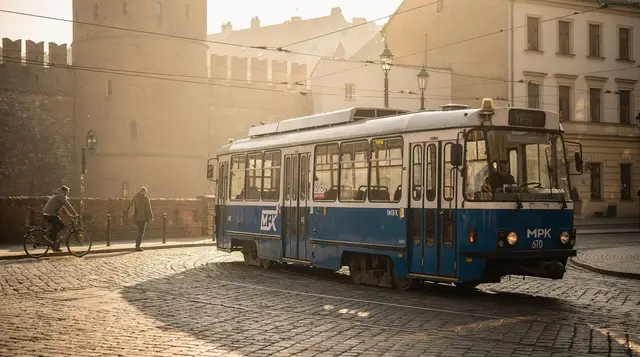
The volume of visitors passing through Rynek Główny every day is exactly why the trap economy exists there and nowhere else in the city on the same scale. A restaurant on the square does not need repeat local custom to survive — a fresh wave of first-time diners arrives every hour. The Kraków overtourism and responsible travel guide looks at this dynamic more broadly, including how spreading your time (and spending) into Kazimierz, Podgórze, and Nowa Huta both avoids the traps and supports a healthier local economy. Getting around those neighbourhoods is straightforward once you’re comfortable with the trams — see the getting around Kraków guide for the practical setup.
Frequently asked questions about tourist traps in Kraków
Is Kraków safe for tourists?
Yes, in the general sense. Kraków has a low rate of violent crime and is safe to walk around at night in the tourist areas. The “danger” is almost entirely financial — being overcharged, not being physically threatened. Standard urban precautions (watch your belongings in crowds, do not flash cash) apply.
Are there scams targeting solo female travellers specifically?
The drink scam operates on all tourist groups but often targets solo male travellers or mixed groups of men. Solo female travellers are more likely to encounter overpriced taxi or accommodation situations. The general rule — know prices before you agree to anything — applies to everyone.
Can I trust restaurants that approach me on the street?
As a rule, legitimate restaurants in Kraków do not send people outside to solicit customers. A restaurant that has a tout on the pavement hawking menus is usually (not always) a sign of lower quality and higher tourist pricing. Walk past and choose your own venue.
What is the best way to get from the airport to the city centre?
Train from KRK Airport to Kraków Główny: 20 minutes, around 20 PLN (≈ €4.75). Bus 208/252: 45–60 minutes, standard city fare. Bolt or Uber: 20–30 minutes, 50–70 PLN. Pre-booked official transfer: similar cost, confirmed price. Do not accept an approach from an unofficial driver in the arrivals hall.
Where can I buy genuine Polish souvenirs?
The Hala Targowa market (ul. Grzegórzecka, tramstop Hala Targowa) sells food, crafts and everyday goods at local prices. Shops on ul. Grodzka and ul. Kanonicza that serve local customers as well as tourists are generally honest. Avoid anything labelled “handmade” at the Sukiennice without verifying provenance.
Are traps worse in high season than in winter?
Yes, somewhat. Restaurant touts, horse-carriage overcharging, and street Auschwitz tours all correlate with visitor volume, so they are more visible from May through September. Winter Kraków (outside the Christmas market period) sees noticeably less of this pressure, though the taxi and drink scams operate year-round regardless of season.
Is it worth staying outside the Old Town to avoid traps entirely?
Not really as a trap-avoidance strategy on its own — the traps are concentrated on specific streets, not the whole Old Town, and you can stay centrally while simply avoiding those streets for eating and drinking. That said, staying in Kazimierz puts you closer to honestly priced restaurants and a genuinely local food scene by default.
Top experiences
Bookable activities with verified prices and instant confirmation on GetYourGuide.