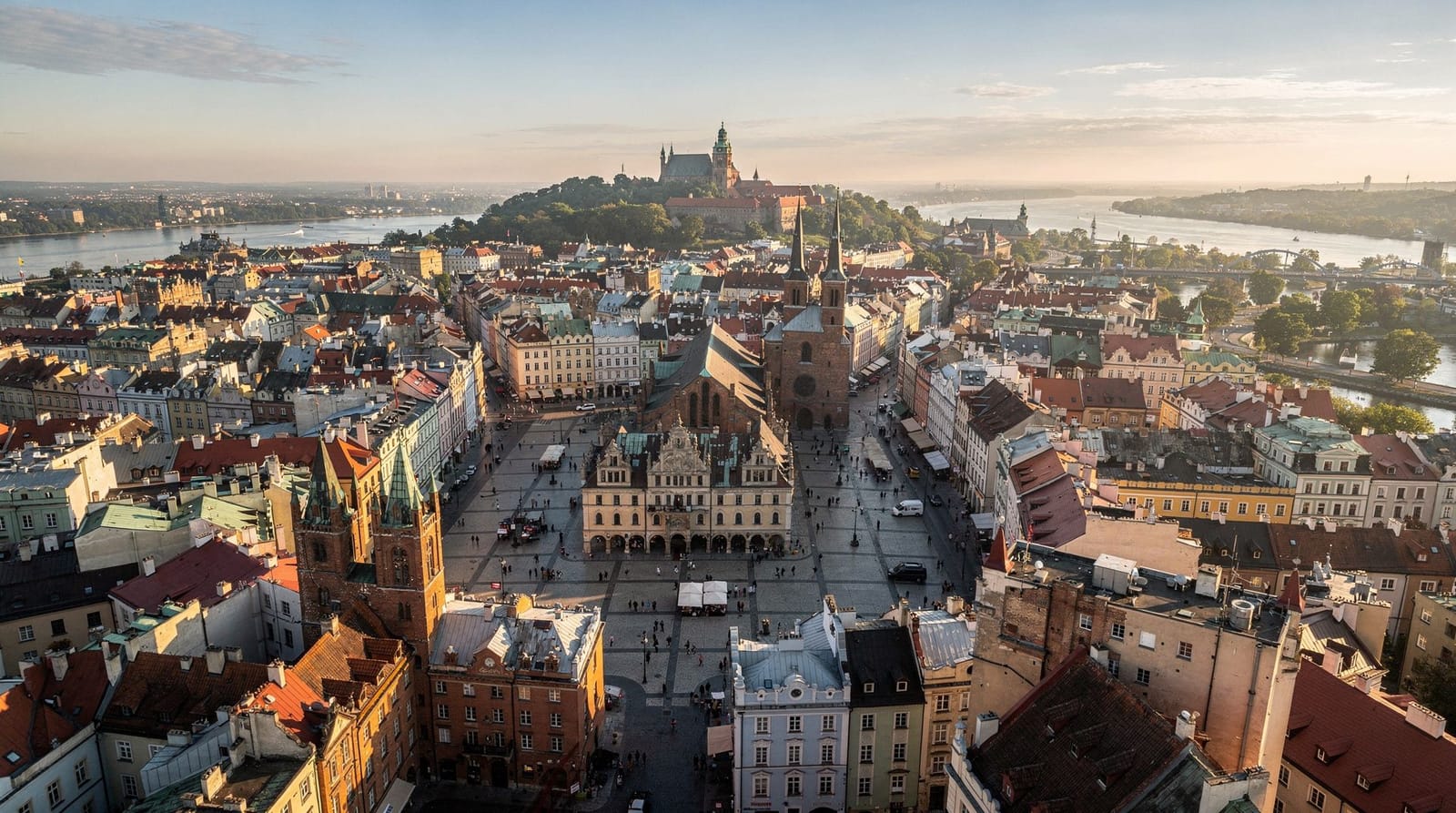
Polish history for visitors: a practical timeline from Piast to Solidarity
Krakow: medieval history city walking tour
Duration: 2h
What do I need to know about Polish history to understand Kraków?
Poland spent the medieval and early modern period as one of Europe's most powerful kingdoms, with Kraków as its capital. It was partitioned out of existence for 123 years (1795–1918), occupied by both Nazi Germany and the Soviet Union in WWII, then subjected to communist rule until 1989. This history of repeated erasure and survival explains the intensity of Polish national feeling and the weight that historical sites carry here.
History as the context for everything you will see
Travelling in Kraków without some grounding in Polish history is like visiting Rome without knowing that emperors built the forum — the stones make sense, but their resonance is lost. Unlike cities where the medieval past feels genuinely distant, in Poland it is present: in political speeches, in church sermons, in street names changed after each regime change, in the weight that ordinary Poles attach to place.
This guide is not a comprehensive history. It is a practical toolkit for travellers — enough context to understand why Wawel Castle matters, why Auschwitz belongs to a particular historical logic, why Nowa Huta was built, and why 1989 feels so recent.
| Best read before | visiting Wawel, Kazimierz, Podgórze or Auschwitz-Birkenau |
| Time needed | around 15–20 minutes for the full timeline |
| Depth | practical traveller’s overview, not academic history |
| Pairs well with | a medieval history walking tour or the Historical Museum of Kraków |
| Best used | before you arrive, not while queuing at a site |
The Piast dynasty and medieval Poland (10th–14th centuries)
The Polish state emerged in the 10th century under the Piast dynasty, centred in Gniezno in western Poland. Christianity arrived in 966, when Duke Mieszko I was baptised — an event that tied Poland to Western Europe rather than the Byzantine world and shaped the country’s subsequent history.
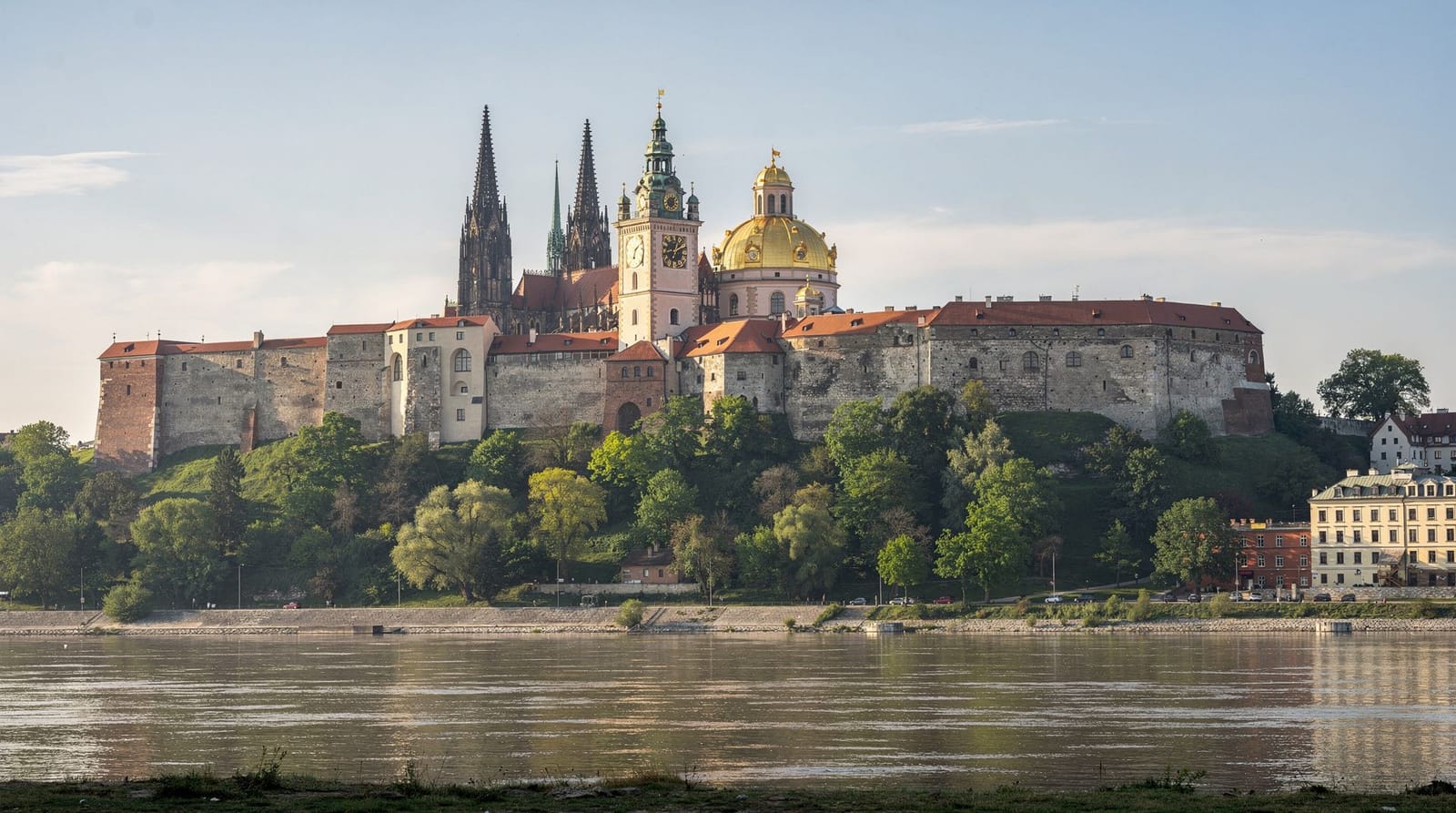
Kraków became the capital of the Kingdom of Poland in 1038, when King Casimir I the Restorer moved the court here from the devastated Gniezno. Wawel Castle on its hill above the Vistula became the seat of Polish kings and, eventually, a focal point for national identity in ways that persist today.
The Mongol invasions of 1241 and 1259 devastated Poland. Kraków was burned, rebuilt, and gradually expanded. The founding of the Jagiellonian University in 1364 by King Casimir III the Great — the only Polish king to be called “the Great” — made Kraków one of Europe’s intellectual centres. Nicolaus Copernicus studied here in the 1490s.
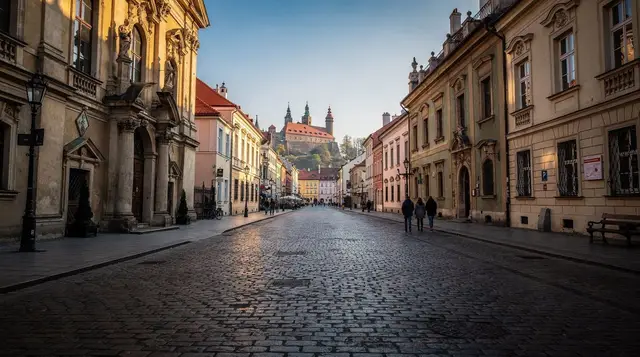
Walk the medieval history walking tour of Kraków to see the surviving fabric of this period: the Barbican, the city walls, the Cloth Hall (Sukiennice), and the foundations of the Rynek Główny that Casimir built.
The Jagiellonian golden age (15th–16th centuries)
The Jagiellonian dynasty, which followed the Piasts, presided over Poland’s most expansive period. The Polish-Lithuanian Commonwealth — formed by the 1569 Union of Lublin — was at its peak one of the largest states in Europe, stretching from the Baltic to the Black Sea. Kraków was its cultural and religious capital; the Renaissance court attracted Italian architects, scholars, and artists.
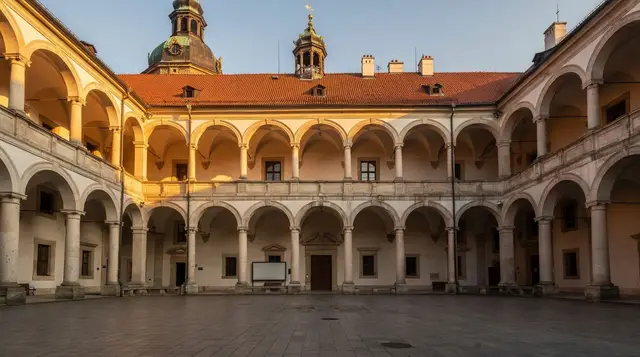
The move of the capital to Warsaw in 1596 under Sigismund III Vasa began Kraków’s long decline as a political centre, though it retained its coronation function and its symbolic primacy. The city’s great churches and the Renaissance modifications to Wawel Castle date primarily from this period.
The Partitions: Poland ceases to exist (1772–1918)
The event that more than any other explains modern Polish national psychology is the Partition of Poland. Three times — in 1772, 1793, and 1795 — Poland’s neighbours (Russia, Prussia, and Austria) carved up its territory until nothing remained. After 1795, Poland ceased to exist as a state for 123 years.
Kraków’s experience of partition was, by European standards, relatively tolerable: the city fell under Austrian rule as part of Galicia, and after 1846 the Habsburgs allowed significant Polish cultural autonomy. Galicia became a haven for Polish culture: universities remained open, Polish was taught in schools, and national consciousness was maintained in ways impossible in the Russian or Prussian partitions. The irony is that the city that suffered least physically was best positioned to maintain the cultural infrastructure of nationhood.
Polish uprisings against the partitions — 1830, 1848, 1863 — failed militarily but sustained the sense of national identity. The late 19th century saw Kraków become the cultural capital of a stateless nation: Jan Matejko painted his enormous historical canvases here; the Young Poland literary movement based itself here; the Jagiellonian University trained the intellectual class of a country that did not yet legally exist.
Independence and World War I (1918–1939)
Poland regained independence in November 1918, as the empires that had partitioned it all collapsed simultaneously in World War I. The Second Polish Republic, reborn in 1918, was a parliamentary democracy with a Jewish minority of approximately 3 million people and significant Ukrainian, Belarusian, German, and Lithuanian populations.
The interwar period brought rapid change: Warsaw was rebuilt as a modern capital, Kraków developed its university and cultural institutions, and an independent Poland navigated an uncertain position between a revanchist Germany and a Bolshevik Soviet Union. The ominous shadow of both neighbours fell over all Polish political calculation in these years.
World War II and the Holocaust (1939–1945)
The German invasion of 1 September 1939, followed by the Soviet invasion from the east on 17 September, ended Polish independence. Poland was divided between Germany and the Soviet Union under the Molotov-Ribbentrop Pact. What followed was the most destructive war in any country’s history: Poland lost approximately 6 million citizens — about 17% of its pre-war population — the highest proportional loss of any country in the war. Of those 6 million, approximately 3 million were Polish Jews, murdered in the Holocaust.
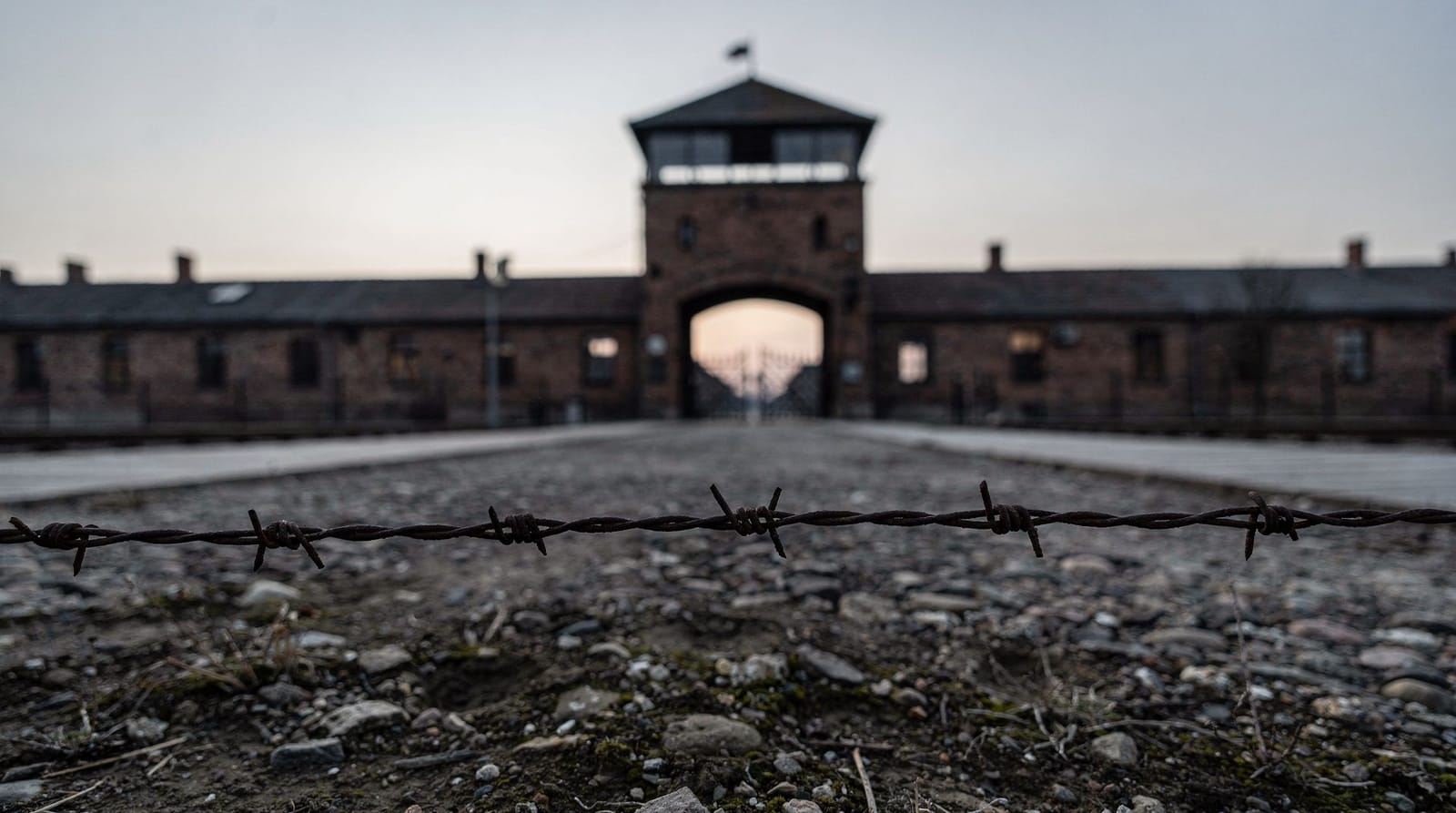
Kraków under Nazi occupation became the capital of the German General Government. The Jewish community of Kraków — approximately 68,000 people — was confined to the Podgórze ghetto, then deported to extermination camps. The history is covered in detail in the guides to Kraków under Nazi occupation, WWII Kraków, and Auschwitz-Birkenau history.
Communist Poland and the Cold War (1945–1989)
Liberation by Soviet forces in January 1945 did not restore Polish independence. Poland became a Soviet satellite state, governed by the Polish United Workers’ Party (PZPR) under Moscow’s direction. The borders shifted westward — the Soviet Union kept the eastern territories it had occupied in 1939, and Poland received German territories to the west in compensation.
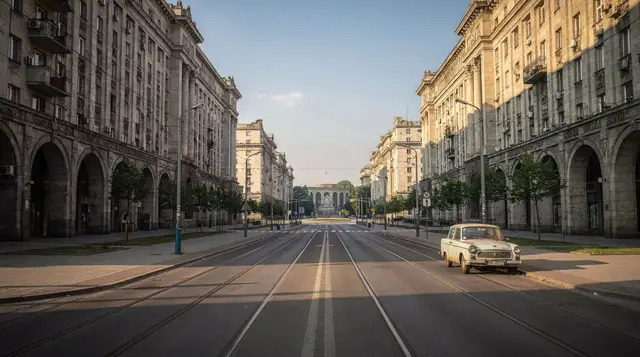
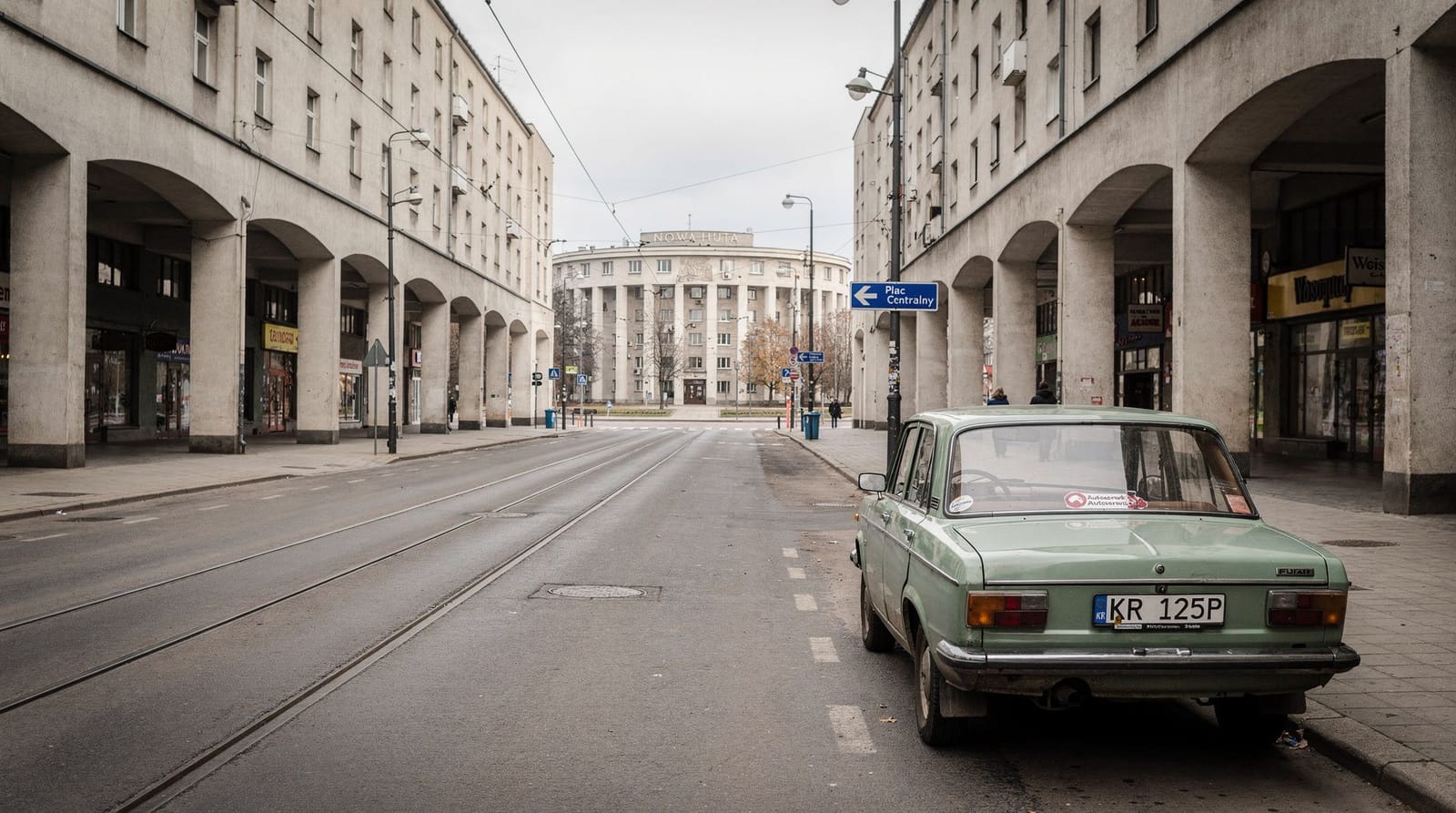
The communist period transformed Polish society: rapid industrialisation, collectivisation of agriculture, the suppression of religion and culture, and the surveillance state. Kraków specifically saw the construction of Nowa Huta — the planned workers’ city built to dilute the intellectual and Catholic character of the medieval city.
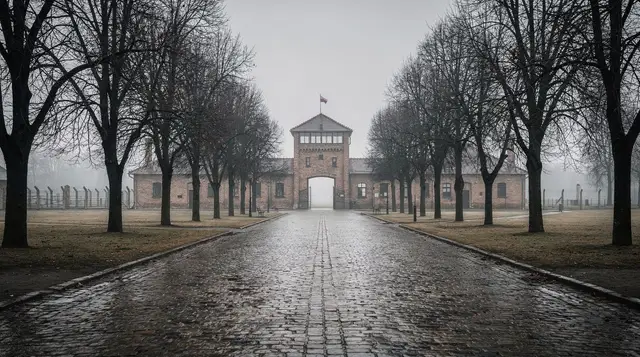
A Nowa Huta walking tour puts you in direct physical contact with communist-era planning and its contradictions. The Auschwitz-Birkenau Memorial and Museum is inseparable from the post-war political context: for decades its history was shaped by communist-era framing that emphasised “anti-fascist victims” over the specific Jewish identity of most victims.
Key moments in communist Poland include:
- 1956: Workers’ uprising in Poznań; limited liberalisation under Gomułka.
- 1968: Student protests at Warsaw University, crushed by authorities; mass emigration of remaining Polish Jews following an anti-Semitic campaign by the state.
- 1970: Workers shot dead at shipyards in Gdańsk; Gomułka replaced by Gierek.
- 1978: Karol Wojtyła of Kraków elected Pope John Paul II — the first non-Italian pope in 455 years.
- 1979: The Pope’s first return visit to Poland; approximately 10 million Poles attend his masses. Historians generally date the fall of communism to this moment.
- 1980: Solidarity trade union founded at Gdańsk shipyard; strikes spread across Poland including Nowa Huta.
- 1981: Martial law declared; Solidarity outlawed.
- 1989: Round Table Agreement; partially free elections; communist government replaced by Solidarity-led coalition.
The Pope’s role in Polish history is covered in the guide to Pope John Paul II in Kraków.
The Third Polish Republic and EU integration (1989–present)
The 1989 transition was remarkably peaceful, negotiated rather than violent. Poland moved quickly to a market economy and democratic institutions. EU membership followed in 2004, transforming the country economically: Polish GDP tripled between 1990 and 2020.
Kraków benefited disproportionately from EU membership, receiving substantial infrastructure funding that improved transport, renovated historic buildings, and modernised the university. The city’s population grew as opportunities concentrated there. Tourism, marginal before 1989, became a major industry.
The ongoing relationship with memory — who defines the history of WWII, the Holocaust, and communism — remains politically contentious in Poland. Visitors will sometimes encounter interpretations that diverge from Western European consensus; this reflects both genuine historiographical complexity and contemporary political pressures.
Making sense of what you see
This history provides the backdrop for almost everything historically significant in Kraków:
- Wawel Castle = medieval kingdom, Jagiellonian power, Habsburg occupation, Nazi desecration, national symbol
- Kazimierz = 500-year Jewish community, destroyed in the Holocaust, now partially revived
- Podgórze = the Ghetto, Schindler’s Factory, post-war working-class district
- Nowa Huta = communist industrial project, resistance, Solidarity, imperfect transition
- Auschwitz-Birkenau = the logical endpoint of Nazi racial ideology, the most documented crime in history
The Wawel Royal history guide goes deeper on the medieval and early modern period. The Krakow legends and myths guide explores the stories that overlay the history. For practical planning, see how many days in Kraków and best time to visit Kraków.
None of these places tells a single, self-contained story — they overlap and cross-reference each other constantly. Wawel’s Nazi-era desecration only makes sense once you know the Jagiellonian golden age it interrupted; Nowa Huta’s Solidarity strikes only make sense once you know what the workers were resisting. Reading this guide once, before you set out, saves you from encountering each site as an isolated fact rather than as part of one continuous, contested story.
The cheat-sheet timeline
If you only remember one table from this guide, make it this one:
| Period | What happened | Where to see it today |
|---|---|---|
| 1038 | Kraków becomes capital of the Kingdom of Poland | Wawel Castle |
| 1364 | Jagiellonian University founded | Collegium Maius, Old Town |
| 1795–1918 | Poland partitioned out of existence | street names, Galicia-era buildings |
| 1939–1945 | Nazi and Soviet occupation, the Holocaust | Podgórze, Auschwitz-Birkenau |
| 1949–1989 | Communist rule, Nowa Huta built | Nowa Huta |
| 1978–1989 | John Paul II, Solidarity, fall of communism | Wawel Cathedral, Nowa Huta |
| 1989–present | Democracy, EU membership | Kraków’s rebuilt Old Town and infrastructure |
For the fuller version of the WWII occupation years specifically, see the guide to Kraków under Nazi occupation.
Key figures in Polish history you will encounter in Kraków
Casimir III the Great (1310–1370): The only Polish king called “the Great.” His reign saw the founding of the Jagiellonian University, the construction of much of the medieval city, and the formal establishment of Jewish legal rights in Poland. The expression attributed to him — “I found Poland built in wood and left it built in stone” — is not quite historically accurate but captures the transformative effect of his reign.
Wladysław Jagiełło (1351–1434): Grand Duke of Lithuania who married the Polish Queen Jadwiga in 1386, uniting Poland and Lithuania and founding the Jagiellonian dynasty. His defeat of the Teutonic Knights at the Battle of Grunwald (1410) is one of the most celebrated moments in Polish military history and is commemorated by a massive painting in the Kraków National Museum.
Nicolaus Copernicus (1473–1543): Born in Toruń but educated at the Jagiellonian University in Kraków in the 1490s. His heliocentric model of the solar system, published in 1543, is the foundation of modern astronomy. The Collegium Maius, where he studied, displays a contemporary account of his early education and the instruments of the period.
Tadeusz Kościuszko (1746–1817): Military commander of the 1794 uprising against the partitioning powers, and previously a general in the American Revolutionary War (a fact that gives him unusual status as a Polish-American hero). His burial in the Wawel Cathedral crypts places him among Poland’s kings and national figures despite his never having been a ruler.
Adam Mickiewicz (1798–1855): Poland’s national poet, whose epic poem “Pan Tadeusz” is the closest Polish equivalent to the Iliad: a mythologised account of Lithuanian-Polish gentry life on the eve of Napoleon’s 1812 campaign. His statue stands on Rynek Główny, where it is the traditional meeting point for Kraków’s residents.
Józef Piłsudski (1867–1935): The military and political leader who restored Polish independence in 1918 and dominated the interwar Republic until his death. His body lies in the Wawel Cathedral crypt alongside Poland’s medieval kings — a deliberate symbolic choice. His political legacy is contested; he became increasingly authoritarian in his later years, but his role in restoring statehood gives him iconic status.
Karol Wojtyła / Pope John Paul II (1920–2005): Born in Wadowice, educated and ordained in Kraków, Archbishop of Kraków 1964–1978, elected Pope in 1978. His visits to Poland in 1979 and subsequently are credited by historians across the political spectrum with generating the conditions for Solidarity and ultimately the collapse of communist rule. The John Paul II guide covers his Kraków connections in detail.
Lech Wałęsa (b. 1943): The Gdańsk shipyard electrician who led the Solidarity trade union from 1980 and served as Poland’s first freely elected president (1990–1995). Although associated primarily with Gdańsk rather than Kraków, Wałęsa’s Solidarity movement was supported by Kraków’s workers and students and by the Kraków Archbishop.
The Jewish community in Polish history
Jewish settlement in Polish territories dates to the 10th century; the major influx came in the 13th and 14th centuries, when Jews expelled from Western Europe found relative tolerance in Polish-ruled territories. The Statute of Kalisz (1264) granted Jews extensive legal rights and protections under Polish law — an unusual degree of legal recognition for medieval Europe.
By the 16th century, Poland had the largest Jewish population in Europe. Kraków’s Kazimierz district, established as a separate Jewish town in 1495, became one of the most important centres of Jewish intellectual and religious life, home to the first Hebrew printing press in Poland (1534) and to major Talmudic scholars including Rabbi Moses Isserles (the Remu), whose commentary on the Shulchan Aruch shaped Jewish law across Eastern Europe.
The destruction of this community — 3 million Polish Jews murdered in the Holocaust — is the greatest single catastrophe in Polish history and the dominant fact of modern Jewish history. Understanding Kraków’s Kazimierz and Podgórze requires holding the full arc of this community’s history: 500 years of cultural flowering, followed by systematic annihilation.
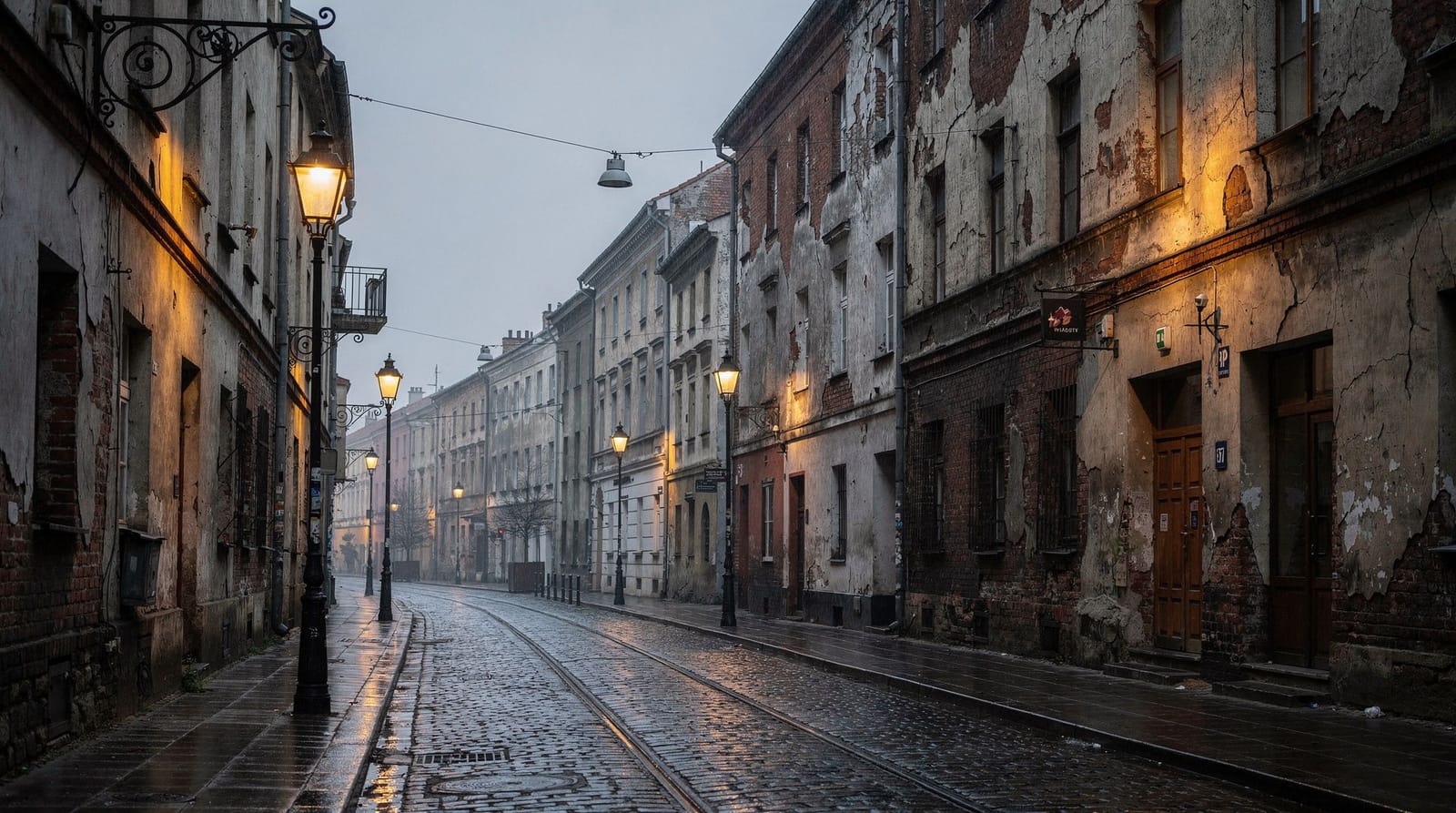
That arc did not end in 1945. A small Jewish community re-established itself in post-war Kraków, and Kazimierz itself spent decades in physical decline before a slow revival from the 1990s onward — partly heritage-driven, partly cultural, partly (and sometimes uncomfortably) touristic. Today’s Kazimierz, with its restored synagogues and Jewish-themed cafés, is a genuine site of memory but also a place where that memory is actively curated and sold; it is worth holding both truths at once.
Language as historical evidence
One of the most direct ways to encounter Polish history in Kraków is through the city’s street names. Street naming in Polish cities has been used as a political tool through successive regimes, and layers of renaming reveal the history of power.
Aleja Krasińskiego in Kraków is named for the 19th-century Romantic poet Zygmunt Krasiński — a patriotic renaming from the partition period, when Polish cultural figures replaced German or Russian names on public spaces. Aleja Solidarności in many Polish cities dates to post-1989 renaming that celebrated the movement that ended communism.
In Nowa Huta, Plac Centralny was renamed Plac Ronalda Reagana in 2004 — a pointed acknowledgment that the American president’s support for Solidarity contributed to the end of the communist system that built the square. The original name remains in common use among older residents.
Ulica Kościuszki (Kościuszko Street) appears in dozens of Polish cities: the 18th-century independence fighter is commemorated everywhere. Ulica Piłsudskiego similarly appears across Poland, reflecting the post-1989 rehabilitation of the interwar leader who had been officially marginalised during the communist period.
The language itself carries historical weight. Polish was suppressed during the partition period in Prussian and Russian territories; speaking it was an act of resistance. The preservation of the Polish language is credited partly to the Catholic Church (which conducted services in Polish) and partly to the underground education networks that the partition-era intelligentsia maintained. The intensity of Polish attachment to language — the Kraków Lajkonik procession uses archaic Polish; the national anthem, “Mazurek Dąbrowskiego,” uses a grammatical form that has not been everyday usage for two centuries — reflects this history.
Kraków vs Warsaw: two different relationships with history
Visitors often assume Poland’s two great cities tell the same national story. They do not — their physical fabric survived the 20th century in almost opposite ways, and it shapes what each city can show you.
| Kraków | Warsaw | |
|---|---|---|
| WWII damage | largely spared physically | around 85% destroyed, then rebuilt |
| What you see | genuine medieval and Renaissance fabric | a meticulous post-war reconstruction |
| Political role | former royal capital, symbolic centre | actual capital since 1596 |
| Communist-era addition | Nowa Huta, built beside the old city | rebuilt largely on top of the old city |
| Best for | walking through unbroken centuries | understanding post-war reconstruction and resilience |
Neither city is more “authentic” than the other — Kraków preserves original stone, Warsaw preserves the will to rebuild it. Our Kraków vs Warsaw guide covers the practical side of choosing or combining both on a Poland trip.
Visiting Polish history: the key institutions in Kraków
The historical sites listed in this guide are complemented by a network of museums and archives that allow deeper engagement:
Schindler’s Factory Museum (Podgórze): The most comprehensive single exhibition on Kraków under occupation. See the WWII Kraków guide.
Jagiellonian University Collegium Maius (Old Town): The medieval university building, with an exhibition on the university’s history from 1364 to the present, including the occupation period. Free guided tours at specific hours.
Historical Museum of Kraków (main branch at Krzysztofory Palace, Rynek Główny): The city’s main historical collection, covering Kraków from medieval times through the communist period.
Nowa Huta Museum (Nowa Huta): The focused communist-era exhibition covered in the Nowa Huta guide.
Galicia Jewish Museum (Kazimierz): Contemporary photography project and historical exhibition focused on the Jewish heritage of the region, with particular attention to present-day sites of pre-war Jewish life.
The medieval history walking tour of the Old Town provides a physical introduction to the city’s pre-partition history, covering the buildings and public spaces that date to the period of Polish independence. For the full scope from medieval to modern, the Wawel royal history guide covers the castle’s layered history from earliest habitation to the present.
Frequently asked questions about Polish history
Why did Poland lose so many people in WWII?
Poland was caught between two totalitarian powers that both viewed Poles as racially or ideologically inferior. Nazi Germany’s racial ideology targeted Jews and Slavs; the Soviet Union targeted the Polish educated and military class (as in the Katyn massacre of 1940, where some 22,000 Polish officers and intellectuals were murdered by the NKVD). The systematic nature of the killing on both sides produced death tolls that have few parallels.
Why is the Polish Catholic Church so influential?
Through 123 years of partition and 44 years of communist rule, the Catholic Church was the primary institution that maintained Polish culture, language, and national identity when the state either did not exist or actively worked against those things. This history of the Church as cultural backbone — rather than simply religious institution — explains its ongoing political and social influence in ways that pure religiosity does not.
Is there tension between Polish national history and the history of Jewish Poland?
Yes, and it is a serious and ongoing topic. Polish and Jewish memory of the war period sometimes diverge: the experience of Holocaust victims in the camps, and the experience of non-Jewish Poles under occupation, were different in important ways, even though both groups suffered enormously. Polish rescuers of Jews (Righteous Among Nations — Poland has more recognised by Yad Vashem than any other country) and Polish perpetrators of wartime anti-Semitism both existed; the historical record is complex and contested.
What do Poles think about the communist period today?
Attitudes are genuinely divided. For older Poles who lived through it, the communist period involved real deprivation, political repression, and loss. Some also remember free healthcare, guaranteed employment, and social solidarity. Younger Poles largely have no direct memory and tend to engage with it through the lens of the museum-and-Trabant tourism industry, which risks flattening a complex reality. The best guides in Kraków handle this with appropriate nuance.
Do I need to read this before every historical site, or just once?
Once is enough for the overview — the timeline and key figures here apply across Wawel, Kazimierz, Podgórze and Nowa Huta alike. Site-specific guides (like the Auschwitz-Birkenau history guide or the Wawel royal history guide) go deeper on their particular period once you have this framework in place.
Is this history taught the same way in Polish schools as presented here?
Broadly yes for the medieval and partition periods, which are relatively uncontested. The 20th century is where interpretations diverge more, particularly around wartime conduct and the communist period, reflecting genuine historiographical debate as well as contemporary politics — worth keeping in mind if a guide’s framing feels more assertive than the evidence warrants.
Why do so many street and square names change after 1989?
Renaming public space is one of the most consistent ways new Polish regimes have asserted legitimacy — the partitioning powers did it, the interwar Republic did it, the communist state did it heavily, and post-1989 Poland did it again, removing communist-era names (Lenin, Marx, Dzierżyński) and restoring pre-war or adding new democratic-era ones. Nowa Huta’s Plac Centralny becoming Plac Ronalda Reagana is a particularly pointed example of this pattern, discussed above.
Top experiences
Bookable activities with verified prices and instant confirmation on GetYourGuide.