Wawel Castle and Cathedral: the full royal history of Poland's sacred hill
Krakow: Wawel Castle & Cathedral guided tour
Duration: 2.5h
Why is Wawel Castle important to Poland?
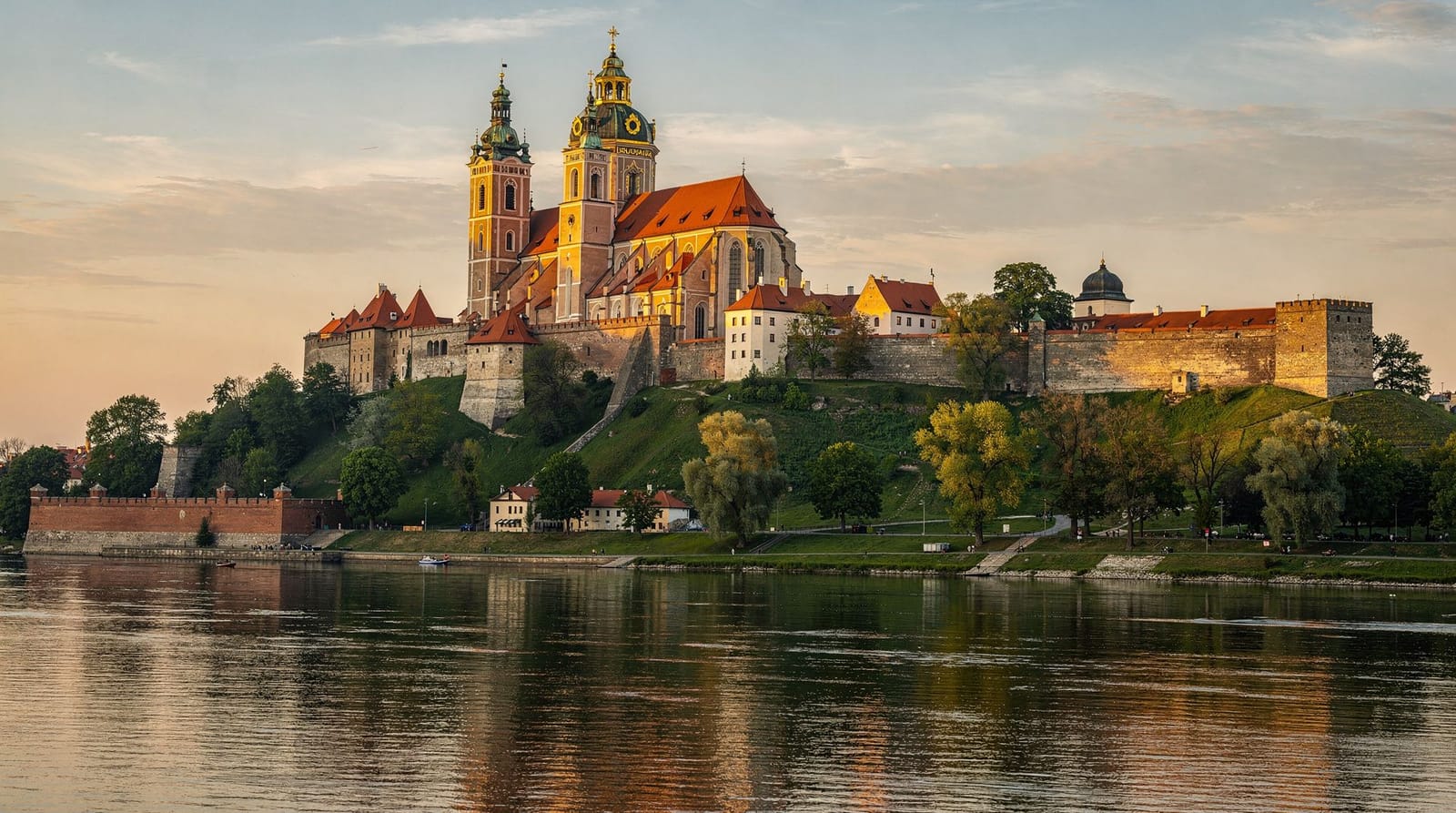
Wawel Castle and Cathedral complex served as the seat of Polish kings from the 11th to the 17th century and remains Poland's most potent national symbol. The cathedral contains the tombs of Polish kings and national heroes; the castle's royal chambers display the finest Renaissance interior in Poland. Its Nazi occupation and post-war restoration give it additional historical weight.
The hill that made Kraków
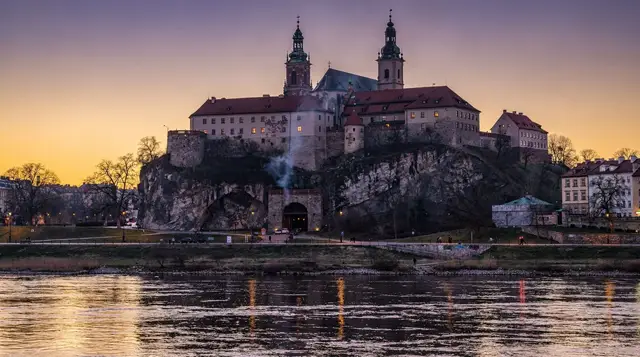
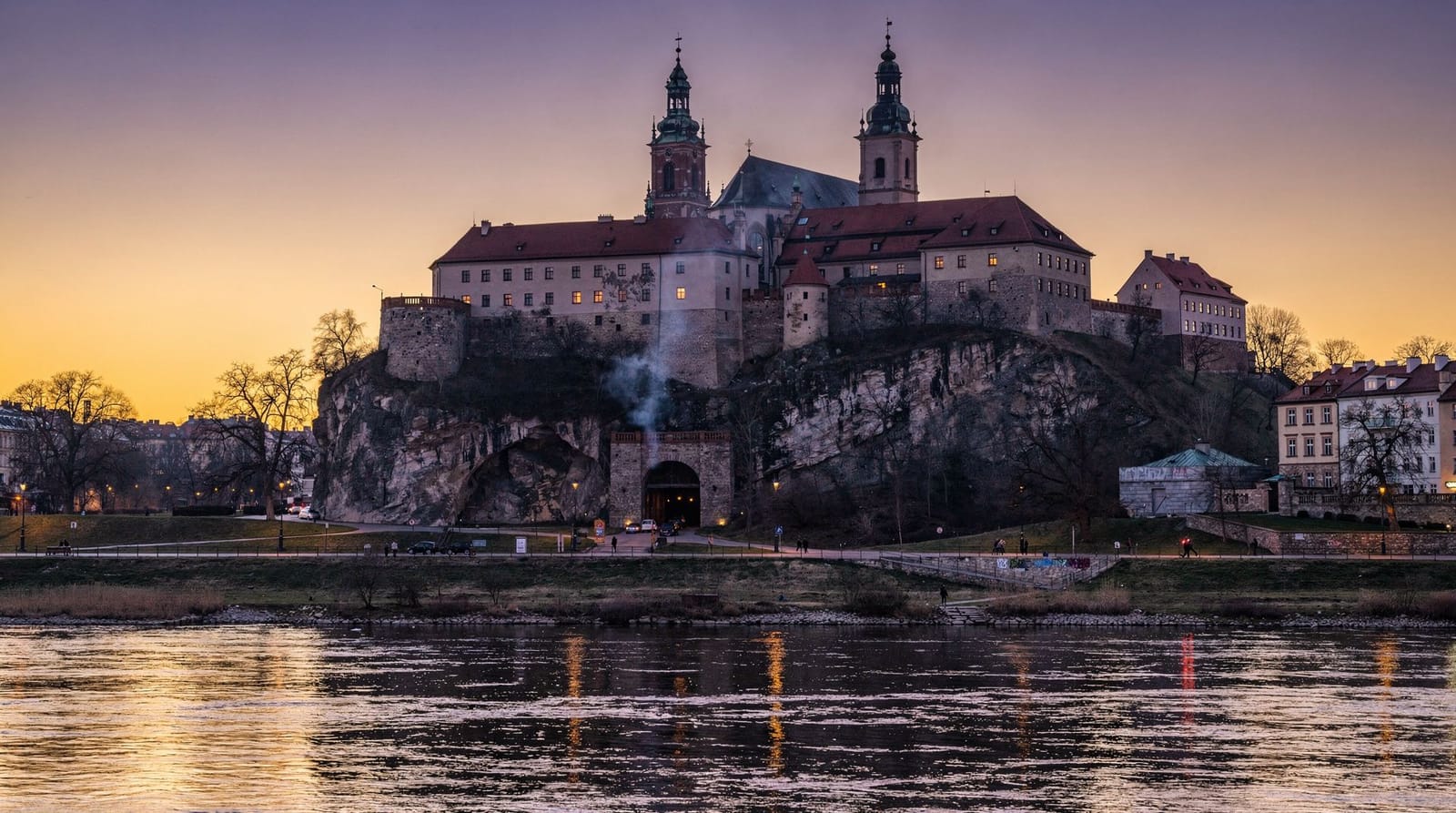
Before there was a city, there was the hill. Wawel rises 228 metres above sea level — barely 28 metres above the Vistula below — but its commanding position above the river bend made it the obvious defensive stronghold for whoever controlled this bend of the river. Archaeological evidence shows habitation from the Neolithic period; by the early Piast period, the hill was already the centre of political power in this part of Poland.
What developed over the following millennium is not a single castle but an accumulation: defensive walls rebuilt after successive invasions, a Gothic cathedral expanded over centuries, Renaissance royal chambers commissioned by kings who employed Italian architects, Baroque additions, 19th-century nationalist restoration, Nazi requisition, and 20th-century renovation. Wawel is all of these things simultaneously, which is what makes it both architecturally complex and historically extraordinary.
A Wawel Castle and Cathedral guided tour makes sense of this layering in ways that wandering unguided cannot.
| Where | Wawel Hill, above the Vistula, south of Rynek Główny |
| Cost | Free hill & exterior; paid exhibitions from 15 PLN |
| Time needed | 1–2 hrs for a history-focused overview; half a day for everything |
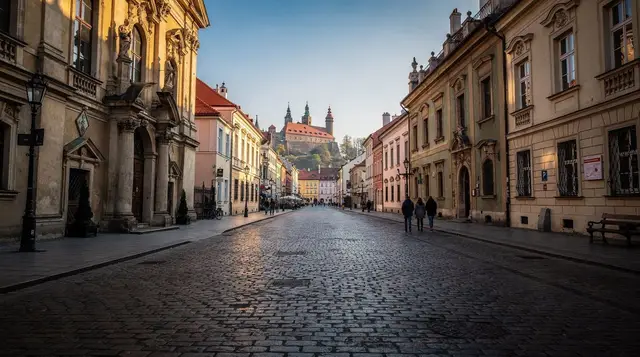
| Getting there | 10-min walk south from the Old Town along ul. Grodzka |
| Best time | Morning opening for the exhibitions, any time for the hill itself |
The early Piasts: the 10th–11th centuries
The first fortified settlement on Wawel dates to the 9th or 10th century. The first permanent church on the hill — the pre-Romanesque Rotunda of Saints Felix and Adauctus — dates to around 1000 CE and can still be seen in the archaeological excavations beneath the current cathedral.
In 1038, King Casimir I the Restorer moved the Polish capital from Gniezno to Kraków, making Wawel the centre of Polish royal power. The first proper stone palace was built; the first cathedral followed. The hill’s significance in Polish historical memory traces directly to this moment: for nearly 600 years from Casimir’s move, this was where Poland’s rulers lived, were crowned, and were buried.
The first Romanesque cathedral, dedicated to Saints Wenceslaus and Stanislaus, was built in the 11th century. The current Gothic cathedral largely replaces it, but sections of the Romanesque walls survive and are visible in the lower levels.
St. Stanislaus and the making of a national saint
The most important single event in Wawel’s medieval history occurred in 1079: the murder of Bishop Stanisław of Szczepanów by King Bolesław II, either at the altar of the Wawel Cathedral or at the church of St Michael on Skałka just below the hill (accounts vary). The bishop had excommunicated the king; the king allegedly killed him himself.
Stanislaus was canonised in 1253 and became Poland’s patron saint. His tomb in the Wawel Cathedral became a pilgrimage site and, crucially, a place where medieval Polish unity was reaffirmed across the fragmented principalities of the Piast period. The annual procession from Wawel to Skałka on the feast of St. Stanislaus (8 May) continues to the present day — one of Kraków’s oldest unbroken traditions.
The Jagiellonian Renaissance: the 15th–16th centuries
The golden age of Wawel architecture arrived with the Jagiellonian dynasty, particularly under Sigismund I the Old (r. 1506–1548) and his son Sigismund II Augustus (r. 1548–1572). Both kings employed Italian Renaissance architects — principally Francesco Fiorentino and Bartolomeo Berrecci — to rebuild the royal castle in the new Renaissance style.
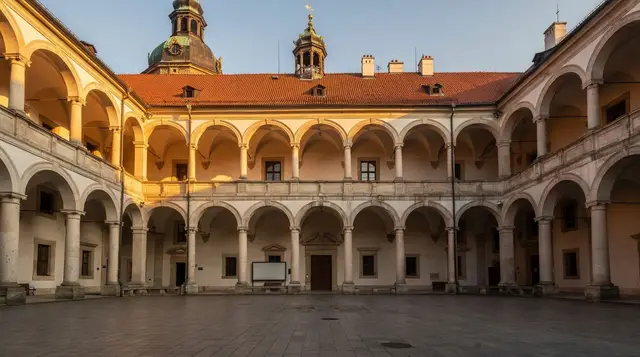
The result is the castle you see today: a three-storey arcaded courtyard of extraordinary elegance, often called the finest Renaissance courtyard north of the Alps. The loggia columns, the decorated courtyard balustrades, the painted and coffered ceilings of the royal chambers — all date from the 16th-century rebuilding under the Jagiellonians.
The castle’s greatest treasure from this period is the tapestry collection: 142 Brussels tapestries commissioned or purchased by Sigismund II Augustus in the mid-16th century. These were evacuated to Canada at the beginning of World War II and returned in 1961. Approximately 140 survive and hang in the royal chambers today. They constitute the largest and finest 16th-century Flemish tapestry collection in existence.
The 16th century also saw the completion of the Sigismund Chapel in the Cathedral — the burial chapel of the Jagiellonian kings, designed by Bartolomeo Berrecci between 1519 and 1533. Its gilded dome, visible from the exterior of the cathedral, is considered the finest example of Renaissance architecture in Poland and one of the finest north of the Alps. Pope John Paul II described it as “the pearl of the Renaissance north of the Alps” — a designation that has stuck.
The Cathedral: tombs of kings and heroes
The Wawel Cathedral — formally the Royal Archcathedral Basilica of Saints Stanislaus and Wenceslaus — is the burial place of Polish kings and national figures from the earliest Piast rulers to the 20th century. Walking through it is an exercise in Polish history made physical.
The royal crypts beneath the cathedral contain the remains of most Polish kings from Władysław I the Elbow-high (d. 1333) through Sigismund III Vasa (d. 1632). Alongside the kings are national heroes who were never rulers: Tadeusz Kościuszko, the leader of the 1794 uprising; Prince Józef Poniatowski, who died fighting for Napoleon; the poet Adam Mickiewicz; the painter Jan Matejko.
The most recent burials reflect the weight that Poles still place on Wawel as a site of national mourning. Marshal Józef Piłsudski, who restored Polish independence in 1918, was buried here in 1935. Most controversially, President Lech Kaczyński and his wife Maria, killed in the 2010 Smolensk air disaster, were buried in the cathedral in a decision that proved deeply politically divisive — not because of any disrespect for the dead, but because many Poles felt the cathedral should be reserved for figures of greater historical consensus.
The Sigismund Bell in the Cathedral tower is the largest bell in Poland, cast in 1520. Ringing it is said to bring good luck; it is rung only on state occasions and major Catholic feast days. Hearing it ring is one of Kraków’s truly distinctive experiences.
The Wawel Dragon and the city’s mythological foundation
The hill’s history extends below history into mythology. The legend of the Wawel Dragon — the smok wawelski — is one of Poland’s foundational myths. The dragon lived in a cave beneath the hill, terrorising the city and demanding tribute in livestock and young women until a clever cobbler’s apprentice named Krak fed it a lamb stuffed with sulphur and sealed with tar. The dragon, maddened by thirst, drank from the Vistula until it exploded.
Krak founded the city, which is named after him: Kraków. His daughter Wanda, who appears in a competing founding myth, is buried (according to legend) in the Kopiec Wandy mound east of the city.
The Dragon’s Den (Smocza Jama) beneath the western slope of Wawel Hill is real: a natural limestone cave approximately 270 metres long, with the famous fire-breathing bronze dragon sculpture by Bronisław Chromy at its entrance — a 1972 installation that has become one of Kraków’s most photographed objects. Access via a staircase from the hill’s western side; entry 15 PLN (≈ €3.60), seasonal opening.
The Kraków legends and myths guide covers the full landscape of Kraków’s folkloric tradition, including the Dragon, the Basilisk of the Old Town cellars, and Lajkonik.
From capital to museum piece: the 17th–19th centuries
The transfer of the capital to Warsaw in 1596 reduced Wawel to symbolic rather than practical significance. The castle fell into disrepair during the wars and disasters of the 17th century (the Swedish invasions, epidemics, fires); Swedish forces looted its remaining treasures in 1655 and 1702.
The Partitions brought Austrian occupation after 1795. Austrian military engineers turned the castle into barracks, subdividing the royal chambers, inserting a hospital, and covering the Renaissance courtyard with iron constructions. The damage was substantial but not irreversible: Polish restoration campaigns from the 1880s onwards gradually undid the Austrian modifications. The hill was returned to Polish custody in 1905 after a sustained cultural campaign.
The 19th-century restoration of Wawel was partly aesthetic and partly political: by restoring the castle and emphasising the continuous thread of Polish history that ran through it, Polish intellectuals and cultural figures were making an argument for national existence during the partition period. The hill became a deliberate symbol of Polish continuity and eventual renewal.
Nazi occupation of Wawel
When German forces entered Kraków on 6 September 1939, Governor-General Hans Frank immediately claimed Wawel Castle as his personal residence. The symbolism was intentional and brutal: the seat of Polish kings was to become the administrative headquarters of a German colonial administration.
Frank lived and worked in the royal apartments throughout the occupation. He ordered modifications, removed Polish artefacts, and used the castle as the stage for his governance of occupied Poland. Wawel under Frank was a direct assertion that Polish history had ended.
This history gives the castle its post-war meaning. When you stand in the royal chambers today, you are standing where Frank held court. This fact is not prominently displayed in the museum but is historically essential. The WWII Kraków guide covers the occupation in detail.
The art collections: what you will actually see
The State Rooms are the flagship experience and the primary reason most visitors pay the entrance fee. The collection centres on the tapestries — 140 surviving Brussels tapestries commissioned by Sigismund II Augustus in the mid-16th century. These are not wall decorations; they are the finest surviving collection of 16th-century Flemish weaving in existence. The largest pieces measure up to 8 metres wide and depict scenes from Genesis, the history of Noah, and symbolic compositions including animals and landscapes. The detail is extraordinary; the colours, despite nearly five centuries, remain remarkably vivid.
The royal apartments themselves are decorated with authentic Renaissance and Baroque furniture, carpets, and paintings assembled from the original royal collection and supplemented over centuries. The coffered ceilings of the Senators’ Hall and the Deputies’ Hall are particular highlights: carved wood with the original painted decoration surviving in good condition.
The Crown Treasury and Armoury is a separate ticket and worth it for visitors interested in Polish military history. The Szczerbiec — the 13th-century coronation sword, the only surviving piece of the original Polish regalia — is displayed here. The armoury collection spans Polish military equipment from the medieval period through the 18th century, including armour captured from Turkish and Swedish forces.
The Lost Wawel archaeological exhibition in the basement of the castle complex displays the remains of Romanesque buildings discovered during 20th-century excavations: the foundations of the early churches, the Rotunda of Saints Felix and Adauctus (circa 1000 CE), and the ceramic tiles and structural elements of the original Piast-era fortress. This is one of Kraków’s most undervisited museums; it gives the castle a depth that the Renaissance surface does not reveal.
The cathedral in detail
The Wawel Cathedral exterior is a confusing but compelling amalgamation: a 14th-century Gothic main structure with Renaissance chapels projecting from its sides, a Baroque entrance tower, and the golden dome of the Sigismund Chapel dominating the skyline from the south. The effect is not harmonious but historically eloquent.
Inside, the nave is lined with the tombs and memorial plaques of Polish kings and national figures stretching from the medieval period to the present. The oldest tombs are Romanesque sarcophagi relocated from earlier buildings; the most recent addition is the double tomb of President Lech and Maria Kaczyński, installed in 2010 amid political controversy.
The Silver Altar of St. Stanislaus in the main nave, constructed in the Baroque period, is one of the most elaborate ensembles of Polish religious art in existence: silver reliefs depicting the life and miracles of Poland’s patron saint. Nearby, the reliquary containing St. Stanislaus’s skull is the physical focus of the annual pilgrimage that has continued to Wawel for seven centuries.
The Bell Tower (Sigismund Bell Tower) is accessible via a narrow staircase from inside the cathedral. The Sigismund Bell, cast in 1520, hangs here — one of the largest medieval bells in Europe. To ring it requires pulling a rope attached to the clapper with the full weight of one’s body. The tower platform offers views over the Old Town and the Vistula.
Wawel’s history at a glance
| Era | Approx. dates | What happened on the hill |
|---|---|---|
| Early Piast | 9th–11th c. | First fortifications, pre-Romanesque rotunda, capital moved here in 1038 |
| Medieval / St. Stanislaus | 1079–14th c. | Bishop’s murder, canonisation, Gothic cathedral built |
| Jagiellonian Renaissance | 1500s | Italian architects rebuild the castle; tapestries commissioned; Sigismund Chapel completed |
| Decline & partition | 1596–1905 | Capital moves to Warsaw; Swedish looting; Austrian barracks occupation |
| Nazi occupation | 1939–1945 | Hans Frank’s residence and administrative seat |
| Restoration & present | 1945–today | Museum status, tapestry return from Canada, ongoing conservation |
Reading the hill in this order — rather than exhibition by exhibition — is the fastest way to understand why Wawel carries so much more national weight than a typical royal castle.
Wawel in the wider story of occupied Kraków
Wawel’s Nazi-era chapter is easier to grasp alongside the rest of the city’s wartime geography. Governor Frank’s residence on the hill sat a short distance from the ghetto established in Podgórze and from the enamel factory now preserved as the Schindler’s Factory Museum. Visitors building a history-focused day often combine Wawel with these sites; the WWII Kraków history itinerary sequences them sensibly, and the standalone WWII Kraków guide covers the occupation period in full. For the postwar chapter — Poland’s communist decades and the purpose-built district that embodied them — see the Nowa Huta communism guide.
Wawel as a walking experience
Before entering any paid attractions, spend time on the hill itself. The approach from the north (via the Dragon’s Den gate and the main ramp) passes under the Danish Tower (Baszta Duńska) and along the inner defensive walls. The courtyard view from the northern arcade of the Renaissance castle shows the full logic of the design: three stories of arcaded loggias creating a perfectly proportioned Renaissance space that functions as a theatrical backdrop as much as an architectural statement.
The southern side of the hill, less visited, offers views of the Vistula and the Dębniki district on the opposite bank. The old fortifications here — the Senators’ Tower, the Thieves’ Tower — are visible from this approach. It is quieter than the main courtyard circuit and worthwhile for the view alone.
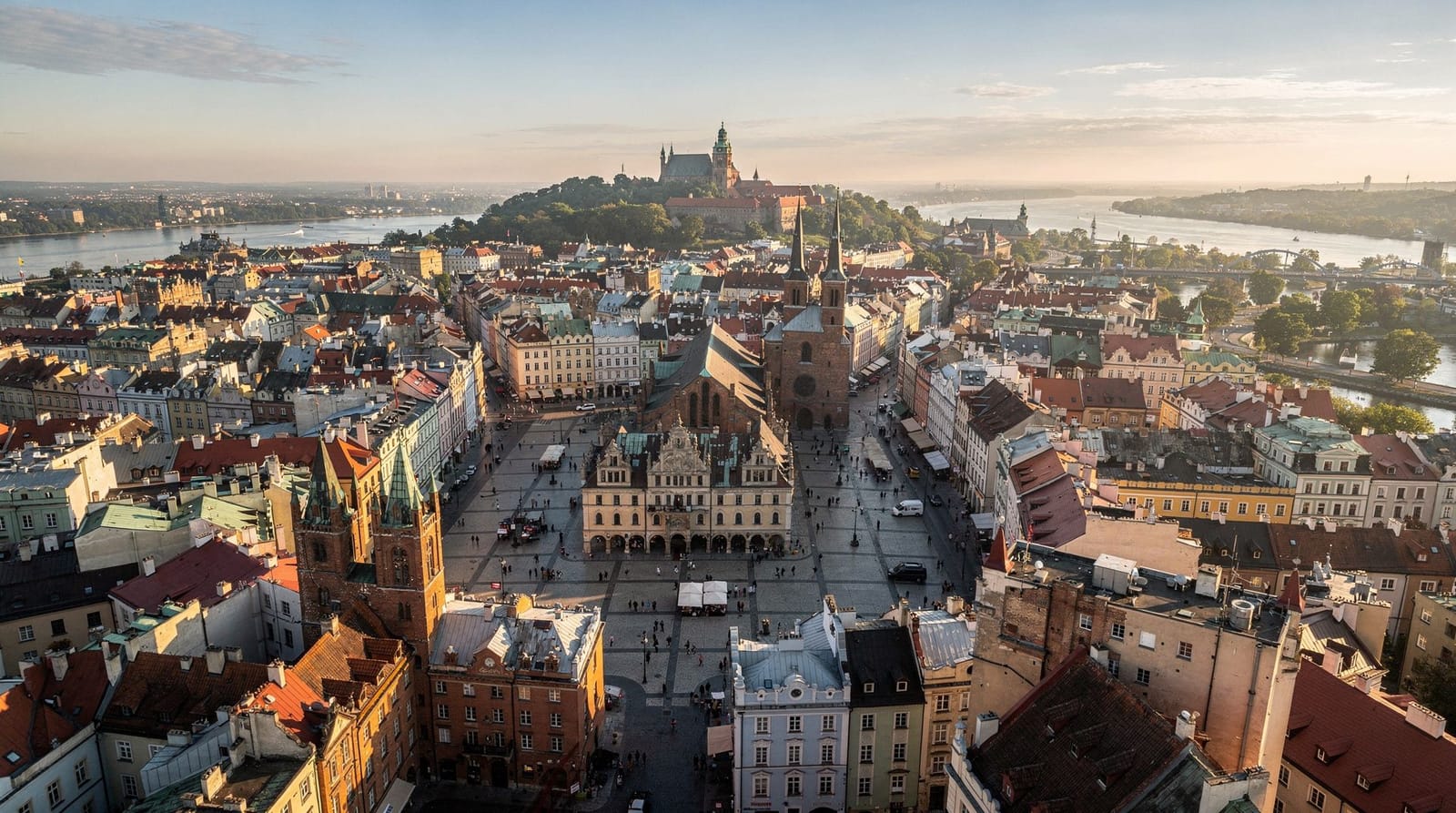
For visitors interested in comparing Wawel’s royal grandeur against the everyday medieval city that grew up around it, the Rynek Underground Museum beneath the main square shows how ordinary Kraków traders lived in the same centuries the Jagiellonians were commissioning tapestries on the hill — a useful counterweight to the royal narrative, and easily combined with Wawel on the same day since both sit on the Royal Route.
A medieval history walking tour of Kraków typically begins at the northern entry to the city (Barbican and Florian Gate) and works its way south along the Royal Route to Wawel, providing the urban context that makes the castle’s position on the hill make geographical sense.
Visiting Wawel today
The Wawel complex comprises several ticketed attractions that require separate entry tickets:
- State Rooms (Komnaty Królewskie): The royal apartments with their tapestry collections and Renaissance interiors. The flagship experience; 57 PLN adults (≈ €13.60).
- Royal Private Apartments (Prywatne Apartamenty Królewskie): More intimate 16th-century chambers. 57 PLN adults (≈ €13.60).
- Crown Treasury and Armoury: Polish regalia, royal objects, and weapons. The Crown Treasury and the Armoury are each 47 PLN for adults (≈ €11.20).
- Wawel Cathedral: The burial church of Polish kings, with the crypts and the Sigismund Chapel. 26 PLN adults (≈ €6.20) for the cathedral interior, crypts and Sigismund Bell.
- Dragon’s Den: The cave with the bronze dragon. 15 PLN (≈ €3.60).
The hill and exterior are free. Opening hours vary by season and attraction; the castle exhibitions are generally open Tuesday–Sunday, 09:00–17:00, with last admission varying by exhibition. Entry is free on certain Mondays in October and December, and in November (free ticket to collect, limited numbers) — check wawel.krakow.pl.
Book tickets in advance online at wawel.krakow.pl, particularly in summer — the State Rooms especially sell out. A guided tour, which includes tickets, is the most efficient option.
The medieval history city walking tour provides context for Wawel within the broader medieval urban landscape, including the Royal Route from St. Florian’s Gate to the castle.
Frequently asked questions about Wawel royal history
Who was the last Polish king buried at Wawel?
Michał Korybut Wiśniowiecki, who died in 1673, was the last reigning Polish king buried in the cathedral’s royal crypts. Later rulers (the Wettin and Saxony kings of the 18th century) were buried elsewhere. Subsequent Polish leaders — including Kościuszko and Piłsudski — were accorded royal-equivalent burials as national heroes.
Why isn’t Wawel UNESCO-listed?
Wawel Castle and Cathedral are not individually UNESCO-listed because they fall within the Old Town of Kraków, which was inscribed as a UNESCO World Heritage Site in 1978 as one of the first twelve sites on the initial World Heritage List. The inscription covers the entire historic city centre, including Wawel.
Can you visit the Dragon’s Den year-round?
The Dragon’s Den is open seasonally and is closed from 1 November to 31 December. Check the Wawel website for the current season’s dates. The cave itself is dramatic but brief — expect a 10–15 minute experience.
What happened to the Polish crown jewels?
The original Polish regalia were stolen by the Prussians in 1795 during the Third Partition and later melted down. What is displayed in the Crown Treasury today includes surviving pieces: the Szczerbiec coronation sword (the only surviving piece of the original regalia, dating from the 13th century), various sceptres, and the coronation vestments. The loss of the regalia during partition is a specific historical wound in Polish national memory.
How long did Wawel serve as Poland’s royal capital?
Roughly 560 years, from Casimir I the Restorer’s move of the capital to Kraków in 1038 until the capital transferred to Warsaw in 1596. Even after 1596, Wawel remained the site of royal coronations and burials for decades, and it never lost its symbolic status as the seat of Polish sovereignty, which is part of why its Nazi occupation in 1939 struck such a deep nerve.
Is Wawel Hill connected to the Nazi occupation of Kraków?
Yes, directly. Governor-General Hans Frank made Wawel Castle his personal residence and administrative headquarters for the entire occupation of Poland, from 1939 to 1945 — a deliberate act of symbolic conquest given the hill’s status as the historic seat of Polish kings. The WWII Kraków guide and Podgórze ghetto guide cover the wider occupation in more detail.
Top experiences
Bookable activities with verified prices and instant confirmation on GetYourGuide.