Kraków legends and myths: dragons, curses, and the stories behind the stones
Krakow: evening walking tour with spooky stories
Duration: 2h
What are the most famous legends of Kraków?
The most famous is the Wawel Dragon (Smok Wawelski), slain by a clever shoemaker's apprentice named Krak who founded the city. Other key legends include Princess Wanda who drowned herself rather than marry a German prince, the Lajkonik horseman who commemorates a Mongol victory, and the Bugler of St. Mary's whose call stops mid-phrase each hour in memory of a medieval archer killed by a Tatar arrow.
| Where | Wawel Hill, Rynek Główny, Sukiennice, Nowa Huta (Wanda’s Mound) |
| Cost | Free to encounter most; Dragon’s Cave 15 PLN, evening tours extra |
| Time needed | A couple of hours self-guided; 2 hours for a guided evening tour |
| Getting there | All sites walkable within the Old Town except Wanda’s Mound (tram) |
| Best time | Any season; the Lajkonik parade needs late June/early July timing |
Why Kraków’s legends still matter
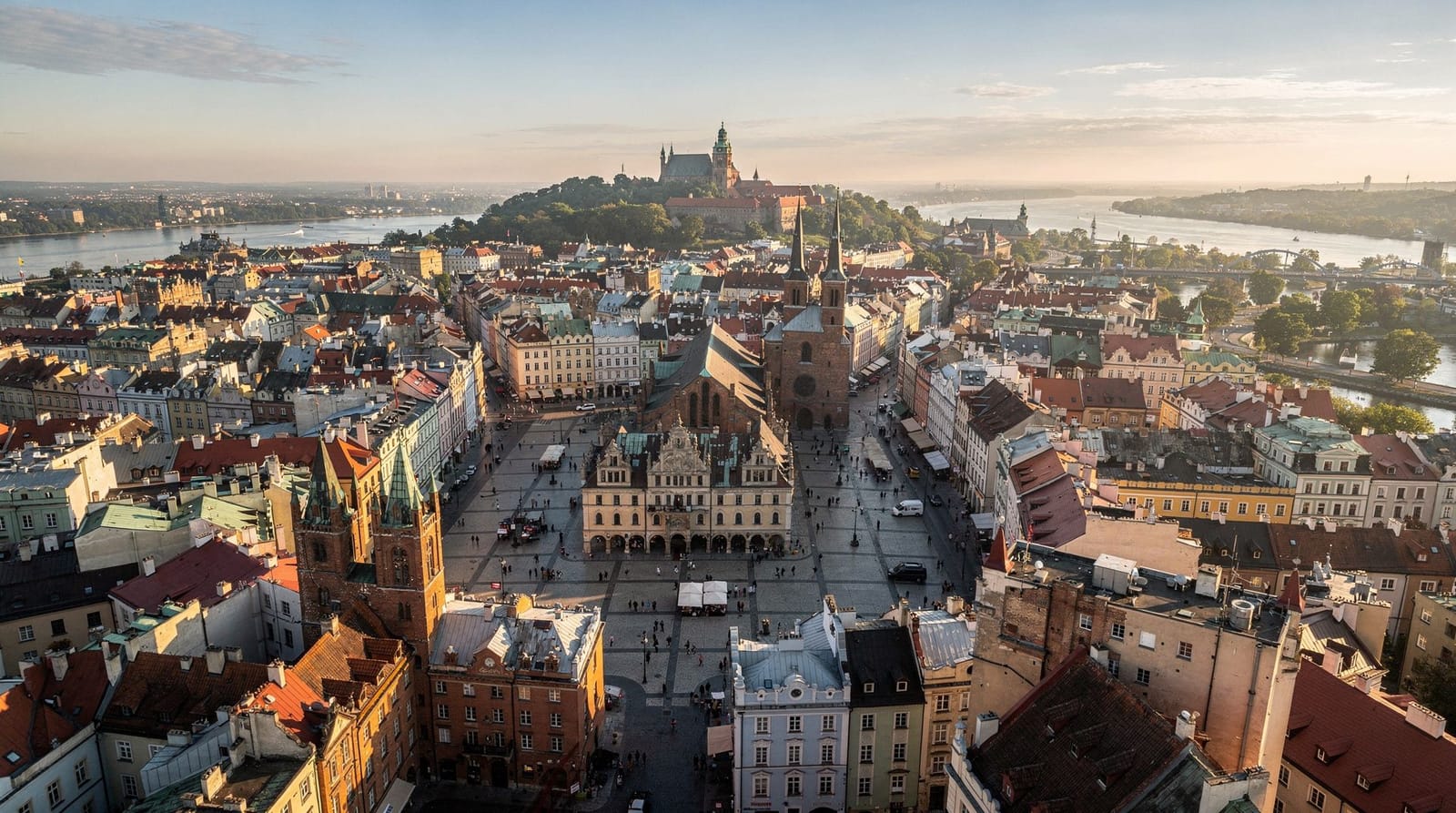
Cities accumulate stories the way rivers accumulate sediment: slowly, in layers, until the stories become as structurally important as the ground itself. In Kraków, the myths have a particular density and visibility. The Wawel Dragon appears on tourist merchandise, pub signs, and children’s books. The hourly bugle call from St. Mary’s Basilica is one of the city’s defining sounds. The Lajkonik horseman parades through the streets every year. The legends are not museum pieces; they are still in active circulation.
This guide covers the major legends, where they came from, and where you can still encounter them today. For the history beneath the myths, the Wawel royal history guide and Polish history for visitors provide the factual context.
The Wawel Dragon: the city’s founding myth
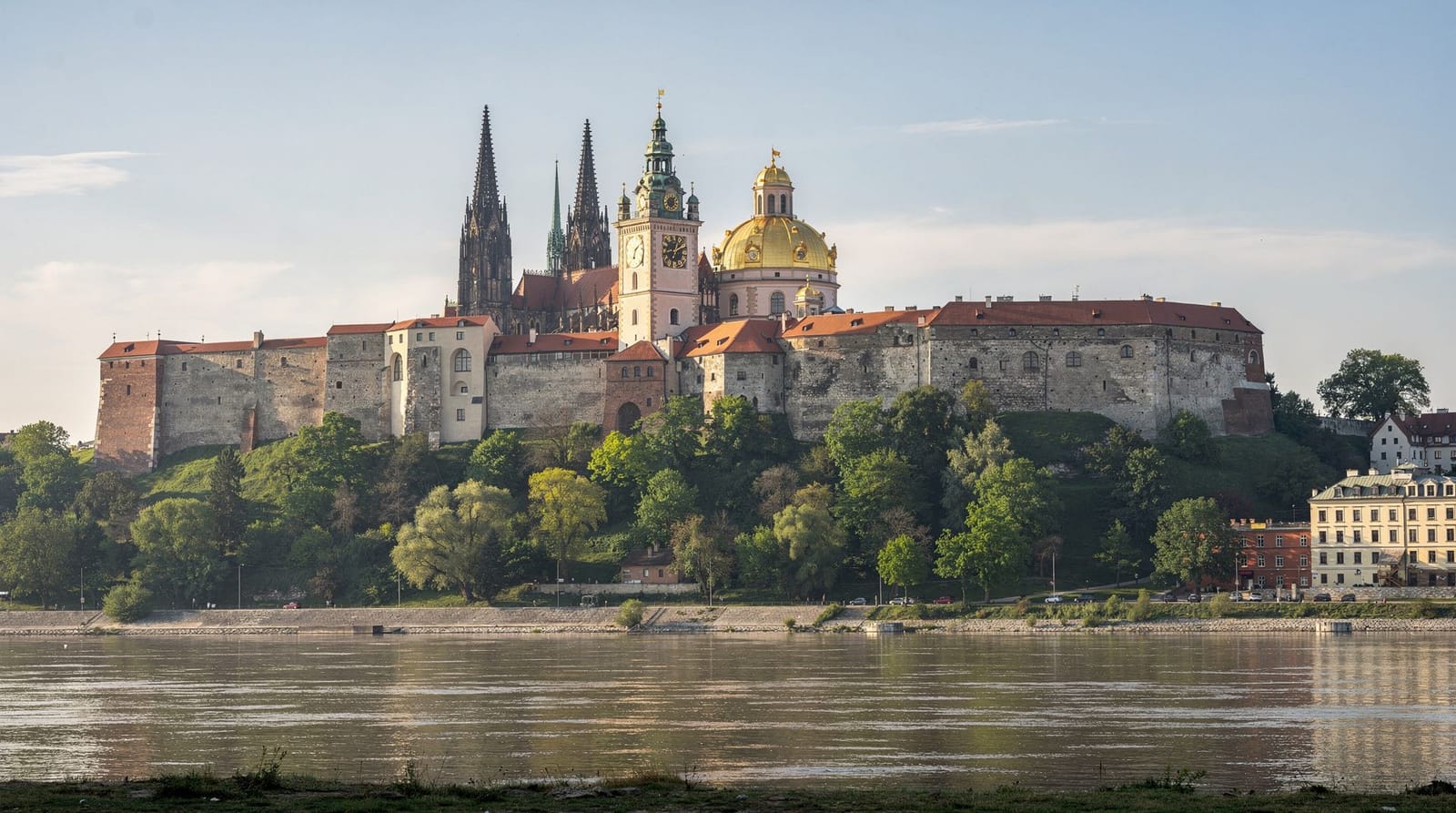
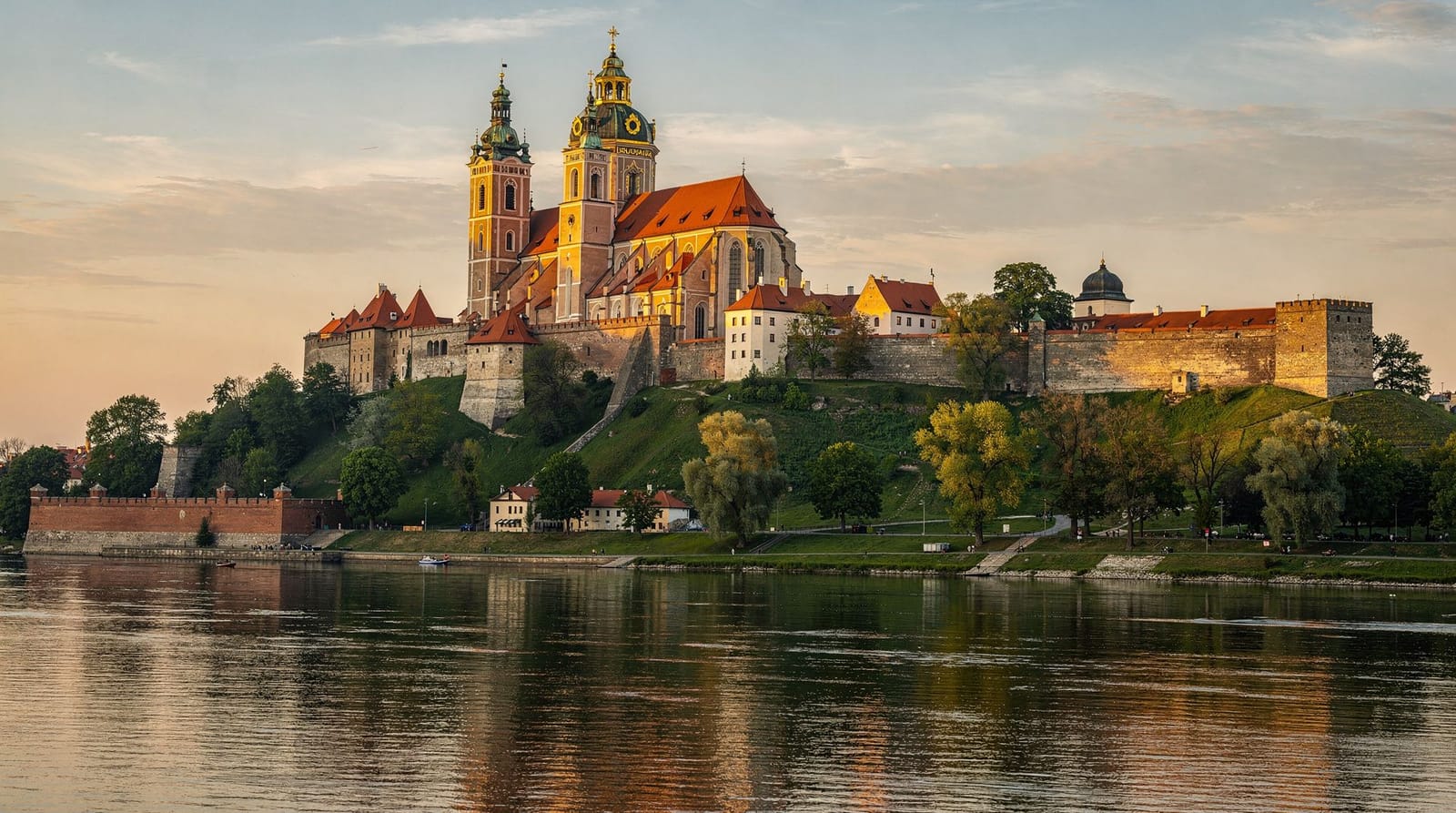
The legend of the Smok Wawelski — the Wawel Dragon — is Poland’s most beloved founding myth. The earliest written versions date to the 13th century, though the story is certainly older.
In the most common version, a terrifying dragon lived in a cave beneath Wawel Hill, demanding tribute from the surrounding settlements: livestock, food, and — according to the darker variants — young women. The local ruler (variously described as a king, a duke, or simply a lord) offered his daughter’s hand in marriage to whoever could slay the monster. Knights tried and failed.
The solution came from the least likely source: a shoemaker’s apprentice named Krak (or, in some versions, Skuba). Rather than fighting the dragon directly, he stuffed a lamb’s hide with sulphur, sealed it with tar, and left it outside the cave. The dragon ate it. Burning with thirst and maddened by the sulphur, the dragon ran to the Vistula and drank so desperately that it exploded.
Krak became a hero, married the princess, and founded a city on the site of his victory. The city was named Kraków in his honour.
The Dragon’s Den (Smocza Jama), the actual limestone cave beneath the western slope of Wawel Hill, is accessible today via a staircase entry point on the hill’s western side. At its entrance stands the famous fire-breathing bronze dragon by sculptor Bronisław Chromy, unveiled in 1972 — a 9-metre statue that breathes real fire at irregular intervals. Entry to the cave: 15 PLN (≈ €3.60). The cave is seasonal and closed from 1 November to 31 December.
The dragon’s image appears throughout Kraków’s visual culture: on the city’s coat of arms (where it has appeared since the medieval period), on the Kraków FC football club badge, in street art, and on hundreds of souvenir items. For the full mythological atmosphere of Wawel at night, an evening walking tour with spooky stories includes the Dragon’s cave and the darker corners of the hill’s history.
Princess Wanda: the patriotic drowning
The second great founding legend of Kraków concerns Wanda, daughter of Krak, who appears in chronicles from the 12th century onwards. After her father’s death, Wanda became ruler. A German prince named Rüdiger (or Rytygier in Polish versions) sought her hand and, when refused, threatened war.
Rather than marry a foreigner and subject her people to a foreign ruler, Wanda led her army against Rüdiger’s forces, prayed to the Slavic gods for victory, won the battle — and then threw herself into the Vistula as a sacrifice of gratitude, to keep the gods satisfied.
The story is obviously mythological: Wanda is the personification of Polish patriotism, female power, and the willingness to sacrifice self for nation — values that took on particular resonance during the centuries of partition and occupation. She appears in romantic paintings, national poetry, and in the naming of patterns ranging from rivers to manufacturing plants.
The Kopiec Wandy (Wanda’s Mound), a large artificial earthen tumulus 30 metres high, stands in the eastern part of Nowa Huta and is traditionally identified as Wanda’s burial site. Archaeological evidence confirms that the mound was constructed in the early medieval period, though whether for the historical (or legendary) figure of Wanda or for someone else entirely remains uncertain. The mound is accessible and worth climbing for views of the city and the Nowa Huta steelworks to the west.
The Bugler of St. Mary’s: the interrupted call
Every hour, from the tallest tower of St. Mary’s Basilica on Rynek Główny, a bugler plays the hejnał mariacki — a simple five-note fanfare in four directions of the compass. Each version of the call ends abruptly, mid-phrase.
The legend behind this interruption is one of the most persistent in Kraków. During a Tatar invasion (dated by tradition to 1241 but conflated with multiple medieval raids), a watchman in the tower sounded the alarm to warn the city of approaching Tatar cavalry. He was shot by a Tatar arrow mid-call; the hejnał stopped as he died. In his memory, the bugler’s call has been cut short at the same moment ever since.
The legend is certainly embellished, but the hejnał itself is historically documented and has been played continuously since at least the 14th century. It is one of the longest unbroken musical traditions in Europe. The Polish Radio has broadcast the noon hejnał live from St. Mary’s tower since 1927.
The bastion of a medieval tower that served as a watchtower is still visible and you can hear the bugler in person from Rynek Główny at any hour. On the stroke of noon, this is a tourist event watched by crowds; at 3 am, if you happen to be awake, it is simply a medieval sound echoing in an empty square.
The medieval history walking tour of the Old Town covers the hejnał tradition alongside the other medieval structures of Rynek Główny and the city walls.
Lajkonik: the Mongol horse parade
In the weeks after Corpus Christi — the most important Catholic feast in the Polish calendar — Kraków holds one of its strangest and most beloved traditions: the Lajkonik parade.
A man in a Mongol warrior costume, riding a decorated wooden hobby horse (the lajkonik), leads a procession from the Norbertine Convent in Zwierzyniec through the Old Town to Rynek Główny, accompanied by musicians and a crowd of participants. The journey takes several hours; at each stop, the “Tatar” demands tribute from spectators and strikes them with his ceremonial mace for good luck.
The legend behind it dates to the same 1241 Tatar invasion that appears in the hejnał story. According to one version, after the Tatars were repelled, Kraków’s raftsmen (flisaków) encountered and killed a Tatar leader, then dressed in his clothes and rode back to the city in triumph. Another version has the lajkonik commemorating a Tatar envoy who was taken prisoner. The precise origin is uncertain and probably conflated over centuries.
What is certain is that the tradition is documented from the 15th century and has been maintained, with interruptions during the World Wars, essentially to the present. The Lajkonik costume was redesigned in 1904 by Stanisław Wyspiański — the great Polish symbolist artist and playwright who was also responsible for the stained glass windows in St. Francis of Assisi Church — and the current costume reflects his design.
The Lajkonik is one of the few living folkloric traditions in a Polish city that has not been entirely absorbed into museum culture. Seeing the parade requires being in Kraków in the right week (typically late June or early July, depending on the Corpus Christi date), but the hobby horse figure appears in Kraków’s visual culture year-round.
The Basilisk of Rynek Główny’s cellars
Beneath the Main Square runs an extensive network of medieval cellars — now partly accessible as the Rynek Underground Museum, which preserves archaeological excavations dating to the 10th century. Medieval Kraków’s popular imagination populated these cellars with a basilisk: a creature whose gaze turned anyone it looked at to stone.
The Basilisk legend has several versions, all involving a young woman whose beauty the creature’s petrifying gaze could not overcome, and a wizard or clever merchant who defeated it using a mirror to reflect its own stare back at it. The specifics vary; the moral is consistent: brains defeat monsters more reliably than brute force, and feminine beauty has peculiar powers.
The cellar network under Rynek Główny is genuinely extensive and genuinely atmospheric; the Rynek Underground Museum preserves it with excellent historical interpretation. The museum’s Basilisk displays are more whimsical than the dragon’s cave, reflecting the lighter register of this particular legend.
The Wawel Chakra: a modern legend
Not all of Kraków’s legends are medieval. The Wawel Chakra is a modern addition to the mythos: the belief, widespread among New Age devotees and some spiritual seekers, that Wawel Hill is one of seven points on Earth where mystical energy concentrations called chakras are located.
The legend apparently originated in the early 20th century but gained significant traction in the 1970s and 1980s. Believers claim that touching a particular section of wall on the castle’s southwest side allows one to absorb the chakra’s energy. The spot is identifiable by the smooth patches where hands have worn the stone and the occasional meditating visitor.
Historians and archaeologists find no evidence for the chakra’s existence; the legend is not medieval but fairly recent. However, it has become a genuine part of the Kraków visitor experience — and the sight of someone meditating against the castle wall while tour groups stream past is itself a kind of interesting observation about how cities generate myth.
The Cockerel of the Cloth Hall
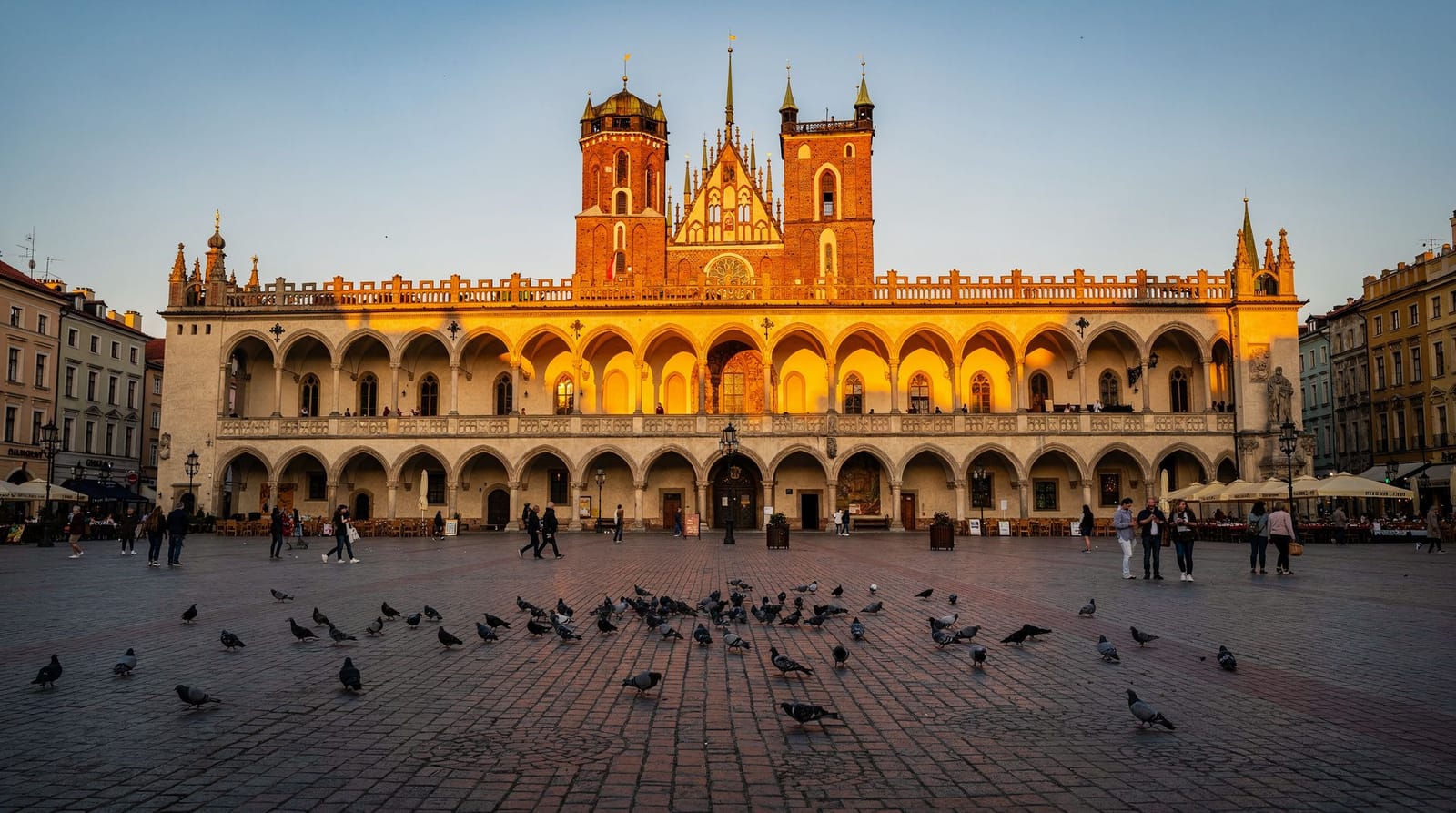
The Renaissance Cloth Hall (Sukiennice) in the centre of Rynek Główny is topped with a parapet featuring stone cockerel heads. According to legend, the building’s architect, challenged to complete the structure faster than was physically possible, made a deal with the devil, who would help finish the construction in exchange for the architect’s soul. The architect agreed, completed the building, and then summoned a priest to bless the completed structure — trapping the devil inside the stonework, where he remains today in the form of the carved heads.
The legend is relatively modern (the Cloth Hall was built in 1555 and the parapet decorations are Renaissance rather than explicitly devil-related in their iconography), but it illustrates the common European pattern of attributing exceptional construction to demonic assistance. Similar legends attach to cathedrals across Germany, France, and England.
The Sukiennice today hosts a market of textiles and crafts on the ground floor, the National Museum’s gallery of 19th-century Polish painting on the upper floor, and the Rynek Underground Museum in its foundations. Worth an hour combining all three.
The Piast legend and the city’s symbolic founding
In Polish national mythology, the Piast dynasty — Poland’s founding royal house — is associated with a legend of humble origins. According to the chronicle tradition, the first Piast prince was discovered not by genealogical succession but by divine election: an ordinary wheelwright named Piast was visited by mysterious strangers at the same time that a corrupt and arrogant ruler elsewhere was being rejected by God. The strangers blessed Piast’s food and drink, which miraculously multiplied, and his son Siemowit later became Poland’s ruler.
This legend — which serves partly as a legitimating myth for a dynasty whose real origins were uncertain — gave the Piast name its later political resonance. During the 19th century, when Poland had been partitioned out of existence, the term “Piast” became a rallying symbol for Polish national identity and democratic aspiration. The Piast political party of the interwar period drew on this symbolism explicitly.
In Kraków, the Piast connection runs through Wawel: the royal hill was the Piast dynasty’s primary seat from the 10th century. Walking up the ramp to the castle, you are following the path that Piast rulers walked for 300 years.
The legend of the salt mines: King Kinga’s ring
Wieliczka Salt Mine, 14 km southeast of Kraków, has its own founding legend inextricably linked to the city’s history. Princess Kinga (also known as Kunigunde), daughter of the King of Hungary and fiancée of the Polish Duke Bolesław V the Chaste, was given the salt mines of Maramureș in Hungary as her dowry. Before departing for Poland, she cast her engagement ring into one of the Hungarian mines.
When Kinga arrived in Poland, she asked local miners to dig at a spot she had identified. They found salt — and within the first lump of salt, miraculously embedded, was her ring. The mine was established; the salt proved an extraordinary source of wealth for medieval Poland.
Kinga was later canonised as a saint; she is the patron saint of Poland and Lithuania. The most elaborate chapel in the Wieliczka Salt Mine — the Chapel of the Blessed Kinga, a full underground church carved entirely from salt — is dedicated to her. The mine is accessible on a day trip from Kraków, and the Wieliczka day trip guide covers the practical details.
The Raven of Wawel
One of the lesser-known Wawel legends concerns a raven that lives in a cage on the castle’s western bastion. According to the story, King Krakus (Krak) had a son also named Krak who murdered his brother and then falsely accused the dragon of the killing. As punishment for this act of fratricide and deceit, the prince was transformed into a raven and condemned to guard the castle until Poland’s greatest crisis, at which point he will be transformed back into a man and lead Poland to victory.
A raven does, in fact, live on Wawel Hill — the castle authorities have maintained ravens there as part of the living legend since at least the early 20th century. Whether this is a case of the tradition following the legend or the legend following the practice is unclear; what is clear is that the raven is fed, cared for, and visible to visitors on the castle grounds.
Ghost traditions: the spectral history of Kraków’s buildings
Kraków has a rich tradition of haunted buildings, ghost stories, and spectral visitations that reflects both the city’s genuinely violent history and the European tradition of memorialising significant deaths through supernatural tales.
The most-cited haunted location is Wawel Castle itself, where the ghost of King Władysław IV is said to walk the royal apartments. More specific is the story of the “white lady” ghost at the Barbican — a young woman who allegedly died in the moat during the medieval period and appears on the full moon. The Barbican’s actual history as a defensive fortification where executions took place gives the ghost story a grounding in violent historical reality.
The cellars under Rynek Główny are associated with multiple ghost traditions, most connected to the plague epidemics of the 14th and 15th centuries, when mass deaths created a particular intensity of spectral memory. The maze of interconnected medieval cellars — now partly the Rynek Underground Museum — generated ghost traditions partly because they were used as mass graves during plague years.
An evening walking tour with spooky stories is the most atmospheric way to engage with these traditions, typically covering three or four of the city’s best-documented ghost sites with a guide who distinguishes between historical record and folklore.
Where to encounter the legends in person
The Dragon’s Cave: Wawel Hill, western access. Seasonal (closed 1 November–31 December). Fire-breathing dragon outside; cave inside. 15 PLN entry.
St. Mary’s Basilica tower hejnał: Heard from Rynek Główny at every hour. The bugler is visible in the tower window. Noon is the most popular moment.
Lajkonik parade: Late June or early July, starting at the Norbertine Convent in Zwierzyniec. Free to watch from the streets.
Rynek Underground Museum: Beneath Rynek Główny. Basilisk displays alongside serious archaeological interpretation. Adults 45 PLN (≈ €10.70).
Evening tours: An evening walking tour with spooky stories covers the darker legends — the basilisk, the witch trials of the 15th century, the ghost traditions of the city’s medieval churches — with a guide who knows which stones hide which stories.
The medieval history walking tour covers the historical context for the legends alongside the actual medieval structures.
Which legend sites are worth prioritising
| Site | Cost | Time | Why it’s worth it |
|---|---|---|---|
| Dragon’s Cave + statue | 15 PLN | 15–20 min | The city’s founding myth, plus a genuinely fun fire-breathing statue for kids |
| Hejnał from Rynek Główny | Free | 5 min, any hour | Hear a living medieval tradition; free and requires no planning |
| Rynek Underground Museum (Basilisk) | 45 PLN | 60–90 min | Combines the legend with serious archaeology beneath the square |
| Wanda’s Mound | Free | 30–45 min + travel | For those with time to reach Nowa Huta; good views as a bonus |
| Lajkonik parade | Free | Seasonal, late June/early July | A living folk tradition, not a museum piece — worth timing a visit around |
| Evening spooky-stories tour | Paid | ~2 hours | The most efficient way to cover multiple ghost sites with context |
How the legends connect to what you’ll actually see
Most first-time visitors encounter these legends in fragments — a dragon statue here, a strange bugle call there — without realising how tightly they connect to sites already on a standard sightseeing route. The Wawel Dragon legend explains why a fire-breathing statue sits at the base of the hill you’re climbing for the Wawel Castle guide anyway. The Basilisk story adds a layer of folklore to the same underground cellars covered by the Rynek Underground Museum guide. And Princess Kinga’s ring ties directly into the Wieliczka Salt Mine day trip, where her chapel is the single most photographed room underground. Reading this guide before those visits turns ordinary sightseeing into something with a story attached.
For visitors who want the legends delivered with expert context rather than self-guided reading, the Kraków for first-timers guide explains how to build a first day that naturally passes most of these sites, and the Wawel Castle and Cathedral guided tour weaves the Dragon and raven legends into the historical narrative on-site.
Frequently asked questions about Kraków legends
Is the Dragon’s Cave a natural formation or man-made?
The Dragon’s Cave is a natural limestone cave approximately 270 metres long, formed by the same karst geological processes that created the Wieliczka and Bochnia salt mines in the region. It has been known and visited since the medieval period; historical records mention it as a curiosity visited by travellers. The fire-breathing dragon statue outside is entirely 20th-century art.
When did the hejnał tradition begin?
The hejnał is documented in city records from the 14th century. The specific tradition of ending it mid-phrase — and the story of the Tatar archer — appears in chronicle references from approximately the same period, though the specific 1241 date is probably an anachronism; the story has been grafted onto the most famous Tatar raid. The Polish Radio broadcast from the tower began in 1927 and is one of the longest-running broadcast traditions in European radio.
Are there ghost tours in Kraków?
Yes, and they are popular year-round. The best use the city’s genuine medieval history — its cellars, its early documented deaths from plague and violence, its period of witch trials in the 15th and 16th centuries — as the basis for atmospheric evening tours rather than simply inventing ghost stories. The evening walking tour with spooky stories is the most widely recommended; it distinguishes between documented history and folklore while making both entertaining.
What is the relationship between Kraków’s legends and actual history?
Most of the major Kraków legends have a historical kernel: the Mongol invasions of 1241 and 1259 were real and devastating; Wawel Hill was genuinely the centre of early Polish settlement; the Cloth Hall is a genuine Renaissance building. The legends grew around these real events and places, interpreting them through the storytelling conventions of their era. The interesting question for the historically-minded visitor is always: what does this legend tell us about what the people who told it feared, valued, or needed to explain?
Can I see all the major legend sites in one day?
Yes, most are within walking distance of each other in the Old Town: the Dragon’s Cave and Wawel raven site, the hejnał from Rynek Główny, the Sukiennice cockerel heads, and the Rynek Underground Museum’s Basilisk displays can all be covered in a half-day. Wanda’s Mound in Nowa Huta and the Wieliczka salt mine legend require separate trips.
Are the legend sites suitable for children?
Very much so — the Dragon’s Cave with its fire-breathing statue is a genuine highlight for younger visitors, and most of the stories (the dragon, the raven, the hejnał) work well as simplified tales for children. The ghost and witch-trial content on evening spooky-stories tours is better suited to older children and adults.
Top experiences
Bookable activities with verified prices and instant confirmation on GetYourGuide.