Best time to visit Kraków: month-by-month guide
Krakow: Old Town guided walking tour
Duration: 3h
When is the best time to visit Kraków?
April–May and September–October are the sweet spots: mild temperatures (15–22°C), 20–30% cheaper hotels than summer, and manageable crowds at Wawel and Auschwitz. Summer (June–August) brings festivals and long days but peak prices and queues. Winter is cold but magical for Christmas markets and budget prices.
| Best months | Late April–May, September |
| Cheapest months | November, February, early March |
| Hottest/busiest | July–August (20–32°C, peak prices) |
| Coldest | January (avg −4 to 2°C) |
| Book Auschwitz | 1–2 weeks shoulder / 2 months summer |
Kraków’s seasons at a glance
Kraków sits in a continental climate zone in southern Poland — warm summers, cold winters, and two pleasant shoulder seasons. It doesn’t have a bad time to visit so much as trade-offs to weigh: crowd size versus festival access, hotel prices versus ideal weather. Understanding those trade-offs determines the quality of your trip.
The city sits at about 220 m above sea level in the Małopolska Upland, sheltered from the north by the Carpathian Mountains. That means reasonable sunshine totals (around 1,700 hours per year), genuine snow in winter, and occasionally scorching August days. The Tatras at Zakopane are snowcapped October through May, which affects day-trip plans considerably.
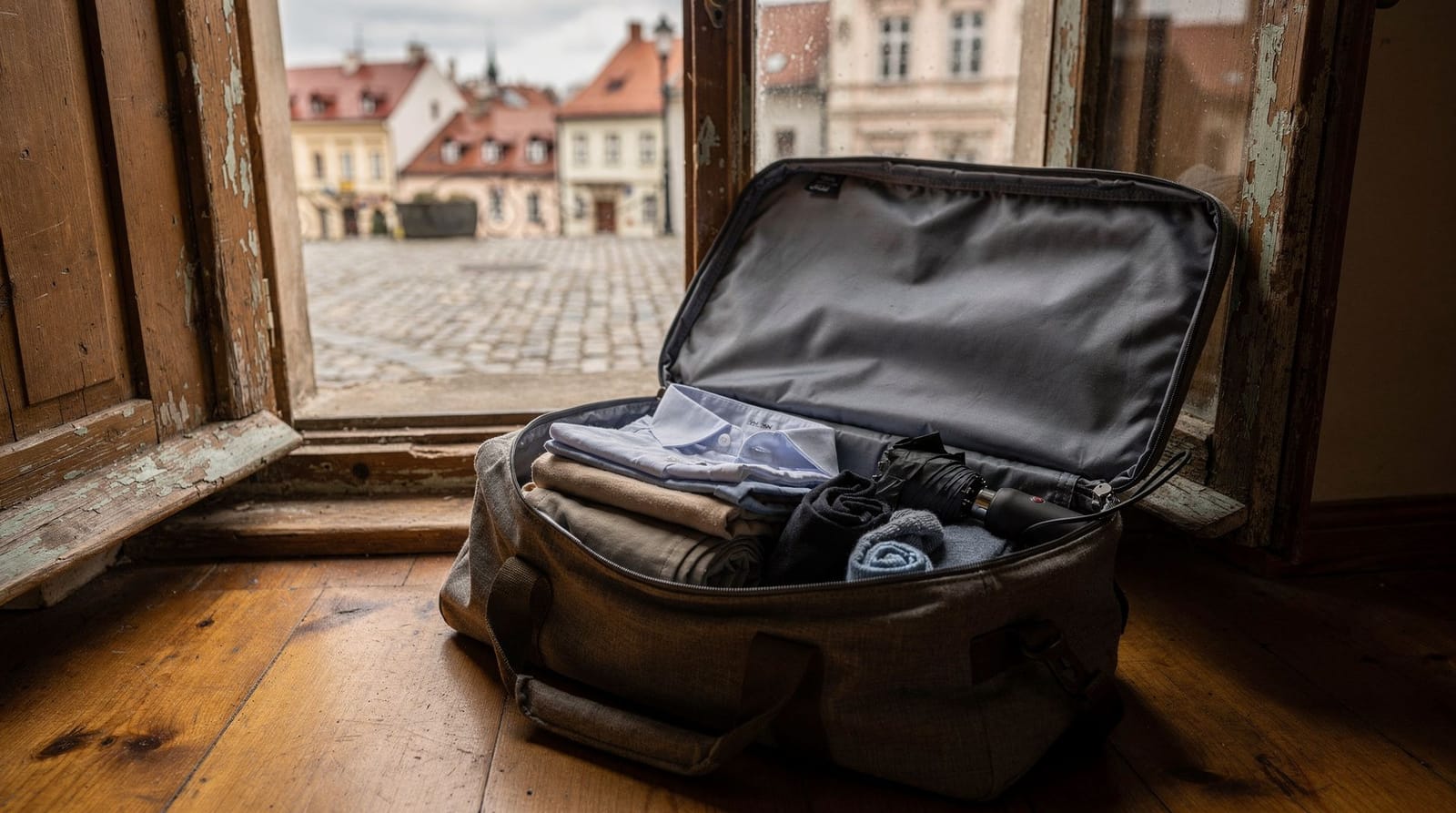
For a complete framework on how long to stay in each season, see the how many days in Kraków guide. For what to wear in each season, the Kraków packing guide covers season-specific clothing requirements.
April and May: the best shoulder season
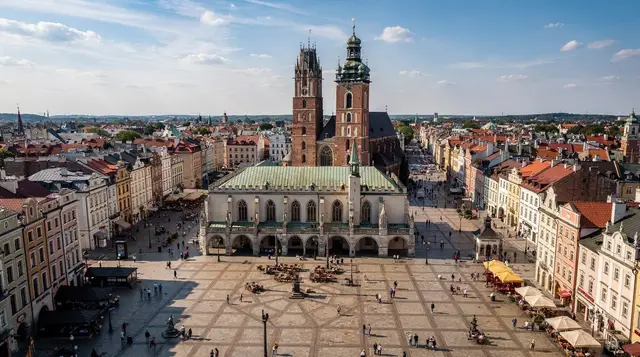
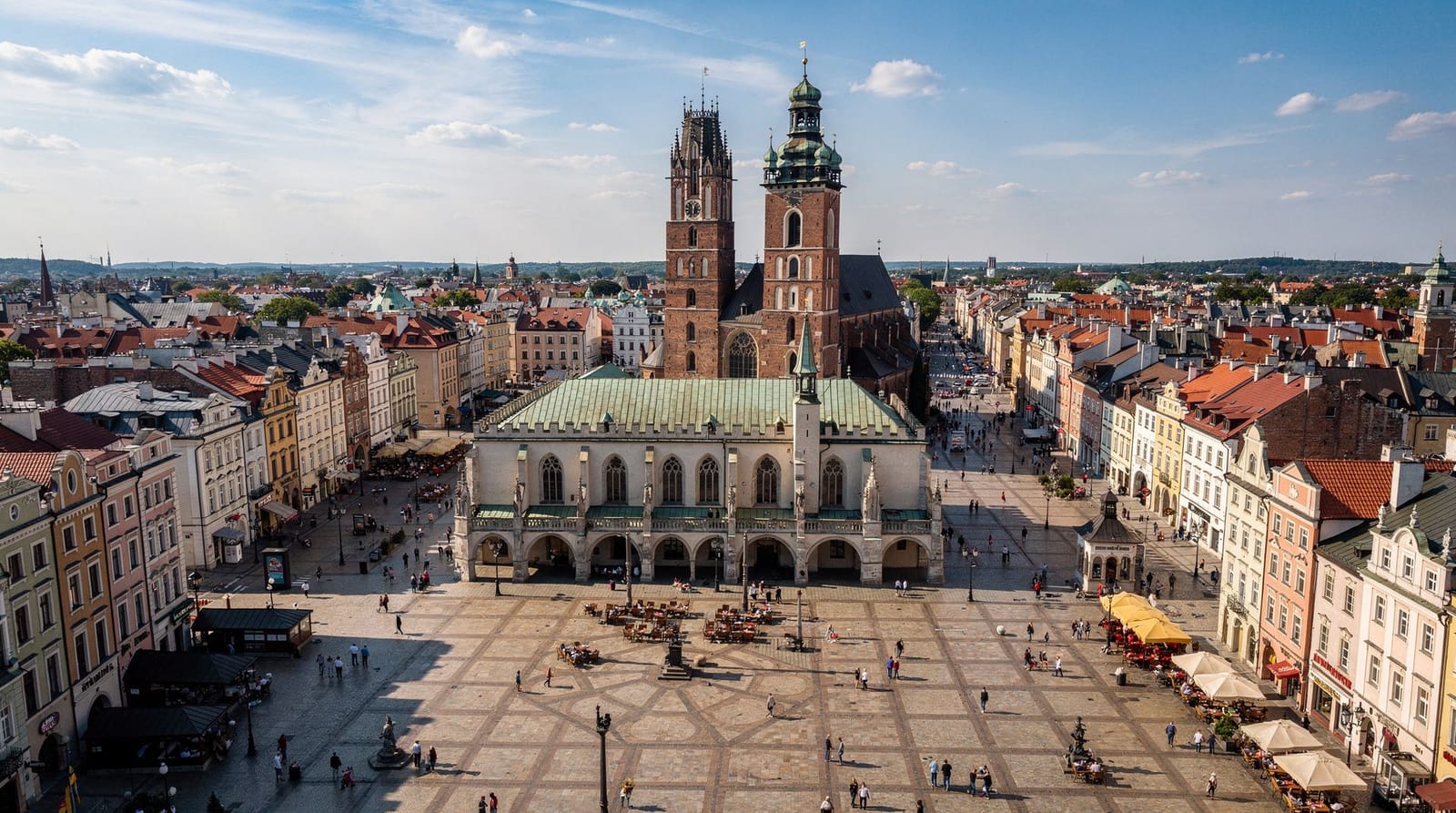
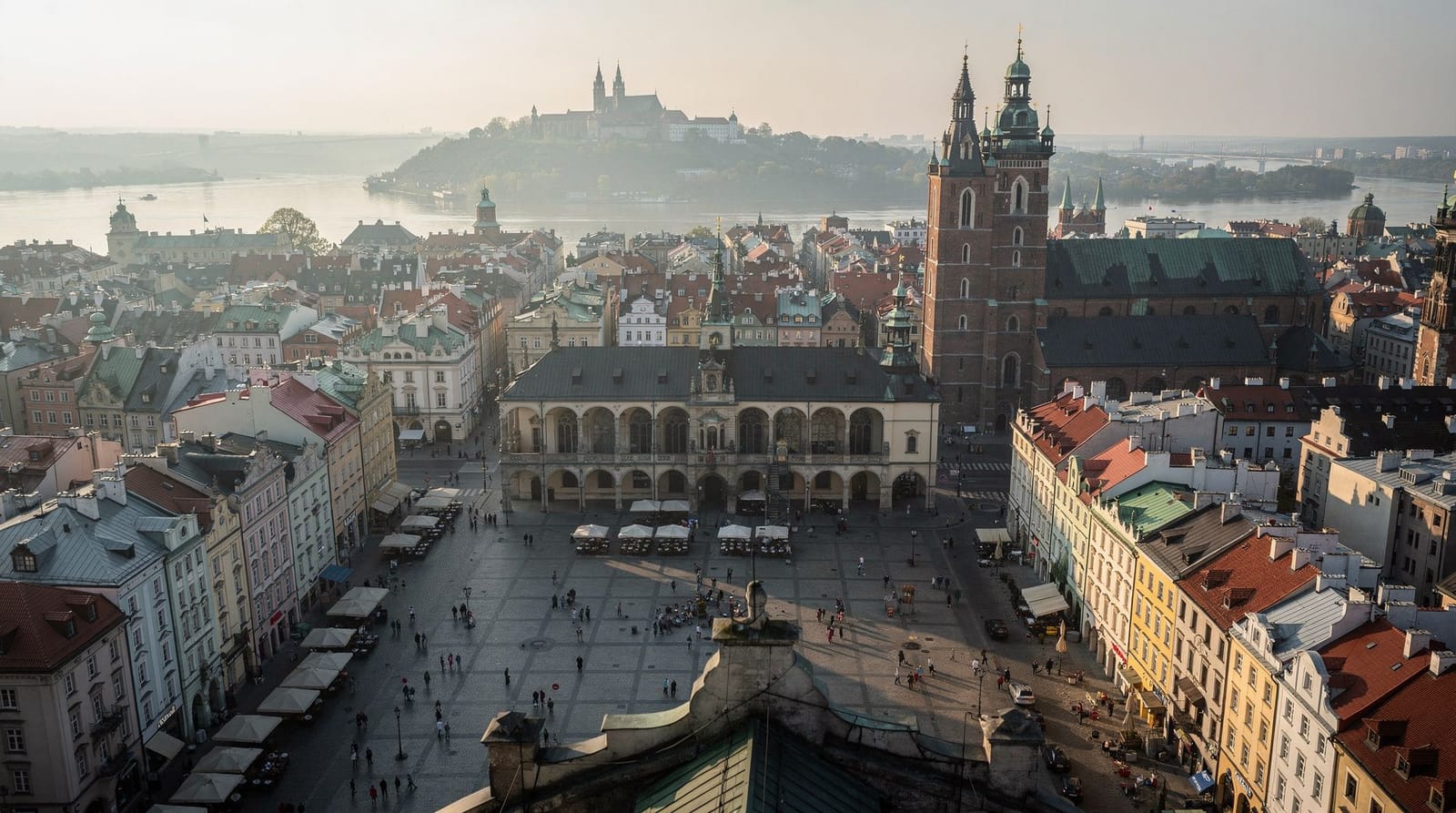
If you can only visit once, aim for late April through May. Temperatures climb from around 10°C to 20°C. The Old Town chestnut trees are in bloom, café terraces spill onto Rynek Główny, and hotel rates run 20–30% below July peaks.
Crowds at popular sites — Wawel Castle, Wieliczka Salt Mine, and Auschwitz — are significant but not crushing. You can usually book Auschwitz entry 1–2 weeks ahead rather than the 2 months needed in summer. Booking is still required; don’t leave it to the day.
Key events in April–May:
Juvenalia (mid-to-late May; 13–23 May in 2026): Kraków’s university festival week — street parties across the city centre, students in costume, open-air stages on Rynek Główny. Free and festive.
Labour Day (1 May) and Constitution Day (3 May): National holidays with street celebrations, outdoor concerts, and closures at government offices. Plan museum visits around these dates.
Weather note: April showers are real. Pack a waterproof layer; mornings can be cool enough for a jacket even when afternoons feel summery.
Hiking in the Tatras opens fully by late May once snow clears from lower trails. The Morskie Oko lake road is accessible from late April. Dunajec River rafting runs April through October.
June, July and August: peak season
Summer is busy and unambiguously the most popular time. Temperatures average 20–25°C, with hot spells pushing to 32°C. Evenings in Kazimierz and along the Vistula riverbank are genuinely lovely: outdoor bars, street food stalls on Plac Nowy, and music spilling from courtyards.
But peak season has real costs and logistical headaches:
Hotel prices: 30–50% more than shoulder months. A mid-range hotel that runs 280 PLN (≈€67) per night in April can hit 420–450 PLN (≈€100–107) in July. For full accommodation context, see where to stay in Kraków.
Auschwitz booking: Requires 2-month advance booking for guided tours; independent timed-entry slots at Auschwitz-Birkenau also fill fast.
Wieliczka Salt Mine queues: Can mean 45–60 minute waits for unbooked visitors. Booking a guided tour with fast-track entry is strongly advised.
Wawel Castle State Rooms: Have daily visitor caps — arrive by 9am or book online.
Major summer events
Wianki / Noc Kupały (late June): Pagan Midsummer festival on the Vistula riverbank, crowns of flowers floated on the river, open-air concerts near Wawel. Free and unmissable if you’re here.
Jewish Culture Festival (late June/early July; 1–5 July in 2026): The largest Jewish cultural event in Poland, centred on Kazimierz. Main stage at ul. Szeroka draws thousands; many events are free. Book accommodation early — it’s the most popular week of summer.
Summer Jazz Festival (July): International jazz acts in historic courtyards.
Pierogi Festival (August, Mały Rynek): Try as many varieties as you can stomach.
For day trips: the Tatra Mountains are fully open June–September, Morskie Oko is at its finest in July–August, and all river activities run through the season. Heat can be an issue in August — trail congestion on popular Tatra routes is real.
September and October: the other sweet spot
September is arguably more pleasant than May. The summer crowds thin after the first week, accommodation prices drop back, and temperatures hold at 15–20°C into early October. The Tatras and Małopolska forests turn gold in October — genuinely beautiful and worth building your trip around.
Rain picks up in October, and the first frosts arrive late in the month. Mountain trails above 2,000 m close from October onward; Morskie Oko is passable through October but check conditions. Dunajec rafting usually ends in late October.
Highlight events:
Rosh Hashanah / Yom Kippur (September/October, dates vary): Quiet, reflective ceremonies at Kazimierz synagogues — a meaningful cultural experience quite different from the Jewish Culture Festival’s summer energy.
Unsound Festival (early October): Internationally acclaimed experimental music and arts festival that draws a global audience to Kraków. Tickets sell out months in advance. Book accommodation the moment you decide to attend.
Practical note: shoulder-season hotel deals often disappear on festival weekends. Check Unsound dates before assuming October means low prices.
November: quiet and cold
Kraków empties in November. Temperatures drop to 3–8°C, daylight shortens, and most visitors are locals. This is the month for museum-heavy itineraries, long dinners at Kazimierz restaurants, and seriously cheap rates — a double room in a 4-star Old Town hotel for under 200 PLN (≈€48) is not unusual.
All Saints’ Day (1 November): One of Poland’s most emotionally resonant public holidays. Rakowicki Cemetery and others are covered in thousands of candles and chrysanthemums in the evening. Worth witnessing if you’re here — respectfully and quietly.
The downside: several smaller attractions keep reduced hours or close for maintenance. Verify seasonal hours before visiting museum sites outside the city centre. The getting around Kraków guide notes which MPK services run differently in winter.
December and January: Christmas markets and winter charm
Kraków’s Christmas market on Rynek Główny (late November to early January; check the exact dates on the city’s official website) is consistently rated among Europe’s best. Wooden stalls sell oscypek (smoked mountain sheep cheese), mulled wine (grzaniec), amber jewellery, handmade ornaments, and warming soups. Wawel is lit, the Sukiennice glows, and there’s a genuine seasonal magic. Hotel prices rise steeply for Christmas week itself.
Szopka competition (first Thursday of December): Uniquely Kraków — elaborate miniature nativity scenes, some over a metre tall, built by locals and displayed in the Museum of Kraków. UNESCO-listed intangible heritage. Worth planning around if you’re visiting in early December.
Winter temperatures: expect −4 to +5°C, with genuine cold snaps. Snow is common January–February. Dress in layers; central heating is reliable indoors. See the Kraków packing guide for winter clothing specifics.
Zakopane in winter is a different destination entirely: ski resort, thermal baths, and snow-covered highland architecture. If you’re combining Kraków with Zakopane in December–February, plan for mountain driving conditions.
February and March: the quiet months
February is the quietest month of the year. Museums are largely empty, staff are attentive, and prices are at their lowest. The cold is genuine (−3 to +4°C) but manageable.
Fat Thursday (Tłusty Czwartek, last Thursday before Lent): Enormous doughnut consumption — every bakery in the city produces pączki, and queues outside Jama Michalika café snake down ul. Floriańska.
March improves noticeably by the end of the month. The first signs of spring (snowdrops, budding lindens in the Planty park ring) appear mid-month. Temperatures climb back above 8–10°C, and the tourist season starts awakening.
For budget-conscious travellers, February and early March represent the best value in the entire year. See the Kraków budget travel guide for specific cost breakdowns by season.
Seasonal considerations for day trips
Each of Kraków’s major day-trip destinations has its own seasonal logic:
Wieliczka Salt Mine: Open year-round, including public holidays (verify closure dates). The mine is a constant 14°C underground — actually more comfortable in summer than you’d expect. Queue management is the main seasonal variable. See the Wieliczka destination guide for full logistics.
Auschwitz-Birkenau: Open year-round except 1 January, Easter Sunday and 25 December. Visitor numbers drop significantly in winter, making the visit more contemplative. Summer heat (the site involves considerable outdoor walking) can be exhausting. The Auschwitz-Birkenau destination guide covers seasonal visitor patterns.
Zakopane and Tatras: Seasonal range is wide. Summer hiking peaks July–August; autumn foliage September–October; winter skiing December–March; spring wildflowers May–June. The Tatra cable car to Kasprowy Wierch closes for annual maintenance (in autumn 2026, 19 October to 6 November), so check the dates on pkl.pl in advance.
Morskie Oko: Generally accessible April–October. Ice on the trail is possible at either end of that season. The lake is at its photogenic best in summer but the crowds reflect this.
Dunajec River Gorge rafting: April to late October, weather and water levels permitting.
Ojców National Park: Year-round access to the gorge and Pieskowa Skała Castle, but cave tours (Łokietek’s Cave) are typically limited November–March.
Practical timing for major sites
| Site | Peak booking lead | Notes |
|---|---|---|
| Auschwitz-Birkenau | 2 months (summer) · 1–2 weeks (shoulder) | Mandatory timed entry |
| Wieliczka Salt Mine | Book ahead year-round | Fast-track entry strongly advised |
| Wawel State Rooms | 1–2 weeks (summer) · Book online | Daily visitor caps apply |
| Rynek Underground | Book same week (most months) | Skip-line option available |
| Czartoryski Museum | Usually walk-in | Lady with an Ermine — popular, limited space |
Month-by-month temperature guide
| Month | Avg high | Avg low | Rain days |
|---|---|---|---|
| January | 2°C | −4°C | 10 |
| February | 4°C | −3°C | 9 |
| March | 10°C | 1°C | 9 |
| April | 16°C | 6°C | 10 |
| May | 21°C | 10°C | 12 |
| June | 24°C | 14°C | 12 |
| July | 26°C | 16°C | 11 |
| August | 26°C | 15°C | 10 |
| September | 21°C | 11°C | 9 |
| October | 14°C | 6°C | 10 |
| November | 7°C | 2°C | 11 |
| December | 3°C | −2°C | 11 |
Which season suits which traveler
| Traveler type | Best window | Why |
|---|---|---|
| First-timer, balanced trip | Late April–May or September | Mild weather, manageable queues, full opening hours |
| Budget-focused | November, February, early March | Lowest hotel rates, thinnest crowds |
| Festival-focused | Late June (Jewish Culture Festival) or early October (Unsound) | Major events, but book accommodation months ahead |
| Families with young kids | May or September | Comfortable temperatures, shorter queue waits, playgrounds usable |
| Winter/Christmas seekers | 10–22 December | Christmas market at its best before the week-of-Christmas price spike |
| Hikers (Tatras/Morskie Oko) | July–August (high routes) or late April–June (lower trails) | Snow-free access varies sharply by altitude |
Public holidays and closures to plan around
A handful of dates affect opening hours and crowd levels beyond the seasonal patterns above. 1 May (Labour Day) and 3 May (Constitution Day) bring government office closures and street celebrations but most museums stay open. 1 November (All Saints’ Day) is a genuinely quiet day for sightseeing — many locals are at cemeteries rather than the Old Town, though some smaller shops close, and the Museum of Krakow branches (including the Rynek Underground and Town Hall Tower) and the Wieliczka Salt Mine are closed. 25–26 December and 1 January see reduced hours at most attractions, and Auschwitz-Birkenau closes entirely on 1 January, Easter Sunday and 25 December. If your trip falls near any of these dates, check individual site hours rather than assuming normal opening — the getting around Kraków guide also flags reduced MPK transport schedules on public holidays.
Getting around in each season
Kraków’s compact Old Town and MPK tram/bus network work year-round. In summer, the hop-on hop-off bus offers good coverage with audio guide included — useful for first-timers covering sites from the Old Town out to Nowa Huta. In winter, trams are faster than walking in the cold and run reliably. The full Kraków public transport guide covers MPK tickets and key lines.
For a first overview regardless of season, an Old Town guided walking tour provides the historical grounding to make everything else click. The Kraków City Card bundles public transport access with museum entries — worth calculating against your planned itinerary.
Honest seasonal verdict
Best all-round: Late April to mid-May, or September.
Best for events: Late June (Jewish Culture Festival / Wianki) or early October (Unsound).
Best for budget: November, February, or March (avoiding school holidays). See the full budget travel guide for month-by-month price differences.
Best for winter romance: December (Christmas market), ideally 10–22 December before the Christmas week price spike.
Avoid if crowds bother you: July–August school holidays, first week of September, and any major festival weekend without 2–3 months of lead-in booking.
For planning your specific itinerary around season, the Kraków itinerary planning guide covers booking timelines in detail.
Frequently asked questions about the best time to visit Kraków
Is Kraków worth visiting in winter?
Absolutely. The Christmas market (late November to early January) is genuine and atmospheric, museum queues disappear, and prices drop significantly. The cold is real — bring a proper winter coat — but the payoff is a much more local and affordable experience. The szopka nativity competition on the first Thursday of December is one of the city’s most distinctive cultural events.
Does Kraków get very crowded in summer?
Yes, July and August can feel overwhelming at Rynek Główny and major sites. Auschwitz requires booking 2 months ahead, Wieliczka has long queues for walk-ins, and even the Wawel state rooms hit their daily caps by mid-morning. The crowds are manageable with pre-booking, but if crowds stress you, April–May or September–October gives a better experience. For guidance on handling peak season logistics, see the Kraków for first-timers guide.
When is Auschwitz easiest to book?
November through March has the most availability. April–May and September–October require 1–3 weeks advance booking. June–August requires 6–8 weeks for many slots. The Memorial’s visit.auschwitz.org opens slots 3 months ahead; for peak season, set a calendar reminder. Guided tours with hotel pickup secure your entry as part of the booking.
Can I hike in the Tatras in spring?
Lower Tatra trails (below about 1,200 m) are accessible from April. Higher routes only clear of snow by late June. Morskie Oko lake and its surrounding paths are generally passable from late April. Always check trail conditions at TOPR (Tatra rescue) before setting out.
Is Kraków expensive in summer?
More expensive than shoulder season, but not extravagantly so by western European standards. Budget 30–50% more for hotels than the same room costs in November. Meals, beer, and public transport prices are stable year-round — the premium is mainly on accommodation and tour pricing. The Kraków money and currency guide covers seasonal price differences in detail.
Is there a bad time to visit Kraków?
Not really — even the coldest weeks (January) have the Christmas market tail end and thin crowds working in your favour, and even the hottest weeks (August) have long evenings and full festival programming. The closest thing to a genuinely awkward window is early-to-mid November: past the autumn colour, before the Christmas market opens, with short days and unpredictable rain. It’s still fine for museum-heavy sightseeing, just less scenic than the months either side.
How many days should I plan for depending on the season?
The season shouldn’t change your day count much — see the how many days in Kraków guide for the baseline — but it does change the pace. In summer’s long daylight you can fit more into each day; in deep winter, plan shorter outdoor stretches and build in time to warm up between sights. For a ready-made framework, the 3-day Kraków itinerary works in any season with minor adjustments.
Does the season affect which day trips I should prioritise?
Yes, more than most first-timers expect. Wieliczka and Auschwitz are both indoor-heavy or otherwise weatherproof and work in any season, so save those for whichever days have the worst forecast. Save the outdoor-dependent trips — Dunajec Gorge rafting, Morskie Oko, and higher Tatra hikes — for your best-weather days, since a rained-out or snowed-in mountain day cannot really be salvaged the way an indoor museum day can. If your trip spans a week or more, put the weather-dependent options in the middle so you have flexibility to shuffle if the forecast changes. This is also why booking a fixed date for an outdoor day trip far in advance carries some risk in Kraków’s changeable shoulder-season weather — where possible, leave that booking until closer to your visit once the forecast is reliable, or choose an operator with flexible rescheduling.
Seasonal specialist interests: when to visit for specific purposes
For Jewish history and heritage
The Jewish Culture Festival (late June/early July) is the obvious highlight, but there’s a quieter, arguably deeper experience at other times:
September/October (High Holy Days): Rosh Hashanah and Yom Kippur bring private ceremonies to Kazimierz’s active synagogues. The mood is contemplative; many visitors find this more moving than the festival’s public celebration. The Remuh Synagogue holds services; small groups of pilgrims visit the cemetery.
November: Particularly good for the Galicia Jewish Museum’s excellent permanent exhibition and the quieter experience of the Old Synagogue Museum. No tour groups; staff have time to answer questions.
For communist architecture enthusiasts
Nowa Huta is unchanged by season, but the experience shifts:
Winter: The monumental socialist-realist spaces take on an entirely appropriate severity in December–January. Plac Centralny in snow, with few pedestrians and a grey sky, communicates the Soviet-era aesthetic with raw effectiveness.
Summer: Nowa Huta comes alive in summer — families in the parks, the ArcelorMittal steelworks in operation, outdoor markets along the main axis. More human-scale but less atmospherically stark.
For outdoor photography
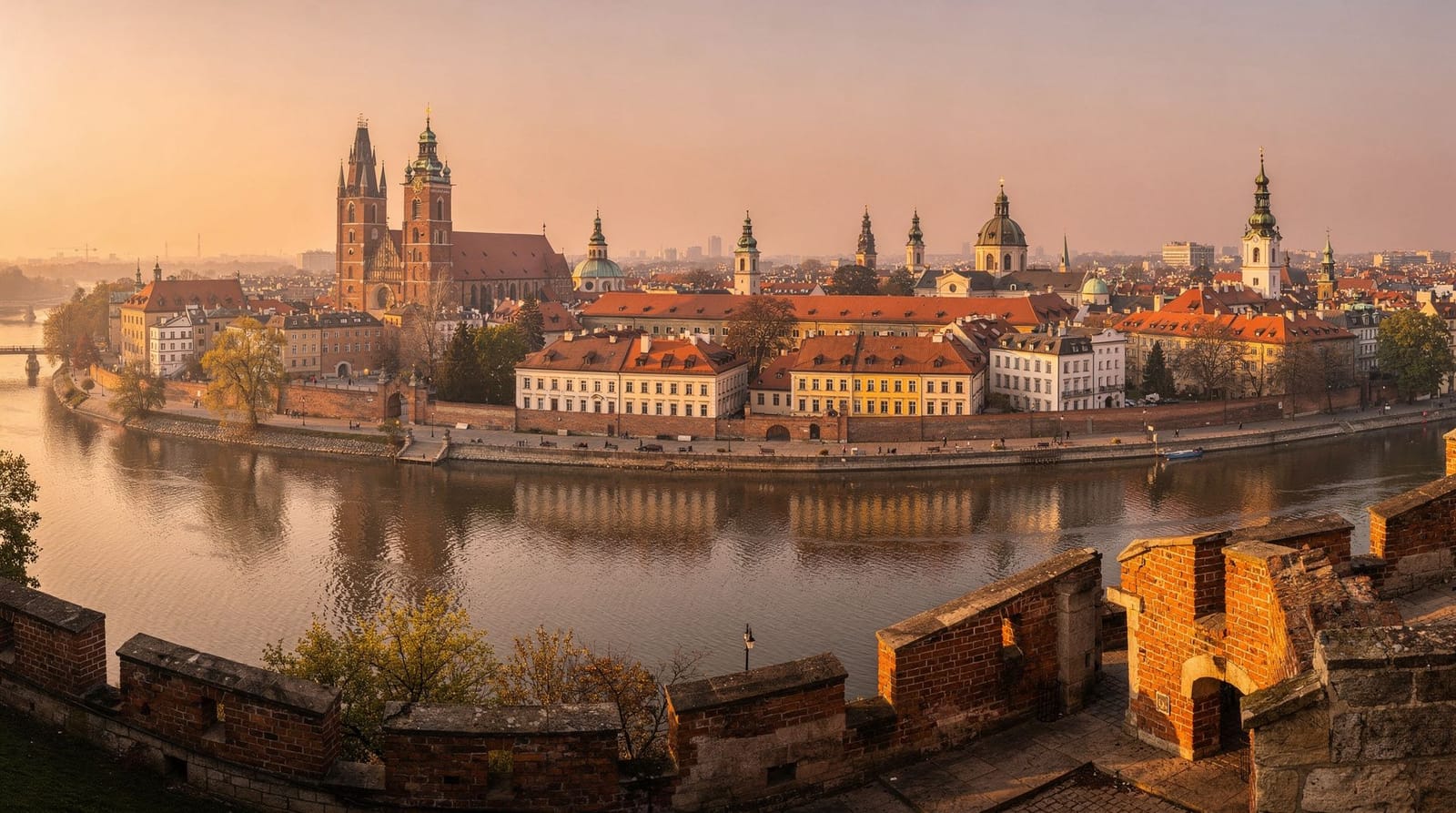
Golden hour timing: Kraków sits at 50° N latitude. Summer evenings have extremely long golden hours (golden light 8–10pm, sunset 9pm); winter golden hour is brief and earlier (around 3:30–4pm). For photography of Wawel and the Vistula, summer evenings and autumn mornings are the best light conditions.
Autumn foliage: The Planty park ring and Ojców National Park’s gorge turn excellent amber and gold in mid-October. The Tatras above Zakopane are particularly beautiful with snow-capped peaks behind golden foliage in late October.
For food and drink
Autumn mushroom season (September–November): Polish cuisine uses wild mushrooms extensively; autumn menus in Kazimierz restaurants feature wild porcini (prawdziwki), chanterelles (kurki), and others freshly foraged. Late September and October are the peak mushroom menu months.
Oscypek (smoked mountain cheese) season: Available year-round at Hala Targowa and tourist markets, but freshest and most varied at the Zakopane markets in summer when highland flocks are active.
Christmas food market (late November–January): The Rynek Główny Christmas market sells genuine traditional foods — biała kiełbasa (white sausage), bigos (hunter’s stew), smoked trout from mountain streams, warm zurek soup. For traditional Polish food culture at its most concentrated, this is the best food experience of the year.
For details on Kraków’s food scene across seasons, the Kazimierz food scene guide covers the neighbourhood’s best restaurant options. For where to stay that puts you in the centre of seasonal events, Kazimierz-based accommodation has the most direct access to the festival calendar.
Top experiences
Bookable activities with verified prices and instant confirmation on GetYourGuide.