Ojców National Park: limestone valleys and Pieskowa Skała Castle
Poland's smallest national park, just 25 km from Kraków. Jura limestone gorges, Pieskowa Skała Castle, caves, and the famous Hercules' Club rock.
From Krakow: Ojców National Park and Pieskowa Skała Castle
Duration: 4h
Quick facts
- Distance from Kraków
- 25 km north (about 40 min by car)
- Park size
- 21.5 km² — Poland's smallest national park
- Key landmark
- Pieskowa Skała Castle (open Tue–Sun)
- Famous rock
- Hercules' Club (Maczuga Herkulesa) limestone pillar
- Entry to park
- Free; castle and cave tickets: see official websites
Poland’s smallest but most dramatic national park
Ojców National Park covers just 21.5 km² in the Prądnik River valley, making it the smallest national park in Poland — yet few places in the country pack as much geological and historical drama into so little space. The park lies only 25 km north of Kraków, making it one of the most accessible nature excursions from the city. You can be standing in a limestone gorge among medieval castle ruins within 40 minutes of leaving the Rynek Główny.
| Where | Prądnik valley, 25 km north of Kraków |
| Cost | Free entry; castle and cave tickets priced separately (see official websites) |
| Time needed | Half day for the highlights, full day with plateau trails |
| Getting there | Car (35–45 min), bus 904 from Bosacka, or organised day trip |
| Best time | Late April–May for wildflowers, late September–October for colour |
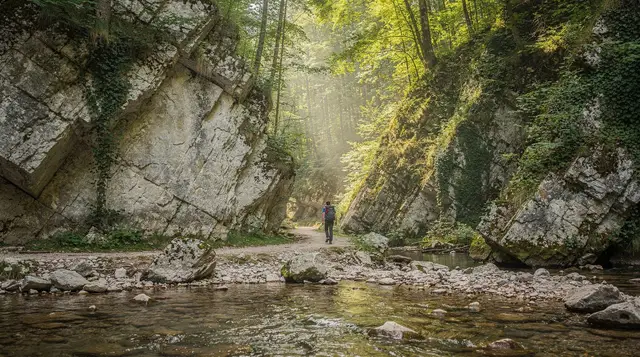
The landscape is part of the Kraków-Częstochowa Upland, a belt of Jurassic limestone running north from Kraków through the highlands. Over millions of years, the Prądnik river carved dramatic ravines through the plateau, leaving behind towering rock pillars, cliff faces streaked white and grey, and a series of caves that prehistoric humans found equally hospitable. The result is a walking landscape unlike anything else in Małopolska — not the alpine drama of the Tatra Mountains, but something older and stranger. For an overview of how it compares with other easy escapes from the city, see our guide to nature near Kraków.
Pieskowa Skała Castle
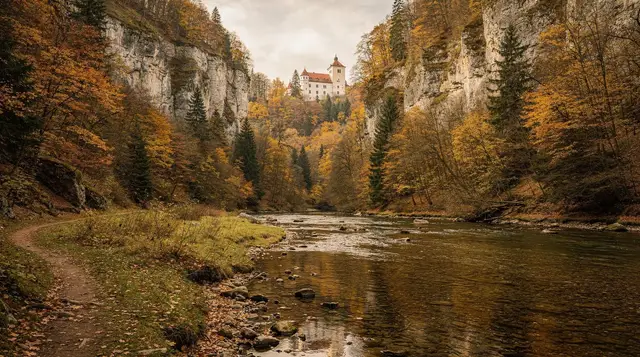
The jewel of the park is Pieskowa Skała Castle, perched on a limestone cliff 8 km into the valley from the park entrance at Ojców village. Built in the fourteenth century as a royal fortress on the route between Kraków and Częstochowa, it was later transformed into a Renaissance residence and is now a branch of the Wawel Royal Collections — essentially a museum of European decorative arts from the medieval period through to the eighteenth century.
The castle is particularly striking from the outside: its arcaded inner courtyard echoes the Italian Renaissance influences that Kraków’s rulers brought back from travels south, and the cliff-edge position gives it a fairytale silhouette. The collection inside includes furniture, tapestries, paintings, and decorative objects, displayed across a series of period rooms.
Check current admission prices on the official website; the museum is open Tuesday to Sunday, closed on Mondays. In summer, arrive before 11:00 or after 14:00 to avoid coach groups. The castle is accessible by car or on foot from Ojców village along the valley trail.
Ojców National Park and Pieskowa Skała Castle — guided day trip from KrakówHercules’ Club and the limestone pillars
The single most photographed geological feature in the park is the Maczuga Herkulesa (Hercules’ Club), a 25-metre limestone pillar near Pieskowa Skała that tapers dramatically at its base — defying common sense, it balances on a narrow neck of rock. It is visible from the road and from the castle terrace. Other named rock formations dot the valley: the Golden Stick (Złota Baszta), the Needle (Igła), and dozens of unnamed pillars rising from the valley floor or jutting from the plateau edge.
Rock climbers from Kraków have used the park’s limestone walls for decades. You will often see bolted routes on the valley walls, though technical climbing requires registration with the park authorities.
Caves
The park contains over 400 caves, though only two are currently open to visitors. Łokietka Cave (King Lokietek’s Cave) near Ojców village is the most accessible: a 320-metre passage where local legend says King Władysław Łokietek hid from his enemies in the fourteenth century. Guided cave tours run from May to October; check current ticket prices on the official Ojców National Park website. The cave maintains a constant temperature of around 7–8 °C year-round — bring a jacket regardless of outside weather.
Ciemna Cave near the Ojców fortress ruins is another option, though the passage is lower and narrower. It contains one of the richest Palaeolithic archaeological deposits in Poland — human and animal remains from over 120,000 years ago were found here, evidence that this valley has sheltered living things through multiple ice ages.
Walking routes in the valley
The main valley trail from Ojców village to Pieskowa Skała is about 8 km and takes around two hours at a relaxed pace. The path follows the Prądnik stream through the gorge, passing the ruins of Ojców Castle, the Łokietka Cave entrance, the Gate on the Water (Brama Wodna — a limestone arch spanning the river), and several dramatic viewpoints before arriving at Pieskowa Skała.
This is a flat and easy walk, suitable for most fitness levels and for children over about six years old. The only steep section is the climb to the castle itself. In wet weather, some sections of the valley floor trail can be muddy — proper shoes are recommended.
For something more strenuous, the plateau-edge trails above the valley offer longer routes (10–15 km loops) through open countryside with views down into the gorge.
Getting there from Kraków
By car: Drive north on route DK94 towards Olkusz, then follow signs for Ojców. Journey time is 35–45 minutes. The main car park is in Ojców village (small fee in summer, approximately 5 PLN, ~1.20 €).
By bus: PKS bus 904 runs from Kraków’s Bosacka bus stop (near Cracovia hotel) to Ojców, with a few departures per day. Journey time is about 50 minutes. Frequency is limited; check the timetable before going if you plan to rely on public transport.
Organised tour: By far the easiest option, especially combined with Pieskowa Skała Castle. Guides handle transport, explain the geological and historical context, and ensure you see the highlights efficiently.
Ojców National Park full-day trip from KrakówWildlife and nature in the valley
The park’s mix of limestone crags, riverside meadows and beech woodland supports a surprising variety of wildlife for such a small reserve. Birdwatchers can spot dippers along the Prądnik stream, peregrine falcons nesting on the cliff faces, and woodpeckers in the older beech stands. The caves and old quarry walls shelter several bat species, including the greater mouse-eared bat, part of the reason cave visits are restricted to guided groups outside the winter hibernation period. Roe deer are commonly seen grazing the valley meadows at dawn and dusk, especially away from the busier Ojców–Pieskowa Skała stretch. Botanists come for the calcicolous flora typical of limestone soils — orchids, rock jasmine, and rare mosses cling to the cliff faces that also draw the climbers.
Where to eat in the valley
Options inside the park are limited by design — this is a protected landscape, not a resort — but there is enough to get by. A small café near Pieskowa Skała Castle serves coffee, pierogi and simple lunches, and a handful of seasonal snack stands operate near the Ojców car park in summer. Most visitors either pack a picnic for the valley trail or save a proper meal for Kraków on the way back; if you are combining the trip with Wadowice, there are more restaurant options there than inside the park itself.
Best time to visit
| Season | Weather | Crowds | Highlight |
|---|---|---|---|
| Spring (Apr–May) | Mild, streams running high | Quiet, caves uncrowded | Wildflowers on the valley floor |
| Summer (Jun–Aug) | Warm, occasional showers | Busy weekends, calmer weekday mornings | Full trail network open, long daylight |
| Autumn (Sep–Oct) | Cool, crisp mornings | Thins out after school holidays | Best colour and photography |
| Winter (Nov–Mar) | Cold, possible ice on trails | Very quiet | Frost on the limestone, near-solitude |
Spring (April–May): The valley floor is carpeted with wildflowers — wood anemones, hepatica, and orchids in the meadows near Sąspów. Caves are uncrowded. The Prądnik stream runs high from snowmelt, which makes the water features more dramatic.
Summer (June–August): Peak season. The valley and castle are busy at weekends, particularly in July and August. Weekday mornings are manageable. Bring sun protection — the valley walls provide shade in the gorge, but the plateau walks are exposed.
Autumn (September–October): The best time for photography. The beeches and oaks that cloak the valley slopes turn amber and copper; the limestone stands out white against the foliage. Crowds thin noticeably after the school holidays end.
Winter (November–March): The park is open but the castle closes for reduced hours and some trails may be icy. The limestone looks striking in frost or thin snow, and the solitude is remarkable for a place so close to a city of nearly a million people.
What to bring and practical notes
- Comfortable walking shoes with grip; the valley trail is mostly flat but can be uneven and muddy.
- A light jacket for cave visits regardless of season (7–8 °C inside).
- Snacks and water — the park has one café near the castle but limited food options along the trail.
- Cash: the cave ticket booth and castle entrance prefer cash or Polish card payment.
- Dogs are allowed on leads in most of the park but not inside the castle or caves.
Combining Ojców with other excursions
Ojców pairs naturally with a visit to Kraków itself — it is close enough for a half-day extension to a city break. The park also combines well with Wieliczka Salt Mine, though that makes for a long day; most visitors choose one or the other.
If you are interested in more of the Jura limestone landscape, the upland stretches north towards Częstochowa — the cave system and castle trail continues for kilometres in that direction, though most visitors access it independently by car.
Ojców National Park tour from KrakówFrequently asked questions about Ojców National Park
How far is Ojców National Park from Kraków, and how long does the trip take?
Ojców is approximately 25 km north of Kraków. By car it takes 35–45 minutes on the DK94 route. Public bus (route 904 from Bosacka stop) takes about 50 minutes but runs infrequently. Organised tours from Kraków include transport and typically spend four to six hours in the park.
Is Ojców suitable for a half-day visit?
Yes. A focused half-day (four to five hours) is enough to walk the main valley trail, visit Łokietka Cave, and see Pieskowa Skała Castle. A full day allows time for the plateau trails and a more leisurely picnic in the valley. Most visitors from Kraków treat it as a half-day excursion paired with something else in the afternoon.
Is the park suitable for children?
Very much so. The valley trail is flat and easy; the cave tour is engaging for children from about six years old (lower age limit for the cave is usually six); and the castle has enough visual interest to hold older children’s attention. Bring snacks and be prepared for potential mud in spring and after rain.
When is Pieskowa Skała Castle open?
The castle is open Tuesday to Sunday, closed on Mondays. Hours vary by season: roughly 10:00–17:00 in winter and 10:00–18:00 in summer. It is always worth checking the Wawel Royal Collections website before visiting, as hours and admission prices can change.
Are there entry fees for the national park itself?
Entering the park on foot is free. Cave and castle tickets are priced separately; check current prices on the official websites. Car parking in Ojców village costs approximately 5 PLN (~1.20 €) in peak season.
Can I see wildlife in Ojców National Park?
Yes, though sightings are never guaranteed. Roe deer graze the valley meadows at dawn and dusk, dippers and occasionally peregrine falcons can be spotted along the cliffs, and several bat species roost in the caves — one reason cave access is guided and seasonal. Bring binoculars if wildlife is a priority, and keep to marked trails to avoid disturbing nesting birds in spring.
Should I visit Ojców or Wieliczka Salt Mine if I only have one afternoon?
Both are worthwhile half-day trips from Kraków, but they suit different interests: Ojców is a nature and geology outing with a Renaissance castle, while Wieliczka is an underground salt mine with chapels carved from rock salt. If you only have one afternoon free, pick based on whether you would rather walk outdoors or descend underground — trying to do both in a single visit leaves too little time for either.
Top experiences
Bookable activities with verified prices and instant confirmation on GetYourGuide.