Kraków for first-timers: everything you need to know before you go
Krakow: Old Town guided walking tour
Duration: 3h
What do first-time visitors to Kraków need to know?
Kraków is compact, walkable, and genuinely safe. The Old Town and Kazimierz cover most first-visit sightseeing on foot. Book Auschwitz timed entry before anything else if it's on your list — it sells out weeks ahead in summer. Avoid restaurants facing Rynek Główny (overpriced), unofficial taxis (overcharging), and anyone on the square selling street Auschwitz tours.
Why Kraków surprises first-time visitors
Most people arrive expecting a pleasant Central European city with a nice old town. What they find is something larger and stranger: a medieval city that survived WWII almost completely intact, whose Jewish quarter was emptied in the most brutal way possible and has since rebuilt a cultural life around remembering that fact, whose communist-era satellite district is one of Europe’s great pieces of utopian urban planning, and whose surrounding region contains salt mines that rank among the geological wonders of Central Europe.
Kraków repays curiosity. This guide gives you the practical foundation; what you do with the depth is up to you.
| Where | Old Town + Kazimierz cover most first-visit sightseeing on foot |
| Cost | Around 200–300 PLN/day for transport, food and a couple of entries |
| Time needed | 3 days covers the essentials; 4–5 allows one unhurried day trip |
| Getting there | Train from KRK airport to Kraków Główny, ~20 min, 20 PLN |
| Best time | Book Auschwitz timed entry before your hotel if it’s on your list |
Orientation: the layout in 5 minutes
Kraków’s historic core is shaped by the Vistula River bending around it from the west and south. The key areas:
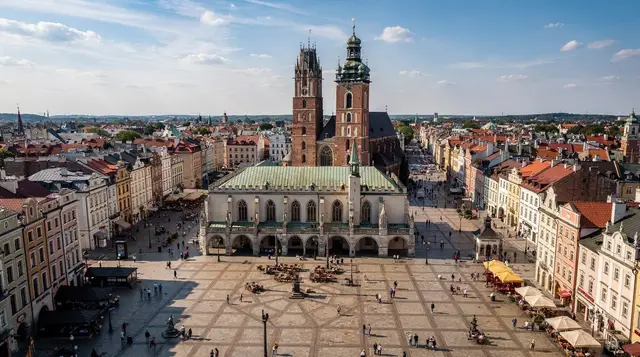
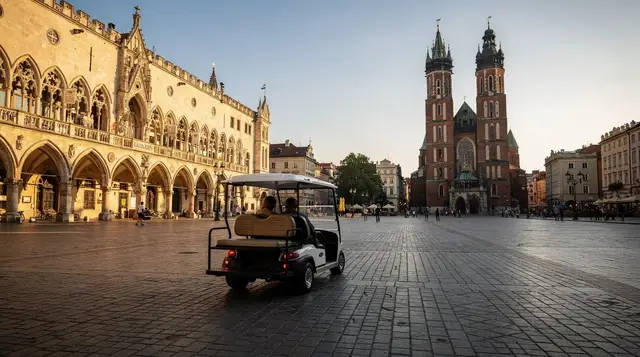
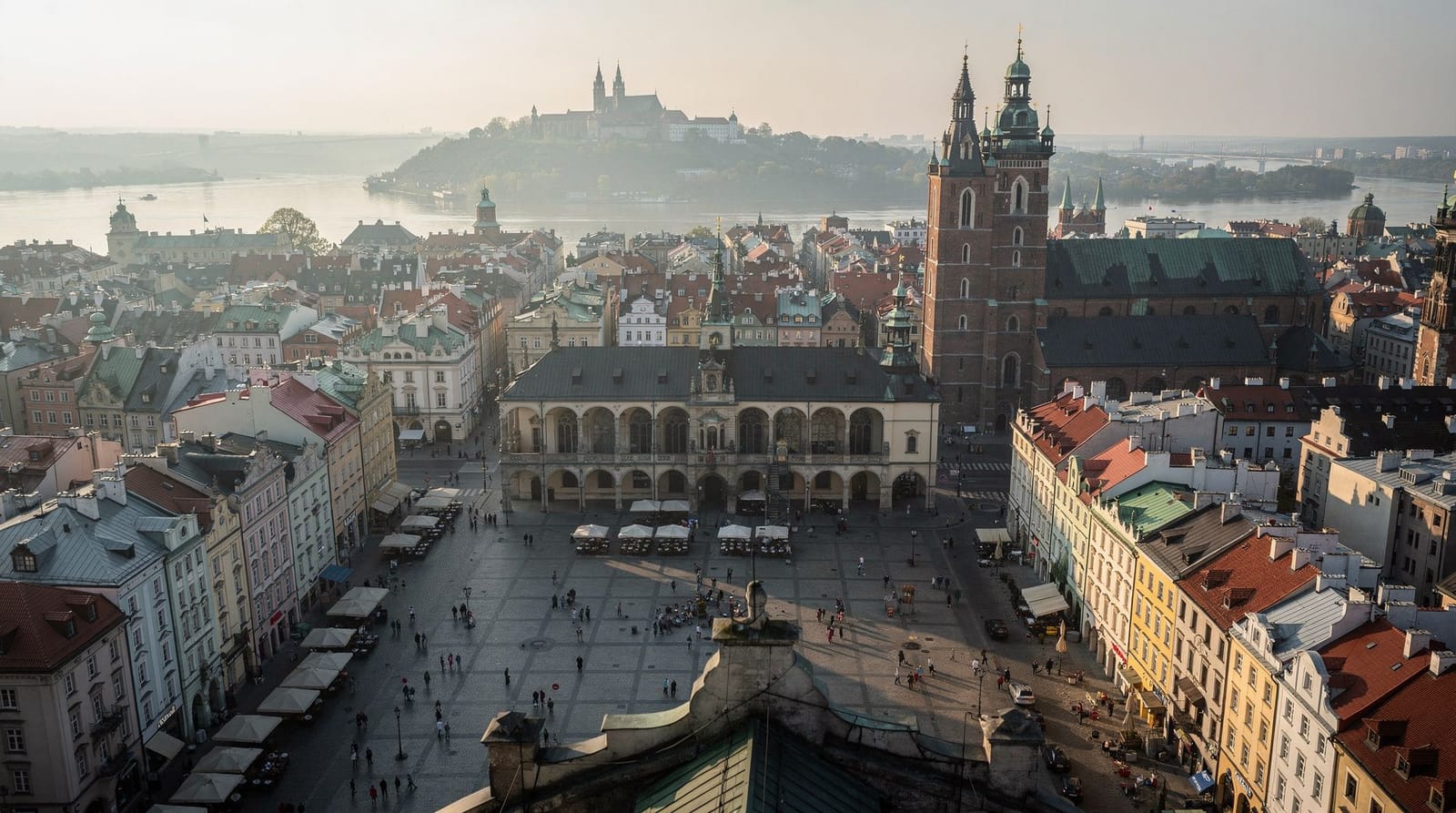
Rynek Główny (Main Market Square): The centre of the Old Town (Stare Miasto). One of Europe’s largest medieval squares. The Sukiennice (Cloth Hall) stands in the centre; St. Mary’s Basilica anchors the northeast corner. This is your navigational reference point — when lost, head toward the sound of horses and tourists.
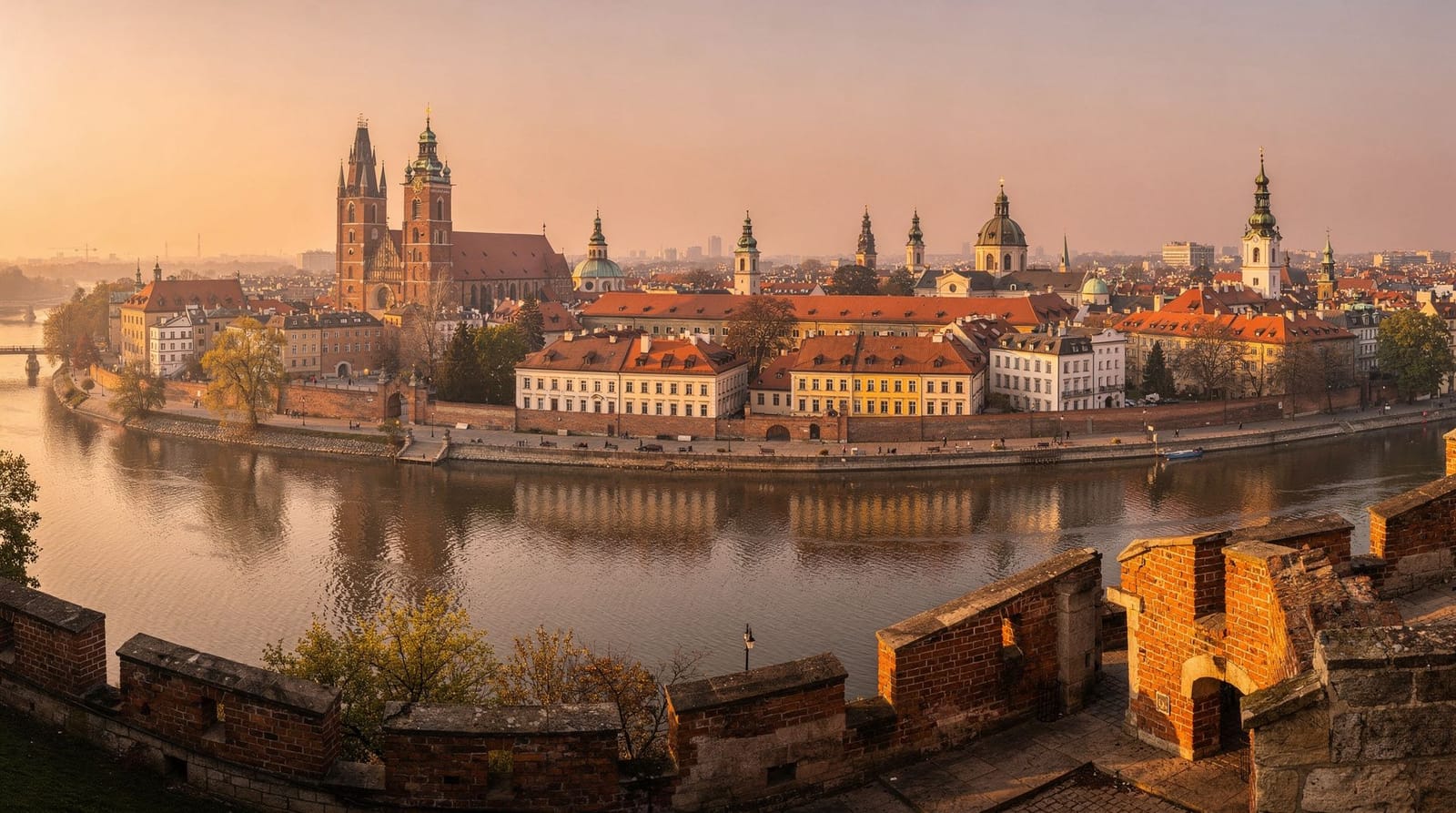
Wawel Hill: 10 minutes south of Rynek. The castle and cathedral on a limestone outcrop above the Vistula — the historic seat of Polish kings. The view from the ramparts looking over the river is one of Poland’s defining images.
Planty park: The green ring surrounding the Old Town where medieval city walls once stood. A 4 km oval promenade connecting all sides of the historic centre. Free, well-maintained, and used by locals daily.
Kazimierz: South of the Old Town, 15 minutes on foot. The historic Jewish quarter, now Kraków’s most interesting neighbourhood for restaurants, bars, and cultural life.
Podgórze: Across the Vistula from Kazimierz (Bernatek Footbridge, 10 min walk). The WWII Jewish Ghetto district, now home to Schindler Factory Museum and MOCAK.
Nowa Huta: 8 km east, reached by tram. A planned socialist-realist city grafted onto Kraków in the 1950s — one of the most fascinating and undervisited places in Poland.
What to do on your first day
Morning: Start at Rynek Główny before 9:30am when tour groups arrive. Walk the square perimeter clockwise: spot the Hejnał musician’s window on St. Mary’s northeast tower (the hourly trumpet call is at the exact top of the hour), enter the Cloth Hall arcade (free), look up at the Gothic church details. Then walk south down ul. Grodzka toward Wawel.
Wawel takes at least 2 hours if you’re doing State Rooms and Cathedral. Buy tickets at the hill entrance or online in advance. The Dragon’s Den (Smocza Jama) at the base of the hill is 15 PLN (seasonal, closed 1 November–31 December) and takes 10 minutes — worth it for the fire-breathing dragon statue outside.
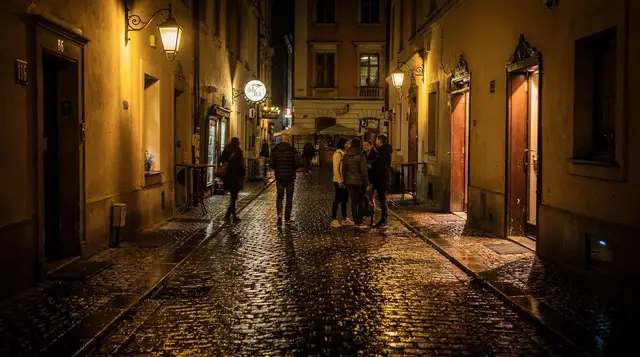
Afternoon: Walk back north on ul. Kanonicza (one of Kraków’s most beautiful Renaissance streets; Karol Wojtyła/Pope John Paul II’s former residence at no. 21), back to Rynek, then down ul. Szeroka into Kazimierz.
Evening: Plac Nowy for zapiekanki (12–18 PLN, cash). Explore the bar scene — Singer café, Alchemia, Mleczarnia are all on the same short stretch. Dinner at Marchewka z Groszkiem (ul. Mostowa, 3 min from Plac Nowy) does reliable Polish food at fair prices.
For an orientation that ties all of this together with historical context, the Old Town guided walking tour takes 2–3 hours and covers Rynek, Barbican, and the medieval street pattern — the best way to understand why the city looks the way it does.
Your first booking: Auschwitz
If visiting Auschwitz-Birkenau is on your list — and for most visitors to Kraków, it should be considered seriously — book this before you book your hotel.
Timed entry slots sell out weeks ahead in summer — sometimes months for guided tours. The process:
- Go to visit.auschwitz.org
- Choose a date and time slot
- Book free individual entry (or pay for a guided tour within the Memorial)
- Alternatively, book a guided tour from Kraków via GetYourGuide — the guided Auschwitz tour with hotel pickup includes transport, licensed guide, and pre-booked entry
You cannot just show up and walk in during peak season. This is the single piece of practical information first-time visitors most often discover too late.
The honest tourist trap list
Kraków has tourist traps that are predictable and avoidable with this information:
1. Rynek Główny restaurants (×2–3 overpricing): Restaurants with direct views of the square charge 2–3× the price of equivalent food on streets 200 m away. A pierogi plate that costs 35–45 PLN at a Kazimierz restaurant costs 80–90 PLN with a Rynek view. See the budget travel guide for alternatives.
2. Unofficial taxis: Men outside the train station and airport who approach you saying “taxi?” charge 150–250 PLN for journeys worth 15–50 PLN. Use Bolt or Uber exclusively. See getting around Kraków and the airport to city centre guide for full detail.
3. Street “Auschwitz tour” sellers: Men and women with clipboards on Rynek Główny selling “Auschwitz tours.” These are not licensed guides. Book via the official Memorial website or a verified operator.
4. Currency exchange at the airport: Rates are 8–12% worse than ATMs. Use the bank ATM in the arrivals area. See money guide.
5. Fake amber at Cloth Hall stalls: A portion of amber jewellery in tourist-facing Sukiennice stalls is pressed or synthetic. Buy amber only from shops with proper certification if authenticity matters to you.
6. Dynamic currency conversion (DCC): At card terminals, declining the option to pay in your home currency (always choose PLN) saves 3–8% on every purchase.
What most visitors miss
Nowa Huta: Only 35 minutes from the centre by tram, this planned socialist city is genuinely extraordinary. Plac Centralny, the grand radiating avenues, the steelworks complex — it looks like nothing else in Poland. Most visitors never go. Go.
Podgórze beyond Schindler: The Ghetto Heroes Square (Plac Bohaterów Getta) has a powerful memorial installation of 70 empty chairs representing those deported. The Pharmacy Under the Eagle (Apteka Pod Orłem) tells the story of Tadeusz Pankiewicz, a Polish pharmacist who chose to stay in the Ghetto and help Jews. Both are more moving than their exterior modesty suggests.
Planty at dawn: The ring park surrounding the Old Town at 7am, before the tourists arrive. Just Polish people walking dogs and elderly residents on benches, with Wawel visible to the south. Free, peaceful, and one of the best moments in the city.
Hala Targowa market: ul. Grzegórzecka. A covered market with real Kraków street life — smoked cheese, pickled vegetables, fresh bread, elderly vendors, local shoppers. Ten minutes from Kazimierz.
Essential Polish phrases for first-timers
Polish is not an easy language, and locals don’t expect you to speak it. But a few words show respect:
- Dzień dobry (jen DO-bry) — Good morning/Good day (use on entering any shop/restaurant)
- Dziękuję (jen-KOO-yeh) — Thank you
- Przepraszam (pshe-PRA-sham) — Excuse me / I’m sorry
- Proszę (PROH-sheh) — Please / Here you are
- Ile to kosztuje? (EE-leh toh kosh-TOO-yeh?) — How much does it cost?
- Nie mówię po polsku (nyeh MOO-vyeh poh POL-skoo) — I don’t speak Polish
English is widely spoken in tourist areas, hotels, restaurants, and museums. You won’t struggle, but attempting these phrases makes interactions warmer.
Practical logistics for day one
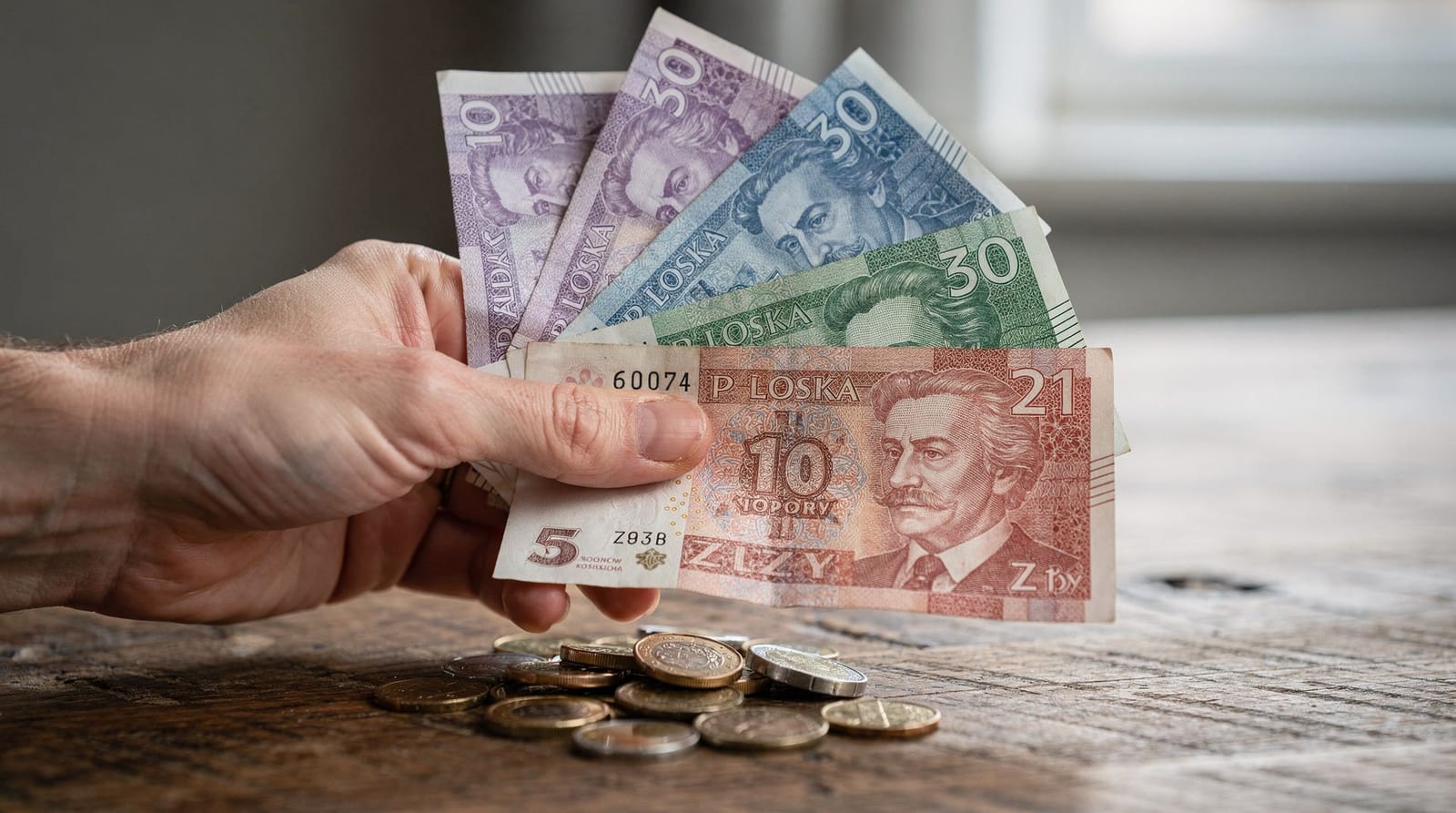
Money: Get PLN from an ATM before or immediately on arrival. Target 200–300 PLN for day one. See Kraków money and currency guide.
Transport from airport: Train to Kraków Główny (about 20 min, 20 PLN) is the best option. Then Bolt/tram or 10-min walk to Old Town. See airport guide.
SIM card: Polish SIMs at airport kiosks: 10 GB for 30–40 PLN (~€7–10). Your EU roaming may work in Poland; US visitors typically need a local SIM.
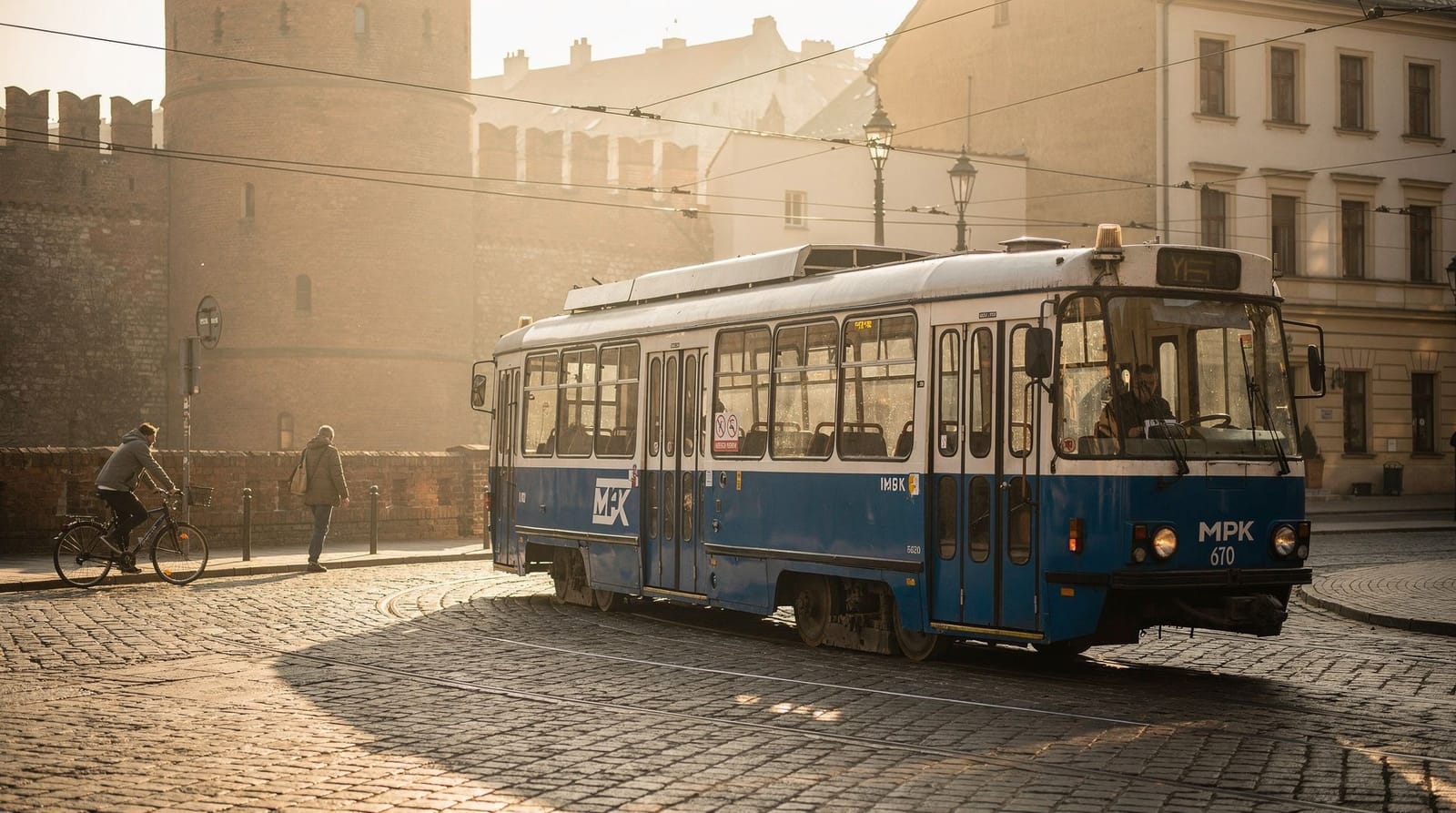
Tram tickets: Buy a 24-hour pass for 20 PLN (zone I) if you’re doing Nowa Huta or multiple cross-city moves. See public transport guide.
Luggage storage: Galeria Krakowska (mall at the main station) has coin-operated lockers. Also available at the station itself.
First-day food recommendations
Breakfast: Café Wiślna (ul. Wiślna 4) for proper coffee and pastries, or Pierwszy Lokal (ul. Floriańska) for Polish breakfast plates.
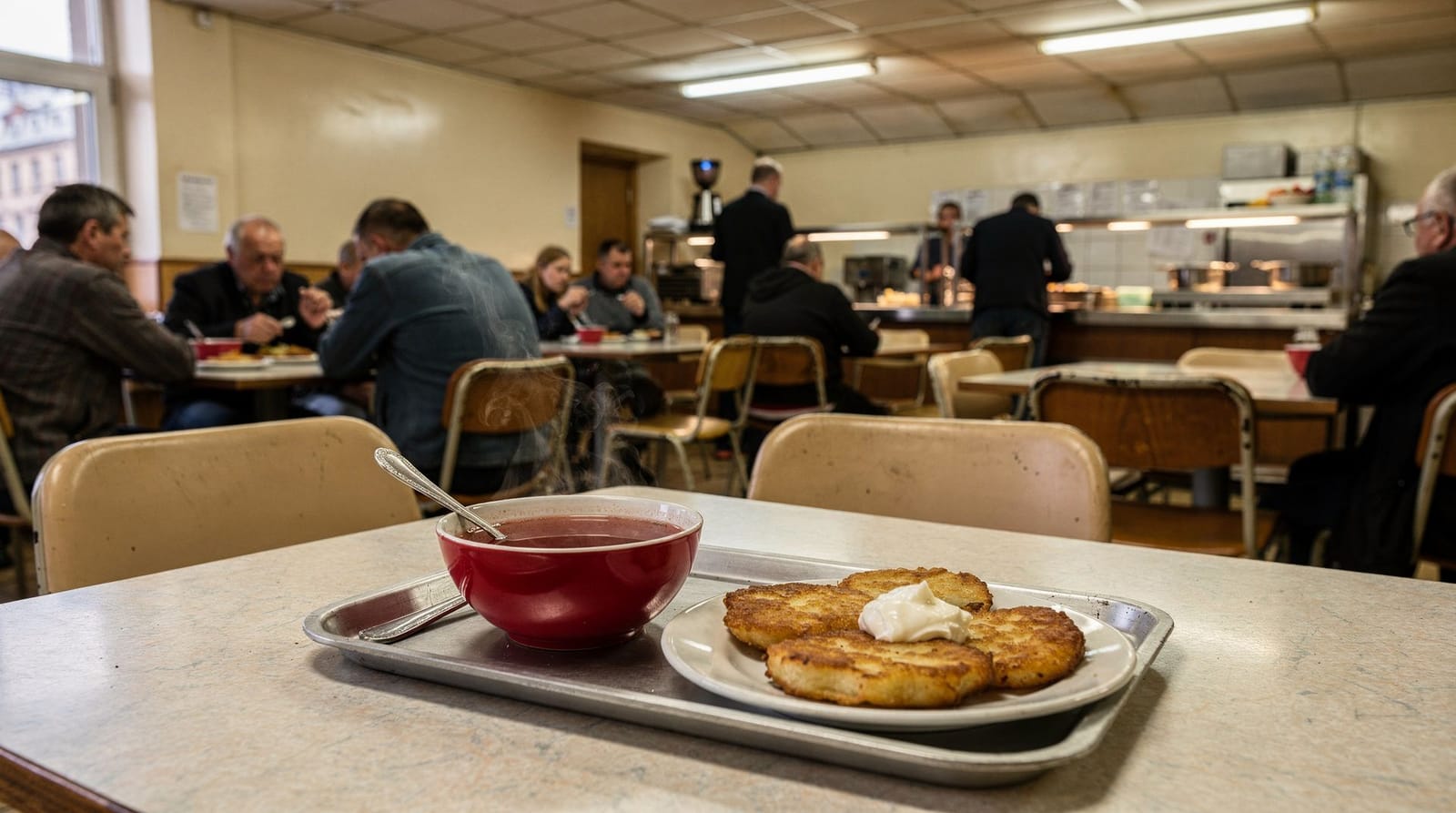
Lunch: Bar Mleczny Pod Temidą (ul. Grodzka 43) — milk bar, queue at the counter, pay at cashier, collect at hatch. Zurek soup (9 PLN), pierogi ruskie (16 PLN), bigos (12 PLN). Crowded, authentic, inexpensive.
Evening: Walk south to Kazimierz. Plac Nowy for zapiekanki. Then dinner — Pierogarnia Starka (ul. Józefa) does excellent pierogi in a proper sit-down setting (35–55 PLN for a main, fair pricing for the quality).
Day-trip decisions for first-timers
Most first-time visitors include at least one major day trip. The choices:
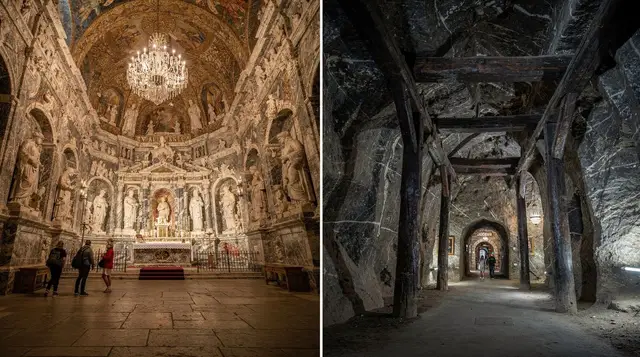
Wieliczka Salt Mine: Closest (14 km), easiest logistics, universally impressive. Book a fast-track Wieliczka tour to avoid queue risk. Suitable for all ages and fitness levels.
Auschwitz-Birkenau: More demanding emotionally and logistically. Essential for anyone interested in 20th-century European history. Book months ahead in summer.
Zakopane: Best for those who want mountain scenery and highland culture. Plan a full day; 2 hours each way from Kraków.
For a complete planning framework, see the Kraków itinerary planning guide. For how many days to allocate, see how many days in Kraków.
Frequently asked questions for first-time Kraków visitors
Do I need to speak Polish in Kraków?
No. English is widely spoken in tourist areas, hotels, restaurants, and museums. Any restaurant with a menu will have an English version; major museums have English signage and audio guides.
Is Kraków difficult to navigate?
No. The Old Town and Kazimierz are compact enough to navigate by landmark. The Rynek is your anchor point. For day trips and Nowa Huta, Google Maps or the Jakdojade app gives reliable routing.
What’s the single most important thing to book in advance?
Auschwitz timed entry, if it’s on your list. If not, Wawel State Rooms or Schindler Factory Museum come next. Everything else can be booked 1–3 days ahead in most seasons.
What should I not miss in Kraków as a first-timer?
Walk Rynek Główny at sunset when the crowds thin and the light turns the Sukiennice golden. Take the short walk up Wawel Hill at dusk for the view over the Vistula. Eat one proper milk bar lunch. Spend an evening in Kazimierz — not just passing through, but sitting down at a table at Singer or Alchemia with a beer and letting the neighbourhood happen around you. This is the experience that makes people come back.
Can I take a guided tour as a first-day orientation?
Yes, and it’s specifically useful for this. The guided golf cart tour of 4 districts with audioguide gives you the city’s geography across four districts before you start walking in detail, without having to navigate the tram system independently.
How much cash should I bring for my first day?
200–300 PLN covers transport, lunch at a milk bar, a couple of museum entries, and dinner. Use an ATM at the airport or the Galeria Krakowska (adjacent to the main station) on arrival. See money guide for ATM tips.
Should I stay in Old Town or Kazimierz for my first visit?
Both work well. Old Town is more central and convenient for sightseeing; Kazimierz is quieter, has the stronger restaurant scene, and is still a comfortable 15-minute walk from Rynek. First-timers who want maximum convenience choose Old Town; those who want a more local feel choose Kazimierz. See where to stay for the full comparison.
Is three days enough for a first visit to Kraków?
Yes, three days covers Old Town, Wawel, Kazimierz and Podgórze comfortably, plus one day trip (Wieliczka or Auschwitz). Four to five days lets you add a second day trip or a slower pace. See how many days in Kraków for a fuller breakdown by trip length.
The cultural context first-timers need
Why Kraków survived when Warsaw didn’t
Warsaw was 85% destroyed during WWII — deliberately razed by the Germans after the 1944 Uprising. Kraków, by contrast, survived almost entirely intact. The German army withdrew from Kraków in January 1945 before orders to destroy the city could be fully carried out. The result is that Kraków preserves its medieval, Renaissance, and Baroque urban fabric in a way that Warsaw, as a reconstructed city, cannot. This explains the UNESCO listing and why the Old Town feels genuinely old rather than reconstructed.
Kazimierz: from medieval Jewish city to modern neighbourhood
Kazimierz was established as a separate royal town in the 14th century, largely outside Kraków’s city walls, and became a major centre of Jewish life in Central Europe by the 16th century. By the 1930s, approximately 65,000 Jews lived in and around Kraków, concentrated in Kazimierz and nearby areas. During the German occupation (1939–1945), the Jewish population was systematically relocated to the Ghetto in Podgórze, then deported to extermination camps. By the end of the war, approximately 2,000 of Kraków’s Jewish community had survived.
The Kazimierz you visit today is therefore both a genuine historic neighbourhood and a site of cultural memory. The synagogues, cemeteries, and courtyards are real heritage; the restaurants and bars operate in buildings where Jewish families lived for generations. Understanding this dual nature — heritage site and living neighbourhood — enriches every hour you spend there.
Nowa Huta: planned utopia, real city
Nowa Huta was built from 1949 onward as a Stalinist counter-project to “bourgeois” Kraków. The idea was that a working-class steel city next to the ancient royal capital would transform Poland’s social character. The result is an extraordinary piece of urban planning: monumental axes, symmetrical residential blocks, and Plac Centralny — a parade square on the scale of Soviet ambition.
What the planners didn’t anticipate was that Nowa Huta would become a stronghold of both Catholic resistance and Solidarity during the 1980s. The workers who were supposed to embody communist ideology were among the first to strike. This history layers the monumental facades with irony that makes the neighbourhood fascinating to explore.
First-timer’s honest glossary
A few Polish words and names that confuse first-time visitors:
Kraków vs Cracow vs Krakow: All refer to the same city. “Kraków” is the Polish spelling (with ó = “oo” sound); “Cracow” is the older English form; “Krakow” is the simplified English version. The city name comes from the legendary founder, Prince Krak.
Rynek Główny: Main Market Square. Rynek = market square; Główny = main. Pronounced roughly “RIN-ek GWUV-nee.”
Kazimierz: The district name, pronounced “Kaz-EEM-yesh.” Named after King Kazimierz (Casimir) III the Great, who established it in the 14th century.
Wawel: The royal hill and castle. Pronounced “VAH-vel.”
Sukiennice: The Cloth Hall in the centre of Rynek Główny. Pronounced “soo-KYEN-ni-tseh.”
Pierogi: Poland’s most famous dish — filled dumplings. Pierogi (plural of pieróg). Can be filled with potato and cheese (ruskie), meat (mięsne), mushroom and sauerkraut (z kapustą i grzybami), or strawberries (z truskawkami, a dessert variety). Pronounced “pyeh-ROH-gee.”
Mleczny: Milk (adjective). Bar mleczny = milk bar — the subsidised Polish canteen format.
Dziękuję: “Thank you.” Every interaction in a shop, café, or taxi benefits from using this. Pronounced roughly “jen-KOO-yeh.”
Building your first Kraków day from scratch
If you’re arriving knowing nothing and starting from zero, here’s the exact sequence:
-
Land at KRK. Find the train platform (follow signs, Platform 1). Buy a ticket at the machine (20 PLN, accept PLN not your home currency). Take the train to Kraków Główny (about 20 minutes).
-
At Kraków Główny, exit through the station concourse and walk south along the Planty park toward the Barbican. You’ll see the medieval gateway ahead. Walk through it into the Old Town.
-
Find Rynek Główny (follow any street south/central — they all lead to the square). Orient yourself. Note where St. Mary’s Basilica is (northeast corner). Note where the Sukiennice is (centre). Note which streets lead south toward Wawel.
-
Lunch: Walk 3 minutes west on ul. Szewska to find mid-priced restaurants. Or continue to Bar Mleczny Pod Temidą on ul. Grodzka 43 for a cheap full meal.
-
Afternoon: Walk south to Wawel. Buy tickets. Spend 2–3 hours at the Castle and Cathedral.
-
Walk back north on ul. Kanonicza — look at the houses, doorways, and courtyards.
-
Evening: Continue south past the Old Town into Kazimierz. Cross ul. Dietla. Walk down ul. Józefa or ul. Szeroka to Plac Nowy. Zapiekanki. Find Singer or Alchemia for a beer. Walk back or take Bolt.
You’ve experienced the core of Kraków in one arrival day. Now plan the rest with the Kraków itinerary planning guide.
Where to base yourself as a first-timer
Most first-time visitors do best staying in or right at the edge of the Old Town or in Kazimierz. Old Town puts you within walking distance of Rynek, Wawel, and the Barbican, but hotel prices run higher and street noise near the square can be an issue on weekends. Kazimierz is quieter at night away from Plac Nowy, has the better restaurant scene on your doorstep, and is still a 15-minute walk to Rynek — many first-timers end up preferring it once they’ve tried both. Avoid booking purely by price near the main train station unless the specific hotel has good reviews; the area is convenient for arrival but thin on atmosphere. The full breakdown of trade-offs by street and price band is in the where to stay guide.
Budgeting your first Kraków trip
A realistic first-timer budget, per person per day, breaks down roughly as follows: 60–100 PLN for food (mixing milk bars and one sit-down meal), 20–40 PLN for local transport and museum entries, and accommodation on top depending on standard (budget hotels/hostels from ~150 PLN/night, mid-range 300–500 PLN/night in Old Town or Kazimierz). Add a day-trip budget of 130–350 PLN if you’re doing Wieliczka, Auschwitz or Zakopane. The budget travel guide has the full shoestring-to-comfortable comparison, and the Kraków money and currency guide covers cards vs cash and ATM tips in more depth.
Top experiences
Bookable activities with verified prices and instant confirmation on GetYourGuide.