Kraków on a budget: how to visit without overpaying
Krakow: city pass card with public transport & museums
Duration: 72h
How much does a day in Kraków cost on a budget?
A realistic budget day in Kraków runs 120–200 PLN (≈€29–48) per person: dorm bed 60–80 PLN, milk bar meals 18–30 PLN each, tram single-ride tickets 6 PLN, a couple of beers at 15–18 PLN, and at least one paid site. Keeping to mid-range instead of budget adds 50–80 PLN/day. Most of the best Kraków experiences — Planty park, Rynek Główny, Wawel exterior, Kazimierz streets — are free.
Daily budget tiers
Kraków is genuinely affordable by western European standards, but tourist pricing has crept upward since 2022. Here’s what each tier actually gets you in mid-2026:
| Budget day | around 120–200 PLN per person |
| Mid-range day | around 300–450 PLN per person |
| Cheapest meals | milk bars, 18–30 PLN each |
| Biggest expense | accommodation, not food or transport |
| Free every day | Rynek Główny, Planty park, Wawel exterior, Kazimierz streets |
Budget traveller (120–200 PLN / ≈€29–48/day):
- Dorm bed at a central hostel: 55–80 PLN
- Milk bar or supermarket meals: 18–30 PLN each
- MPK tram ticket for the day: 6–20 PLN
- One paid museum or free sights: 0–40 PLN
- Two beers at a local bar: 30–36 PLN
Mid-range (300–450 PLN / ≈€71–107/day):
- Budget hotel or apartment: 180–280 PLN
- Restaurant meals (sit-down, not Rynek): 35–65 PLN each
- Paid entry to 1–2 attractions: 40–80 PLN
- Bolt/tram transport: 15–25 PLN
- Coffee and snacks: 20–30 PLN
Comfort traveller (500–700+ PLN / ≈€119–167+/day):
- 3–4 star hotel in Old Town or Kazimierz: 300–500 PLN
- Restaurant meals with wine: 70–120 PLN each
- Guided tours plus museum entries: 100–180 PLN
The biggest variable is accommodation — good Kazimierz apartments at 180 PLN/night bring a comfort traveller down toward mid-range totals on everything else. See where to stay in Kraków for full accommodation pricing.
Free things to do in Kraków
The base layer of Kraków sightseeing costs nothing:
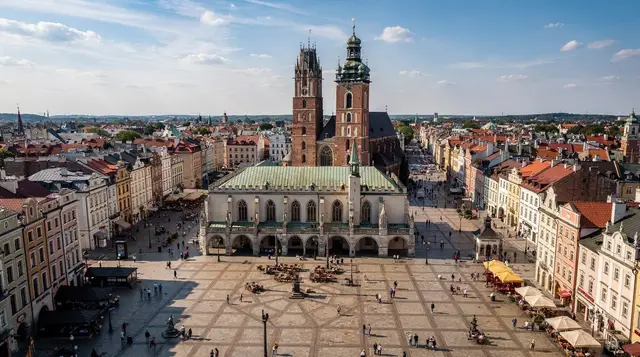
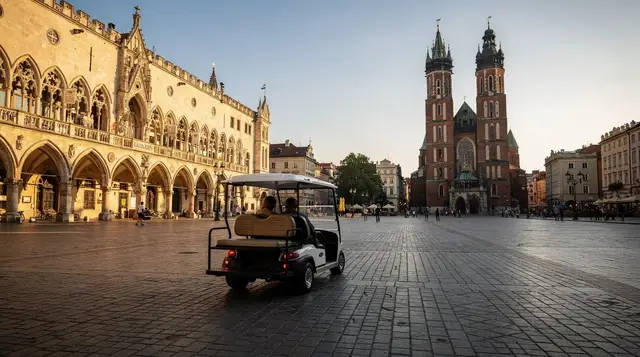
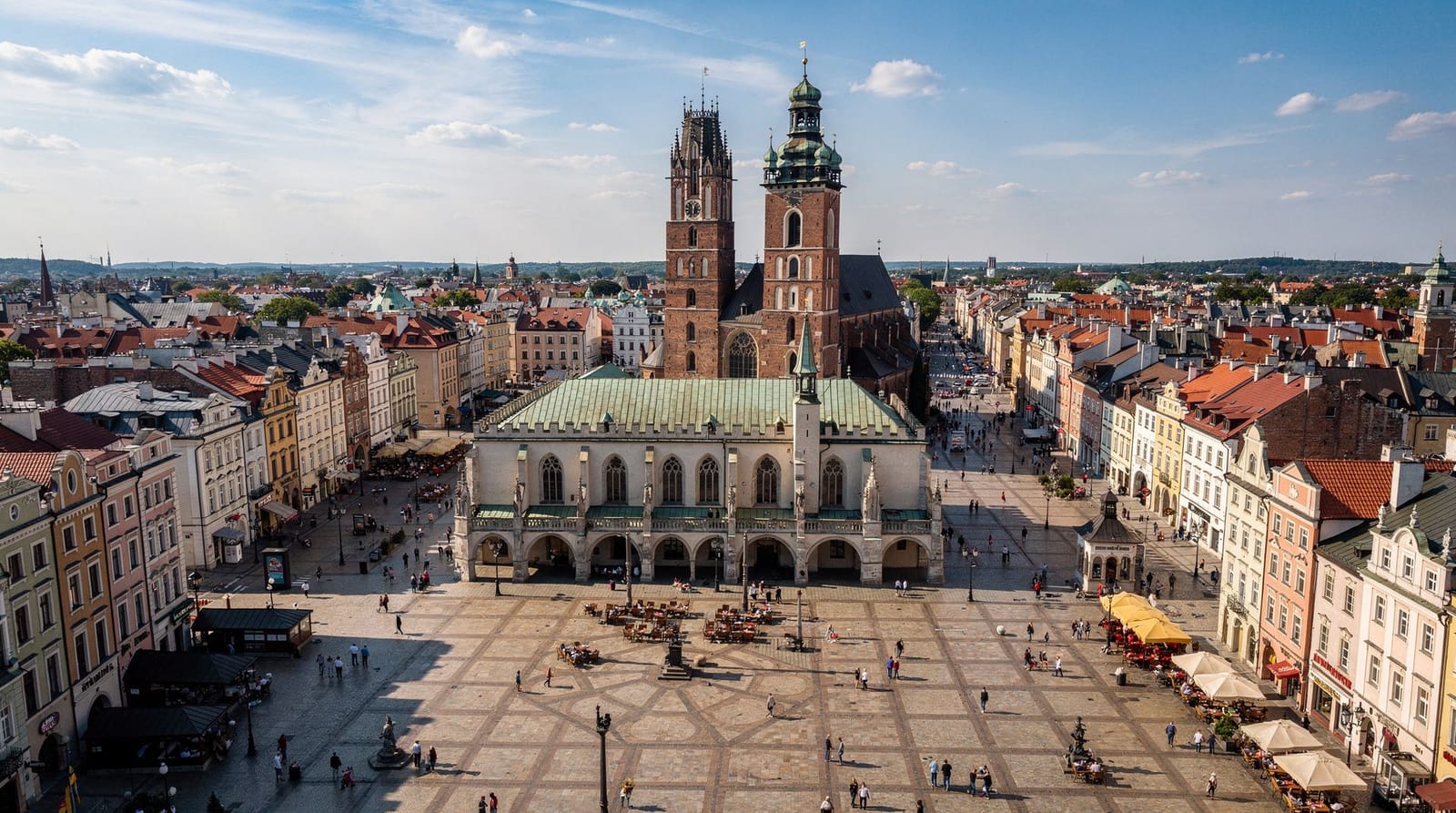
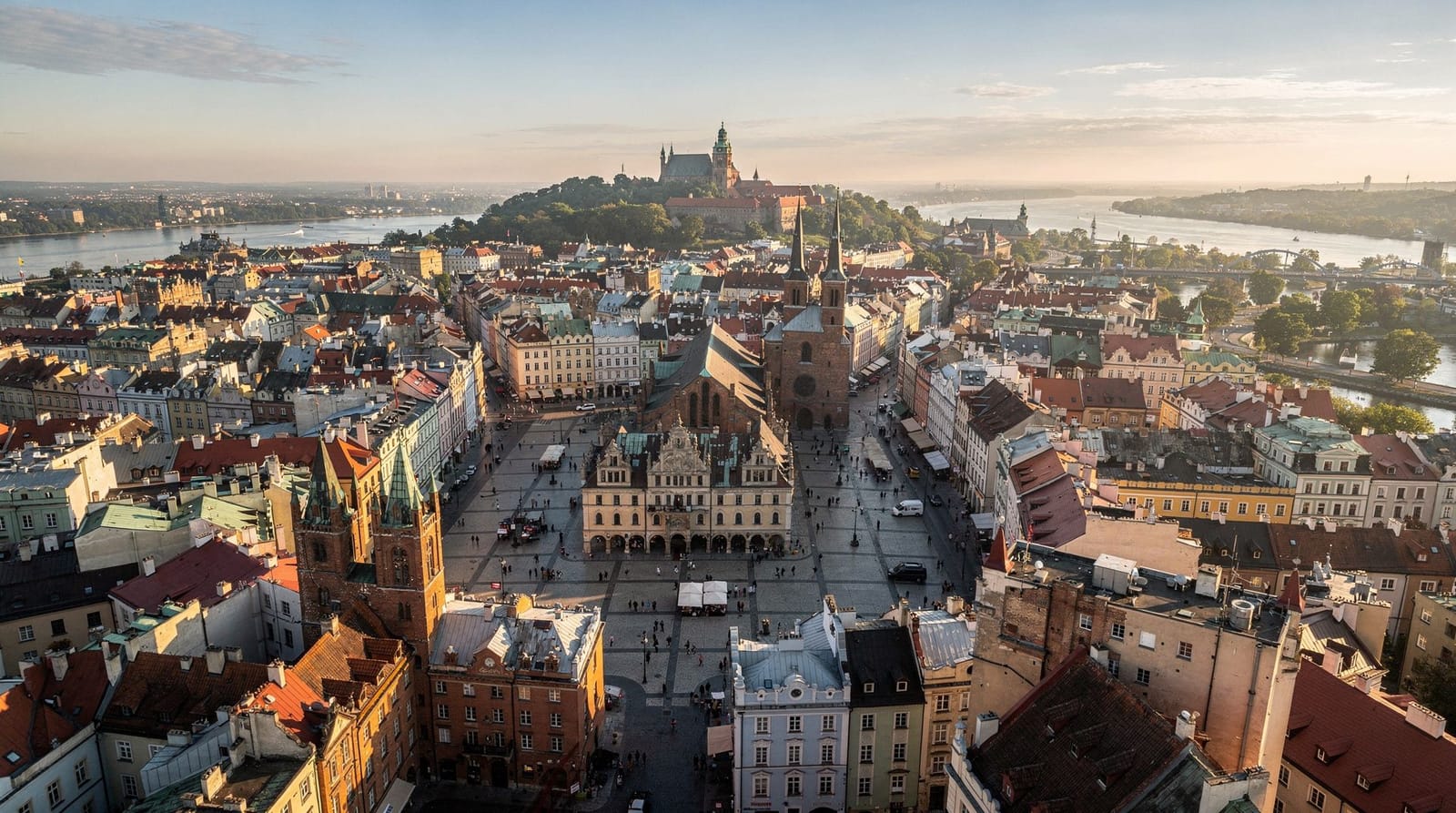
Rynek Główny: Simply being in Europe’s largest medieval market square is entirely free. The hourly trumpeter (Hejnał mariacki) plays from the taller tower of St. Mary’s Basilica — free to watch. Wandering the Sukiennice arcade: free. Exterior of the Basilica: free (interior viewing of the Veit Stoss altarpiece costs 20 PLN / ≈€4.75).
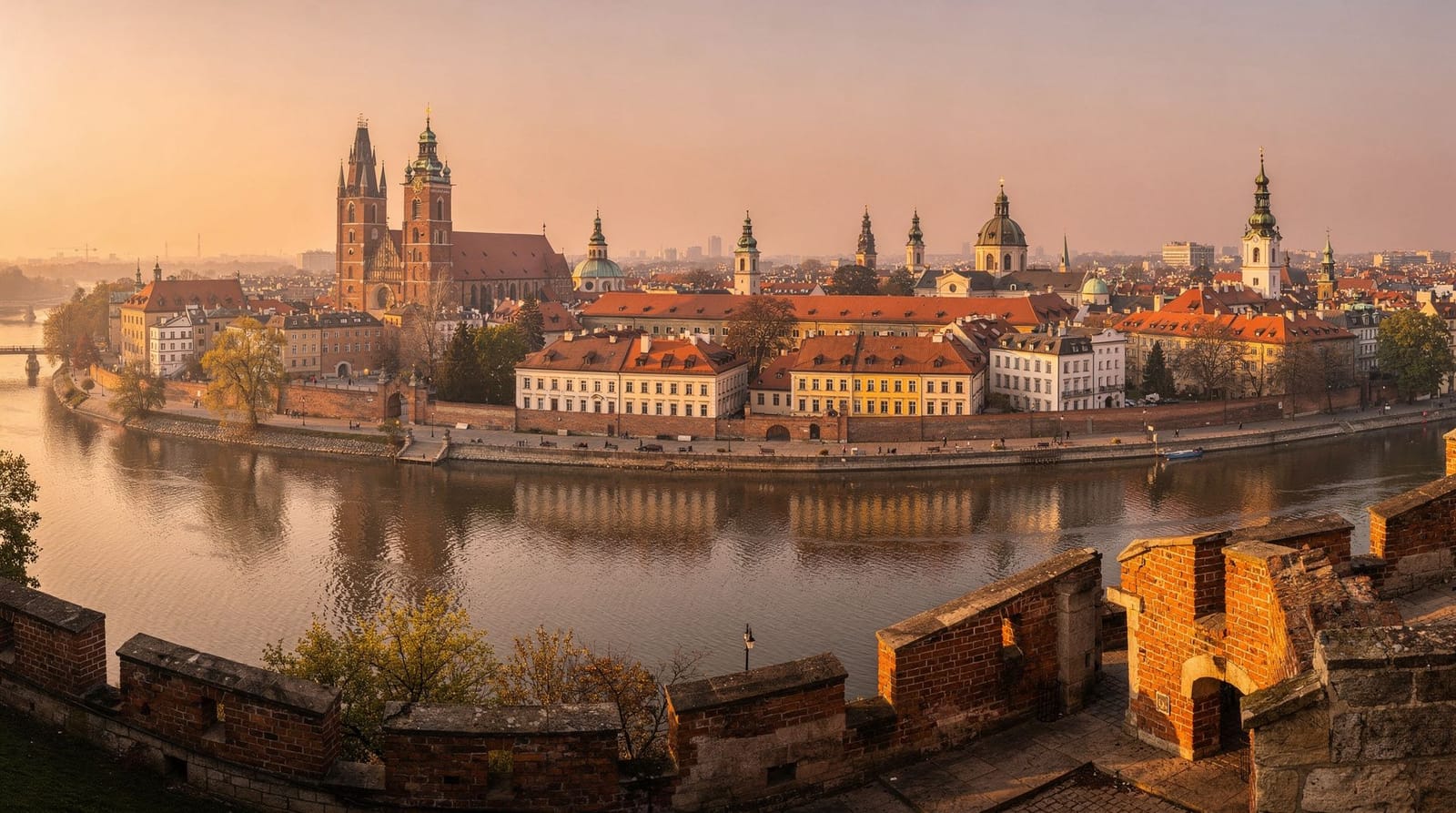
Wawel Hill exterior: Walking up Wawel Hill, seeing the castle and cathedral exteriors, and looking out over the Vistula is free. Ticketed sections (State Rooms, Dragon’s Den, Cathedral interior) are separate.
Planty park: The 4 km ring of parkland encircling the Old Town along the course of the former city walls. Free, pleasant, used by locals daily.
Kazimierz streets: The main experience of Kazimierz — ul. Szeroka, Plac Nowy, the synagogue courtyards from outside, street art, the market atmosphere — costs nothing. Museum entries (Old Synagogue 22 PLN, Galicia Jewish Museum 35 PLN) are modest.
Vistula riverbank walks: The Bulwar Czerwieński (north bank) and Bulwar Podgórski (south bank) are free. The view of Wawel from across the river is one of the city’s best at dusk.
Dragon’s Den exterior: The fire-breathing dragon sculpture outside the Den breathes real fire every few minutes. Free.
Nowa Huta: Plac Centralny, the grand avenues, the exterior of the steelworks — all free to walk through. Tram 4 or 22 from the city centre (6 PLN single ride) gets you there.
Free museum days
Several Kraków museums have one free admission day per week or month:
- MOCAK (Museum of Contemporary Art): Free every Tuesday
- National Museum (MNK), permanent exhibitions: Free on Tuesdays (the Czartoryski Museum issues timed free tickets on the day)
- Museum of Kraków (Muzeum Krakowa): Rynek Underground free on Tuesdays; Town Hall Tower, Schindler’s Factory and the Old Synagogue free on Mondays
Note: “free” days can mean more visitors; arrive early. Auschwitz is free to enter any day — the free individual entry allows self-guided visits; guided tour fees apply to the guide only, not entry itself.
Eating on a budget
Milk bars (bar mleczny): Poland’s socialist-era subsidised canteen format, still going strong. Order from a chalkboard menu, pay at the counter, collect your tray. Genuinely cheap:
- Bar Mleczny Pod Temidą (ul. Grodzka 43): pierogi ruskie for 16 PLN, bigos for 12 PLN, żurek soup for 9 PLN. Functional, crowded at lunch.
- Bar Vega (ul. Krupnicza 22): Vegetarian milk bar; salads, mushroom cutlets, bean soups. A full plate under 20 PLN.
Plac Nowy, Kazimierz: The most famous street food spot in Kraków. Zapiekanki (open-faced baguette with mushrooms, cheese, toppings) cost 12–18 PLN from the round market building kiosks. Open-air benches surround the square. This is where Kraków students and long-term residents eat — not a tourist creation.
Hala Targowa (ul. Grzegórzecka): A covered market hall open daily until about 2–3pm. Fresh vegetables, bread, cheese, pickles, smoked meats — raw ingredients for self-catering. Buy obwarzanek (bread rings, 2.50 PLN each), various cheeses, and prepared salads.
Supermarkets: Biedronka and Lidl (both well represented in the city centre) are excellent for budget provisions. A 400g pot of zurek soup, bread, cheese, and fruit from Biedronka runs under 20 PLN. Żabka convenience stores sell hot food, coffee, and sandwiches at reasonable prices 24 hours.
Where not to eat cheap (despite appearing to): Restaurants immediately facing Rynek Główny charge 2–3× what equivalent food costs on side streets. A main course that costs 35 PLN on ul. Grodzka 3 minutes from the square costs 75–90 PLN with a Rynek view.
Affordable ways to see the main sights
Walking tours: Many companies offer free walking tours on a tips-only model — you pay what you feel the tour was worth at the end. Quality varies. For a structured paid tour, the Old Town guided walking tour includes a professional guide covering Rynek, Barbican, and Wawel for a fixed price.
City Card for museum-heavy days: The Kraków City Card bundles transport plus 22+ museum entries. If you plan Rynek Underground (45 PLN), Czartoryski Museum (65 PLN), the Sukiennice gallery (35 PLN), and unlimited trams in one day, the card typically calculates as worthwhile. Full details in the public transport guide.
Wieliczka on your own: Rather than a paid tour (80–120 PLN per person on top of entry), take bus 304 from Rynek Główny (35 min; check the fare at ztp.krakow.pl) and buy mine entry at the ticket desk (Tourist Route tickets start from 82 PLN for the Polish-language tour; foreign-language tickets cost more, see kopalnia.pl). Only saves money if you don’t mind the queue risk — guided tours include fast-track.
Auschwitz on your own: The Memorial is free to enter; take the train from Kraków Główny to Oświęcim (30–45 PLN each way, about 1h30) and book a timed entry online at visit.auschwitz.org in advance (free). A meaningful saving over guided tours (typically 100–180 PLN per person including transport).
Affordable accommodation
Hostels:
- Good Bye Lenin (ul. Józefa, Kazimierz): Dorms 55–70 PLN/night
- Hostel Mundo (ul. Sarego): Dorms 55–80 PLN/night, good social atmosphere
Budget hotels: Several 2–3 star properties near the Old Town offer doubles at 200–280 PLN (≈€48–67) in shoulder season.
Apartments: In Kazimierz and Podgórze, 1-bedroom apartments typically run 150–220 PLN/night — better than a hostel for couples or travellers who want cooking facilities. See where to stay in Kraków for full neighbourhood comparison.
Transport savings
The Old Town is best navigated on foot — every minute walking is a ticket not bought. When you do need transport:
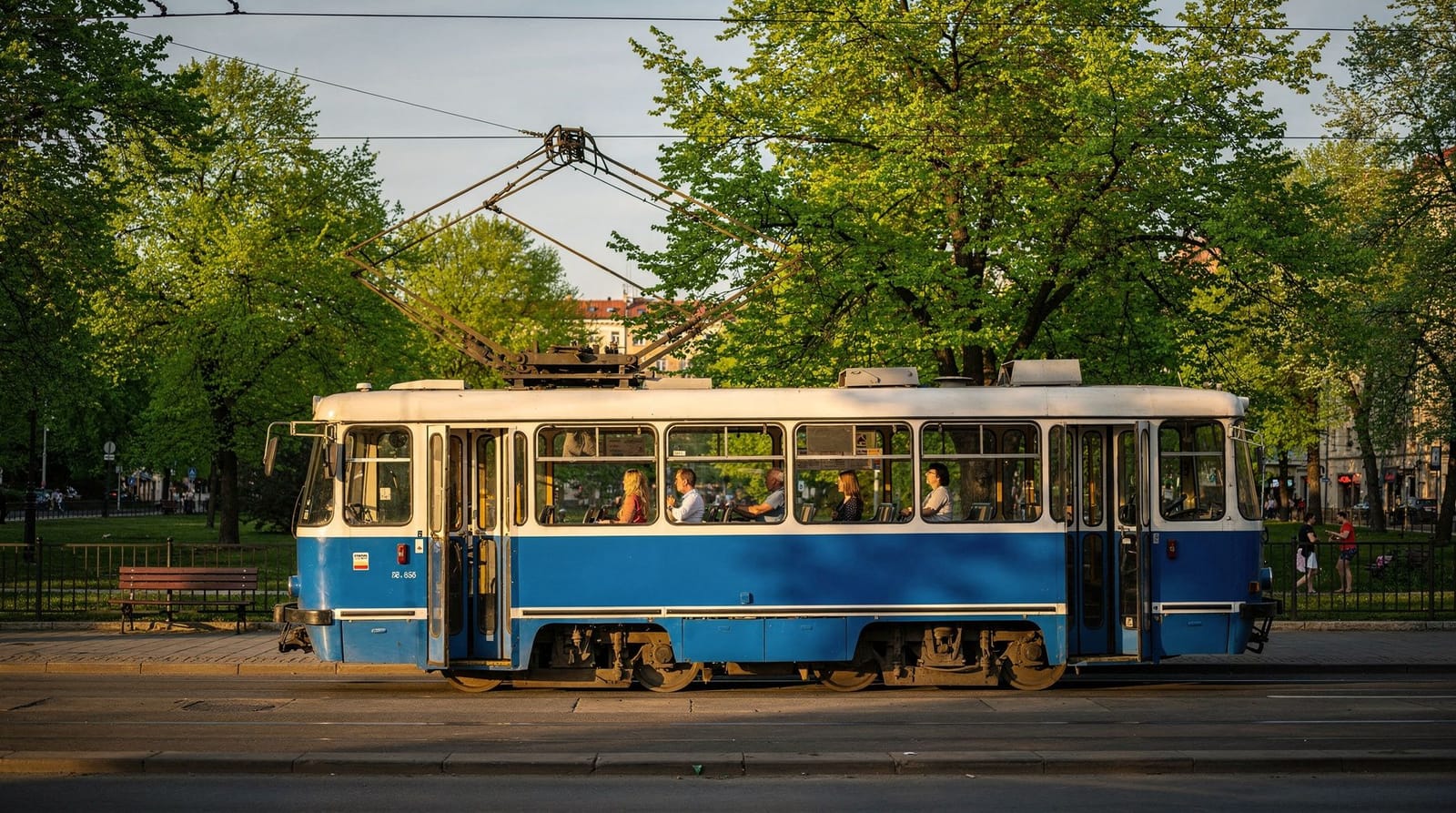
- 24-hour MPK pass (20 PLN, zone I): Worth it on a busy day with multiple cross-city moves (e.g., Old Town → Nowa Huta → Kazimierz)
- Bolt over Uber: Typically 15–20% cheaper for the same journey
- Don’t take unofficial taxis: 5–10× the Bolt fare for the same trip
For day trips, check bus 304 to Wieliczka and PKP trains to Oświęcim before booking guided transport — the savings are real for confident independent travellers.
Tourist traps that eat budgets
Restaurants facing Rynek Główny: See the food section above. The premium is real and the quality often doesn’t match.
Airport currency exchange: Rates are 8–12% worse than ATMs. Change only what you need to get into the city, then find an ATM. See the Kraków money guide for ATM advice.
Euronet ATMs: Recognisable by their yellow branding, positioned heavily in tourist areas. High fees and bad DCC rates. Use bank-operated ATMs instead.
Sukiennice souvenir stalls: Inflated prices. The amber jewellery at tourist-facing Cloth Hall stalls includes significant quantities of pressed or synthetic amber. If amber matters to you, buy from a certified specialist with proper documentation.
Unofficial “Auschwitz tours” on Rynek Główny: Men with clipboards offering Auschwitz tours are not licensed Memorial guides. Book through the official Memorial website or a verified operator. See the Kraków safety guide for the full tourist trap list.
Frequently asked questions about budget travel in Kraków
Is Kraków still cheap for tourists in 2026?
Cheaper than western Europe, yes — by 40–60% for most categories. But less dramatically cheap than it was in 2015–2019. Hostel dorms that cost 30–35 PLN per night then now run 55–80 PLN. Restaurant meals that were 20 PLN are now 35–45 PLN. The gap has narrowed but remains significant.
What are the biggest budget mistakes tourists make in Kraków?
Eating at Rynek Główny restaurants (paying 2–3× for atmosphere), using airport currency exchange, taking unofficial taxis, and not checking which museum days are free. Avoiding those four mistakes alone saves 100–200 PLN per person per visit.
Can I visit Wieliczka Salt Mine cheaply?
Yes — take bus 304 (check the fare at ztp.krakow.pl) and buy entry at the mine (Tourist Route tickets start from 82 PLN for the Polish-language tour; foreign-language tickets cost more, see kopalnia.pl). Compare to guided tour packages (typically 80–120 PLN on top of entry, includes transport and guide). If you’re confident navigating independently and are fine with potential queues, self-guided saves money. The Wieliczka destination guide covers the full logistics.
Is it worth getting the Kraków City Card on a tight budget?
Only if you genuinely plan to use it. Calculate the entry fees for your actual planned museums and compare to the card cost. If you’re skipping museums to save money, the card doesn’t help. If you plan 3+ paid museum visits plus multiple tram rides in a day, it almost certainly pays for itself. The electric golf cart city sightseeing tour is an affordable alternative for seeing the Old Town with commentary if a full guided day tour doesn’t fit your budget.
How much should I budget for a 3-day trip to Kraków?
For a budget traveller, expect roughly 500–700 PLN total across 3 days excluding accommodation, factoring in one paid highlight (Wieliczka or a museum) alongside mostly free sightseeing and milk bar meals. Add 500–900 PLN more for 2–3 nights of budget accommodation.
Is self-catering worth it in Kraków?
For short stays, not really — milk bars and market food are already cheap and part of the experience. For stays of a week or more, self-catering from Biedronka, Lidl, or Hala Targowa can meaningfully cut costs, especially for breakfast and lunch, leaving dinners out as the daily highlight.
Self-guided vs guided: the honest cost comparison
Many of Kraków’s best experiences can be done self-guided and are genuinely fulfilling that way. Others are substantially improved by a guide. Here’s the honest breakdown:
Self-guided works well for:
- Old Town wandering — the Rynek, ul. Kanonicza, Barbican exterior
- Kazimierz street atmosphere — Plac Nowy, ul. Szeroka, the synagogue facades
- Nowa Huta walk — Plac Centralny and the main avenues communicate their own story visually
- Planty park, riverbank walks, Wawel Hill exterior
Guided significantly improves:
- Auschwitz-Birkenau — a licensed guide provides context that transforms the experience; self-guided is legally possible but contextually thin for most visitors
- Wieliczka Salt Mine — guides are mandatory for the Tourist Route; this isn’t a choice
- Schindler Factory Museum — the museum’s own material is good but a guided tour connects the exhibits to the physical streets of Podgórze outside
- Rynek Underground Museum — optional guide available; the multimedia installation is self-explanatory but a guide helps with historical depth
Cost comparison:
- Self-guided Auschwitz (train + entry): ~35–45 PLN per person
- Guided Auschwitz tour from Kraków: ~180–220 PLN per person (includes transport, guide, entry)
- The 140–175 PLN difference for Auschwitz specifically is money well spent for most visitors
For a mid-range budget with selective use of guides, the Kraków travel itinerary planning guide helps you identify which experiences justify the premium.
Food budget in depth: from free to splurge
Free food experiences:
- Obwarzanek from street vendors: 2.50 PLN. The bread ring sold from carts across the city is Kraków’s most iconic street snack — a slightly sweet, sesame or poppy-seeded ring that’s been sold on Kraków streets since the 14th century. Budget visitors can start every morning with one for under €1.
- Tap water at cafés: Ask for wodę z kranu (tap water) and most cafés will provide it free
Budget end (~20–40 PLN / ≈€4.75–9.52 per meal):
- Milk bar lunch: the non-negotiable budget-travel experience in Kraków. Bar Mleczny Pod Temidą, Bar Vega, Bar Górnik (ul. Szeroka)
- Żabka convenience store (everywhere): prepared sandwiches (8–14 PLN), hot dogs (4–6 PLN), decent coffee (5–8 PLN)
- Plac Nowy zapiekanki: 12–18 PLN for a filling open-faced baguette
Mid-range (~45–80 PLN / ≈€10.70–19 per meal):
- Pierogarnia Starka (ul. Józefa, Kazimierz): excellent pierogi, proper sit-down, 35–55 PLN for a main
- Marchewka z Groszkiem (ul. Mostowa): reliable Polish kitchen, generous portions, fair pricing
- Hala Targowa: 25–40 PLN for a prepared hot dish at the market hall counters
Splurge (~100–200+ PLN / ≈€24–48 per meal):
- Ed Red (ul. Sławkowska, Old Town): steakhouse in a 16th-century vaulted cellar; mains 90–150 PLN
- Starka Restaurant (ul. Józefa, Kazimierz): Polish regional cuisine elevated, mains 75–120 PLN; reservations recommended
The Kraków money and currency guide provides full price tables across all categories.
Seasonal budget fluctuation
Prices in Kraków aren’t flat across the year. Key budget variables:
Summer (June–August) premium:
- Hotels: 30–50% more than shoulder season
- Some guided tours operate seasonal pricing (5–15% higher in peak season)
- Accommodation books out farther ahead; last-minute doesn’t get deals
Shoulder season savings (April–May, September–October):
- Mid-range hotels at winter prices; 4-star hotels often at 3-star summer rates
- Tour availability improves; no urgency on most bookings
- Auschwitz booking windows shorter (1–3 weeks vs 6–8 weeks)
Winter deals (November–March):
- Cheapest accommodation of the year
- Museums empty, staff attentive, no queues
- Exception: Christmas market week (24 Dec–1 Jan) sees hotel prices spike back to summer levels
For the full seasonal picture, see the best time to visit Kraków guide, which covers month-by-month price differences.
Hidden costs: what surprises budget travellers
Even experienced budget travellers encounter a few Kraków-specific costs that aren’t obvious from advance research:
Wieliczka Mine entry: With Tourist Route tickets starting from 82 PLN (Polish-language tour; foreign-language tickets are higher, see kopalnia.pl), Wieliczka is the single most expensive item for many budget visitors. It’s worth every złoty, but it needs to be planned into the budget rather than treated as a spontaneous add-on.
Guided tour tips: Tours from GetYourGuide include the guide’s time but not their tip. For an Auschwitz guided tour (5–6 hours, emotionally and professionally demanding work), 30–50 PLN tip per person is appropriate. Budget this in advance.
Wawel multiple tickets: Wawel Castle operates multiple separate ticketing points. Each Wawel exhibition has its own ticket (47–57 PLN for the State Rooms, Crown Treasury, Armoury or Lost Wawel), and the Cathedral (26 PLN, which includes the Sigismund Bell and the royal tombs) is ticketed separately; there is no single ticket for everything. The combined cost is significant; decide in advance what you want to see.
Medical costs if things go wrong: Even minor healthcare costs money at private clinics (150–300 PLN per consultation). Travel insurance with medical coverage is not expensive (typically €20–40 for a week’s trip from western Europe) and provides peace of mind for the entire visit.
The honest value calculation
When is Kraków worth the money and when isn’t it?
Best value experiences in Kraków (high satisfaction, low cost):
- Milk bar lunch at Bar Mleczny Pod Temidą (20–25 PLN)
- Plac Nowy zapiekanki (12–18 PLN)
- MPK tram to Nowa Huta and back (12 PLN total)
- Old Town and Planty park walk (free)
- Kazimierz evening at Singer café or Mleczarnia (20–35 PLN for drinks)
- Vistula riverbank evening walk (free)
Poor value, not recommended:
- Restaurants on Rynek Główny facing the square (2–3× overpricing)
- Hotel room in the most central Old Town block (20–30% premium over equivalent quality one street back)
- Tourist-marketed “traditional Polish dinner” in a hotel basement (often generic quality, high price)
- Souvenir items at Sukiennice stalls without authenticity verification (amber, crystal)
High value, worth every złoty:
- Wieliczka Salt Mine (entry from 82 PLN, see kopalnia.pl — genuinely extraordinary)
- Auschwitz-Birkenau Memorial visit (free entry, life-changing experience)
- Schindler Factory Museum (60 PLN for one of the best WWII museum experiences in Europe)
- Galicia Jewish Museum (35 PLN for a genuinely excellent permanent exhibition)
The key insight: Kraków’s institutional cultural experiences are priced fairly and sometimes below their real value. The tourist-facing commercial experiences (Rynek restaurants, souvenir stalls, tourist-trap bars) are where the money is wasted. Budget for the former; avoid the latter.
For accommodation value by neighbourhood, see where to stay in Kraków. For visa and entry costs (none for most visitors), see the Poland visa and entry requirements guide.
A sample 3-day budget itinerary
Day 1 — Old Town on foot (free-heavy): Rynek Główny, Sukiennice arcade, St. Mary’s Basilica exterior, Planty park loop, Wawel Hill exterior. Lunch at a milk bar (20–25 PLN). Evening walk along the Vistula. Total spend: roughly 60–90 PLN excluding accommodation.
Day 2 — Kazimierz and Podgórze: Morning in Kazimierz — ul. Szeroka, Plac Nowy, synagogue exteriors (22 PLN if you enter the Old Synagogue). Cross to Podgórze for the Schindler Factory Museum (60 PLN). Lunch at Plac Nowy zapiekanki (12–18 PLN). Total spend: roughly 70–100 PLN.
Day 3 — Wieliczka self-guided: Bus 304 to Wieliczka (check the fare at ztp.krakow.pl), mine entry at the ticket desk (from 82 PLN, see kopalnia.pl). This is the one genuinely expensive day, but it’s worth planning for rather than treating as an afterthought. See the Wieliczka salt mine from Kraków guide for the full self-guided logistics.
This pattern — free-heavy days bracketing one paid highlight — keeps a 3-day trip well within budget-traveller range while still covering the essentials.
Money-saving apps and tools worth having
Jakdojade: The standard Kraków public transport app, showing real-time tram and bus times and routing. Free, and removes the guesswork that leads to buying unnecessary extra tickets.
Biedronka and Lidl apps: Both supermarket chains run loyalty-app discounts on staples — worth downloading if you’re self-catering even partially during a longer stay.
Google Maps offline area: Downloading the Kraków area for offline use before your trip avoids relying on paid data roaming for basic navigation, useful if you haven’t bought a local SIM.
For the full currency and payment picture — cards versus cash, ATM traps, tipping norms — see the Kraków money and currency guide.
Top experiences
Bookable activities with verified prices and instant confirmation on GetYourGuide.