Where to stay in Kraków: neighbourhood guide
Krakow: Old Town guided walking tour
Duration: 3h
Which neighbourhood is best to stay in Kraków?
The Old Town (Stare Miasto) puts you within walking distance of everything and suits first-timers despite higher prices (180–450 PLN/night for mid-range). Kazimierz is livelier, more affordable (130–280 PLN/night), and better for food and bar scenes. Podgórze suits budget travellers and second-visit explorers. Avoid staying far outside the centre — tram connections work but eat into your time.
How Kraków’s neighbourhoods work
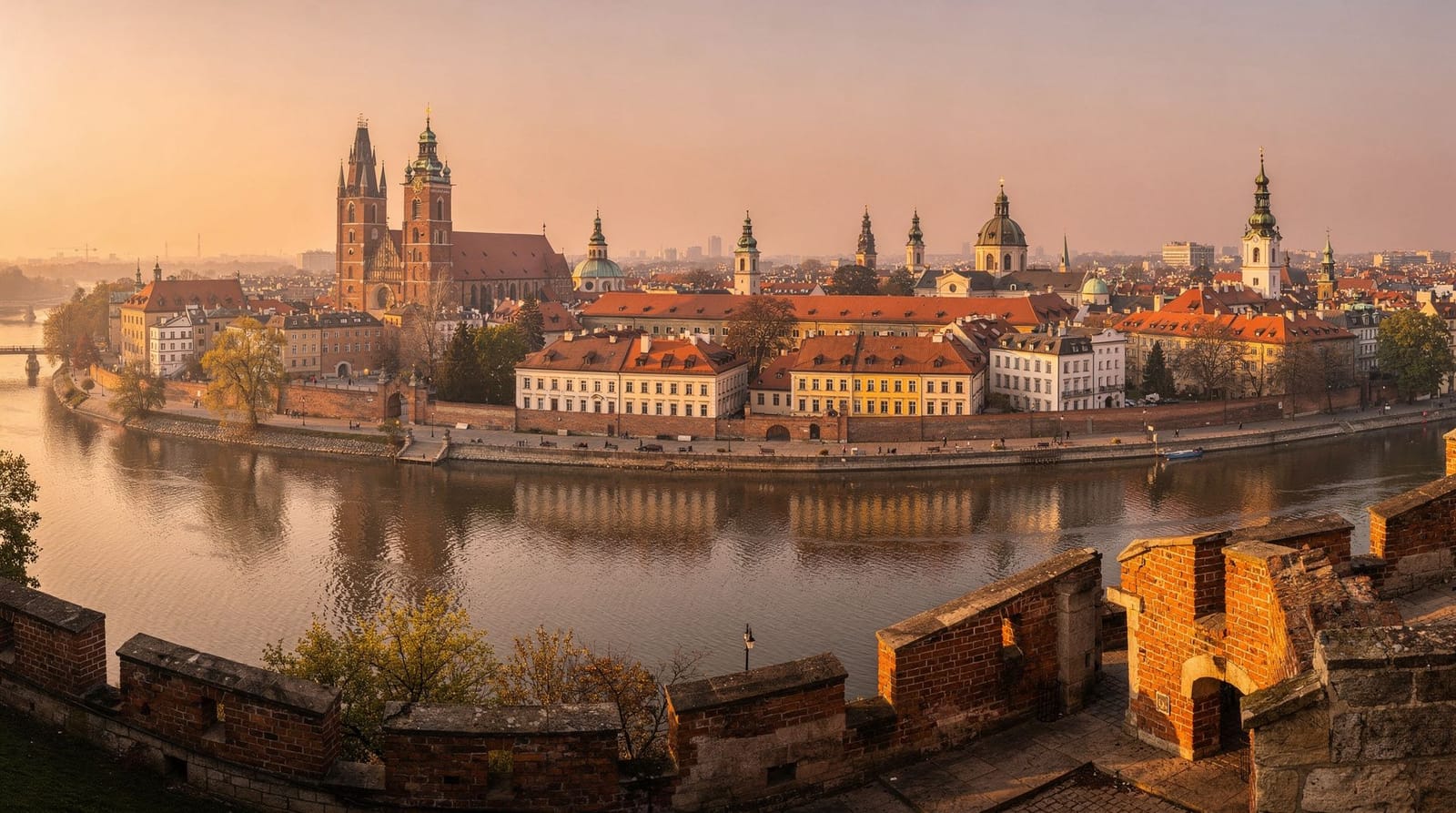
Kraków’s geography is simpler than it looks. The historic city sits in a bend of the Vistula River, with the pedestrianised Old Town at its heart, Kazimierz immediately to the south, and Podgórze across the river. Nowa Huta is a separate satellite district 8 km east.
Most visitors stay in the Old Town or Kazimierz and never need a taxi inside the historic core. The Planty park ring encircles the Old Town — a wide, tree-lined promenade that marks the former city walls. Everything within it is traffic-free or nearly so.
This guide rates each neighbourhood for walkability, atmosphere, price, and who it actually suits. For transport between neighbourhoods, see the getting around Kraków guide and the Kraków public transport guide for tram specifics.
| Best overall | Old Town for first-timers, Kazimierz for atmosphere |
| Cheapest central base | Podgórze, from around 160 PLN/night mid-range |
| Quietest option | Podgórze or Nowa Huta |
| Furthest from Rynek | Nowa Huta, 25–35 min by tram |
| Book ahead | 6–8 weeks for July–August, especially festival week |
Old Town (Stare Miasto): for first-timers and convenience
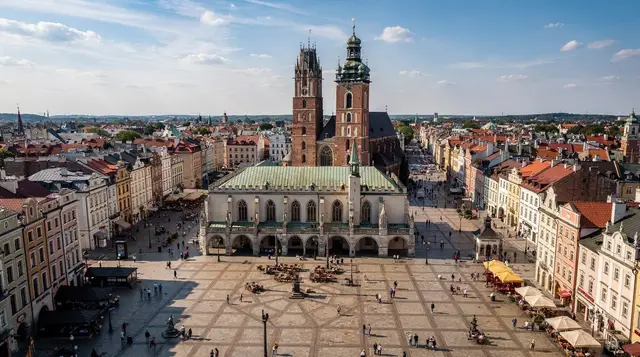
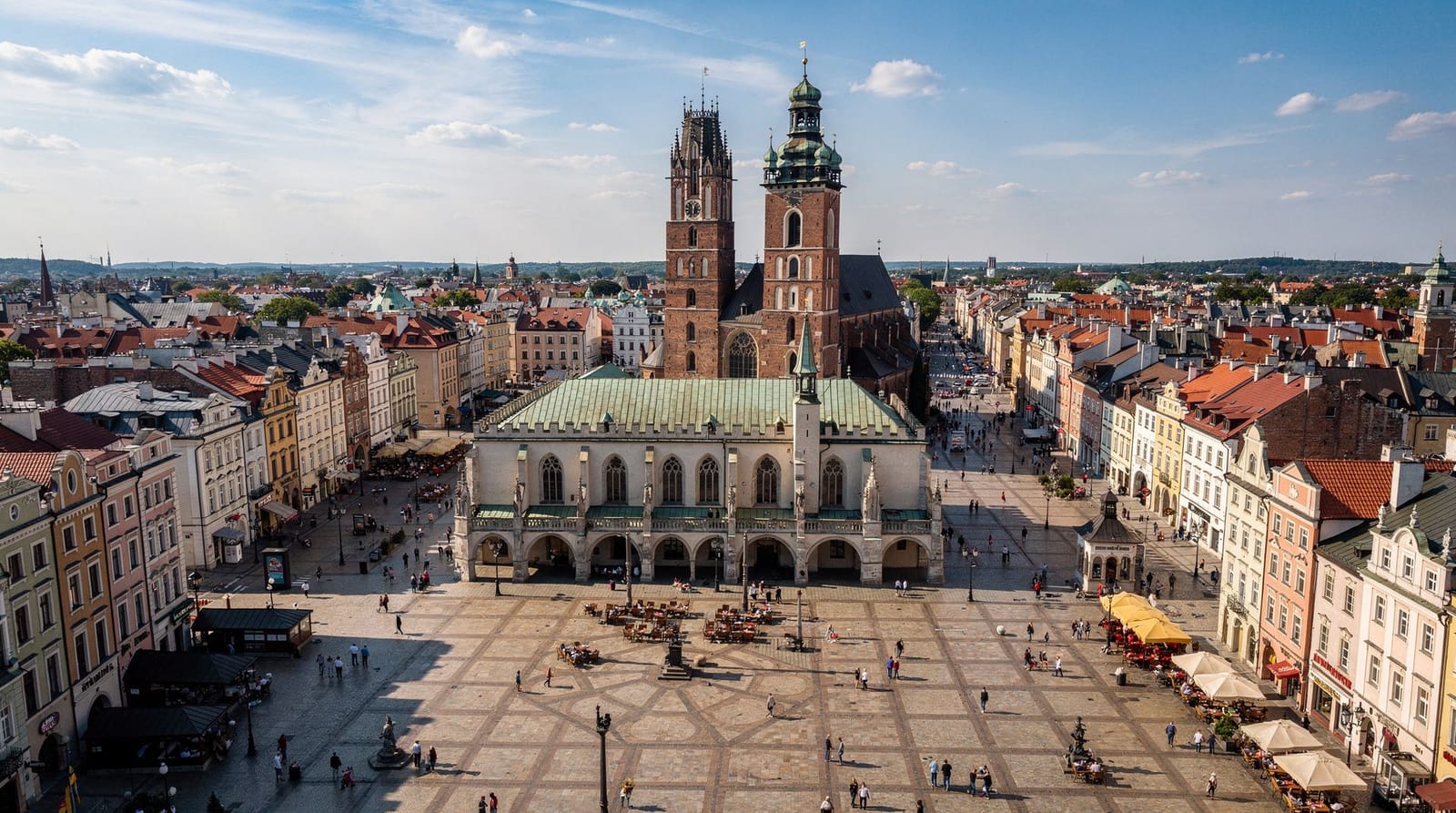
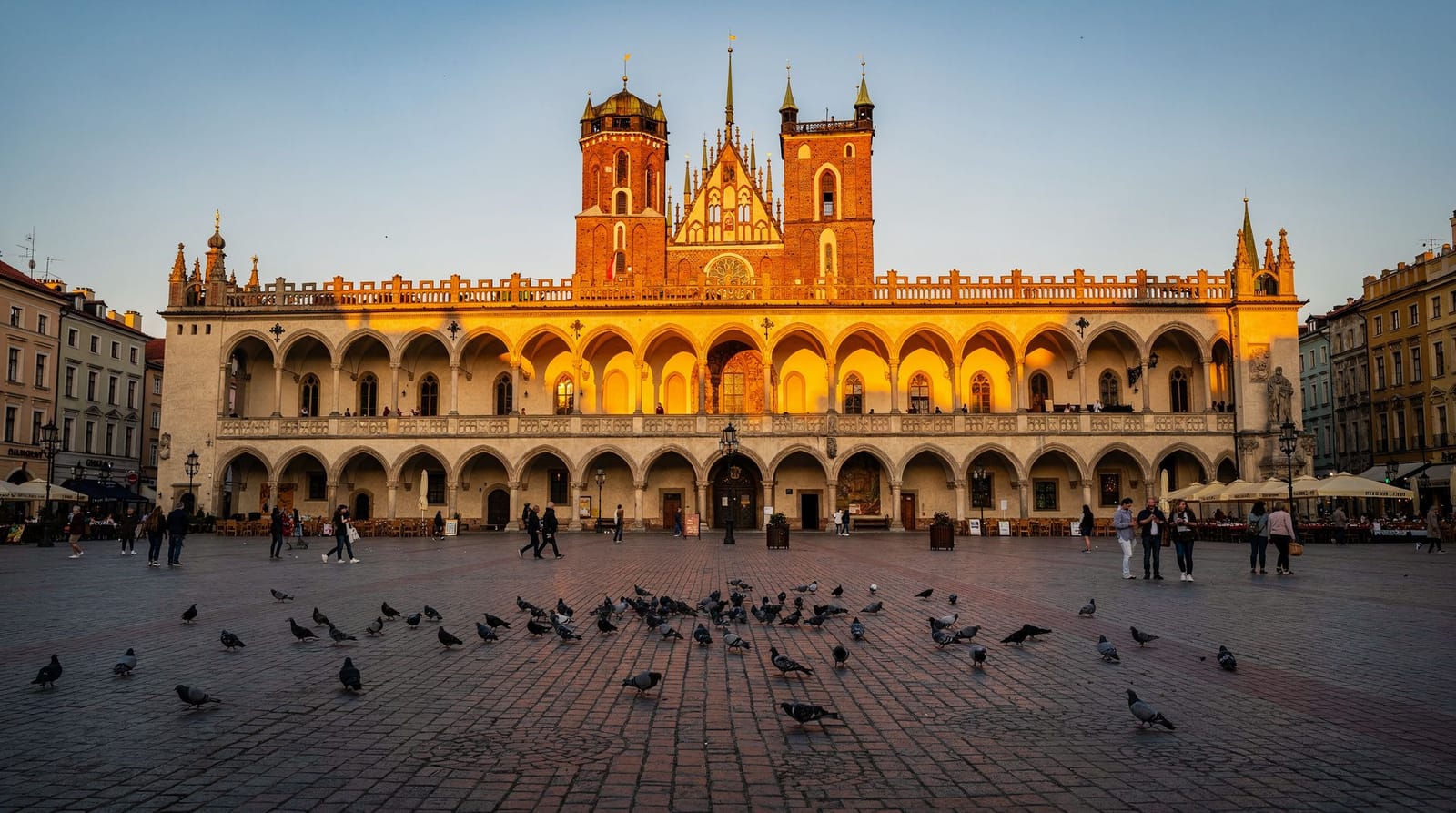
What it is: The walled medieval heart of Kraków, centred on Rynek Główny — one of the largest medieval market squares in Europe. Wawel Castle is a 10-minute walk south. The entire Old Town is UNESCO-listed.
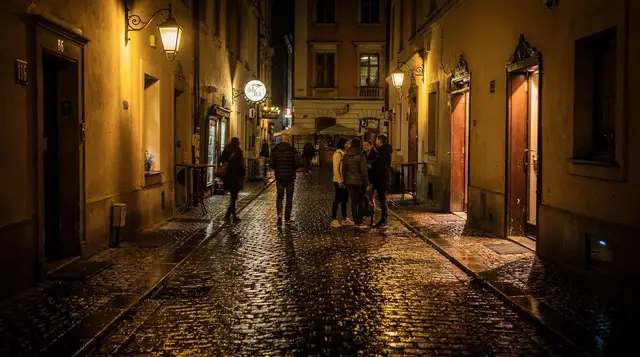
Atmosphere: Elegant and busy. Rynek Główny is tourist-heavy, especially in summer, but the streets immediately off the square (ul. Kanonicza, ul. Grodzka, the Jewish university quarter around Collegium Maius) are quieter and beautiful. The area becomes quieter after 10pm.
Where to stay:
- Hotel Copernicus (ul. Kanonicza 16): A 14th-century building with a rooftop pool overlooking Wawel. One of Kraków’s finest hotels; around 800–1,200 PLN/night (≈€190–285). Book months ahead for summer.
- Hotel Wawel (ul. Poselska 22): Reliable 3-star within the Planty ring, typically 250–380 PLN/night (≈€60–90). Good location and consistent reviews.
- Hostel Mundo (ul. Sarego 10, fringe of Old Town): For budget travellers; dorms from 55–75 PLN/night (≈€13–18), private rooms 160–200 PLN/night.
- Grand Hotel (ul. Sławkowska 5–7): Belle époque landmark on the main pedestrian street; 450–700 PLN/night for standard rooms.
Price range: Budget hostels from 55 PLN; mid-range hotels 250–450 PLN/night; high-end 600 PLN+. Summer adds 30–50%.
Pros: Walk to Rynek, Wawel, Barbican, and main museums without transport. Safe, well-lit, pleasant at all hours. Everything a first-time visitor to Kraków needs within 15 minutes on foot.
Cons: Noisiest area (especially around Rynek on Friday/Saturday nights). Some streets see drunken stag-party groups late at night. Restaurants within 200 m of Rynek Główny are typically 2–3× overpriced for the quality — see honest Kraków budget tips.
Honest verdict: Best for first-time visitors, families, and anyone prioritising walking access. Accept the tourist-area premium knowing you’ll save time on transport.
Kazimierz: for atmosphere, food, and value
What it is: Kraków’s historic Jewish quarter, formerly a separate town absorbed into the city in the 19th century. Today a mix of authentic Jewish heritage sites, thriving restaurant and bar scene, street art, and gentrifying residential streets.
Atmosphere: The most interesting neighbourhood in Kraków for day-to-day street life. Plac Nowy serves fresh-baked obwarzanek (bread rings) and zapiekanki around the clock. Ul. Józefa and ul. Szeroka have excellent restaurants. The synagogues and cemeteries are within walking distance. By night, it’s one of the best places in Poland to eat, drink, and hear live music.
For the full neighbourhood context — heritage sites, what to see and eat — the Kazimierz destination guide is comprehensive.
Where to stay:
- Hotel Kazimierz (ul. Miodowa 16): Solid 4-star; 280–420 PLN/night (≈€67–100) depending on season.
- Hotel Stary Kleparz (adjacent to Old Town, border of Kazimierz): 200–320 PLN/night.
- Aparthotel at ul. Estery (various operators): 1–2 bedroom apartments from 180–280 PLN/night — excellent value for small groups or longer stays.
- Good Bye Lenin Hostel (ul. Józefa): Central Kazimierz; dorms 50–70 PLN/night.
Price range: 20–35% cheaper than equivalent Old Town options. Apartments especially good value.
Pros: Outstanding food and bar scene (better than Old Town on both counts). Heritage sites — Old Synagogue, Remuh Synagogue and cemetery, Galicia Jewish Museum — all walkable. 15-minute walk to Rynek Główny. Less stag-party noise than Old Town, but weekend bar noise is still present.
Cons: Some streets feel rough after midnight. The tram back from the Old Town is fine; the 15-minute walk is pleasant but adds up across a multi-day visit. Fewer luxury hotel options.
Honest verdict: Best for return visitors, food-focused travellers, solo visitors, and anyone who wants atmosphere over convenience. Strongly recommended for visitors wanting the full Kraków neighbourhood experience.
Podgórze: for the curious and budget-conscious
What it is: The district across the Vistula from Kazimierz, historically the site of the Nazi-era Jewish Ghetto and now home to Schindler Factory Museum and MOCAK. Rapidly gentrifying; still affordable.
For full context on this extraordinary district’s WWII history, see the Podgórze destination guide.
Atmosphere: Grittier than Kazimierz, more residential, less polished. The stretch along ul. Lipowa near the Schindler Factory has excellent new cafés and restaurants. Rynek Podgórski (the neighbourhood square) has a local, unpretentious feel.
Where to stay:
- Hotel Forum (ul. Konopnickiej 28): A recently restored 1980s brutalist hotel on the Vistula riverbank with spectacular city views. 250–400 PLN/night; the most architecturally interesting hotel in Kraków.
- Hostel Flamingo (Podgórze side): From 50–65 PLN/night.
- Airbnb/apartments on ul. Kącik or ul. Brodzińskiego: typically 120–200 PLN/night — excellent value.
Price range: Cheapest of the three central areas. 15–30% below Kazimierz.
Pros: Quietest at night. Genuinely local neighbourhood. Schindler Factory and MOCAK on your doorstep. Tram connections to Old Town and Kazimierz are direct and fast. Excellent views of Wawel from the Vistula riverbank.
Cons: Less walking variety than Old Town or Kazimierz. Fewer hotel options. Somewhat less convenient for Wawel (20–25 min walk or quick tram).
Honest verdict: Best for budget travellers, second visits, WWII history focus, or anyone who wants a real neighbourhood rather than a tourist zone.
Nowa Huta: for serious explorers only
What it is: A planned socialist-realist city built from scratch in the early 1950s, now a district of Kraków 8 km east. Monumental boulevards, Lenin Steelworks (now ArcelorMittal), a fascinating social history museum, and the largest open-air socialist architecture ensemble in Poland.
For the full neighbourhood experience, visit the Nowa Huta destination guide.
Atmosphere: Surreal, quiet, and utterly unlike anywhere else in Poland. Not a tourist neighbourhood — a real residential district where people live and shop.
Why someone might stay here: Significant cost savings (apartments from 80–130 PLN/night), very quiet, and authentic. If your primary Kraków interest is the communist era or urban history, staying here makes thematic sense.
Cons: 8 km from the Old Town — tram 4 or 22 takes 25–35 minutes. You’ll spend meaningful time on public transport each day.
Honest verdict: A fascinating place to visit (take a morning out from the centre), but not recommended as a base unless you have a specific reason. Stay in Kazimierz and take the tram out for a half-day.
Practical considerations for choosing
Noise: Rynek Główny and the streets immediately around it (ul. Floriańska, ul. Szewska) are loud on weekend nights. If you’re a light sleeper, ask specifically for a courtyard-facing room. Kazimierz is quieter than the Old Town but still lively on Estery/Szeroka on weekends.
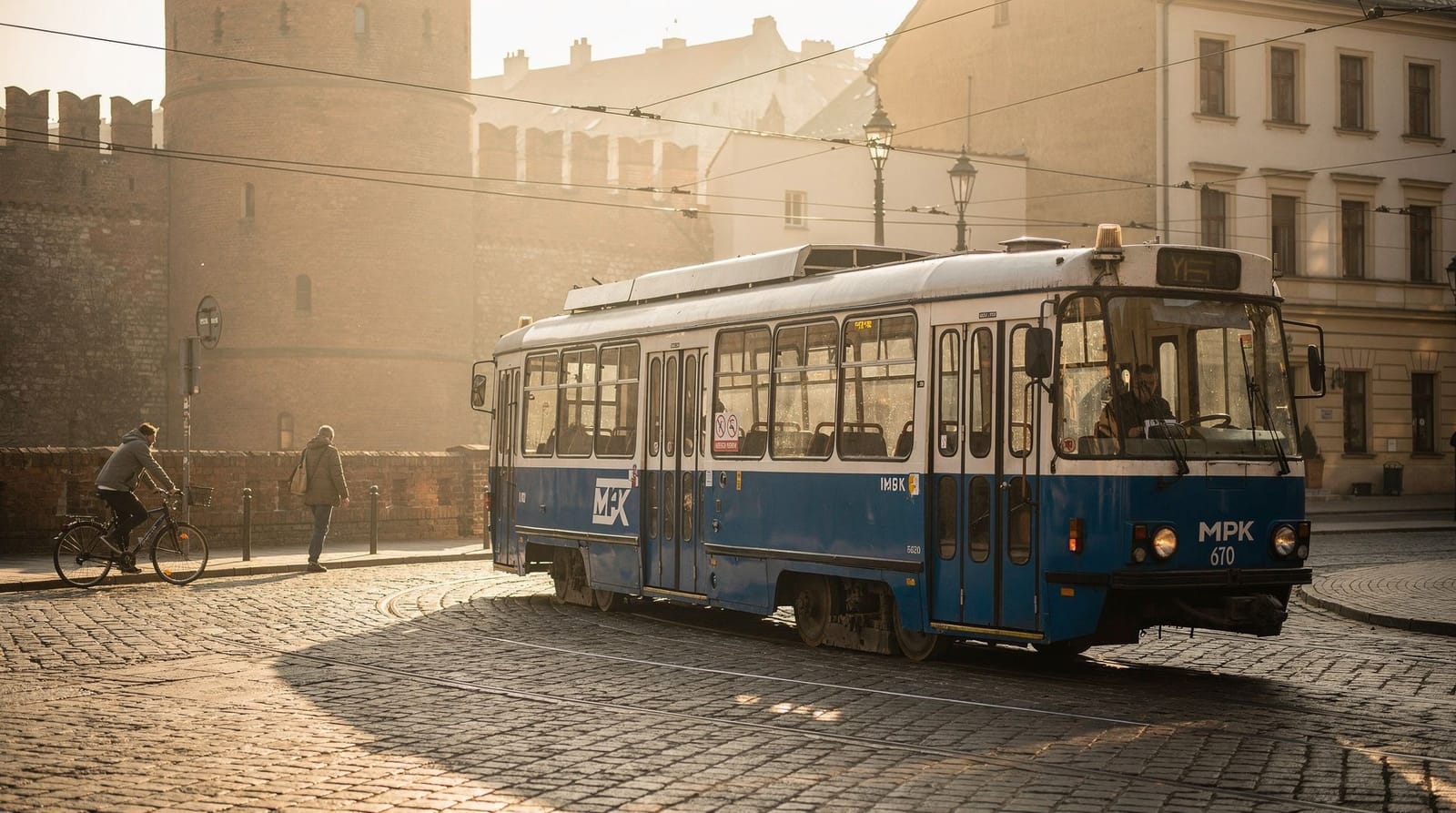
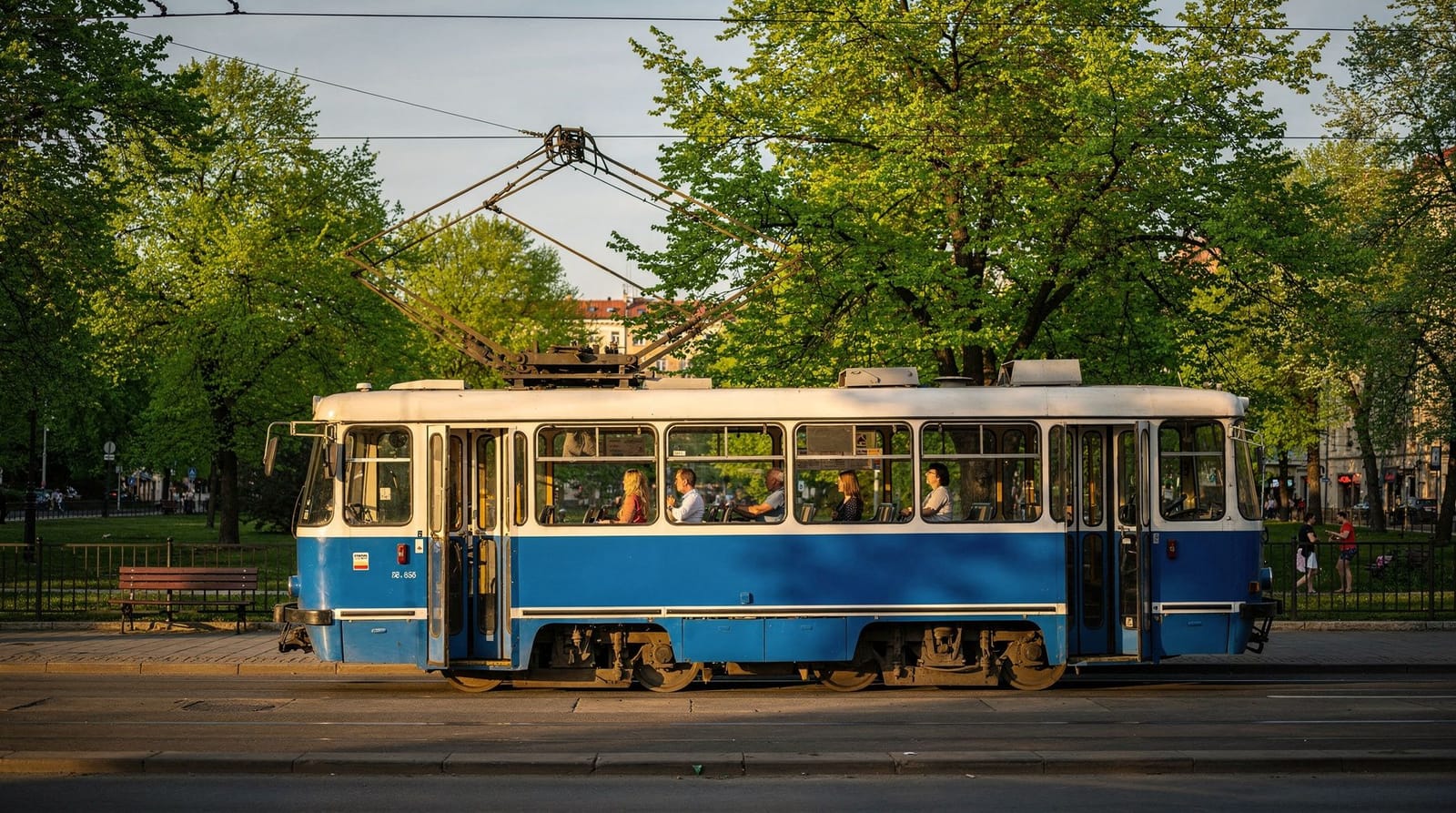
Transport: All three main districts (Old Town, Kazimierz, Podgórze) are within 1.5 km of each other. A single-ride tram ticket costs 6 PLN (≈€1.40). See the public transport guide for details.
Stag parties: Kraków is one of Europe’s most popular stag/hen destinations. Budget hotels near Rynek Główny and along ul. Grodzka see the heaviest impact on Friday and Saturday nights. Mid-range Kazimierz hotels and quieter Old Town side streets are less affected.
Wawel access: Only the Old Town, central Kazimierz, and Podgórze riverbank are within comfortable walking distance of Wawel. From all three, Wawel is 10–20 minutes on foot.
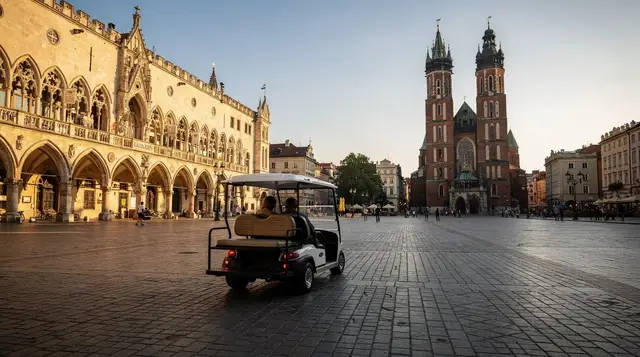
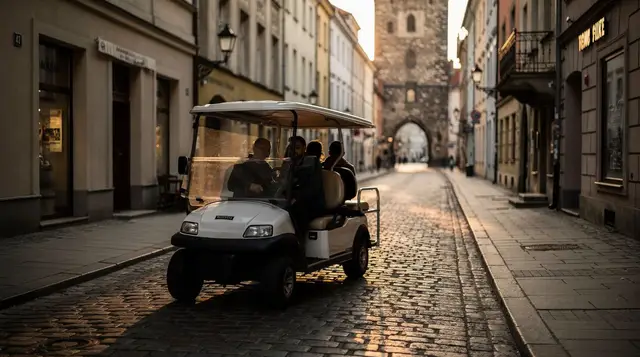
For a first-day city overview — especially useful for getting your bearings before committing to walking distances — a guided golf cart tour of 4 districts with audioguide is a relaxed way to see several districts without walking them all.
With the three main districts so close together, the exact street of a listing matters more than the district name. Check the map pin, read the most recent guest reviews for comments on night noise, and choose a rate with free cancellation so you can switch if the first night disappoints. You can then narrow the options through Booking.com listings in Kraków.
Neighbourhood comparison at a glance
| Area | Avg mid-range price | Distance to Rynek | Night noise | Best for |
|---|---|---|---|---|
| Old Town | 280–450 PLN/night | 5 min walk | High weekends | First-timers, convenience |
| Kazimierz | 200–320 PLN/night | 15 min walk | Moderate weekends | Food lovers, atmosphere |
| Podgórze | 160–280 PLN/night | 25 min walk/tram | Low | Budget, WWII history |
| Nowa Huta | 100–180 PLN/night | 35 min tram | Very low | Specialist interest |
For full budget breakdown across all accommodation categories, see the Kraków budget travel guide.
Frequently asked questions about where to stay in Kraków
Is the Old Town safe at night?
Generally yes. Kraków’s Old Town is well-lit, busy until midnight, and has a visible police presence. The main risks are standard urban ones: pickpocketing in crowded squares, overpriced unofficial taxis (use Bolt/Uber), and occasional drunk stag groups. See the Kraków safety guide for full detail.
Is Kazimierz far from the main sights?
No — 15 minutes on foot from the south edge of Kazimierz to Rynek Główny, and Wawel is actually closer to Kazimierz than to the north side of the Old Town. For a guided overview that covers both areas, an Old Town walking tour often includes Kazimierz streets.
Can I stay near Auschwitz instead of Kraków?
There are hotels in Oświęcim (the town adjacent to the Auschwitz Memorial), but there’s no reason to stay there unless your entire trip is Memorial-focused. Staying in Kraków and taking a full-day guided tour gives you better logistics and far more to do before and after the visit.
Which area has the best restaurants?
Kazimierz, without question. Ul. Józefa, ul. Szeroka, and the streets around Plac Nowy have the most consistently good and fairly priced restaurants in Kraków. The Old Town has excellent options too, but the closer to Rynek, the higher the tourist markup.
Are apartments or hotels better in Kraków?
For stays of three nights or more, Kazimierz and Podgórze apartments offer excellent value — full kitchens, more space, and neighbourhood feel. For one or two nights, a central hotel is simpler. The Old Town has very few apartments at reasonable prices.
Which neighbourhood is most accessible for mobility needs?
Podgórze and parts of Kazimierz have better paved surfaces than the Old Town’s cobblestones. Modern buildings in Podgórze (near the Schindler Factory) offer better lift and room access. The electric golf cart sightseeing tour navigates Old Town streets that are difficult on foot or in a wheelchair. See the full Kraków accessibility guide.
Where should families with young children stay?
Podgórze and central Kazimierz work best for prams and tired legs — flatter pavements and shorter blocks than the Old Town’s cobbles. The Old Town’s compact, car-free layout still suits families well despite the cobblestones, since walking distances between sights stay short. See the Kraków with kids guide for a fuller family planning breakdown.
Is it better to stay near the train station or in the historic centre?
The historic centre, without much debate. Kraków Główny station is only a 5–10 minute walk from the Old Town’s northern edge, so staying centrally doesn’t cost you convenience for arrivals or departures, and it puts you within walking distance of everything else described in this guide. Staying further out to save money near the station rarely pays off once you factor in daily transport time.
Extended neighbourhood character: what each area feels like
Old Town: the tourist experience
The Old Town experience varies dramatically by street and time of day. The Rynek Główny is peak tourist density at all hours in summer — horse-drawn carriages, café umbrellas, guided tour groups assembling at the Adam Mickiewicz statue, street musicians, and souvenir sellers. The square is genuinely beautiful and worth spending time on, but it reads as a performance of tourism as much as a genuine public space.
One street back — ul. Kanonicza, ul. Poselska, the courtyard of the Dominican church — and the atmosphere changes entirely. These are residential streets of Renaissance and Baroque houses, inhabited by Kraków academics, lawyers, and cultural figures alongside tourist accommodation. The contrast between Rynek Główny and ul. Kanonicza in the space of 200 metres is part of the Old Town’s character.
Kazimierz: the neighbourhood that changes you
Kazimierz operates on different energy than the Old Town. There are tour groups on ul. Szeroka in the morning, but by 6pm they’ve gone and the neighbourhood belongs to its residents, students, and visitors who’ve chosen to stay. Plac Nowy at 9pm in summer — the zapiekanki windows still open, people sitting on benches with beers from the off-licence, dogs, bicycles, conversations in Polish and English and French — is the most authentic urban scene in Kraków.
The neighbourhood has layers of time: the 15th-century synagogues and 16th-century cemetery; a 1990s revival of Jewish cultural life in the formerly empty buildings; and a 21st-century neighbourhood of design studios, artisan coffee shops, and excellent restaurants.
Podgórze: the neighbourhood in transition
Podgórze is where Kraków’s interesting urban future is being built. The MOCAK/Schindler Factory complex has seeded a cluster of cultural activity along ul. Lipowa. New restaurants and coffee shops around Rynek Podgórski cater to a young professional population. The riverbank development (partly enabled by the Bernatek Footbridge connecting Podgórze to Kazimierz) has made the south bank of the Vistula a genuine evening destination.
Staying in Podgórze puts you in Kraków’s next neighbourhood rather than its established ones. It’s slightly less convenient and slightly more interesting.
Nowa Huta: living history rather than a museum piece
Unlike the other three districts, Nowa Huta was never designed with tourists in mind, which is exactly its appeal for a certain kind of traveller. The monumental scale of the central plac (now Ronald Reagan Square) and the socialist-realist apartment blocks along Aleja Róż feel closer to a living history exhibit than a neighbourhood built for visitors. Staying here for a night is an unusual but genuine way to understand a side of Poland’s 20th century that the Old Town and Kazimierz don’t touch at all — just budget the tram time honestly rather than underestimating it.
Booking strategies and timing
Book 2–4 weeks ahead in shoulder season: April–May and September–October see high occupancy at the best-value hostels and mid-range hotels in Kazimierz. The most popular properties fill up. Booking a month ahead secures choice.
Book 6–8 weeks ahead for summer: July and August, particularly around the Jewish Culture Festival (late June/early July), are the hardest weeks to find good accommodation at fair prices. The festival week specifically sees even mid-range Kazimierz hotels filling 2 months out.
Last-minute in November–March: Genuinely the only period where last-minute booking gets you deals. Monday–Thursday arrivals in November/March can find 4-star Old Town hotels at 180–220 PLN/night.
For full budget guidance across accommodation categories, see the Kraków budget travel guide. For how accommodation location affects your day-to-day transport needs, see getting around Kraków.
Neighbourhood security and noise: what to expect
Old Town noise
The Old Town is one of Europe’s most active stag and hen destination zones. On Friday and Saturday nights between approximately 9pm and 3am, groups move between bars on the main streets — ul. Floriańska, ul. Szewska, ul. Gołębia, and around Rynek Główny. This is significant noise in accommodations directly on these routes.
How to mitigate: Ask for a courtyard-facing or rear-building room when booking. Read recent reviews specifically for noise complaints. Hotels on ul. Kanonicza (south of Rynek) and ul. Poselska experience significantly less stag-party traffic. For very light sleepers, Thursday/Sunday/Monday nights are substantially quieter.
Kazimierz weekend noise
The bars concentrated on ul. Estery and around Plac Nowy generate their own weekend noise. Singer café stays open until 4am; the outdoor zapiekanki windows on Plac Nowy operate around the clock. Accommodation directly on ul. Estery or facing Plac Nowy should be expected to be noisy on Friday and Saturday nights.
Kazimierz noise has a different character than Old Town noise — the crowd tends to be younger and more mixed rather than stag-party groups, but the volume is comparable on peak nights.
How to mitigate: Choose accommodation on ul. Józefa, ul. Szeroka, or the quieter streets south of Plac Nowy (ul. Rabina Meiselsa, ul. Miodowa).
Podgórze: the quietest option
Podgórze has no significant nightlife concentrated in one area. Weekend noise from the Rynek Podgórski area is minimal. For visitors who prioritise sleep and early-morning starts for day trips, Podgórze accommodation is the most restful option while remaining central.
Practical questions for booking
When booking any accommodation in Kraków, ask:
- “Is the room facing the street or a courtyard?” (courtyard = significantly quieter)
- “Does the hotel have 24-hour reception?” (useful for early departures or late arrivals)
- “Is there secure luggage storage for early arrivals before check-in?” (Kraków check-in is typically 3pm; morning arrivals are common)
- “What is the parking situation?” (if arriving by car — Old Town parking is nearly impossible; ask for the nearest paid car park)
For specific travel timing advice and how to choose your base for different durations, the how many days in Kraków guide and Kraków itinerary planning guide provide the structural context. For safety specifics by neighbourhood, the Kraków safety guide covers security across all districts.
Which neighbourhood for families with kids
Families weighing location tend to prioritise differently from solo travellers or couples: less nightlife noise, easier stroller routes, and proximity to kid-friendly sights matter more than bar scenes. The Old Town’s cobblestones are hard on strollers but its flat, car-free streets mean short walking distances between sights, which suits young children who tire quickly. Kazimierz has fewer dedicated kid attractions but excellent casual food for fussy eaters. Podgórze’s newer buildings and wider pavements are the easiest for prams, and it sits close to family-friendly day trips departure points. Whichever base you choose, the Kraków with kids guide and rainy-day activities guide help fill an itinerary around your accommodation.
Solo travellers and digital nomads
Kazimierz is the strongest fit for solo travellers: café culture suited to working alone, a genuine social scene in hostels and co-working-adjacent cafés, and enough foot traffic in the evening to feel safe walking back after dinner. Podgórze works well for longer stays where a quiet base with a real kitchen (via an apartment) matters more than nightlife proximity. The Old Town suits solo first-timers who want maximum convenience and don’t mind paying a premium for it — you’ll never need a taxi to reach a sight. For orientation on your first day alone in the city, the Kraków for first-timers guide and the solo female travel in Kraków diary both cover practical specifics beyond neighbourhood choice.
Top experiences
Bookable activities with verified prices and instant confirmation on GetYourGuide.