Is Kraków safe? Honest safety guide for visitors
Krakow: Old Town guided walking tour
Duration: 3h
Is Kraków safe for tourists?
Yes — Kraków is consistently among the safest large cities in Europe. Violent crime affecting tourists is extremely rare. The main risks are standard tourist-area issues: pickpocketing on crowded squares, taxi overcharging, and alcohol-related scams targeting groups. Solo women travellers report Kraków as safe; the Old Town and Kazimierz are well-lit and busy until late.
The honest safety picture
| Overall risk | Low — among the safest large cities in Europe for tourists |
| Main real risk | Taxi overcharging and bar bill scams, not violent crime |
| Emergency number | 112 (EU-wide, English-speaking operators) |
| Safe areas at night | Old Town, Kazimierz — busy and well-lit until late |
| Precaution level needed | Standard European city-centre awareness |
Kraków regularly appears in “safest European cities for tourists” rankings. Violent crime directed at tourists is rare. The Polish National Police data consistently shows Kraków’s city centre as low-crime. As an EU Schengen member, Poland benefits from coordinated EU law enforcement structures.
That said, every city with heavy tourism has specific patterns of non-violent exploitation that visitors should know about. In Kraków, those patterns are well-documented and entirely avoidable with a few pieces of information. This guide covers both the genuine risks and the honest dismissal of exaggerated ones.
For a complete first-timer’s orientation, the Kraków for first-timers guide includes this safety context alongside all other essential logistics.
General crime level
Kraków’s crime rates for violent offences (mugging, assault) are lower than London, Paris, Amsterdam, or Barcelona. The city centre is well-lit, has visible police presence on main streets and Rynek Główny, and benefits from CCTV coverage in the Old Town.
Petty theft is the main practical concern:
- Pickpocketing on crowded Rynek Główny, especially during events and summer peak season
- Bag snatching is rare but not unknown in very crowded summer situations
- Unattended items in cafés or on restaurant chairs
Standard precautions apply: money belt or interior pocket for cards/passport, bag worn in front in crowds, don’t leave phones on café tables unattended. These are the same precautions appropriate in any European city.
Taxi scams: the most common tourist problem
This is Kraków’s most documented tourist trap. Unofficial taxi drivers at Kraków Główny station and at the airport approach arriving visitors and charge wildly inflated fares.
Common scenario: You step out of arrivals. A man asks “taxi?” and offers a ride. You agree; the metre (if there is one) starts very fast. The 11 km airport-to-city journey arrives costing 150–250 PLN. The legitimate fare by Bolt is 35–55 PLN.
The fix:
- Use Bolt or Uber exclusively — price shown before you confirm, GPS tracking, rated driver
- If using a metered taxi, use only official taxis at marked ranks (blue-and-white taxi sign)
- At the train station: walk through the station concourse and use the marked Bolt/Uber pickup area
See the airport to city centre guide for full airport transport options, and the getting around Kraków guide for all city transport safety tips.
Alcohol scams targeting groups
Kraków has an enormous stag/hen party market. Several specific scams target groups under the influence:
Bar bill inflation: A member of the group is approached by a friendly stranger who joins them in a bar and orders rounds of unspecified “Polish vodka shots.” The bill at the end includes charges for premium spirits nobody specified, at prices not shown on the menu.
How to avoid: In any bar you didn’t research in advance, ask to see the drinks menu before ordering. Verify prices of anything not on the standard menu. Reputable Kazimierz bars (Alchemia, Mleczarnia, Singer, Drukarnia) are straightforward — the issue is more with tourist-trap bars on ul. Sławkowska and streets near Rynek that specifically target groups.
Club entry rackets: Advance entry to clubs through “promoters” who approach on the street sometimes involves undisclosed extra charges at the door.
Drinks spiking: Reported occasionally but not specifically elevated in Kraków versus other European nightlife destinations. Usual precautions: don’t leave drinks unattended, accept drinks only from bar staff.
The street “Auschwitz tour” sellers
Men and women with clipboards and lanyards approach visitors on Rynek Główny and ul. Grodzka offering “Auschwitz tours” at apparently good prices. These are not licensed Memorial guides. Some are simply price-gouging intermediaries; some deliver experiences that bear no relation to what’s promised.
What to do: Book Auschwitz-Birkenau through the official Memorial website (visit.auschwitz.org) or a licensed operator. Walk past anyone soliciting on the street. There is no legitimate reason to book a major historical site from a clipboard.
The Old Town guided walking tour briefing point (given at tour start) often covers this — professional guides flag it for their groups, illustrating how common the issue is.
If you would rather settle the question in advance, a booking made online before you leave home removes the street offer altogether. A small-group guided visit to Auschwitz-Birkenau is one way to do it with a licensed guide, and the Auschwitz from Kraków guide explains the options. For the etiquette side, see visiting Auschwitz with respect, and for the full picture of fake offers, the unofficial Auschwitz tours warning is worth a read.
Fake amber and souvenir fraud
Kraków’s Sukiennice (Cloth Hall) and tourist shops along the Royal Road sell significant quantities of pressed amber (heated and compressed pieces) or plastic “amber” marketed as genuine Baltic amber.
Genuine Baltic amber is insect-containing, warm-tone, and has specific physical properties (floats in saturated saltwater, doesn’t scratch easily with a fingernail). It should have a certificate of authenticity.
If amber jewellery matters to you, buy from a specialist jeweller with a fixed shop address rather than a market stall. Shops on ul. Sławkowska and ul. Floriańska with proper certifications have reputations to maintain. See the budget travel guide for the full tourist trap list by category.
Solo female traveller safety
Kraków is generally considered safe for solo female travellers by most published travel safety indices and traveller reports:
- The Old Town and Kazimierz are busy until midnight and feel safe
- Locals intervene in harassment situations more readily than in some western European tourist zones (anecdotally reported)
- The Planty ring park is safe during daylight and early evening; late-night walks through isolated Planty sections warrant the same common-sense calculation as any European park
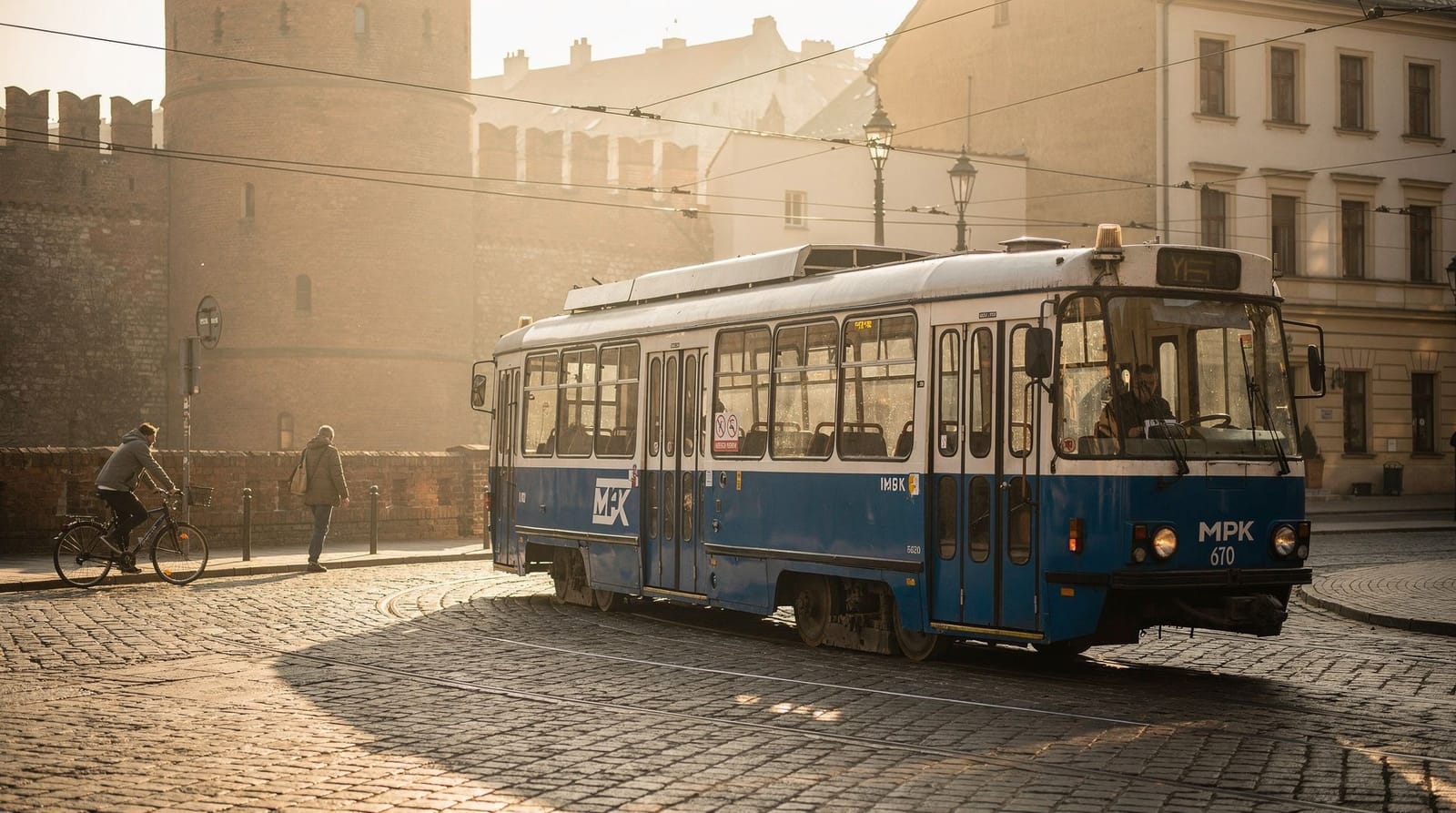
- MPK trams are safe; the main risk is bags in crowded carriages
The nightlife district in Kazimierz (ul. Estery, Plac Nowy area) is active and can be loud on weekends but not notably threatening to solo visitors.
As in any city: trust your read on a situation, have your phone charged, and know the Bolt app works 24 hours. See where to stay in Kraków for accommodation recommendations that factor in noise and security.
LGBTQ+ safety
Poland has faced media attention for political debates about LGBTQ+ rights at the national level. Kraków as a city is more liberal than many smaller Polish towns, and the Kazimierz neighbourhood in particular has a visible LGBTQ+-friendly bar and café culture.
Public displays of affection may attract attention outside liberal urban contexts — the assessment most experienced travellers give is “be aware, not afraid.” The international student population and cultural diversity of the Old Town and Kazimierz make both areas more relaxed in practice than national political narratives might suggest.
Healthcare and emergencies
Emergency number: 112 (EU-wide, English-speaking operators available)
- Police: 997
- Ambulance: 999
- Fire: 998
EKUZ / EHIC card (EU nationals): Valid for public healthcare in Poland. Private clinics (often faster and English-speaking) are available throughout the city centre; expect 150–300 PLN (≈€36–71) for a consultation.
Pharmacies (apteka): Green cross sign; one 24-hour pharmacy is always designated per district. The one at ul. Grottgera 22 has reliable 24-hour service.
LUX MED and Medicover have private English-language clinics in Kraków central, standard consultation fee around 250–350 PLN.
European visitors with EHIC cards: treatment at Polish public hospitals (Szpital Uniwersytecki, ul. Kopernika 36) is covered. Carry your card.
Water and food safety
Tap water in Kraków is safe to drink — it meets EU standards. Polish people often prefer bottled water for taste; the tap alternative is genuinely safe.
Food safety in restaurants is not an elevated concern. The main food-adjacent risk is street food quantity (zapiekanki are large and cheap; pace yourself).
Weather and environmental safety
Smog: Kraków has historically had one of Poland’s worst air quality records due to domestic coal burning and geographic situation in a basin. The city has made significant progress since 2019 through coal heating bans. Air quality remains below EU standards on cold winter days. If you have respiratory conditions, monitor AQI via the GIOS monitoring app, especially in January–February.
Mountain weather: If hiking in the Tatras near Zakopane, mountain weather can change rapidly. Always check TOPR (Tatra rescue) trail conditions and carry waterproofs and warm layers regardless of summer forecasts. The Kraków packing guide covers this.
Frequently asked questions about safety in Kraków
Is Kraków safe at night?
Yes, for the standard tourist areas. Rynek Główny and ul. Floriańska are busy and well-lit until after midnight. Kazimierz bar streets (ul. Estery, Plac Nowy) are active and safe. The Planty park ring is reasonable in early evening; isolated sections late at night warrant the same caution as any urban park. Bolt works 24 hours if you’d rather not walk.
Is Kraków safe for solo travellers?
Yes. Solo male and female travellers consistently rate Kraków as safe. The specific risks (taxi overcharging, bar bill inflation) are avoidable with the information in this guide. Standard travel-smart habits — don’t advertise expensive electronics, know your route home before leaving the bar — apply here as everywhere.
Are there areas of Kraków to avoid?
No neighbourhood that visitors would typically access warrants “avoid” status. Nowa Huta has a rougher reputation among some locals, but tourists visiting in daylight for the communist architecture have no reported issues.
Is the train from the airport safe?
Yes, entirely. The Kraków airport rail link is a normal modern commuter service. The main risk on public transport is standard pickpocketing on crowded carriages. See the getting around Kraków guide for transport security tips.
Is Kraków safe with respect to the Ukraine situation?
Poland borders Ukraine and has played a major role in refugee reception since 2022. There is no security threat to visitors from this situation. Kraków is 350 km from the Ukrainian border. The city is functioning normally, tourist infrastructure is intact, and Polish security agencies have not issued elevated threat alerts relating to civilian tourism.
Is it safe to walk between Kazimierz and Podgórze at night?
Yes. The route crosses the Bernatek footbridge or Piłsudski bridge over the Vistula, both well-lit and used constantly by locals in the evening. The riverbank paths on either side are busy with walkers, runners, and cyclists well into the evening in summer. As with any riverside path, avoid poorly lit sections if walking very late alone, and use Bolt for the return leg if you’d rather not walk.
Detailed scam scenarios and how to handle them
The “Auschwitz discount” approach
Scenario: A well-dressed person on Rynek Główny approaches and says they work for a tour company and happen to have a discount for the last two seats on an Auschwitz tour tomorrow. Price is suspiciously low; payment required now in cash.
Reality: There are no legitimate last-minute Auschwitz tour discounts sold on the street. The tour may not exist; the money vanishes. Auschwitz-Birkenau guides must be licensed by the Memorial; unlicensed operators cannot legally guide at the site.
What to do: Decline, walk away. Book through the Memorial’s official website (visit.auschwitz.org) or via a licensed operator.
The “friendly local” drinks invitation
Scenario: A friendly person (often a young man) strikes up a conversation, seems genuinely interested, and suggests “a traditional Polish bar I know — much cheaper than tourists places.” The bar turns out to charge 80–120 PLN for a single shot of “traditional vodka”; the bill at the end is enormous.
Reality: This pattern is well-documented in tourist areas of Kazimierz and the Old Town. The “local” receives a commission.
What to do: Decline invitations to bars you don’t know, especially from strangers who initiate contact. If you end up in a bar and prices aren’t on a posted menu, ask before ordering. Reputable Kazimierz bars always have visible price lists.
The fake charity collection
Scenario: Persons with official-looking vests and clipboards ask for donations for a Polish children’s charity, showing photos and paperwork.
Reality: Fake charity collections targeting tourists are documented throughout Polish tourist cities. Polish charities operate through established channels; legitimate street collection requires specific permits with visible badge numbers.
What to do: Decline. If genuinely moved to give, donate via established charity websites rather than street collections.
ATM skimming
Kraków’s tourist areas have occasional ATM skimming devices placed on machine card slots. Signs:
- Card slot feels loose or has an unusual attachment
- The keyboard overlay feels spongy or higher than normal
- Tiny camera mounted above the keyboard
What to do: Prefer ATMs inside bank branches during opening hours. Cover your PIN with your other hand. Use contactless payment where possible to reduce ATM exposure.
Responsible tourism and respectful behaviour
At Auschwitz-Birkenau
The Auschwitz-Birkenau Memorial and Museum has explicit guidelines for visitor behaviour:
- Photography is permitted in most areas; selfies at or near exhibits directly related to victims are disrespectful and widely condemned
- Speaking at normal volume throughout; the Memorial asks for respectful quiet
- No food or drink consumption in the main site areas
- Booking through legitimate channels and attending with the mindset of a witness, not a tourist
In Kazimierz’s active synagogues
The Remuh Synagogue is an active place of worship, not only a tourist site. When Friday evening services or Shabbat services are in progress, tourist access to the prayer hall is not appropriate. Men covering their heads (a kippah is available at the entrance) is required. Photography inside during services is not permitted.
At Wawel during state events
Wawel occasionally hosts state funerals and national ceremonies (major Polish figures are interred in the Cathedral’s Royal Crypts). During such events, access to parts of the complex is restricted. Check the castle website before visiting if a national event is scheduled.
Safety for specific health situations
Mobility limitations: Kraków’s cobblestones and historic buildings create specific challenges. See the full Kraków accessibility guide for site-by-site assessment.
Medication: All standard European medications are available at Kraków pharmacies (apteka). Prescriptions from EU countries are generally honoured; US/UK prescriptions may require a consultation with a local doctor to transfer. LUX MED private clinics (ul. Boznańskiej and other locations) provide English-language consultations and prescription services.
Dietary requirements: Kraków’s food scene has become significantly more accommodating for dietary needs. Kazimierz has vegetarian and vegan restaurants (Bar Vega, Glonojad); gluten-free options are increasingly available. Muslim visitors should note that halal-certified restaurants are available but limited in the historic centre; ask specifically at each restaurant.
Allergies: Menu labelling for allergens (the EU’s 14 major allergens) is legally required in Polish restaurants since 2014. Dishes containing nuts, gluten, shellfish, etc. should be labelled; ask staff to confirm if in doubt.
For any health situation requiring urgent assistance, the emergency number is 112 (English operators available), and the city’s central hospital is Szpital Uniwersytecki on ul. Kopernika.
Safety planning integration
Safety awareness is most useful when it’s built into your practical planning rather than treated as a separate concern. A few integrations:
When booking accommodation: Read recent reviews specifically for mentions of noise issues, neighbourhood concerns, or security. The where to stay in Kraków guide notes noise patterns by area. For Old Town accommodation, courtyard-facing rooms significantly reduce both noise and the “performance” of tourist-area street activity.
When planning transport: The getting around Kraków guide covers the taxi scam in detail with specific avoidance instructions. Download Bolt before arriving and save yourself the single most common negative experience in Kraków. The airport to city centre guide covers the airport-specific version of the same problem.
When managing money: The Kraków money and currency guide covers DCC fraud, Euronet ATM avoidance, and kantor selection — the three main financial scam vectors.
When planning meals: The Kraków budget travel guide names the specific Rynek restaurants pattern honestly. Eating two streets from Rynek is the single most reliable way to avoid tourist-trap overcharging on food.
Emergency contacts and resources
Polish emergency services:
- 112 — universal EU emergency number (English available)
- 997 — Police
- 999 — Ambulance
- 998 — Fire service
- 601 100 300 — Mountain rescue (TOPR) — save this if hiking in the Tatras near Zakopane
English-language medical care in Kraków:
- LUX MED: ul. Boznańskiej 11 and other locations; private clinic, English-speaking GPs; consultation approximately 250–300 PLN
- Medicover: ul. Armii Krajowej 11; similar private clinic network
- CM Damian: ul. Radziwiłłowska 27; 24-hour outpatient care available
Police in Kraków:
- Main police station: ul. Sienkiewicza 29 (city centre)
- Tourist assistance is available in English at the main station
- For property theft, you need a police report (protokół) for insurance claims; police stations provide these
Consulates and embassies: No major embassies are based in Kraków; most are in Warsaw. In an emergency requiring consular assistance, contact your Warsaw embassy directly (phone numbers listed on your government’s official consular affairs website).
For first-time visitors who want a trusted introduction to the city, an Old Town guided walking tour with an established operator also provides informal local insight into where to go and what to avoid.
Scam quick-reference by category
Kraków’s genuine safety issues are almost entirely financial rather than physical, and each has a dedicated deep-dive guide if you want the full detail:
| Category | Main risk | Full guide |
|---|---|---|
| Transport | Unofficial taxi overcharging at station/airport | Kraków taxi scams to avoid |
| General scams | Fake charity, street tour sellers, friendly-local drink invites | Kraków scams guide |
| Tourist traps | Overpriced set menus, staged “traditional” venues | Kraków tourist traps to avoid |
| Souvenirs | Pressed or plastic “amber” sold as genuine | Fake amber souvenirs guide |
| Dining | Rynek Główny restaurant overpricing | Avoiding Rynek restaurant overpricing |
None of these amount to genuine danger — they’re all avoidable overcharging, and every one is easy to sidestep once you know the pattern.
Turning safety awareness into a calmer trip
Most of what makes a trip feel safe happens before you arrive. A few habits cover nearly everything in this guide, and each links to a deeper page when you want the detail.
Choose your base with your own rhythm in mind. Light sleepers and late-night walkers have different needs, and the Old Town versus Kazimierz comparison helps you pick the side of the centre that suits you. Both are lively in the evening, which is part of why they feel comfortable.
Know your first hour. Arrival is when visitors are most tired and most exposed to offers they didn’t plan for. The airport to city centre guide and the public transport guide let you decide on your route before you land, so no one at the exit has to decide it for you.
Walk the centre by day first. An orientation stroll along the Royal Route or around Rynek Główny gives you a mental map. Once you know where the main streets, the Planty park and the bridges sit, evening walks feel familiar rather than uncertain.
Pace your evenings. If nightlife is on your list, the Kraków nightlife guide and the Kazimierz nightlife guide describe the areas worth heading for. The pub crawl guide is useful for groups who want to know what a reputable organised night looks like before they sign up.
Travelling with children or on your own. Families will find practical reassurance in the Kraków with kids guide, and solo travellers can read first-hand impressions in the solo female travel diary. Neither changes the basic message: the city is welcoming, and the usual city-centre habits are enough.
Read the personal accounts too. The first-time tips diary shows how ordinary visitors handled the same situations described above, and the hidden gems piece points to quieter corners where the crowds, and therefore the pickpockets, are thinner.
Keep the big picture in view. Safety questions often sit alongside planning questions such as timing and length of stay. The best time to visit guide and the how many days guide help you build a trip with enough slack that you never feel rushed into a bad decision. Rushing, more than anything else, is what makes people accept the first taxi or the first tempting offer.
If something does go wrong. Stay calm, use the emergency contacts above, and keep any receipts or messages. A lost card, an overcharged bill or a stolen phone is an irritation, not a disaster, and the city’s services deal with these cases every day.
Top experiences
Bookable activities with verified prices and instant confirmation on GetYourGuide.