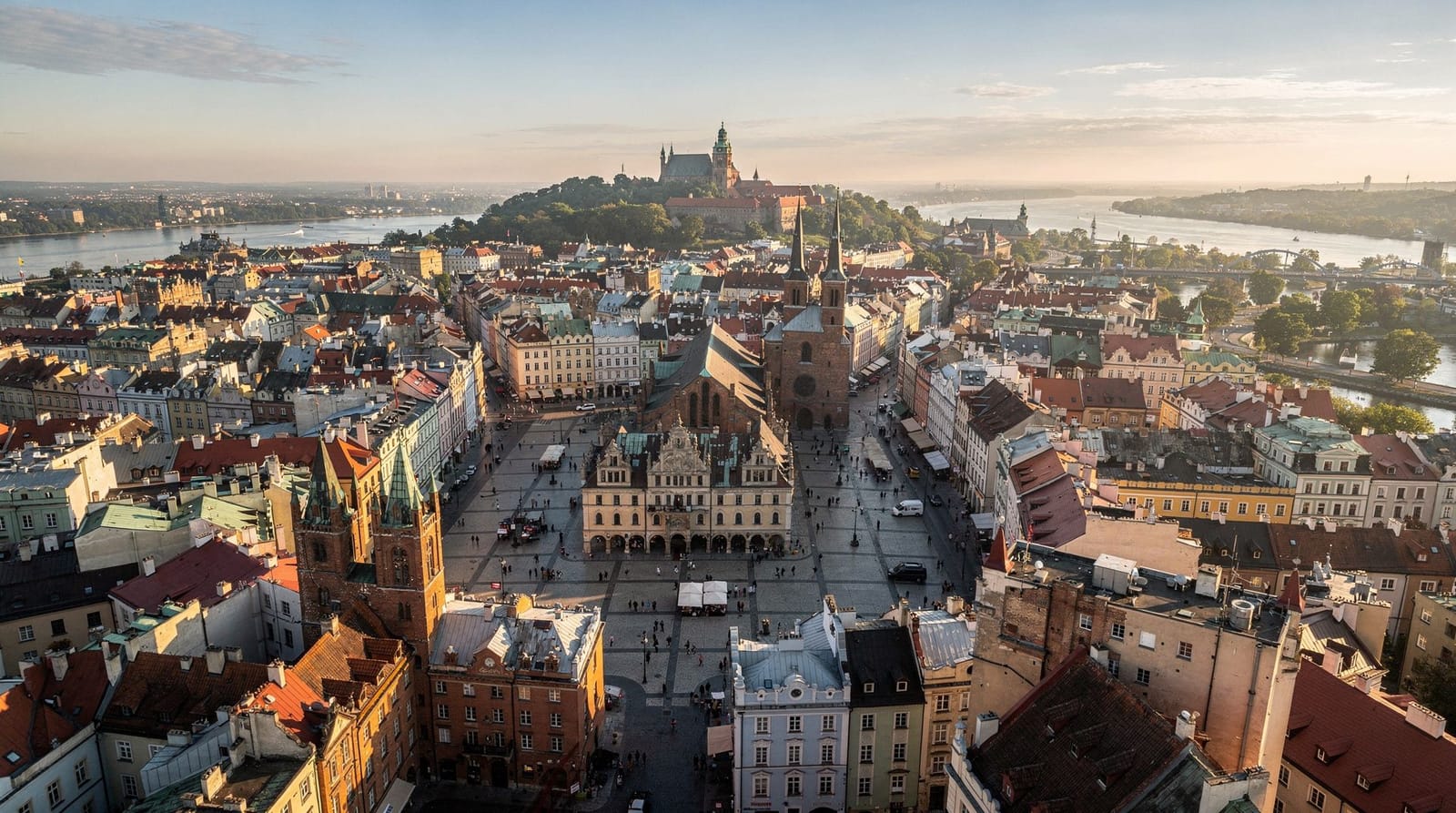
Kraków accessibility guide: visiting with mobility needs
Krakow: city sightseeing tour by electric golf cart
Duration: 1.5h
Is Kraków accessible for wheelchair users and visitors with mobility needs?
Kraków is partially accessible. The city has made real improvements, but the historic cobblestone core remains challenging for wheelchairs and pushchairs. Key sites like Wawel, Rynek Underground, and Wieliczka have significant accessibility limitations. Accessible transport exists on main tram lines. Planning ahead and knowing which sites have genuine adapted access prevents frustrating surprises.
Planning an accessible visit to Kraków takes more advance work than most Western European cities, but it is genuinely possible to build a full, satisfying trip around wheelchairs, walking frames, or limited stamina — provided you know which sites deliver and which ones don’t. This guide is built site by site, from the cobblestones of the Old Town to the 380 steps at Wieliczka, so you can plan around the real barriers rather than discover them on arrival.
| Biggest barrier | Old Town cobblestones (kocie łby) |
| Best-adapted sites | MOCAK, Schindler Factory Museum, Rynek Underground |
| Hardest sites | Wieliczka Tourist Route (380 steps), Dragon’s Den (135 steps) |
| Accessible transport | Modern low-floor trams on lines 4, 6, 8, 22; adapted taxi via Radio Taxi 919 |
| Advance planning needed | Yes — email Auschwitz and call Wieliczka ahead of your visit |
The honest accessibility picture
Kraków takes genuine effort on accessibility — more than many Central European historic cities — but the physical reality of a medieval stone-built city is what it is. The UNESCO-listed Old Town was not designed for wheelchairs; many of its most significant spaces were built on uneven limestone, down irregular stairs, and through doorways sized for 14th-century Poles.
This guide gives you an honest assessment rather than blanket reassurance. Some sites are genuinely accessible with modern adaptations. Others have meaningful barriers. Knowing the difference lets you plan a realistic visit.
For a broader planning overview, the Kraków for first-timers guide covers all essential logistics, and the getting around Kraków guide covers transport options.
The cobblestone problem
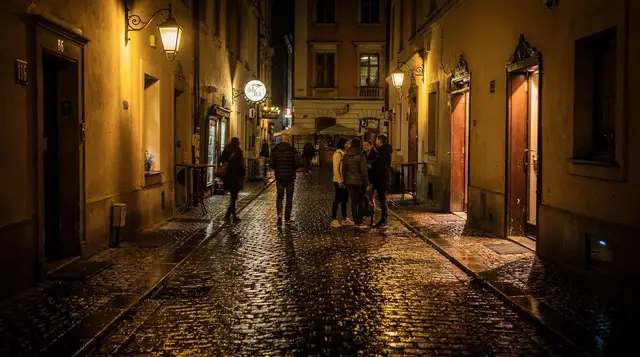
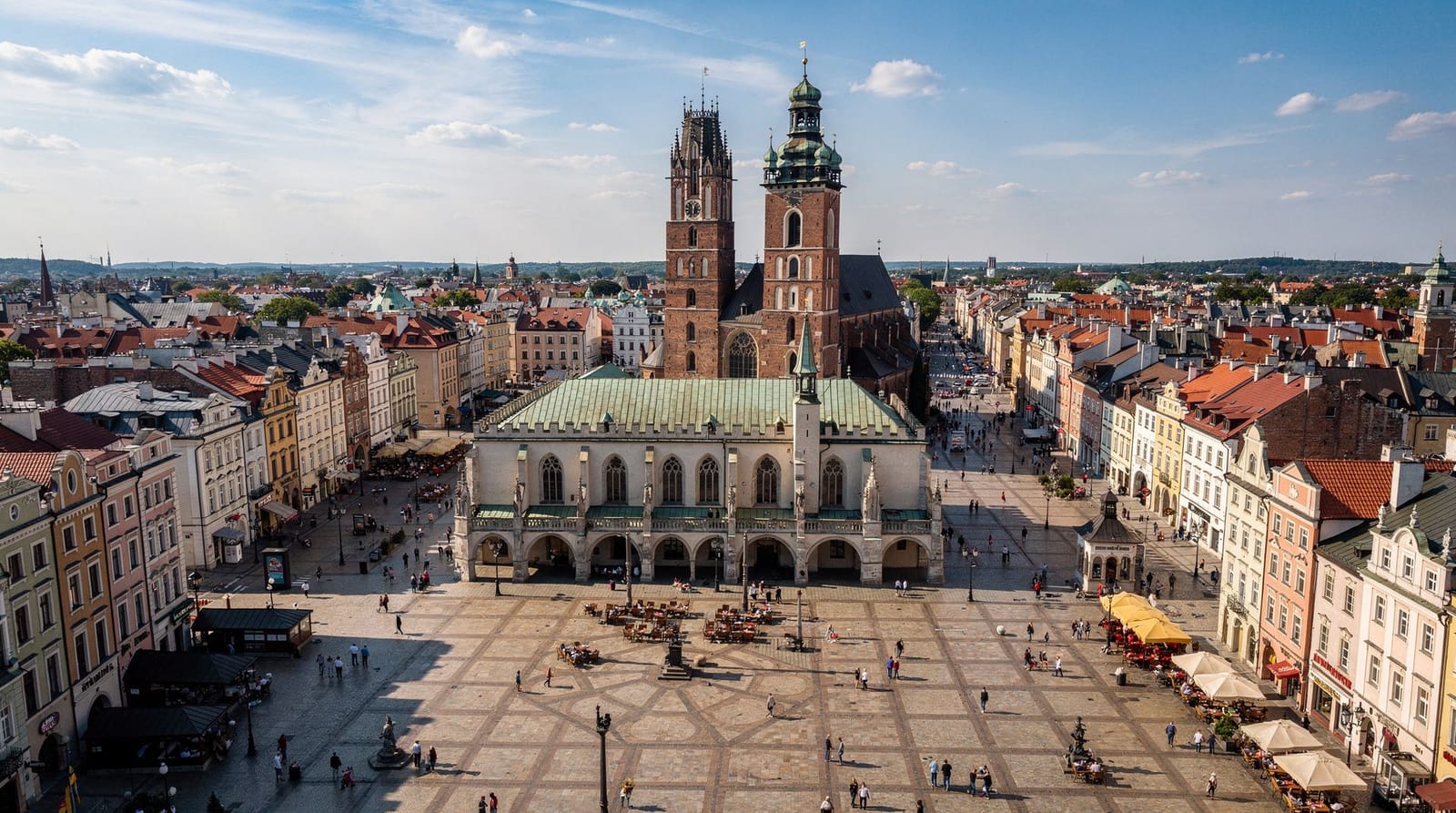
Kraków’s historic centre is surfaced primarily with cobblestones (kocie łby — literally “cat heads”) — uneven stone sets that create significant challenges for:
- Manual and powered wheelchairs
- Walking frames and crutches
- Pushchairs and prams
- Anyone with limited ankle stability or balance
The worst surfaces are on Rynek Główny itself, ul. Grodzka (central Royal Road), ul. Kanonicza, and the approaches to Wawel. Some streets have been repaved with smoother cut stone alongside the historic cobbles — these smoother margins are usable for wheelchairs, though narrow.
What helps: Powered wheelchairs handle cobblestones better than manual ones. Thick-wheeled pushchairs (mountain-buggy style) manage significantly better than city prams. Avoiding the most heavily cobbled routes when possible helps.
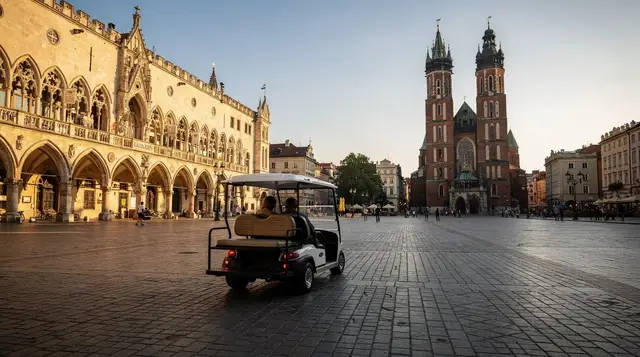
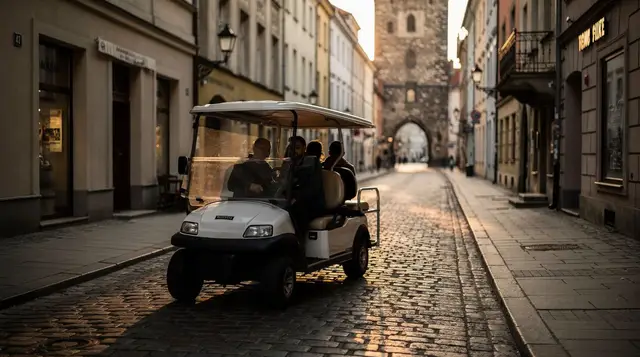
Alternative: The electric golf cart sightseeing tour navigates Old Town streets that are difficult to walk on surfaces that aren’t practical for wheelchairs — a genuine alternative for covering the Old Town with commentary.
Public transport accessibility
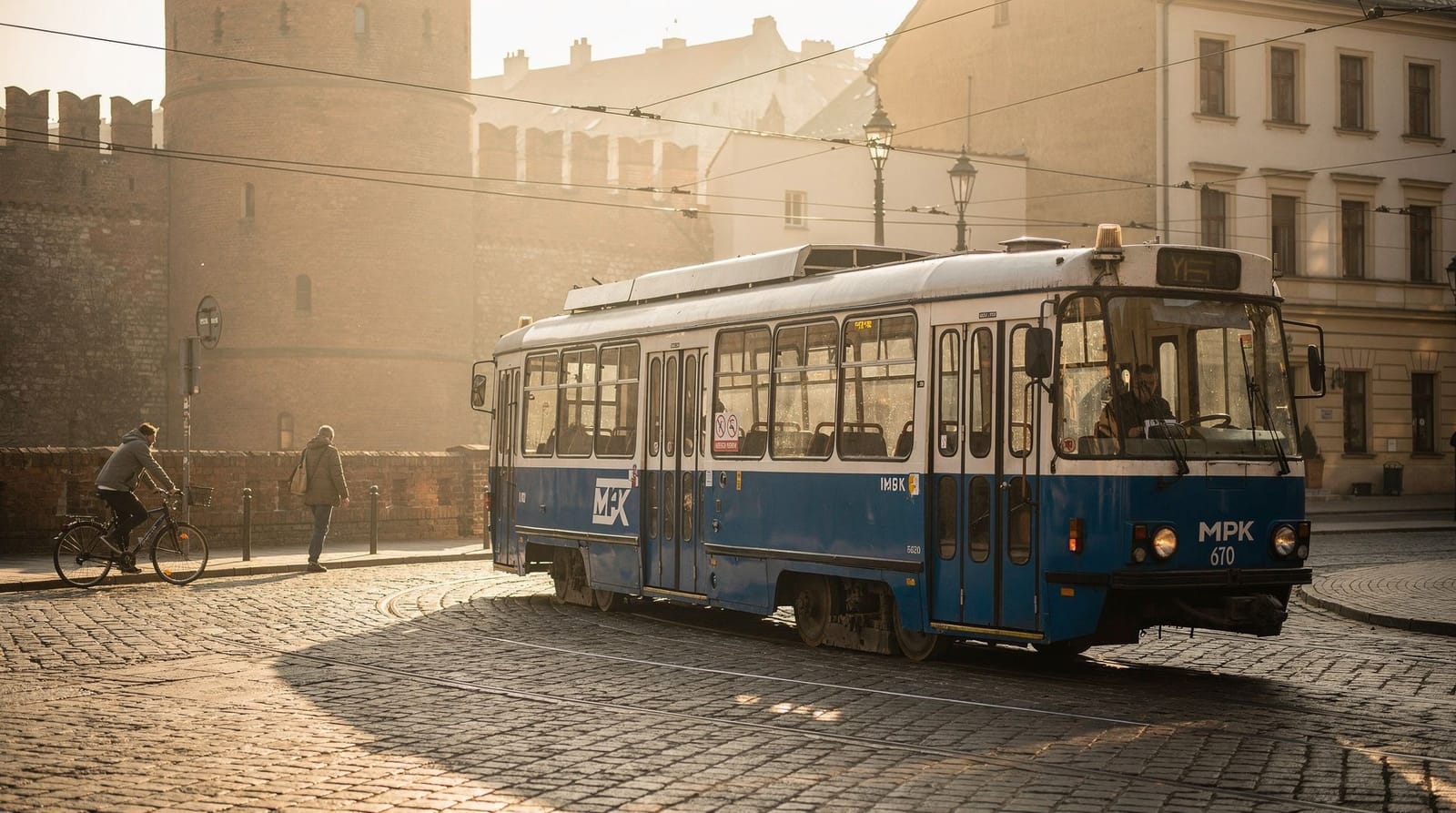
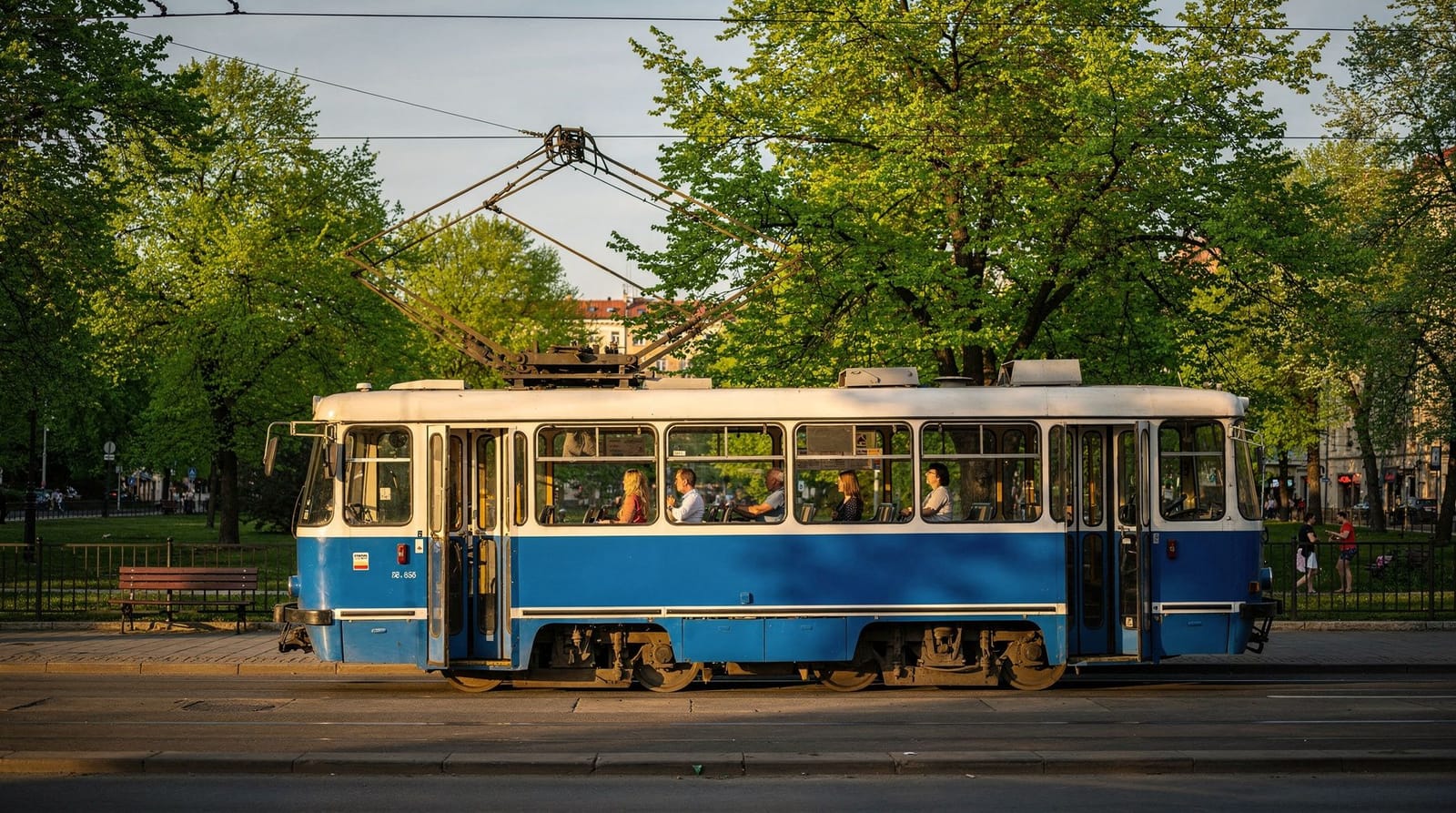
Trams: Modern low-floor trams (Hyundai Rotem, Newag Inspiro models) have:
- Wheelchair ramp or kneeling function
- Designated wheelchair spaces
- Priority seating near doors
Older high-floor trams (still in partial service) have steps and are not accessible. Main tourist lines (4, 22 to Nowa Huta; 6 and 8 through the city centre) use modern low-floor vehicles most of the time, but older stock does appear. For full MPK details, see the Kraków public transport guide.
Buses: Modern MPK buses are generally low-floor with kneeling function. More reliable than trams for accessibility.
Taxis and ride-hailing: Bolt and Uber standard vehicles are not adapted; request “comfort” or “van” categories for more space. For a fully adapted vehicle with wheelchair ramp, contact Radio Taxi 919 in advance.
Sightseeing buses and vehicle tours: Accessibility varies by operator and vehicle. Confirm accessible boarding before purchasing. The guided golf cart tour of 4 districts with audioguide operator can confirm current vehicle specifications.
Rynek Główny and Old Town
Rynek Główny: The main square surface is uneven cobblestone. Wider paths along the perimeter near buildings are marginally smoother. The Sukiennice (Cloth Hall) interior arcade has a stone floor; entry through arched doorways is step-free on the long sides. The Cloth Hall Gallery upstairs has elevator access (check current operation on arrival).
St. Mary’s Basilica (Kościół Mariacki): Step-free entry is available through the side entrance on Plac Mariacki. The interior is accessible, though pews narrow the usable width. The wooden altarpiece by Veit Stoss is visible from the nave without stairs.
Barbican and Floriańska Gate: The Barbican exterior is accessible; the interior has uneven surfaces. The Floriańska Gate tower requires stairs and is not accessible for wheelchairs.
Rynek Underground Museum: The museum is largely underground and is accessed via lift from the surface level of Rynek Główny. Lift dimensions accommodate most standard wheelchairs. The underground galleries have smooth floors. This is one of the better-adapted Old Town sites.
Wawel Castle and Cathedral
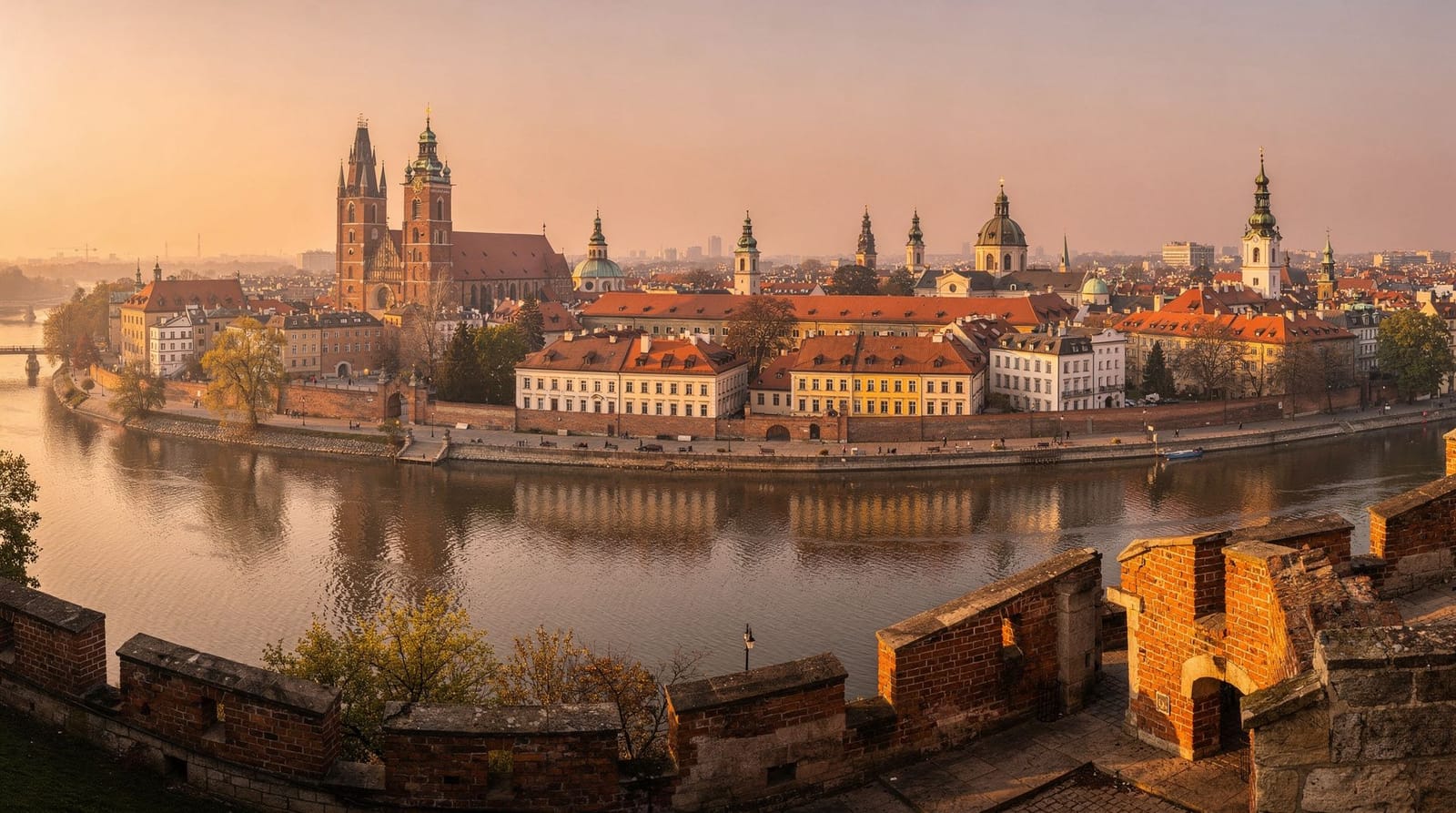
Getting up the hill: Wawel Hill can be reached via a sloping access road from the west rather than the stepped approach from ul. Grodzka. Signposted “Wjazd” from the Kanonicza side. The ramp is gradual enough for most wheelchairs with assistance.
State Rooms: Partially accessible. Several rooms have accessible routes; others require stairs. The castle complex website (wawel.krakow.pl) notes which exhibition circuits are accessible — check before visiting.
Wawel Cathedral: Entry via the main door is accessible (step-free with assistance at threshold). The interior has significant height variations and chapels with steps; the main nave is accessible.
Dragon’s Den: 135 steps down and back up. Not accessible for wheelchairs or those with significant mobility limitations.
Kazimierz
The main Kazimierz streets (ul. Szeroka, ul. Józefa, the area around Plac Nowy) have a mix of smoother paving and older cobblestone. Generally better than the Old Town core.
Old Synagogue Museum: Step-free access via main entrance; ground floor accessible. Check current accessibility notices at muzeumkrakowa.pl.
Galicia Jewish Museum: Ground floor entirely accessible; smooth floors, wide doorways.
Remuh Synagogue and Cemetery: Entry via courtyard; some cobblestone. The prayer hall itself is accessible. The historic Remuh Cemetery has uneven ground between graves.
Podgórze and MOCAK
Schindler Factory Museum (Podgórze): Modern museum with full wheelchair access. Ramps, lifts, and level thresholds throughout. One of the best-adapted major cultural sites in Kraków.
MOCAK (Museum of Contemporary Art): Modern building, fully accessible. Lift access to all floors; accessible toilets on each floor.
Wieliczka Salt Mine
This requires direct honesty: Wieliczka Salt Mine is not accessible for visitors with significant mobility limitations.
The Tourist Route involves descending approximately 380 steps (135 m underground), walking 3.5 km of mine passages, and returning via lift. While there is an elevator for the return journey, the descent and walk through the mine are not wheelchair-accessible. Some sections have low ceilings, uneven surfaces, and narrow passages.
The Mine website (kopalnia.pl) notes that visitors with mobility difficulties should consult the mine in advance about what partial access may be available. There is no standard accessible route for wheelchair users.
Auschwitz-Birkenau Memorial
The Memorial has made significant accessibility improvements in recent years.
Auschwitz I (main camp):
- Gravel and paved paths between barracks; the main routes are accessible
- Some barracks have internal stairs; accessible versions of key exhibitions have been created on ground floors
- Accessible toilets available
- The film in the cinema block is on the ground floor
Auschwitz II-Birkenau:
- The site is large (170 hectares) and partially accessible
- The main viewing platform at the gate (from the iconic Gateway building) is accessible
- The main monument area and memorial area are reachable via accessible paths
- Some areas between ruins are on uneven or soft ground
The Auschwitz-Birkenau destination guide and the Memorial’s website (visit.auschwitz.org) have detailed accessibility sections; email reservation.office@auschwitz.org to arrange adapted visit support.
Nowa Huta accessibility
Nowa Huta’s planned socialist-realist streets are actually among the more accessible in Kraków — wide pavements, gentle gradients, and modern surfaces in the central areas. The district was designed for large-scale pedestrian movement and doesn’t have the cobblestone problem of the historic core.
Tram accessibility to Nowa Huta: same modern low-floor caveats as above (tram 4, 22).
Accessible accommodation
Hotels and apartments in Kraków vary widely in accessibility:
Better accessible options:
- Modern hotels outside the immediately historic core (built or fully renovated post-2000) generally have lifts, wide doorways, roll-in showers
- Hotel Forum (ul. Konopnickiej 28, Podgórze): Modern renovation with accessible rooms; on the Vistula riverbank, away from worst cobblestones
- Sheraton Grand Kraków (ul. Powiśle 7): Full accessible facilities, roll-in showers on request
What to ask when booking:
- Does the hotel have a lift to all floors?
- Are accessible rooms on low floors with roll-in shower?
- What is the path from reception to accessible room?
- Is parking available adjacent to the entrance?
For full neighbourhood comparisons including accessibility, see where to stay in Kraków.
Wheelchair and mobility equipment rental
There is no large-scale wheelchair rental network aimed at tourists in Kraków, unlike some Western European capitals. Options include:
- Hotel loan chairs: Some larger hotels (particularly the Sheraton Grand and Hotel Forum, see above) keep a manual wheelchair on site for guest use — ask when booking, not on arrival.
- Medical supply shops: Pharmacies and orthopaedic supply stores in the city centre occasionally rent manual chairs and walking frames short-term; availability is inconsistent, so phone ahead rather than turning up.
- Bring your own: Most visitors with ongoing mobility needs travel with their own chair. Airlines generally handle wheelchairs as checked equipment at no extra cost; confirm with your carrier before flying into Kraków’s airport.
Powered scooters are rarer still to rent locally, so if you rely on one, bringing it (or a foldable travel scooter) is more reliable than expecting to source one in the city.
Accessible dining and toilets in the centre
Many Old Town restaurants occupy historic cellars or upper floors reached by stairs, so accessible dining takes a little more research than accessible sightseeing. Newer restaurants on ul. Szewska, ul. Sławkowska, and around the Planty tend to have step-free ground-floor seating; ask “Czy jest wejście bez schodów?” (“Is there a step-free entrance?”) when booking or on the phone. Accessible public toilets exist at the Rynek Underground Museum, MOCAK, the Galicia Jewish Museum, and most shopping centres (Galeria Krakowska by the main train station has reliable, well-maintained facilities). Old Town cafés vary widely — a step-free entrance doesn’t guarantee an accessible toilet, so it’s worth asking both questions together.
Parking for visitors with disabilities
Blue-badge holders (EU disability parking permits, and equivalent permits from many non-EU countries by reciprocity) can use designated accessible parking bays throughout the centre and are generally exempt from some paid-zone restrictions — display the permit clearly on the dashboard. The Old Town’s paid parking zone (Strefa Płatnego Parkowania) has a limited number of accessible bays near the main entry points; they fill early in high season. Underground car parks at Galeria Krakowska and Plac Na Groblach both have designated accessible spaces and step-free lift access to street level, and are a more reliable bet than street parking if you’re driving in.
Practical resources
- Disabled persons accessibility desk at Kraków airport: Available in arrivals hall for airport assistance
- Kraków city accessibility information: krakow.pl — search “Kraków dla Wszystkich” (Kraków for All)
- Wawel accessibility: wawel.krakow.pl — check “Udogodnienia dla zwiedzających”
- Auschwitz accessibility: visit.auschwitz.org or email reservation.office@auschwitz.org
- Wieliczka accessibility: kopalnia.pl — contact in advance for consultation
Frequently asked questions about Kraków accessibility
Is Kraków suitable for visitors in wheelchairs?
Partially. Modern sites — MOCAK, Galicia Jewish Museum, Schindler Factory Museum — are fully accessible. The Old Town’s cobblestones and historic buildings with stairs present real barriers. A visit focused on modern museums, the Planty park (partially smooth paths), and accessible sections of main sites is achievable with planning.
Can I take a pushchair to Kraków?
Yes, but choose your pram wisely. Mountain-buggy-style pushchairs with large pneumatic wheels handle cobblestones; compact city prams do not. The Planty park and main pavements along ul. Grodzka are manageable; the Rynek surface itself is difficult.
Is the Wieliczka Salt Mine accessible for mobility-limited visitors?
The standard Tourist Route is not accessible for wheelchair users (380 steps down, 3.5 km walk). Ambulatory visitors with limited mobility should contact the mine in advance (kopalnia.pl) to discuss what’s possible. There is no fully accessible alternative tour of the main attractions.
Which neighbourhood is most accessible for visitors with mobility needs?
Kazimierz and Podgórze have better surface conditions than the Old Town core. The Schindler Factory area (ul. Lipowa) is smooth and well-paved. For accommodation, areas outside the immediate Old Town historic zone typically have newer buildings with better accessibility. The electric golf cart sightseeing tour is worth considering as an accessible option for the Old Town streets.
Is there accessible transport to Nowa Huta?
Yes — modern low-floor trams on lines 4 and 22 serve Nowa Huta. The streets of Nowa Huta itself are more accessible than the historic Old Town. See the public transport guide for tram accessibility details.
Can I rent a wheelchair in Kraków?
There’s no dedicated tourist wheelchair-rental network — check with your hotel first (larger hotels sometimes keep a loan chair), then try local medical supply shops if needed. Most visitors with ongoing mobility needs find it more reliable to bring their own chair or a foldable travel scooter rather than count on renting one locally.
Are Kraków’s restaurants and cafés accessible?
It varies. Many Old Town restaurants sit in historic cellars or upstairs rooms reached by stairs, while newer places around ul. Szewska and the Planty tend to have step-free ground-floor seating. Phoning ahead to ask about a step-free entrance and an accessible toilet is more reliable than guessing from photos online.
Accessibility at Kraków’s day-trip destinations
Wieliczka Salt Mine: the clear limitation
As noted above, the standard Tourist Route at Wieliczka Salt Mine is not accessible for wheelchair users. The 380-step descent, narrow passages, and uneven mine floor make the standard route impossible. The mine does operate a Heritage Route (Trasa Górnicza) and various specialty routes that may offer partial access to some areas — contact the mine directly at kopalnia.pl before visiting.
For ambulatory visitors with limited mobility (those who can manage stairs with handrails but find extended walking difficult), the mine can sometimes accommodate slower pacing and rest stops. Phone ahead and explain your specific situation for the most accurate guidance.
Zakopane and Tatra Mountains
Zakopane town centre is relatively accessible for wheelchair users — the main pedestrian street (Krupówki) has smooth surfaces. The cable car to Kasprowy Wierch has accessible platform loading for most wheelchair types; confirm current accessibility with the cable car operator (pkl.pl).
Tatra Mountains hiking trails range from largely inaccessible (the Morskie Oko trail involves 8 km of uneven mountain path) to the lower valley walks (Koscieliska Valley has a partially accessible horse-drawn carriage service alongside the trail). Visitors with mobility limitations should contact the Tatra National Park (tpn.gov.pl) for current information on accessible routes.
Auschwitz-Birkenau Memorial
For visitors using wheelchairs or with significant mobility limitations, the Auschwitz-Birkenau Memorial can arrange:
- Accessible vehicle transport between Auschwitz I and Auschwitz II-Birkenau
- Dedicated accessible guided visits with routes that bypass the most challenging terrain
- Accessible toilet facilities at multiple points across both sites
Contact the Memorial directly at reservation.office@auschwitz.org with your specific needs at least 2 weeks before your visit. The Memorial’s accessibility approach has improved substantially and the staff response is genuinely helpful.
Assistive technology in Kraków
Audio guides: Available at Wawel Castle and Cathedral, Rynek Underground Museum, MOCAK, and several other major sites. Usually available in 8–12 languages including English. At Rynek Underground, the audio experience is central to the visit; the player format is straightforward.
Hearing loops (induction loops): Available at some larger museum counters and theatres (the ICE Kraków Congress Centre has full loop installation; individual museum ticket desks vary — enquire at each).
Subtitles: The film shown at the Auschwitz Memorial cinema block is available with English subtitles. Most MOCAK exhibition video installations include English text.
Tactile exhibits: The Schindler Factory Museum has some tactile elements in its permanent exhibition. Enquire at the reception desk for the current accessibility provisions.
Planning your accessible Kraków trip
A realistic accessible itinerary for visitors using wheelchairs, avoiding the worst cobblestone areas and inaccessible sites:
Day 1: Old Town via smoother routes — approach Rynek Główny from the north via ul. Floriańska (slightly better surface than ul. Grodzka); Sukiennice ground floor; Rynek Underground Museum (lift access from the square, smooth floors throughout); lunch at a restaurant on ul. Szewska or ul. Sławkowska.
Afternoon: the electric golf cart sightseeing tour covers the Old Town with commentary on surfaces inaccessible on foot — a genuinely useful option for seeing the full circuit.
Day 2: MOCAK (fully accessible, modern building in Podgórze); Schindler Factory Museum (fully accessible, next door to MOCAK); Galicia Jewish Museum (fully accessible, Kazimierz). Three fully accessible major cultural sites possible in one day.
Day 3: Nowa Huta by accessible tram; Plac Centralny (smooth wide pavements); Nowa Huta Museum (temporarily closed for renovation at last check — see muzeumkrakowa.pl). Afternoon: return to Kazimierz for accessible street-level atmosphere.
For transport between these sites, see the getting around Kraków guide and the public transport guide.
Accessibility for visitors with visual impairments
Old Town navigation: Audio guides are available at Wawel Castle and Cathedral (available via handset at the ticket desk). The Rynek Underground Museum offers an audio guide; check muzeumkrakowa.pl for current details. The Czartoryski Museum’s collection includes tactile reproductions of some key works for visually impaired visitors — enquire at the front desk.
Guided tours as accessibility tools: For visitors with visual impairments, guided tours that provide rich verbal description can substitute for visual information. An Old Town guided walking tour with an experienced guide who provides detailed architectural and historical description offers a genuinely rich experience even without full visual access.
Auschwitz-Birkenau for visually impaired visitors: The Memorial can arrange specialised guided visits for visually impaired visitors with a guide trained to provide descriptive commentary and orient the visitor in the spaces. Email the Memorial at reservation.office@auschwitz.org at least 2–3 weeks ahead.
Accessing Kraków’s key attractions: an honest rating system
Using a 1–5 scale where 5 = fully accessible for wheelchair users, 1 = not accessible:
| Site | Wheelchair access | Mobility aid access | Notes |
|---|---|---|---|
| Rynek Underground Museum | 4 | 4 | Lift from square; smooth underground floors |
| MOCAK | 5 | 5 | Modern building, full access |
| Schindler Factory Museum | 5 | 5 | Modern building, full access |
| Galicia Jewish Museum | 4 | 4 | Ground floor accessible |
| Old Town streets | 2 | 2 | Cobblestones throughout |
| Wawel Hill exterior | 3 | 3 | Sloping access road; steep in places |
| Wawel State Rooms | 2 | 3 | Partial access; lifts to some sections |
| Kazimierz main streets | 3 | 3 | Mixed surfaces |
| Nowa Huta streets | 4 | 4 | Wide, smooth socialist-era pavements |
| Wieliczka Mine Tourist Route | 1 | 1 | 380 steps, narrow passages |
| Auschwitz I | 3 | 4 | Main routes paved; some gravel |
| Auschwitz II-Birkenau | 2 | 3 | Large outdoor site, variable surface |
These ratings are approximate and can change as sites update their facilities. Always verify current accessibility with individual sites before visiting.
Practical contacts for accessible Kraków
- Wawel Castle accessibility: wawel.krakow.pl — “Udogodnienia” section; +48 12 422 51 55
- Auschwitz Memorial accessibility: visit.auschwitz.org or reservation.office@auschwitz.org; mention specific needs
- Wieliczka Salt Mine: kopalnia.pl; call +48 12 278 73 02 to discuss partial access options
- MPK Kraków accessibility helpline: mpk.krakow.pl; +48 12 646 14 00
- Kraków city accessibility coordinator: krakow.pl/urzad; dedicated contact for accessibility complaints and information
For planning your full Kraków trip around accessibility needs, the Kraków travel itinerary planning guide can be adapted to focus on fully accessible sites, and the how many days in Kraków guide helps plan a realistic schedule when some sites require more time.
Top experiences
Bookable activities with verified prices and instant confirmation on GetYourGuide.