What to pack for Kraków: season-by-season packing guide
Krakow: Old Town guided walking tour
Duration: 3h
What should I pack for a trip to Kraków?
Comfortable walking shoes are non-negotiable — Kraków's cobblestones punish unsupported footwear. Layers for shoulder seasons (15–22°C with cool evenings), a proper winter coat for November–March (-4 to +5°C), light breathables for summer. Bring a rain layer year-round. If visiting Auschwitz, wear quiet, respectful clothing. If hiking the Tatras, add proper trail shoes.
| Non-negotiable | Comfortable walking shoes for cobblestones |
| Year-round | Packable rain jacket |
| Temperature range | −4°C (Jan) to 32°C+ (late Jul) |
| Buy locally if needed | Decathlon and Galeria Krakowska cover most gaps |
| Special cases | Modest dress for Auschwitz; hiking boots for the Tatras |
The one packing rule that matters most
Footwear. Everything else can be bought in Kraków. Comfortable, supportive walking shoes cannot be improvised once you’re limping across the Rynek Główny cobblestones on Day 2.
The historic centre is almost entirely cobblestone — beautiful, atmospheric, and hard on feet. The walk from your hotel to Wawel and back is typically 3–5 km. A full sightseeing day covering Old Town, Kazimierz, and Podgórze covers 8–12 km of uneven stone. If you’re hiking in the Tatras near Zakopane, add trail-specific demands.
Trainers/sneakers with cushioned soles work for city days. For Tatra hiking, you need proper trail shoes or boots with ankle support. For a full overview of each season’s conditions, see best time to visit Kraków.
Spring packing list (April–May)
Kraków in spring runs 10–22°C but with unpredictable rain and cool mornings.
Clothing:
- Light base layer (2–3 T-shirts)
- Mid layer: one merino or light wool sweater, one long-sleeve top
- Outer layer: packable waterproof jacket (essential — April showers are real)
- One warmer layer for cool evenings and Wieliczka mine interior (constant 17–18°C underground)
- 2 pairs of trousers or jeans
- Comfortable walking shoes with cushioned insoles
- Optional second pair of shoes for evenings/bars
Accessories:
- Compact umbrella (available cheaply in Kraków but useful on day 1)
- Light scarf for variable temperatures
- Small daypack for day trips
Electronics:
- EU adapter (Type E/F socket, same as France/Germany)
- Portable phone charger — useful for long days navigating via Jakdojade, photographing, and using Bolt
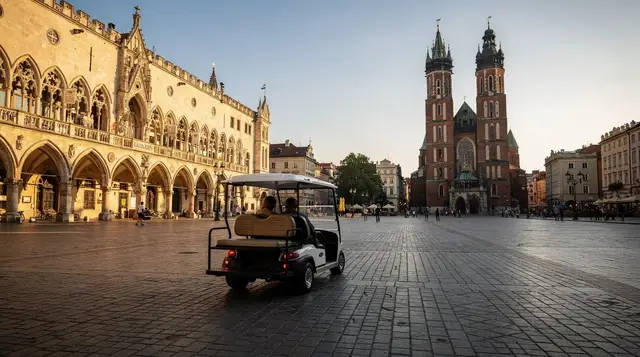
- Earphones (useful on the guided golf cart tour of 4 districts with audioguide, train journeys)
Documents:
- Passport (required for entry; see Poland visa and entry requirements)
- Travel insurance documentation
- EHIC/EKUZ card (EU nationals — covers emergency public healthcare)
- Printed copies of hotel booking and key tour confirmations (Auschwitz, Wawel)
Summer packing list (June–August)
Kraków summers run 20–28°C, occasionally hitting 32–34°C in late July. Humidity is moderate.
Clothing:
- Light breathable T-shirts (3–4)
- One light long-sleeve layer for cool evenings (temperatures drop 8–12°C at night)
- Packable rain jacket (summer thunderstorms are common, arriving quickly)
- Light trousers and one pair of shorts
- Walking sandals viable for city days in good weather; bring backup shoes for cooler days and any hiking
Heat management:
- Sunscreen: SPF 30+ minimum; Rynek Główny has little shade in afternoon sun
- Sunglasses
- Light hat or cap for outdoor sightseeing
- Reusable water bottle — Kraków tap water is safe; stay hydrated
Wieliczka Salt Mine note: The mine is a constant 17–18°C underground regardless of outside temperature. Bring a layer to put on inside (and carry it out on a warm day).
Auschwitz-Birkenau note: Comfortable but respectful clothing is appropriate. The site involves considerable outdoor walking; sunscreen and water are essential in summer. The Memorial asks visitors to dress appropriately — avoid deliberately revealing clothing; the site deserves respect.
Autumn packing list (September–October)
September is much like May; October brings genuine cooling and rain.
Clothing:
- Warmer base layers than summer; merino wool performs well
- Fleece or wool mid layer
- Full waterproof jacket (not just a light rain jacket — October rain can be sustained)
- Warmer trousers; jeans or hiking-style trousers
- Hiking shoes if Tatra Mountains are on the agenda (September hiking is good; October needs checking)
- Closed-toe shoes for all city walking
October specifically:
- October temperatures: 8–14°C days, 4–8°C evenings
- Pack light gloves for the second half of October
- A light hat is useful
Winter packing list (November–March)
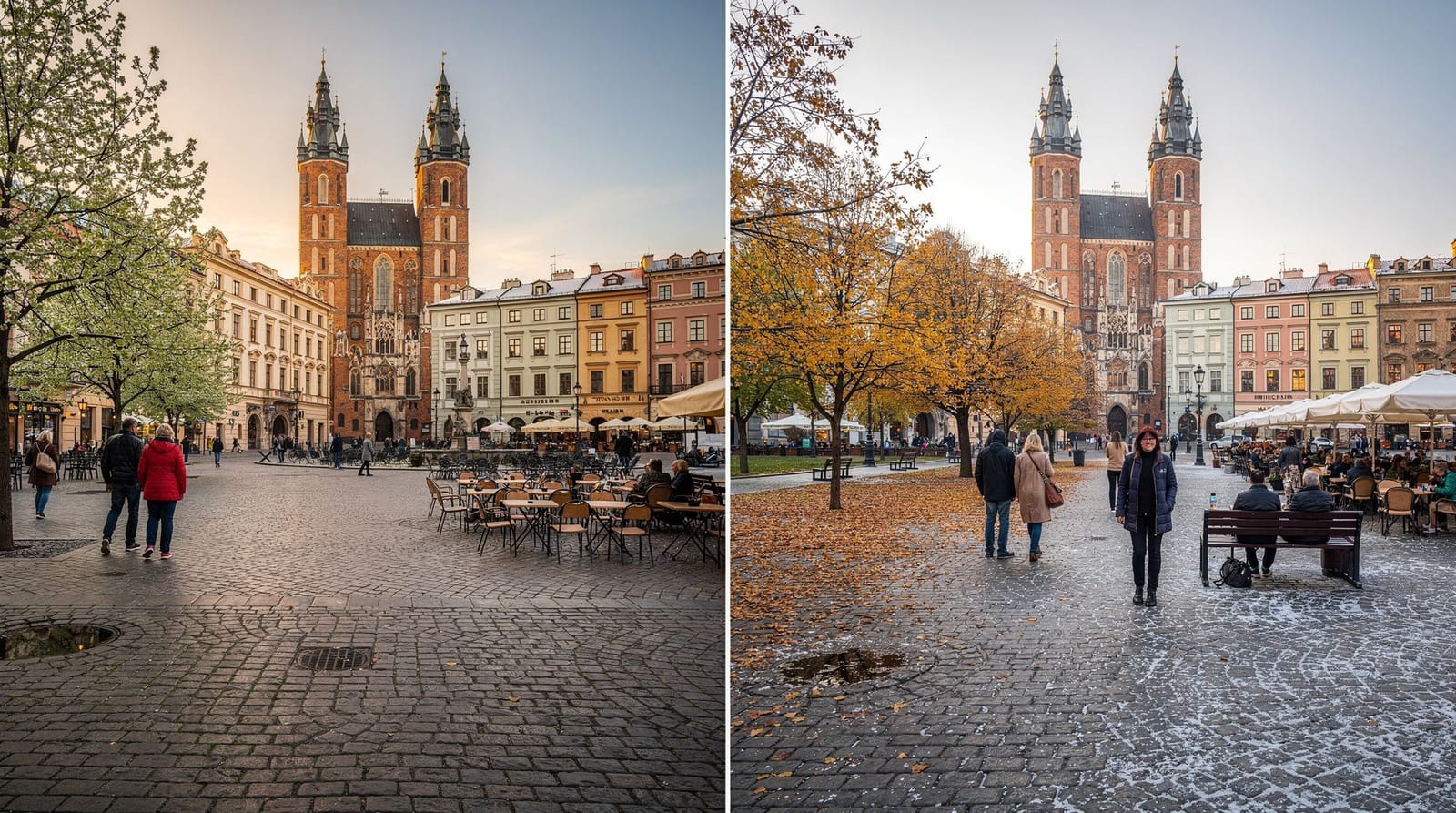
Kraków winters are genuinely cold. Temperatures range from −4°C to +5°C; wind chill from the Carpathian drainage makes it feel colder. Snow is common January–February.
Clothing:
- Heavy insulating base layer (thermal underlayer)
- Thick mid layer: down jacket or heavy wool sweater
- Waterproof and windproof outer layer — this is Poland in January, not a weekend in Paris
- Warm hat covering ears
- Insulating gloves (proper winter gloves, not just touch-screen gloves)
- Warm scarf
- Wool or thick cotton socks
- Insulated waterproof boots or shoes — cobblestones are icy when wet
Christmas market specific (late November – January):
- You’ll be standing outside for extended periods at the Rynek market. Dress as if waiting for a train outdoors, not as if walking between heated shops.
Zakopane in winter:
- If day-tripping to Zakopane for skiing or thermal baths: ski base layers if skiing, swimwear for thermal baths
If you’re visiting Auschwitz
The Auschwitz-Birkenau Memorial and Museum has no strict dress code, but the following is worth keeping in mind:
- The visit involves 4–6 hours of outdoor and indoor walking on a large site
- Comfortable supportive footwear is essential; the gravel paths between barracks involve distance
- Modest clothing (avoid deliberately revealing clothing) is appropriate for a site of this nature
- In summer: bring water and sunscreen; the Memorial has limited shade
- In winter: very warm layers are needed; the Memorial is largely outdoors
- Photography is permitted in most areas; flash photography is not
Hiking the Tatras: what to add
If Zakopane and Tatra Mountains hiking are in your itinerary — Morskie Oko, Kasprowy Wierch, Koscieliska Valley — pack additionally:
- Proper hiking boots with ankle support — not trainers. The Morskie Oko trail is 8 km each way on a well-made path, but descent on loose gravel in trainers is uncomfortable and risky. Rental is not available at the trailhead; bring your own.
- Trekking poles — optional but helpful on longer descents; can be rented in Zakopane
- Windproof layer — Tatra ridges have different weather from the valley; even in August it can be cold and windy at altitude
- High-calorie snacks — no cafés on the main trail past the first refuge; bring enough food
- First aid basics — blister plasters, ibuprofen, bandage
- TOPR emergency number (Mountain Rescue): +48 601 100 300 — save it before hiking
Mountain rescue (TOPR) on the Polish side of the Tatras is free of charge. Not having proper footwear is a stated reason TOPR gives for the majority of unnecessary call-outs on the Morskie Oko trail.
What you don’t need to bring
- Formal evening wear: Kraków’s restaurant scene is smart-casual at its most formal. A clean shirt and trousers is sufficient for any restaurant.
- Towels: Hotels and hostels provide them. A compact travel towel from Decathlon (25–40 PLN) covers any gaps at budget hostels.
- Polish phrasebook: English is spoken widely in tourist areas. A few words (dziękuję = thank you, przepraszam = excuse me/sorry, proszę = please) are appreciated.
- Euros: Not useful as a payment currency. Use PLN. See the Kraków money and currency guide.
- Travel adapter beyond standard EU: Poland uses Type E/F (same as most of continental Europe).
Buying things in Kraków
If you’ve forgotten something, Kraków is a large modern city with:
- Galeria Krakowska (adjacent to the main station): Large shopping centre with all major chains (H&M, Zara, sports shops)
- Decathlon (ul. Jasnogórska): Full outdoor and sporting goods; good for forgotten hiking gear, backpacks, weather layers
- Apteka (pharmacy): Sunscreen, painkillers, blister care, any medication you forgot
You don’t need to stress about packing perfectly — the city has everything a western European or North American city has.
For getting around once you arrive, the getting around Kraków guide covers transport options in detail. The Kraków for first-timers guide covers all other first-day logistics.
Frequently asked questions about packing for Kraków
Do I need a power adapter for Poland?
Poland uses Type E/F plugs (two round pins), the same as France, Germany, Spain, and most of continental Europe. UK visitors need a standard EU travel adapter. US/Canadian visitors need a Type E/F adapter.
What shoes are best for Kraków?
Cushioned trainers/sneakers are adequate for city sightseeing. Leather-soled shoes or high heels are uncomfortable on cobblestones. For the Tatras, dedicated trail shoes or light hiking boots. A separate pair of shoes for evenings is optional.
Should I bring a rain jacket?
Yes, regardless of season. Polish weather is variable at any time of year. A packable rain jacket takes up almost no space and prevents a drenched afternoon. In summer, lightweight is fine; in spring/autumn, a more waterproof shell is better.
Is there laundry available in Kraków?
Several laundrettes exist in the Old Town and Kazimierz — PralniaTuba (ul. Dietla 58) offers self-service and drop-off options at reasonable prices. Most hostels have laundry facilities or can arrange washing. For a week-long trip, planning one mid-trip laundry session lets you travel lighter.
What documents should I carry?
Your passport (or national ID for EU citizens), travel insurance documentation, EHIC/EKUZ card if applicable, and printed or accessible copies of key bookings (hotel, Auschwitz entry, Wawel tickets). None of these are legally required at tourist sites, but they smooth interactions. See Poland visa and entry requirements for full entry documentation.
Site-specific packing considerations
For Wieliczka Salt Mine
The Wieliczka Salt Mine tourist route involves:
- Descent of approximately 380 steps (steep; handrails on both sides)
- 3.5 km walk through passages at a constant 17–18°C
- Return by elevator
- 2–3 hours underground total
Pack specifically: a layer to put on underground (a fleece or light jacket that fits in your daypack), sensible closed-toe shoes (the mine floors are smooth but the stairs are steep), and camera or phone charged for photography (photography is permitted throughout).
Don’t pack: large backpacks (storage is limited in the mine passages), food or drinks beyond what you can carry in pockets.
For Auschwitz-Birkenau
The Auschwitz-Birkenau Memorial visit involves:
- Extensive outdoor walking across a large site (4–6 hours on your feet)
- Uneven gravel paths between barracks
- Limited shade areas
- Variable weather (check forecast; bring layers even in summer)
Pack specifically: comfortable walking shoes (not new shoes — wear them in first), a small backpack with water (1 litre minimum, summer visits), sunscreen in summer, an extra warm layer in winter, and a charged phone. No food in the main exhibition areas; a small snack for after the visit.
Respectful dress: no deliberately revealing clothing. This isn’t a strict dress code but a matter of basic respect for the site’s significance.
If you would rather leave the logistics to someone else, a guided visit to Auschwitz-Birkenau with hotel pickup means you only need to carry the essentials above. Our Auschwitz from Kraków guide compares the ways of getting there.
For Tatra Mountains hiking
If Morskie Oko or any Tatra Mountains trail is in your plan:
Essential:
- Hiking boots with ankle support — the Morskie Oko trail is well-maintained but the return on loose gravel in trainers is genuinely uncomfortable and risks twisted ankles
- Waterproof jacket — mountain weather changes within minutes; even a clear morning can mean rain by afternoon
- Water (1.5–2 litres for the Morskie Oko round trip)
- High-energy snacks (there are no cafés after the first mountain hut on the main trail)
- Sunscreen (altitude intensifies UV)
Recommended:
- Trekking poles (rent in Zakopane if you don’t own)
- Light fleece for the lake (the Morskie Oko sits at 1,395 m elevation; temperature difference from Zakopane town is significant)
- Sun hat
Save the TOPR emergency number (+48 601 100 300) in your phone before setting out. Mountain rescue on the Polish side of the Tatras is free of charge; not having proper footwear is cited in the majority of unnecessary TOPR call-outs.
Technology packing for Kraków
Beyond the basics (phone, charger, adapter), the following tech makes a Kraków trip significantly smoother:
Portable battery charger (10,000 mAh): A full day of Google Maps navigation, Bolt bookings, photography, and Jakdojade transport planning drains a phone battery by early afternoon. A portable charger adds a full day’s use.
Universal EU travel adapter: Poland uses Type E/F, same as France, Germany, and most of Europe. If you have an EU adapter already, it works. UK/US visitors need one; available at Kraków airport arrivals for about 30 PLN if forgotten.
Noise-cancelling earphones: Useful on the 1h30 train to Oświęcim for Auschwitz, on the 2-hour bus to Zakopane, and in any overnight accommodation near Old Town nightlife areas.
Camera or phone with good low-light mode: Kraków’s interior spaces — the Wawel State Rooms, the vaulted Rynek Underground galleries, the Kazimierz synagogue interiors — are photographed best with good low-light capability. Flash photography is prohibited in most of these spaces.
For transport apps to download, see the Kraków public transport guide and getting around Kraków guide for recommended apps before you arrive.
Day-specific packing notes
Day trip to Auschwitz-Birkenau
A dedicated packing list for Auschwitz-Birkenau visits:
Must have:
- Your timed entry confirmation (digital or printed)
- Water bottle (1 litre minimum in summer; the site is large and the visit is long)
- Comfortable closed-toe walking shoes — you will walk several kilometres over gravel and paved paths
- Weather-appropriate layers: the visit can run 4–6 hours; check the forecast and plan accordingly
- Small bag only — bags larger than 35 × 25 × 15 cm are not allowed on site; don’t carry a suitcase
Summer additions:
- Sunscreen (SPF 30+): limited shade across the site
- Sunglasses and light hat
- Extra water
Winter additions:
- Very warm layers: the Memorial is largely outdoors; January at Auschwitz is bitterly cold
- Hand warmers are useful on especially cold days
Leave behind:
- Food and drink to consume on site (eating within the Memorial is not appropriate)
- Audio earphones playing music during the visit (use them only for the official audio guide if provided)
Day trip to Zakopane with Tatra hiking
For a Zakopane day trip including a hike (Morskie Oko or Kasprowy Wierch):
Standard day trip (no hike, just Zakopane town):
- Normal city comfortable shoes
- Light layer (Zakopane is noticeably cooler than Kraków even in summer — typically 5–8°C lower)
- Camera: the scenery is excellent
- Cash for highland market and food (150–300 PLN budget for the day)
Day trip including Morskie Oko hike:
- Hiking boots (non-negotiable — 8 km each way on mountain trails)
- Waterproof jacket
- 2 litres water minimum
- Energy snacks for the trail
- Warm layer for the lake (1,395 m elevation)
- Sunscreen and sunglasses
Day trip including Kasprowy Wierch cable car:
- Warm layers for the summit (temperature at Kasprowy is typically 10–15°C colder than Zakopane valley)
- Windproof outer layer
- Sturdy walking shoes if you plan any ridge walking at the top
Packing for families with children
Travelling to Kraków with kids adds a few specific items worth planning ahead rather than sourcing locally under time pressure:
- A lightweight, sturdy stroller or carrier suited to cobblestones — Old Town’s stone surfaces are hard on wheels; a carrier is genuinely more practical than a stroller for anyone under about 3 for a full sightseeing day.
- Snacks for museum queues — timed-entry queues at the Rynek Underground or Wawel can run 15–20 minutes; a small snack avoids a meltdown at a bad moment.
- A change of clothes in the daypack — the Wieliczka mine’s constant 17–18°C and the day’s general unpredictability make a spare layer worthwhile for younger children.
- Entertainment for the Auschwitz day trip — this is not a child-oriented site (many operators set a minimum age around 14); if you’re bringing older children, prepare them beforehand rather than on the day. See the Kraków with kids guide for age-appropriate itinerary planning, and the rainy day activities guide for a backup plan if weather turns during a family trip.
Packing for different trip types
History and culture focus
If your Kraków trip centres on the Jewish heritage, WWII history, and museum experience:
- Bring a journal or notebook: the Schindler Factory Museum and Galicia Jewish Museum both generate thoughts worth recording
- A small printed guide to Jewish Kraków can supplement the museum audio (printed matter is allowed inside these museums; phone screens can be distracting)
- Modest dress: active synagogues (Remuh, Tempel, Kupa) require appropriate clothing; men should have a head covering (kippah available at synagogue entrances)
- Comfortable footwear for extended museum standing: you’ll be on your feet for 2–3 hours at a time in these spaces
Outdoors and active focus
If Tatra Mountains, Dunajec River Gorge, or Ojców National Park are primary:
- Trail shoes or boots are the essential item
- Quick-dry clothing (river rafting gets you wet; changing afterwards matters)
- Sandals for thermal bath visits after hiking
- Small towel (thermal bath entry often includes a hired towel, but personal towels are better)
- Mountain rescue number saved: TOPR at +48 601 100 300
Winter (Christmas market) focus
If your visit centres on the December Christmas market season:
- Proper winter coat (not a light jacket — standing for 2 hours in Rynek Główny in December requires real insulation)
- Thermal underlayer for cold market evenings
- Warm socks (standing on stone cobbles in cold weather requires insulated footwear)
- Small reusable mug if you plan to drink grzaniec (mulled wine) from stalls — the disposable cups are poor
For seasonal packing context, the best time to visit Kraków guide covers weather conditions for each season in detail.
Packing around your itinerary
The best packing list follows your plan rather than the calendar alone. Before you close the suitcase, skim the Kraków travel itinerary planning guide or one of the ready-made routes, such as the 3-day Kraków itinerary or the weekend city break, and note which days are outdoors, which are underground and which are mostly museums. A day on the Royal Route and an Old Town walking tour asks mostly for good shoes, and the same goes if you join a guided walking tour of the Old Town, where you spend hours on your feet at a slow pace, while a salt mine day asks for a spare layer.
If you are not yet sure how long to stay, the how many days in Kraków guide helps you decide how much to bring. A shorter stay rewards a single versatile outfit built on layers; a longer one is where a laundry session pays off.
Where you sleep changes what you carry
Your base affects the bag you choose. Staying in the pedestrian centre means dragging luggage over stone, so a soft bag or a light wheeled case with sturdy wheels is kinder than a large hard shell. The where to stay in Kraków guide and the comparison of Old Town versus Kazimierz explain how each area feels at night, which helps you decide whether earplugs belong in your kit. When you arrive, the airport to city centre guide shows how far you will be walking with your bags.
Small extras worth the space
- A foldable tote or light daypack for market shopping and day trips; the Kraków museum pass guide is worth reading if you plan several museum days, since a slim document pouch keeps passes and tickets together.
- A little cash and a card, as covered in the Kraków money and currency guide.
- A modest outfit for churches, including St. Mary’s Basilica and the Wawel Cathedral, where covered shoulders are the polite choice.
- A small bag for nights out, since the bars of Kazimierz are casual and crowded, and a compact crossbody is easier than a backpack.
Packing smart on a budget
Travelling cheaply does not mean packing badly. The Kraków budget travel guide shows where your money goes further, and one of the easiest savings is to bring good shoes and a proper rain layer from home rather than buy them under pressure. Pair that with a quick read of the Kraków scams guide and is Kraków safe before you go, and keep valuables in a zipped inner pocket of your daypack.
Packing at a glance: by season
| Season | Key item | Avoid |
|---|---|---|
| Spring (Apr–May) | Packable waterproof jacket | Leaving the umbrella at home |
| Summer (Jun–Aug) | Sunscreen + reusable water bottle | Leather-soled shoes on hot cobblestones |
| Autumn (Sep–Oct) | Full waterproof shell, not just a light rain jacket | Underestimating October’s genuine cold snap |
| Winter (Nov–Mar) | Insulated waterproof boots | Fashion boots with no grip on icy cobbles |
Flying budget airlines to Kraków: luggage tips
Many visitors reach Kraków on budget carriers (Ryanair, Wizz Air, easyJet) with strict cabin-bag rules and paid checked luggage. A few practical notes specific to this route: pack layers rather than one bulky coat where possible, since a puffy winter jacket eats a disproportionate amount of cabin-bag space — wearing it onto the plane rather than packing it is a common workaround. If you’re picking up hiking boots or a proper coat at Decathlon on arrival, you can genuinely travel lighter outbound and add checked luggage capacity for the flight home. Liquids over 100ml (sunscreen, contact lens solution) go in checked luggage or get bought in Kraków — pharmacies and supermarkets stock all the basics.
A lighter alternative: packing cubes and consolidation
For trips combining city sightseeing with a Tatra hike or a Wieliczka descent, packing cubes make a genuine difference — one cube for city clothes, one for hiking-specific gear, and a small pouch for documents and electronics keeps a single bag organised across very different activities in the same trip. This matters more in Kraków than in a single-purpose beach or city trip, since a well-planned itinerary often mixes museum days, an underground salt mine, and a mountain hike within the same week. If you’re travelling with a partner or family, colour-coding cubes by person avoids the hotel-room repacking scramble on travel days. A separate, easily reachable pouch for tickets and timed-entry confirmations — Auschwitz, Wieliczka, museum slots — saves fumbling at the entrance gate on a packed itinerary day.
Top experiences
Bookable activities with verified prices and instant confirmation on GetYourGuide.