Pope John Paul II in Kraków: the sites, the story, and why he still matters
From Krakow: in the footsteps of John Paul II
What are the main John Paul II sites in and around Kraków?
The key sites are the Archbishop's Palace on Franciszkańska Street (where he lived as Archbishop), the Archdiocesan Museum next door (his personal belongings and papal memorabilia), the Sanctuary of Divine Mercy in Łagiewniki (his favourite place of prayer), and Wadowice (his birthplace, 50 km south), which contains the family home museum. All are accessible from Kraków, typically on a half-day or full-day excursion.
Karol Wojtyła before the papacy
| Where | Archbishop’s Palace & Archdiocesan Museum (Old Town), Łagiewniki, Wadowice |
| Cost | museum entry: check the museum’s official website; Wawel Cathedral 26 PLN; free at the sanctuary and the palace exterior |
| Time needed | half-day for the Kraków sites, full day including Wadowice |
| Getting there | walkable in the Old Town; tram 8/52 to Łagiewniki; tour or car to Wadowice |
| Best time | any season; avoid major Catholic feast days if you want a quiet visit |
The man who became Pope John Paul II in October 1978 spent 56 of his first 58 years in or near Kraków. Born in Wadowice in 1920, educated at the Jagiellonian University, ordained as a priest in 1946, appointed auxiliary bishop in 1958, and Archbishop of Kraków in 1964 — his entire formation was rooted in this city and this region. Understanding the Kraków of Wojtyła’s era is essential to understanding the Pope.
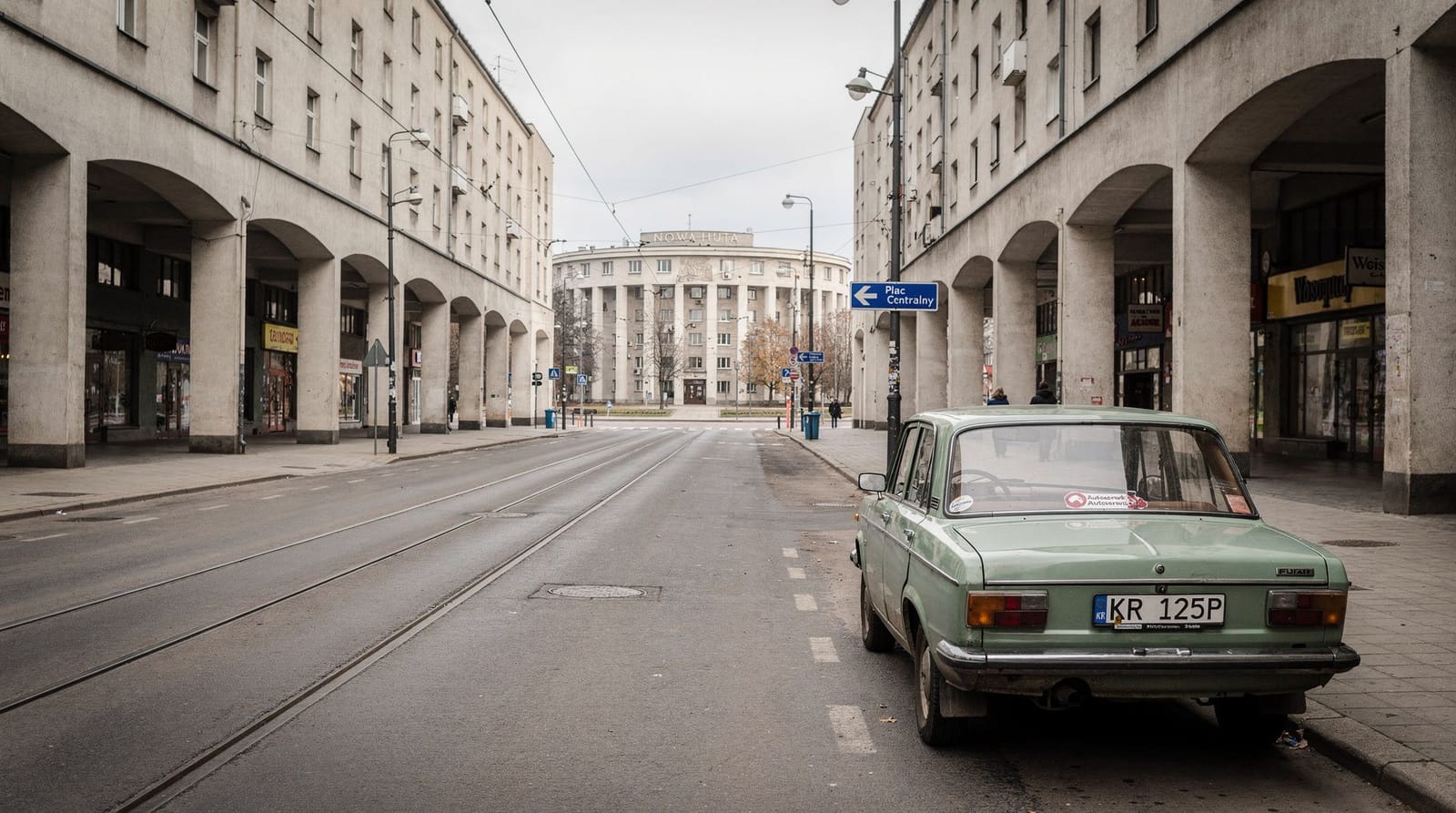
Kraków in the 1950s and 1960s was a city under communist rule, where the Church was the main institutional counterweight to the state. The new Nowa Huta district was explicitly designed to be religion-free; the regime’s hostility to the Church was systematic and, at times, violent. Into this context came the young Bishop Wojtyła: intellectually formidable, politically cautious enough to avoid the worst confrontations, but unflinching on matters of religious principle. His support for Nowa Huta’s residents in their 20-year campaign to build a church — which he consecrated in 1977 as Archbishop — is the clearest single example of his approach.
The Archbishop’s Palace
The building at ulica Franciszkańska 3, a few steps from the Main Square, is where Wojtyła lived and worked as Archbishop of Kraków from 1964 to 1978. It is also where he was staying on 16 October 1978 when he was elected Pope.
The window above the main entrance — the “papal window” — became the site of legendary late-night conversations between Wojtyła and Kraków’s students and young intellectuals. He would appear at the window, exchange jokes and prayers with the crowd below, and engage in the kind of informal dialogue that was unusual for a senior Catholic cleric in that era. These gatherings continued after his papal elections during his return visits to Kraków.
The palace continues to function as the Archbishop’s residence; it is not a public museum. However, standing at the gate and looking up at the window is one of the most evocative free experiences in Kraków — particularly in the evening, when the street is quiet.
The Archdiocesan Museum
Immediately adjacent to the Archbishop’s Palace, at Kanonicza 19–21, the Archdiocesan Museum occupies the house where Wojtyła lived as a young priest and later as Archbishop. The museum contains his personal belongings — furniture, vestments, liturgical objects, books from his personal library — displayed in the rooms where he actually used them.
The collection is modest by grand museum standards but intimate in a way that large-scale museums rarely achieve. Seeing the actual desk at which the future Pope worked, the cassocks he wore, the skis from his famous ski trips in the Tatras — these objects communicate the human scale of the man before the papacy transformed him into a global figure.
The museum also covers his academic work at the Jagiellonian University (where he taught ethics), his role in the Second Vatican Council (Vatican II, 1962–1965), and his relationship with Jewish Kraków — which was complex and important; he grew up with Jewish classmates in Wadowice and maintained those friendships through the war.
Check current opening hours and ticket prices on the museum’s official website.
The Sanctuary of Divine Mercy at Łagiewniki
The Sanctuary of Divine Mercy, located in the Łagiewniki district about 4 km southwest of the Old Town, was Wojtyła’s favourite place of prayer and meditation during his years in Kraków. The sanctuary is built around the chapel of the convent of the Sisters of Our Lady of Mercy, where the mystic nun Sister Faustyna Kowalska lived, died, and was buried. John Paul II canonised Faustyna in 2000 and established the second Sunday of Easter as “Divine Mercy Sunday” throughout the Catholic Church — a direct extension of the Kraków devotion to a global scale.
The new basilica (Świątynia Opatrzności Bożej), constructed adjacent to the original convent chapel and consecrated by John Paul II in 2002 during his final visit to Kraków, is one of the largest churches in Poland. The pilgrim centre and the relics of St. Faustyna draw Catholic visitors from around the world.
For secular visitors, the sanctuary’s interest lies in its demonstration of the intimate relationship between John Paul II’s personal spirituality and his Kraków years, and in the architecture of the new basilica, which is both modern and capable of holding enormous congregations for outdoor masses.
Wadowice: his birthplace
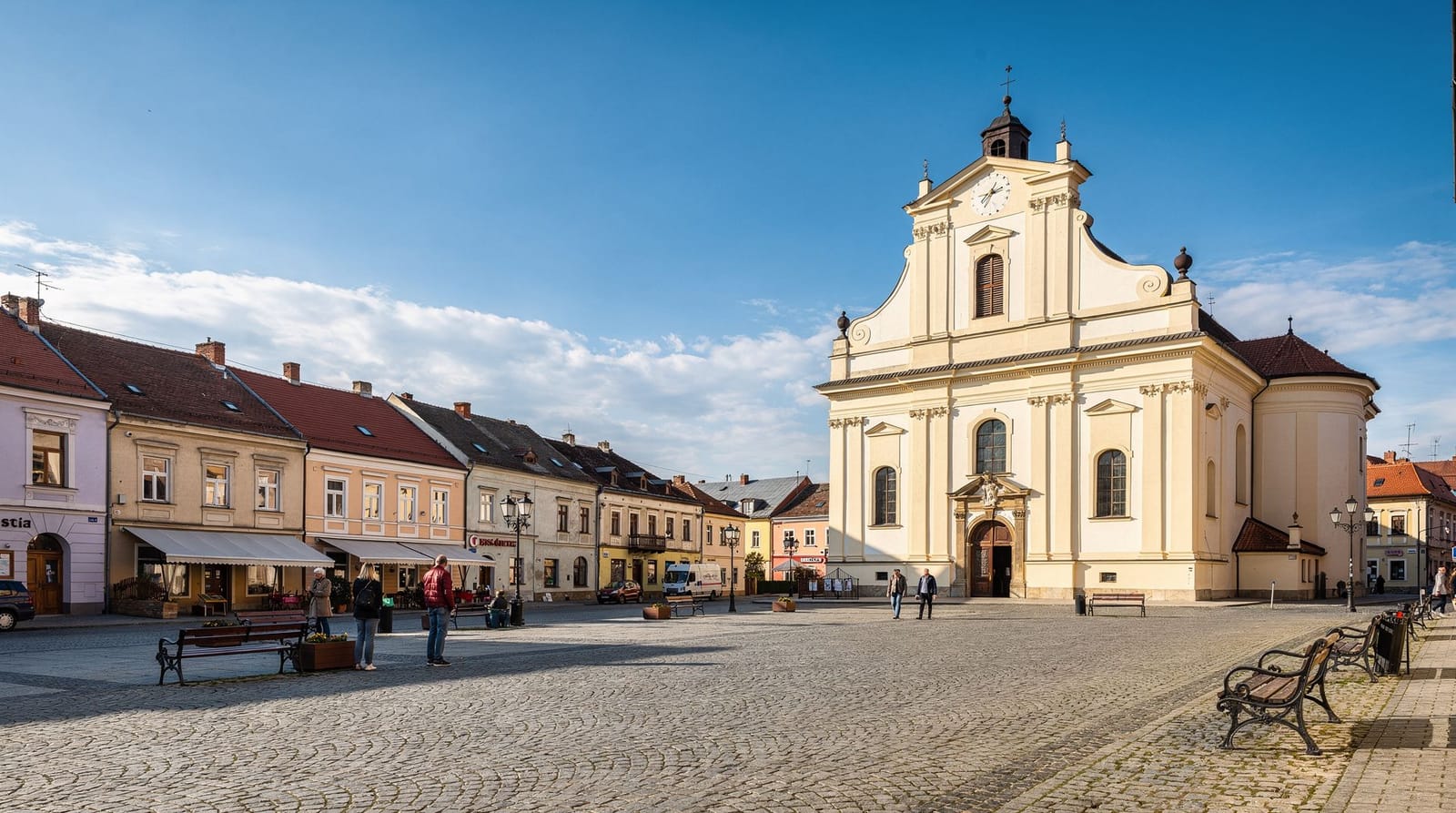
The small town of Wadowice, approximately 50 km south of Kraków, is where Karol Wojtyła was born on 18 May 1920 and where he spent his childhood. The family home at ul. Kościelna 7, immediately adjacent to the parish church where he was baptised, is now a museum run by the Kraków Archdiocese.
The museum opened in 2014 after a complete renovation and is one of the best-designed of Poland’s papal sites. It uses contemporary exhibition design to reconstruct the world of interwar Wadowice: the Jewish community (approximately 20% of the town’s population before the war, nearly all killed in the Holocaust), the school Wojtyła attended where Jews and Catholics studied together, the Vistula River where he swam, the church where he served as an altar boy. The exhibition carefully avoids hagiography, presenting Wojtyła’s formation within its actual historical context — including the war years, when many of his Jewish schoolmates were murdered.
The iconic local speciality is the kremówka — a vanilla cream pastry that Wojtyła reportedly favoured and that he mentioned in a 1999 address, prompting a global media story about papal pastries. Every bakery in Wadowice now sells kremówki; they are genuinely good.
Taking the in the footsteps of John Paul II tour from Kraków is the most efficient way to cover Wadowice and the Łagiewniki sanctuary in a single day, with transport and a guide included.
The Pope’s return visits and their political significance
John Paul II made eight pastoral visits to Poland during his papacy (1979, 1983, 1987, 1991, 1995, 1997, 1999, 2002). Each was a political event as much as a religious one. The first, in June 1979, is considered by historians — including many secular Polish historians — as the decisive turning point in the collapse of communist rule in Poland and, by extension, in Eastern Europe.
The 1979 visit is difficult to overstate in its effect. An estimated 10 million Poles — roughly one in three citizens — attended the Pope’s masses across the country. The visit demonstrated that the communist state could not mobilise its population as the Church could; that Poles’ private religious and national identity had survived 34 years of communist rule essentially intact; and that Solidarity, founded just over a year later, had an already-mobilised base. Zbigniew Brzeziński, President Carter’s National Security Advisor, stated that the Pope had “ignited a revolution.”
During his visits, Wojtyła typically celebrated mass at Błonia, the large meadow west of Kraków’s Old Town. The grass field, used by the city for sports events in normal years, was transformed by hundreds of thousands of people into a vast open-air cathedral. Photographs of these gatherings rank among the most striking images in Polish 20th-century history.
Where this fits alongside Kraków’s other history
Wojtyła’s story does not sit apart from the rest of Kraków’s 20th-century history — it runs directly through it. His resistance to communist rule in Nowa Huta was one front of the same struggle covered in our Nowa Huta communism guide, and his 1979 visit is the pivotal moment referenced throughout our broader Polish history for visitors guide, which sets his life within the fuller sweep from the Piast kings to 1989. If you are building a history-focused itinerary, treat the two guides as companions: one gives the national context, this one gives the personal thread through it.
The Wawel connection
Wojtyła was ordained as a bishop and invested as Archbishop of Kraków in the Wawel Cathedral. His funeral on 8 April 2005, celebrated by Cardinal Joseph Ratzinger in St. Peter’s Square, was attended by over 4 million pilgrims in Rome and watched by an estimated 2 billion people worldwide. He was beatified in 2011 and canonised in April 2014.
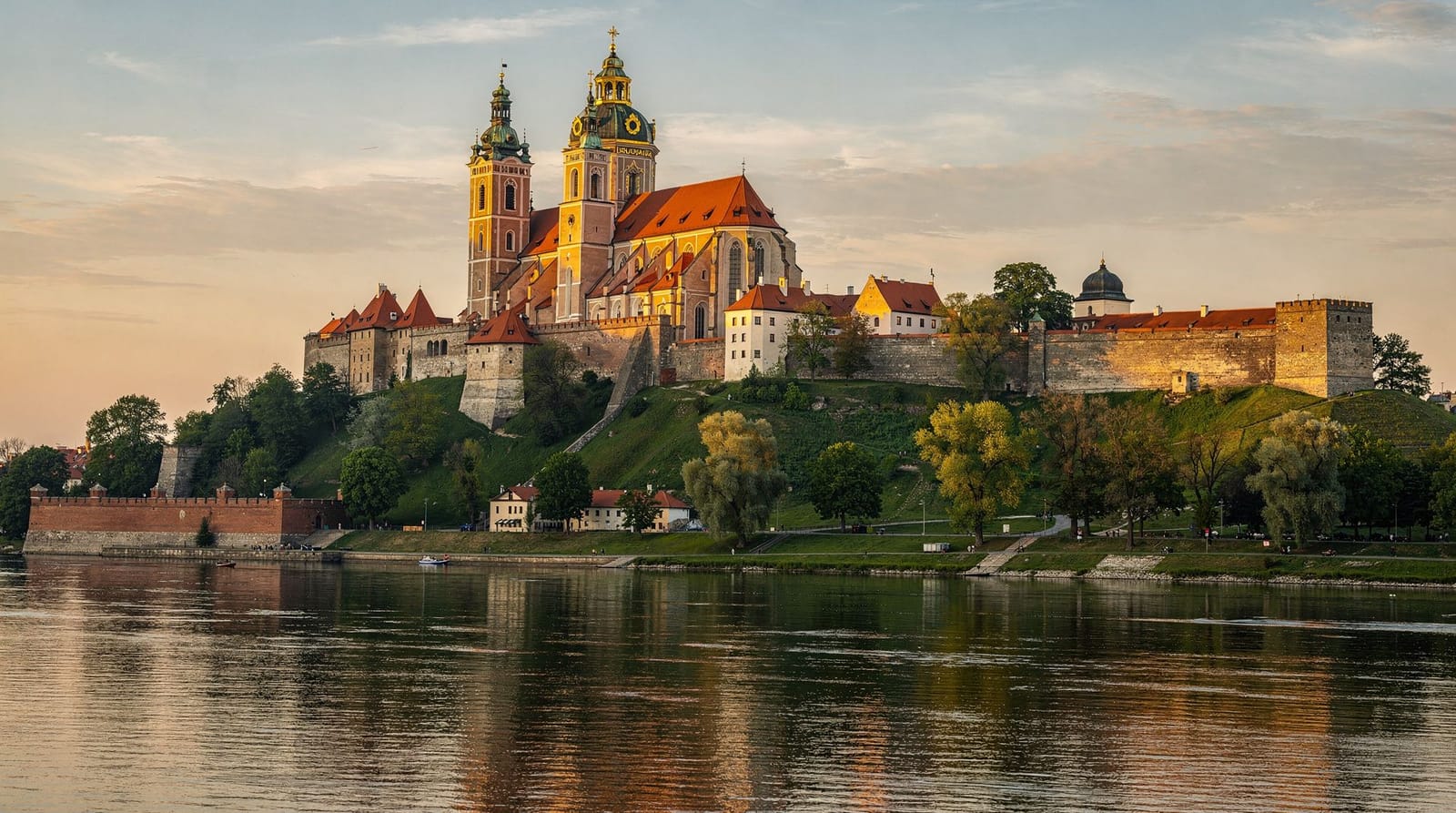
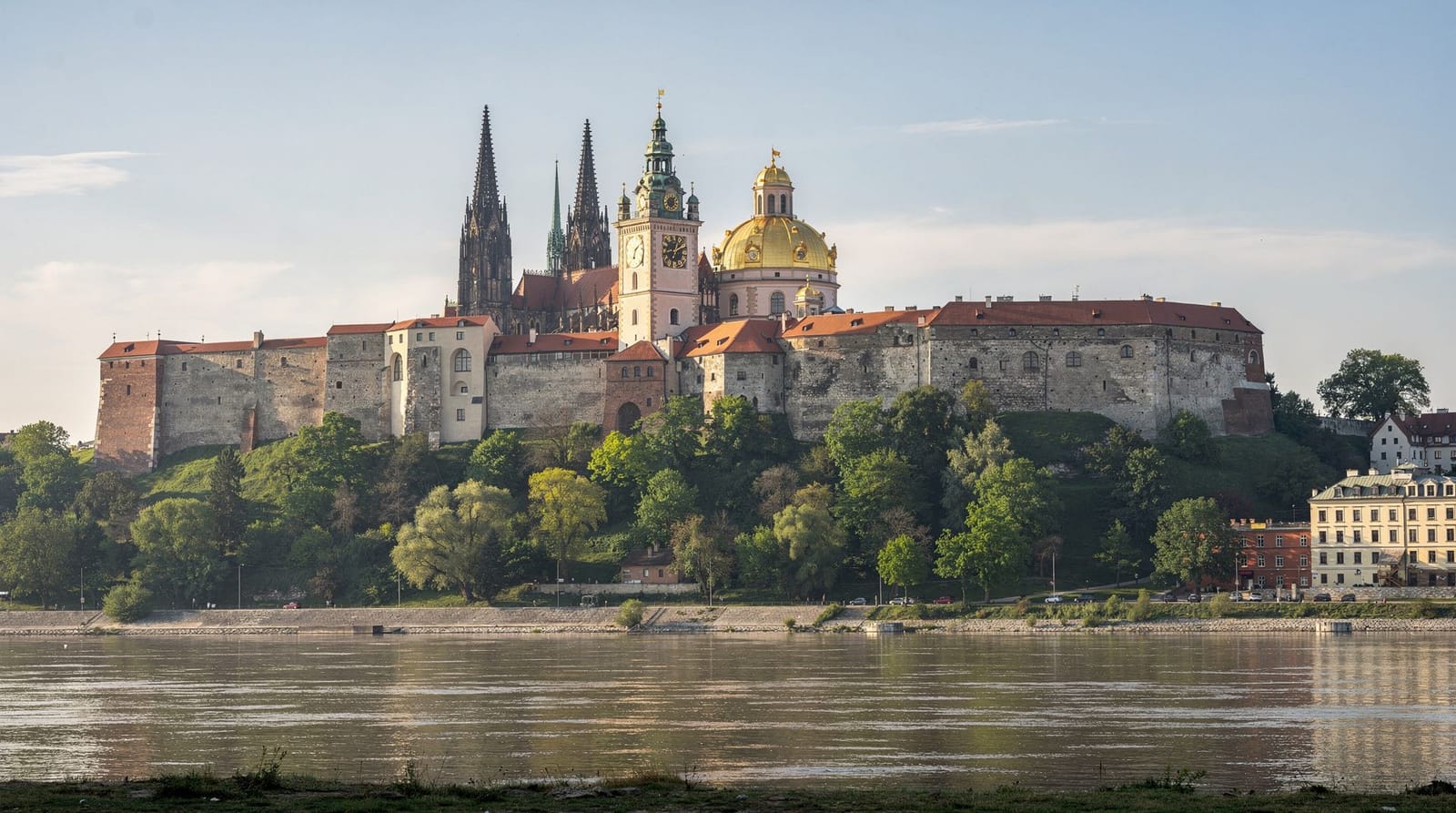
A visit to the Wawel Cathedral, where his episcopal career was rooted, pairs naturally with a Wawel Castle and Cathedral guided tour that covers the full spectrum of Polish royal and religious history in which his life was embedded. Our Wawel Cathedral guide and Wawel royal history guide both go deeper on the site he was ordained bishop in.
The theological context: what John Paul II believed and taught
Karol Wojtyła’s papacy was theologically conservative and politically anti-communist — a combination that made him one of the most significant political figures of the 20th century. His encyclical Laborem Exercens (On Human Work, 1981) articulated a Catholic social teaching that was neither capitalist nor communist, and was released deliberately during the Polish martial law crisis. His support for Solidarity was never in doubt; his methods were pastoral and moral rather than directly political, which gave him an authority that partisan politics could not provide.
His theological work before the papacy — he wrote two books on ethics and phenomenology as an academic — gave him an intellectual seriousness unusual among senior Catholic figures. The combination of philosophical depth, pastoral warmth, and physical vitality (he was an avid skier, kayaker, and hiker throughout his Kraków years) created a public persona that was genuinely different from the ecclesiastical pattern of his time.
His teaching on religious tolerance, and particularly his relationship with Judaism, was a genuine break from Catholic tradition. His visit to the Great Synagogue of Rome in 1986 — the first papal visit to a synagogue since the early Christian period — was followed by visits to Jewish communities around the world and by formal Vatican recognition of the State of Israel (1993). His personal memories of Jewish Kraków, of the friends and neighbours murdered in the Holocaust, informed this stance throughout his papacy.
World Youth Day 2016 and Kraków today
Kraków hosted World Youth Day — the global Catholic youth gathering that John Paul II established in 1984 — in July 2016, 11 years after the Pope’s death. Approximately 2.5 million young Catholics attended, including Pope Francis, making it one of the largest gatherings of people ever to take place in Poland.
The 2016 event concentrated at Błonia meadow west of the Old Town (the same site where John Paul II celebrated his Kraków masses during his Polish visits) and at Campus Misericordiae in the Nowa Huta district. The infrastructure investments for the event — transport improvements, accommodation expansion — left a lasting legacy on the city.
For Catholic visitors to Kraków in 2026, the papal sites are well-maintained and well-marked. Maps are available at the tourist information office at Rynek Główny 1–3.
Karol Wojtyła’s years in Kraków: a timeline
- 1920: Born 18 May in Wadowice.
- 1929: Mother Emilia Wojtyła dies; Karol is nine years old.
- 1938: Moves to Kraków with father to study Polish philology at the Jagiellonian University.
- 1939: German invasion; university closed; Wojtyła works in a quarry and chemical plant.
- 1942: Enters the clandestine seminary of the Kraków Archdiocese, operated underground during the occupation.
- 1945: Seminary resumes openly; Wojtyła continues his theological studies at the Jagiellonian.
- 1946: Ordained as a priest by Archbishop Sapieha. Sent to Rome for doctoral studies.
- 1948: Returns to Kraków; begins parish work in Niegowić, then St. Florian’s Church in Kraków.
- 1956: Appointed chair of Ethics at the Catholic University of Lublin.
- 1958: Appointed auxiliary bishop of Kraków by Pope Pius XII.
- 1964: Appointed Archbishop of Kraków by Pope Paul VI.
- 1965: Participates actively in the Second Vatican Council (Vatican II).
- 1978: Elected Pope John Paul II on 16 October. Leaves Kraków for Rome.
- 1979: Returns to Poland for the first papal visit; celebrated mass at Błonia in Kraków before an estimated 3 million people.
- 1983, 1987, 1991, 1995, 1997, 1999, 2002: Further visits to Kraków.
- 2005: Dies 2 April in the Vatican. Funeral attended by world leaders; canonisation process begins.
The Pope and Kraków’s students
One of the most personal aspects of Wojtyła’s Kraków years was his relationship with students and young people. As a young priest at St. Florian’s Church in the Kleparz district (just north of the Old Town), he organised kayaking and skiing trips into the Tatras for students — forming what became known as the “Śodowisko” (Environment), an informal group that met regularly and maintained lifelong connections.
These informal pastoral relationships were deliberate: Wojtyła believed that authentic religious life was developed through friendship, shared experience, and honest intellectual conversation rather than institutional authority. The group members, who called themselves “wujek” (uncle) to address him in a way that avoided both priestly formality and first-name presumption, stayed connected through his episcopal and papal career.
As Archbishop, the famous late-night appearances at the Franciszkańska window extended this relational approach to a larger scale. After official events ended, crowds of students would gather under the window; Wojtyła would appear, exchange jokes, lead songs, and engage in extended informal conversation. Polish communist-era visitors to Kraków from other cities sometimes found this informality between a Cardinal and young people genuinely extraordinary.
The former parishioners of St. Florian’s Church — now a regular Kraków parish with a long JP2 memorial wall — still gather annually for reunions that span generations. The church is at ulica Warszawska 1, a 10-minute walk north of the Old Town.
The Sanctuary of Divine Mercy and Polish spirituality
The Divine Mercy devotion that John Paul II elevated to global Catholic practice originated in the visions of Faustyna Kowalska, a simple nun from a poor family in central Poland who entered the Sisters of Our Lady of Mercy in Kraków in 1925. Her mystical experiences, which she recorded in a diary at her confessor’s direction, described encounters with Christ presenting an image of himself with rays of white and red light extending from his heart.
The image — the “Divine Mercy image” — and the chaplet (prayer) associated with it spread rapidly after Faustyna’s death in 1938. The Łagiewniki convent where she lived and died became a pilgrimage site, though the devotion was suppressed by the Vatican in 1959 as theologically questionable. Cardinal Wojtyła of Kraków commissioned a formal theological review; its positive conclusion led to the rehabilitation of the devotion and eventually to Faustyna’s canonisation under John Paul II in 2000.
The connection between the Pope and the Divine Mercy devotion is both personal (his visits to Łagiewniki began when he was a young priest) and theological (his encyclical Dives in Misericordia, “Rich in Mercy,” 1980, directly reflects this spirituality). The Łagiewniki sanctuary is now the second most-visited religious site in Poland after Częstochowa.
Monuments and memorials around the city
Beyond the sites tied directly to his residence and worship, John Paul II’s presence in Kraków shows up in dozens of smaller memorials that most visitors walk past without noticing. A statue of the Pope stands outside the Franciscan Church near Franciszkańska, and another, larger monument sits at the entrance to the Łagiewniki sanctuary grounds. St. Florian’s Church at ulica Warszawska, where he served as a young priest and organised the student trips into the Tatras, keeps a memorial wall documenting his years there — it is easy to combine with a walk north from the Old Town toward the Barbican and city walls covered in our barbican and city walls guide.
Plaques marking his connection to specific buildings are scattered through the Old Town and Kazimierz, part of a broader civic habit of marking historically significant sites that also shapes how Rynek Główny itself is presented to visitors. None of these smaller memorials need a dedicated stop, but noticing them adds texture if you are walking the Old Town with this guide’s context already in mind.
Practical information for John Paul II sites in Kraków
All the main Kraków sites can be covered in a half-day walking tour of the Old Town and Kazimierz:
- Archbishop’s Palace at Franciszkańska 3 (exterior, free, 10 minutes)
- Archdiocesan Museum at Kanonicza 19–21 (1 hour)
- Wawel Cathedral — the crypt where he celebrated mass, the Sigismund Chapel (1 hour, 26 PLN)
- Błonia meadow (optional, 20-minute walk west)
For the Łagiewniki sanctuary, take tram 8 or 52 from the city centre (approximately 25 minutes). Free entry to the church; guided tours of the chapel available.
For Wadowice, the organised tour is recommended over driving: parking in the town is limited, and the guide’s context adds substantially to the experience. The John Paul II footsteps tour typically covers Wadowice and returns to Kraków in 5–6 hours. Travellers doing this as part of a longer Kraków stay often pair it with the Wadowice destination guide for restaurant and timing recommendations beyond the museum itself.
Frequently asked questions about Pope John Paul II and Kraków
Was John Paul II Polish or did he have any other heritage?
Karol Wojtyła was ethnically Polish, born in what was then the Republic of Poland to Polish-speaking parents. There is a family legend of partial Ukrainian ancestry on his mother’s side, but he was culturally, linguistically, and nationally Polish in every sense of his upbringing and identity.
Why is Kraków so associated with him rather than Warsaw?
Wojtyła spent virtually his entire pre-papal life in Kraków and the Małopolska region. He had no significant connection to Warsaw. The choice to study, teach, and serve in Kraków was a consequence of circumstance (his father moved the family to Kraków when Wojtyła was a teenager) and then of preference. He reportedly said that Kraków was “his city.”
How did John Paul II’s relationship with Judaism develop?
As a schoolboy in Wadowice, Wojtyła had close friendships with Jewish classmates, including Jerzy Kluger, with whom he maintained contact for his entire life. As Pope, he was the first pontiff to visit a synagogue (Rome, 1986), the first to visit Israel and pray at the Western Wall (2000), and instrumental in the Vatican’s recognition of the State of Israel. His relationship with the Jewish community — and its complexities given the Church’s historical anti-Semitism — is covered extensively in the Wadowice museum.
Did John Paul II support Poland’s EU membership?
Yes, explicitly. During his 1999 visit he urged Poles to embrace European integration, saying “Poland has always been a part of Europe.” He was a consistent advocate for Polish EU membership, which was achieved in 2004, a year before his death.
How much time should I set aside for the John Paul II sites?
A half-day (3–4 hours) covers the Archbishop’s Palace, Archdiocesan Museum and Wawel Cathedral within the Old Town. Add Łagiewniki for a fuller day, or a full day if you want to include Wadowice — the organised footsteps tour is the most time-efficient way to fit all of it in.
Can I visit these sites without joining a Catholic-focused tour?
Yes. The Archbishop’s Palace exterior, Archdiocesan Museum and Łagiewniki sanctuary are all independently accessible by foot or public tram, and none require a religious tour to appreciate. Wadowice is the exception where an organised tour genuinely helps, mainly for transport and parking rather than religious framing.
Are the John Paul II sites busy with tourists, or mostly pilgrims?
Both, and the mix shifts by site. The Archdiocesan Museum and Franciszkańska window attract a broad mix of history-curious visitors and Catholic pilgrims in similar numbers. Łagiewniki and Wadowice skew more heavily toward pilgrims and organised Catholic groups, particularly around Divine Mercy Sunday and other major feast dates, when crowds and queue times increase noticeably.
Top experiences
Bookable activities with verified prices and instant confirmation on GetYourGuide.