Solo female travel in Kraków: an honest account
Four days alone in Kraków in February — here’s what actually felt safe, what didn’t, and the logistics no one mentions before you land.
| Overall safety | high by European standards |
| Best base | Kazimierz for atmosphere and quiet nights |
| Getting from airport | Bolt/Uber only, ~40-60 PLN |
| Local transport | trams/buses, ~6 PLN per ride |
| Best time | year-round; layer up if visiting Nov-Feb |
Arriving alone and getting your bearings
I landed at Kraków’s John Paul II Airport at nine in the evening in February, which is not the most inviting introduction to any city. The arrivals hall is small and slightly chaotic. There is a rank of unofficial taxis immediately outside the main doors, with drivers holding up signs and quoting prices. I walked past them.
This matters, and I am going to say it clearly before anything else: do not take the unofficial taxis from Kraków Airport. The legitimate services are Bolt and Uber, both of which work reliably from the airport, and cost around 40-60 PLN (10-14 €) to the centre. The unofficial drivers outside the doors charge multiples of that, sometimes without a meter. This applies equally to the taxi rank outside Kraków Główny railway station. It is not a danger, exactly — it is just an expensive way to start a trip, and the apps are simpler. The honest Kraków guide on taxi scams covers this in detail if you want the full picture.
My Bolt arrived in four minutes. The driver spoke no English; I spoke no Polish. We shared a companionable silence for the twenty-minute drive to Kazimierz, where I was staying. This turned out to be typical of most interactions.
Where I stayed and why Kazimierz made sense
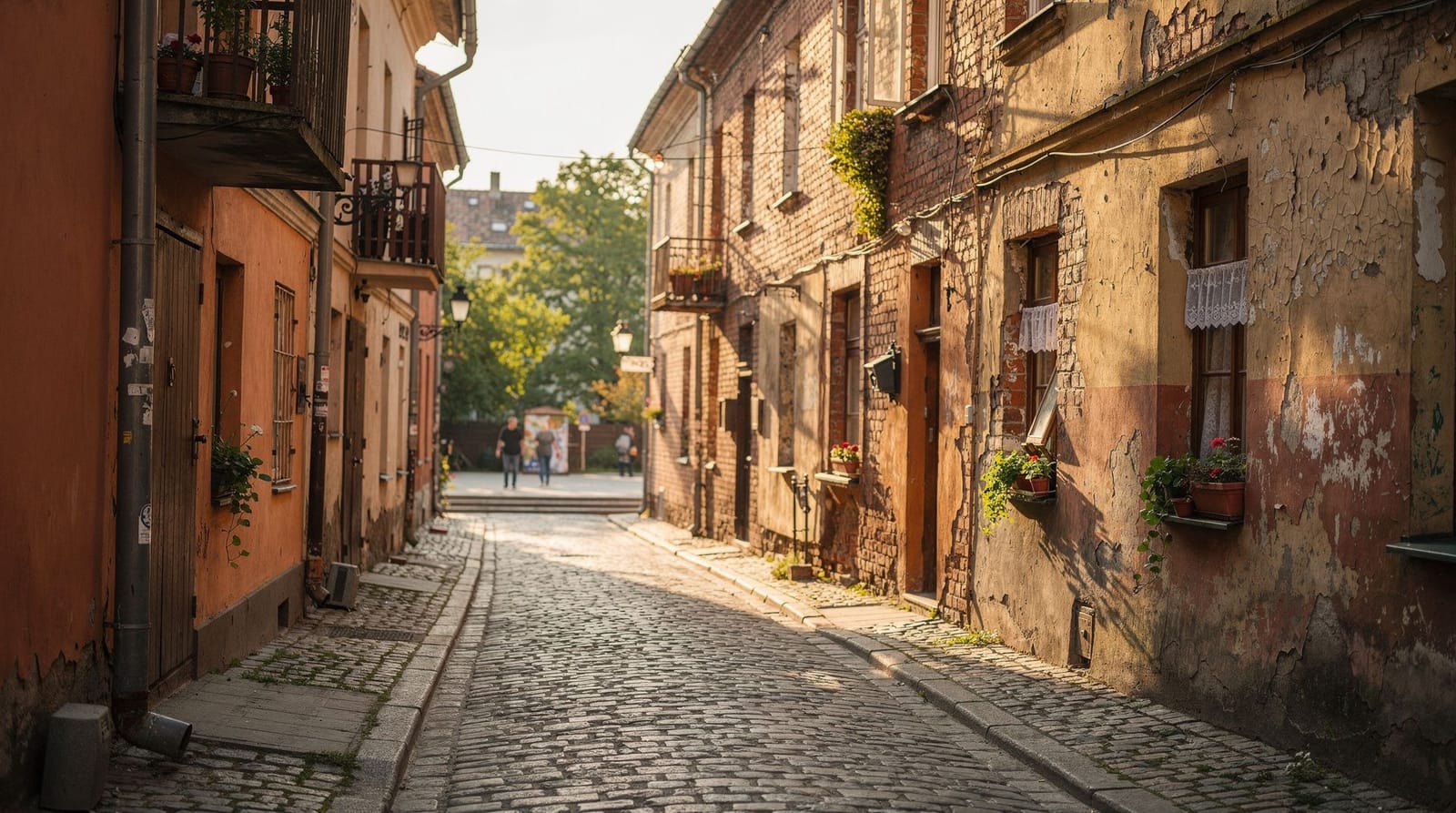
I had booked a room in a small guesthouse on ul. Józefa, in the heart of Kazimierz, Kraków’s former Jewish quarter and current artistic and café district. This was a good choice, though not an obvious one if you are optimising purely for sightseeing convenience.
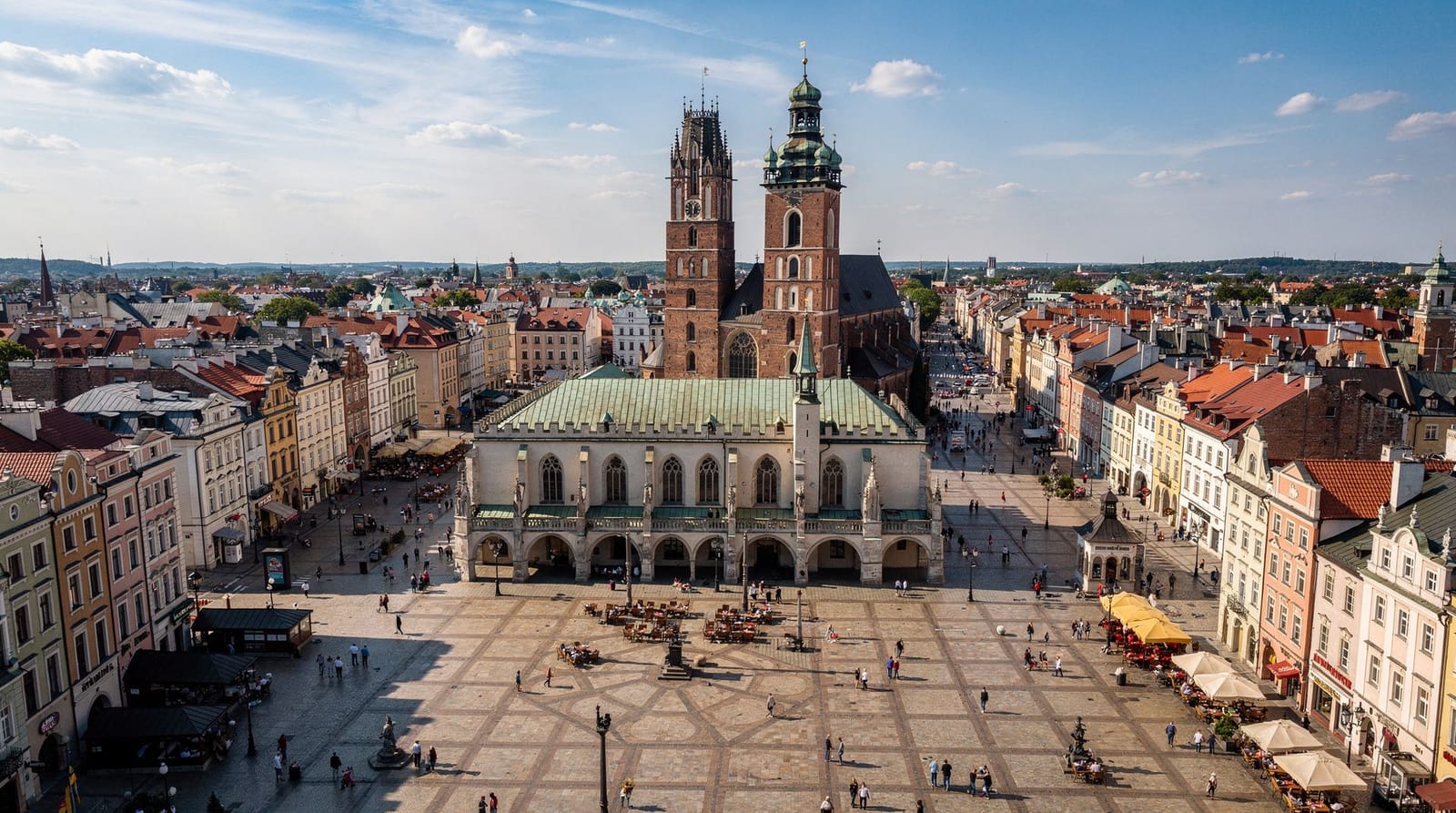
The Old Town is closer to the main attractions, but it is also louder at night — the stag-party tourism that concentrates around Rynek Główny and the surrounding streets is real, and it involves groups of men in themed costumes well into the early hours on weekends. This is not threatening, exactly, but it is not restful either. Kazimierz is fifteen minutes’ walk from the main square, has its own excellent café and bar scene, and tends to attract a different crowd: artists, locals, younger Poles, and the kind of international visitors who are there for the museums rather than the nightlife industry.
For solo women, proximity to a neighbourhood that feels inhabited rather than themed matters.
How safe Kraków actually is
The honest answer is: quite safe, by European standards, and significantly safer than the most anxious versions of pre-trip research would suggest.
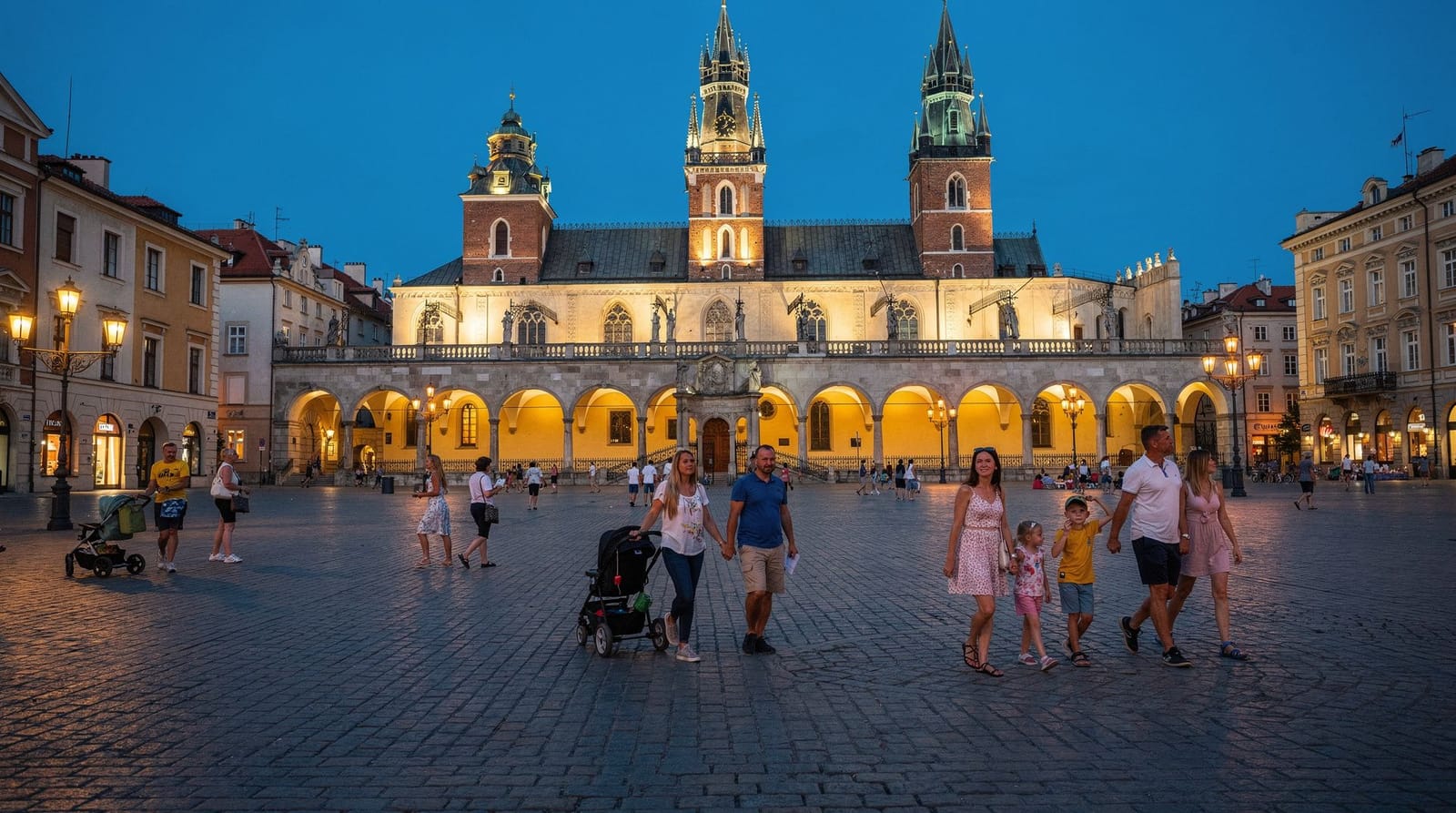
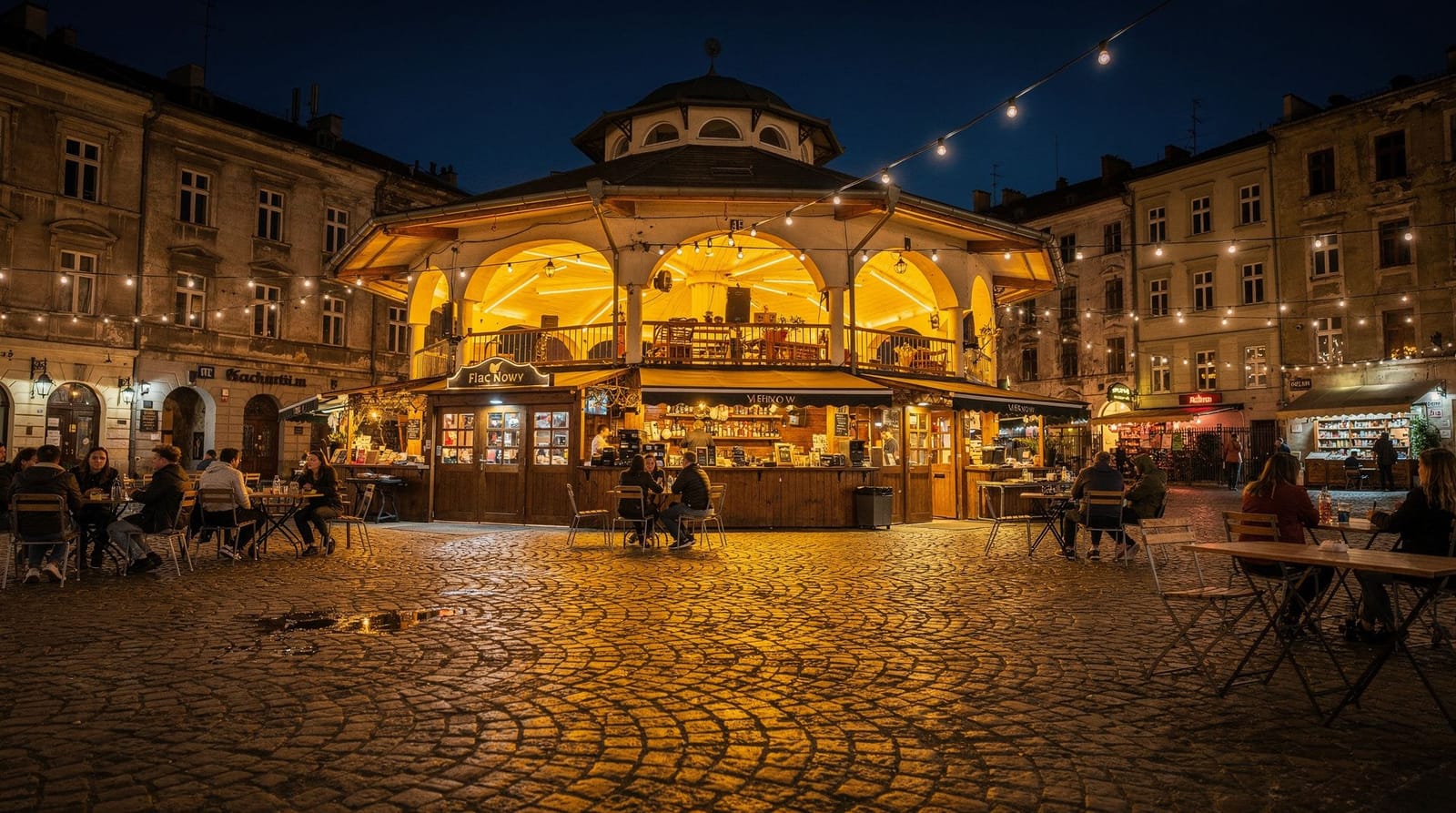
Kraków is a large university city — Jagiellonian University is one of the oldest in Europe — and that gives it a student population and an everyday normality that works in a solo traveller’s favour. The Old Town pedestrian area is well-lit, consistently busy until midnight, and has a visible police presence in peak tourist season. Kazimierz is similarly walkable at night; the cafés around Plac Nowy stay open late and draw a mixed, unhurried crowd.
The areas to approach with more attention are the streets immediately around Kraków Główny station late at night (as with most major train stations anywhere), and the strip of clubs on ul. Szewska and nearby streets, where the stag-party economy is concentrated. These are not dangerous areas in any meaningful sense — they are just areas where solo women may find unsolicited company. The practical response is the one that works anywhere: headphones, purposeful walking, a bar or café to duck into if needed.
I asked the safety question directly to a Polish woman I met at a coffee shop on my second day. She looked slightly baffled by it. “Kraków is very normal,” she said. “It’s a city.”
That felt accurate.
The language question
Polish is a notoriously difficult language, and I spoke approximately none of it. In the tourist areas — Old Town, Kazimierz, Wawel Hill — this presented no problems at all. English is widely spoken by anyone working in hospitality, museums, or cafés. Google Translate’s camera function handled menus I encountered that lacked English translations.
Learning a few words made interactions noticeably warmer. Dziękuję (thank you, pronounced roughly “jeh-KOO-yeh”) and przepraszam (excuse me/sorry, “psheh-PRA-sham”) are the most useful. Polish people are not particularly effusive with strangers but are generally helpful when approached politely.
Eating alone
This is the thing that many solo travellers dread and often do not mention: the restaurant ritual of requesting a table for one, the book-or-phone as a prop, the hovering waiter.
Kraków is unusually easy for solo dining, partly because of the café culture and partly because the milk bars function like self-service canteens where no one glances at you twice regardless of party size. Bar Mleczny under the sign “Pod Wawelem” near the base of the hill does a bowl of żurek (sour rye soup with hard-boiled egg) for around 12 PLN (3 €). It is the correct thing to eat on a cold February morning and requires no social performance whatsoever.
For evenings, the coffee-shop-to-restaurant pipeline in Kazimierz works well. Arrive at a place like Café Młynek or Alchemia early, get comfortable, order food when you are ready. These places are designed for sitting in, not for turning tables.
The Kraków food guide covers the specifics of what to order and where the value is; the short version for solo travellers is to avoid the Rynek Główny restaurants, which are expensive and aimed squarely at tour groups, and to wander one street back from wherever the tourist maps point.
Walking tours as a social mechanism
Solo travel is often advertised as total independence, but total independence can be lonely. Walking tours solve this without requiring you to commit to anyone specific.
I joined a free walking tour of the Old Town on my second morning — these depart daily from the main square and operate on a tip model (100-150 PLN / 24-36 € is reasonable for a good guide). The group included a mixture of solo travellers and small couples. The guide, a history student at Jagiellonian, was excellent on the medieval period and appropriately scathing about the tourist trap restaurants her tour passed.
Book a guided Old Town walking tour if you prefer the certainty of a booked slot, which also tends to attract smaller groups than the free tours in peak season.
For Kazimierz, a separate Jewish Quarter tour adds significant depth — the neighbourhood is visually compelling but its history, which runs from medieval Jewish settlement through the Holocaust and into a complex contemporary revival, rewards explanation.
The Auschwitz question
Many solo travellers visit Kraków partly because it is the logical base for a visit to Auschwitz-Birkenau. The memorial is about 70 km west of the city and is visited by over two million people a year.
I went. It is the right thing to do if you are in Kraków and have the time. I am not going to try to describe it in a paragraph. What I will say practically is that a guided tour from the city — with transport included — is significantly preferable to managing the logistics independently on a difficult emotional day. Booked tours depart early (typically 7:30-8:00) and return by late afternoon, leaving the evening free. The drive each way is an opportunity to process rather than navigate.
Pre-booking is essential, particularly for guided tours in spring and summer. Walk-ins are possible in winter but much harder in peak months.
The stag-party economy: what it is and is not
Kraków is one of the most popular stag-party destinations in Europe. This fact appears in almost every article about the city and is often presented as a warning to female solo travellers. I think it deserves some calibration.
The stag-party groups are real and visible, particularly on Friday and Saturday evenings in the Old Town. They are loud and sometimes tiresome. In my experience of four days in the city, none of them were threatening or aggressive. They were people on a trip, doing what stag parties do, which is drink in groups and take photos of each other.
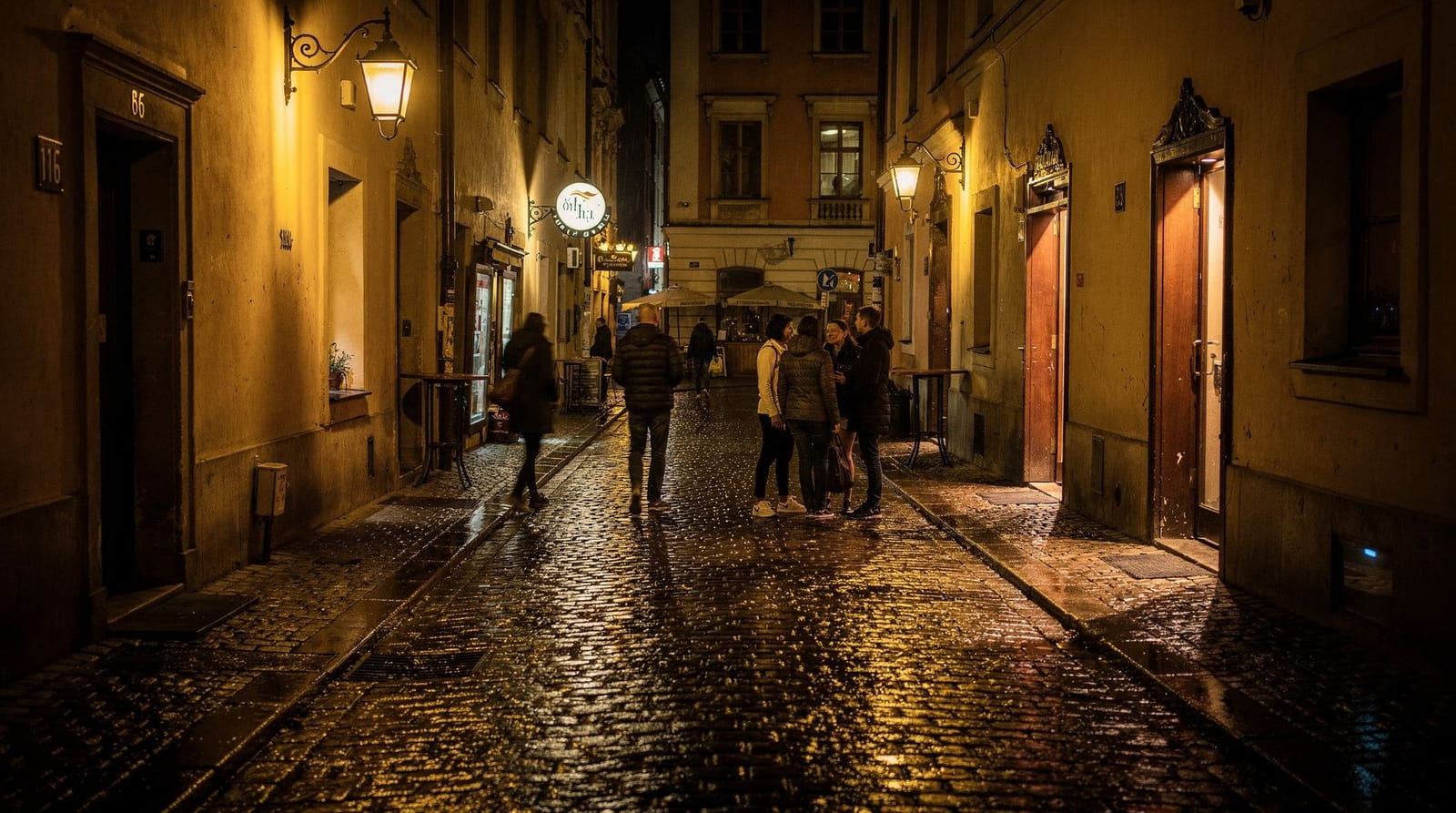
The industry built around them — the clubs on ul. Szewska, the shot bars, the “experience” tours that circulate around Plac Szczepański — creates a particular nighttime atmosphere in certain streets. If this is not the atmosphere you want, you go to Kazimierz instead, where the bars are smaller and the noise levels are human.
Kraków’s nightlife guide is honest about the split between the tourist nightlife district and the actual local bar scene; as a solo woman, you will probably find the latter more comfortable.
What surprised me
The cold, in February, was serious in a way that British weather does not prepare you for. I thought I was dressed appropriately. I was not. Kraków in winter means temperatures that regularly sit below -5°C and a wind off the Tatras that has no mercy. Layers work; fashionable coats do not.
The Planty gardens that ring the Old Town are beautiful even in winter — bare trees and pale light and almost no tourists. I walked the full circuit twice.
Nowa Huta, the Soviet-era district about six kilometres from the centre, was the trip’s most surprising discovery. I took a tram (line 4 or 15, around 20 minutes, 6 PLN / 1.40 €) on a grey afternoon and walked its monumental avenues, which were designed to house steelworkers and impress foreign communists. Almost no English-speaking tourists were there. The light on the socialist-realist architecture was extraordinary. A café near the central square served coffee and cake for amounts of money that felt slightly illegal.
The logistics summary
Getting around: Trams and buses cover most of the city; a single journey ticket costs 6 PLN (1.40 €). The Old Town centre is pedestrianised and best walked. Bolt is the app to use for taxis — cheaper and more transparent than local radio cabs.
Cash: Kraków runs on złoty (PLN), not euros. Cards are widely accepted, but cash is needed for market stalls, milk bars, and some smaller cafés. Withdraw from a bank machine attached to an actual bank rather than standalone ATMs, which sometimes offer terrible exchange rates with a “convenient” conversion.
Accommodation: Kazimierz for atmosphere; Old Town for convenience; planning guide covers the full comparison.
Solo female specifics: Hostels here have a strong social culture if you want company. The city’s Kraków safety guide goes further into neighbourhood logistics. Trust your instincts, use apps rather than street taxis, and remember that this is a normal European city with a functioning university and people going about their lives.
Meeting other travellers without trying too hard
Solo doesn’t have to mean isolated, and Kraków makes it easy to have as much or as little company as you want. Hostels in Kazimierz tend to run communal dinners or pub-crawl nights that are easy to opt into or skip. Walking tours, mentioned above, are the lowest-effort way to end up in conversation with other solo travellers heading the same direction. Cafés with communal tables — several around Plac Nowy — are also a soft way to strike up conversation without the commitment of a group activity. None of this requires extroversion; it just requires showing up to things with other people already in the room.
A day trip alone: what changes
Day trips are where solo travel logistics matter most, since you’re relying entirely on your own planning rather than splitting tasks with a companion. For Wieliczka Salt Mine or Auschwitz, a guided tour with transport included removes essentially all of the friction — you show up at a pickup point and the rest is handled. For Zakopane and the Tatras, going solo is more involved: buses run regularly but require more independent navigation, and the mountain trails themselves are safer with company or at least a well-populated, well-marked route rather than an ambitious solo hike into quieter terrain.
Book a guided Wieliczka Salt Mine tour from KrakówWhat I’d tell my first-time-alone self
Book the first night’s accommodation somewhere central and well-reviewed even if it costs slightly more — arriving alone after dark to an unfamiliar, poorly lit street is an unnecessary stress you can avoid entirely for the price of one extra night’s premium. Download Bolt before you land, not after. And don’t over-plan the safety question before arriving; the anxious pre-trip research about Kraków specifically (as opposed to solo travel generally) turned out to be disproportionate to the actual experience, which the first-timers guide reflects more accurately than most generic “is it safe” forum threads.
I would go back. That is the plainest recommendation I have.