Krakow food guide: the honest eater's handbook
Krakow: 4-hour Polish food tour
Duration: 4h
What is the best food to eat in Kraków?
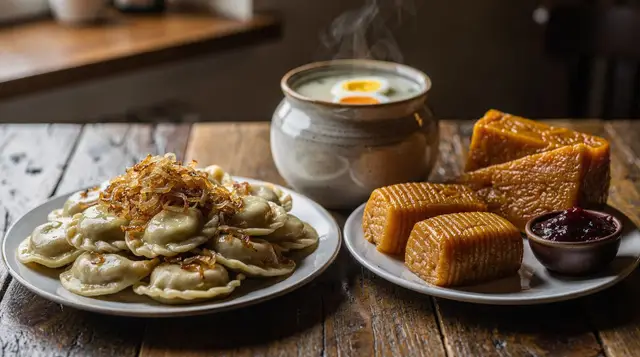
Kraków excels at pierogi (dumplings), barszcz (beetroot soup), żurek (sour rye soup) and zapiekanki (open toasted baguettes from Plac Nowy). For the best value, eat at a bar mleczny (milk bar) — you will pay 20–35 PLN for a full meal. The Old Town restaurants are convenient but mark up prices 2–3× versus neighbourhood spots.
Eating well in Kraków is easy once you know the pattern: the closer to the Rynek Główny, the more you overpay, and the further into Kazimierz or Podgórze you walk, the better the food gets for less money. This guide covers the essential dishes, the neighbourhoods worth eating in, realistic prices, and the etiquette that helps you eat like a local rather than a tourist.
| Where | Kazimierz and Podgórze for value; avoid the Rynek ring |
| Cost | 20–35 PLN milk bar meal; 60–100 PLN sit-down dinner |
| Time needed | Half a day to sample 3–4 spots; a full trip to cover it all |
| Getting there | All neighbourhoods walkable from the Old Town (10–20 min) |
| Best time | Any season; June–September for festival food stalls |
Why Kraków is one of Central Europe’s best food cities
Polish food has spent decades being underestimated. Kraków is changing that perception fast. A combination of deeply rooted Central European peasant cooking, Jewish culinary heritage, highland Góral traditions from the Tatras, and a young, ambitious restaurant scene has made the city genuinely exciting for food lovers — and almost absurdly affordable by Western European standards.
A full lunch at a bar mleczny (milk bar) costs 20–35 PLN (≈ €5–8). A solid dinner with drinks at a neighbourhood restaurant in Kazimierz runs 60–100 PLN per person (≈ €14–24). Even the city’s best modern-Polish tasting menus rarely break 300 PLN (≈ €70).
The trap is the Rynek Główny (Main Market Square). The restaurants ringing the square serve mediocre food at tourist prices — typically 2–3× the Kraków average. The rule is simple: the closer to the Cloth Hall, the worse the value. Walk five minutes in any direction and the quality goes up while the prices drop.
The essential Kraków food categories
Pierogi — the non-negotiable starting point
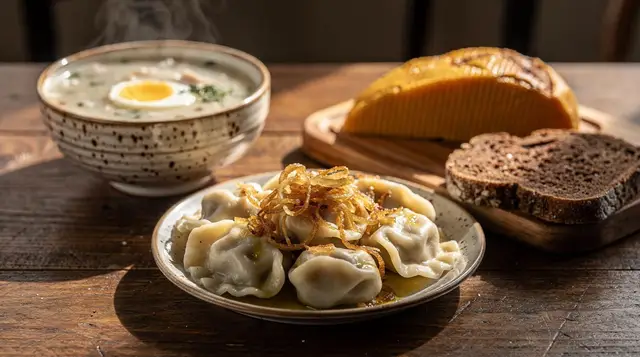
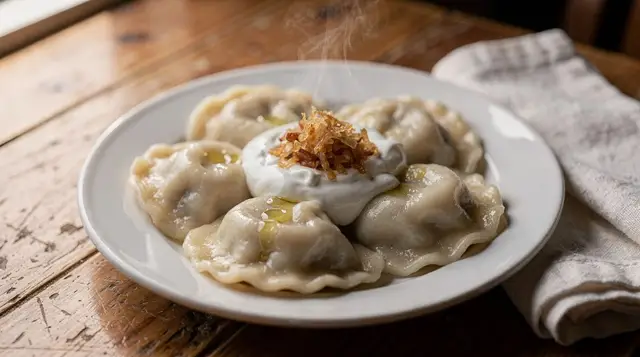
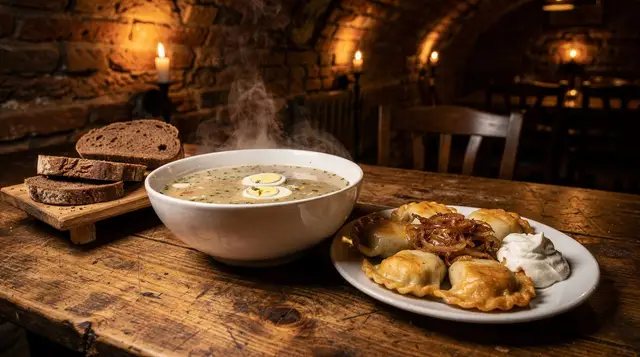
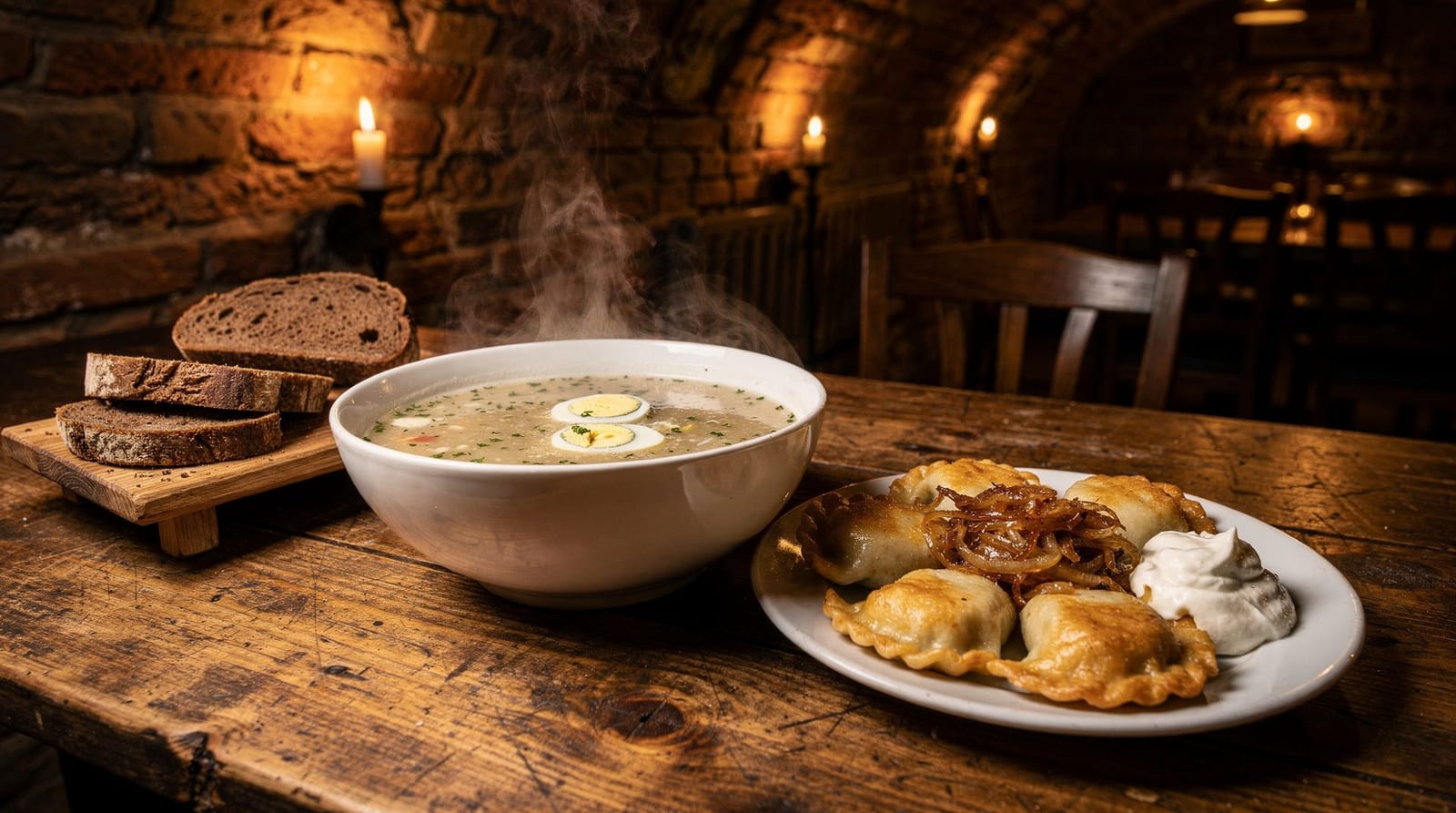
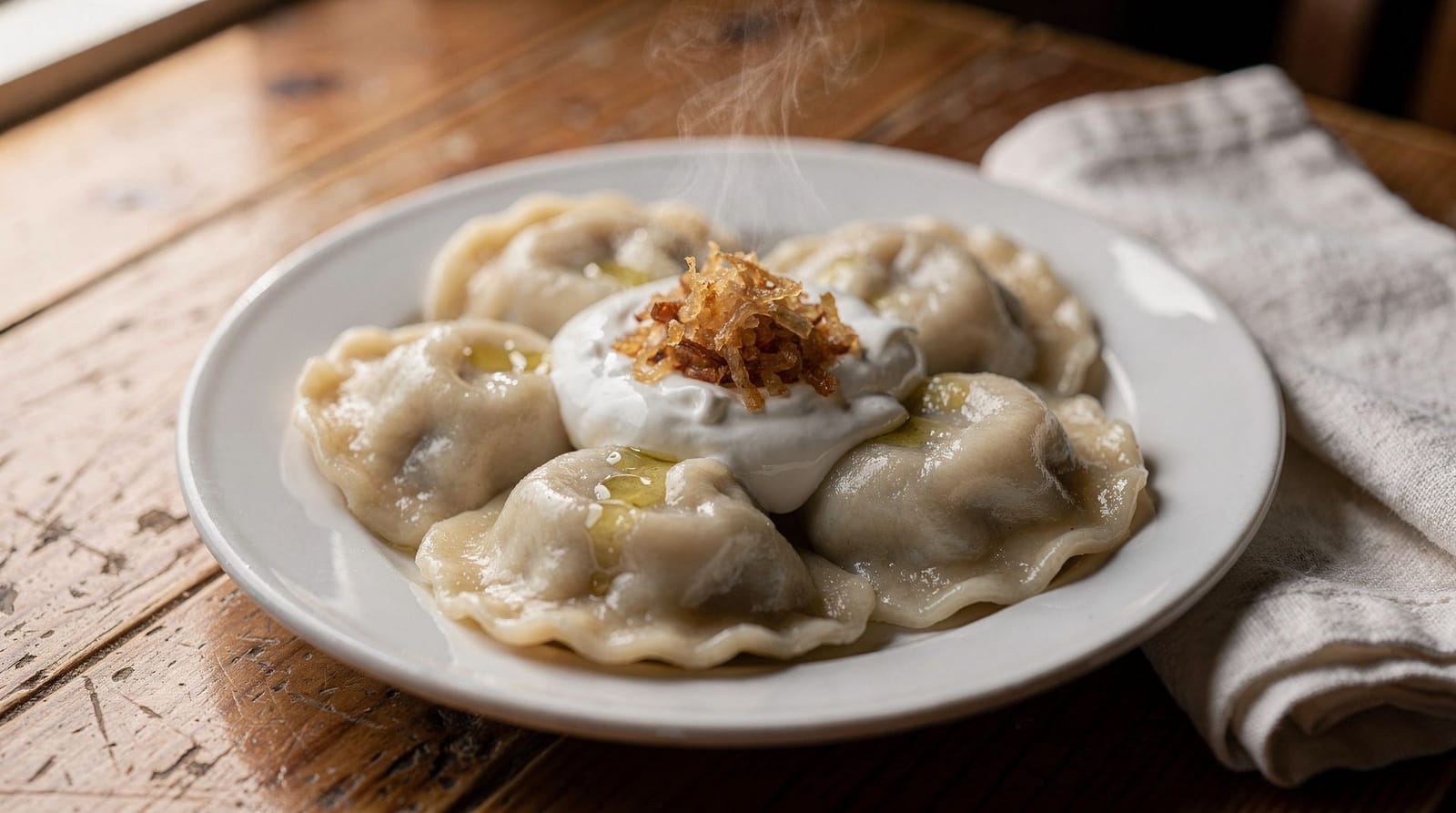
No visit to Kraków is complete without eating pierogi. These filled dumplings are the backbone of Polish comfort food: half-moon parcels of thin dough filled with combinations of potato and cottage cheese (ruskie), sauerkraut and mushroom (kapusta i grzyby), meat, spinach and cheese, or sweet fillings like strawberries or blueberries. They are boiled, then often finished by frying in butter until the skin crisps.
Pierogi ruskie — confusingly named, with no connection to Russia; the name likely refers to Rus’, the historical region — are the classic starting point. A portion of six to eight runs 25–35 PLN (≈ €6–8) at a good dedicated spot. See the full guide at Best pierogi in Kraków: the honest guide to dumplings for the best dedicated pierogarnia restaurants.
Good places for pierogi: Pierogi Mr Vincent (ul. Bożego Ciała 12, Kazimierz), Pierogarnia Mandu (ul. Szewska 26, close to Old Town), Starka (ul. Józefa 14, Kazimierz). Expect queues at lunchtime — arrive at opening (noon–12:30) or after 2pm.
Bar mleczny — the milk bar experience
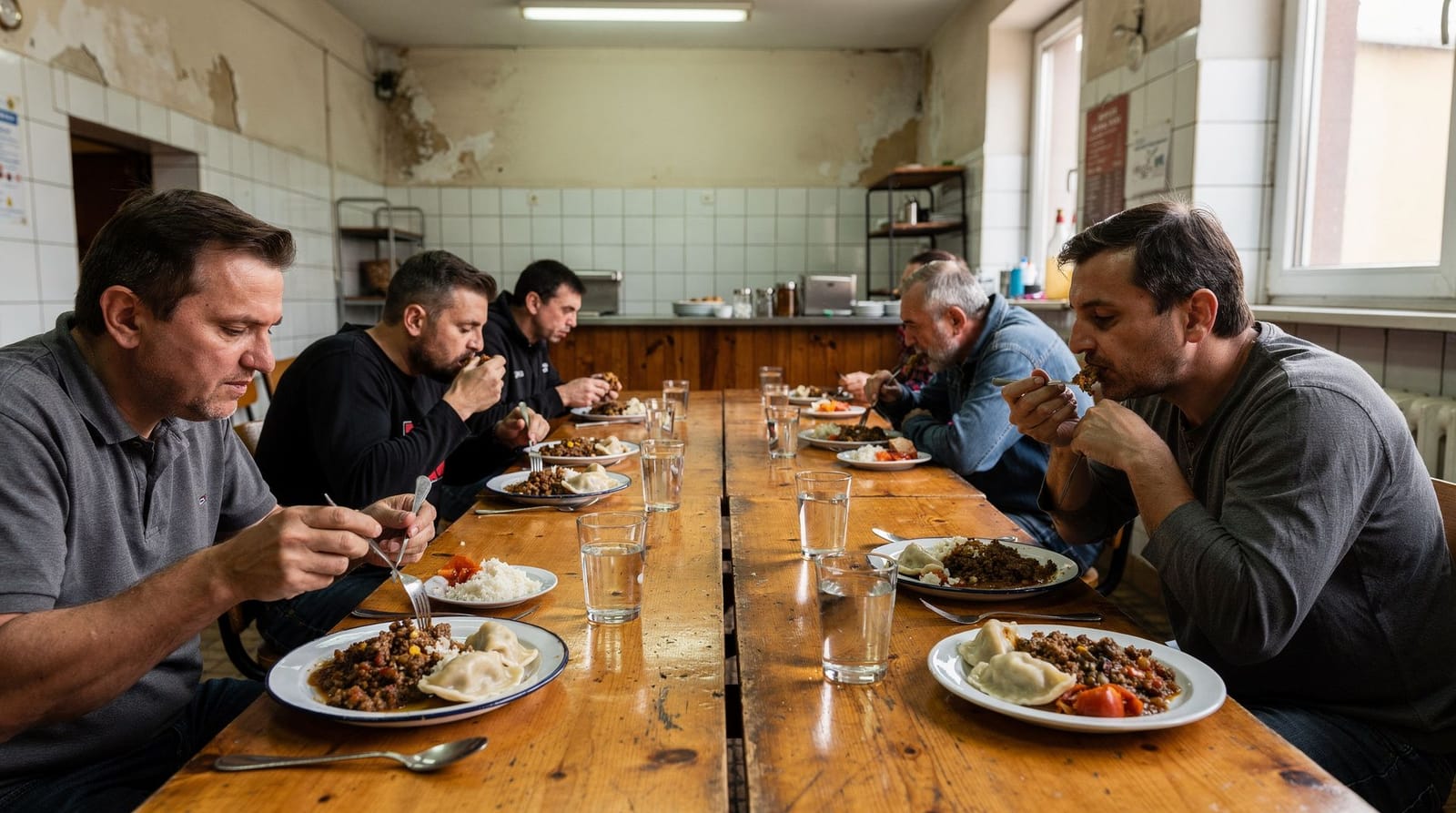
Bar mleczny literally means “milk bar,” a Soviet-era institution that subsidised hot meals for workers. Several have survived in Kraków and they remain extraordinary value. Prices are posted on a chalkboard; you queue at the counter, carry your tray to a shared table, and eat for under 30 PLN. Quality varies but the best milk bars serve genuinely good, home-style Polish cooking.
The unmissable example is Bar Mleczny Pod Temidą (ul. Grodzka 43) — central, well-run, cash only, around 25 PLN for soup plus a main. Bar Mleczny Krakus (ul. Grzegórzecka 26) and Mieszek (Rynek Kleparski 15) are also solid. The full breakdown is at Milk bars (bar mleczny) in Kraków: the complete guide.
Zapiekanka — the Plac Nowy experience
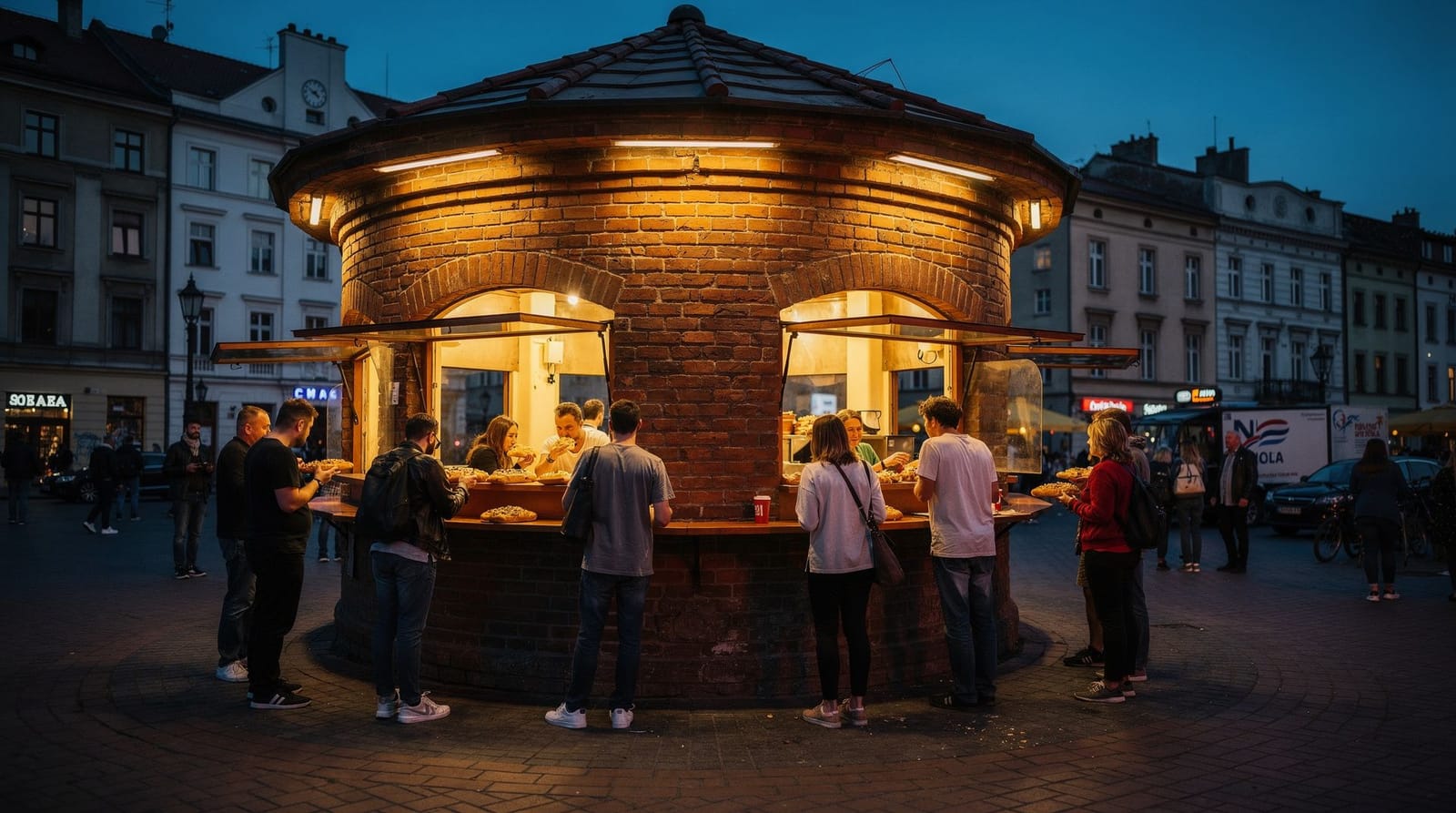
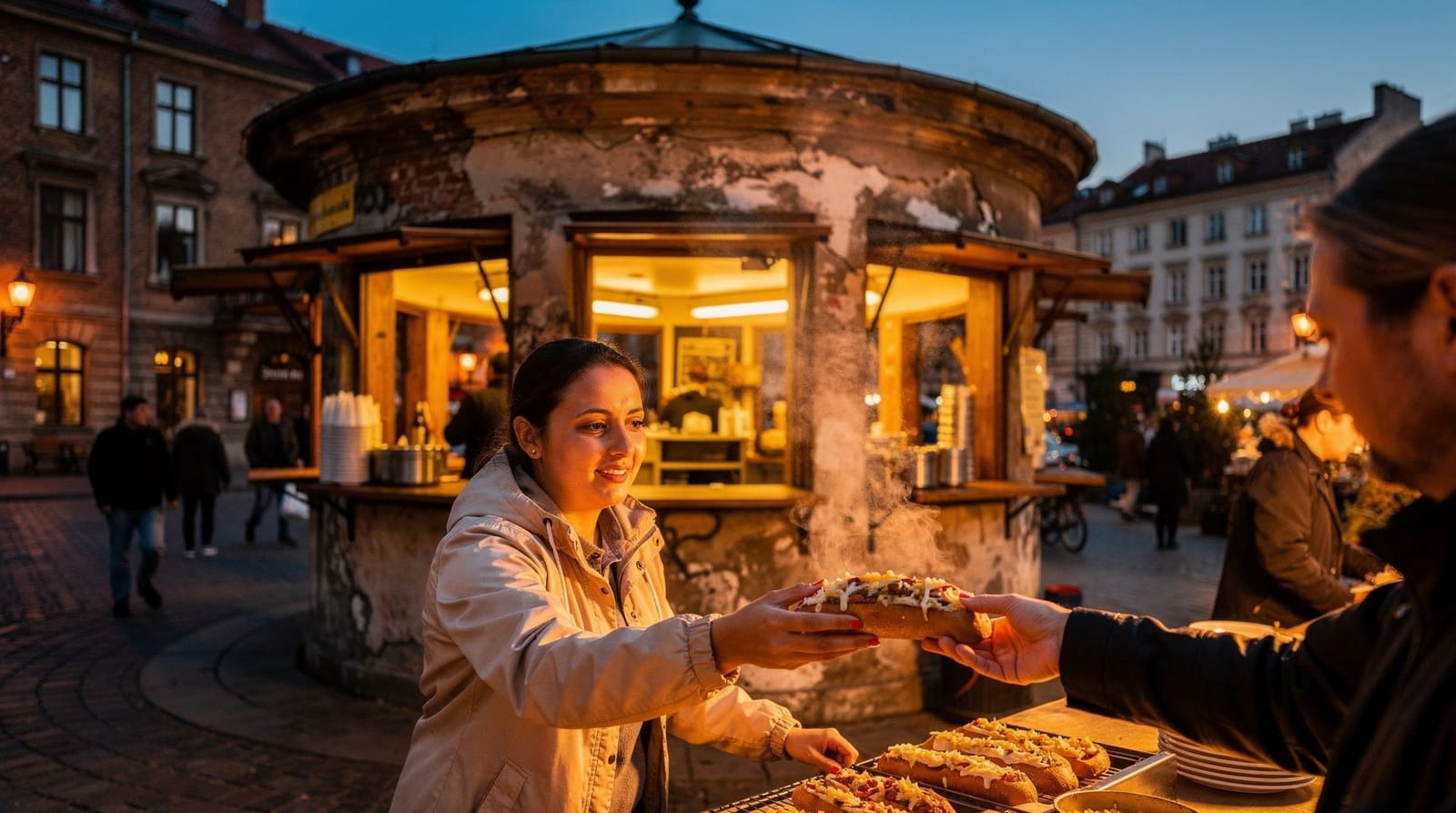
Kraków’s most distinctive street food is the zapiekanka: a halved baguette toasted with mushrooms, melted cheese, and various toppings, finished with ketchup. Cheapest is 8–12 PLN (≈ €2–3). The holy grail is the round market at Plac Nowy in Kazimierz, where the circular stalls have been selling zapiekanki since the communist era. Late night and weekend afternoons, queues form. Read more at Zapiekanka: Kraków’s street food icon at Plac Nowy.
Soups
Polish soup culture is serious. Żurek (sour rye soup with hard-boiled egg and white sausage, often served in a bread bowl) is the Kraków breakfast-and-brunch standard and costs 18–28 PLN (≈ €4–7). Barszcz czerwony (clear beetroot broth) is served with uszka — tiny mushroom-filled dumplings — especially around Christmas. Flaki (tripe soup) is an acquired taste but worth trying at a milk bar.
Obwarzanek — the ring bread
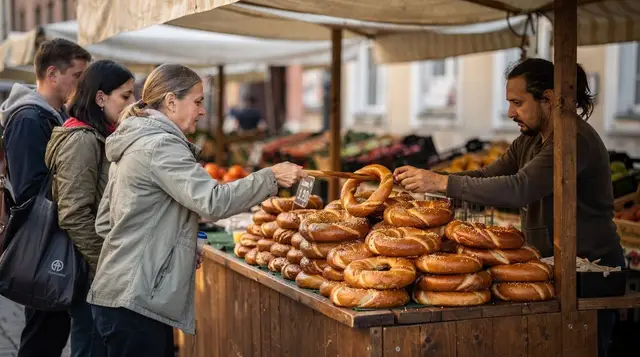
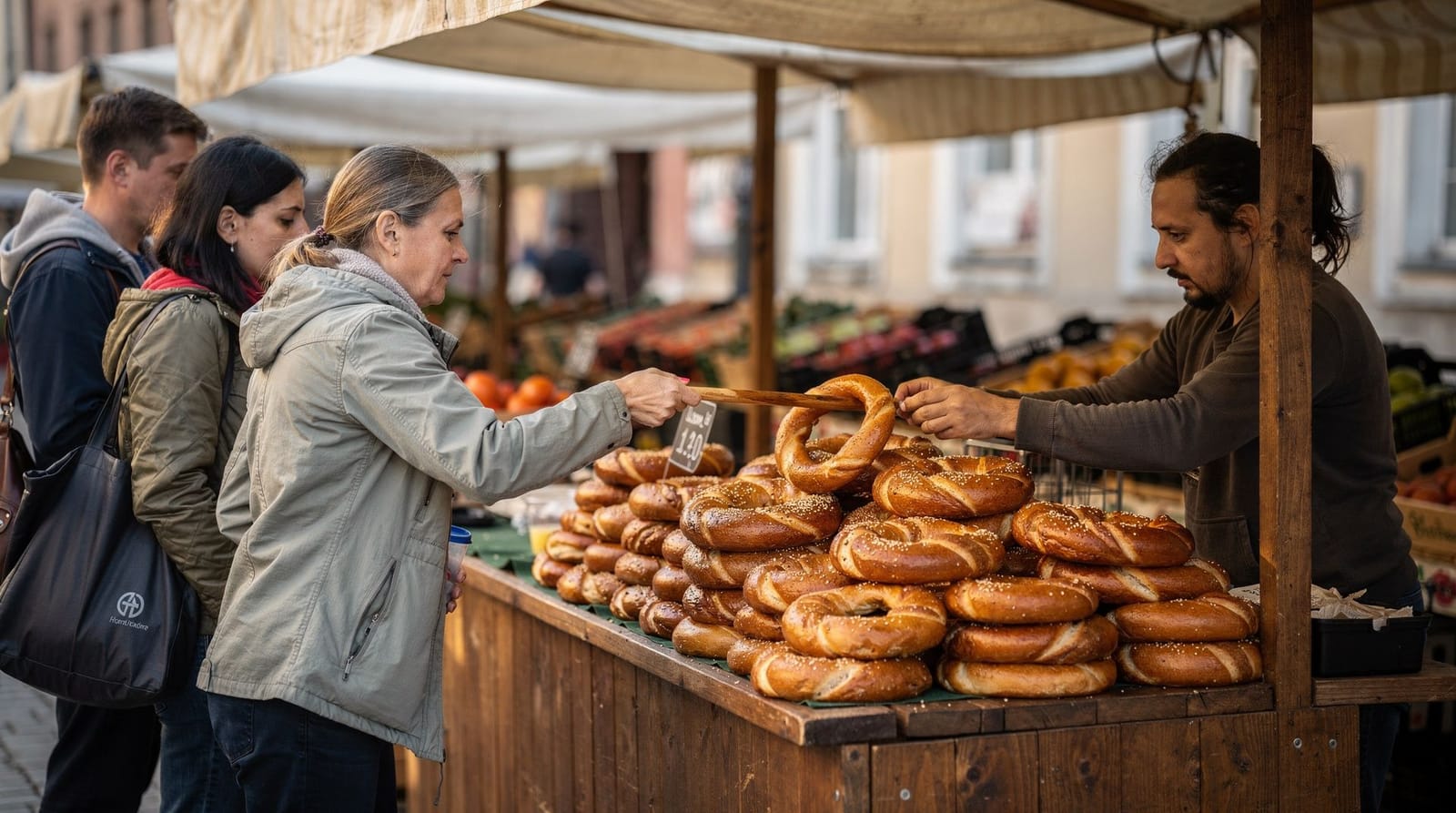
The obwarzanek krakowski (Kraków ring bread) is a UNESCO-protected product: a plaited ring of scalded and baked dough, sprinkled with sesame, poppy seeds or salt. Sold from orange street carts across the city for 3–5 PLN (≈ €0.70–1.20), they are a Kraków institution since the 14th century. Buy from street vendors rather than tourist shops — they are baked fresh daily by licenced vendors. Full guide: Obwarzanek krakowski: the ring bread of Kraków.
The main food neighbourhoods
Old Town — convenient but choose carefully
The Old Town has excellent food if you know where to look, but the trap density is high. Old Town (Stare Miasto) has the full picture; for dining, the key principle is to step off the Rynek. Hawełka (Rynek Główny 34) is an institution but priced accordingly. For better value in the Old Town itself, try streets like ul. Grodzka and ul. Floriańska, or the alleys between them. See Best restaurants in Kraków’s Old Town: where to actually eat well for verified picks.
Kazimierz — the real food scene
Kazimierz is where Kraków’s most interesting food happens. The streets around ul. Szeroka, ul. Józefa, and ul. Estery have concentrated one of the best collections of independent restaurants and bars in the country. Jewish-inflected cooking at Klezmer-Hois and Ariel, contemporary Polish at Starka, excellent breakfasts at Cheder Cafe, and the night-time zapiekanka scene at Plac Nowy. Full guide: Kazimierz food scene: the best restaurants and bars.
Podgórze — quieter, cheaper, improving
Podgórze across the Vistula is less visited but increasingly interesting, with neighbourhood places like Momo (vegetarian, excellent value) and the growing cluster around ul. Józefińska.
Hala Targowa — the covered market
Hala Targowa (ul. Grzegórzecka 3, across the Stary Kleparz), Kraków’s main covered market hall, is worth a morning visit. Vendors sell fresh fruit, vegetables, bread, smoked meats, and local dairy. Several food stalls inside cook cheap, filling lunches. This is where Kraków actually shops.
Drink: vodka, craft beer and coffee
Kraków has an outstanding vodka culture, a growing craft beer scene, and coffee houses that take their espresso seriously. The Polish vodka tasting in Kraków: the honest guide covers the full vodka story — brands to know include Żubrówka (bison grass), Chopin (potato vodka), Belvedere, and the Starka aged variety. The Craft beer in Kraków: the best taprooms, brewpubs and tours covers the tap room scene. For coffee, see Kraków cafes and coffee: where to find the best cup in the city.
Honest warning: the Kazimierz bar scene is excellent but the “vodka bar” category hides some rip-offs. Insist on seeing a menu with prices before ordering; a shot of decent vodka should be 12–18 PLN (≈ €3–4), not 40 PLN.
Food tours: worth it?
A guided food tour is the fastest way to cover multiple spots and understand the cultural context. The 4-hour Polish food tour is the city’s most comprehensive, hitting milk bars, Plac Nowy, pierogi spots and vodka — about 6–8 tasting stops over 4 hours. The Polish food and culture tour with tastings adds more historical context. For something livelier, the tipsy Polish food tour combines history, pierogi and shots in an evening format popular with groups.
If you want to make pierogi yourself, the Polish cooking classes in Kraków: the best hands-on options guide covers the best hands-on options.
Prices at a glance (May 2026)
| Item | PLN | EUR approx |
|---|---|---|
| Obwarzanek from street cart | 3–5 | €0.70–1.20 |
| Zapiekanka at Plac Nowy | 8–12 | €2–3 |
| Milk bar meal (soup + main) | 20–35 | €5–8 |
| Pierogi (6–8 pieces) | 25–35 | €6–8 |
| Lunch at neighbourhood restaurant | 40–60 | €10–14 |
| Dinner with drinks (Kazimierz) | 60–100 | €14–24 |
| Craft beer (0.5L, tap) | 14–22 | €3–5 |
| Wodka shot | 12–18 | €3–4 |
Seasonal food highlights
Spring (April–May): asparagus, radishes, early strawberries at Hala Targowa. Restaurant terraces open — Kazimierz fills up fast on warm evenings.
Summer (June–August): peak season for markets, outdoor festivals. Jewish Culture Festival (late June/early July) brings exceptional food stalls to Kazimierz.
Autumn (September–October): mushroom season — żurek gets even better; market stalls overflow with forest mushrooms. The best time for a milk bar lunch with a bowl of grzyby soup.
Winter (November–March): Christmas markets (November 28–January 1) on the Rynek sell mulled wine (grzaniec), obwarzanki, and roasted nuts. Kazimierz restaurants are cosier than ever.
How Poles actually eat: meal structure and etiquette
Understanding the local meal rhythm helps you order like you belong. Śniadanie (breakfast) is often light — bread, cold cuts, cheese — but Kraków’s café culture has made a leisurely weekend brunch increasingly popular in Kazimierz. Obiad (the main meal, traditionally eaten mid-afternoon around 2–4pm) is the biggest meal of the day for many Poles, which is why milk bars are busiest at lunchtime rather than in the evening. Kolacja (supper) is typically lighter — cold cuts, bread, maybe soup.
A few etiquette notes that spare you an awkward moment: it’s polite to say “smacznego” (enjoy your meal) before eating with company. Bread is often served before the meal and it’s fine to eat it without asking. At milk bars, bussing your own tray to the rack near the exit is expected — nobody will do it for you. Splitting the bill (“każdy płaci za siebie”) is normal among younger Poles, but for a group dinner in a sit-down restaurant, ask for the bill to be split at the time of ordering, since some kitchens prefer one bill per table.
Food by budget: what a day of eating actually costs
| Budget | What it buys | Example day |
|---|---|---|
| Shoestring (under 60 PLN) | Street food + milk bar | Obwarzanek breakfast, milk bar lunch, zapiekanka dinner at Plac Nowy |
| Mid-range (100–180 PLN) | One sit-down meal + snacks | Milk bar lunch, pierogi dinner in Kazimierz, craft beer |
| Splurge (250 PLN+) | Two proper meals + drinks | Kazimierz breakfast café, modern-Polish tasting menu dinner, vodka tasting |
The gap between shoestring and splurge is almost entirely about how many sit-down restaurant meals you have, not about quality — a 25 PLN milk bar żurek is often better than a 45 PLN version at an Old Town tourist restaurant. For more ways to eat cheaply across the whole trip, see the Kraków on a budget: how to visit without overpaying.
Practical tips
Cash: milk bars and many traditional restaurants are cash-only. ATMs (bankomat) are plentiful; avoid those in tourist areas with unfavourable rates. Card payment is standard at modern restaurants.
Tipping: 10–15% is standard and appreciated; rounding up the bill is common.
Reservations: required for popular spots on weekends and in summer. For dinner in Kazimierz on a Friday or Saturday, book at least 2–3 days ahead.
Opening hours: milk bars typically 7am–5pm, closed Sundays. Restaurants noon–10pm; some Kazimierz bars until 2–4am.
Language: most restaurant menus in the Old Town and Kazimierz have English translations. Outside tourist areas, Google Translate on your phone is useful.
Frequently asked questions about food in Kraków
Is Kraków food good for vegetarians?
Yes, better than you might expect. Pierogi ruskie (potato-cheese), kapuśniak (sauerkraut soup) and many traditional dishes are naturally vegetarian. Momo in Podgórze is an excellent vegetarian restaurant. In Kazimierz, Hamsa serves hummus and Middle Eastern dishes. Most modern restaurants now have strong vegetarian sections.
Where should I avoid eating?
The restaurants facing directly onto the Rynek Główny (Main Market Square) are almost universally overpriced and mediocre — think 80–120 PLN for a main course at tourist-trap quality. The same food is available a five-minute walk away for 30–50 PLN. Also avoid the “milk bar” restaurants in tourist areas that use the name but charge three times the real milk bar prices.
Can I eat well on a budget in Kraków?
Very well. A day of eating at milk bars, buying an obwarzanek and a zapiekanka costs under 50 PLN (≈ €12). Even with a proper dinner, a full day of excellent eating is possible for 80–100 PLN (≈ €19–24).
What are the best food markets?
Hala Targowa (ul. Grzegórzecka) is the main covered market. Rynek Kleparski (the smaller open-air market north of the Barbican) has seasonal produce and is less crowded. Both are within 15 minutes’ walk of the Old Town.
Do I need to book cooking classes in advance?
Yes — the most popular pierogi cooking classes (often run from private homes or small kitchens) book out several days to a week ahead in peak season (June–September). See Polish cooking classes in Kraków: the best hands-on options for booking advice and the best options.
What time do Poles actually eat lunch and dinner?
Obiad, the main meal, is traditionally eaten mid-afternoon (2–4pm), which is why milk bars are busiest then. Restaurants in Kazimierz and the Old Town serve dinner on a more familiar Western schedule, from around 6pm, with tables filling up from 7–8pm onward, especially on weekends.
Is tap water safe to drink in Kraków restaurants?
Tap water is safe to drink, but most restaurants do not serve it automatically and will bring bottled water unless you specifically ask for “woda z kranu” (tap water). Some traditional spots may look surprised at the request, but it is perfectly fine to ask.
Top experiences
Bookable activities with verified prices and instant confirmation on GetYourGuide.